
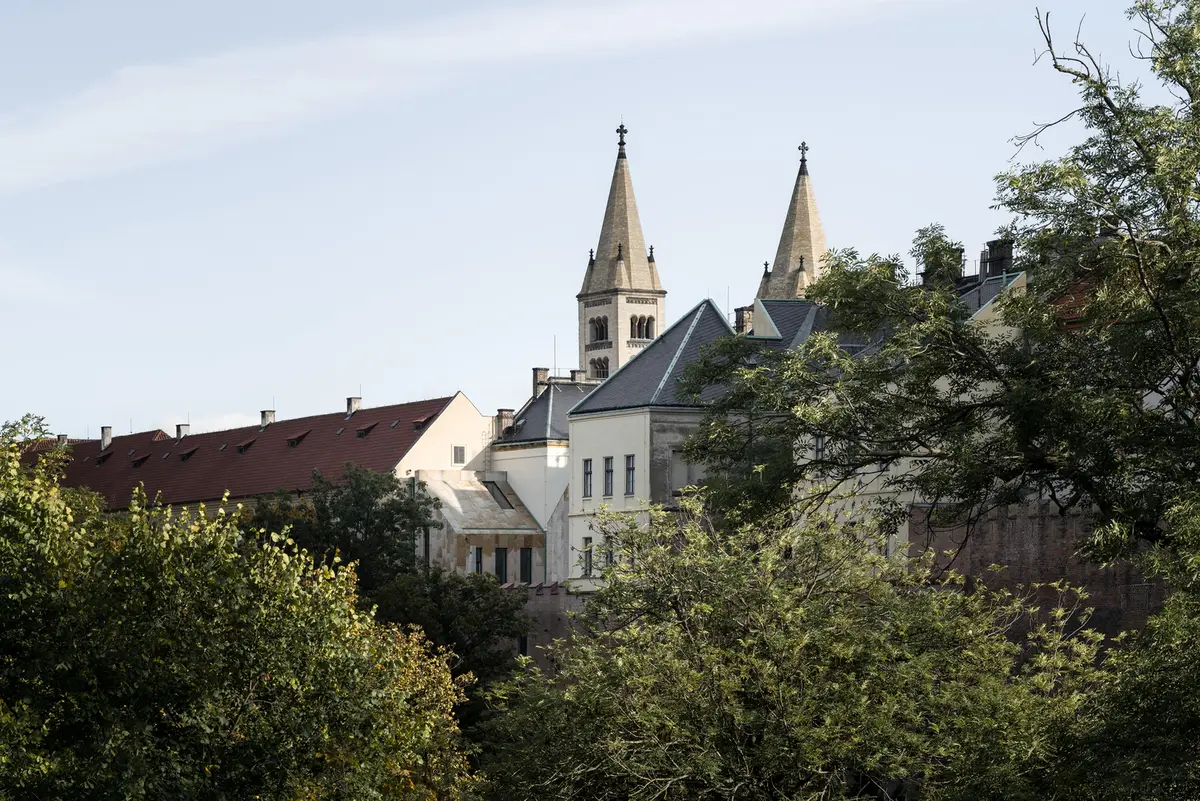
New Provostry Extensions and Reconstruction by Studio acht: A Heritage Revival in Prague Castle
The New Provostry in Prague Castle combines neo-Gothic restoration with modern extensions, creating public courtyards, café spaces, and adaptive heritage architecture.


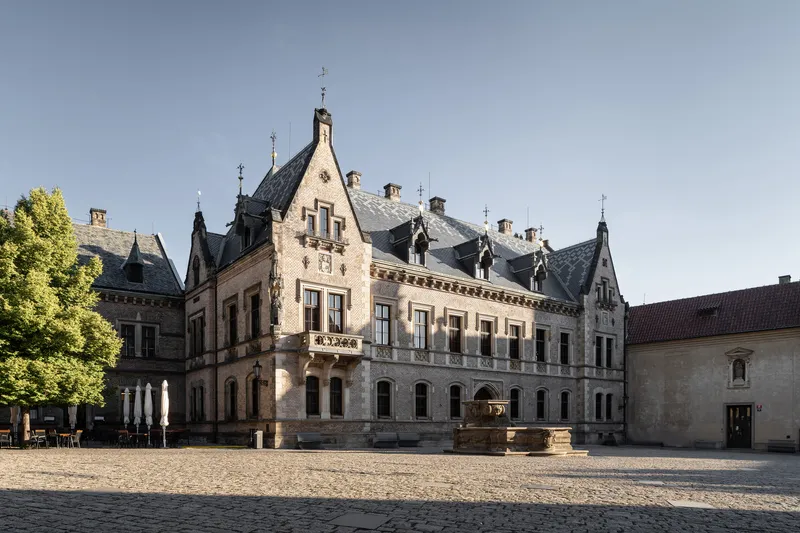
The New Provostry Extensions and Reconstruction is a landmark heritage restoration and adaptive reuse project located in Prague 1, Czechia, within the historic grounds of Prague Castle. Designed by Studio acht and completed in 2023, the project carefully restores a Neo-Gothic building dating back to 1877 while introducing contemporary courtyard extensions that reactivate the site for public and commercial use.

Originally constructed as the residence of the provost adjacent to St. Vitus Cathedral, the building was confiscated in the 1950s and fell into neglect during the communist era. The courtyard structures were demolished, and the main residence was converted into barracks. Following restitution in 2016, the property was returned to the Church, opening the door to a sensitive architectural restoration and urban revitalization strategy.
Heritage Restoration and Adaptive Reuse Strategy
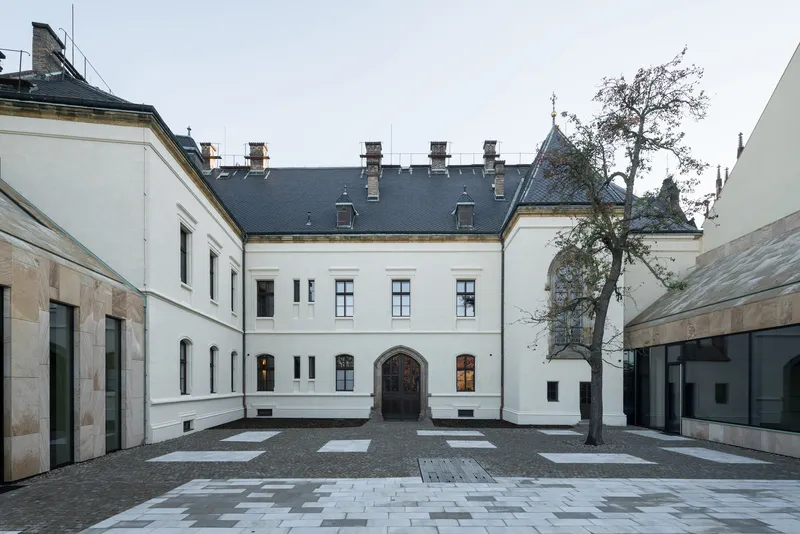
The architectural concept centers on historic preservation, courtyard reopening, and contextual contemporary intervention. The restoration carefully returns the Neo-Gothic façade to its late 19th-century character, reinforcing the architectural identity of the Prague Castle complex.
Façade and Interior Restoration
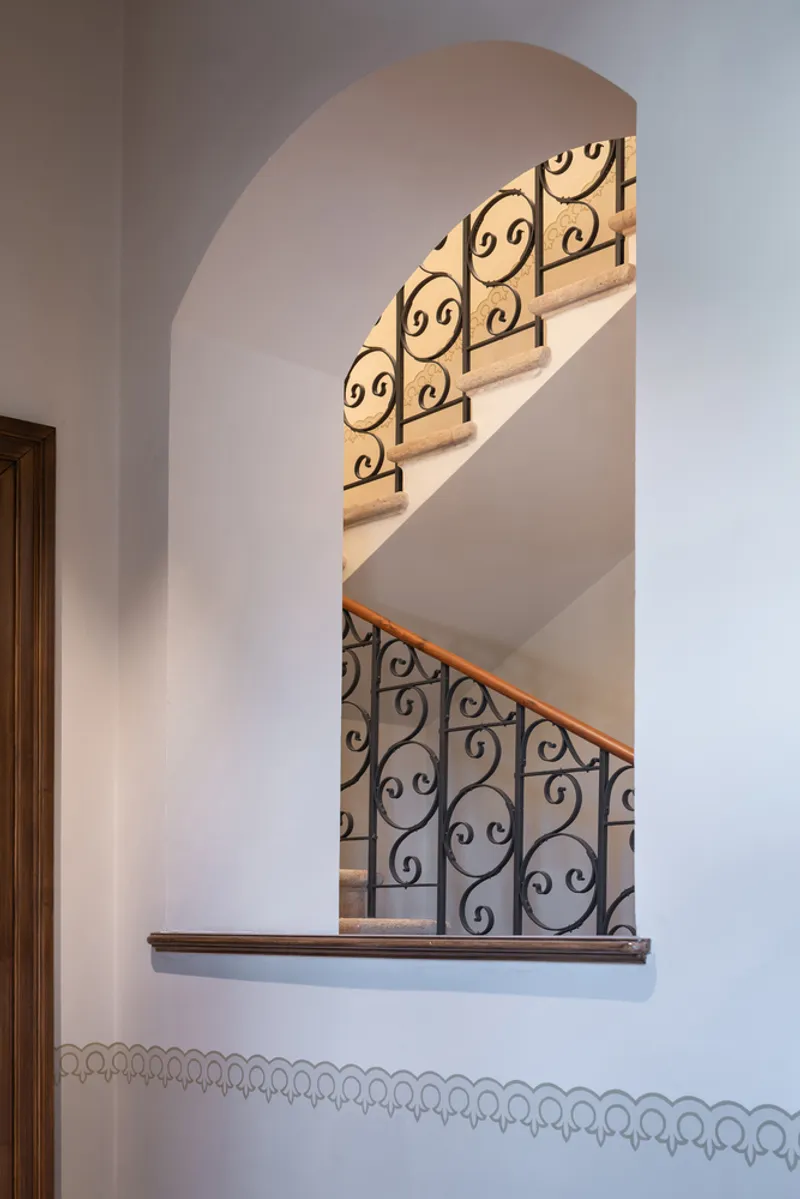
The façade was meticulously restored to recover its historic proportions, materials, and ornamental detailing. Internally, the renovation balances preservation and modernization:
- Restoration of faux-grained historic doors and windows
- Refurbishment and reconstruction of parquet and wooden floors
- Reinstallation of historically consistent tile formats and patterns
- Integration of contemporary glass partitions with minimal steel framing
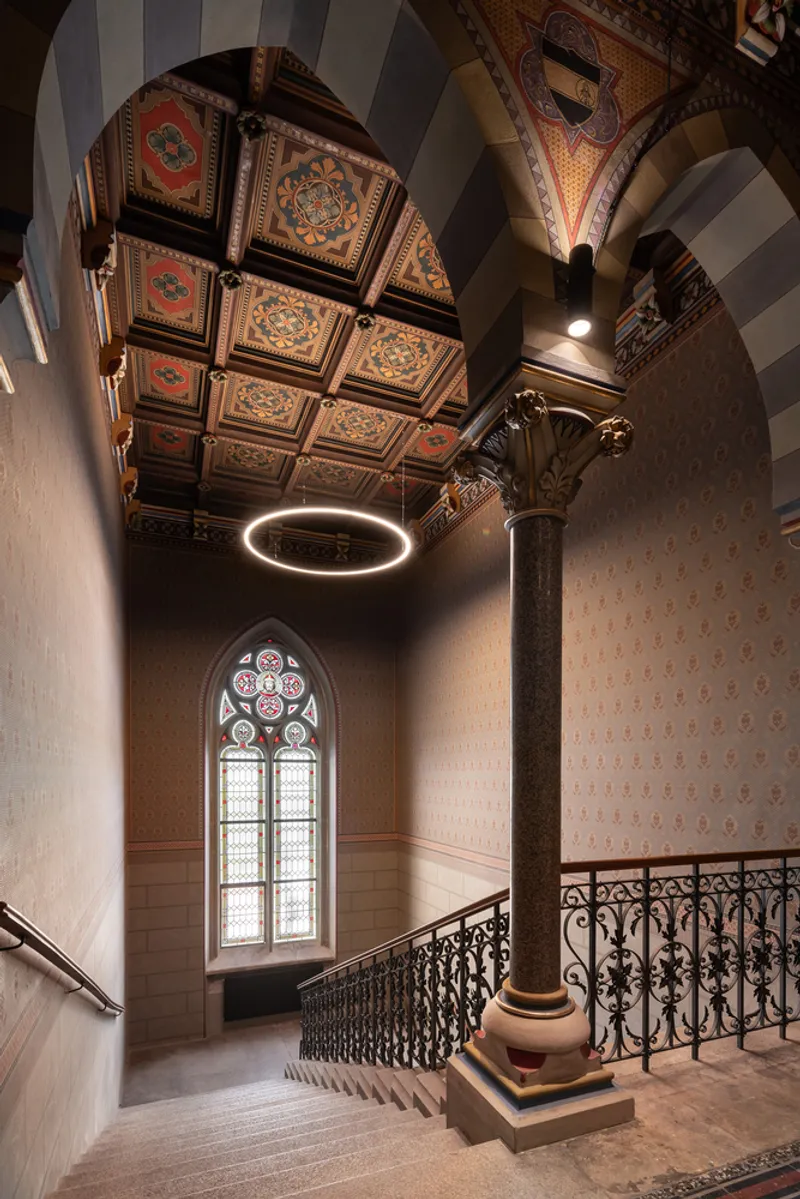
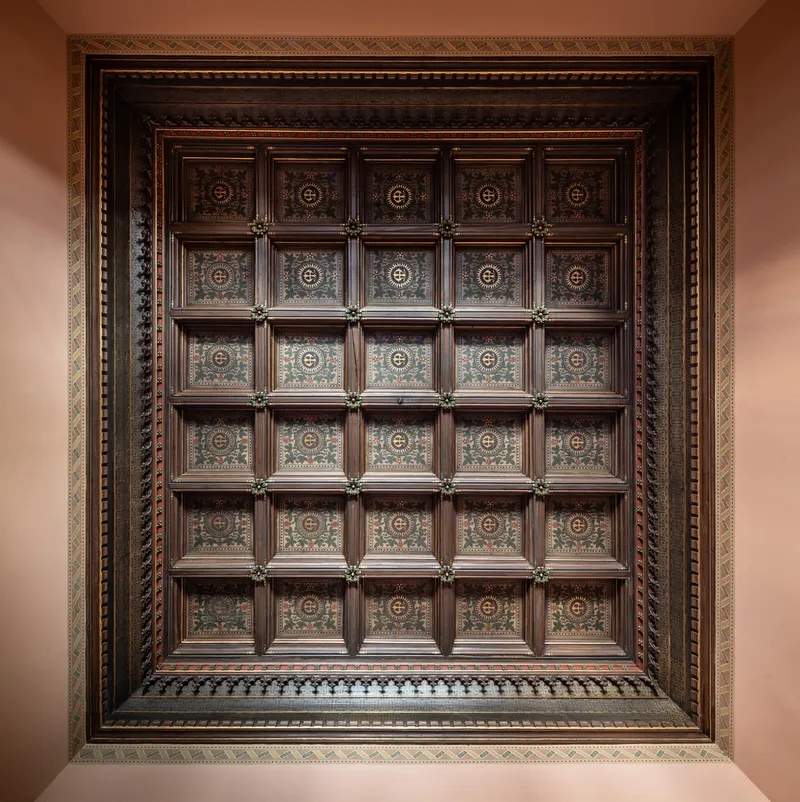
A key spatial highlight is the main staircase, where a delicate circular pendant light contrasts harmoniously with the strict geometry of the painted wooden ceiling. This gesture exemplifies the project’s broader design philosophy: a dialogue between historical craftsmanship and contemporary architectural clarity.
Today, the building has resumed its original function as the administrative seat of church institutions, including the Metropolitan Chapter of St. Vitus. The adaptive reuse ensures long-term sustainability while preserving cultural heritage value.

Courtyard Reopening and Public Activation
One of the most transformative aspects of the project is the reopening of the inner courtyard to the public. This intervention restores urban permeability within Prague Castle and offers rare panoramic views toward the lower Deer Moat, an area previously inaccessible to visitors.
The courtyard is now designed as a multi-functional civic space, capable of hosting:
- Cultural performances
- Outdoor events
- Corporate gatherings
- Informal public use
The northern edge features a contemporary overlook and a granite-and-bronze fountain, reinforcing the courtyard’s symbolic and experiential dimension.
Contemporary Extensions Within a Historic Context

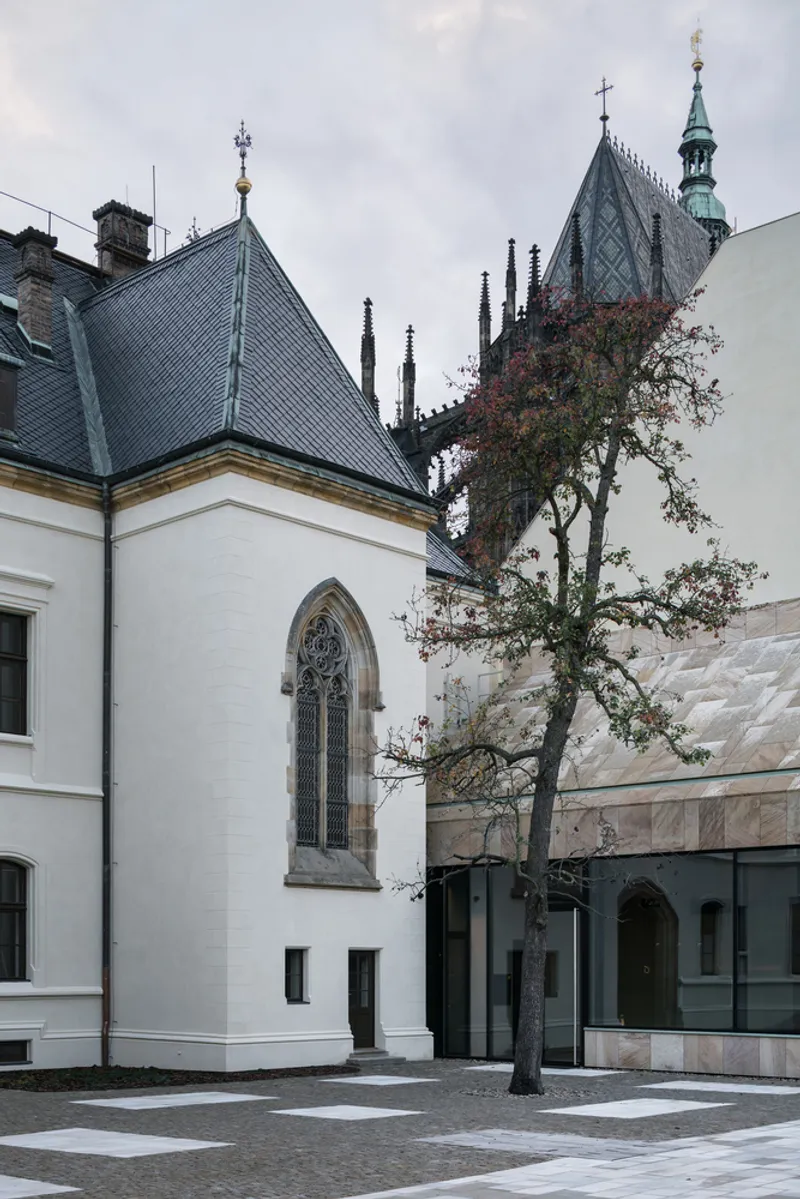
Two newly constructed extensions occupy the historic footprint of former stables and carriage houses. These structures introduce commercial functions while maintaining architectural harmony with their Neo-Gothic surroundings.
West Extension, Café Pavilion
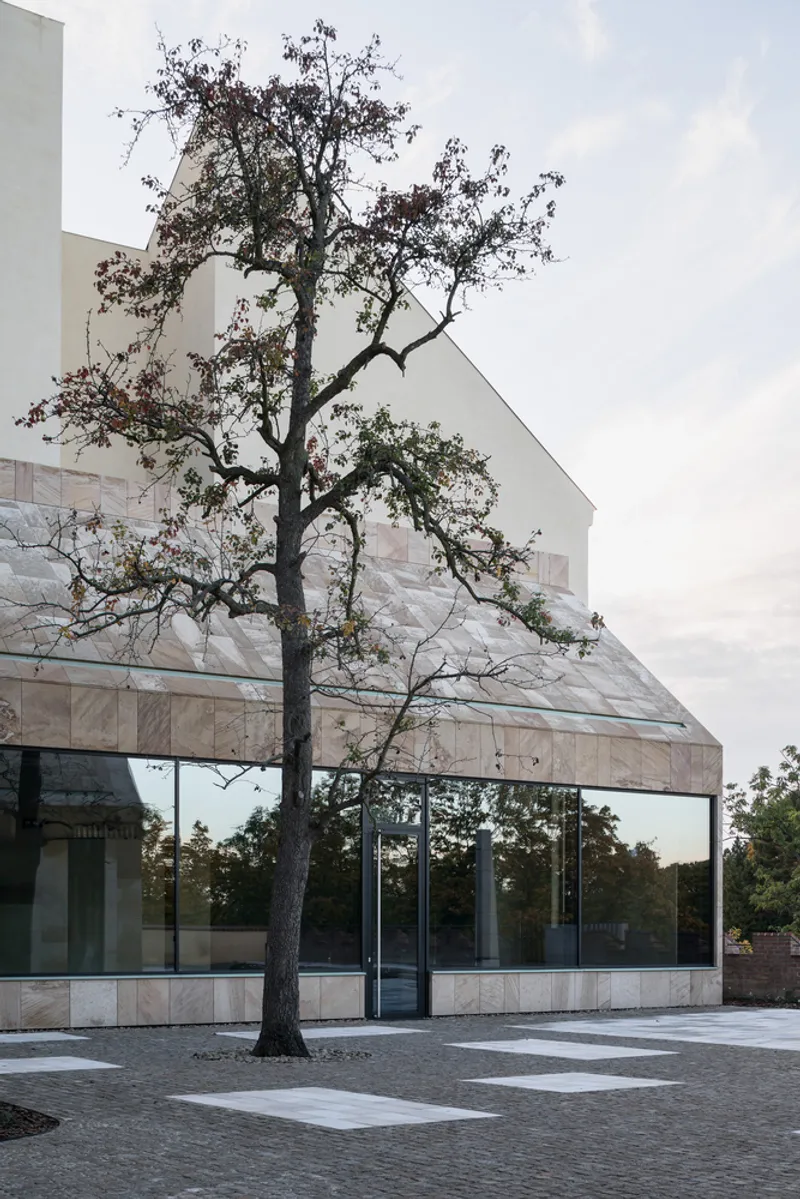
The west extension, partially extending into the northern basement, is designed as a café serving Prague Castle visitors. It features:
- Vertical openness and generous glazing
- A nearly frameless glass corner emphasizing structural lightness
- Subtle steel-framed glass façade systems
- A dramatic skylight connecting roof and façade
The transparency enhances interaction between interior activity and courtyard life, reinforcing hospitality architecture within a heritage context.
East Extension, Flexible Commercial Space
More compact and introverted, the east extension accommodates retail or office functions. Although formally related to the west pavilion, it maintains its own identity through proportion, enclosure, and spatial configuration.

Material Strategy and Architectural Language
The extensions balance contextual sensitivity with contemporary detailing through:
- Sandstone cladding sourced from the Vyhnánov quarry
- Patinated copper detailing
- Discreet tiled and wooden flooring
- Refined steel-framed glazing systems
A narrow skylight detail creates a dynamic interplay of light and shadow, enhancing interior spatial quality while referencing the historic masonry articulation of Prague Castle.


Outlook and Symbolic Fountain Intervention
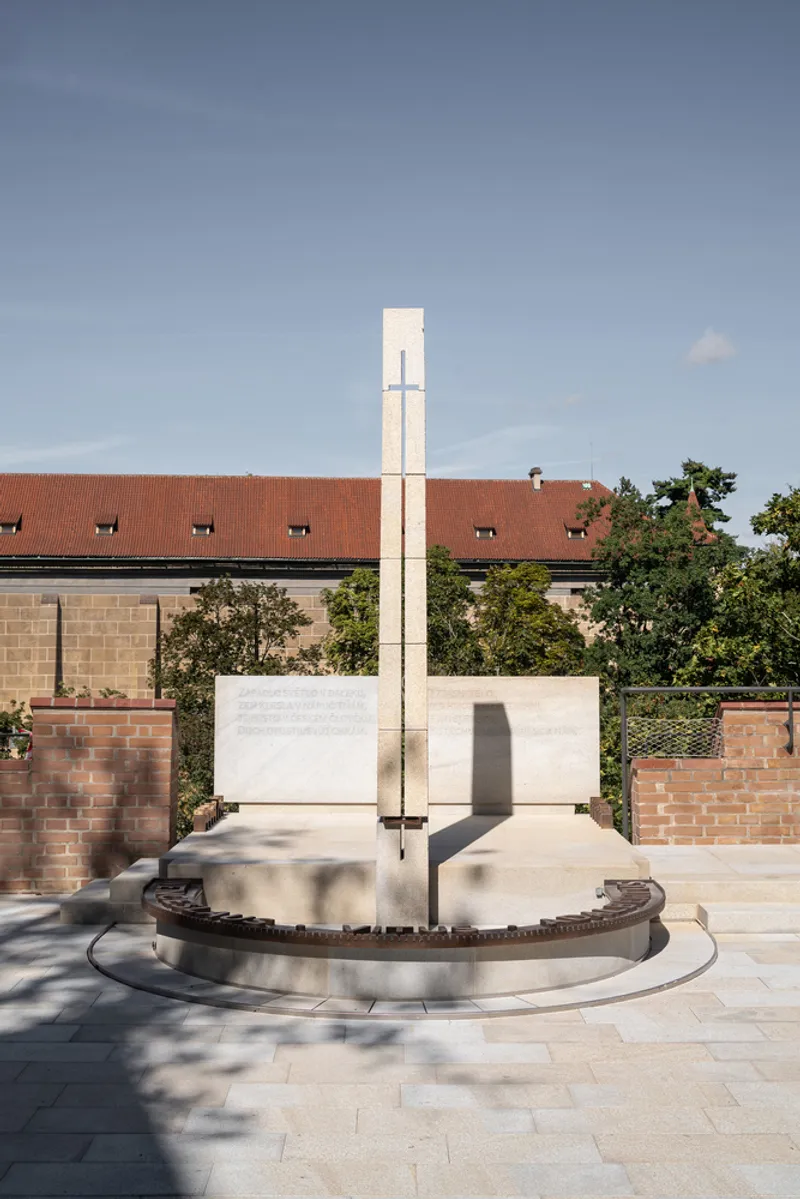
The courtyard redesign incorporates an overlook inspired by an unrealized concept by original architect Josef Mocker. This contemporary reinterpretation projects outward from the castle wall, offering elevated views while maintaining structural subtlety.
The adjacent fountain features:
- A granite obelisk
- A bronze-edged basin
- Symbolic water flow from a cross over engraved saint names
Water gradually absorbs into the ground, reinforcing themes of continuity, spirituality, and renewal. A poem engraved in stone further anchors the intervention within ecclesiastical tradition.

Sustainable Heritage Architecture in Prague
The New Provostry project exemplifies sustainable heritage architecture, where restoration, adaptive reuse, and contemporary additions coexist in architectural equilibrium. Rather than replicating historic forms, the design employs timeless geometry, restrained detailing, and durable materials to ensure long-term relevance.
Key architectural themes include:
- Neo-Gothic restoration
- Adaptive reuse of religious heritage buildings
- Contextual contemporary architecture
- Courtyard revitalization strategies
- Hospitality and commercial integration in heritage zones
- Material authenticity and craftsmanship
Through precise restoration and carefully calibrated new construction, Studio acht demonstrates how historic architecture can be reactivated for public engagement while preserving its cultural integrity.

All photographs are works of
Tomáš Slavík


Popular Articles
Popular articles from the community


The Amber Palace Opera: A Geological Fiction Surfaces on Tallinn's Baltic Waterfront
Pierre Brillard reimagines a Baltic legend as a public landscape, opera house, and waterfront promenade rooted in Tallinn's coastal identity.

Aquadapt: An Underwater Habitat That Rewrites Its Rooms by the Hour
Curved modules ring the seabed while one shell shifts from breakfast room to cinema, farm and football pitch as residents' needs change.


Cube Design Draws an Ecological Corridor Between Two Shenzhen Hills with the Nankai Building
Beside Shenzhen's container docks, the Nankai Building pairs stacked balconies with a climbing green screen to connect two hillsides across its height.

David Ortega Stacks a Two-Story Mexico City Penthouse Around a Steel Stair and a Pergola-Shaded Roof Terrace
In Colonia Roma, a 300 m² penthouse uses oak joinery, a planted steel stair and a slatted roof pergola to make a new-build apartment feel like a house.

Similar Reads
You might also enjoy these articles

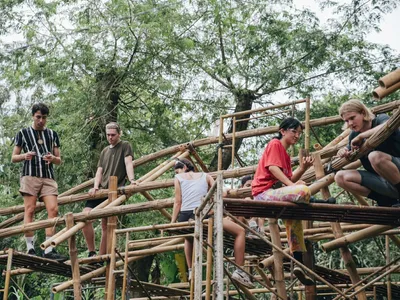
Bamboo Housing Challenge 2026: Design Affordable, Sustainable Homes Using Bamboo
An international design competition by Bamboo U and IBUKU inviting architects and designers to reimagine affordable housing using bamboo — with the winning design built full-scale in Bali.

Computational Design & Education: Beegraphy Design Awards Introduces 7th Category (Featuring Jiyun's Innovative Approach)
Dive into Beegraphy’s 7th Design Awards category, where computational design meets education to create immersive, interactive learning tools, inspired by Jiyun’s work.

From Parametric Lighting to Urban Furniture: Join the 2nd Workshop in Beegraphy’s Computational Design Series
Dive into Cutting-Edge Design Techniques and Practical Applications with Industry Experts

Last Call: Unleash Your Architectural Genius in SHAK's Kindergarten Design Competition
Urgent call for architects to join SHAK's kindergarten design competition before the looming deadline

Explore Architecture Competitions
Discover active competitions in this discipline

Challenge to reimagine the Iron Throne

Photograph architecture without architects

Illustrate the lost glory of Angkor Wat - Render Challenge

Design challenge to reuse E-waste
Comments (0)
Please login or sign up to add comments
No comments yet. Be the first to comment!