

Daisuke Ibano and Ryosuke Fujii Shape an Osaka Family Home Around Spline Curves and Forest Views
On a triangular plot left empty since the 1970 Expo, a looping timber-and-stucco house in Osaka opens every room to the adjacent woods.


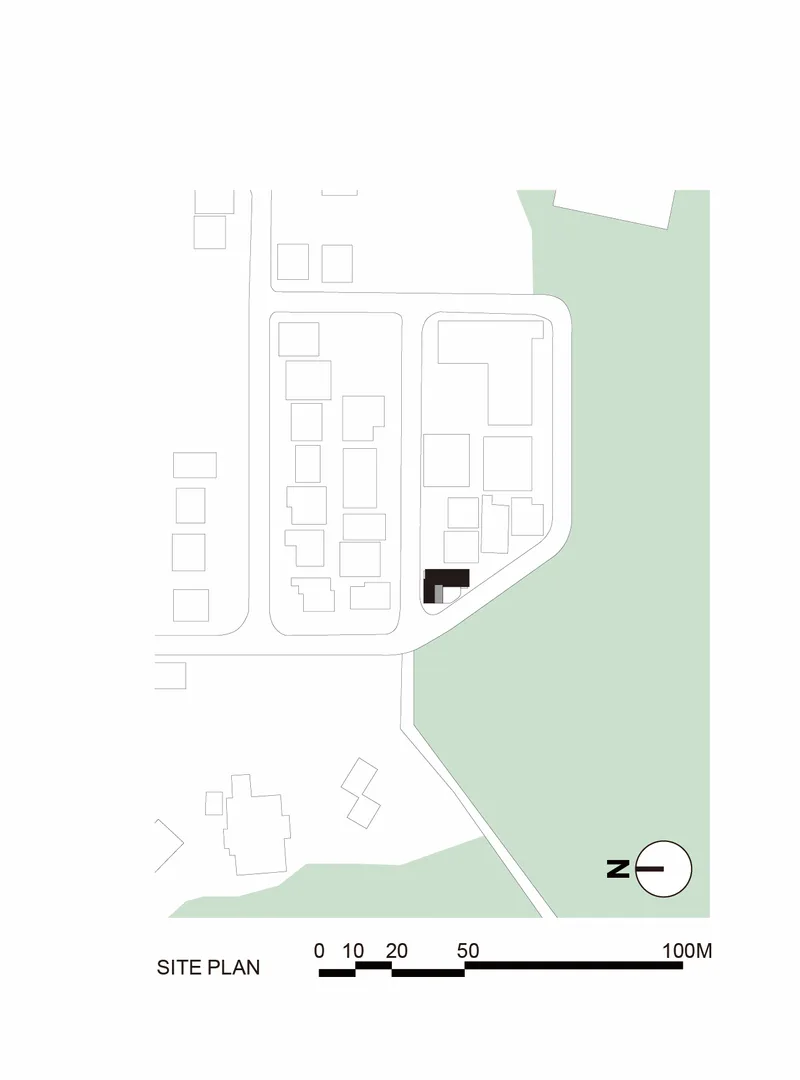
Some sites wait decades for the right building. The triangular lot that now holds the Spline House sat vacant since the land was parceled out during the economic boom that followed the 1970 Osaka Expo. Its western edge abuts a forested community park, and the residential streets around it slope gently, creating a subtle grade change that most developers would flatten into irrelevance. Daisuke Ibano and Ryosuke Fujii did the opposite: they turned the topography and the irregular footprint into the organizing logic for a house whose curves, terraces, and looping staircases keep the surrounding greenery in constant dialogue with domestic life.
What makes the project genuinely compelling is its refusal to treat structure, circulation, and scenery as separate problems. A keel beam running longitudinally from a central column holds up bent wood boards that form the spline-shaped walls, and those walls do not merely enclose rooms. They steer movement, frame views, and create outdoor spaces that feel as considered as the interiors. The result is a house where you never lose awareness of the forest next door, even when you are climbing between floors or standing at a kitchen counter.
A White Volume on a Difficult Lot
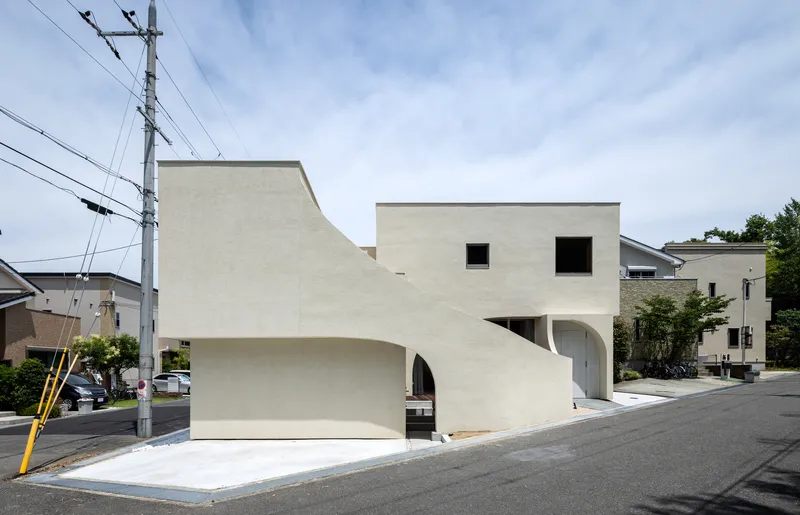
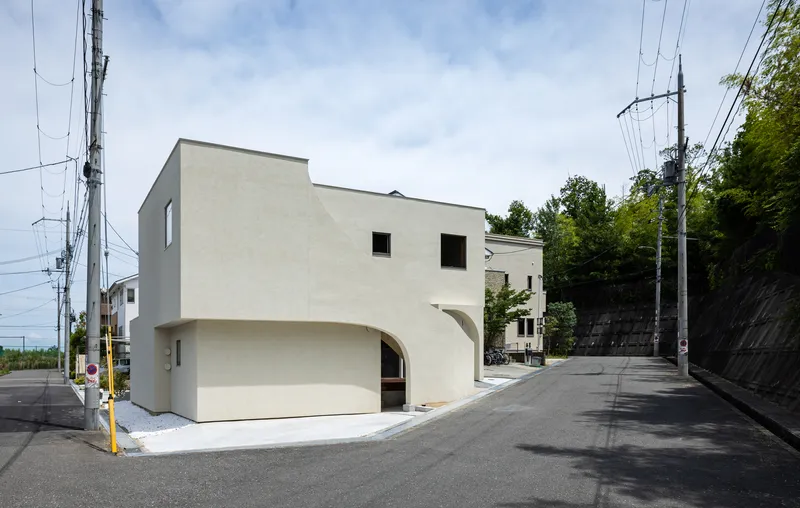
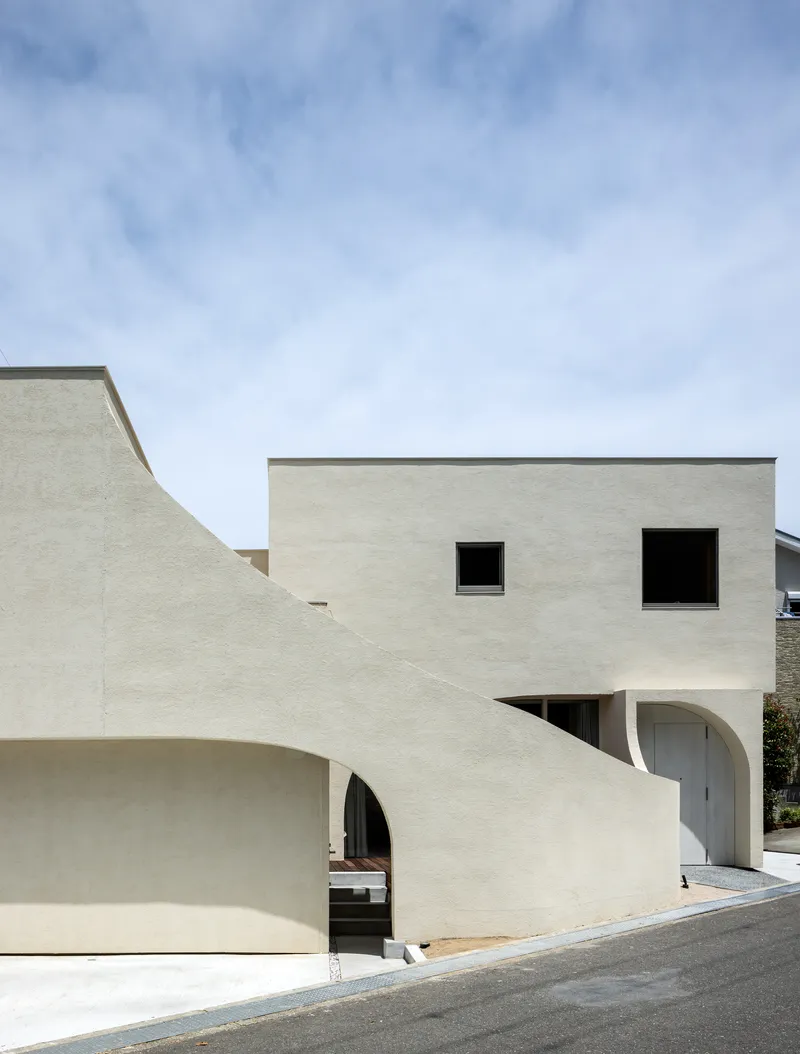
From the street, the Spline House reads as a series of white stucco volumes punctured by arched openings at ground level and small square windows above. The L-shaped plan wraps around the acute angle of the triangular site, positioning the longest facade toward the park to the west. On the sloped street, the building steps down with the grade, allowing arched recesses to appear and disappear depending on your vantage point. Nothing about the exterior telegraphs the spatial complexity inside, which is exactly right for a quiet residential block crisscrossed by utility wires.
The rough texture of the plaster and the restrained palette let the geometry do the talking. Curves are introduced sparingly on the exterior, mostly at wall junctions and around staircase enclosures, so the house integrates with its neighbors without mimicking them. The arched ground-level openings hint at the vocabulary inside but stop short of spectacle.
Terraces That Loop Through the Section
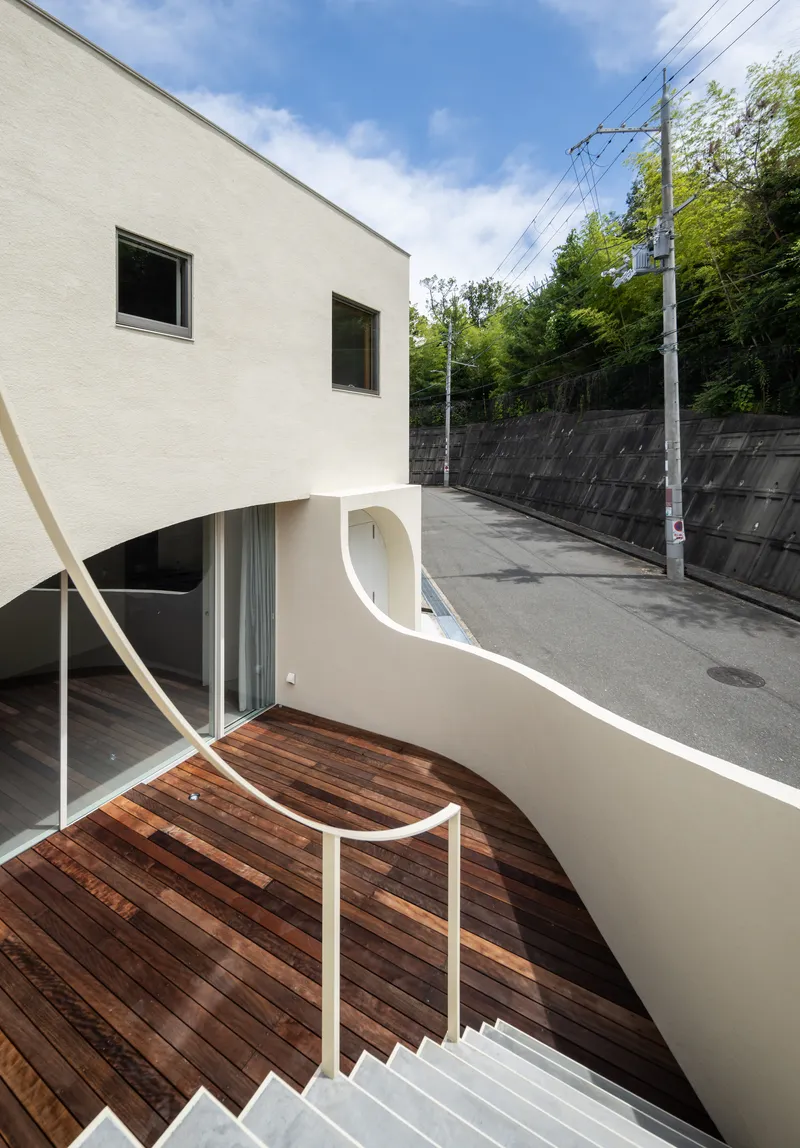
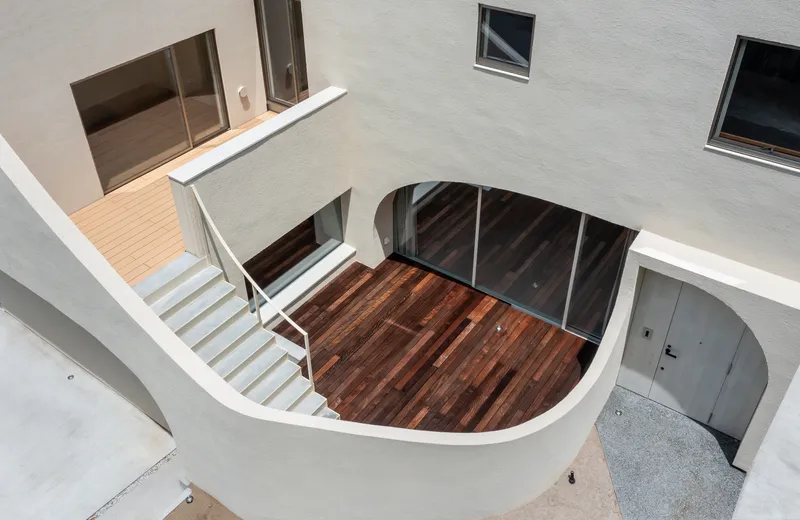
The most inventive move is a circulation staircase that bridges outdoor terraces and a central atrium, resolving the site's height difference while creating a continuous loop between inside and out. Timber deck terraces at the roof level curve into the plan, forming a sunken outdoor room visible from above. The decking material, dark wood with a fine grain, contrasts sharply with the white stucco and establishes the terraces as a separate register of experience: warmer, tactile, exposed to the sky.
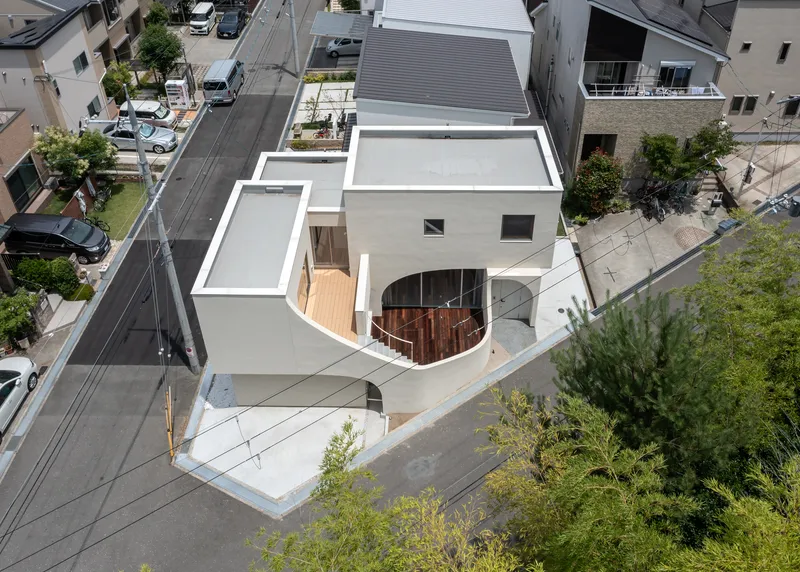
Seen from the air, the curved courtyard reads as a notch carved into the white roofscape. It pulls daylight down into the section and gives the house a private outdoor space that compensates for the compact footprint. The metal railing is deliberately thin, almost invisible in photographs, so the timber surface appears to float between the stucco walls.
The Staircase as Spatial Engine
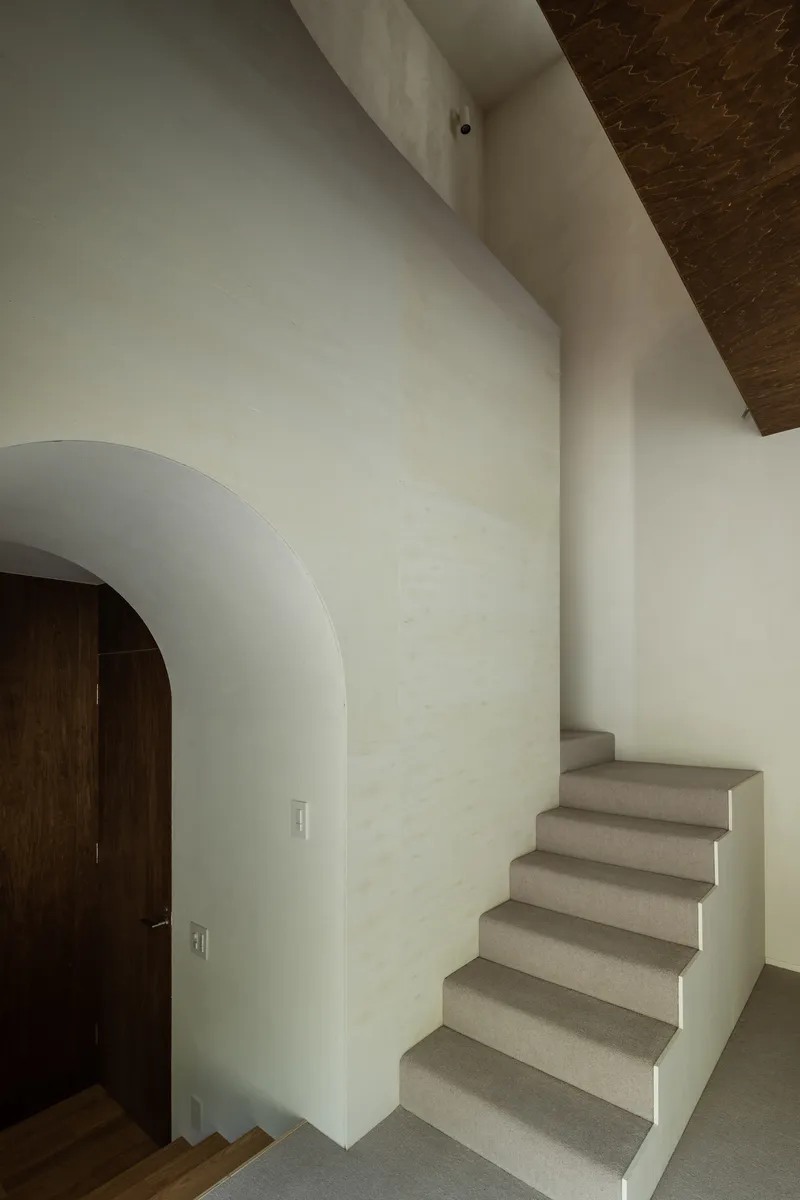
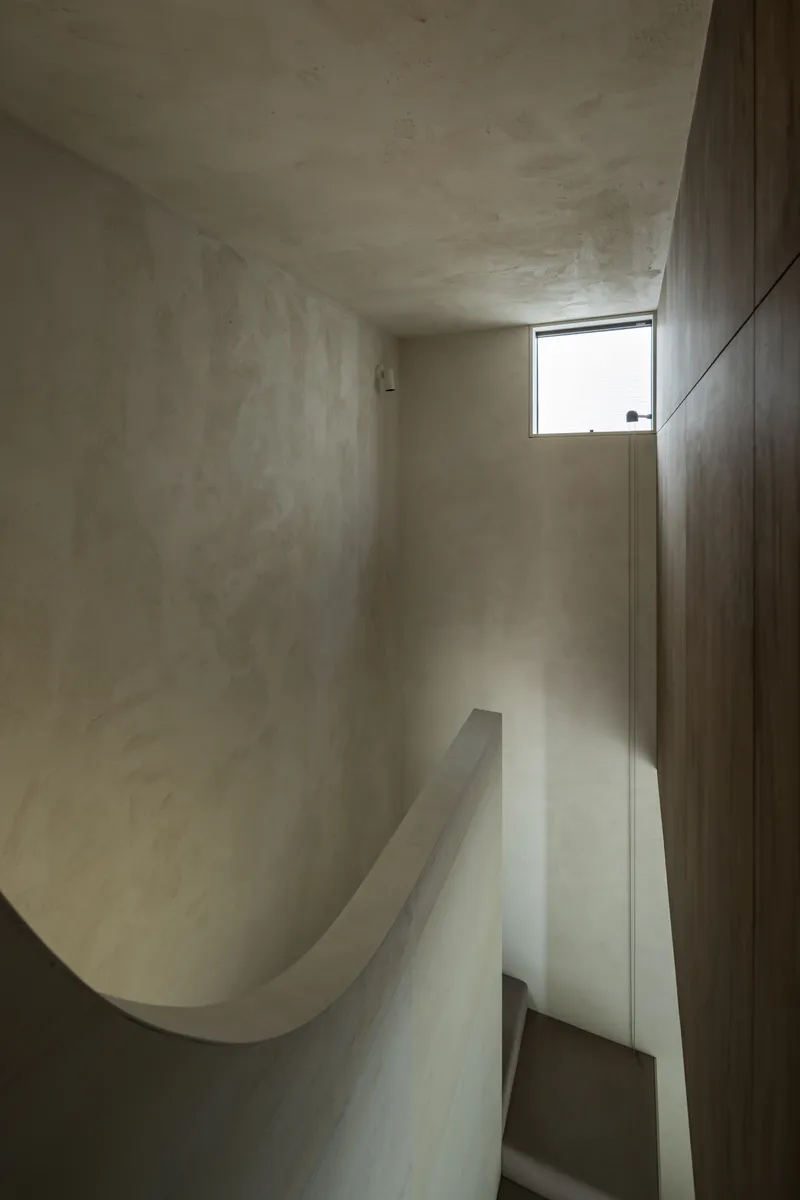
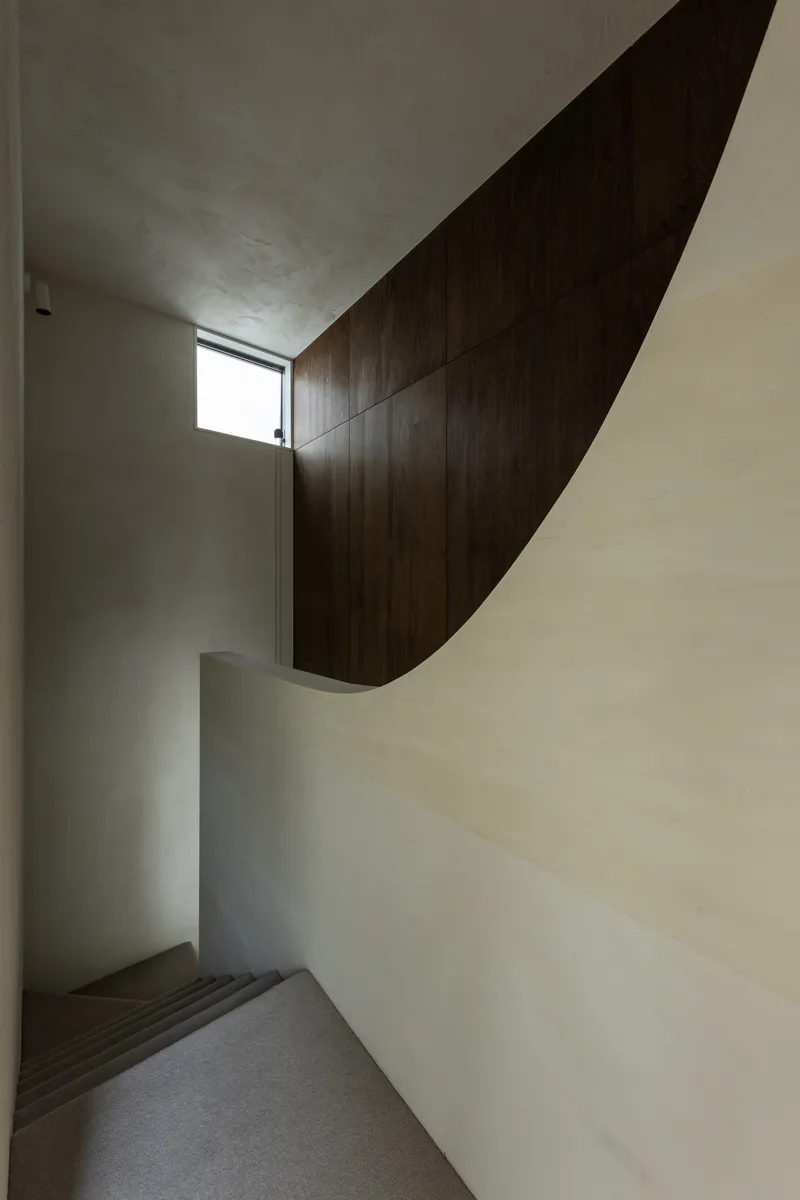
In a house this compact, the staircase cannot be an afterthought. Here it is the spatial engine that ties every level together and introduces the most dramatic material contrasts. Pale terrazzo treads rise alongside white plaster walls and through arched doorways, while dark timber panels sweep up the upper walls and meet a vaulted ceiling. The shift from mineral to wood happens abruptly, and the effect is almost geological: you move from a cool, luminous lower zone into a warmer, darker enclosure overhead.
Narrow horizontal windows cut into the stairwell catch daylight at precise moments, keeping the ascent from feeling enclosed. The curved plaster surfaces eliminate hard corners and make the stair feel wider than its dimensions suggest. It is a small house that never feels pinched, and the staircase is the main reason why.
Arches as Thresholds to the Forest
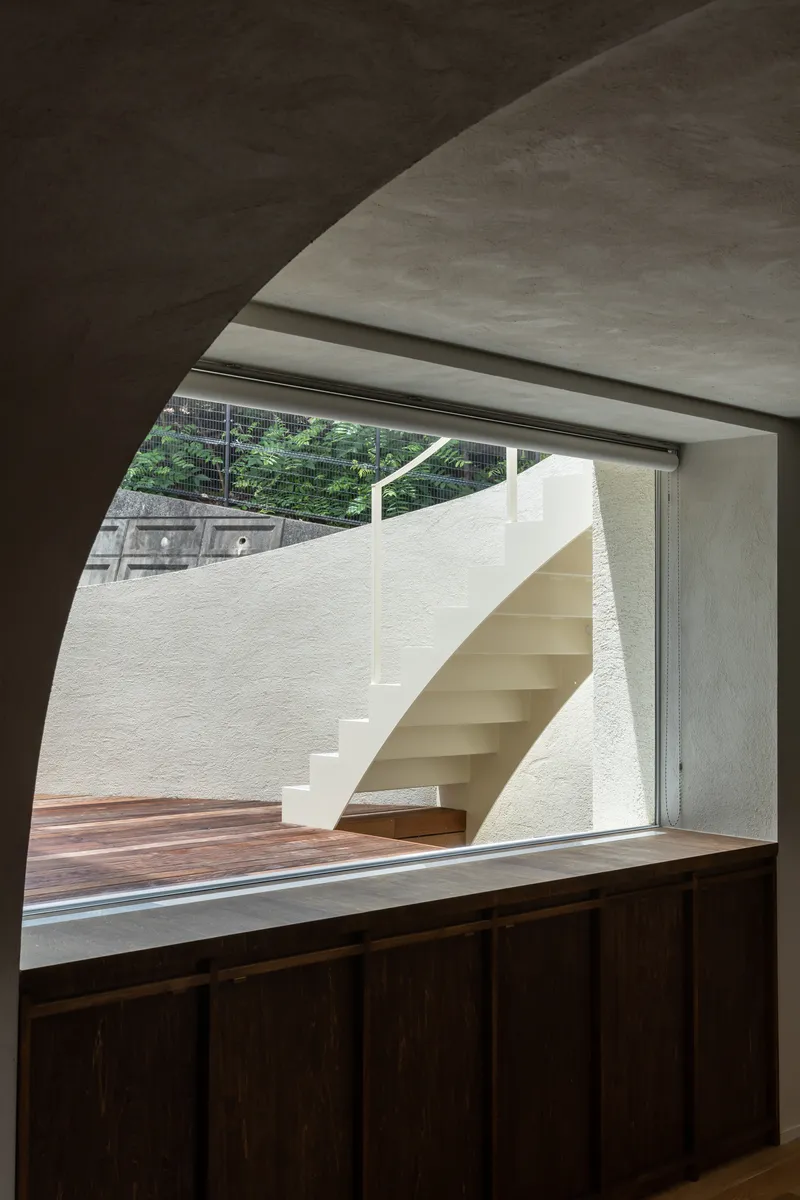
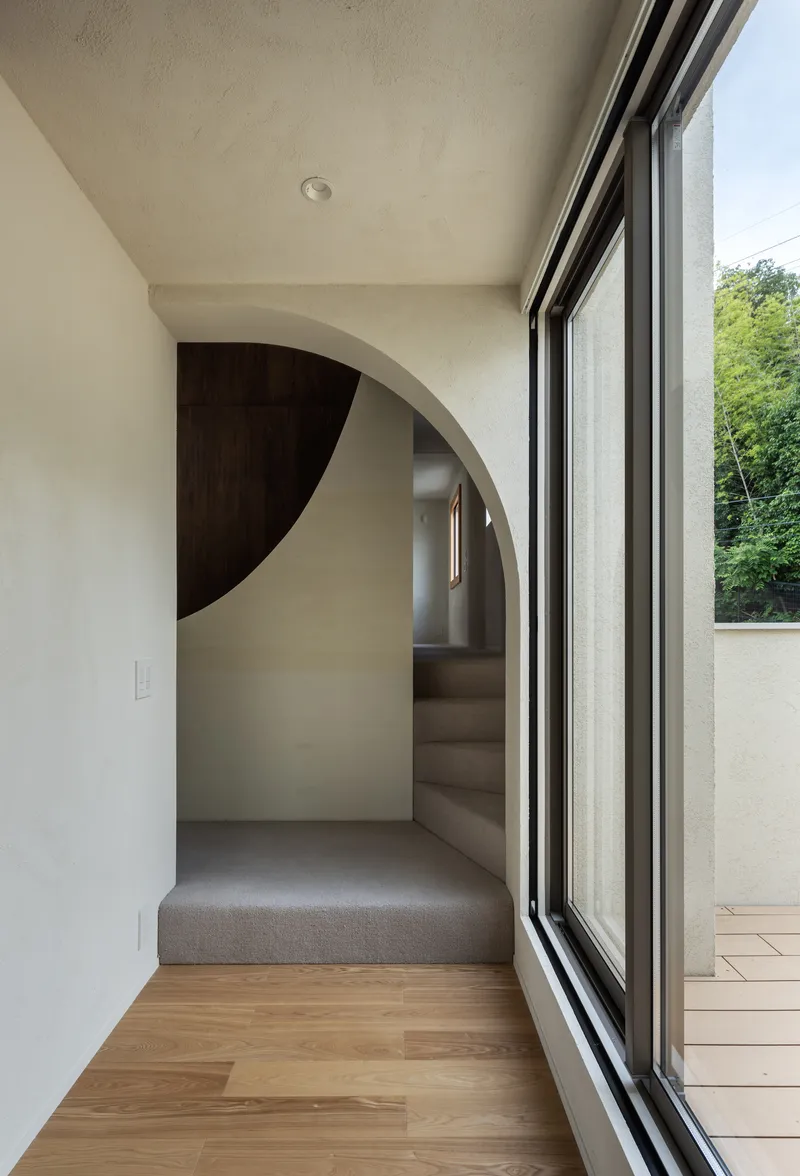
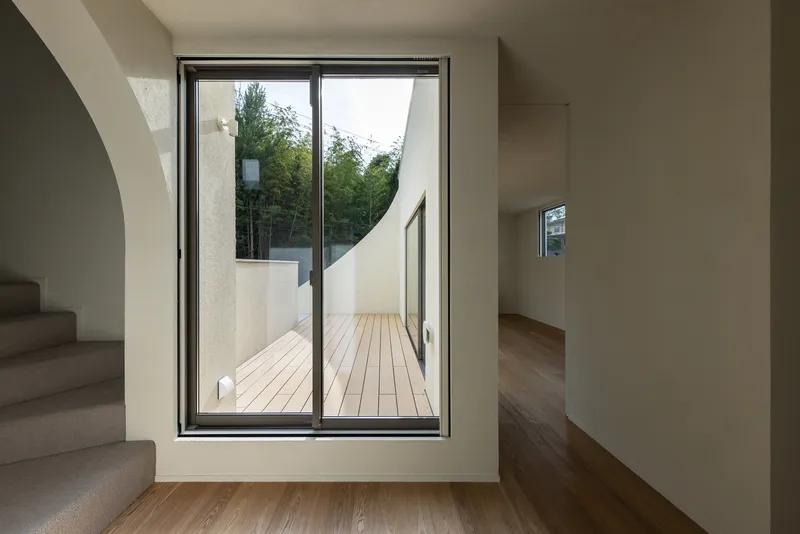
The arched openings that appear on the facade become full-height glazed thresholds inside, framing views of the planted hillside and the park's canopy. Floor-to-ceiling glass panels sit within curved plaster reveals, so the view is always slightly cropped, always directed. The architects are clearly interested in how a window can do more than admit light: it can compose a landscape, turning a municipal park into something closer to a private garden.
One interior view through an arched opening captures an exterior staircase, green foliage, and sky in a single frame. Another shows a glass door swinging open onto a timber deck with trees filling the background. These moments are not accidental. They are the payoff of siting the long facade toward the forest and using curved walls to channel sightlines.
The Exterior Staircase and Dusk Identity
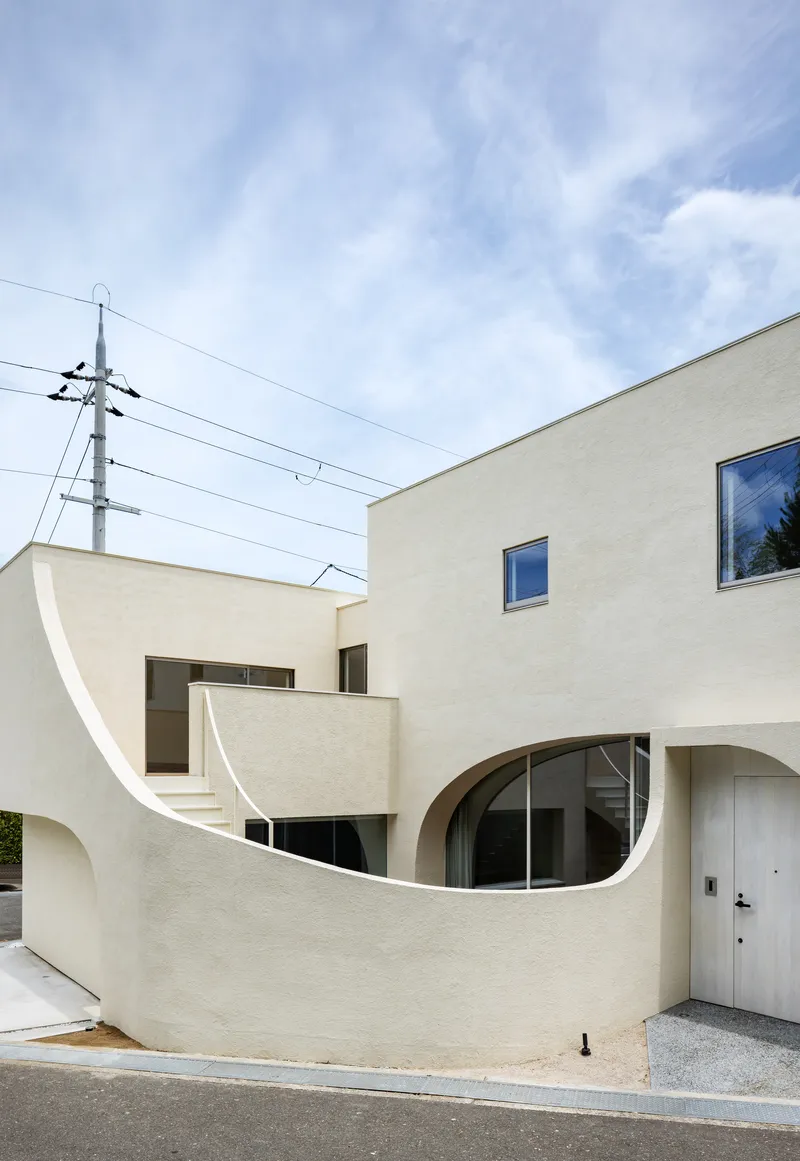
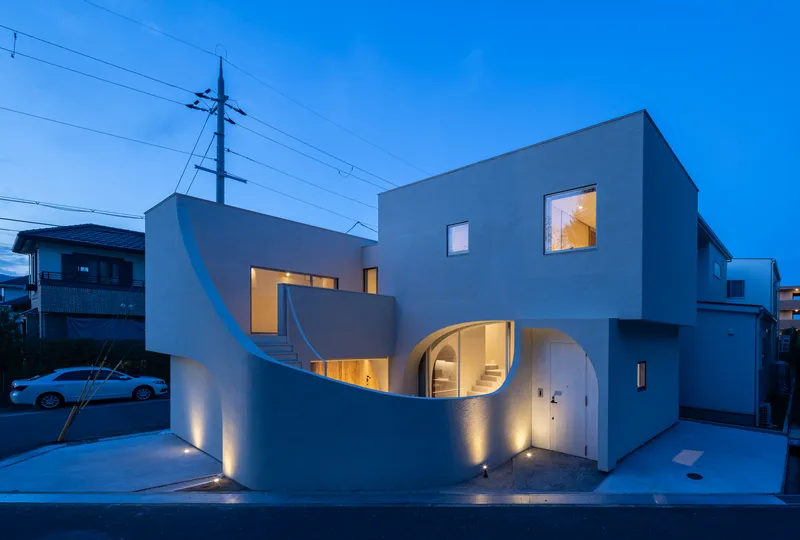
An exterior staircase rises between two stucco volumes, its curved form visible from the street and underscoring the house's verticality on the sloped site. During the day it is a modest concrete ribbon threading between walls. At dusk, uplighting transforms the grey facade into a softly glowing object, and the arched openings become dark voids that suggest depth beyond the surface. The blue-hour image is the closest the project comes to theatricality, and even then it remains restrained.
Roof and Context
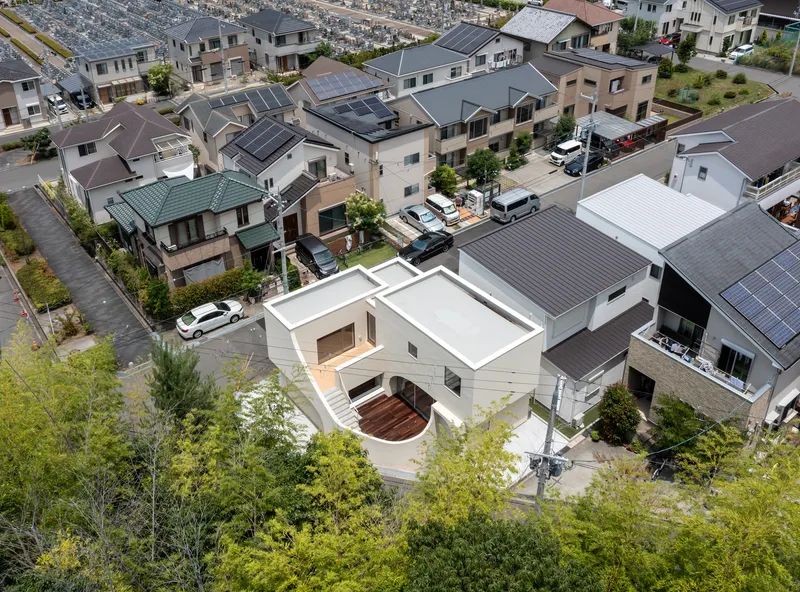
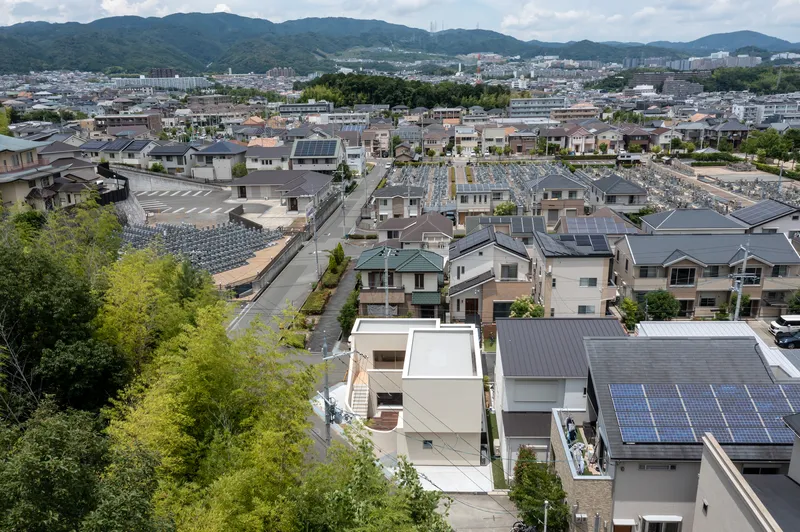
The aerial views place the Spline House within its dense suburban fabric and reveal how the curved courtyard relates to the rooftops around it. Neighboring houses are conventional pitched-roof structures, and the Spline House's flat white planes and timber deck stand out without dominating. Behind the neighborhood, forested mountains rise under overcast skies, a reminder that Osaka's residential periphery sits closer to nature than its reputation for urban density would suggest.
The rooftop courtyard is legible even from a distance, a signal that this house negotiates between density and openness. It borrows the park's greenery visually while maintaining strict privacy at street level. That dual reading, public discretion and private generosity, is the project's signature.
Plans and Drawings
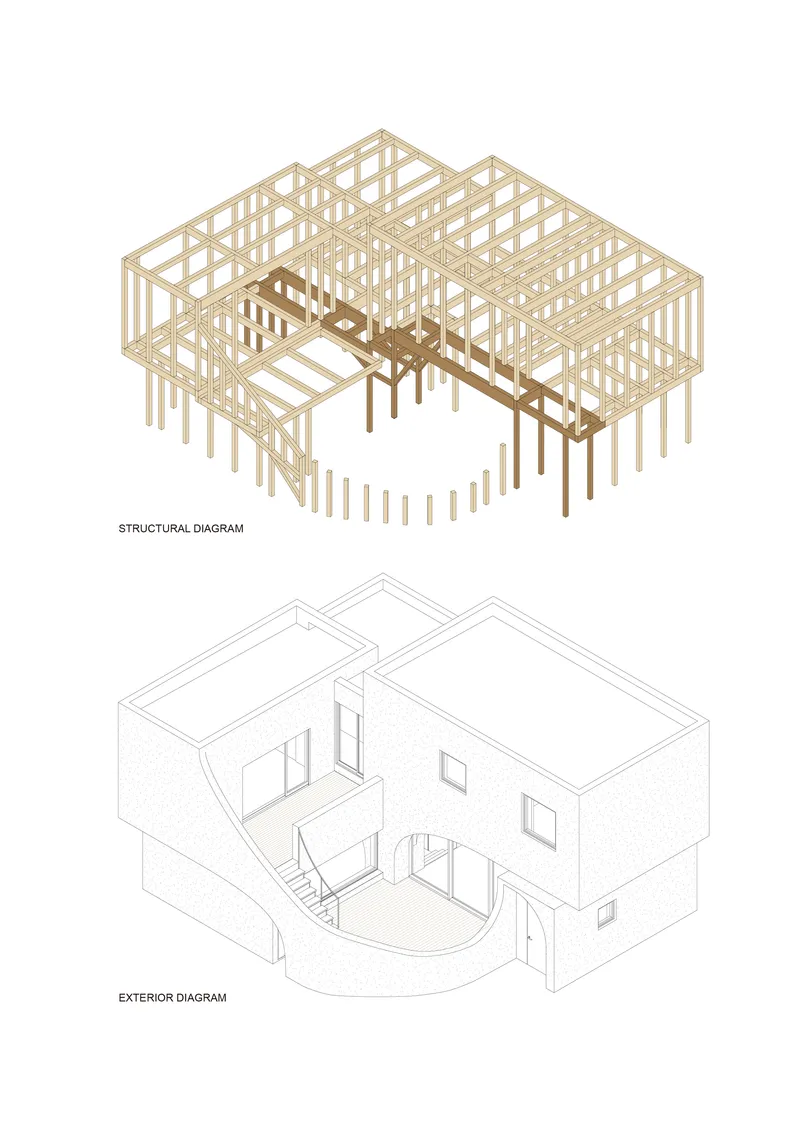
The axonometric diagram reveals the timber framework and the keel beam with struts radiating from the central column, the structural spine that allows the curved walls to work without excessive material. The isometric view shows how the spline-shaped plates attach to the framework, creating surfaces that are at once structural and spatial. It is a legible system, closer to boatbuilding than conventional framing.
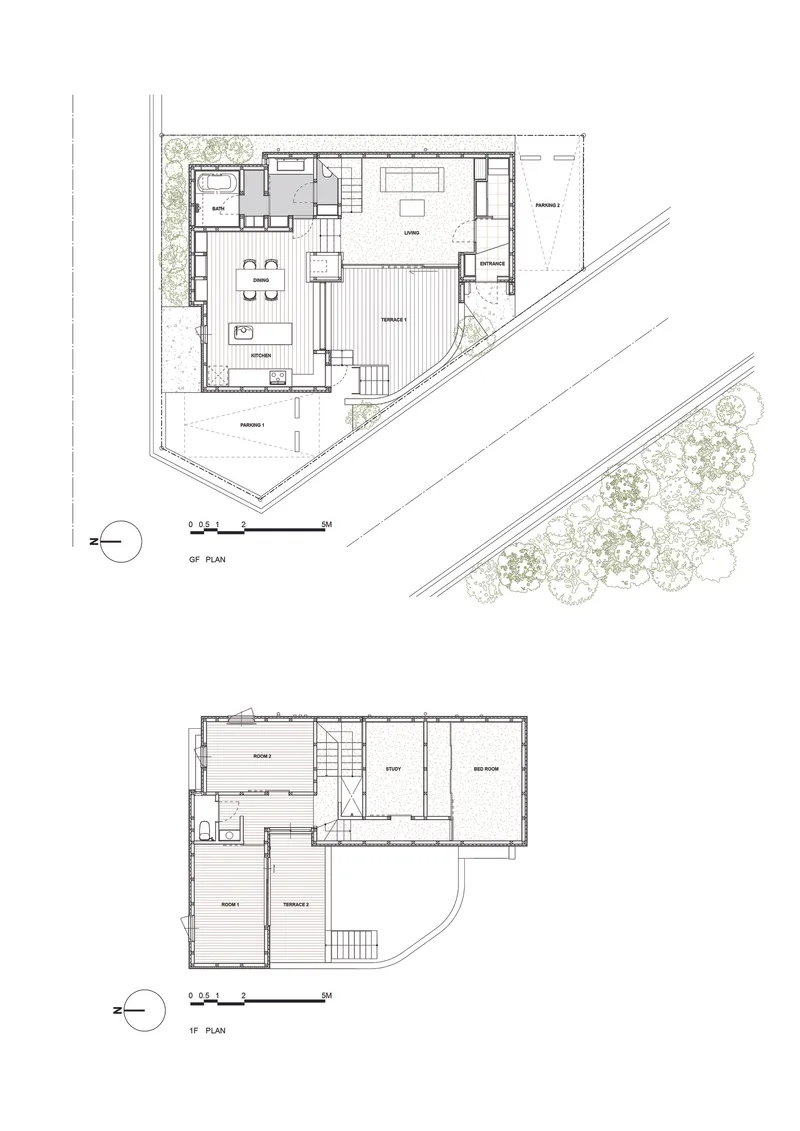
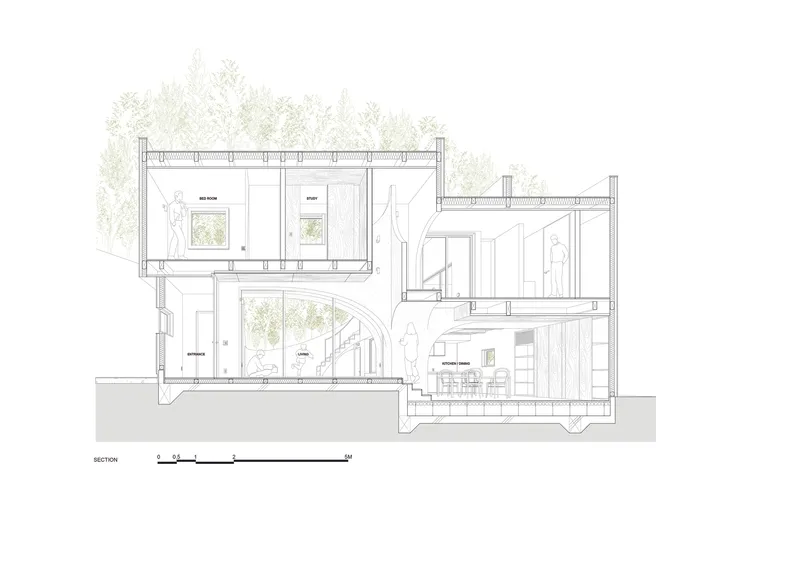
The floor plans confirm the angled triangular footprint and the L-shaped arrangement of rooms around the terraces. Landscaping fills the gaps between building and property line, softening the boundary condition. The section drawing is the most revealing: it shows the double-height living area, the exposed timber ceiling structure, and the way the looping staircase connects indoor and outdoor levels without a single redundant corridor. Every square meter is working.
Why This Project Matters
The Spline House is a case study in extracting maximum spatial richness from minimum footprint. Rather than treating a triangular, sloped, previously unbuildable lot as a constraint to overcome, Ibano and Fujii used it as the generator for a house whose curves, terraces, and views would not exist on a conventional rectangular plot. The structural system, a central column and keel beam supporting bent wood boards, is specific to this geometry and avoids the generic flexibility that makes so many small houses feel interchangeable.
More broadly, the project is a reminder that Japanese residential architecture continues to produce its most inventive work on the most constrained sites. The adjacent forest is not a luxury amenity; it is a public park that any neighbor can see. What the Spline House does is choreograph that relationship, turning proximity into intimacy through careful orientation, looping circulation, and walls that curve just enough to frame what matters. It is a house that rewards the effort of understanding how it was made.
Spline House by Daisuke Ibano and Ryosuke Fujii. Osaka, Japan. Completed 2022. Photography by Yohei Sasakura.
About the Studio
Daisuke Ibano
Official website of Daisuke Ibano, one of the studios behind this project.
instagram.comRyosuke Fujii
Official website of Ryosuke Fujii, one of the studios behind this project.
instagram.comShare Your Own Work on uni.xyz
If projects like this are the kind of work you want to make, uni.xyz is a place to publish your own, find collaborators, and enter design competitions.


Popular Articles
Popular articles from the community


The Amber Palace Opera: A Geological Fiction Surfaces on Tallinn's Baltic Waterfront
Pierre Brillard reimagines a Baltic legend as a public landscape, opera house, and waterfront promenade rooted in Tallinn's coastal identity.

Singing Woman: An Opera House That Performs Before the Curtain Rises
Ovidiu Cristian Pavel's conceptual opera house translates Estonia's choral identity into a sculpted waterfront landmark facing the Baltic Sea.

Manzana Morphosis: Stretching Barcelona's Grid into a Living Landscape for 2050
A radical reworking of the Eixample manzana turns density into a tool for generous public space, vertical ecology, and environmental performance.
Tsunami Convergenics: Turning Catastrophic Ocean Forces into Underwater Housing Infrastructure
A speculative underwater settlement off the coast of Onagawa, Japan, treats tsunamis and typhoons as energy sources rather than threats.

Similar Reads
You might also enjoy these articles

Pixel Gardens: One Repeated Module Stacked Into a Terraced Social Housing Tower for Famagusta
Salem Bader's shortlisted housing tower builds a vertical neighbourhood from one repeated module, offsetting units to carve terraces, light and air.

Bao Huynh Watercolor Atelier: A Serene Art Retreat in Hội An
Bao Huynh Watercolor Atelier in Hội An blends multifunctional art spaces, sustainable design, local materials, and family-friendly living in a serene environment.

Atelier Macri Concept Store Interior Design by CASE-REAL
Atelier Macri store features a "ko" counter, walnut wood details, cork displays, blending retail, gallery, and seamless customer experiences.

Manuel Vargas Izquierdo Stadium and High-Performance Sports Center: Architectural Excellence in Jalpa de Méndez
The Manuel Vargas Izquierdo Stadium blends sustainable design, inclusive sports facilities, and cultural-inspired architecture, revitalizing Jalpa de Méndez’s public spaces.


Comments (0)
Please login or sign up to add comments
No comments yet. Be the first to comment!