
Next to the Tree House: A Courtyard-Centric Villa Rooted in Nature by Rosha Office
A compact villa designed around an 80-year-old tree, blending smart levels, natural light, and indoor-outdoor living on a challenging triangular site.


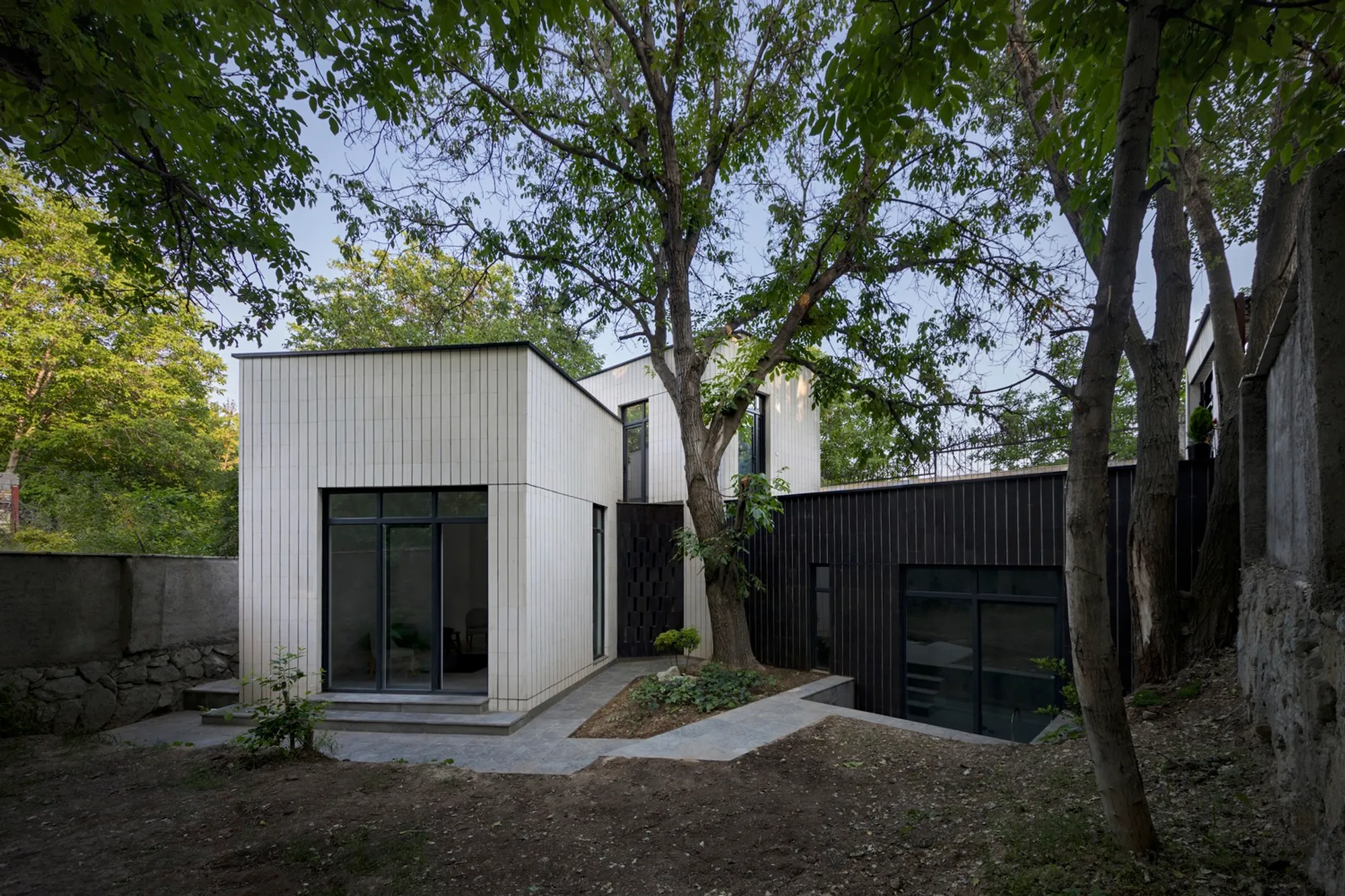
Next to the Tree House by Rosha Office is a compact yet elegantly orchestrated villa in Kordan, Iran, designed around the presence of a monumental 80-year-old tree. With a built area of just 102 m² on a 300 m² triangular plot, the project transforms complex site restrictions into opportunities for spatial creativity, landscape integration, and sustainable living. This article explores how the design team: led by Parastoo Roushenas: anchored the entire project around a single natural element to create a home that is intimate, site-sensitive, and deeply contextual.
Project Context and Design Challenges
Responding to a Triangular Site
The site’s triangular geometry presented the first and most significant constraint. One corner tapered into a narrow vertex, lacking proper access from the main street, making construction in that zone impossible. As a result, the design shifted to the opposite end of the plot, where the land was most usable and spatially coherent.
Working Within Tight Budget and Area Limits
Budget limitations capped the total construction area at 100 m², prompting a highly efficient two-level design. The architects strategically divided private and social functions:
- Upper Level: parking and bedrooms
- Lower Level: living room, kitchen, terrace, and pool
This compact spatial strategy ensures comfort while maintaining architectural clarity.
The Ancient Tree as the Central Design Generator
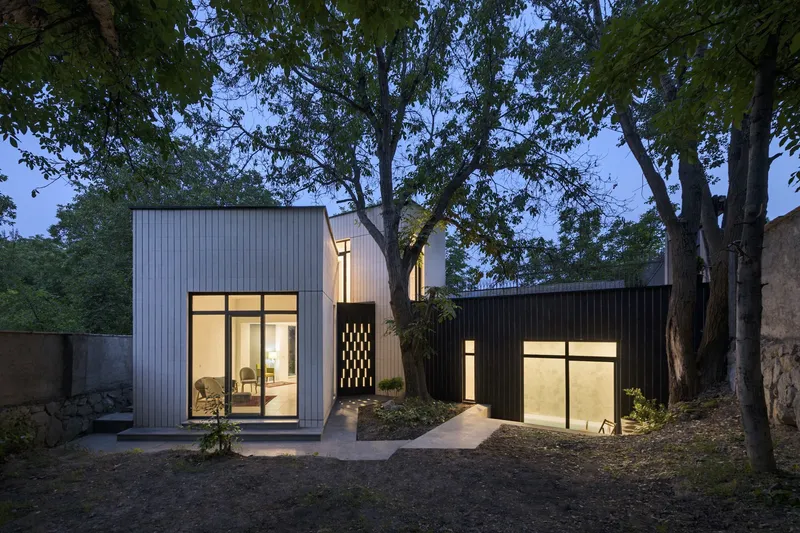
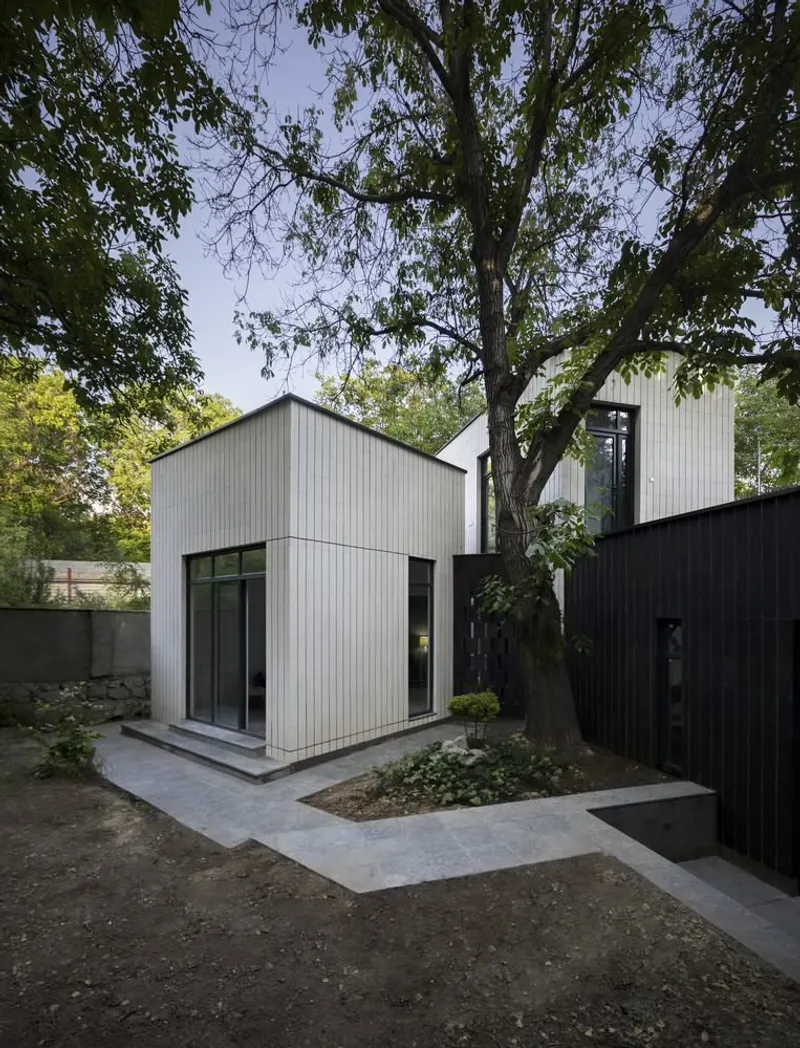
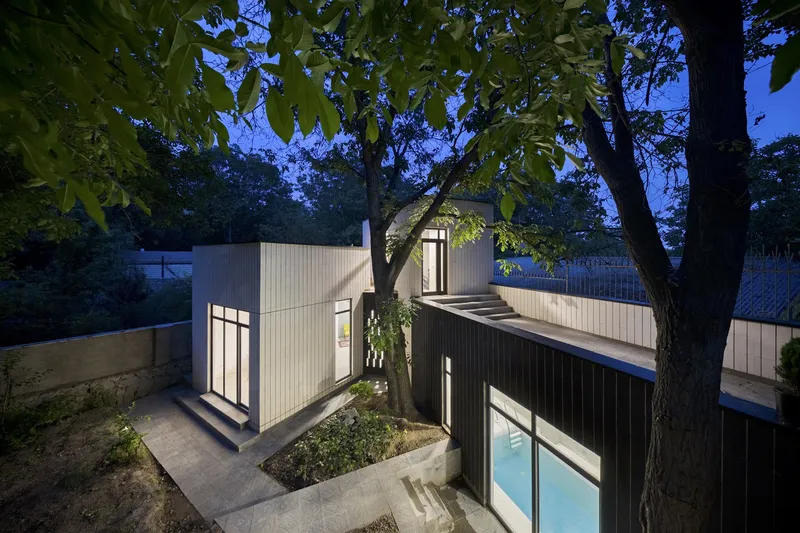
The defining element of the site, and the soul of the project, is the 80-year-old existing tree, standing proudly at the far end of the land. Instead of removing or overshadowing it, the architects embraced the tree as the protagonist.
A House That Rotates Around Nature
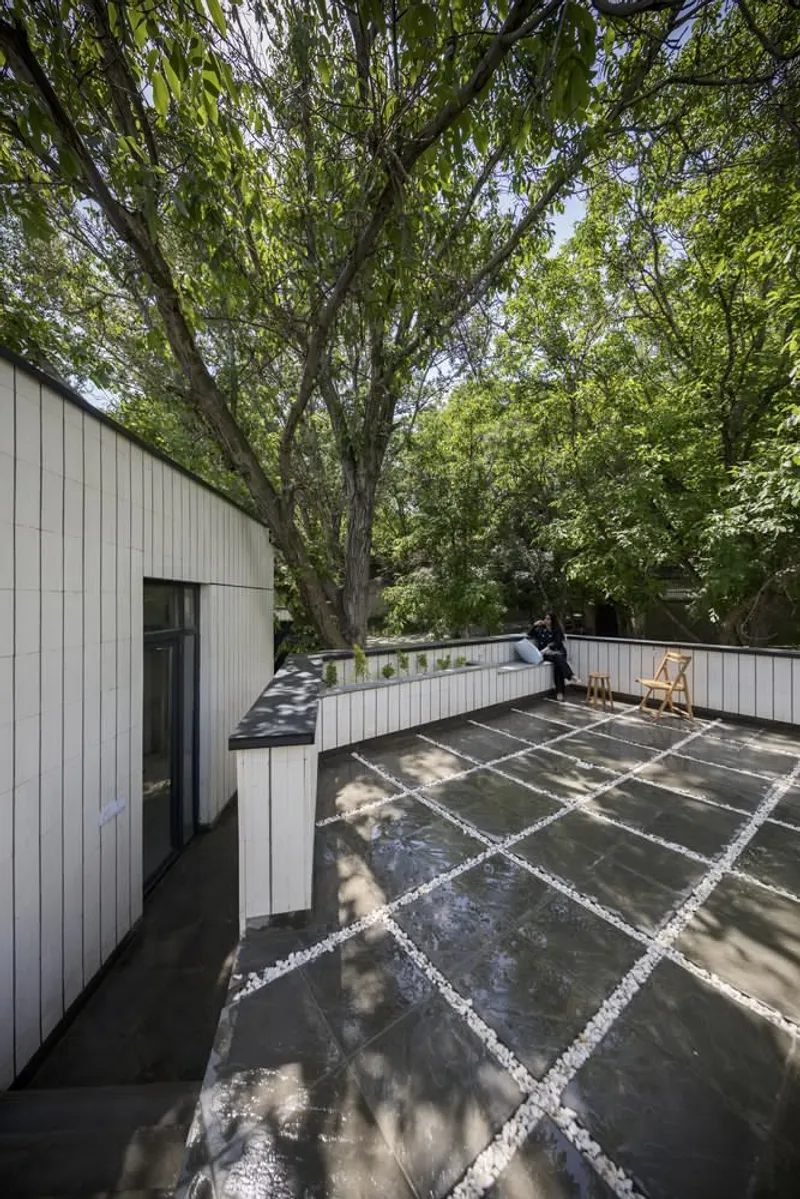
The villa’s geometry appears to gently pivot around the tree, shaping its form in response to the trunk, canopy, and root zone. This organic rotation not only protects the tree but also brings it into visual and spatial dialogue with the interior. The result is a home that feels grounded, alive, and connected to its surroundings, a contemporary interpretation of nature-first architecture.
Topography and Multi-Level Spatial Design
Using a 2-Meter Height Difference as an Advantage
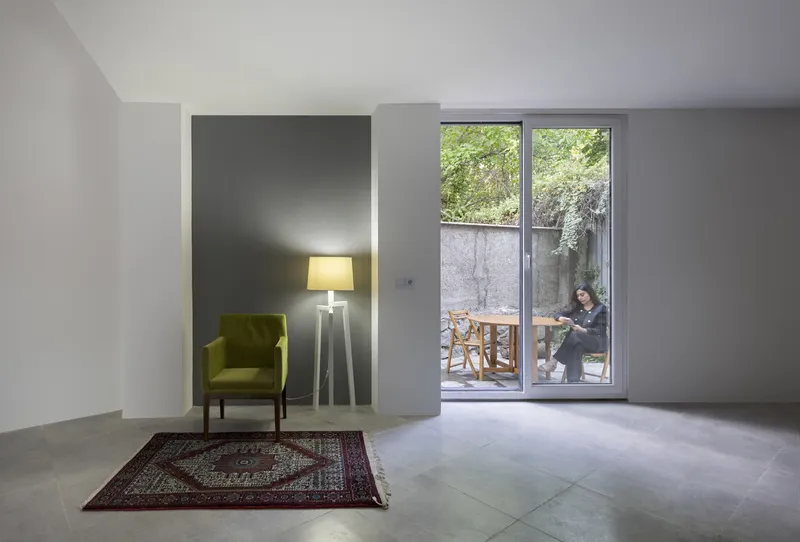
A natural 2-meter elevation difference between the street level and the site became a key opportunity. Instead of leveling the land, the architects leveraged this vertical shift to define functional zones:
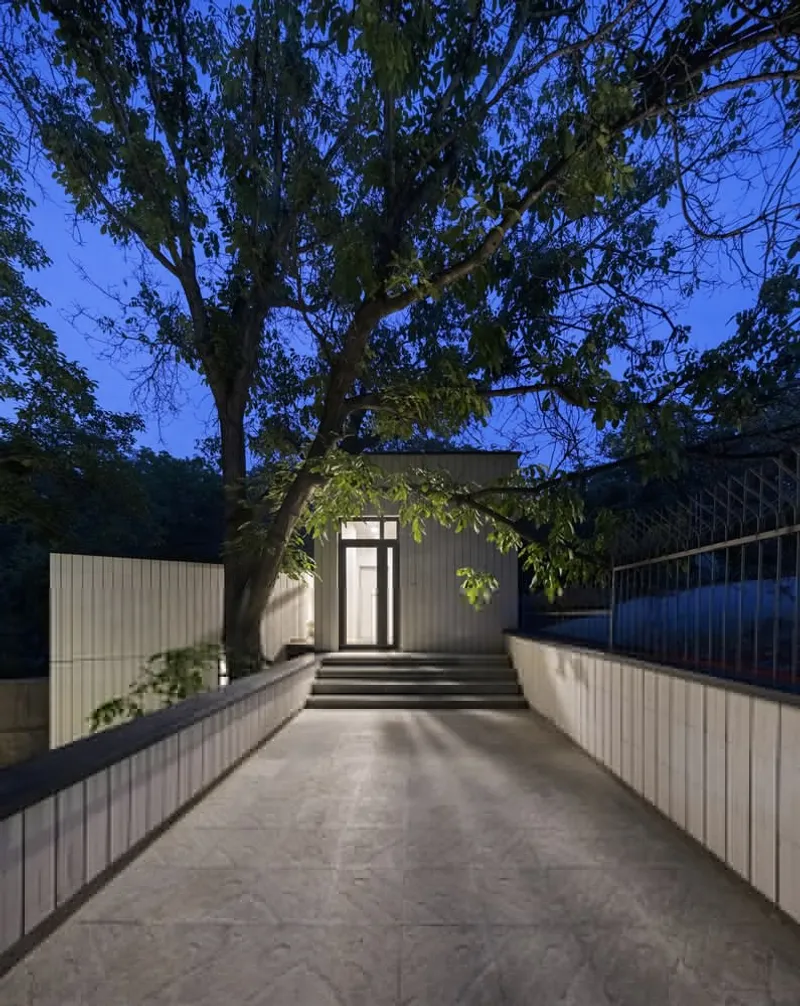
- The upper level aligns with street access, making parking seamless.
- The lower level sinks partially into the site, creating added height for the pool and enhancing privacy.
This approach transforms a potential constraint into spatial richness and vertical layering.
Indoor, Outdoor Integration
Terraces, Open Spaces, and Roof Garden
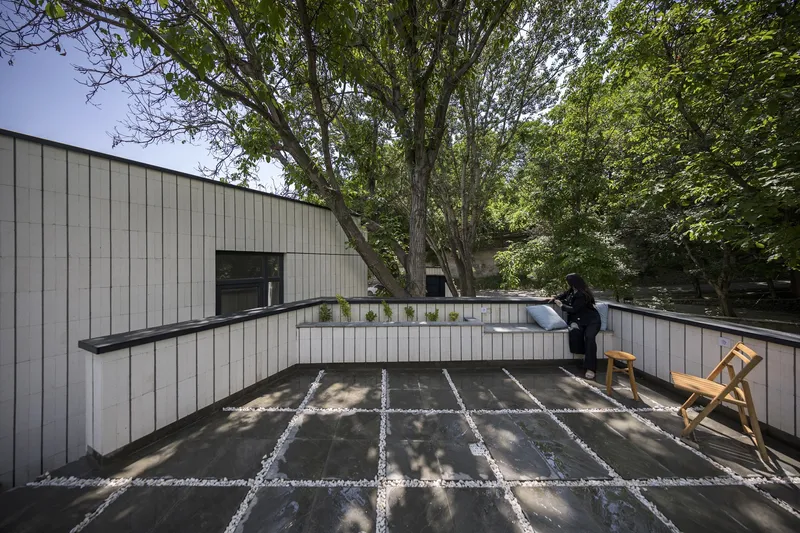
To maximize outdoor living potential on a compact site, the roof of the lower level serves as a roof garden, expanding usable space while offering elevated views of the property and surroundings. A setback on the bedroom level introduces natural daylight, while the space created below becomes an open terrace directly connected to the kitchen, an effortless blend of indoor functionality and outdoor leisure.
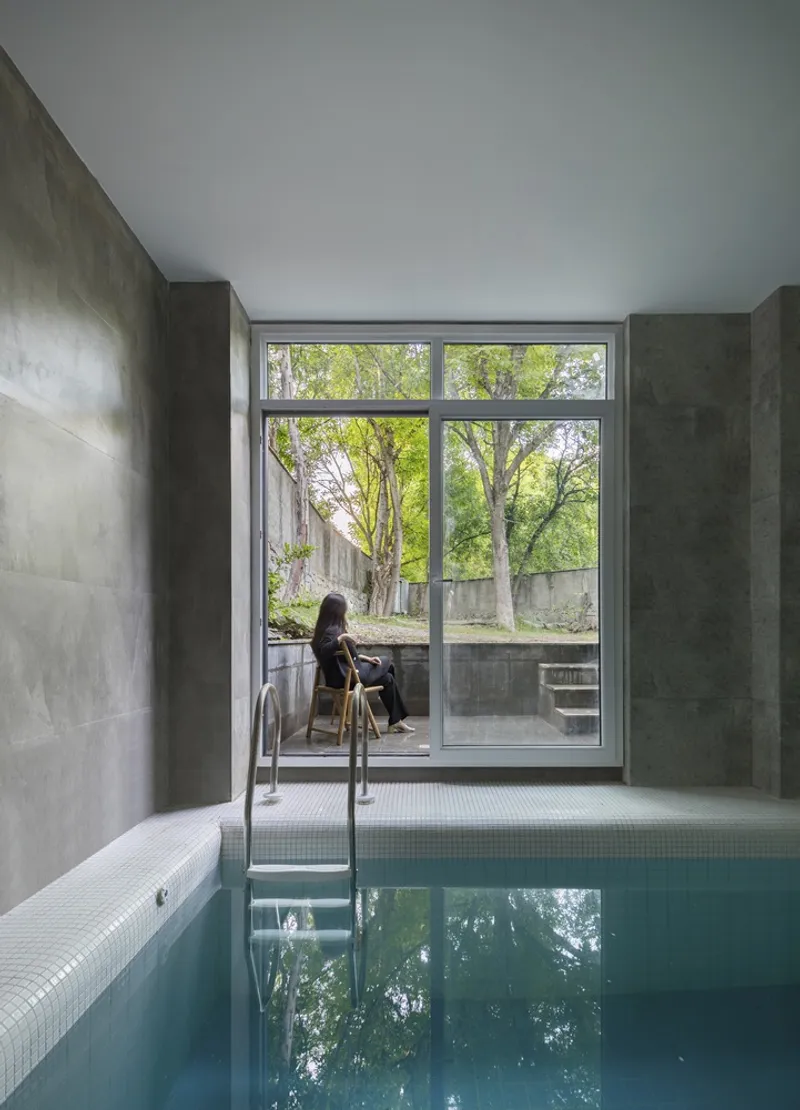
A Pool That Connects Architecture and Landscape
The small pool on the lower level plays a dual role:
- Enhancing passive cooling and microclimate
- Acting as a visual anchor from the living spaces
Direct access between the pool and the outdoor spaces strengthens the continuity between built volume and landscape.
Materiality and Atmosphere
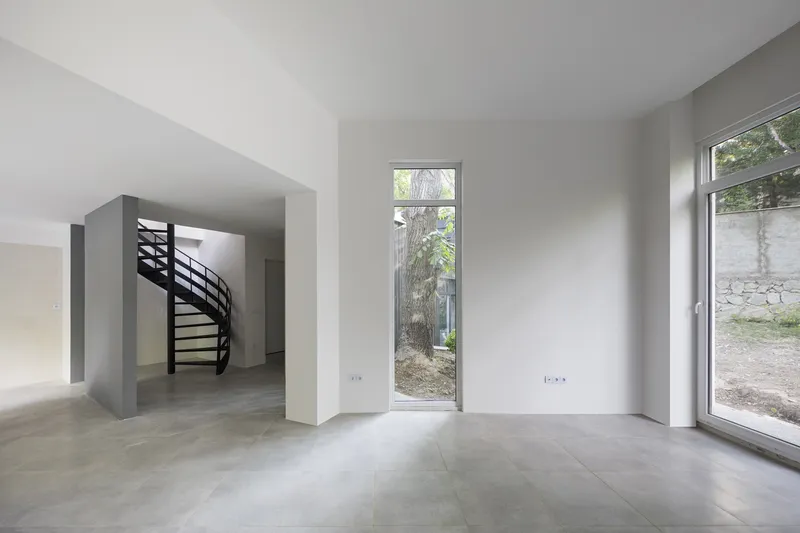
The project uses a restrained material palette that highlights light, texture, and shadow. Warm tones, wooden elements, and soft natural finishes reinforce the organic relationship between architecture and site. Large windows frame the ancient tree, turning it into a living artwork within the home.
Next to the Tree House is an exemplary model of contextual, small-scale residential design that transforms site limitations into architectural opportunities. Rosha Office’s thoughtful integration of the existing tree, strategic spatial organization, and sensitive response to topography create a home that is both functional and soulful. With minimal means and a deep respect for nature, the architects deliver a project that celebrates place, landscape, and the enduring presence of an 80-year-old tree.
All photographs are works of Mohammad Hassan Ettefagh


Popular Articles
Popular articles from the community


The Earth Pod: 3D Printed Homes for Resilient Refugee Communities
The Earth Pod reimagines refugee housing through 3D printed homes made from clay, combining resilience, self-sufficiency, and rapid shelter.

The Ocean Hive: Sustainable Architecture for a Self-Sufficient Civilization at Sea
The Ocean Hive imagines sustainable architecture at sea, where modular habitats, algae, wave power and ocean waste sustain a growing colony.

The Musturak Paradise: Senior Living Architecture for a Connected Future in Temara, Morocco
The Musturak Paradise reimagines senior living architecture in Temara via private homes, social spaces, culture, community, and shared care.

Hill & Cross Opera: Sculptural Opera House Architecture Shaped by Tallinn’s Landscape and Identity
Hill & Cross Opera reimagines opera house architecture in Tallinn through its sculptural hill, civic plaza, glass wave and a luminous cross.
Similar Reads
You might also enjoy these articles


Hodi-Mandai Geram
Project Function: Preservation and revitalization of the Intangible heritage and socio-spatial identity of the Hodi by Housing, Cultural Memory Center, Sacred Grove, landscape, local tourism economy


Olio Towers: A Mid-Rise for Performers That Fuses Housing, Rehearsal, and Stage
Located blocks from Houston's Theater District, this modular tower stacks living units around a central performance atrium.

Oasis: Modular Green Housing Carved into Dhaka's Urban Fabric
A shortlisted Plugin Housing entry reclaims unauthorized settlements in Dhaka with stepped concrete volumes, green roofs, and ventilation-driven design.

Black Hole: A Floating Megastructure for the Post-Physical Era
Emiliano Mazzarotto envisions a spherical, self-scaling arena where e-sports, digital hotels, and holographic stadiums replace traditional public space.

Explore Architecture Competitions
Discover active competitions in this discipline



Challenge to reimagine the Iron Throne


Photograph architecture without architects


Illustrate the lost glory of Angkor Wat - Render Challenge


Design challenge to reuse E-waste
Comments (0)
Please login or sign up to add comments
No comments yet. Be the first to comment!