
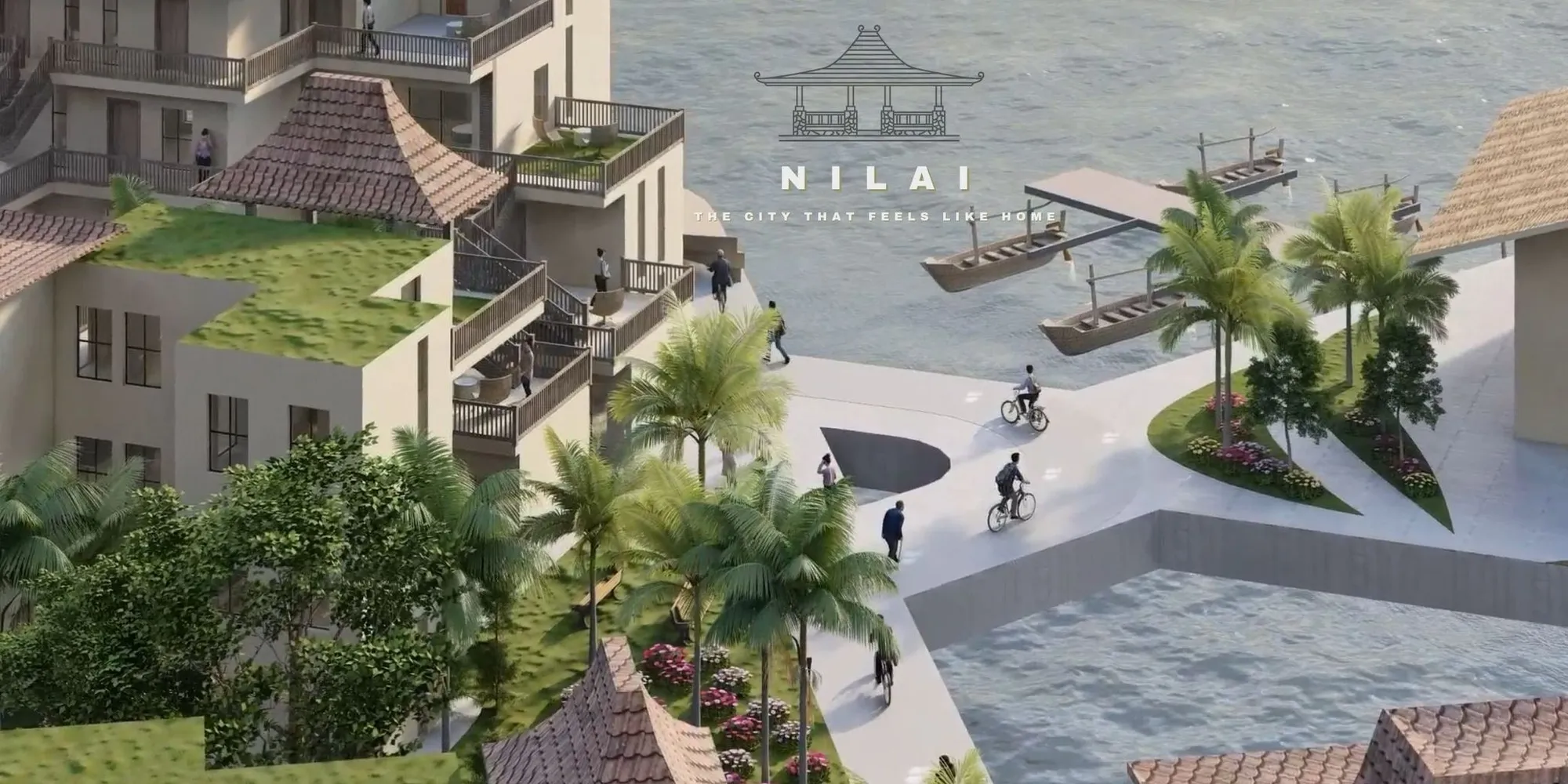
Nilai: The Floating City That Feels Like Home
Exploring Nilai, a sustainable floating city blending Javanese culture with modern, climate-resilient urban architecture.


In the face of rising sea levels and increasing climate change impacts, the concept of sustainable and resilient architecture is more crucial than ever. Nilai, a visionary project by Mariam AbdElvakhab, Maya Hasan, Ayah AlJaghoub, and Meera AlSuwaidi, showcases an innovative approach to urban living. This floating city, which won the Editor's Choice in the Afloat 2.0 Competition, embodies the essence of Javanese history, culture, and identity while addressing modern environmental challenges.

The Vision Behind Nilai
Nilai is designed to be a floating city that not only adapts to environmental changes but also integrates sustainable living with cultural preservation. The city is built on modular floating platforms, ensuring that it remains resilient against rising sea levels. This design choice not only addresses the immediate threat of flooding but also creates a unique living environment that feels both innovative and deeply rooted in tradition.
Location and Cultural Significance
Located in Semarang, Indonesia, Nilai draws heavily from the local Javanese culture. The city's design reflects the architectural styles and communal living practices of the region. Key cultural landmarks such as the Sam Po Kong Temple and the Lewang Sewu Building are highlighted, emphasizing the city's historical and cultural significance. The diverse Javanese people and their traditions are celebrated, creating a city that feels authentically connected to its roots.
Addressing Climate Change
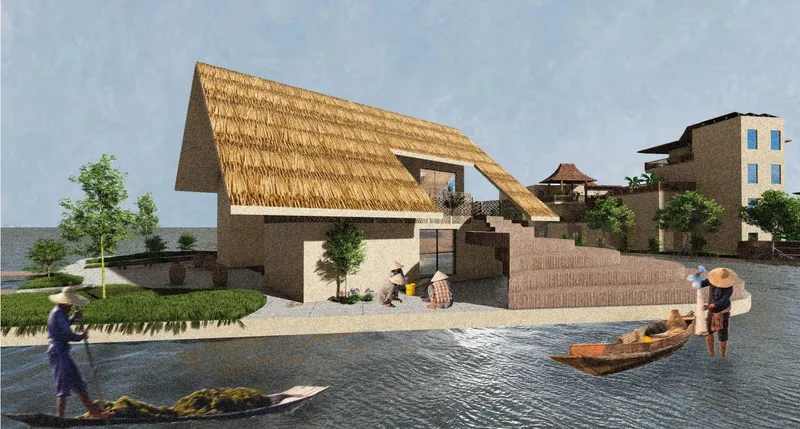
One of the primary challenges Nilai addresses is the impact of climate change. With credible simulations indicating that the site will be completely submerged by the year 2100, the city's floating design is not just innovative but necessary. The integration of endangered mangrove trees within the city helps mitigate climate change by absorbing carbon dioxide and providing natural flood defenses.
Sustainable Urban Modules
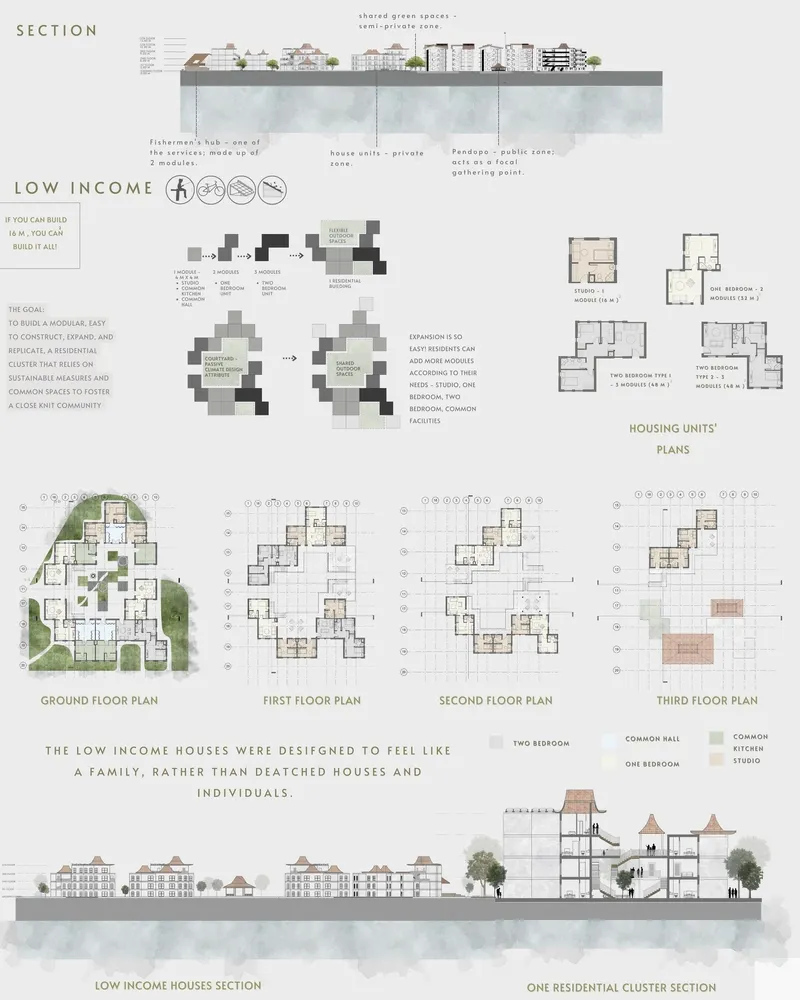
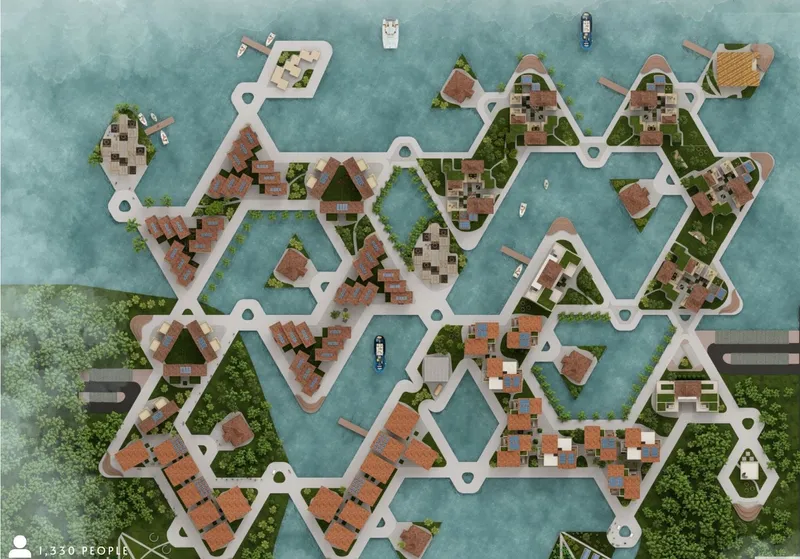
Nilai's urban planning revolves around modular structures inspired by traditional Javanese architecture. The "Pendopo," a public zone in traditional Joglo houses, serves as a focal point in the city's layout. The floating platforms are pre-fabricated modular structures, allowing for easy construction, expansion, and adaptation. This modular approach ensures that the city can grow and evolve with its inhabitants' needs while maintaining sustainability.
Zones and Gathering Places
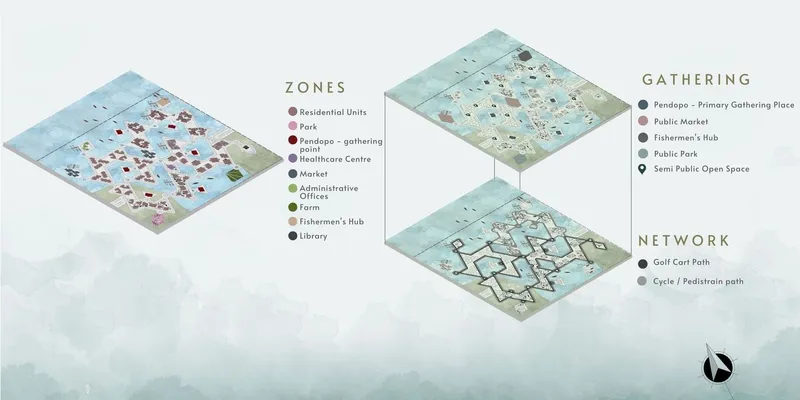
The city is divided into various zones, each serving a distinct purpose. Residential units, parks, healthcare centers, markets, administrative offices, and fishermen's hubs are strategically placed to ensure convenience and accessibility. Gathering places such as the Pendopo and public markets foster community interaction and social cohesion. The integration of semi-public open spaces allows for communal activities, enhancing the sense of belonging among residents.
Housing for All Income Levels
Nilai is designed to accommodate residents from all income levels, ensuring inclusivity and diversity. The housing units are categorized into low, middle, and high-income groups, each with tailored designs and amenities.
Low Income Housing: These houses are designed to feel like a close-knit family rather than detached units. They are modular, easy to construct, and expand according to the residents' needs. Shared green spaces and common facilities foster a strong sense of community.

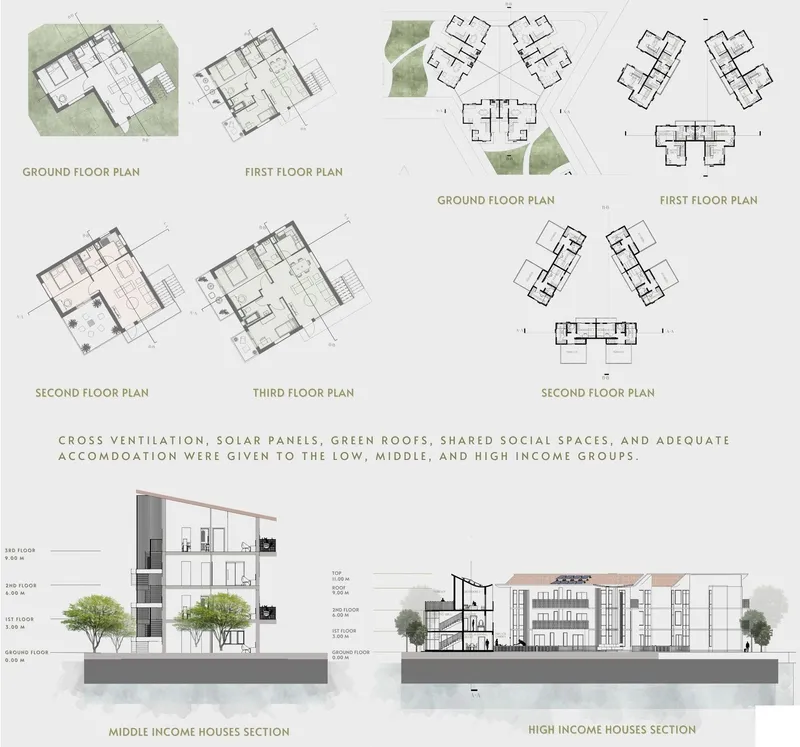
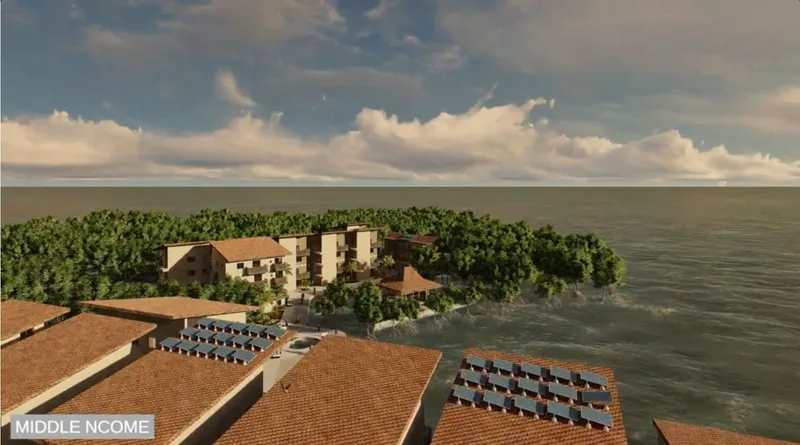
Middle Income Housing: Multi-family homes with external stairs are provided for middle-income residents. Each floor houses a single family, with options ranging from one to four bedrooms. These homes feature cross ventilation, solar panels, and green roofs to enhance sustainability.
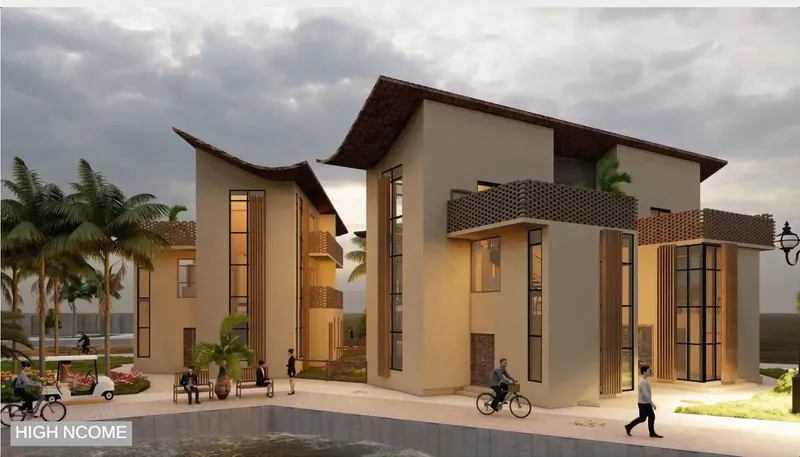
High Income Housing: Townhouses for high-income residents come with private backyards and luxurious facades. These units are designed to provide maximum comfort and exclusivity while incorporating sustainable building practices.
Construction and Structure
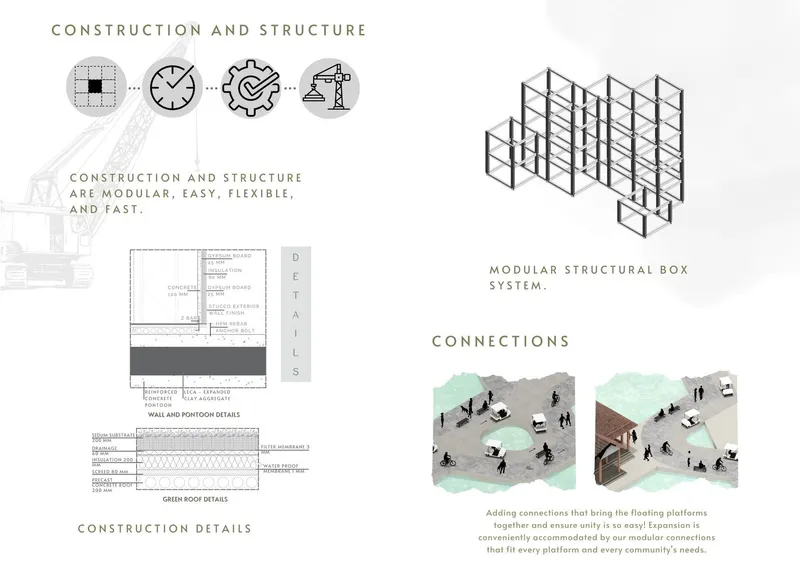
The construction and structure of Nilai are centered around modularity, ease, flexibility, and speed. The floating platforms use a modular structural box system, allowing for quick assembly and expansion. Green roofs, concrete pontoons, and waterproofing details ensure durability and resilience against harsh environmental conditions.
Connectivity and Accessibility
Adding connections that bring the floating platforms together is straightforward, ensuring unity and cohesion throughout the city. The network includes golf cart paths and cycle/pedestrian paths, promoting walkability and reducing reliance on motor vehicles. Accessibility to nearby facilities such as fishing and farming zones, libraries, and education centers is seamlessly integrated into the city's design.
Embracing Sustainability
Nilai's design emphasizes sustainability through various means. Solar panels are utilized to harness renewable energy, and the inclusion of mangrove islands highlights the city's commitment to environmental preservation. These sustainable practices not only reduce the city's carbon footprint but also create a self-sufficient and resilient community.
Nilai, the city that feels like home, is a groundbreaking project that showcases how modern architecture can harmoniously blend with traditional culture while addressing pressing environmental challenges. By embracing modular design, sustainability, and cultural preservation, Nilai sets a new standard for future urban developments. This floating city is not just a response to climate change but a visionary example of how communities can thrive in harmony with nature.




Popular Articles
Popular articles from the community


Play: Fragments of Their World
Familiar architecture becomes modular playground design, creating safe spaces where displaced children can learn, connect, imagine and play.

The Musturak Paradise: Senior Living Architecture for a Connected Future in Temara, Morocco
The Musturak Paradise reimagines senior living architecture in Temara via private homes, social spaces, culture, community, and shared care.

Conexión: Biophilic Design Reimagines High-Rise Living in Hong Kong
Conexión reimagines high-rise living in Hong Kong through biophilic design, green facades, shared spaces, daylight, water and nature within.

Co-Life: Senior Housing Design That Reconnects Older Adults With the City
Co-Life reimagines senior housing design through healing gardens, shared streets, workshops, and a sustainable community across generations.

Similar Reads
You might also enjoy these articles

Day and Night Park: A Time-Based Urban Newsstand in Beijing
A temporary urban newsstand in Beijing blending travel, light, and reading through poetic colors, compact form, and community-focused design.

Modernist Patio Renovation in El Masnou, Barcelona by Oliver Segura Arquitectura + Cebrià Arquitectura
Modernist patio renovation blending tradition and innovation with a movable pool, leveled floors, and Catalan materials in El Masnou.

Alto Residencial Coop: Cooperative Housing Development in Santiago de Compostela by Carbajo Barrios Arquitectos
A linear cooperative housing complex blending white volumes and perforated metal façades, enhancing community living, natural light, privacy, and urban integration.
Vil Genis School by BPA ARCHITECTURE – Massy, France
Vil Genis School in Massy, France, features sustainable design, south-facing classrooms, community integration, accessible spaces, and modern educational architecture.





Comments (0)
Please login or sign up to add comments
No comments yet. Be the first to comment!