
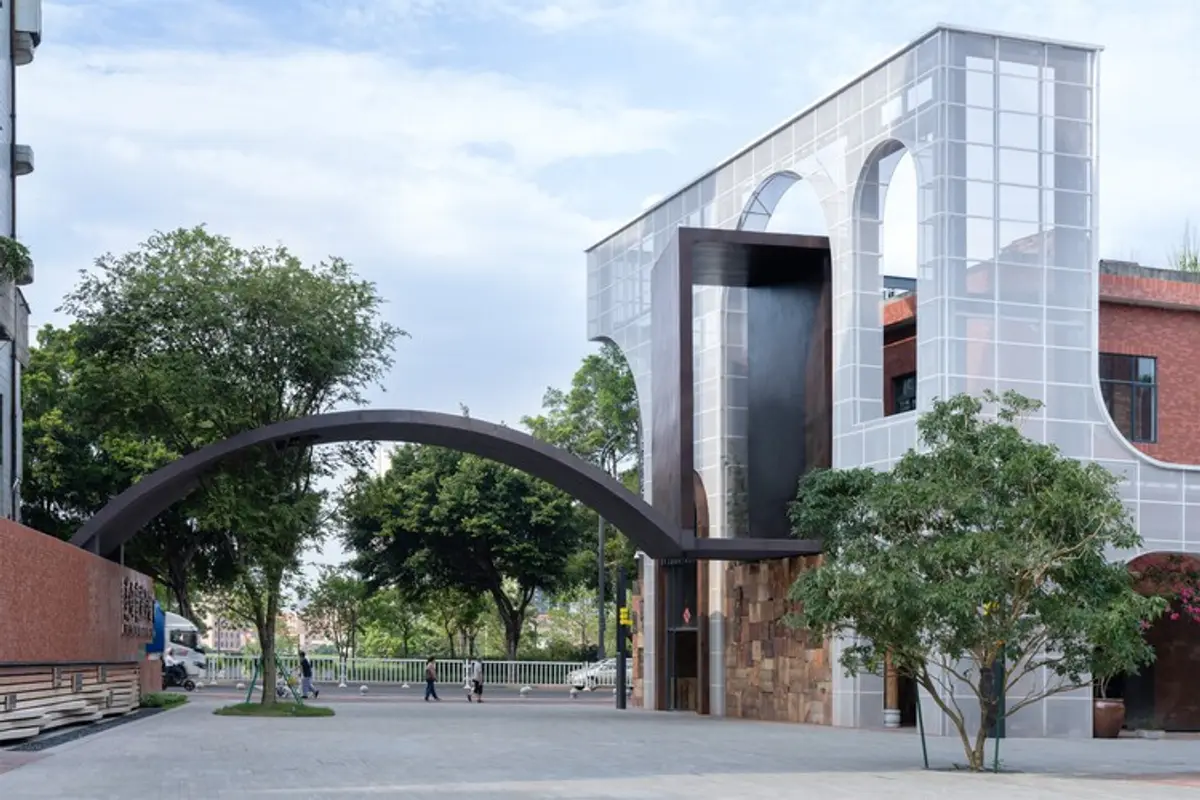
No. 7 Ceramic Art Research Base - Phase One by Atelier cnS
Atelier cnS transforms Shiwan’s old ceramic factories into a vibrant cultural hub blending heritage, innovation, and contemporary ceramic artistry.


Reviving the Spirit of Ceramic Heritage through Architecture
In the heart of Shiwan, Foshan, a city known as the “Ceramic Capital of Southern China,” Atelier cnS has reimagined an abandoned industrial complex into a dynamic cultural landmark — the No. 7 Ceramic Art Research Base (Phase One). This transformative project celebrates Shiwan’s thousand-year-old ceramic tradition while fostering a vibrant platform for contemporary artistic innovation and cultural exchange.
A Dialogue Between Mountains, Water, and Clay
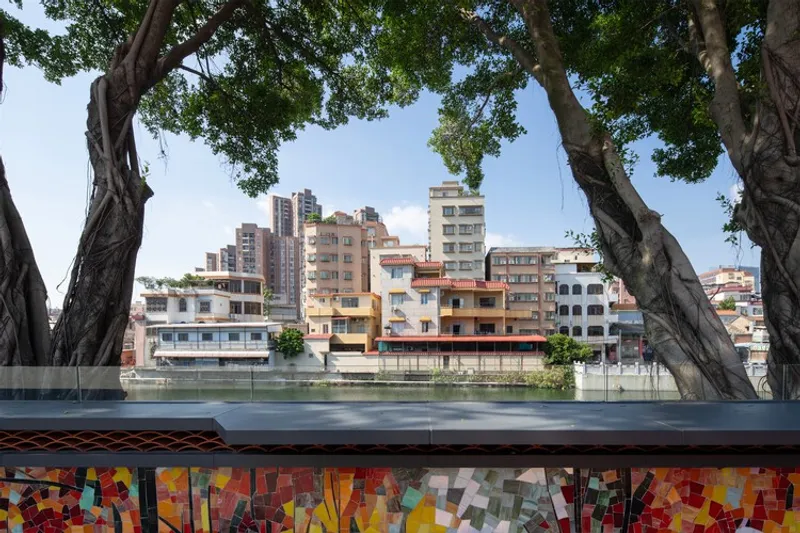
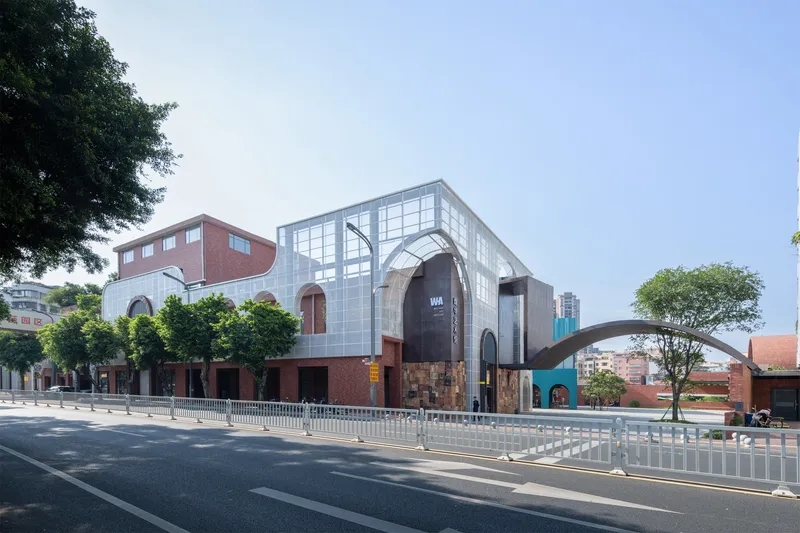
Nestled between Dawu and Xiaowu Hills and bordered by the Dongping River and Tanzhou Waterway, the site embodies the harmonious coexistence of nature and human craft. Strategically located along Zhongxin Road, facing the Nanfeng Ancient Kiln Scenic Spot, the project draws inspiration from the landscape’s organic rhythm and the enduring legacy of ceramic craftsmanship.
The architects sought to “reveal the beauty of the mountains and waters,” transforming a once-forgotten industrial site into a multi-layered cultural ecosystem that connects art, community, and nature.
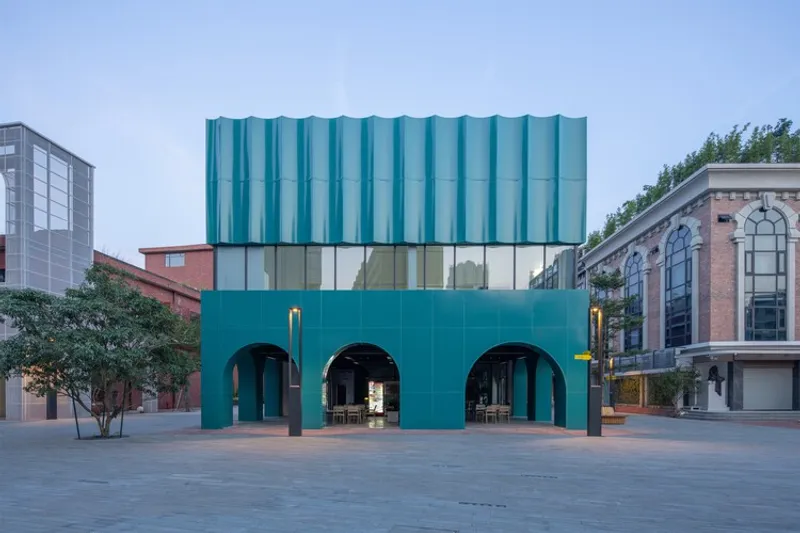
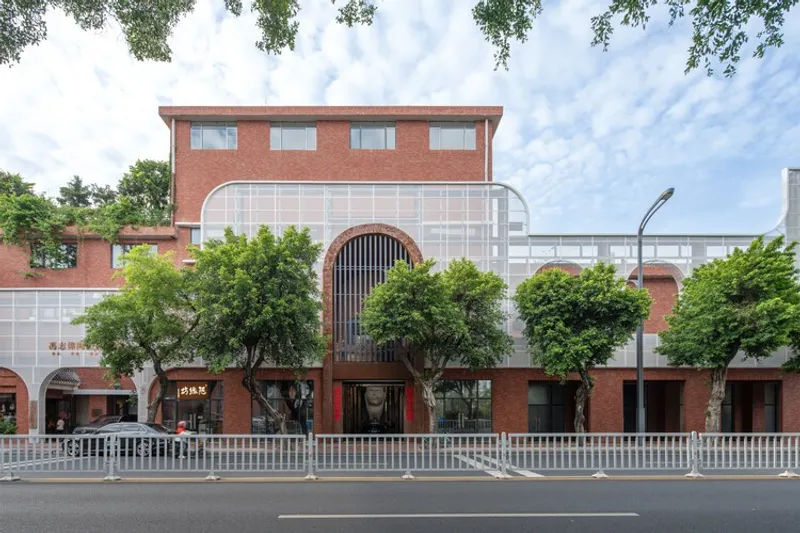
Cultural Inheritance Through Adaptive Reuse
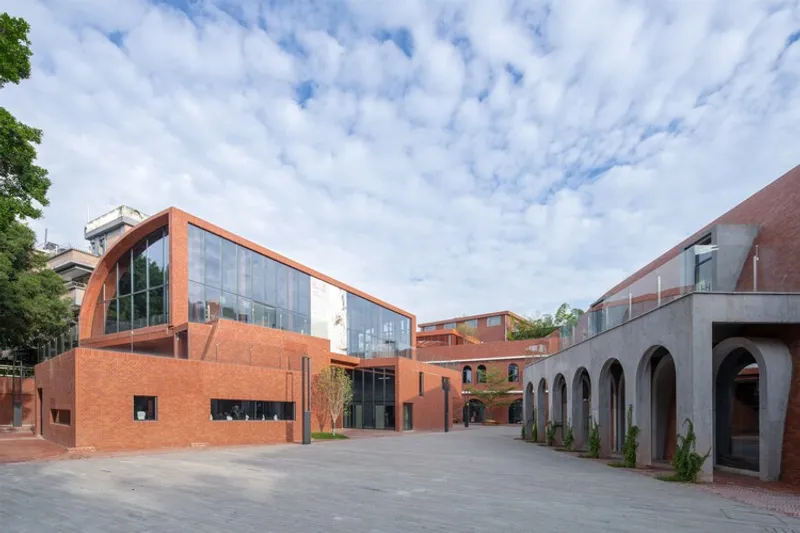
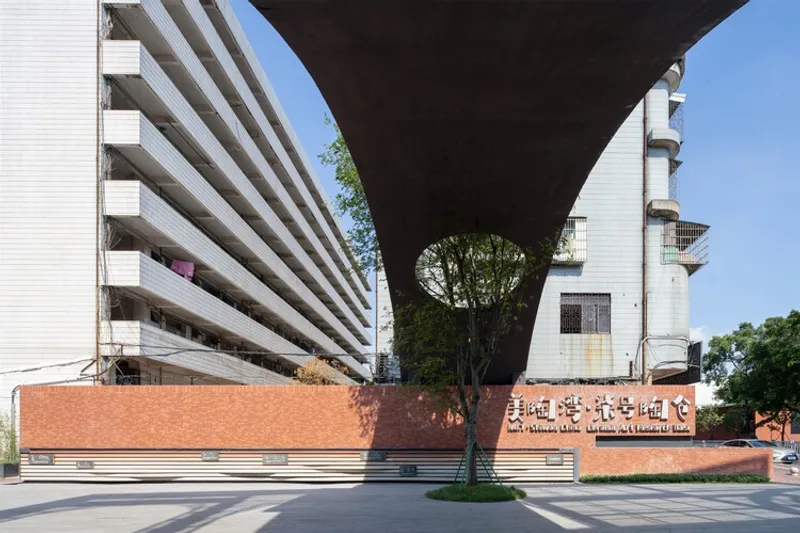
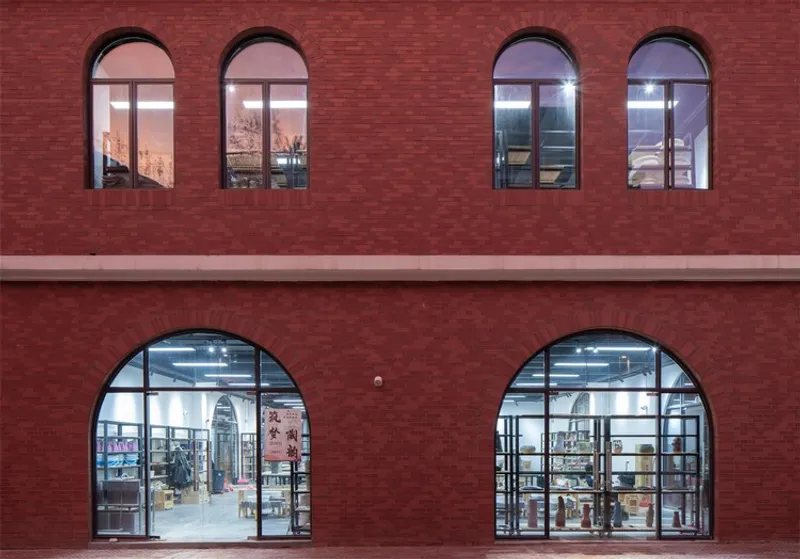
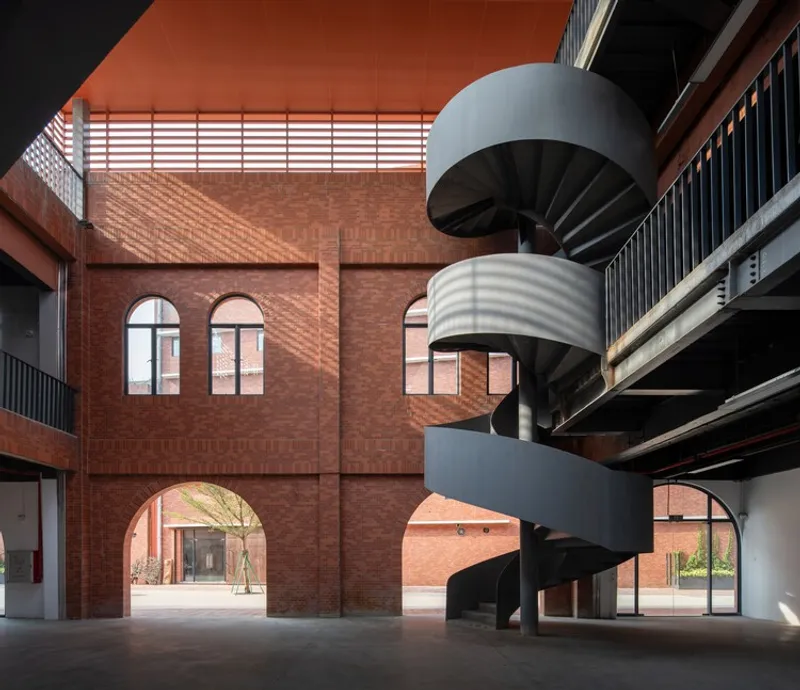
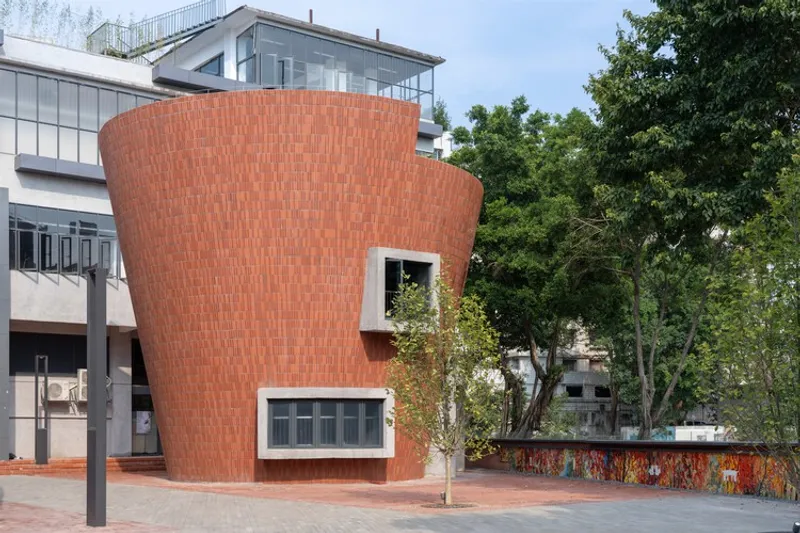
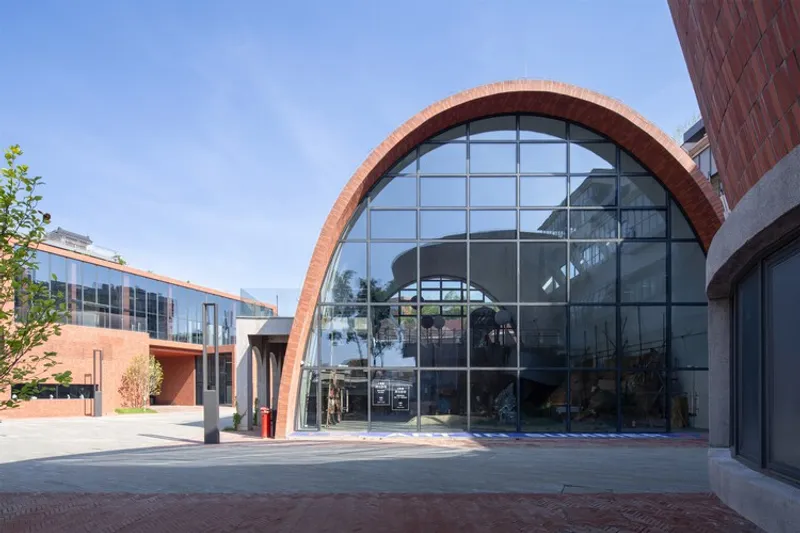
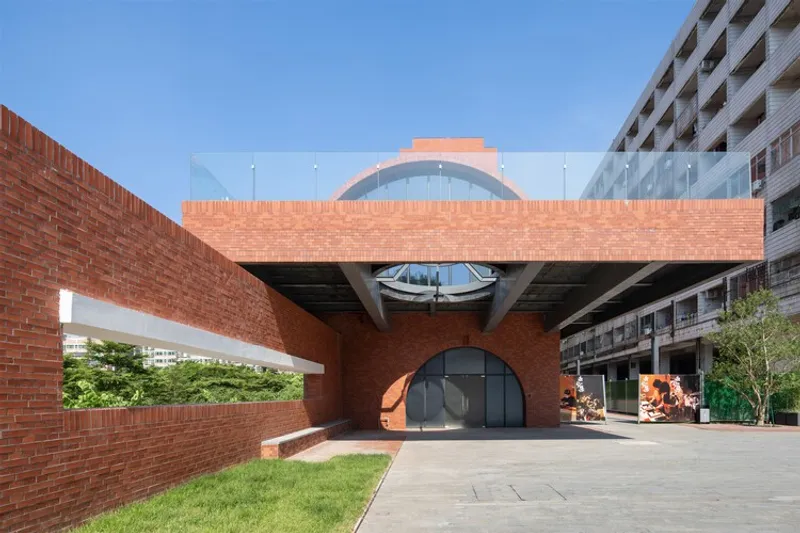
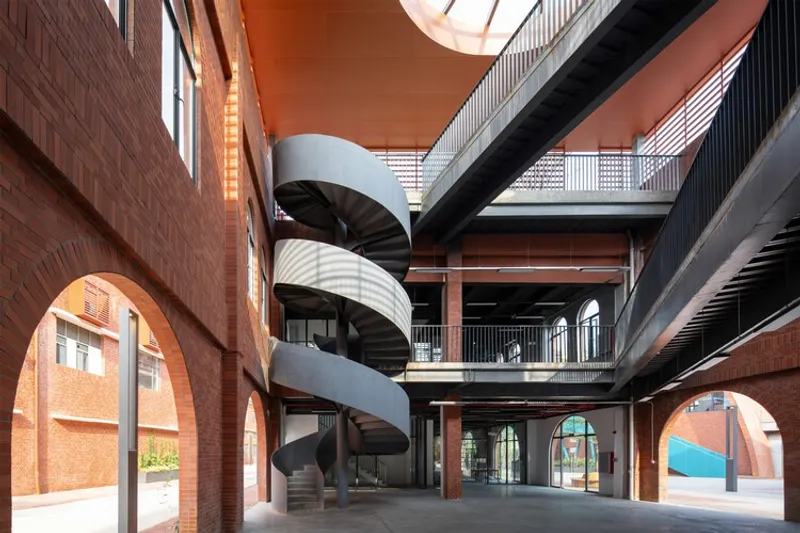
Before its renovation, the site comprised dilapidated ceramic workshops and warehouses, fragmented by random additions and obstructed pathways. While these structures had lost their original function, they retained immense historical and cultural value. Atelier cnS approached the project not as a demolition, but as a reinterpretation of memory — preserving the tactile beauty of red brick walls, concrete frames, and steel trusses, while introducing new architectural elements that evoke the spirit of Shiwan’s ancient dragon kilns.
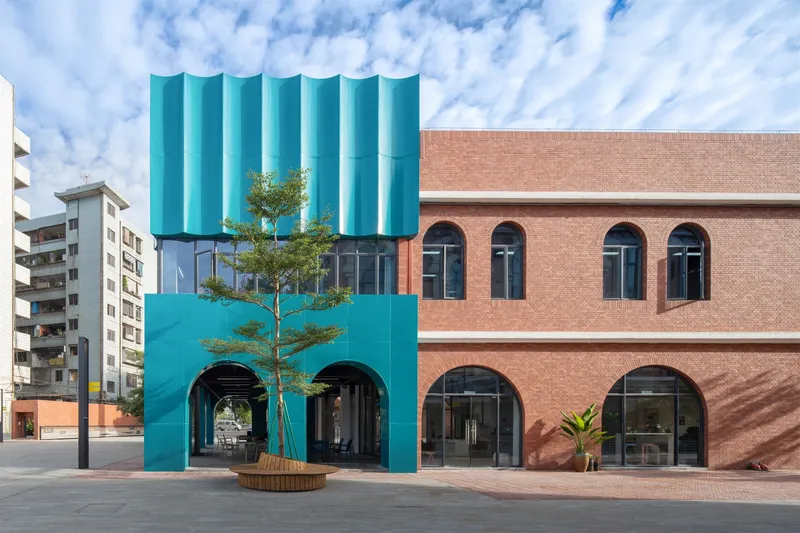
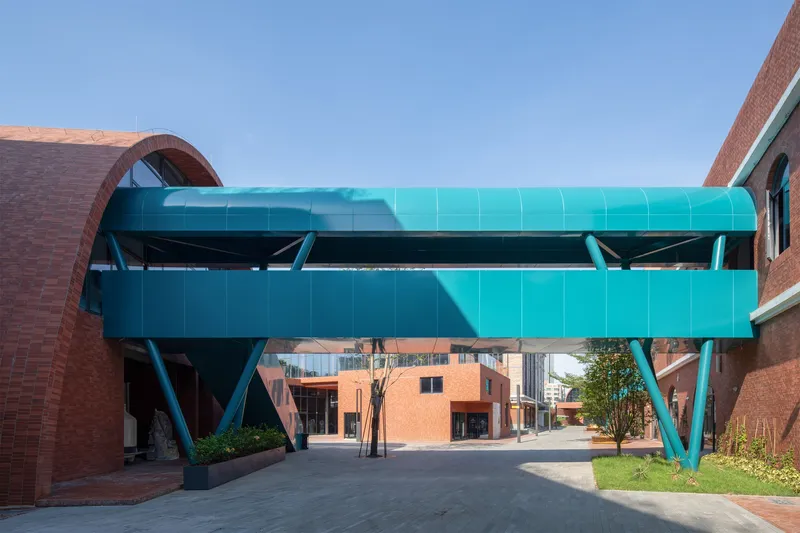
Inspired by the tiered form of the Nanfeng Dragon Kiln, the new architecture mirrors its ascending profile and arch motifs, creating a rhythm of light and shadow reminiscent of kiln smoke rising through the air. The design palette blends warm brick reds with cool ceramic blues, symbolizing the fusion of tradition and modernity.
Innovation, Integration, and Artistic Collaboration
The project embraces architectural hybridity, integrating old factory shells with newly built creative spaces. Several historical buildings were carefully reinforced and reprogrammed to accommodate ceramic studios and art galleries, including the Pan Bolin Art Museum, Wei Hua Art Museum, and Wang Rongmao Art Museum. Many master ceramicists directly participated in the renovation, embedding craftsmanship within architecture itself.
A striking intervention is the glazed blue corridor—a pedestrian link that threads through multiple buildings, connecting different zones of the campus while reflecting the shimmering qualities of fired ceramics. This corridor transforms everyday movement into a sensory experience of color, texture, and reflection.
At the core of the complex lies Taofeng Square, an open-air plaza that hosts cultural festivals, performances, and community events, surrounded by lush landscape design. It acts as the beating heart of the ceramic base—an urban gathering ground where art meets everyday life.
A Cultural Engine for the Future
The No. 7 Ceramic Art Research Base forms part of the Shiwan cultural tourism route, connecting the Nanfeng Ancient Kiln and Art Wharf No. 8. Together, these destinations create a network of cultural and creative industries that support both heritage preservation and contemporary design innovation.
This first phase establishes a framework for future development, aligning with the vision of “Revealing Natural Beauty, Inheriting Culture, and Fostering Innovation and Integration.” The upcoming second phase, alongside related projects like Hongwei Hill and Starlight Garden, aims to transform Shiwan into a global ceramic art hub and a youth innovation center that bridges artistry, entrepreneurship, and sustainability.
All the photographs are works of Siming Wu


Popular Articles
Popular articles from the community


U.GA Architects Wraps an Oval Rooftop Pool in Curved Board-Formed Concrete on Busan's Jeollidan-gil
In Busan's Jeonpo-dong, a 454 m² mixed-use block stacks a neighborhood facility, guest rooms and an oval rooftop pool inside spiraling concrete walls.

David Macias Steps a Doorless Stone and Plaster House Down a Tropical Colombian Hillside
In the humid hills of Colombia, Threshold House replaces the front door with an open void and terraces its 850 m² down the slope instead of fighting it.

GROUP A Strips a 1969 Rotterdam Harbor Headquarters to Its Frame and Wraps It in Timber Louvers
In Rotterdam's M4H harbor district, Ferro Offices reuses a 1969 frame, adds one timber storey and reaches BREEAM-NL Outstanding.

Architekt Andreas Gruber Scatters 23 Dark Timber Chalets Across a South Tyrolean Forest Edge
In Molini di Tures, Amonti Chalets breaks a resort into a hamlet of gabled timber houses, with parking, storage and services pushed into the slope.

Similar Reads
You might also enjoy these articles


Hodi-Mandai Geram
Project Function: Preservation and revitalization of the Intangible heritage and socio-spatial identity of the Hodi by Housing, Cultural Memory Center, Sacred Grove, landscape, local tourism economy


Olio Towers: A Mid-Rise for Performers That Fuses Housing, Rehearsal, and Stage
Located blocks from Houston's Theater District, this modular tower stacks living units around a central performance atrium.

Oasis: Modular Green Housing Carved into Dhaka's Urban Fabric
A shortlisted Plugin Housing entry reclaims unauthorized settlements in Dhaka with stepped concrete volumes, green roofs, and ventilation-driven design.

Black Hole: A Floating Megastructure for the Post-Physical Era
Emiliano Mazzarotto envisions a spherical, self-scaling arena where e-sports, digital hotels, and holographic stadiums replace traditional public space.

Explore Extreme Architecture Competitions
Discover active competitions in this discipline

Challenge to design a shop stop sunk in the city

Challenge to reimagine the Iron Throne

Photograph architecture without architects

Illustrate the lost glory of Angkor Wat - Render Challenge
Comments (0)
Please login or sign up to add comments
No comments yet. Be the first to comment!