

Nomadic pods: Designers propose micro-housing at anywhere on globe to resolve space crises.
Result for 'Nomad' - Residential building Design challenge, out now.


We are animals who have tamed our environments, domesticated fire, and developed languages. The act of moving, eased by evolution over time, was triggered by basic survival instincts, to look for food, and sometimes out of pure curiosity and wonder.
Movement in search for discovery has enabled us to evolve not only as an individual but also as a species. Civilizations have sprung and declined and we still are moving forward to an unknown destiny.
While the basic movement, which makes us humans, remains, we have grown more comfortable in our static lives. This has resulted in overpopulation followed by issues of land scarcity, deterioration in the quality of living and work, and an increase in physical and mental problems. This makes us question the future of civilization.
Are we as a species ready to face and acknowledge these problems? Or are we just waiting for it to go into decline?
Our ancestors solved the problems of destroyed habitats by moving and finding a better ones. This time there are no better habitats left.
Though in all this urban mess there are a certain group of young nomads rising day by day through a newer medium; Technology. The core of the digital nomad market comprises young adults.
This segment of digital nomads is well educated and has the means to self-fund travel and related experiences. There was already a gradual rise in such trends, but due to the pandemic, this was even more realized. The global population for these nomads is estimated to reach one billion by 2035. This lifestyle may place new demands on residences, tourism, cities, and working spaces. Instead of wanting permanent homes, this generation may seek and want to live life through a different approach.
Taking this opportunity can we use this as a solution to relieve our urban spaces?
These nomads rely heavily on technology for travel, before, during, and also after it. They have unconsciously blurred the boundary between working and living. Homes and offices have started resembling mountains and travel hostels.
Is there a better option for people who want to continue their daily grind from any place they want? Can we design something that can make their life more flexible?
With this increasing community of digital nomads, the next generation is also expected to follow the lifestyle. So, can this be an opportunity to retain the nomadic lifestyle of our ancestors and reduce the pressure on our urban systems?
Brief: The challenge of the competition is to design a nomad pod for mobile living.
Develop furniture concepts and tools for a generation to make them feel at home in any corner of the globe.
Some of the Best competition projects are as follows:
Winning Project: Adaptive Cell
By: Anna Wojtynia, Beniamin Walecki & Karolina Kosmowska
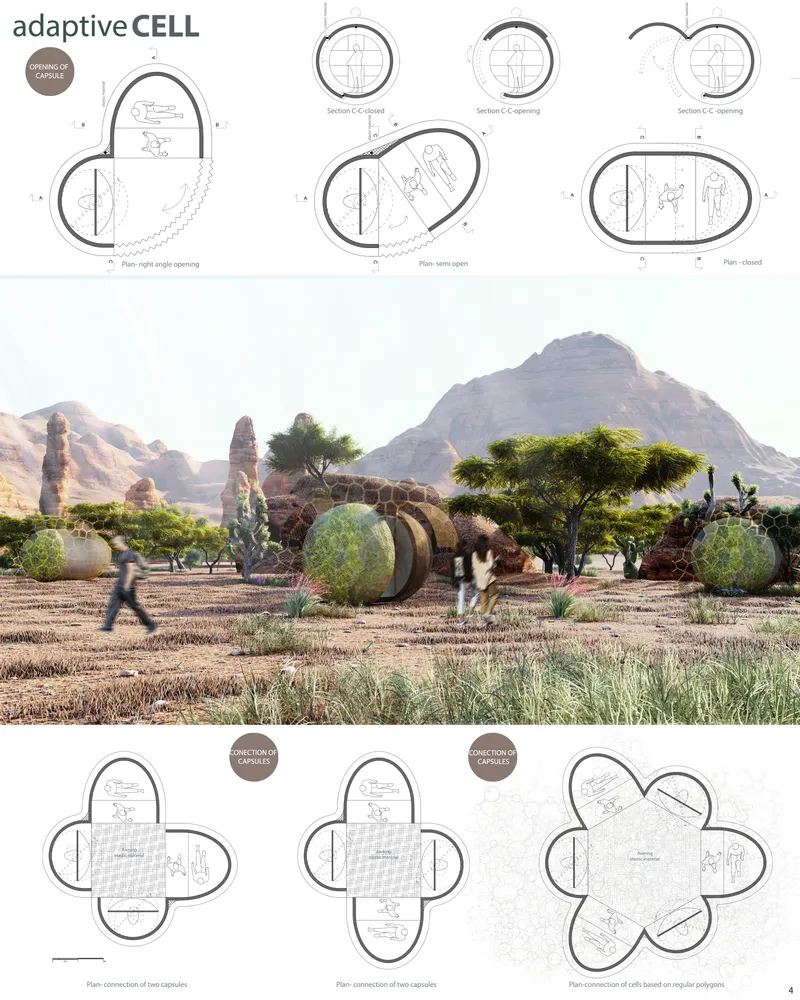
Fig: 1 Site view and capsule connection plan
Description: The leading inspiration in the design process, were issues related to the field of biomimicry. Both the form, function and mechanisms allowing for mobility and adaptation found their inspiration in this field, allowing us to design a futuristic and ecological capsule.
-------------------
Editor’s Choice: NOMAD
By: Leonid Emdin
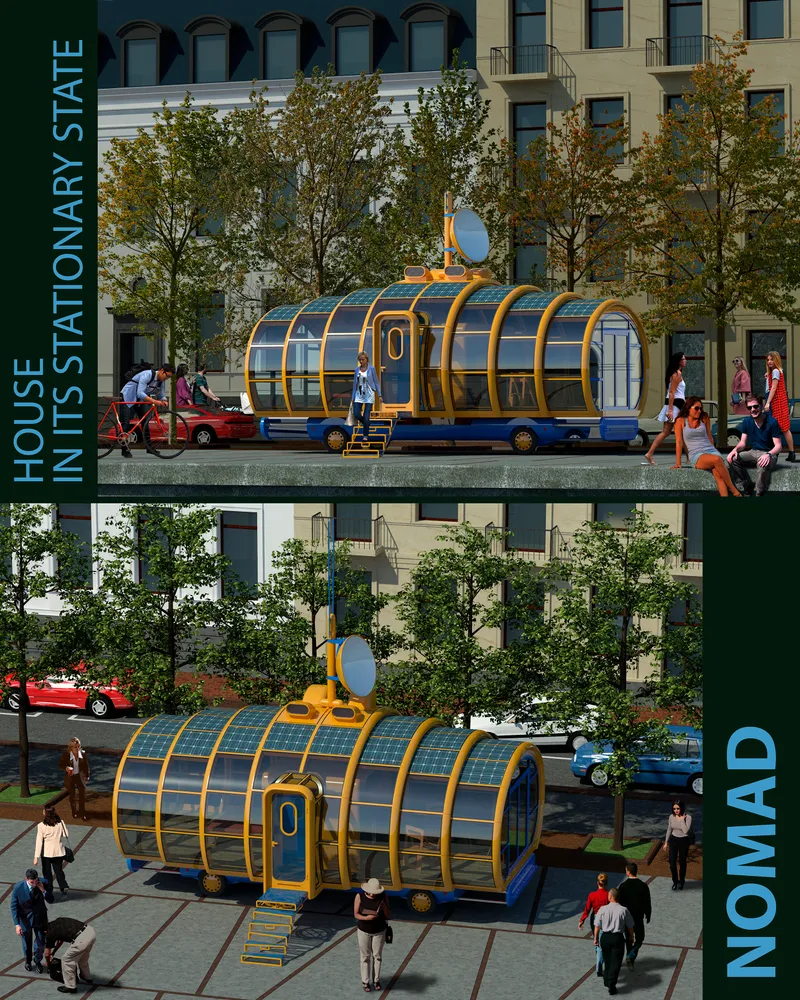
Fig: 2 House in a stationary state
Description: The mobile home consists of two main elements: a stationary unit with an area of 10 sq.m. and a block with wall panels in three sizes. The wall panels are pulled out in three pieces from each of the two sides of the stationary block and having a width of 1 m. in the extended state together with the stationary block, form a house with an area of 36 sq.m.
-------------------
Editor’s Choice: nomad1
By: LIU HUIYING
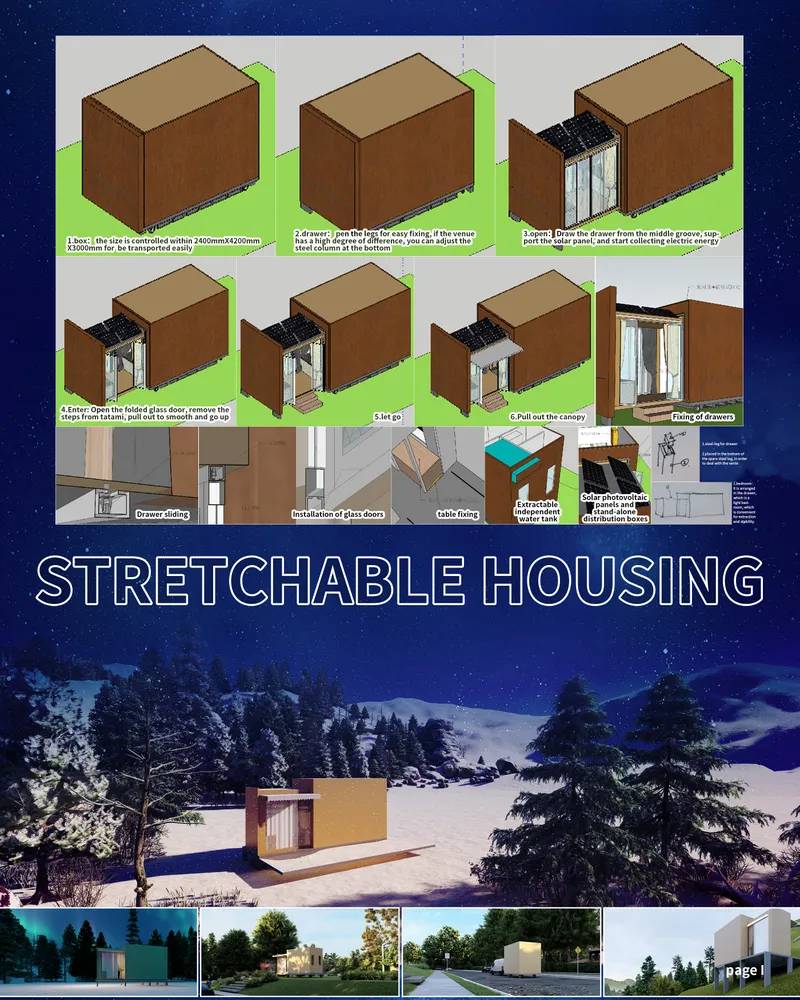
Fig: 3 Stretchable housing design
Description: My favorite was the projection screen, which was hidden in the ceiling of the bedroom. Put it down, I could be watching the movie, lying on the floor in the living room. The more magical was that through the transformation of internal furniture, it could meet a multi-port life demand. It was comparable to a traditional three-bedroom housing type.
--------------------
Editor’s Choice: Nomad
By: LIU HUIYING
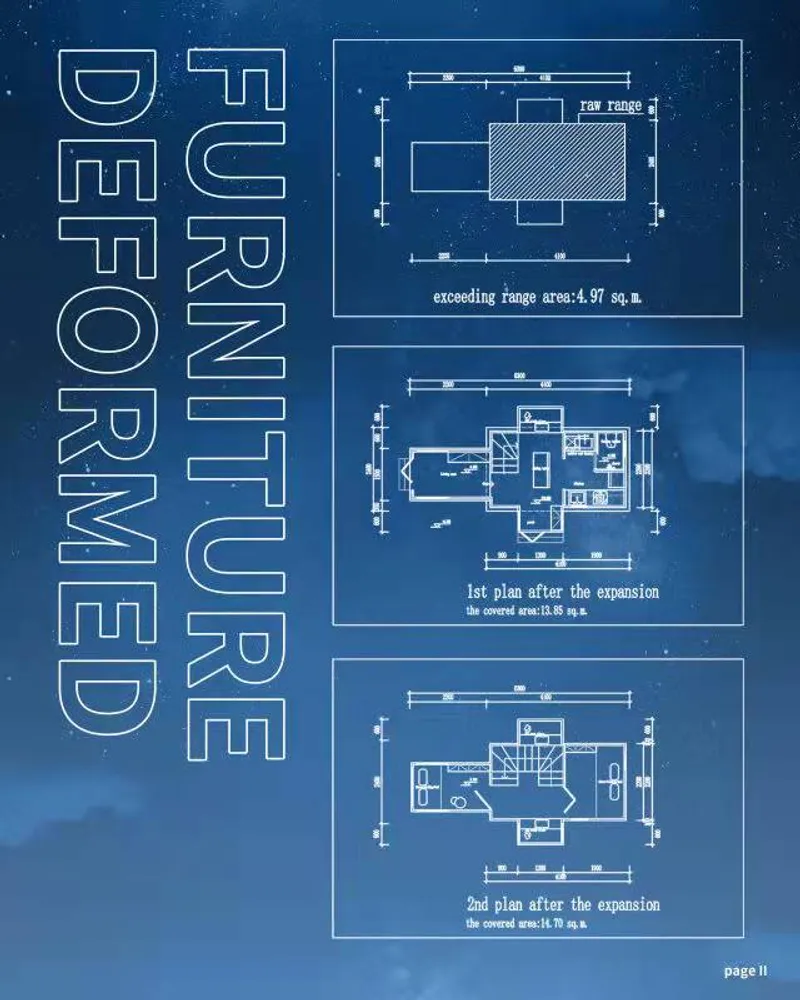
Fig: 3 Deformed furniture design
Description: It should reflect on the perfection, real, equal, super, people will reflect on themselves, and will find that the self-study will re-examine the perspective of self-seeking problems, give up some observance, ignorant ideas, courtesy Traditional virtues such as mutual assistance, respecting the old, love the young, love the environment.

Follow us on social media: Facebook | Instagram | LinkedIn | Twitter | Youtube
References (3)


Popular Articles
Popular articles from the community

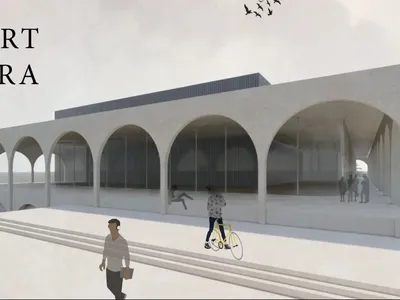
PÄRT OPERA: A Monumental Stone Platform That Turns an Opera House into Public Infrastructure
Raised above the waterfront on stepped terraces and rhythmic colonnades, this opera house invites the city in before the curtain rises.

Little Red Riding Hood: Architectural Design as a Journey Through Fear, Light, and Storytelling
Little Red Riding Hood reimagines the fairy tale through architectural design shaped by fear, light, scale, memory, uncertainty, and choice.

Opera by the Sea Estonia: Three Shells Dissolving Architecture into Tallinn's Coastline
A winning opera house proposal replaces monumental form with interconnected shells that blur the boundary between building, park and Baltic Sea.

Play: Fragments of Their World
Familiar architecture becomes modular playground design, creating safe spaces where displaced children can learn, connect, imagine and play.

Similar Reads
You might also enjoy these articles

Faces of the Soviet Avant-Garde: Turning Moscow's Street Names into an Open-Air Museum
A network of sculptural installations across a Moscow residential district transforms forgotten architect names into spatial encounters with cultural memor
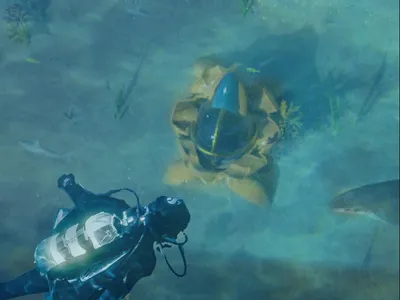
Operative Sanctuary: Architecture Designed for Marine Life, Not Human Comfort
A speculative underwater habitat reframes sustainable architecture as ecological infrastructure for species threatened by ocean pollution.
Opera by the Sea Estonia: Three Shells Dissolving Architecture into Tallinn's Coastline
A winning opera house proposal replaces monumental form with interconnected shells that blur the boundary between building, park and Baltic Sea.
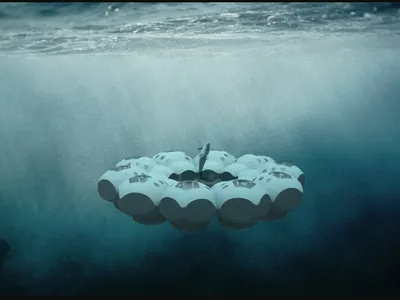
Wireless CoralPods: Modular Underwater Habitats That Grow Like Coral Colonies
A winning underwater architecture proposal imagines detachable, self-sustaining pods that coexist with marine ecosystems rather than displacing them.


Comments (0)
Please login or sign up to add comments
No comments yet. Be the first to comment!