
Off-Grid Sustainable Homes: Rustenburg Farm by Nadine Engelbrecht Architect
Rustenburg Farm by Nadine Engelbrecht Architect exemplifies off-grid sustainable homes, blending natural materials, passive design, and environmental resilience.


Rebuilding with Resilience
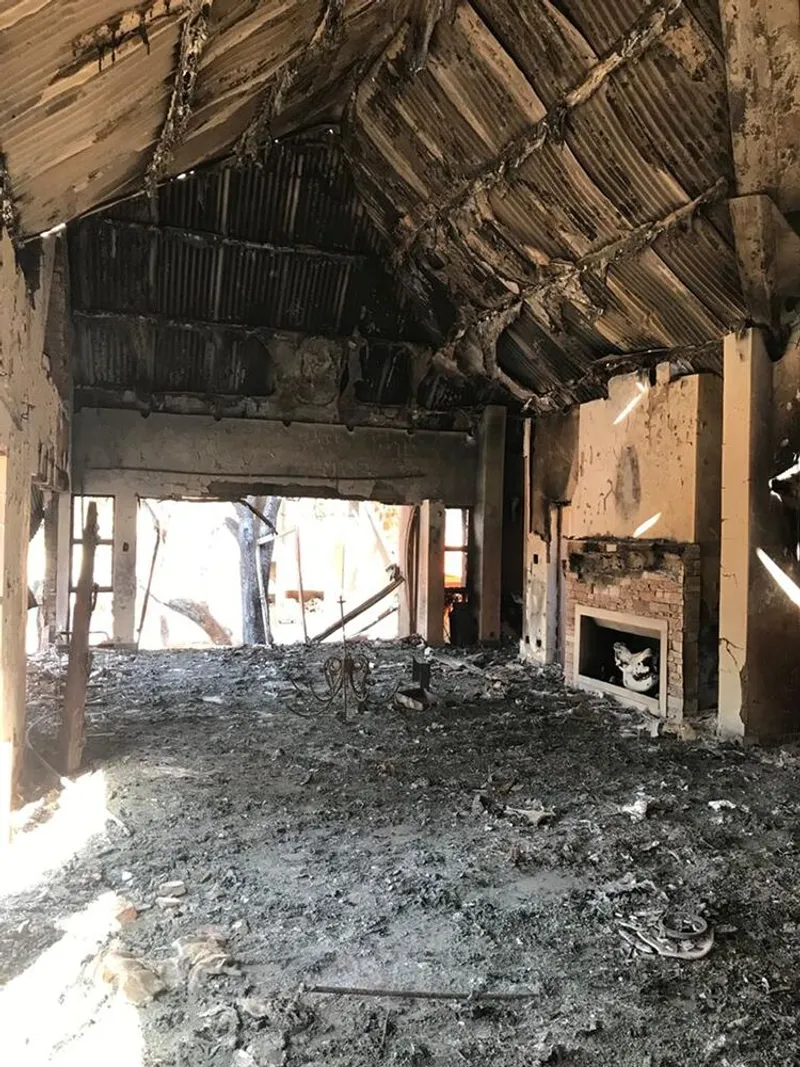
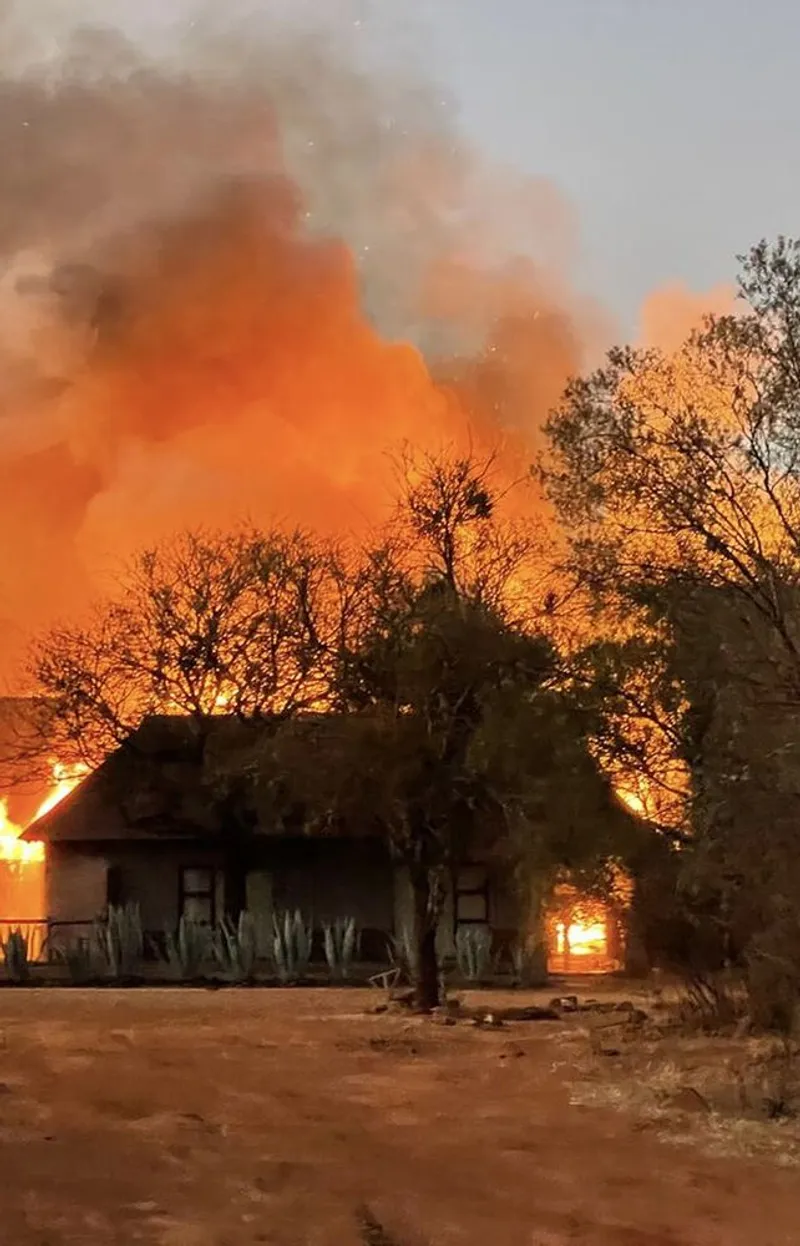
Rustenburg Farm, designed by Nadine Engelbrecht Architect, is a remarkable example of off-grid sustainable homes, seamlessly integrating with its surrounding environment. Situated in South Africa, the residence emerged from the ashes of a fire that largely destroyed the original thatched farmhouse. The new design honors the past while embracing durability, sustainability, and resilience. The house stands as a testament to environmentally conscious architecture, utilizing natural materials, passive design strategies, and off-grid energy solutions to create a self-sufficient retreat.
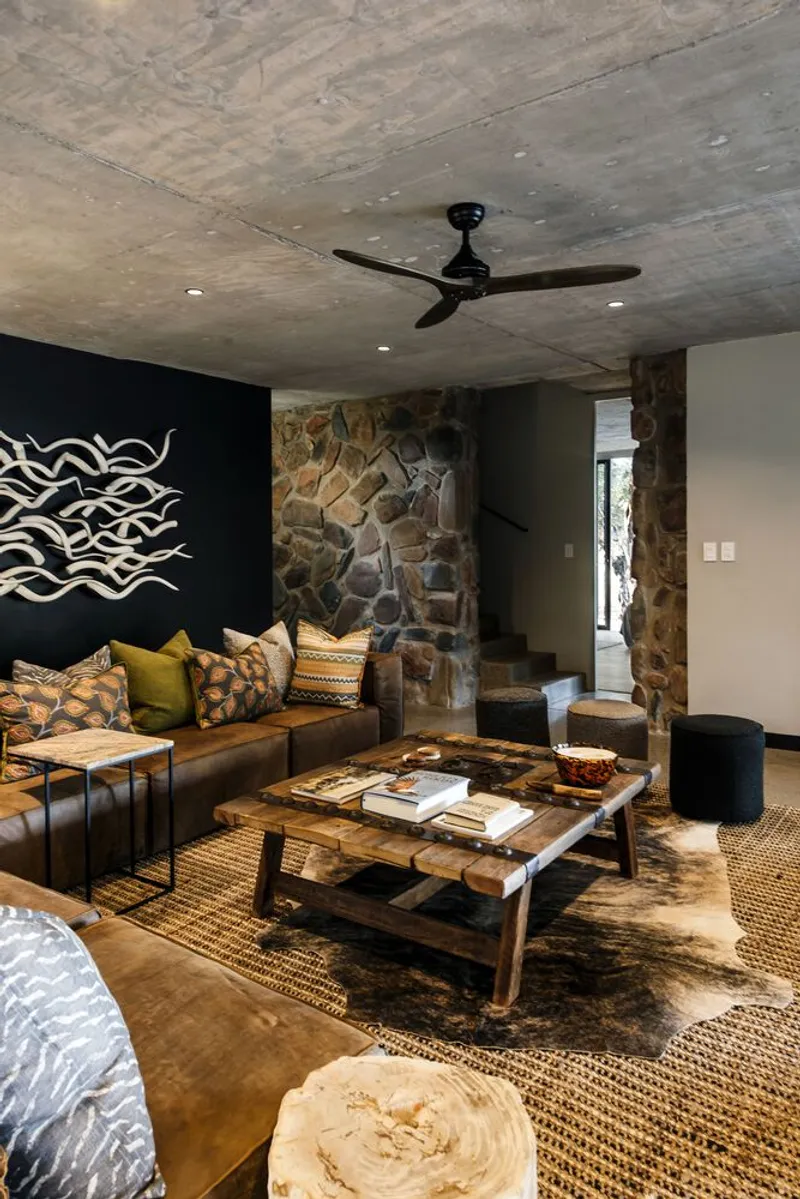
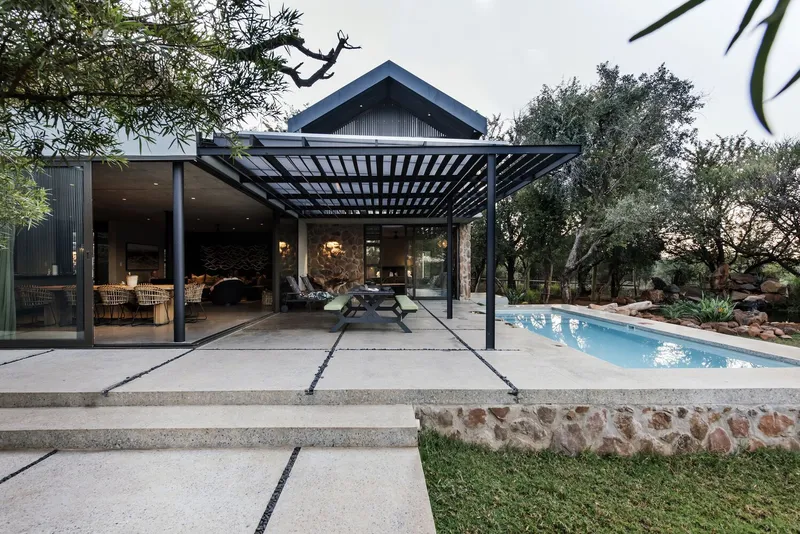
Blending Old and New
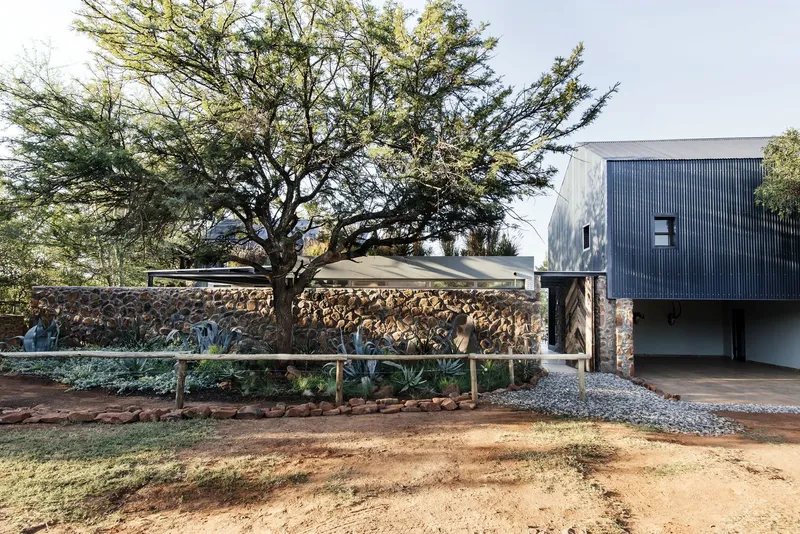
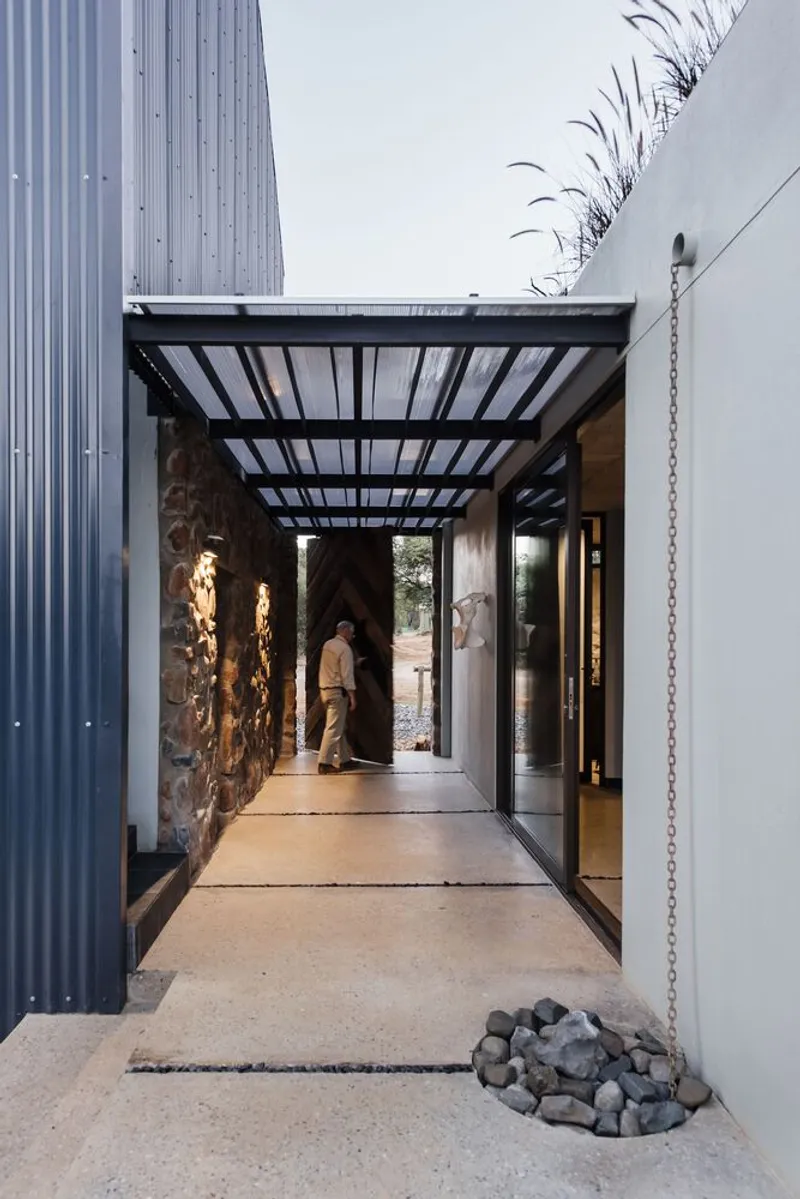
The design of Rustenburg Farm was guided by the need to merge the remnants of the original structure with modern, fire-resistant elements. Instead of rebuilding in a conventional manner, the architects preserved and repurposed existing structures, using them as the foundation for a new, more sustainable home. A key design approach was maintaining a visual and material continuity between old and new, ensuring that the house respected its historical roots while embracing contemporary construction techniques.
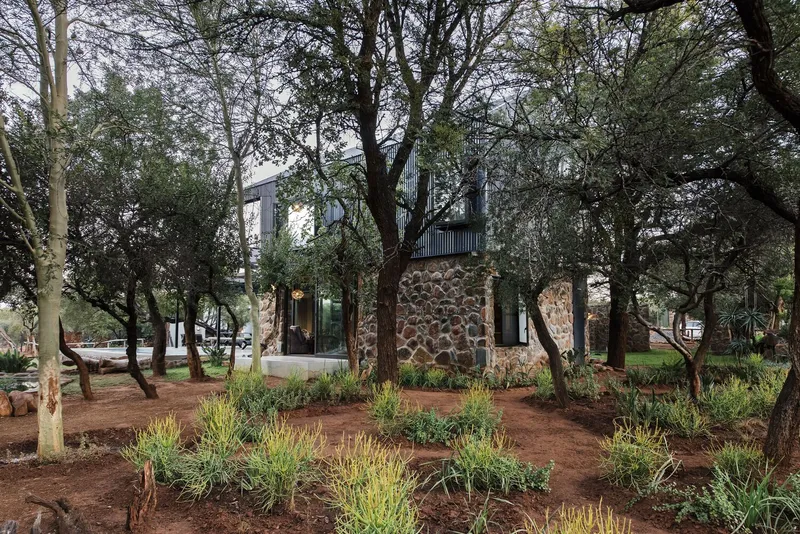
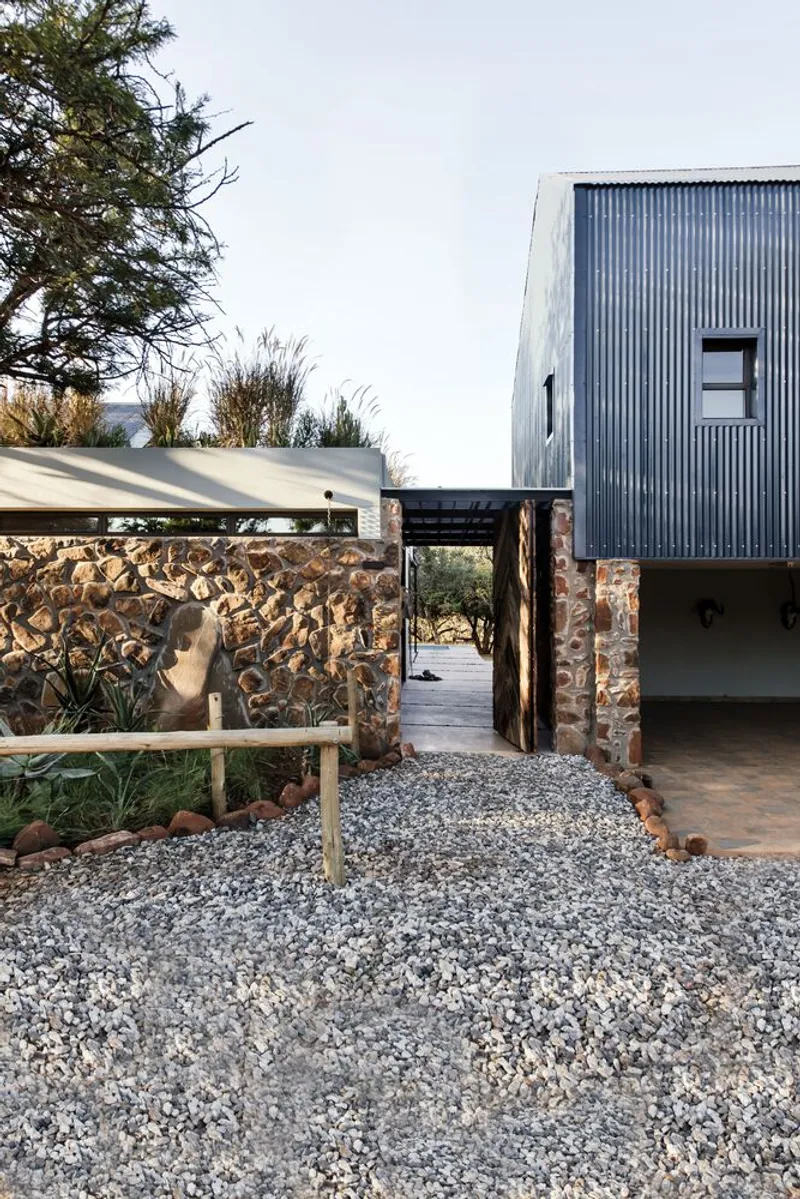
Sustainable Materials and Low-Impact Construction
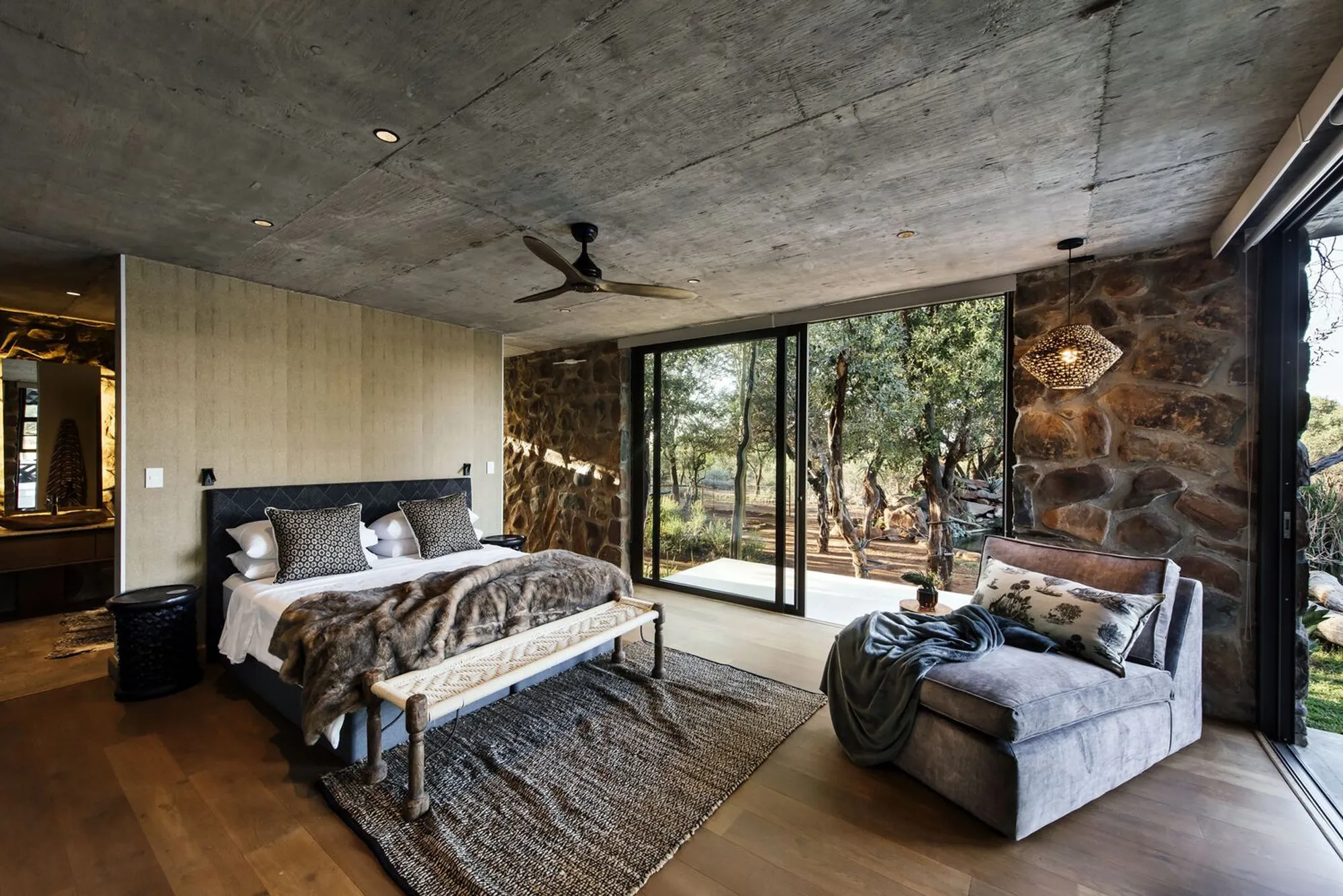
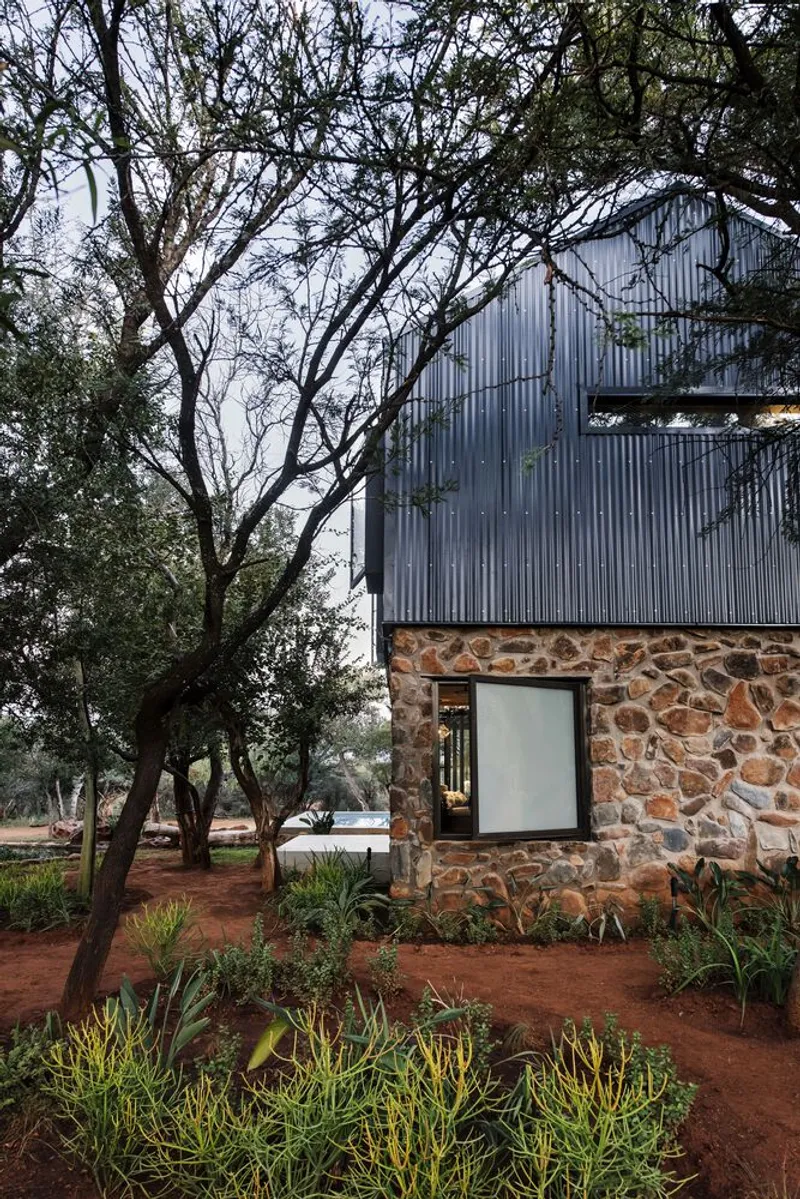
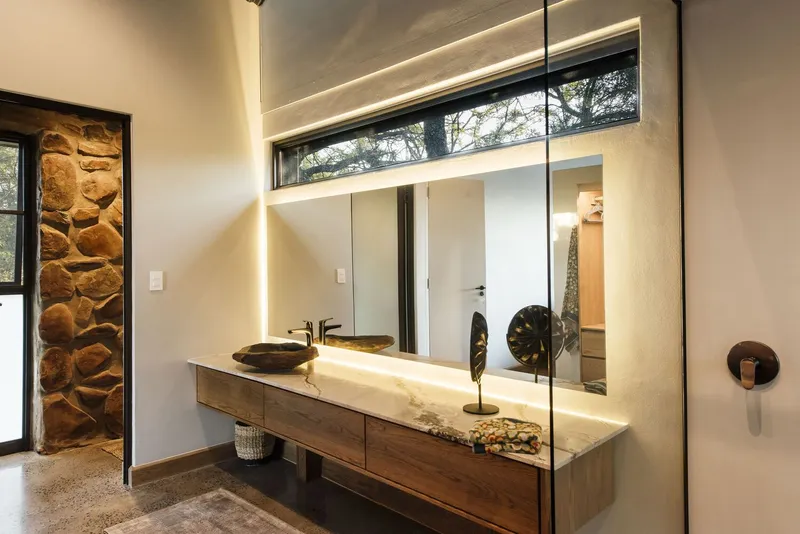
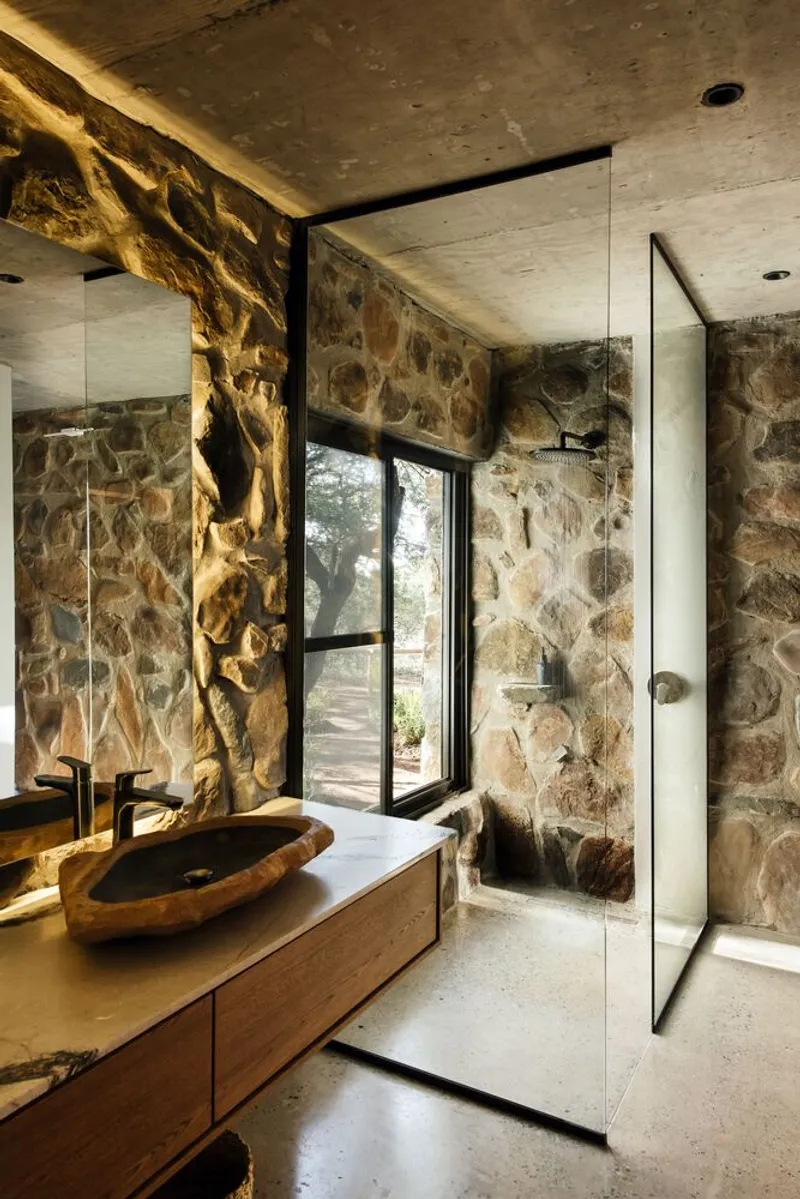
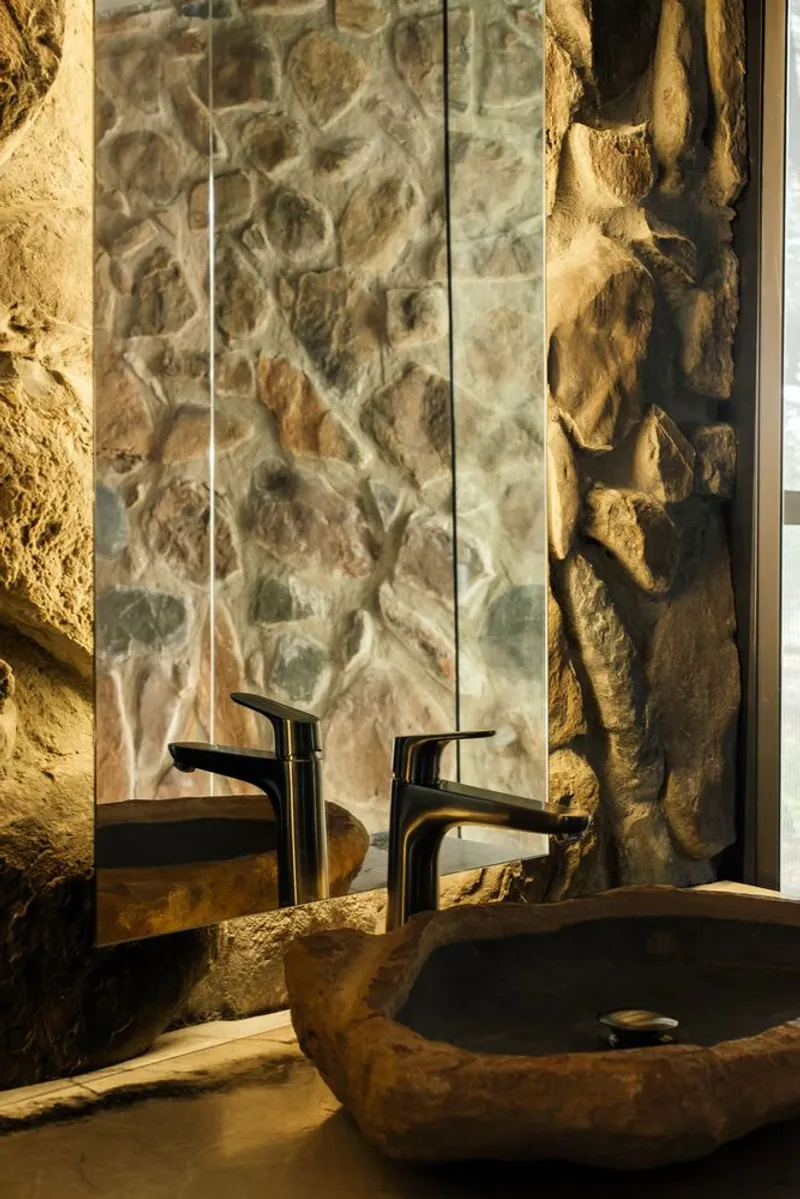
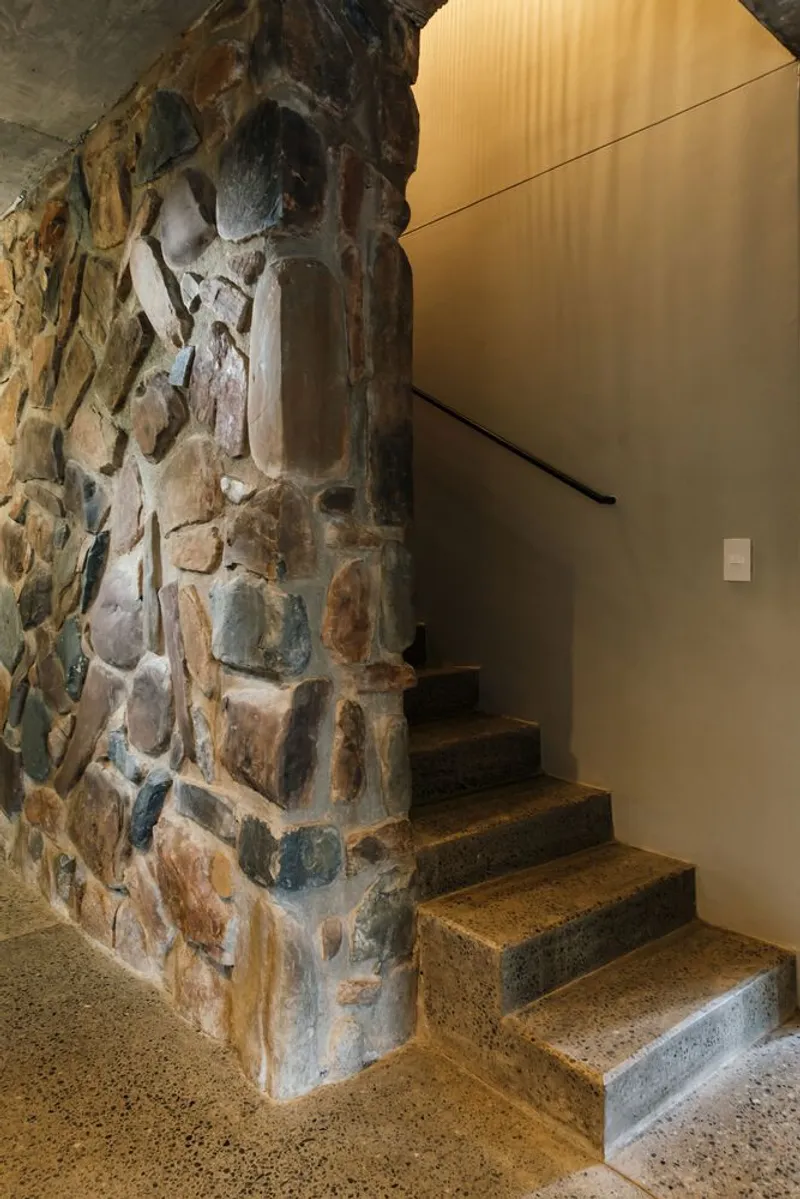
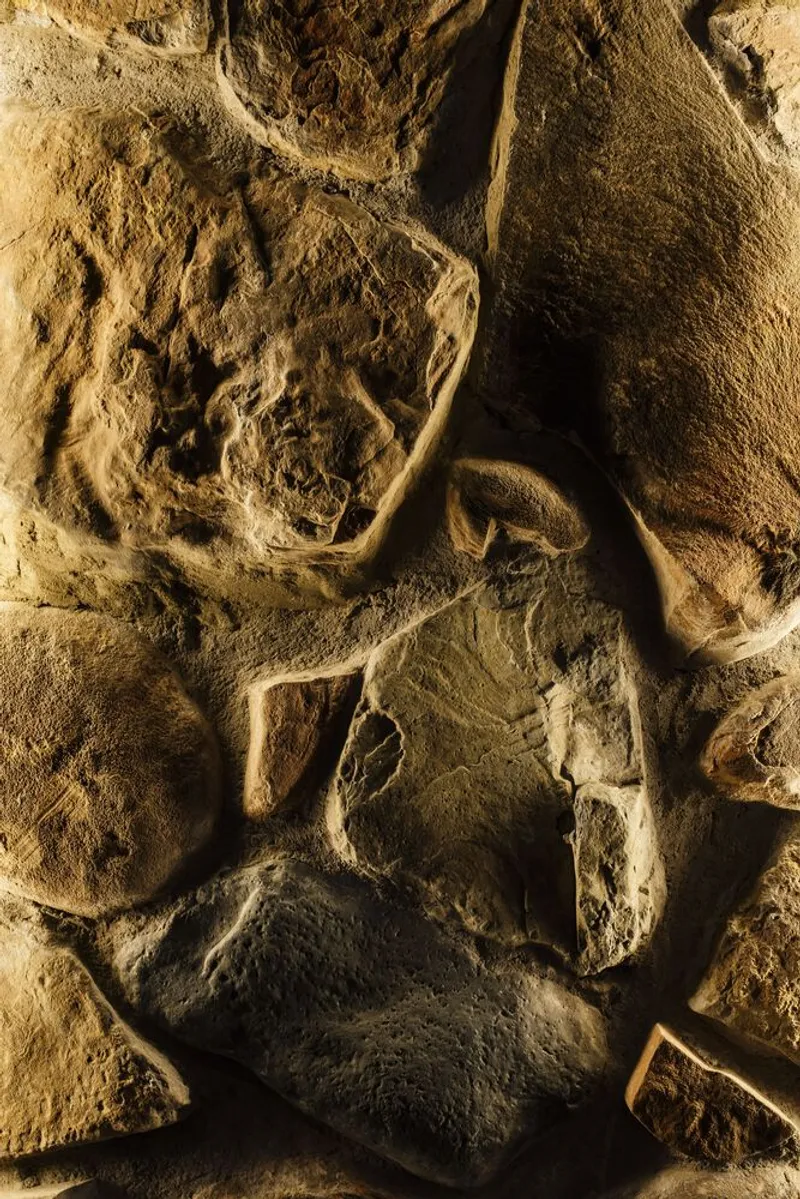
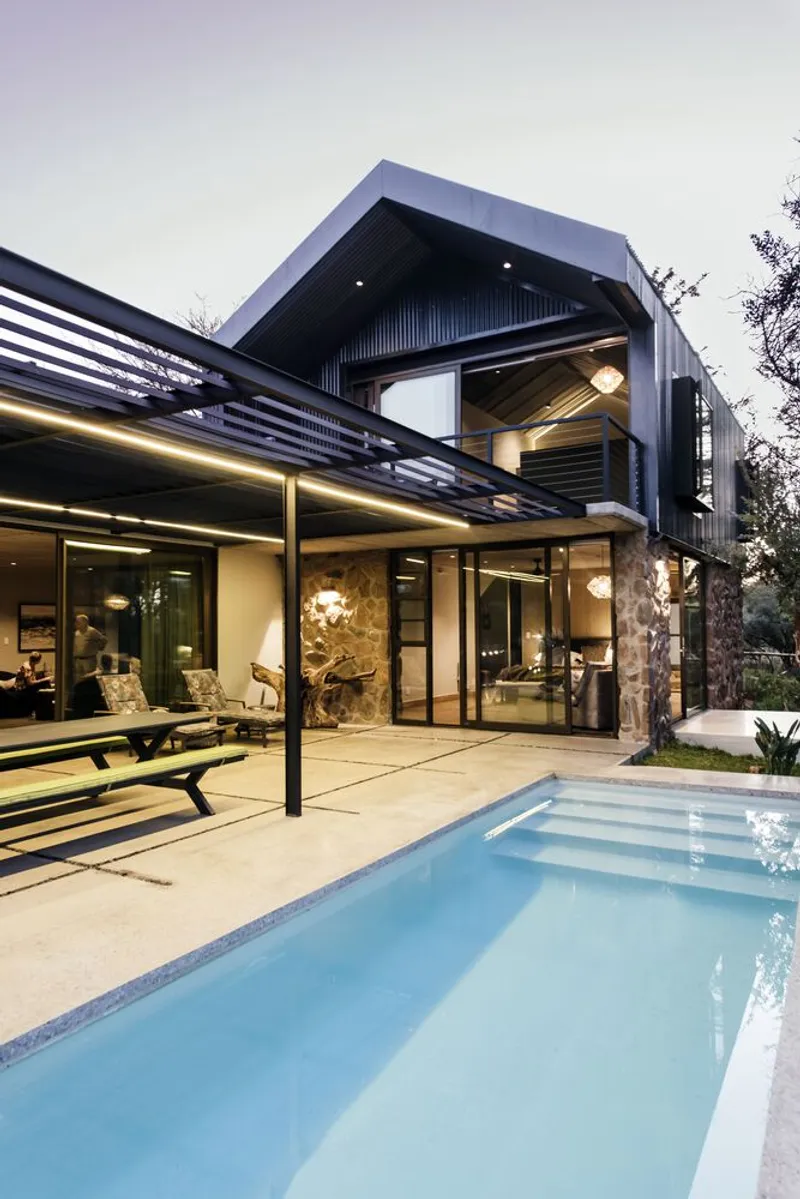
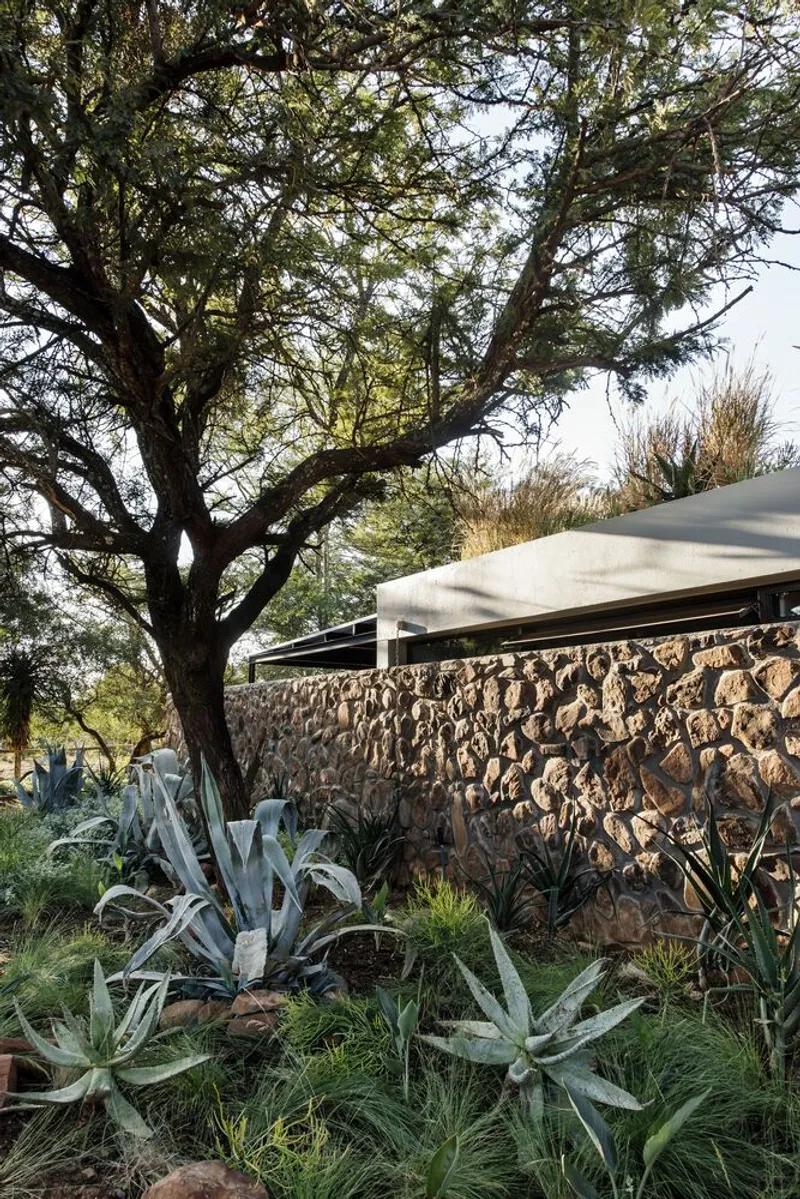
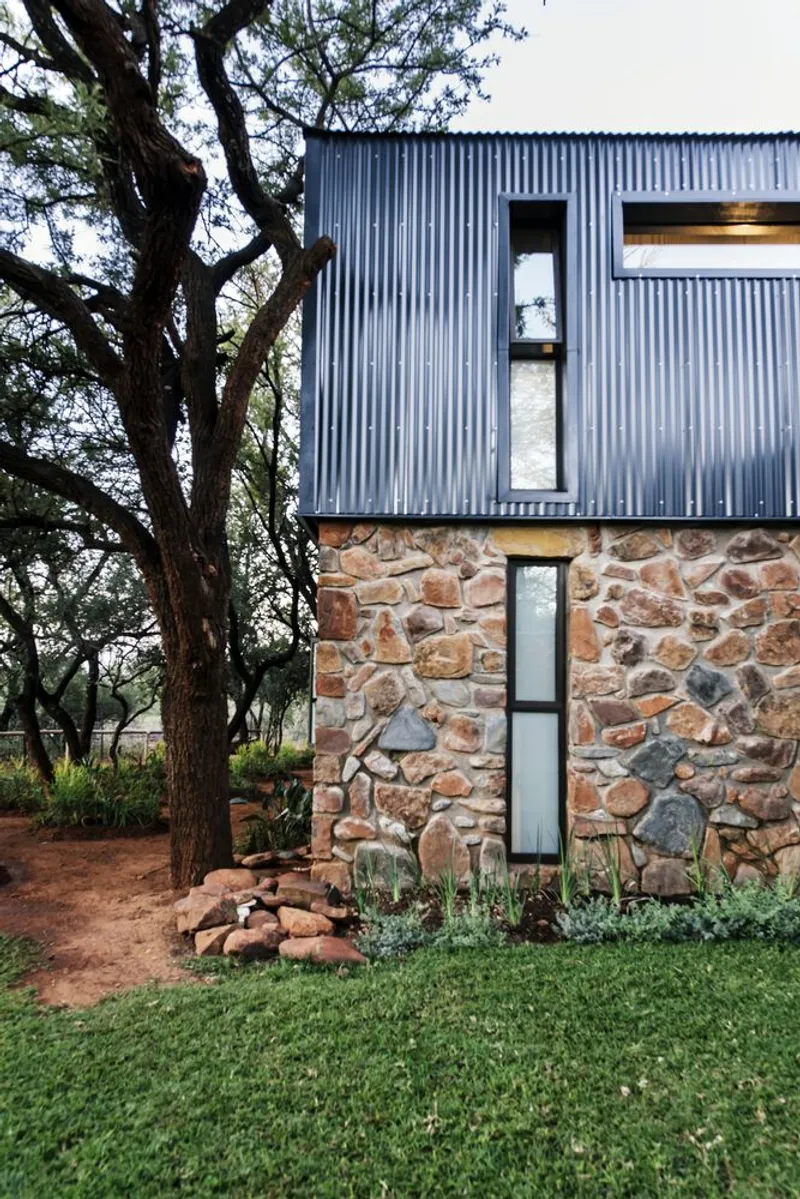
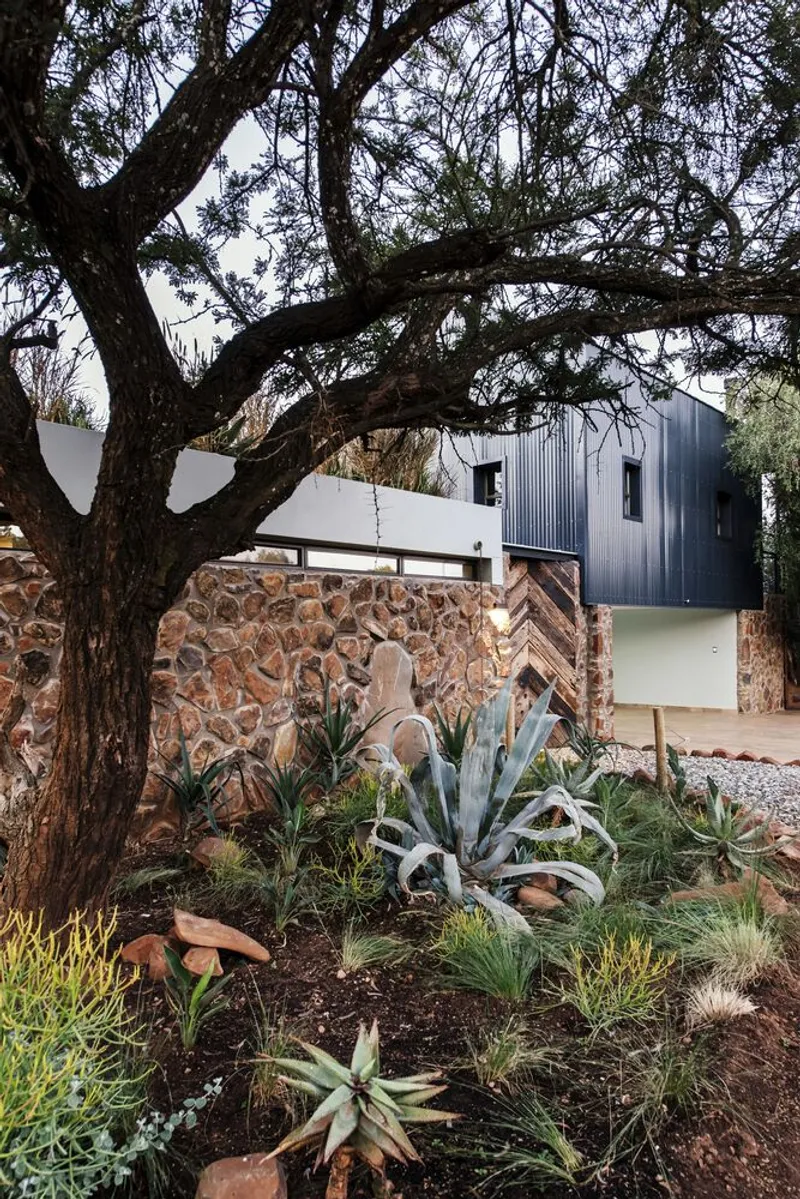
One of the most striking features of Rustenburg Farm is its use of locally sourced stone for the base structure. Builders collected and carefully selected stones from the site, crafting walls with large-scale masonry that not only provided durability but also showcased exquisite craftsmanship. This approach minimized the need for additional building materials, reducing the project's environmental impact. Innovative techniques were employed, such as embedding aluminum profiles within the stone for glass doors and carving basins directly from natural stone formations. These details highlight the synergy between architecture and nature, where materials retain their raw, unprocessed beauty.
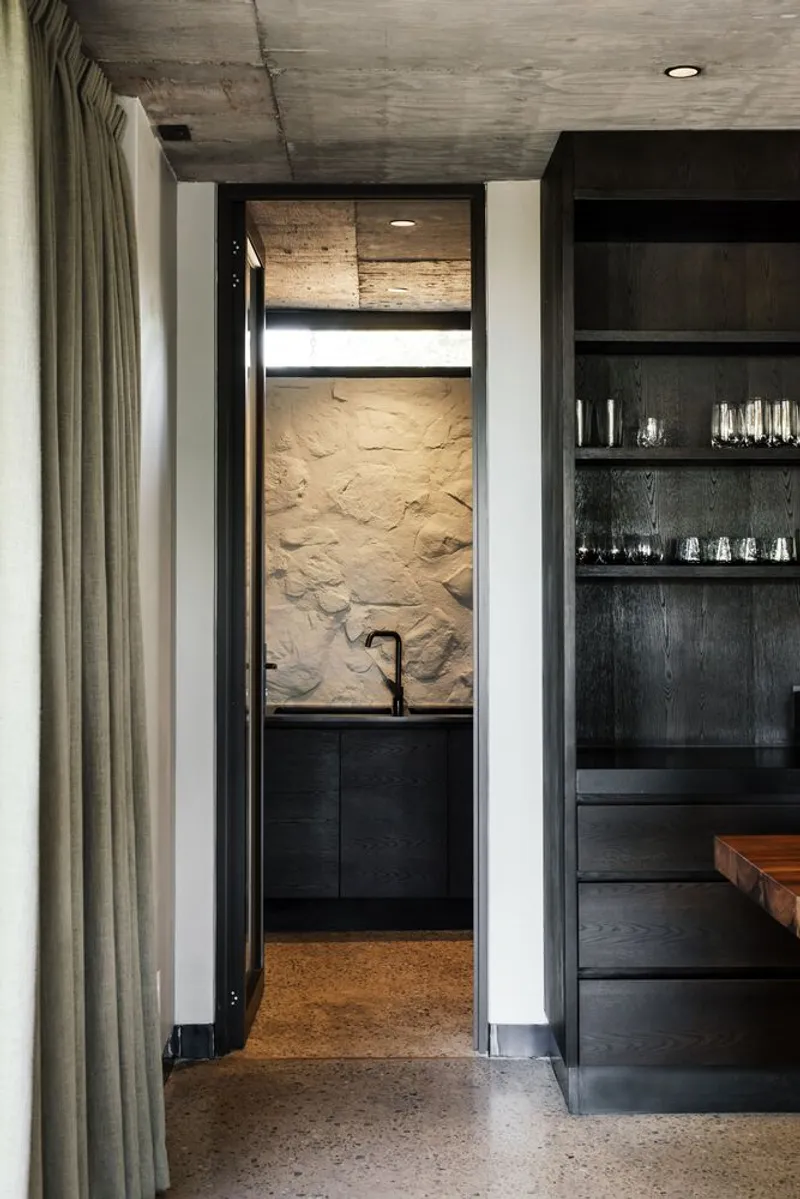
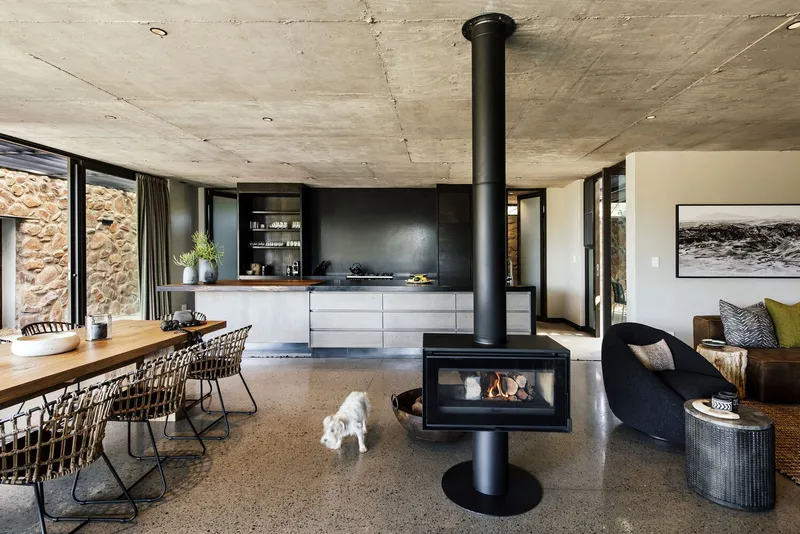
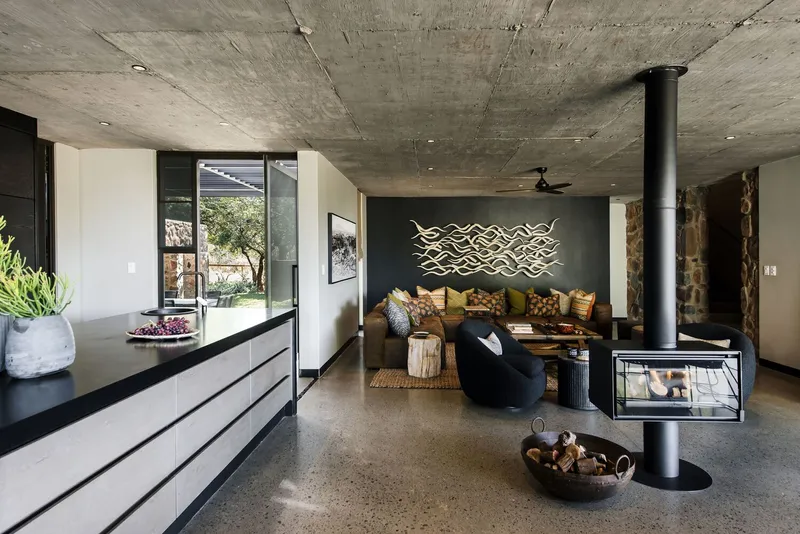
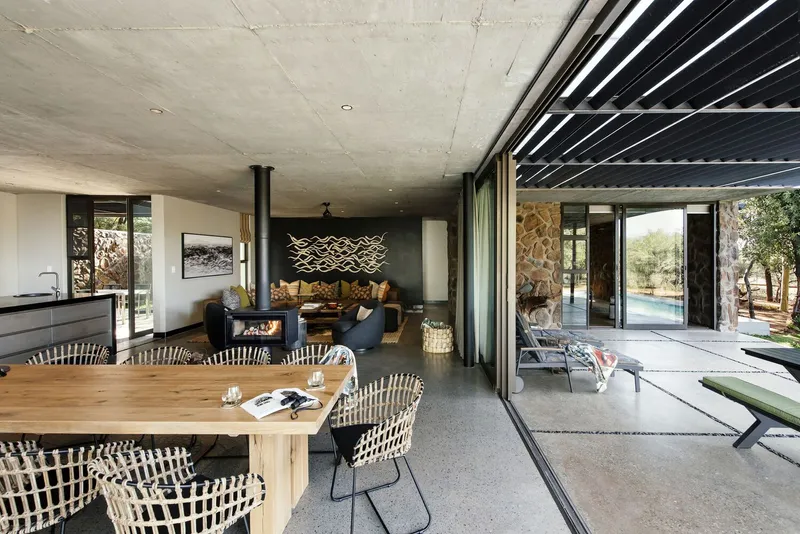
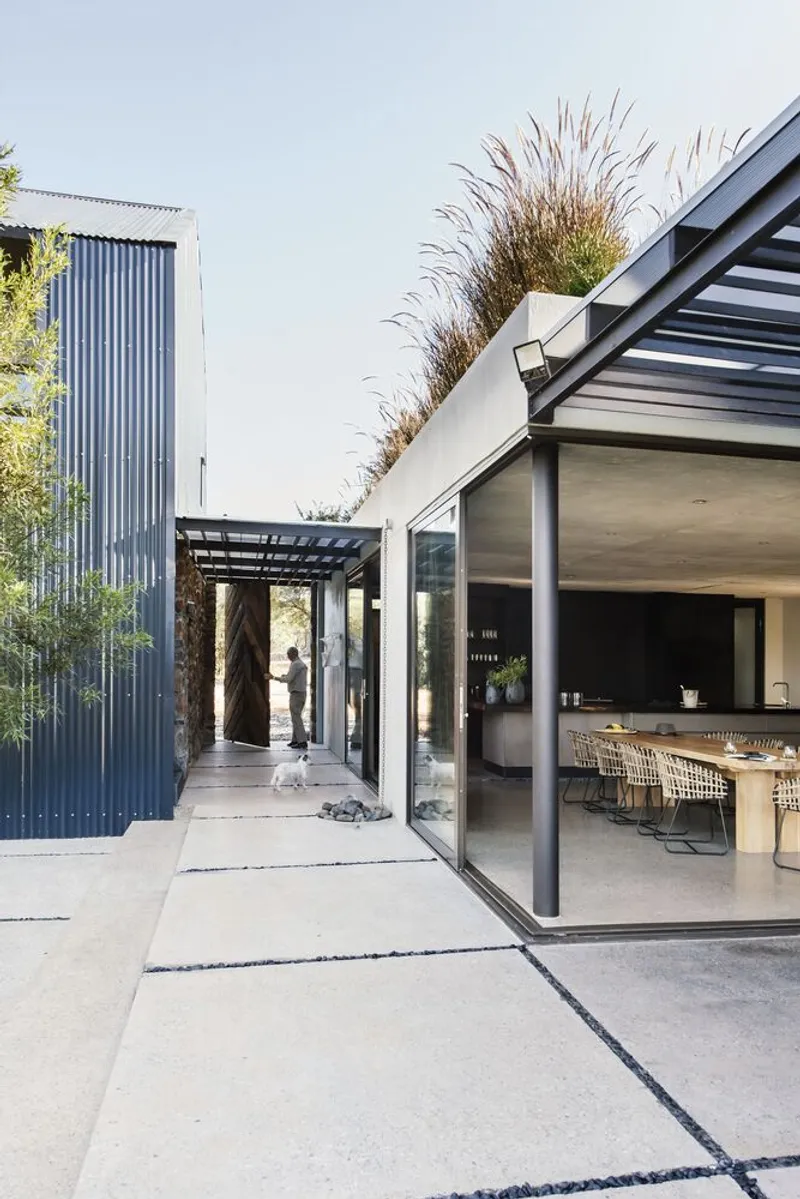
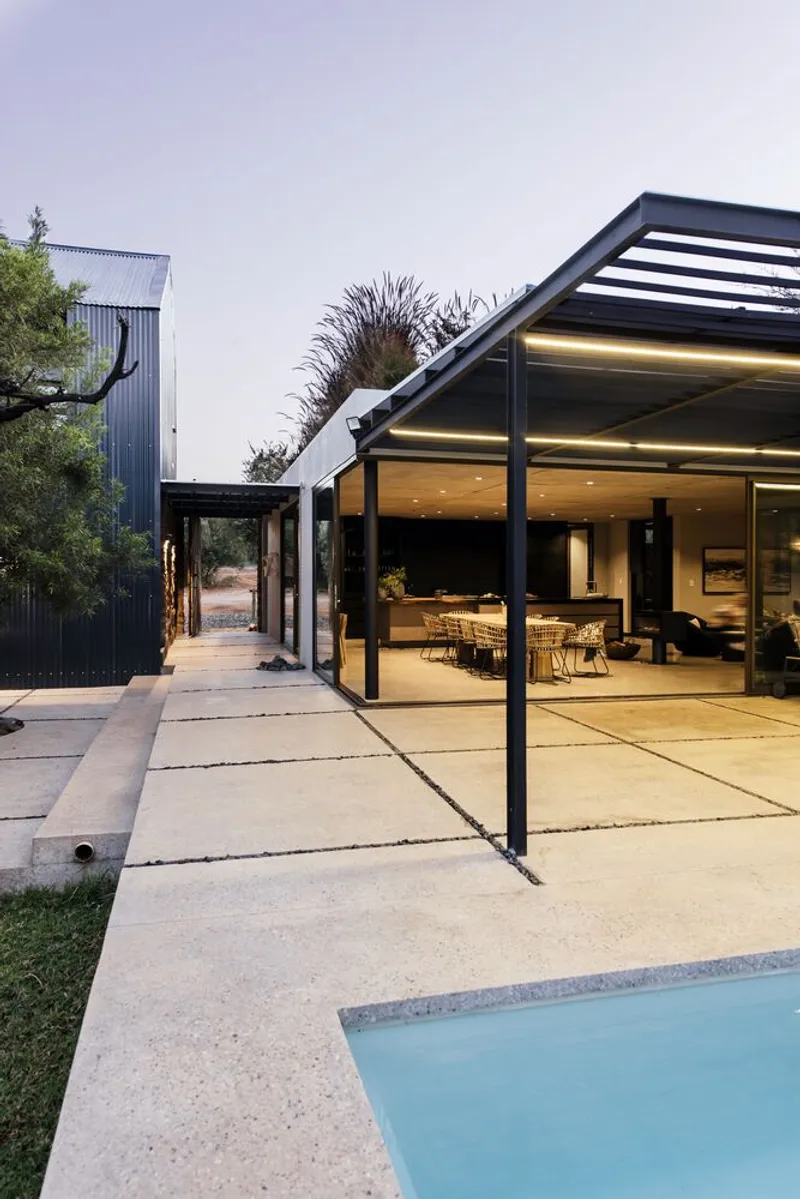
Concrete floors were cast and polished on-site, eliminating the need for finishing materials and emphasizing the house’s raw, natural aesthetic. The decision to leave all construction materials exposed enhances the home’s authenticity, creating an organic connection between built and natural environments.
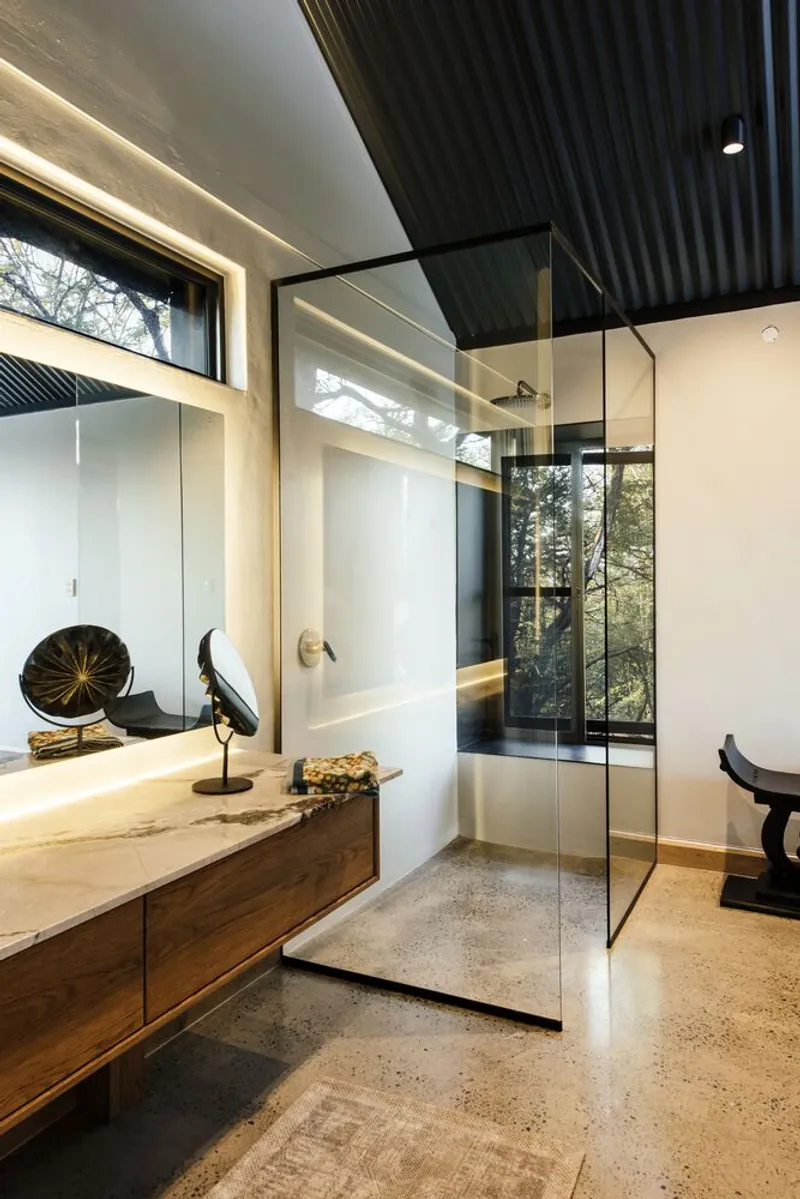
Off-Grid Living and Environmental Integration
Rustenburg Farm operates entirely off-grid, relying on passive design strategies to regulate indoor temperatures throughout the year. The home incorporates natural ventilation, thermal massing, and solar energy solutions, reducing reliance on artificial heating and cooling systems. The remote location of the site necessitated a simplified approach to materials and construction techniques, ensuring efficiency without compromising quality.
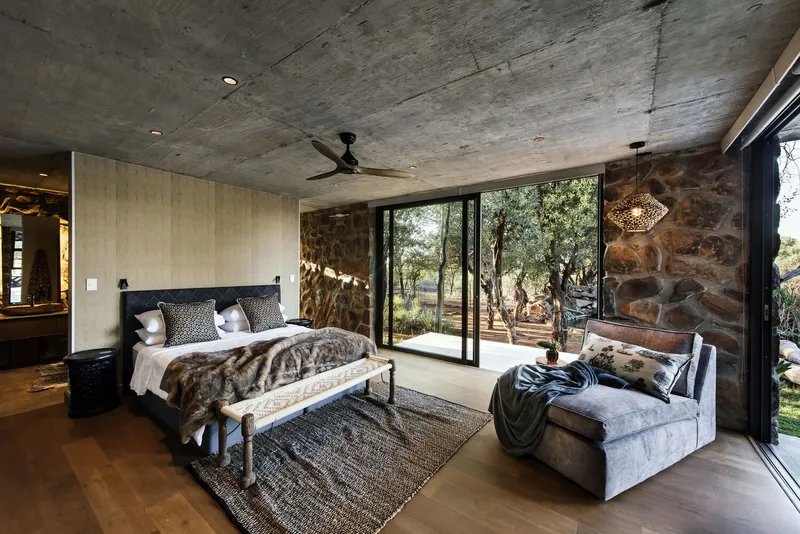
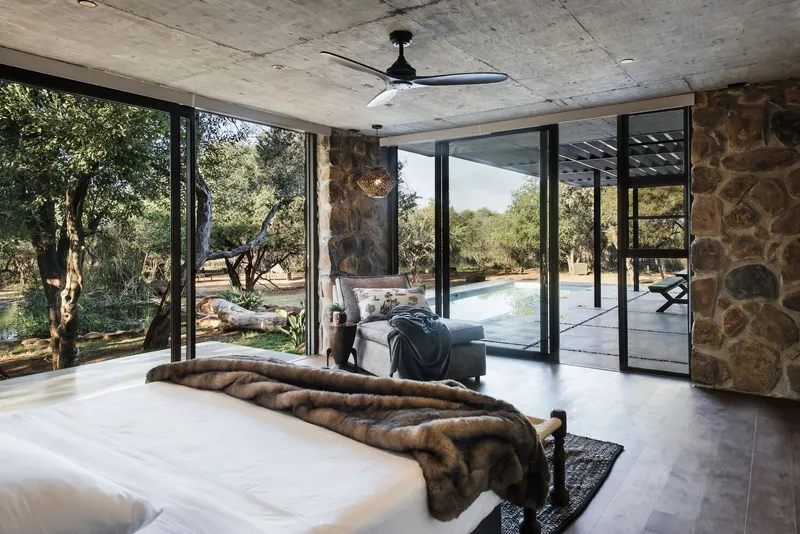
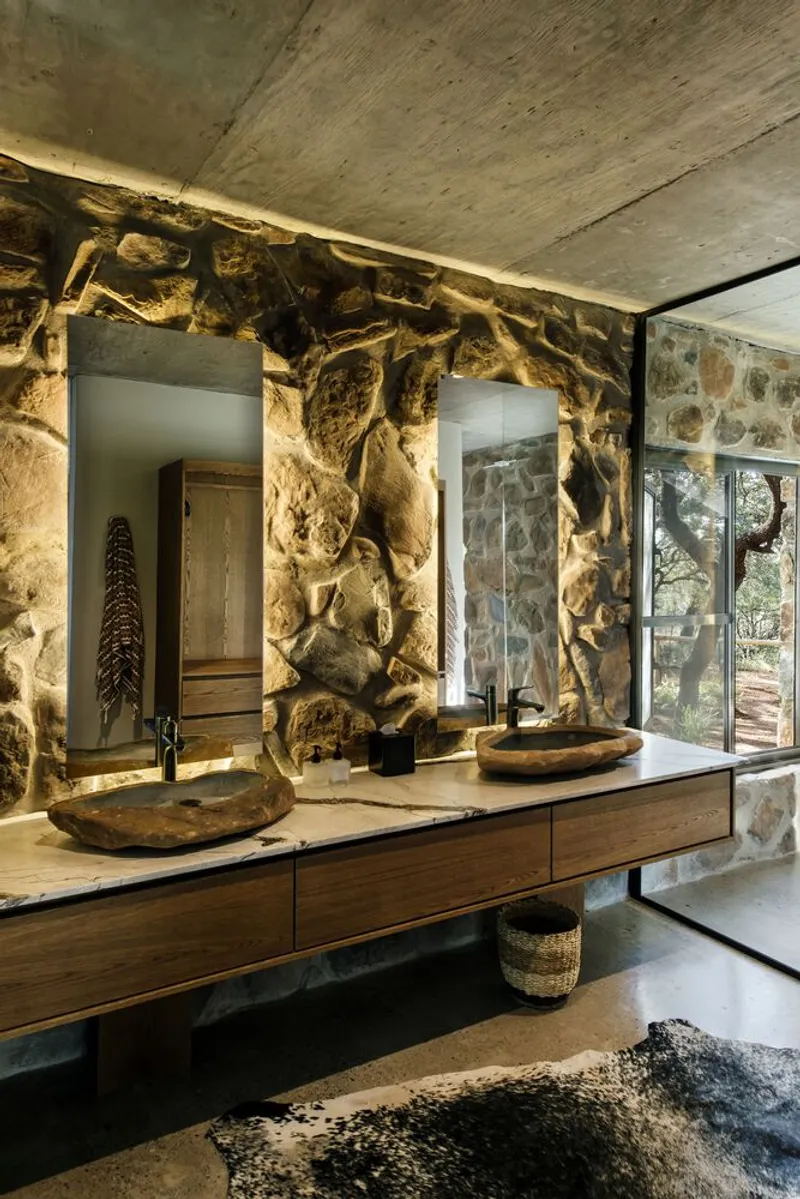
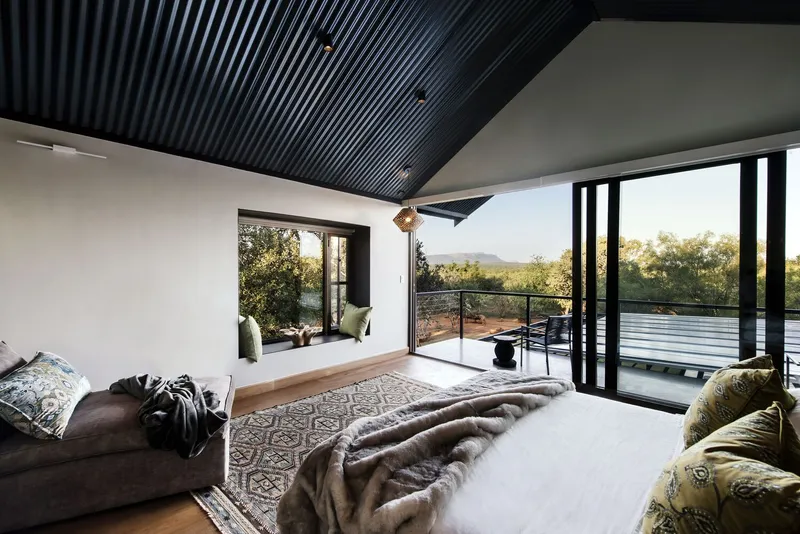
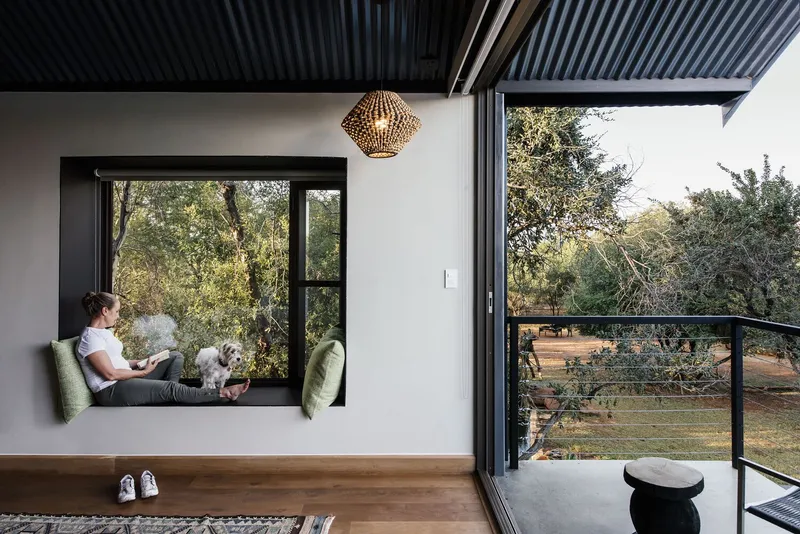
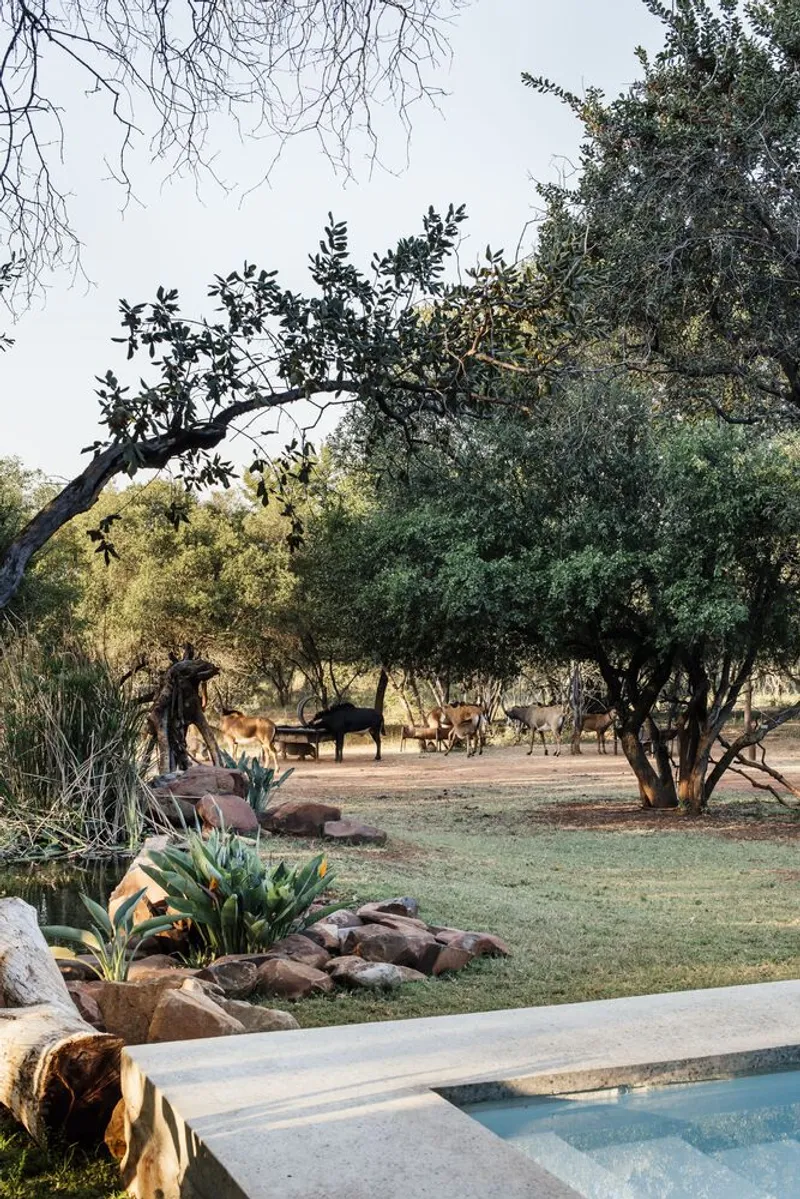
To further integrate the house into its surroundings, the design extends the local vegetation onto the flat roof, softening the structure’s presence in the landscape. The connection between architecture and nature is reinforced by expansive openings that frame views of the Magaliesberg mountains, inviting the outdoors into the living spaces.
Thoughtful Spatial Organization
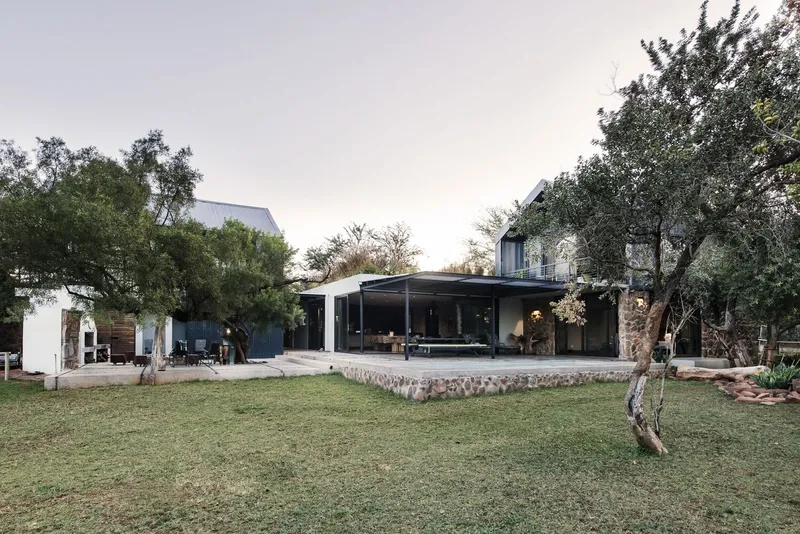
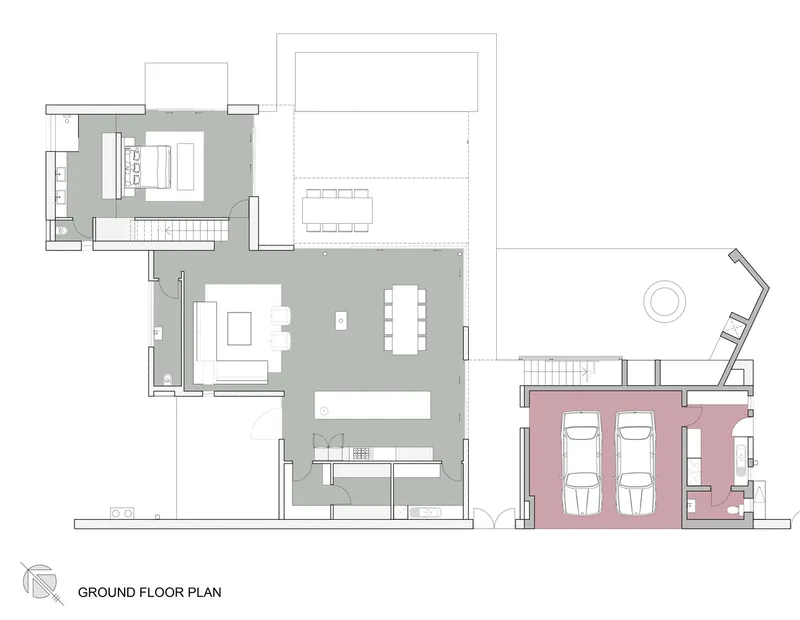
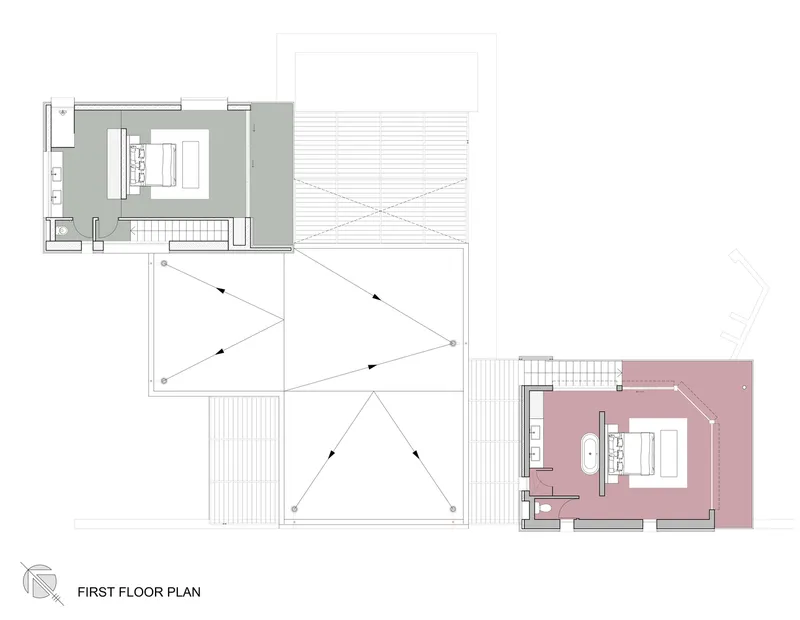
The reconstruction of Rustenburg Farm was not just about resilience but also about creating a comfortable and functional home. The surviving portion of the original farmhouse, consisting of a double garage with a bedroom suite above, was incorporated into the new layout. A spacious living area with an open-plan kitchen was built on the original platform, linking the preserved structure with two additional bedroom suites. This arrangement ensures a seamless flow between indoor and outdoor spaces, emphasizing openness and connection to the landscape.
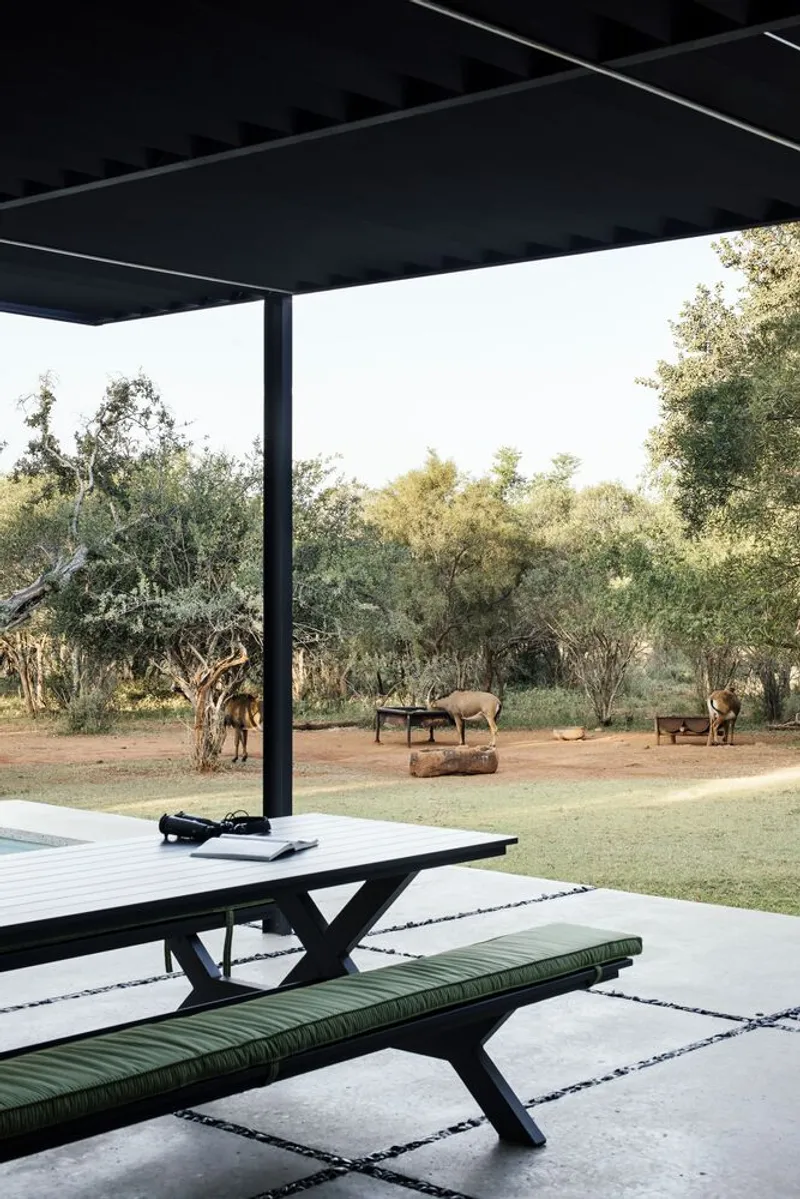
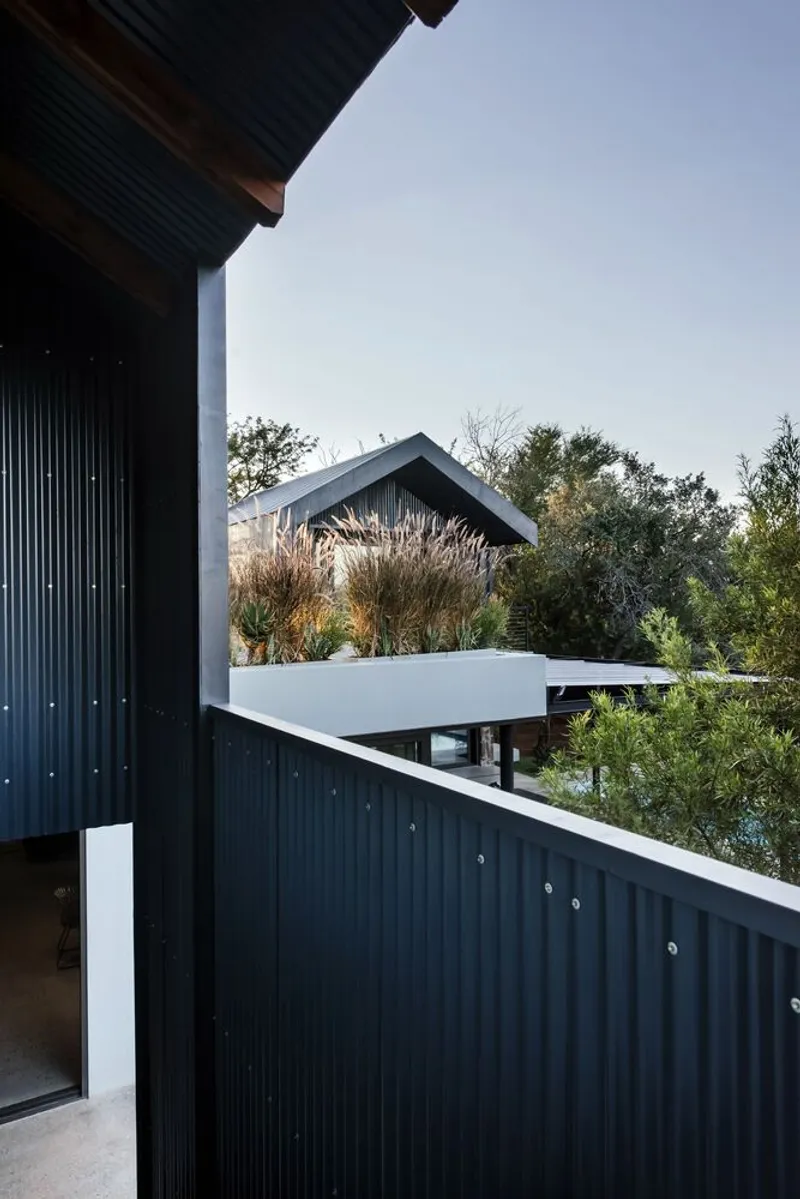
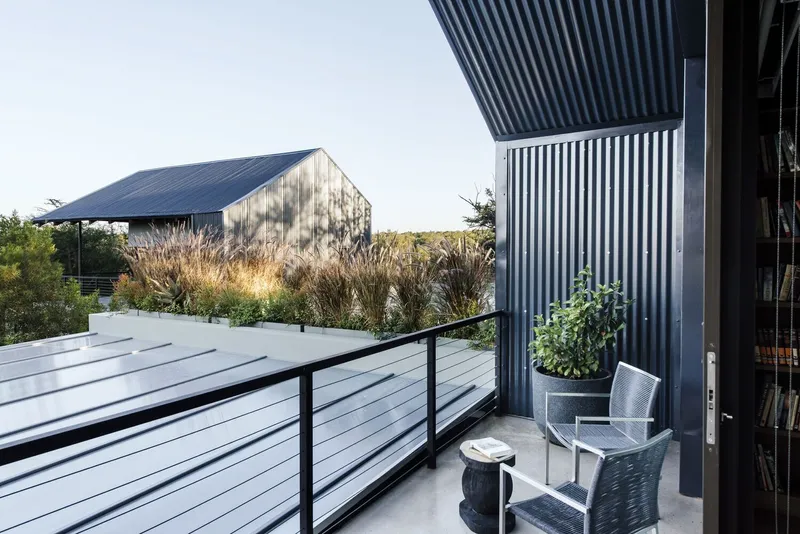
Corrugated sheeting was applied across both the existing and new structures, visually unifying the home. The result is an elegant yet understated design that blends contemporary elements with traditional craftsmanship.
A Model for Future Off-Grid Sustainable Homes
Rustenburg Farm exemplifies how architecture can respond to environmental challenges while creating beautiful, functional spaces. By prioritizing resilience, sustainability, and material authenticity, the project sets a precedent for off-grid sustainable homes that respect nature rather than dominate it. The house is not just a place of shelter but a model for future eco-conscious developments that seek harmony between human habitation and the natural world.
Embracing Sustainability with Architectural Integrity
Nadine Engelbrecht’s design for Rustenburg Farm redefines what it means to build sustainably. The house celebrates local craftsmanship, environmental integration, and energy independence, proving that off-grid living can be both luxurious and ecologically responsible. As the world shifts towards greener architecture, projects like Rustenburg Farm offer a glimpse into a future where sustainability and design excellence go hand in hand.
All Photographs are works of Marsel Roothman




Popular Articles
Popular articles from the community

A Reinforced Cocoon: Vernacular Architecture for Security, Healing and Community in Qandahar
A Reinforced Cocoon reimagines Afghan vernacular architecture as secure community space for widowed women, families, healing and resilience.


FAMM Arquitectura Organizes Ten Villas Around Courtyards and Jungle in Nosara, Costa Rica
El Molino pairs two elongated volumes with deep overhangs and timber louvers to build a compact coastal community five minutes from the beach.
How Henri Picq's 1889 Paris Pavilion Traveled 11,000 Kilometers to Become Santiago's Artequín Museum
A prefabricated iron and glass pavilion built for the Paris Universal Exposition found a second life as a children's art museum in Chile.

Pangolin Can Help Mining: Biomimicry Architecture for an Asteroid Mining Habitat
Pangolin Can Help Mining explores biomimicry architecture through a modular 3D-printed habitat designed for asteroid mining and future life.

Similar Reads
You might also enjoy these articles

Bamboo Housing Challenge 2026: Design Affordable, Sustainable Homes Using Bamboo
An international design competition by Bamboo U and IBUKU inviting architects and designers to reimagine affordable housing using bamboo — with the winning design built full-scale in Bali.

Computational Design & Education: Beegraphy Design Awards Introduces 7th Category (Featuring Jiyun's Innovative Approach)
Dive into Beegraphy’s 7th Design Awards category, where computational design meets education to create immersive, interactive learning tools, inspired by Jiyun’s work.
From Parametric Lighting to Urban Furniture: Join the 2nd Workshop in Beegraphy’s Computational Design Series
Dive into Cutting-Edge Design Techniques and Practical Applications with Industry Experts

Last Call: Unleash Your Architectural Genius in SHAK's Kindergarten Design Competition
Urgent call for architects to join SHAK's kindergarten design competition before the looming deadline

Explore Housing Competitions
Discover active competitions in this discipline



The International Standard for Design Portfolios


The Global Benchmark for Architecture Dissertation Awards

The Global Benchmark for Graduation Excellence


Challenge to reimagine the Iron Throne
Comments (0)
Please login or sign up to add comments
No comments yet. Be the first to comment!