
OMA's First Ground-Up Office Building in Japan, Tenjin Business Center, Completed
The mixed-use complex sets new standards for sustainable and flexible workspaces in Fukuoka


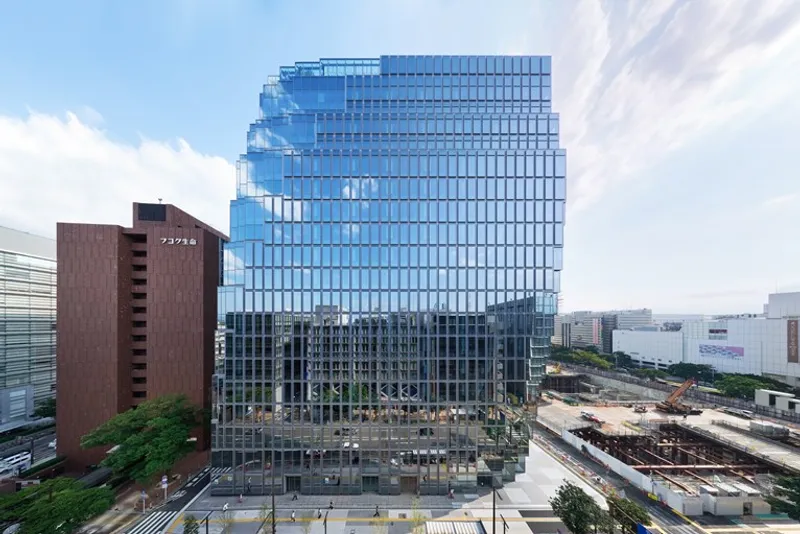
Tenjin Business Center, a 640,300-square-foot mixed-use office complex, has been completed in Fukuoka, Japan. The project marks OMA's first ground-up office building in Japan and the first built development of the Tenjin Big Bang initiative, which aims to transform the district into an Asian business hub and startup city. Designed by OMA's New York office as lead architect in collaboration with Maeda Corporation, Nihon Sekkei, and Curiosity Inc., the building represents a new ambition for urban renewal and growth in Fukuoka.
 Ph. © Tomoyuki Kusunose
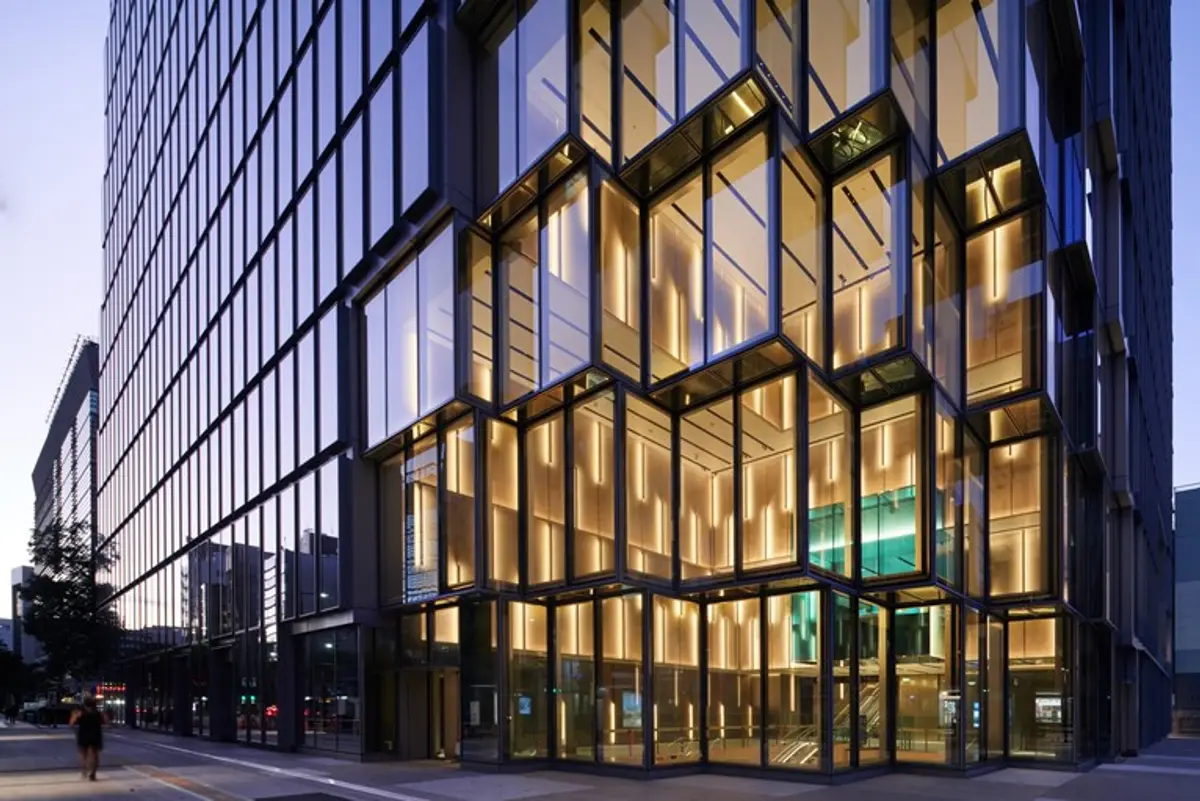
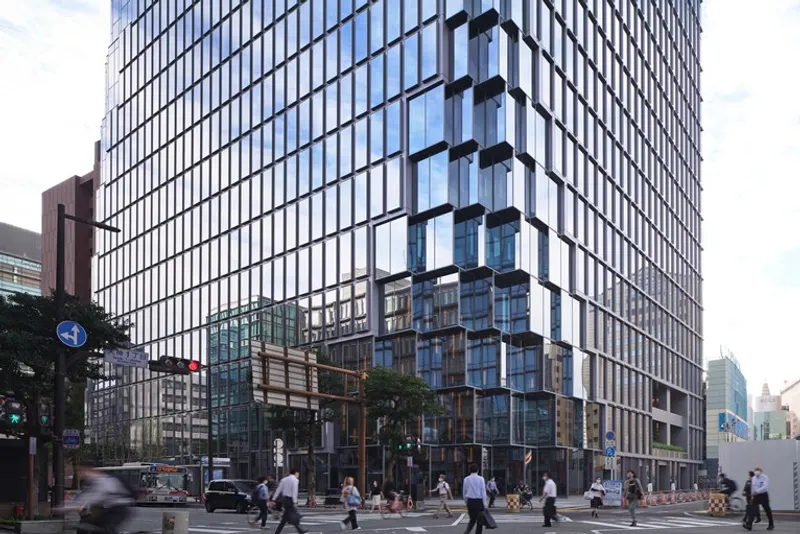
The site is located at the intersection of two major axes: Meiji-Dori, the city's established avenue of commerce lined with financial offices, and Inabacho-dori, an organic pedestrian corridor linked to the city Hall Plaza and Galleria, lined with intimate cafes. OMA's approach was to excavate the facade on the corner of Meiji-Dori and Inabacho-dori to articulate the convergence of two different urban activities. This gesture enhances two conditions simultaneously - it reveals the internal activity of the office and draws in public activity at the new entry plaza.
 Ph. © Tomoyuki Kusunose
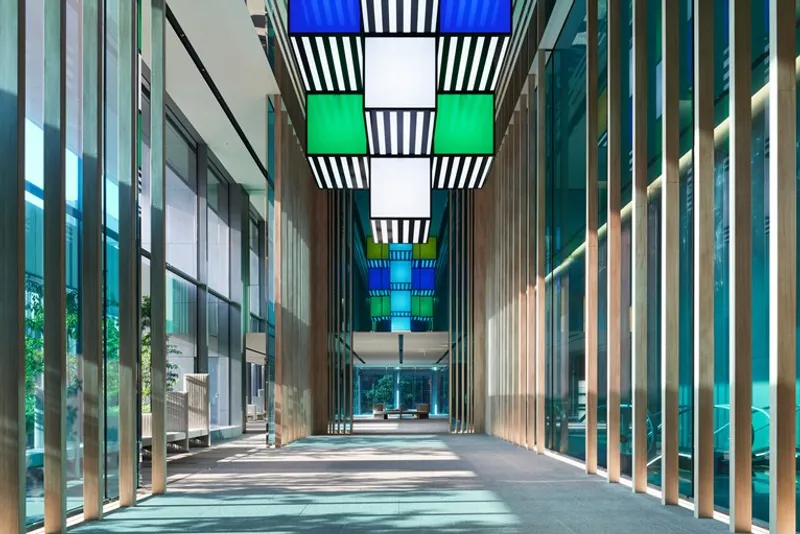
The building program is predominantly workspace, within a given massing that is neither low-rise nor tower. Therefore, the design was conceived through hyper-focused interventions that subtly merge and connect human and urban scale, two streets of different characters, inside and outside, city and nature. The result is an efficient office block with the most memorable corner - an excavation of the building towards more openness. Within the carved-out corner is a six-story atrium that reinforces the inside/outside visual connection and draws natural light down to the lower-level concourse linked to the area's underground pedestrian, retail, and transit network.
 Ph. © Tomoyuki Kusunose
The excavation is calibrated as three-dimensional pixels that break down the building to a human scale. The pixelated facade forms a series of soffit surfaces above, activated with signage and lighting that reinforce a sense of place at the convergence point. Setbacks at the opposing upper level provide dynamic office interiors. With respect to nature in the city, OMA symbolically introduces panoramic views to the often-overlooked Naka River and Hakata Bay. Together, the two pixelated edges round out the building to create a sense of softness like that of a melting ice cube.
 Ph. © Tomoyuki Kusunose
Shohei Shigematsu, OMA Partner and Fukuoka native said: "It's been a remarkable experience to build in my hometown where the city's unique culture and identity are held close by its community, but in a moment of transformation catalyzed by an openness to new ideas and people.
 Ph. © Tomoyuki Kusunose
 Ph. © Tomoyuki Kusunose


Popular Articles
Popular articles from the community


Lunar Spiral: Space Architecture Shaped by the Mathematics of the Universe
Lunar Spiral reimagines space architecture through Fibonacci geometry, lunar regolith, levitating habitats, and self-sustaining Moon living.

Hill & Cross Opera: Sculptural Opera House Architecture Shaped by Tallinn’s Landscape and Identity
Hill & Cross Opera reimagines opera house architecture in Tallinn through its sculptural hill, civic plaza, glass wave and a luminous cross.

The Ocean Hive: Sustainable Architecture for a Self-Sufficient Civilization at Sea
The Ocean Hive imagines sustainable architecture at sea, where modular habitats, algae, wave power and ocean waste sustain a growing colony.

Co-life: Sustainable Architecture for Age-Friendly Community Living
Co-life reimagines sustainable architecture for seniors through courtyards, rammed earth, shared gardens, and spaces designed for belonging.

Similar Reads
You might also enjoy these articles
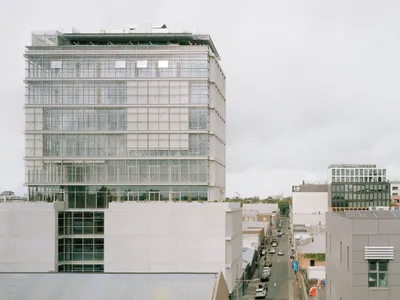
116 Rokeby Building, Collingwood
Sustainable Collingwood office building featuring double-skin façade, natural ventilation, rooftop amenities, and carbon-neutral design focused on wellbeing and longevity.
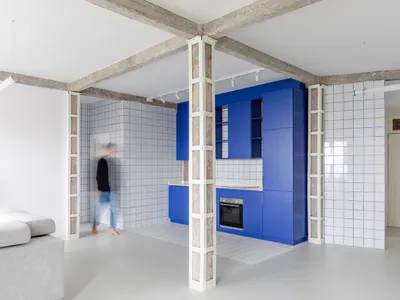
Contemporary Apartment Renovation in Spain: RV House by BIAN Opens Up to the Sea
A minimalist 1930s apartment in Santander is transformed into a flexible, sea-facing home through contemporary Spanish renovation.
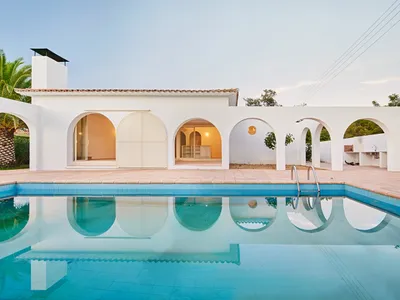
3 Marías House: A Contemporary Mediterranean Courtyard Retreat by Bajet Giramé + Burckhardt
Mediterranean courtyard home blending traditional architecture with modern design, terracotta flooring, flexible interiors, sustainable climate strategies, and garden integration.
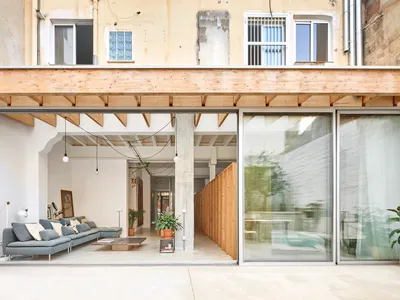
NZ10 Apartment by auba studio: Adaptive Reuse in Palma de Mallorca
Adaptive reuse apartment transforms bakery into light-filled home with patios, privacy layers, and wood interiors enhancing urban living experience.

Explore Office Building Competitions
Discover active competitions in this discipline


Challenge to reimagine the Iron Throne

Photograph architecture without architects

Illustrate the lost glory of Angkor Wat - Render Challenge

Design challenge to reuse E-waste
Comments (0)
Please login or sign up to add comments
No comments yet. Be the first to comment!