

Viczonecode Villa by DDconcept: Tropical Family Living in Ho Chi Minh City
Tropical family villa in Ho Chi Minh City featuring courtyards, skylights, natural ventilation, elevated flooring, and seamless indoor-outdoor living surrounded by greenery.


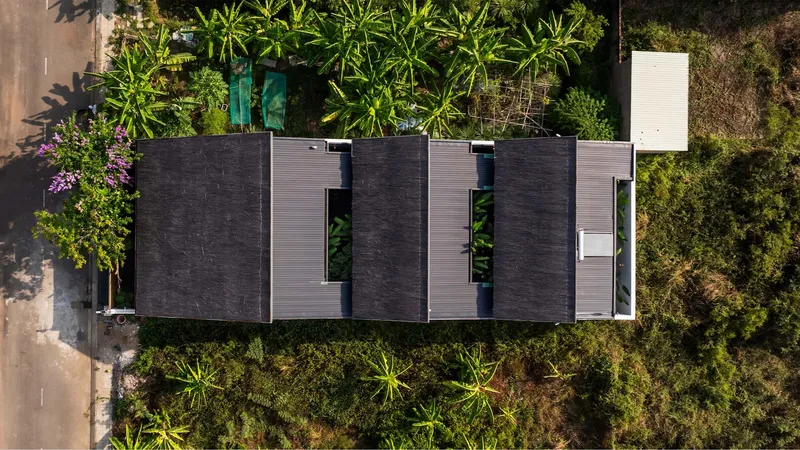
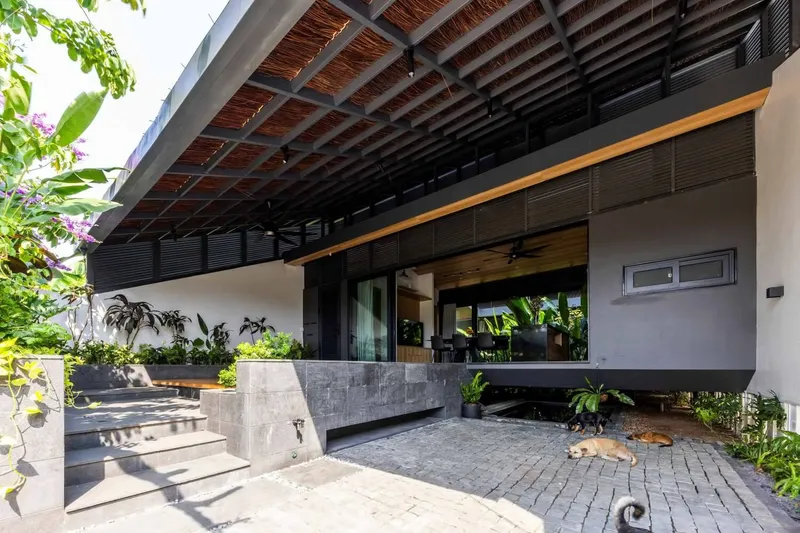
Located in a quiet residential neighborhood approximately 20 kilometers east of downtown Ho Chi Minh City, Viczonecode Villa by DDconcept is a thoughtfully designed tropical residence created for a young family of five. Completed in 2023, the 300-square-meter home explores the relationship between architecture, climate, and nature, offering a contemporary lifestyle while maintaining a deep connection with the surrounding environment.
Tropical Residential Architecture Rooted in Nature
The design responds to the homeowner’s desire for a living space that integrates seamlessly with nature while maintaining the comfort and functionality of modern urban housing. The site benefits from a low-density context with generous green spaces, which allowed the architects to develop a house that maximizes natural light, ventilation, and garden views.
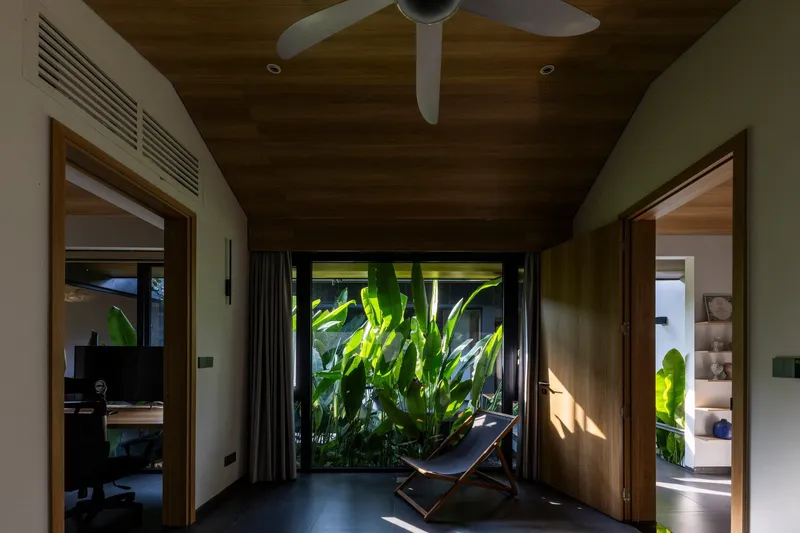
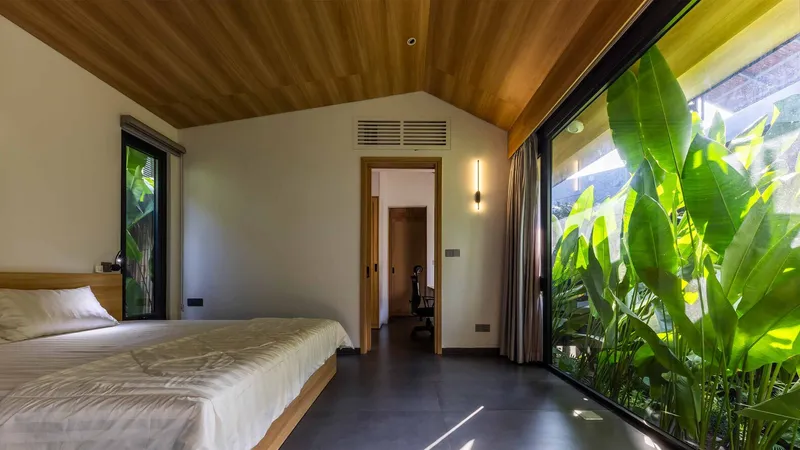
Throughout the home, large openings, skylights, and garden-facing spaces blur the boundary between indoor and outdoor environments. Natural elements become part of the daily living experience, allowing residents to observe seasonal changes, rainfall, breezes, and shifting sunlight patterns throughout the day.
This approach reflects the core principles of tropical architecture, where climate-responsive design strategies help reduce energy consumption while improving comfort and well-being.
A Single-Level Layout Inspired by Apartment Living
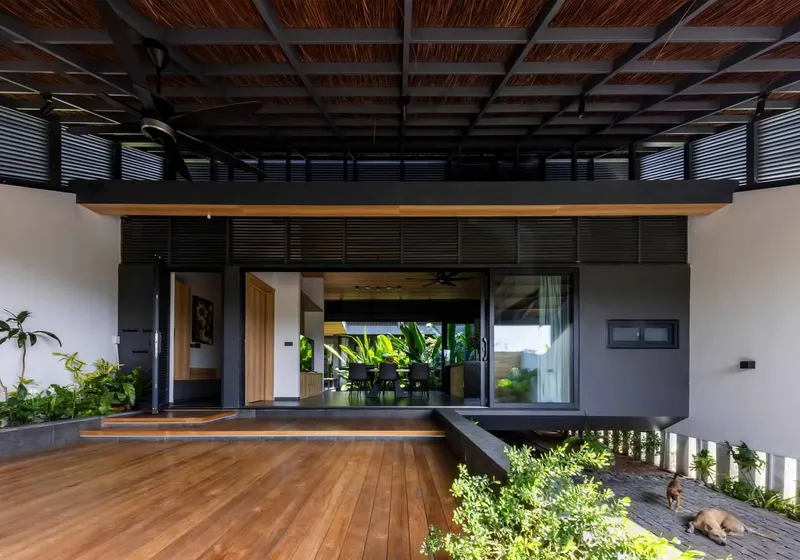
Having previously lived in a high-rise apartment, the homeowners wanted a ground-level residence that preserved the convenience and functional organization of apartment living. As a result, all activities in the house are arranged on a single floor covering 300 square meters, creating a compact and highly efficient layout.
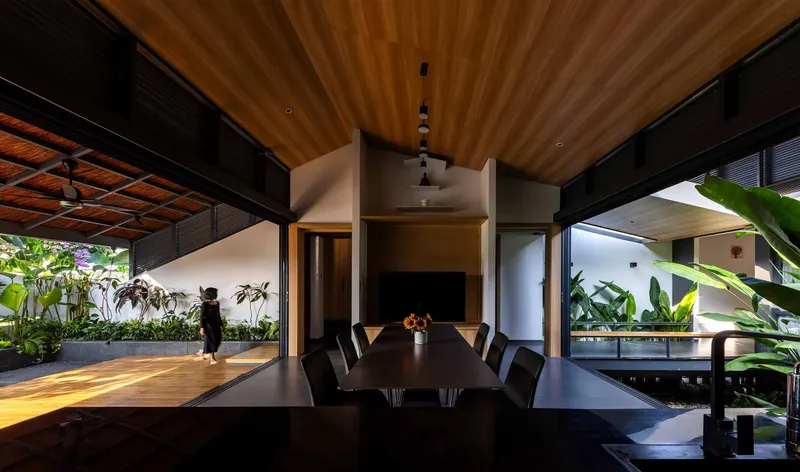
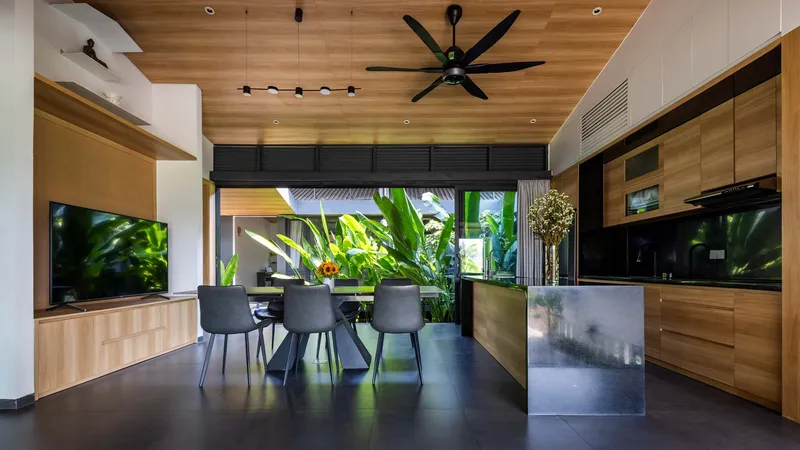
Instead of strictly separating private and communal areas, the design adopts a more fluid spatial organization. Living, dining, and family spaces flow naturally into one another, creating a continuous living environment that encourages interaction among family members.
This open-plan concept enhances flexibility while maintaining visual connections across the home.
Transitional Spaces as Climate Buffers
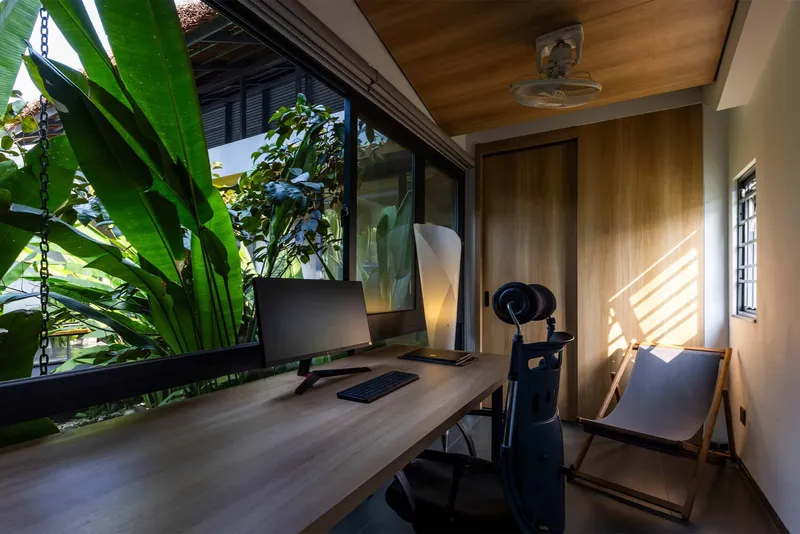
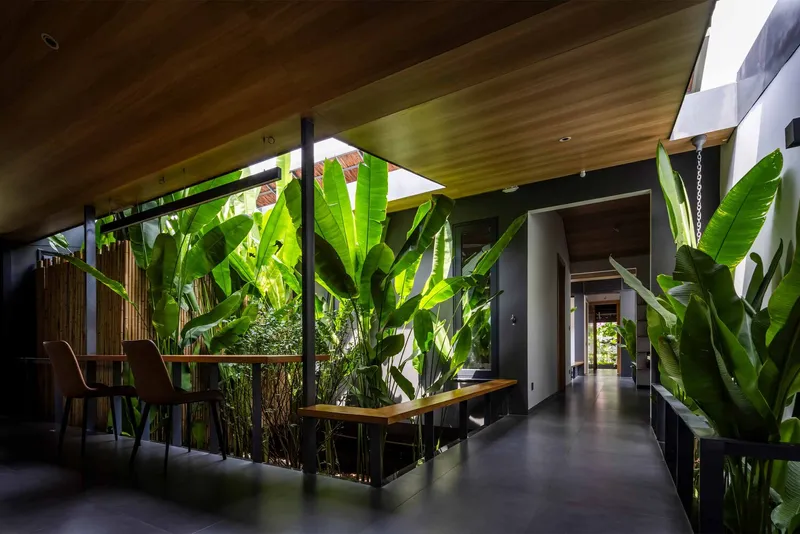
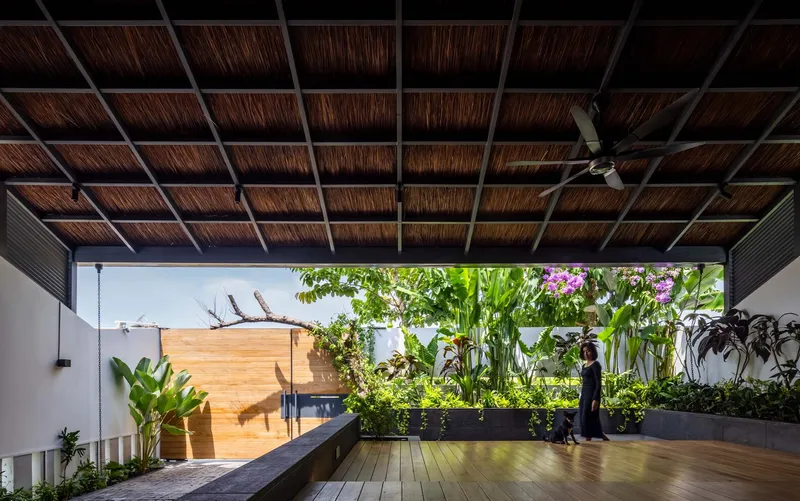
One of the most distinctive aspects of Viczonecode Villa is the integration of courtyards, verandas, and corridors, which function as transitional spaces between interior and exterior environments.
These semi-open zones play several important roles:
They reduce thermal radiation entering the main living areas They create shaded outdoor spaces for relaxation and family activities They improve cross-ventilation throughout the house They strengthen the connection between architecture and landscape
Although these transitional areas reduce the amount of enclosed interior space, they significantly enhance environmental performance and the quality of daily life. They also provide flexible spaces where children can play and family members can gather informally.
Climate-Responsive Design for a West-Facing Home
Because the house faces west, an orientation typically associated with intense afternoon heat, the architects implemented several climate-control strategies to maintain interior comfort.
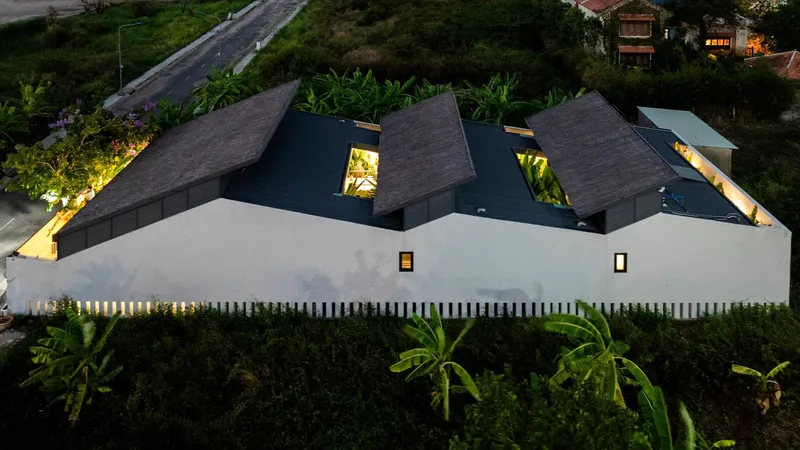
A dual-layer sloped roof system helps minimize solar heat transmission by creating an insulating air gap between the roof layers. This system reduces heat gain while allowing hot air to dissipate more efficiently.
In addition, the elevated floor platform serves multiple functions. It protects the home from potential flooding during heavy tropical rains, improves air circulation beneath the structure, and helps dissipate accumulated heat from the ground. For the children, the raised structure also creates an engaging and playful spatial experience.
Gardens, Skylights, and Everyday Encounters with Nature
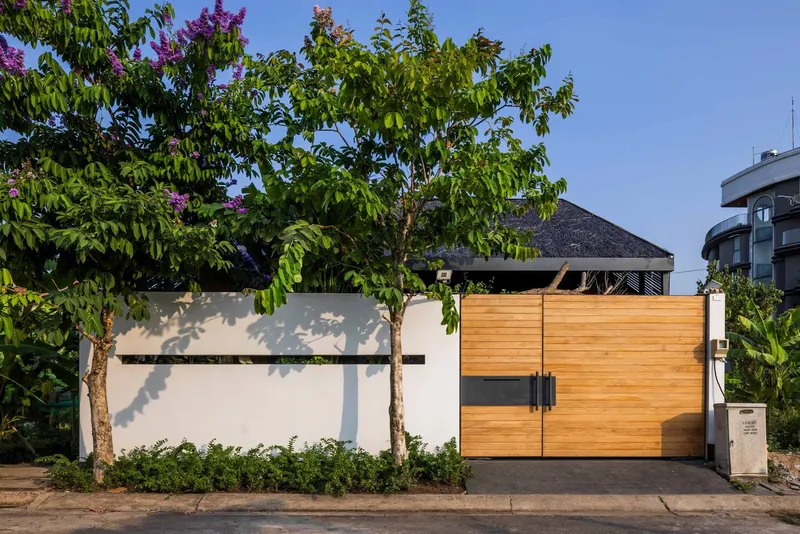
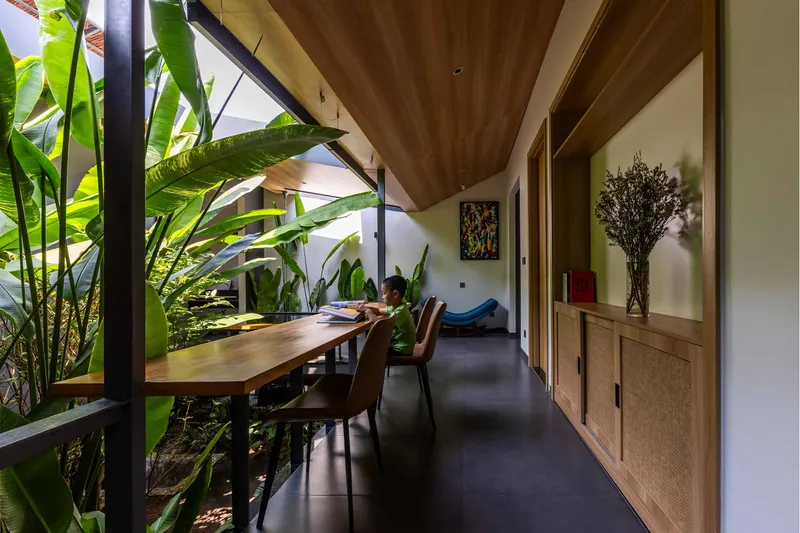
Greenery is carefully distributed throughout the house, ensuring that most rooms maintain visual connections to outdoor landscapes. Gardens, planted courtyards, and skylights introduce natural light and fresh air into the interior spaces.
This design strategy creates constantly changing atmospheres within the home. Sunlight filters through vegetation, rain becomes visible from interior courtyards, and seasonal breezes circulate naturally through the rooms.
These subtle interactions with nature contribute to both physical comfort and mental well-being, reinforcing the house’s role as a calm and nurturing environment for family life.
A Sustainable and Human-Centered Home
Viczonecode Villa demonstrates how contemporary residential architecture can combine sustainability, climate responsiveness, and family-centered design. By prioritizing environmental harmony, natural ventilation, and transitional spaces, the project offers a refreshing alternative to conventional urban housing.
Rather than relying heavily on mechanical cooling systems, the house uses passive strategies: such as shading structures, airflow management, and landscape integration, to create comfortable living conditions.
The result is a home that supports everyday family activities while fostering stronger connections between architecture, nature, and community.


Popular Articles
Popular articles from the community

Cloaked Colonization: A Mobile Underwater Habitat That Moves Like a Fish
Micah Abaya's shortlisted EHC Pacific entry reimagines ocean settlement as a dispersed network of self-sustaining architectural organisms.
Temporary Home for Dogs: A Reversed Zoo Rethinks Animal Shelter Architecture
In Bucharest, a sinuous corridor and freed landscape flip the logic of containment, designing a shelter that works to make itself unnecessary.

Extended Shell: Retrofitting Kolkata's Balconies as Living Urban Thresholds
A modular retrofit system recovers the social and environmental intelligence of Kolkata's historic verandas for contemporary Park Street residents.

Manzana Morphosis: Stretching Barcelona's Grid into a Living Landscape for 2050
A radical reworking of the Eixample manzana turns density into a tool for generous public space, vertical ecology, and environmental performance.

Similar Reads
You might also enjoy these articles

Bamboo Housing Challenge 2026: Design Affordable, Sustainable Homes Using Bamboo
An international design competition by Bamboo U and IBUKU inviting architects and designers to reimagine affordable housing using bamboo — with the winning design built full-scale in Bali.

Computational Design & Education: Beegraphy Design Awards Introduces 7th Category (Featuring Jiyun's Innovative Approach)
Dive into Beegraphy’s 7th Design Awards category, where computational design meets education to create immersive, interactive learning tools, inspired by Jiyun’s work.

From Parametric Lighting to Urban Furniture: Join the 2nd Workshop in Beegraphy’s Computational Design Series
Dive into Cutting-Edge Design Techniques and Practical Applications with Industry Experts

Last Call: Unleash Your Architectural Genius in SHAK's Kindergarten Design Competition
Urgent call for architects to join SHAK's kindergarten design competition before the looming deadline

Explore Ho Chi Minh City Competitions
Discover active competitions in this discipline

Challenge to reimagine the Iron Throne

Photograph architecture without architects

Illustrate the lost glory of Angkor Wat - Render Challenge

Design challenge to reuse E-waste
Comments (0)
Please login or sign up to add comments
No comments yet. Be the first to comment!