
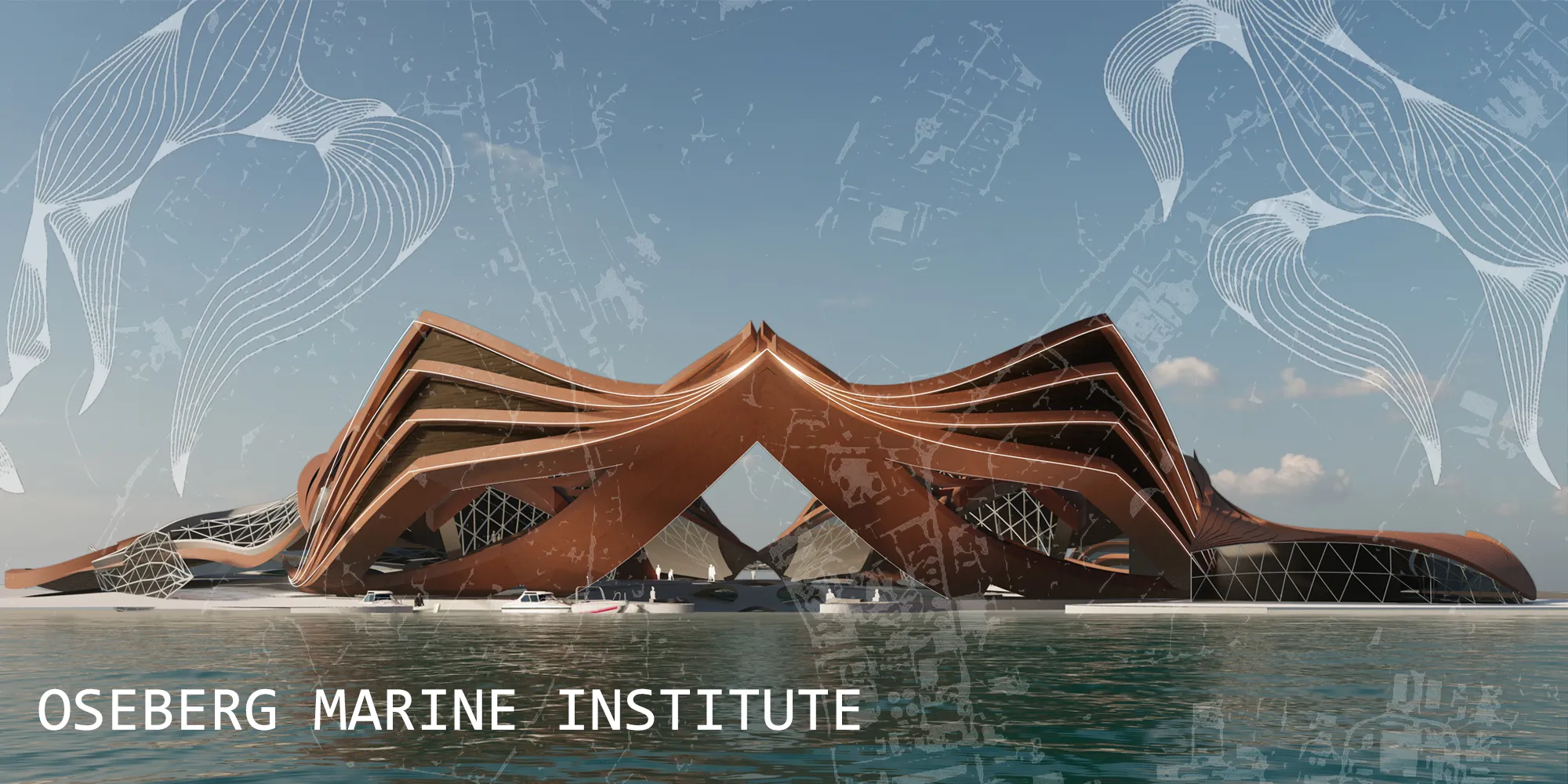
Oseberg Marine Institute
Flow Competition
The Oseberg Marine Institute sought to bring together education and research in a collaborative manner to allow for the flourishing of innovative ideas that have the potential to improve the future of our planet. The building addressed the main topics of sustainability, program and design, with the additional considerations of transient housing and a cultural connection to Norway. The design engages characteristics of water metaphorically and also physically brings water into the site for a literal connection. In this journal, we seek to explain not only the design process and methodologies but also the sources of inspiration and cultural considerations of Norway.
To create architecture inspired by water, we first analyzed its intrinsic qualities, such as fluidity, elasticity and adaptability as well as its rhythmic properties seen in waves, currents, whirlpools and other natural occurrences. Water was then deployed in three main ways, as a filtration system, as an aesthetic element, and as a functionality device. This can be seen in the overall building massing which works as a unit, made with interconnected pieces instead of a campus style approach to the site. It is also seen in the armature, where soft folds and dynamic shifts were deployed to spatialize and create an organizational logic to the program. Circulation was also inspired by the mobility of water, where elements converge and separate to create an efficient flow of traffic and a fluid sequence of spaces. Additionally, water was brought into the site as a literal representation of the element that allows users a direct connection to it.
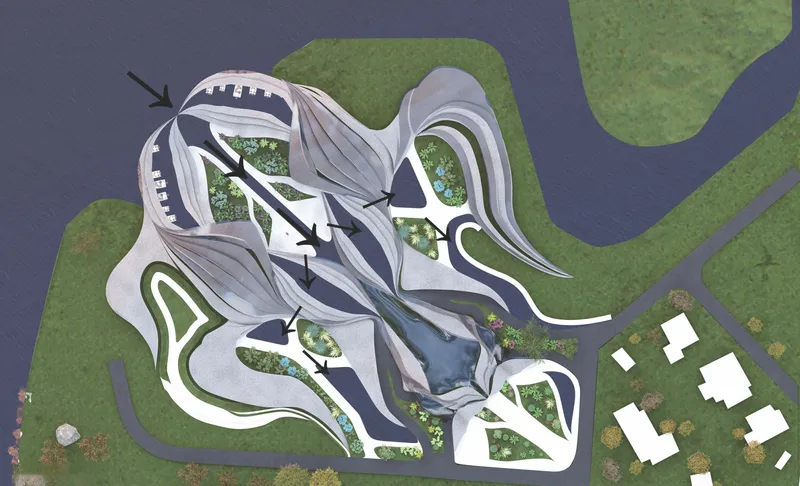
The organizational logic applied to the masterplan was inspired by the existing site conditions, those being the topography, water edge, and vehicle access. The topography’s soft curves were used as guidelines to inform the building’s composition, both in plan and section. The building bends and adapts to create enclosed courtyards accommodated to each individual program, and allow for natural light, ventilation and unobstructed views. The entry point was dictated by the street access, the road extends into the site leading into the underground parking garage and drop off zone. Upon entering, one would find a large atrium where the Interaction Zone is located, adjacent to the road access. That then leads into the central courtyard, a space where users can pause, reflect and redirect, as this is the main dynamic shift of space. Here the spaces branch into the two main programs of the Institute, the Marine Research Zone (South) and Educational Zone (North). The proximity of both programs allows for the central courtyard to be a collaborative and interactive space between the two vital components leading to marine science development. It was also of crucial importance that the zones’ placement was adjacent to the water’s edge to allow for easy access to the canal. The access was also made possible by partially flooding the site to allow for an enclosed docking space, creating a fluid connection between the canal and the building.
Branching off the Educational Zone, one can find the Transient Housing Wing, which offers temporary accommodations for students, professors, guest speakers, and other visitors associated with the Marine Institute. Due to a possible flooding risk, the housing is situated on the highest elevation on the site. Through the Marine Research Zone, one can access workshop spaces that overlook the canal, and are in close proximity to the boat docks. In the designated courtyard assigned to the workshop spaces, is an Open Air Theater that utilizes the building’s façade to project pertinent media to marine research and exploration. It sculpts the site topography to create sunken terraced seating, which not only serves as an intimate gathering space, but can also double as a means to regulate flooding by turning into a containment pool.
East of the Workshop Spaces, one can find the Viking Museum and Archive, an additional programmatic component that serves to link Norway’s culture and its connection to the ocean. Historically, the Vikings were known to have sailed long distances into the sea before many other cultures. They had a strong connection to the ocean, and naturally were extremely skilled at crafting ships that could handle the unpredictability of the sea. This component, along with the topography were crucial in informing the building’s uniqueness to this particular site, region and country.
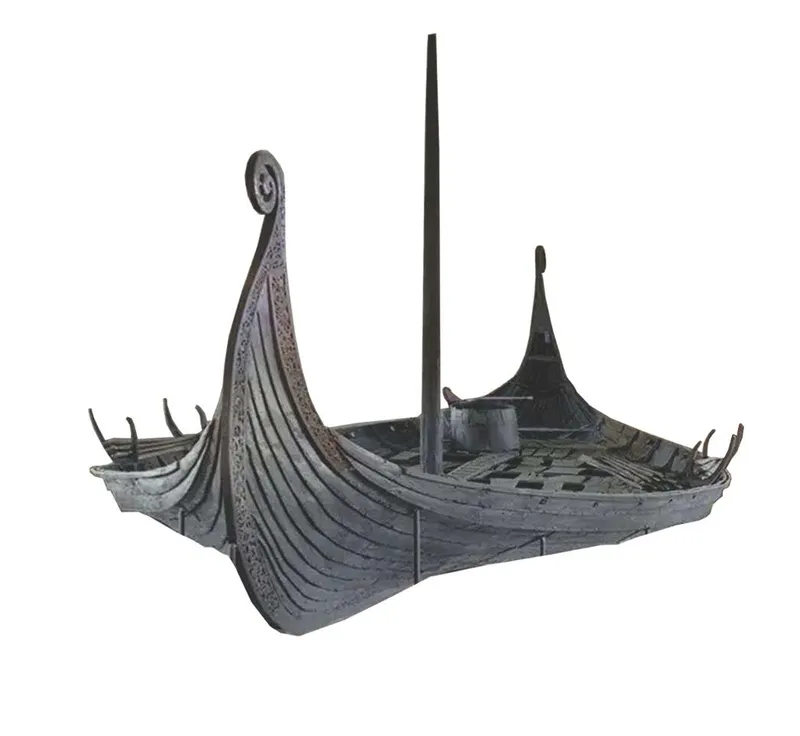
Another main reason for the additional program of a Viking Museum and Archive was due to this idea’s strong influence in the design of the building itself. It became a cultural tie to Norway, and allowed for the use of vernacular materials and typologies, which are not only a more sustainable choice, but also give a familiar feel to a new building. We then looked specifically at the famous Oseberg Ship (Figure 1), known for being the most well-preserved and one of the largest Viking ships in existence today, found in a large burial mound in Norway and currently residing in the Viking Ship Museum in Oslo. This not only proceeded to influence the design and structure of the building but also was used in the title of the project to honor it as our main source of inspiration.
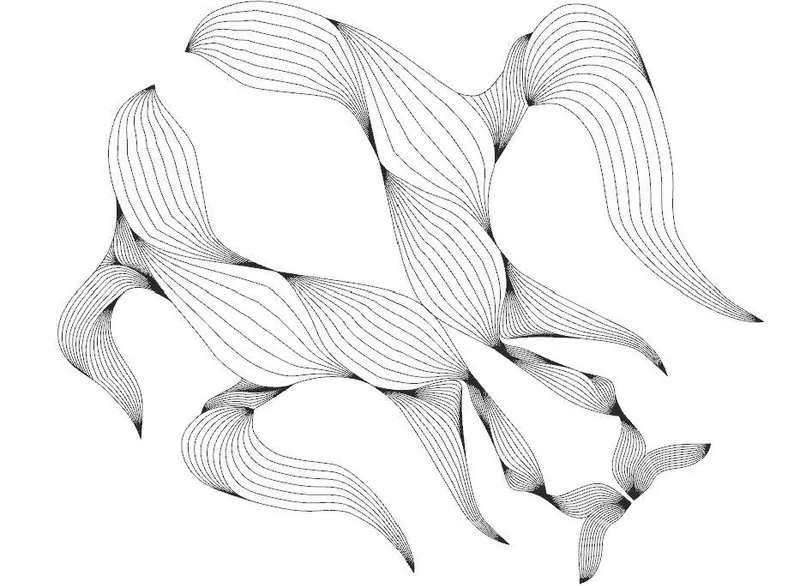
The design started with the creation of fluctuating soft lines that taper at the ends and inflate in the center, inspired by the layered sculpted wood in Oseberg (Figure 2). Those lines then became soft tectonic components that culminated into the main armature that orients to stretch and creates lateral connections to sculpt spaces. By layering, peeling and creasing, we were able to create a similar aesthetic effect to the Oseberg Ship and an animated fluctuating structure that becomes a metaphorical gesture to represent water. This technique lent us a tool to populate the site horizontally instead of vertically, as to be conscious of the surrounding urban fabric, which is vastly residential. The rhythmic fluctuation of the armature is possible with its base starting and landing at ground level, but inflating to allow for dynamic spaces.
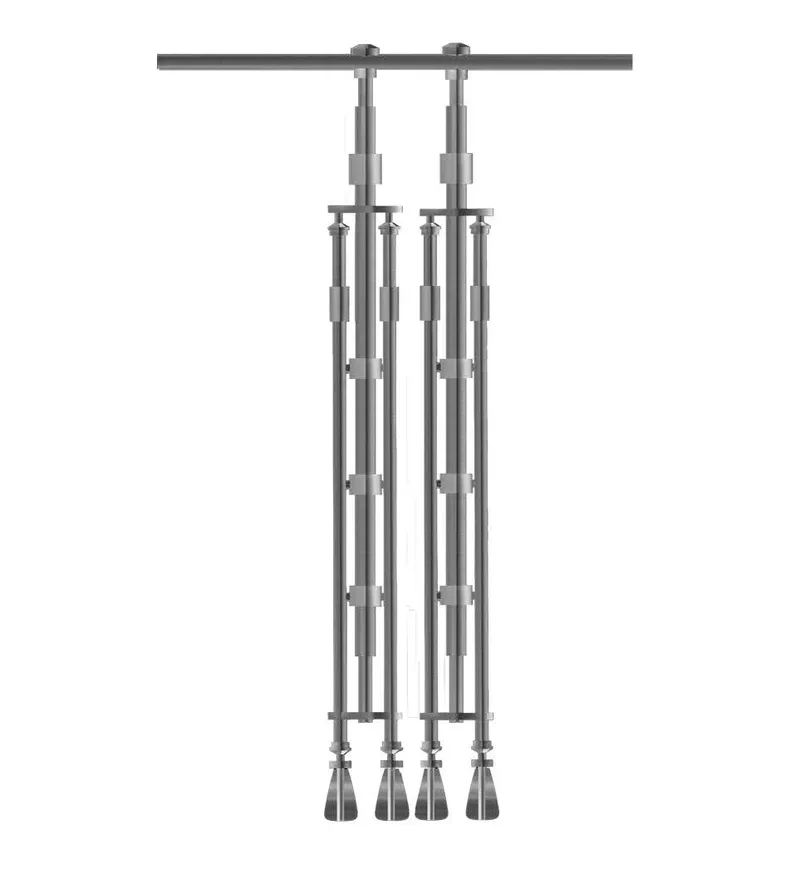
Sustainability was a major consideration of the project due to the rising marine crisis in Norway. The project sought to address specifically marine pollution caused by hydropower plants, leakage from sewers and overflow discharges, as well as marine litter which directly harm wildlife and decrease water quality for the community. This issue was addressed by creating a circulatory water filtration system (Figure 3), where water is brought into the site through a central datum canal, then passes through a filtration device (Figure 4) that both purifies and further propels the water through the site and into secondary tanks that are used for holding marine life, water quality testing, containment in case of flooding, and aesthetically as reflecting pools. From there, water is re-purified as needed and returned to the main canal. This is a continuous system that engages the site and the main water source that borders it, making it accessible to the students, visitors and scientists by bringing it into the site itself.
Another way that sustainability was addressed is through the organic form of the building, allowing for an even distribution of sunlight, which in turn is reflected in a lowered air conditioning and heating need, and consequently not only lower those respective bills but allow the building to depend less on hydroelectric power (one of the main marine pollutants in the area).
Finally, this project sought to not only address the main issues of sustainability through a circulatory water filtration system, program through a dynamic shift of spaces, and site engagement through the connection with the existing topography, but also took into consideration Norway’s Viking culture and connection to the sea to inform the design and function of the Marine Institute.


Popular Articles
Popular articles from the community


Hill & Cross Opera: Sculptural Opera House Architecture Shaped by Tallinn’s Landscape and Identity
Hill & Cross Opera reimagines opera house architecture in Tallinn through its sculptural hill, civic plaza, glass wave and a luminous cross.

Co-Life: Senior Housing Design That Reconnects Older Adults With the City
Co-Life reimagines senior housing design through healing gardens, shared streets, workshops, and a sustainable community across generations.

The Earth Pod: 3D Printed Homes for Resilient Refugee Communities
The Earth Pod reimagines refugee housing through 3D printed homes made from clay, combining resilience, self-sufficiency, and rapid shelter.

Conexión: Biophilic Design Reimagines High-Rise Living in Hong Kong
Conexión reimagines high-rise living in Hong Kong through biophilic design, green facades, shared spaces, daylight, water and nature within.

Similar Reads
You might also enjoy these articles

Day and Night Park: A Time-Based Urban Newsstand in Beijing
A temporary urban newsstand in Beijing blending travel, light, and reading through poetic colors, compact form, and community-focused design.

Modernist Patio Renovation in El Masnou, Barcelona by Oliver Segura Arquitectura + Cebrià Arquitectura
Modernist patio renovation blending tradition and innovation with a movable pool, leveled floors, and Catalan materials in El Masnou.

Alto Residencial Coop: Cooperative Housing Development in Santiago de Compostela by Carbajo Barrios Arquitectos
A linear cooperative housing complex blending white volumes and perforated metal façades, enhancing community living, natural light, privacy, and urban integration.
Vil Genis School by BPA ARCHITECTURE – Massy, France
Vil Genis School in Massy, France, features sustainable design, south-facing classrooms, community integration, accessible spaces, and modern educational architecture.





Comments (0)
Please login or sign up to add comments
No comments yet. Be the first to comment!