
Outside-In House by MA Office: Reimagining the Courtyard in Contemporary Iranian Architecture
Outside-In House by MA Office reimagines the courtyard as a central living space, blending tradition with modern urban architecture.


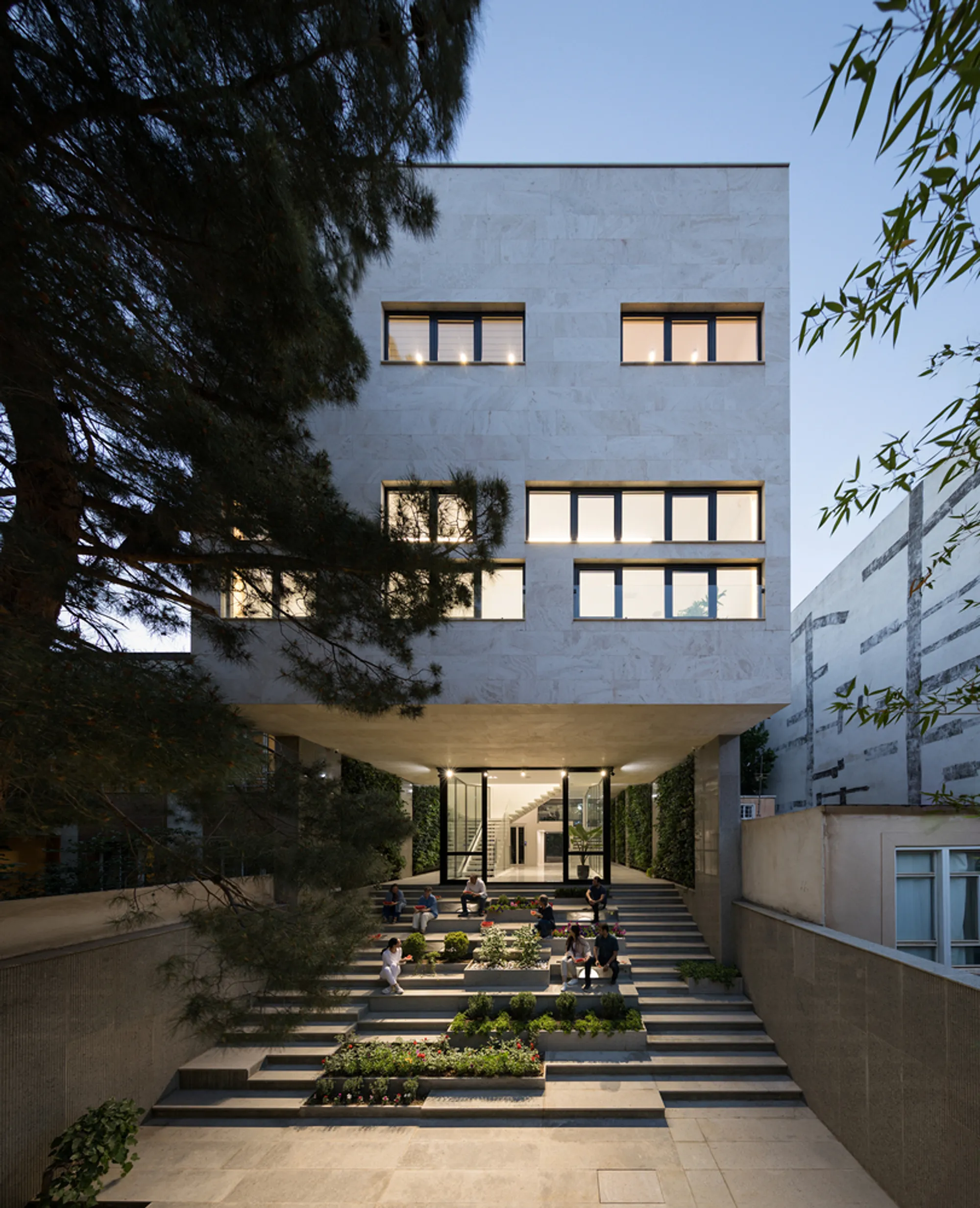
The Outside-In House by MA Office is a bold architectural reinterpretation of traditional Iranian courtyard design, responding to the contemporary challenges of urban infill, limited space, and the changing relationship between interior and exterior environments in residential architecture. Located in Hamedan, Iran, this 680-square-meter home blends traditional spatial values with modern design principles, offering a fresh perspective on the role of the courtyard in today’s urban housing.
Reclaiming the Courtyard as a Living Space
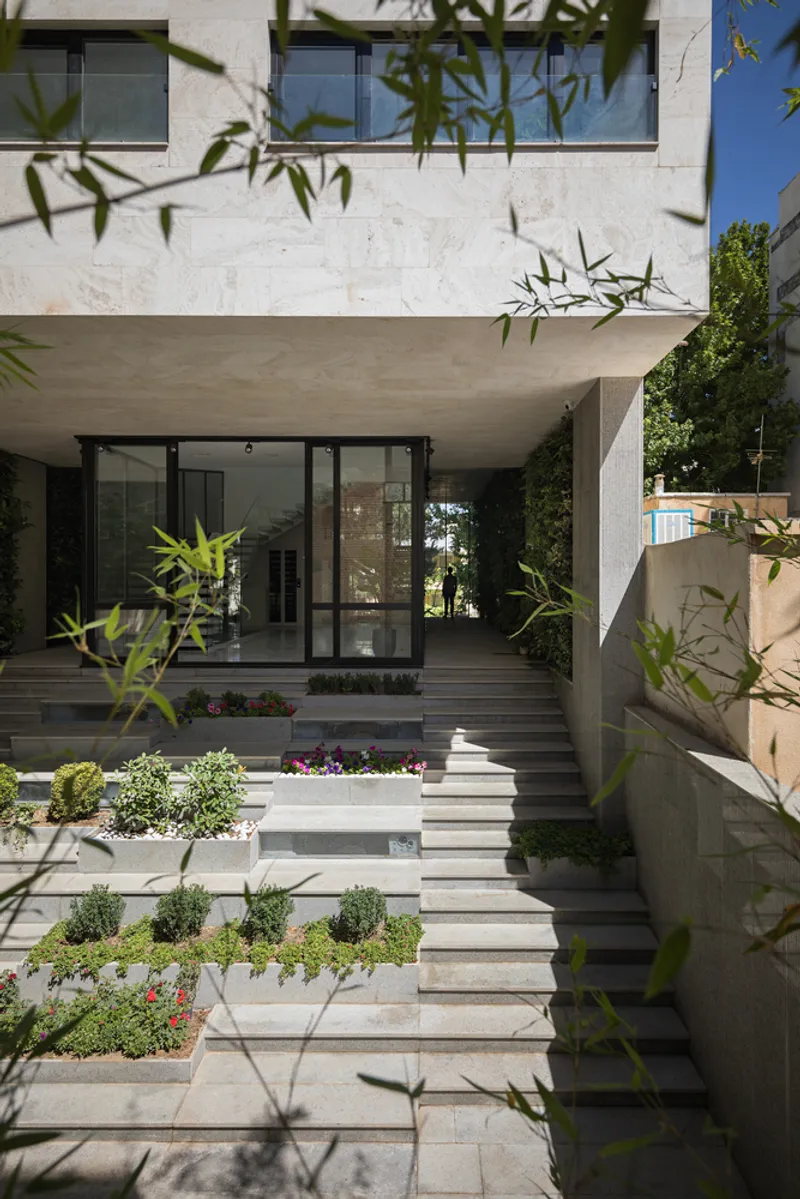
Historically, the courtyard has been a defining element in Iranian residential architecture, acting as the heart of the home and a central organizational feature. However, in recent decades, urban development and infill strategies have drastically reduced the role of the courtyard to a minimal, often symbolic space—especially in smaller urban plots. In many contemporary homes, the courtyard is relegated to merely capturing light, stripped of its former vitality and social function.
MA Office approached this project with a central design question: how can the yard be revived as an active, lived-in space, even in tight urban plots?
Site Constraints as Design Drivers
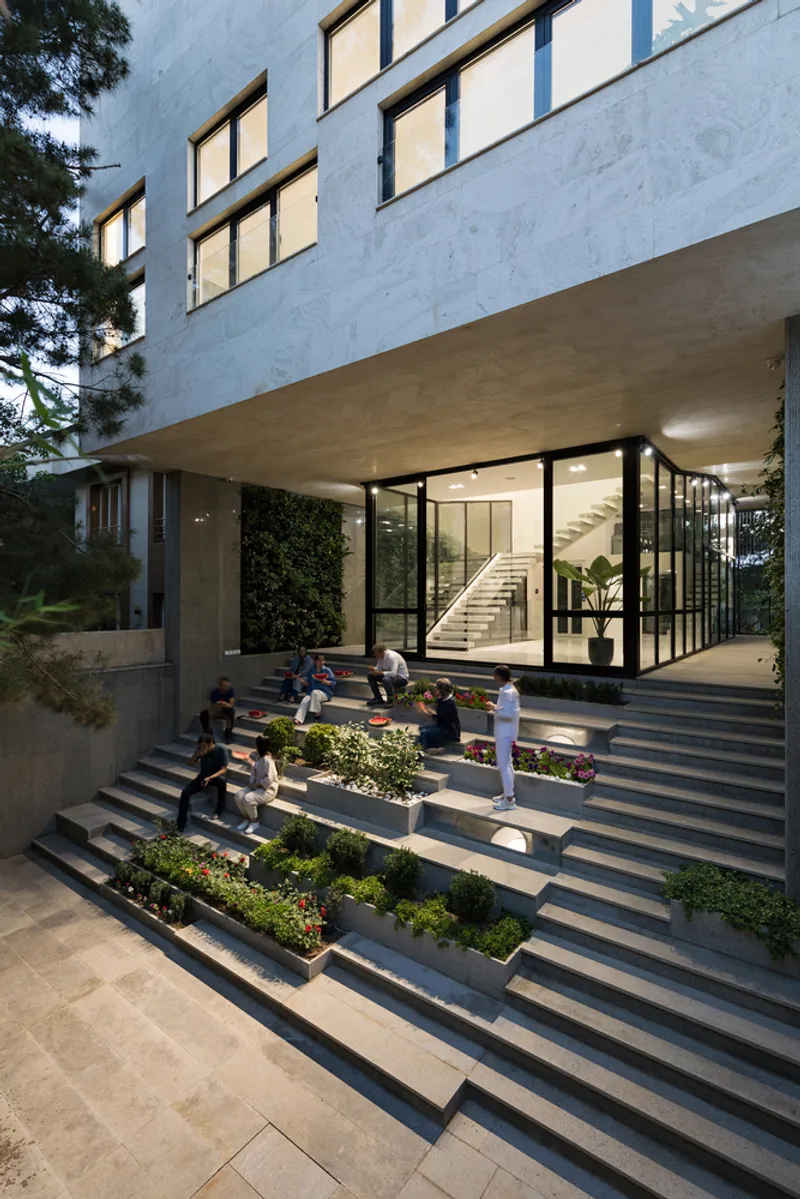
The project site was just 220 square meters, and strict urban codes required space for four parking spots along with the client’s request for an indoor swimming pool. This meant the ground floor was nearly fully occupied, leaving no room for a traditional ground-level courtyard.
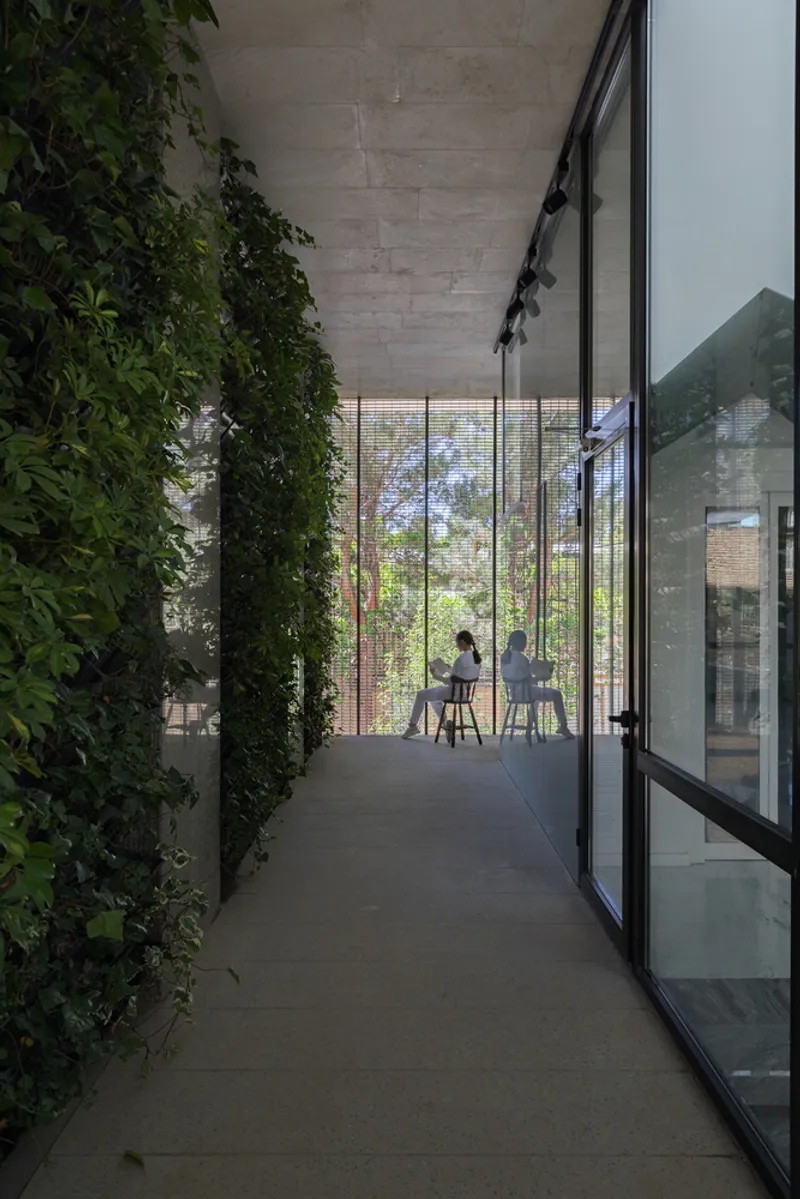
Instead of compromising, the architects expanded the concept of the yard vertically. The solution was to extend the courtyard up to the first floor, connecting it to the public alley through a staircase. This clever move allowed the entire land to function as an interactive courtyard, reintroducing greenery, light, and openness without sacrificing programmatic needs.
The Glass Cube: A Pavilion of Light and Life
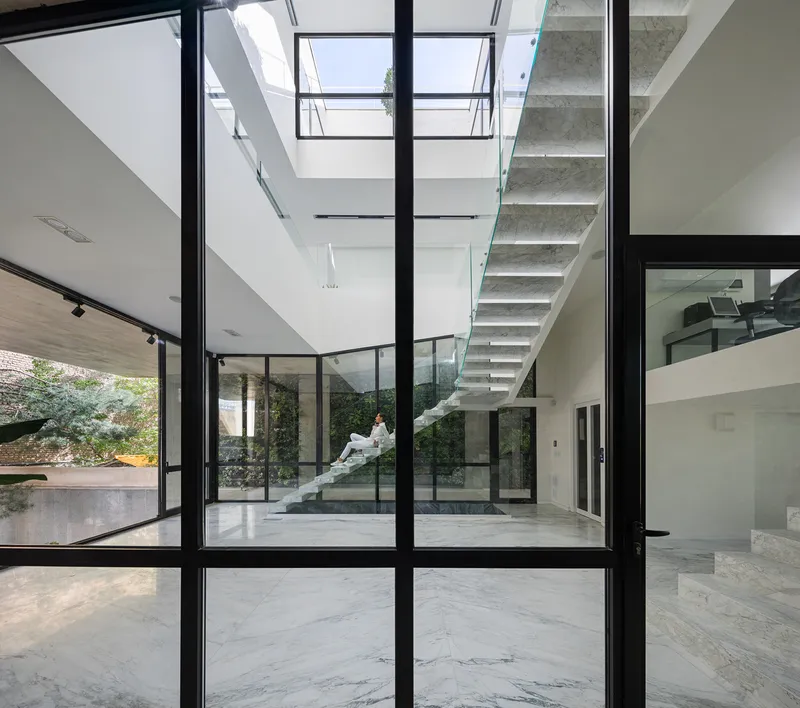
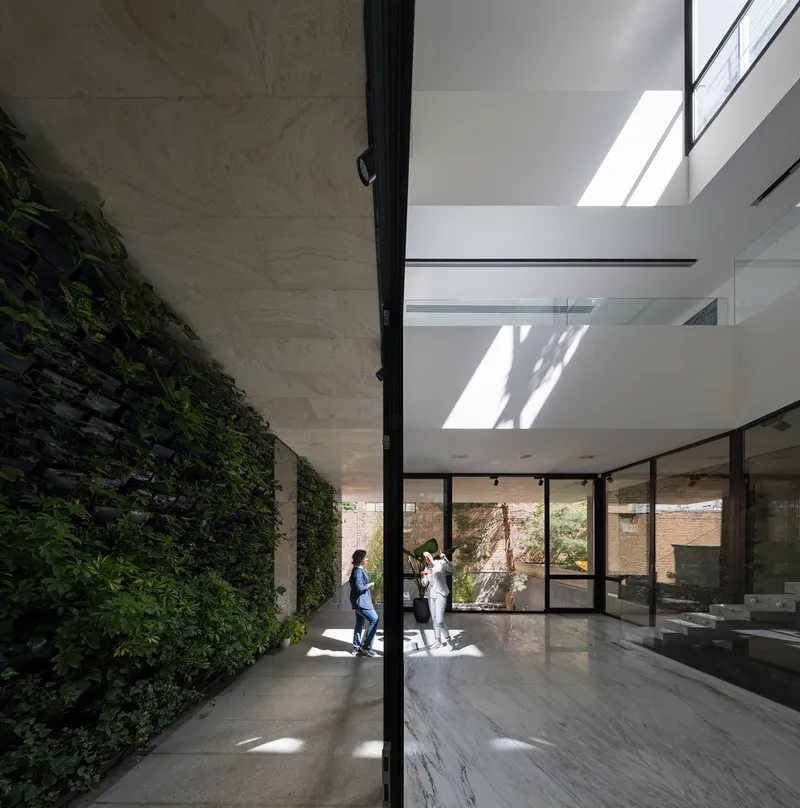
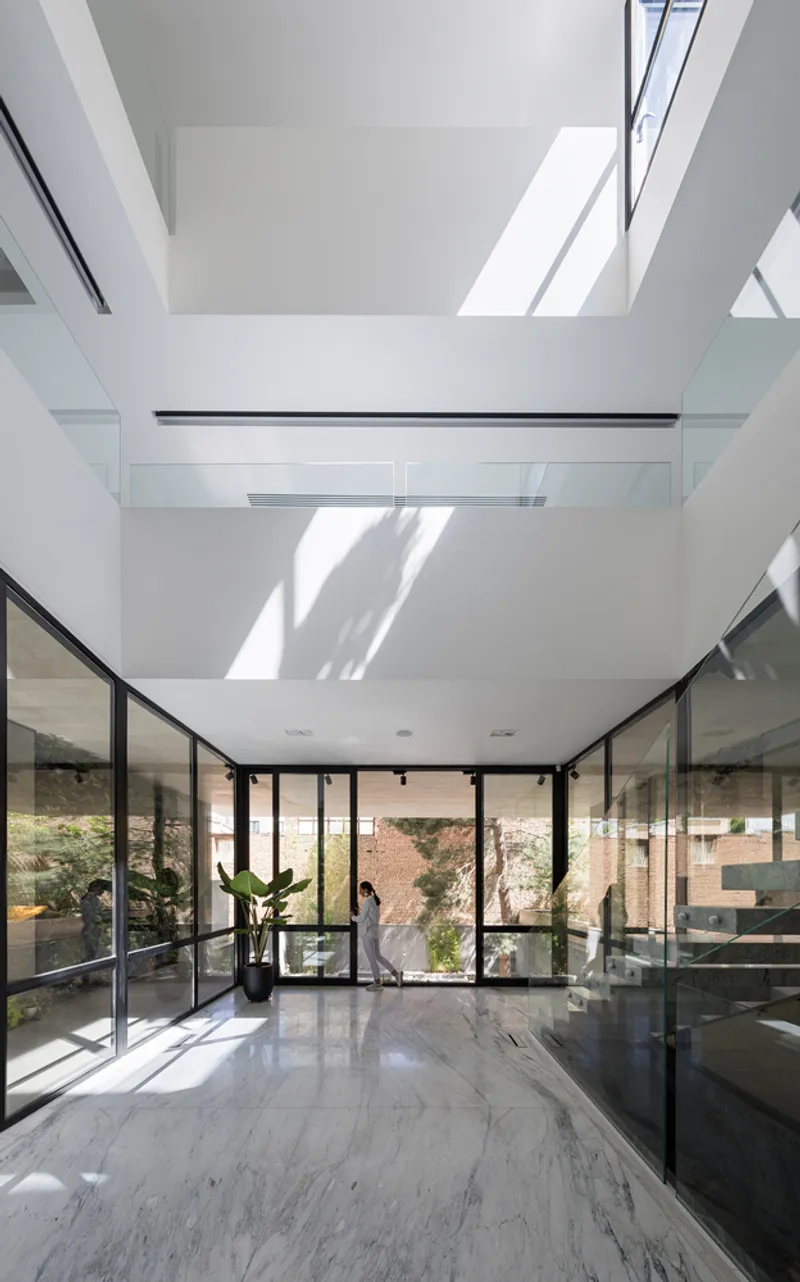
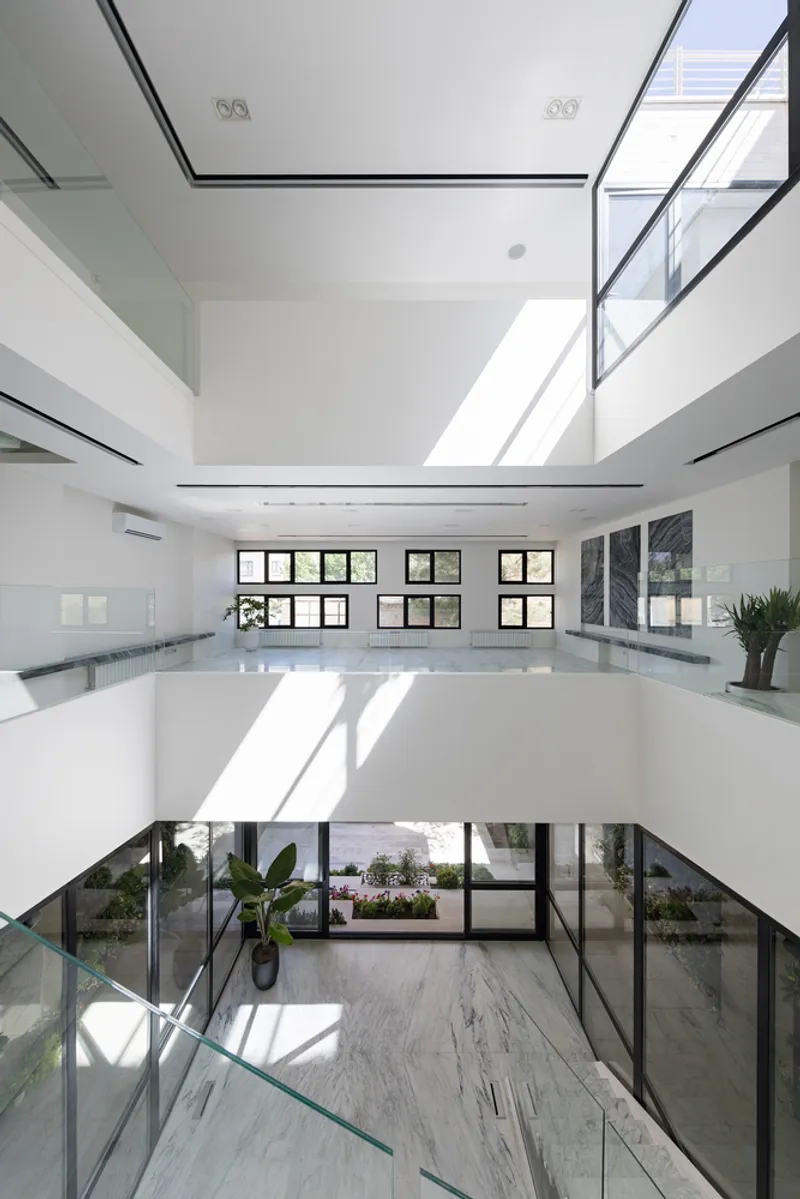
At the center of the elevated courtyard, a striking glass cube was inserted—serving as a climate-controlled, multi-functional living space. Surrounded by green walls and lush vegetation, this cube acts like a modern pavilion, accessible and usable throughout all seasons. Inside, it contains a small kitchen, service areas, and a home office, creating a seamless bridge between indoor comfort and outdoor ambiance.
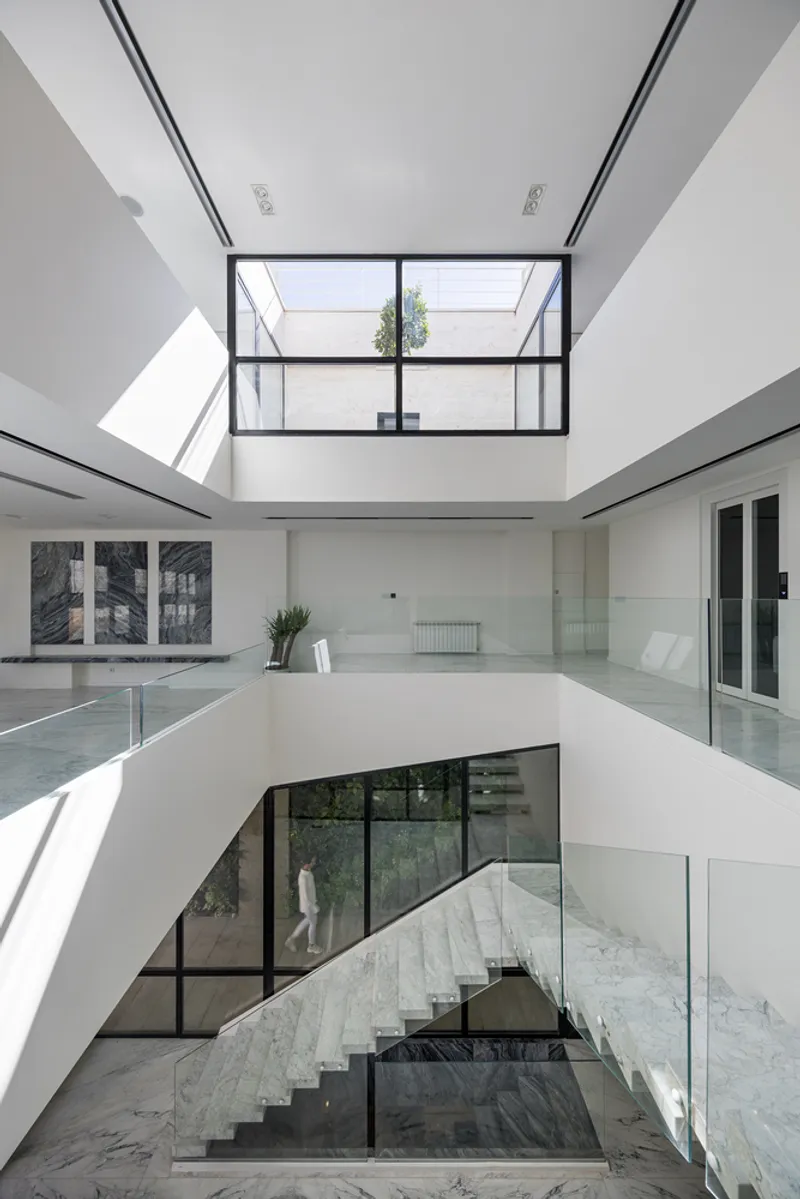
This transparent volume is not only a hub for daily family life but also a vertical connector. Rising through the upper floors, it visually and spatially ties the building together through a central void, culminating in a smaller courtyard on the top floor. This vertical axis establishes a dialogue between earth and sky, grounding the home while opening it to the heavens.
Spatial Composition and Program Distribution
The Outside-In House is thoughtfully divided into three distinct layers:
- Ground Floor: Entry point, vehicle parking, and an indoor swimming pool.
- First Floor: Elevated courtyard and the glass pavilion.
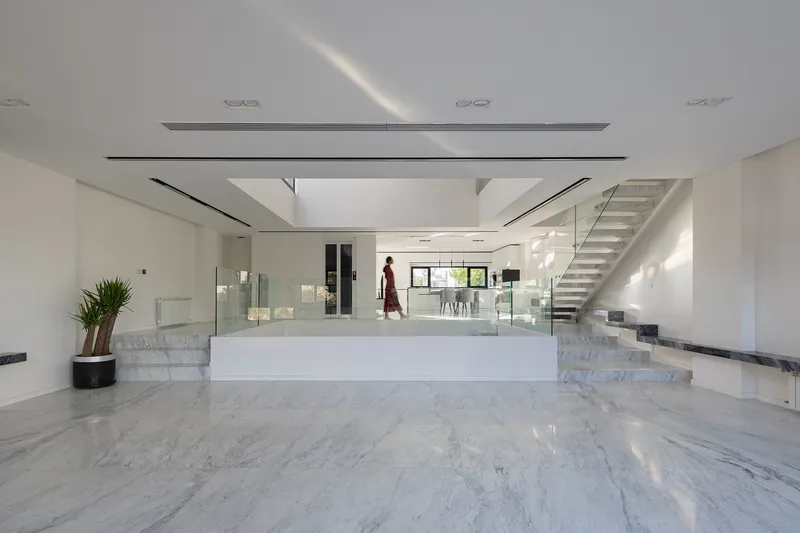
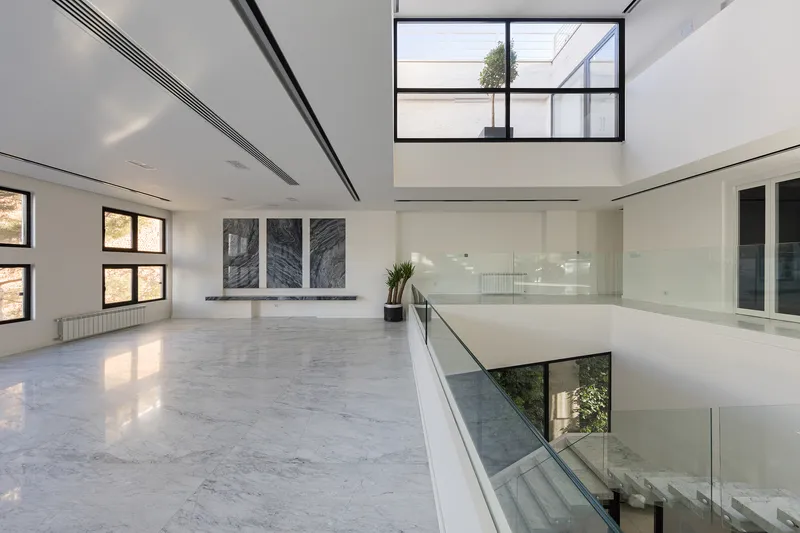
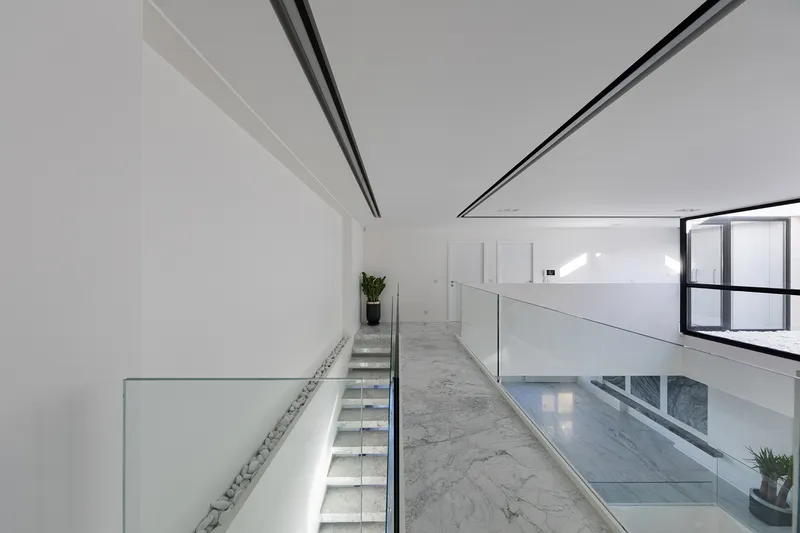
- Upper Floors: Private living quarters designed as a duplex, embracing open views and cross-ventilation.
The interplay between the horizontal courtyard and the vertical void brings light, air, and natural views deep into the heart of the home. These dual elements—sky and earth—are integrated through architectural gestures that blur the boundary between outside and inside.
Outside-In: A New Way of Living
True to its name, the Outside-In House redefines residential living in dense urban environments. Rather than accepting the limitations of infill development, MA Office used those constraints to innovate. By reconceptualizing the yard not as leftover space but as the organizing core of the home, this project exemplifies how thoughtful architecture can revive tradition through modern form.
This project isn’t just a home; it’s a contemporary architectural manifesto that challenges urban conventions and reclaims the courtyard as a dynamic, year-round living space.
All Photographs are works of Mohammad Hassan Ettefagh




Popular Articles
Popular articles from the community


Co-life: Sustainable Architecture for Age-Friendly Community Living
Co-life reimagines sustainable architecture for seniors through courtyards, rammed earth, shared gardens, and spaces designed for belonging.

The Ocean Hive: Sustainable Architecture for a Self-Sufficient Civilization at Sea
The Ocean Hive imagines sustainable architecture at sea, where modular habitats, algae, wave power and ocean waste sustain a growing colony.

Conexión: Biophilic Design Reimagines High-Rise Living in Hong Kong
Conexión reimagines high-rise living in Hong Kong through biophilic design, green facades, shared spaces, daylight, water and nature within.

The Musturak Paradise: Senior Living Architecture for a Connected Future in Temara, Morocco
The Musturak Paradise reimagines senior living architecture in Temara via private homes, social spaces, culture, community, and shared care.

Similar Reads
You might also enjoy these articles


Hodi-Mandai Geram
Project Function: Preservation and revitalization of the Intangible heritage and socio-spatial identity of the Hodi by Housing, Cultural Memory Center, Sacred Grove, landscape, local tourism economy


Olio Towers: A Mid-Rise for Performers That Fuses Housing, Rehearsal, and Stage
Located blocks from Houston's Theater District, this modular tower stacks living units around a central performance atrium.

Oasis: Modular Green Housing Carved into Dhaka's Urban Fabric
A shortlisted Plugin Housing entry reclaims unauthorized settlements in Dhaka with stepped concrete volumes, green roofs, and ventilation-driven design.

Black Hole: A Floating Megastructure for the Post-Physical Era
Emiliano Mazzarotto envisions a spherical, self-scaling arena where e-sports, digital hotels, and holographic stadiums replace traditional public space.


Explore Courtyard Competitions
Discover active competitions in this discipline



Challenge to reimagine the Iron Throne


Photograph architecture without architects


Illustrate the lost glory of Angkor Wat - Render Challenge


Design challenge to reuse E-waste
Comments (0)
Please login or sign up to add comments
No comments yet. Be the first to comment!