
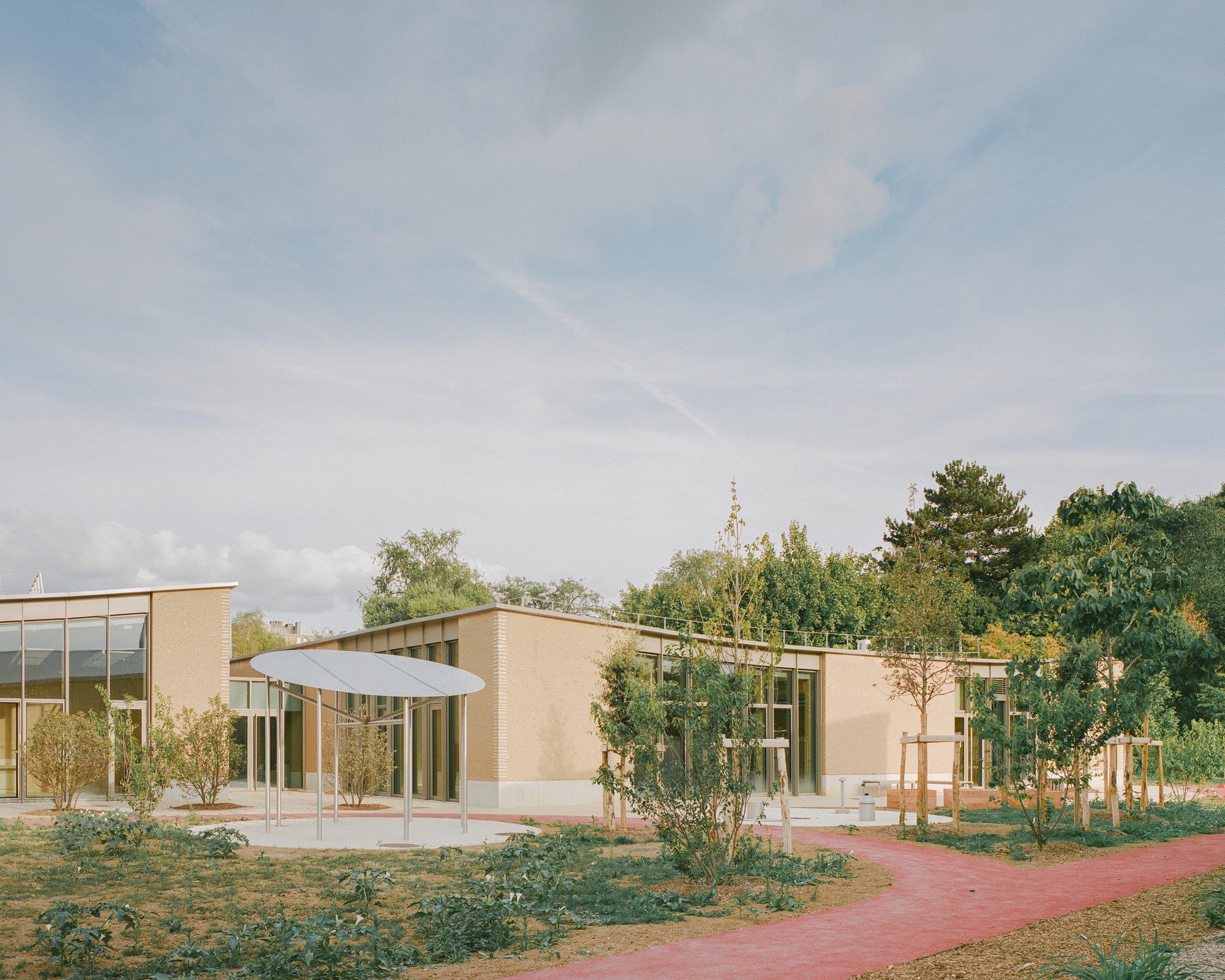
Parc des Loges Childhood and Sports Center By HEMAA Architectes
Parc des Loges is a nature-integrated childhood and sports center using rammed earth and timber to create sustainable, playful learning spaces.

Located in Évry-Courcouronnes, France, the Parc des Loges Childhood and Sports Center by HEMAA Architectes is a powerful example of contemporary public architecture rooted in landscape, ecology, and social purpose. Completed in 2025, the 2,444 m² complex brings together early childhood facilities, educational spaces, and sports infrastructure within a unified, nature-based composition that prioritizes sustainability, wellbeing, and community engagement.
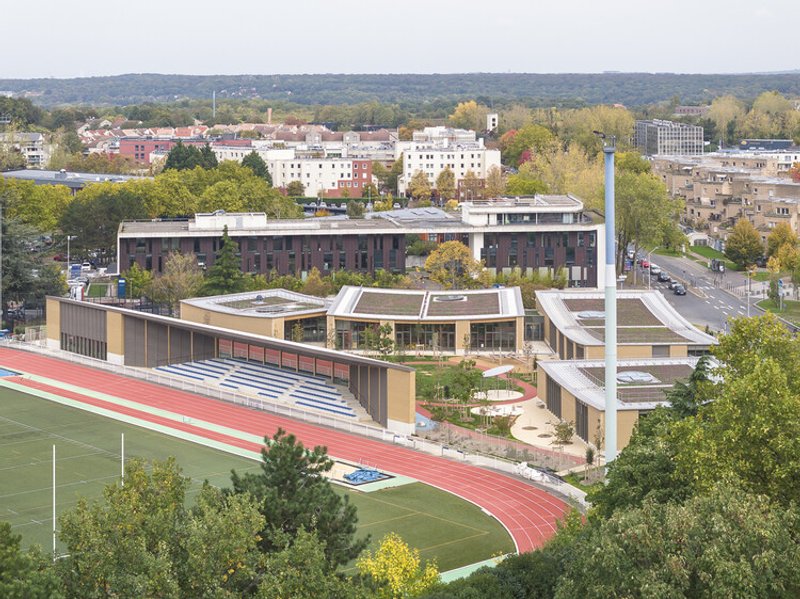
Founded in 2018, HEMAA Architectes is known for a contextual and sobriety-driven architectural philosophy grounded in the living world. At Parc des Loges, this approach manifests in a campus-like arrangement that responds sensitively to topography, climate, and biodiversity. Rather than reshaping the land, the project follows the site’s natural slope, allowing architecture and landscape to merge seamlessly.
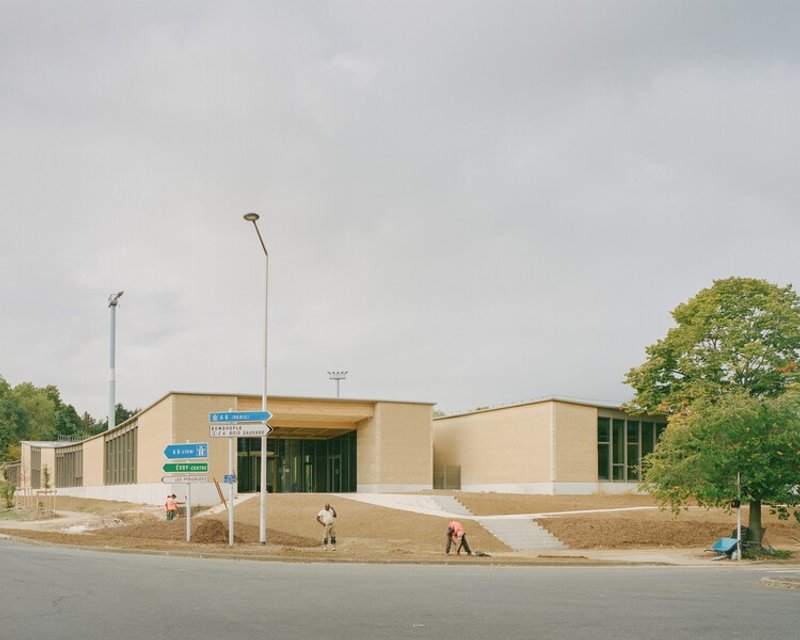
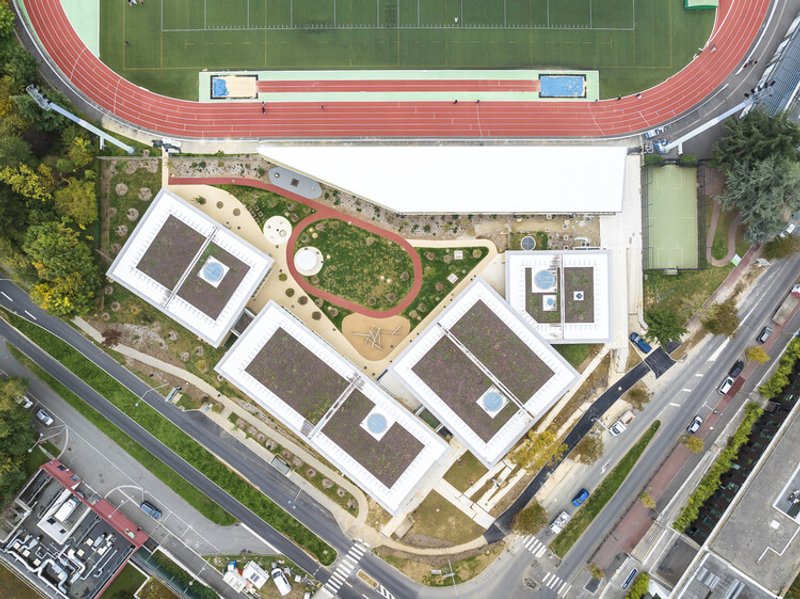
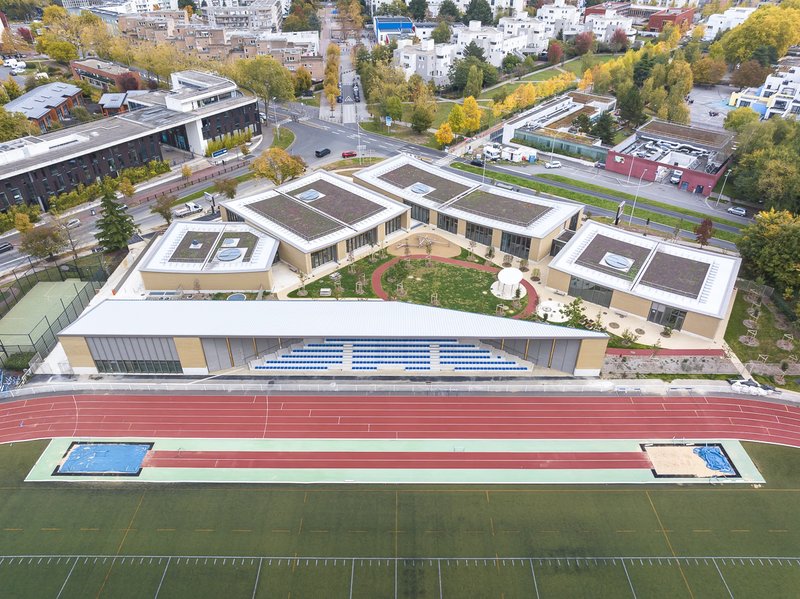
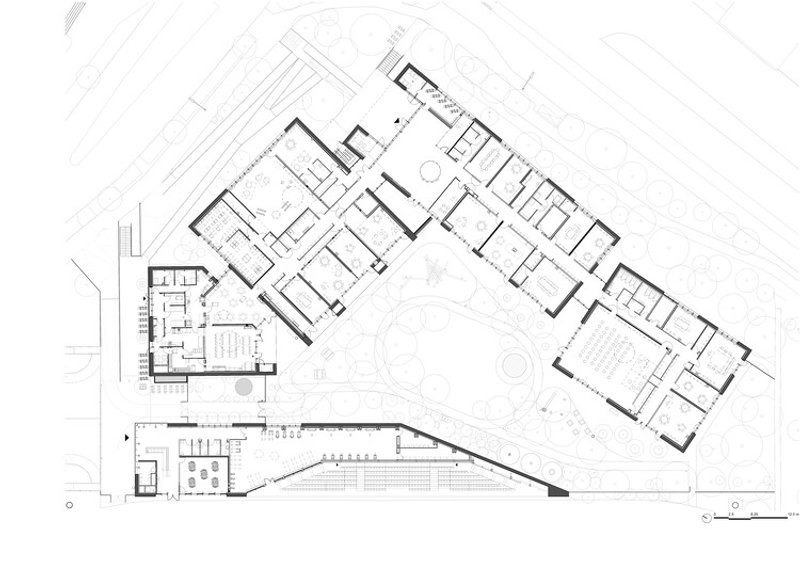
The program is divided into five distinct yet interconnected volumes: a nursery, an elementary school, a childminders’ hub, a cafeteria, and a sports stand. These entities are arranged around a protected central garden courtyard, creating a calm, inward-focused environment shielded from surrounding streets while remaining visually and physically open to the adjacent park. Light glazed walkways link the buildings, fostering transparency, intuitive circulation, and constant visual contact with nature.
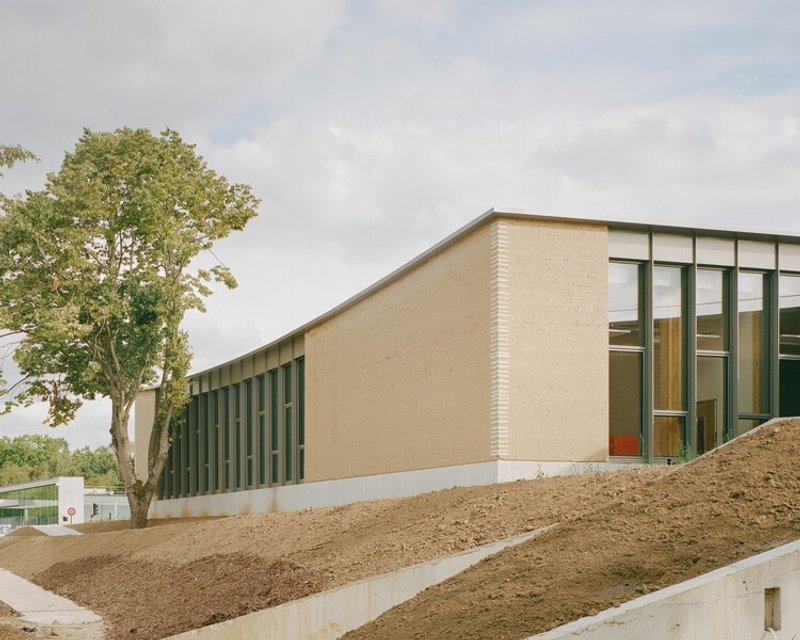
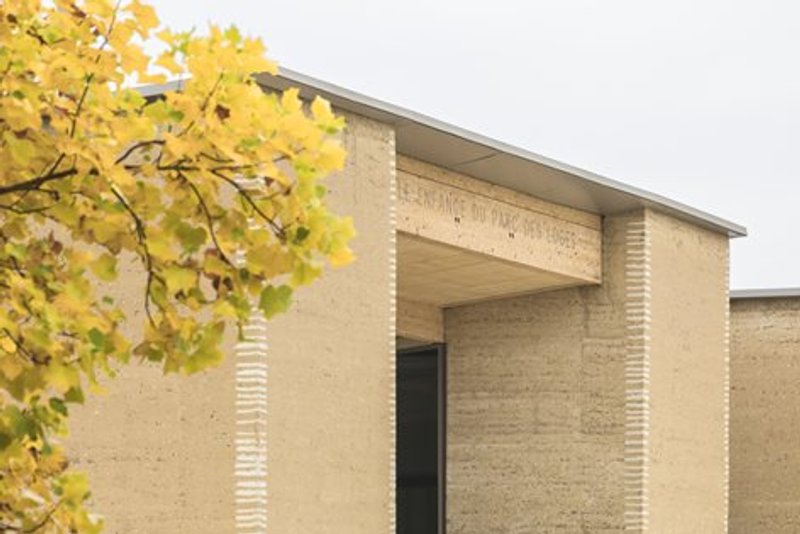
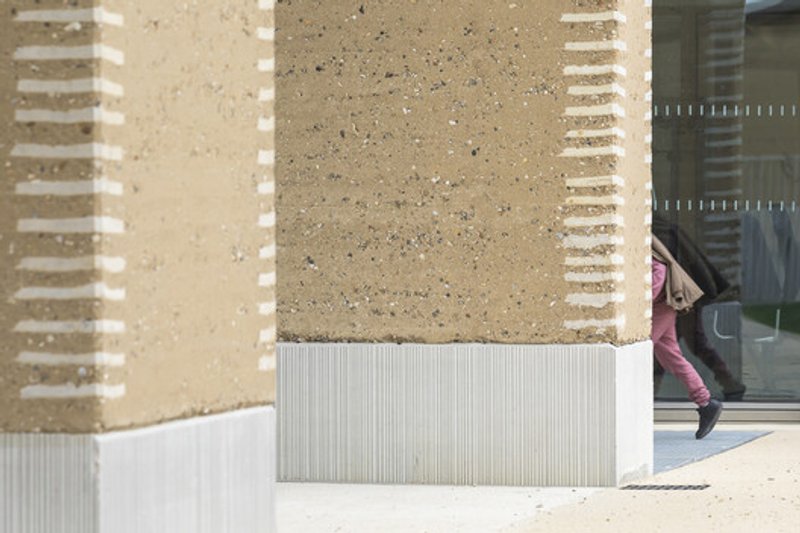
Materiality plays a central role in shaping the identity of the project. The façades are constructed from load-bearing rammed earth, sourced directly from excavated soil from the Grand Paris metro works—665 cubic meters in total. This geo-sourced material not only significantly reduces embodied carbon but also offers excellent thermal inertia and natural breathability. Insulated with hemp wool, the thick earth walls create a healthy indoor climate while reinforcing the building’s tactile, grounded presence.
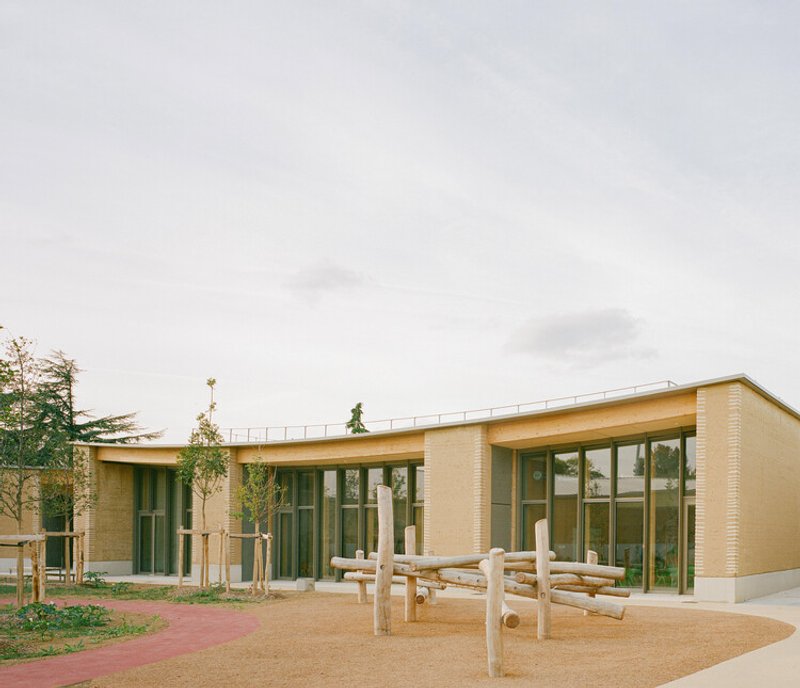
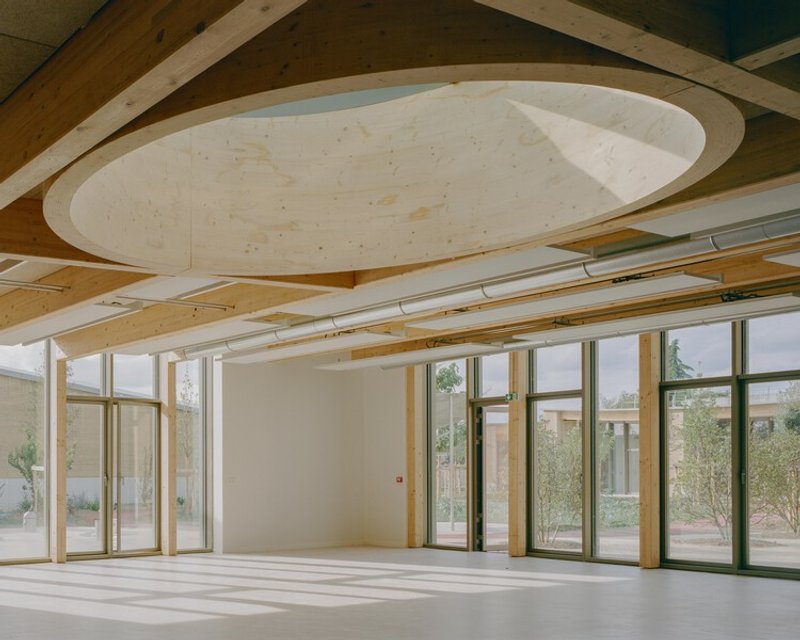
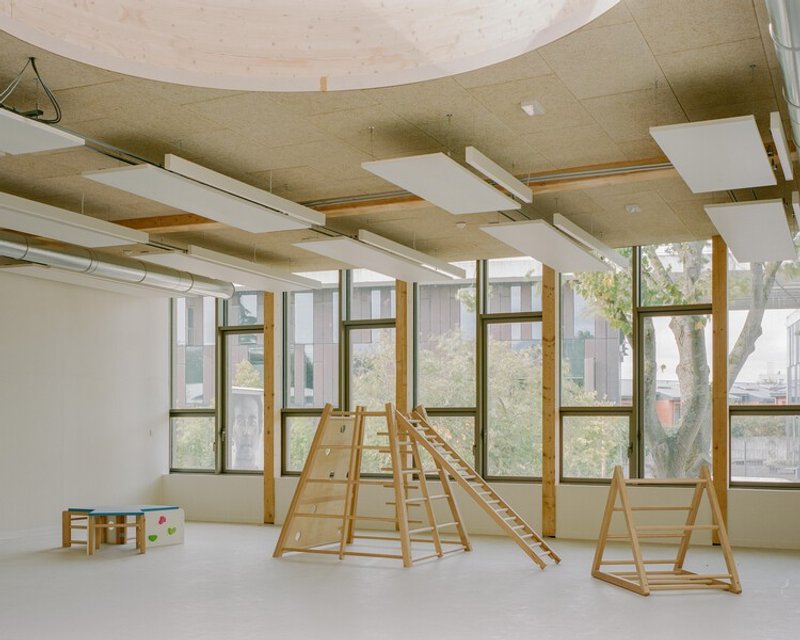
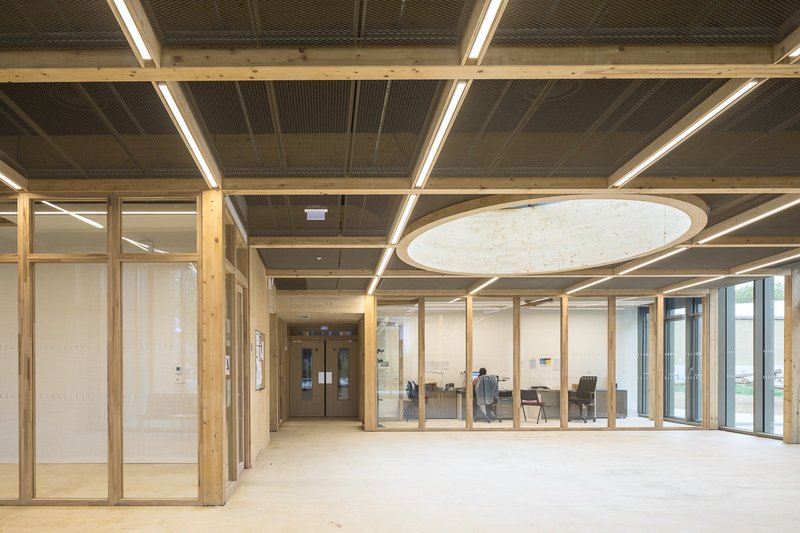
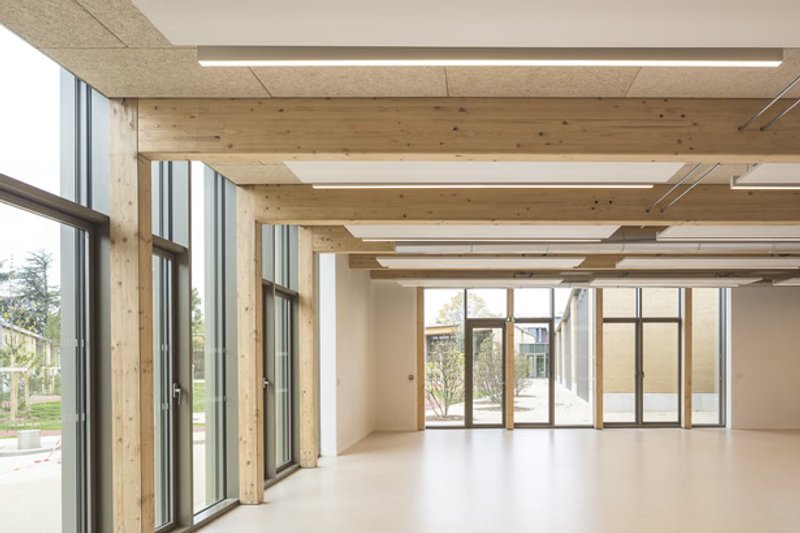
The interior structure is entirely timber, introducing warmth, softness, and human scale throughout the learning spaces. Exposed wood surfaces encourage sensory engagement, particularly important in a childhood environment. Low-carbon textured concrete at the base of the buildings provides durability, while strategically placed glazing at child height enhances daylight, visibility, and intimacy.
Landscape design is integral to the project’s educational philosophy. Inspired by Waldkindergarten principles, the children’s garden functions as a “tamed forest,” planted with oak, ash, maple, and elm trees. Meandering paths, clearings, and shaded areas invite free play, exploration, and learning through direct contact with nature. The school grounds extend naturally into the surrounding park, blurring boundaries between built and natural environments.
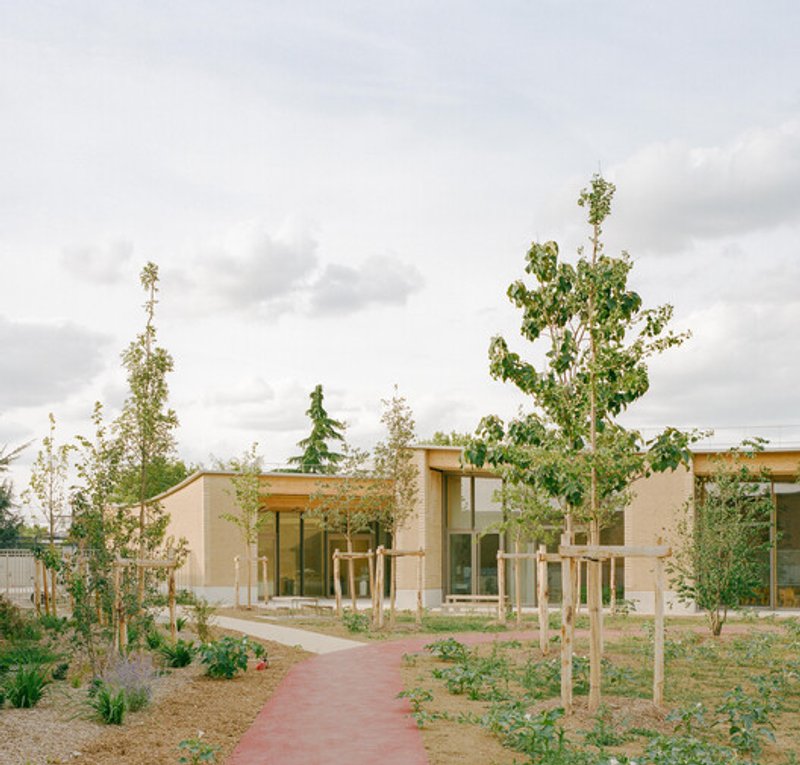
Environmental performance underpins every design decision. Green roofs with deep substrates improve insulation, support rainwater management, and enhance biodiversity. Deep roof overhangs and adjustable sunshades provide passive solar control, while building orientation maximizes winter sunlight and encourages natural cross-ventilation in summer. Abundant planting mitigates urban heat island effects and strengthens local ecosystems.
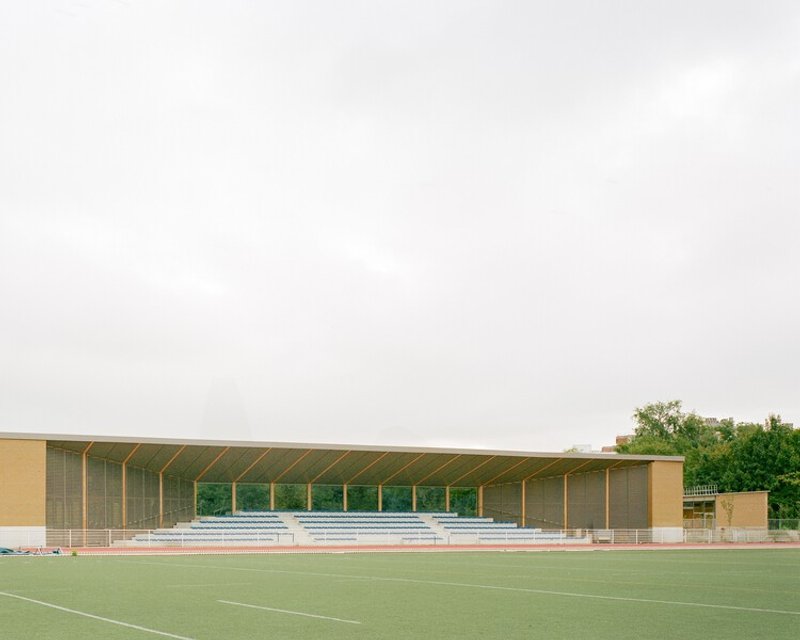
The sports facility completes the ensemble, featuring a 300-seat grandstand carefully integrated into the site’s slope. Its gently descending roof preserves light, views, and spatial continuity across the campus. More than a standalone sports venue, it reinforces the project’s role as a shared, intergenerational public facility—open to both students and the wider community.
In a dense urban context where many children have limited access to nature, the Parc des Loges Childhood and Sports Center offers more than education and recreation. It provides a place of escape, discovery, and connection to the living world—demonstrating how sustainable architecture, bio-based materials, and landscape-led design can shape meaningful civic spaces for future generations.
All the photographs are works of Charles Bouchaid, Sergio Grazia




Popular Articles
Popular articles from the community

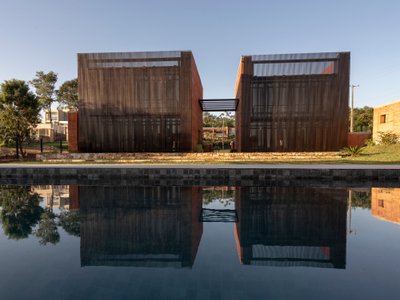
BAUEN Builds Two Rammed Earth Volumes in Paraguay Inspired by the Ovenbird's Nest
In San Bernardino, a house of compacted earth channels the instinct of a constructive bird to shelter life from the Paraguayan summer.
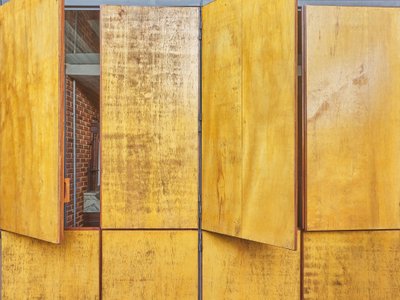
gru.a Builds a 70 m² Timber Shelter That Opens Like a Farm Door in Brazil's Valley of the Vines
In the mountainous region near Rio de Janeiro, a compact retreat uses plywood panels and deep eaves to blur the line between inside and out.
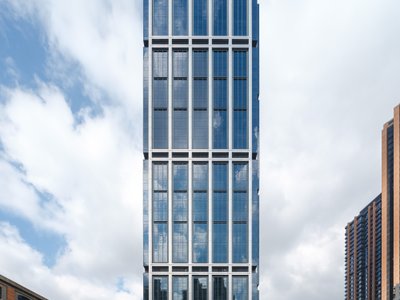
Foster + Partners Wraps a 200-Meter Shanghai Tower in Stainless Steel and Industrial Memory
The Suhe Centre Office Tower anchors a regenerated waterfront district in Shanghai with an all-steel structure that nods to local warehouse heritage.
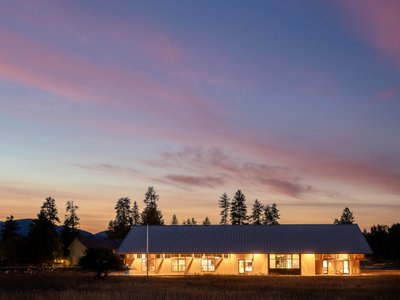
Johnston Architects Reimagines the Methow Valley Hay Barn as a Small-Town Library in Winthrop
A 7,300-square-foot timber library channels the region's agrarian vernacular to serve a rural Washington community of 400 year-round residents.


Similar Reads
You might also enjoy these articles

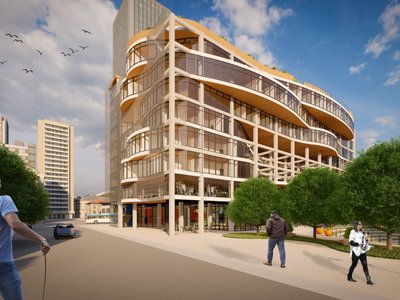
Olio Towers: A Mid-Rise for Performers That Fuses Housing, Rehearsal, and Stage
Located blocks from Houston's Theater District, this modular tower stacks living units around a central performance atrium.
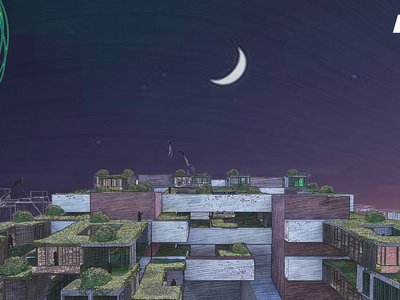
Oasis: Modular Green Housing Carved into Dhaka's Urban Fabric
A shortlisted Plugin Housing entry reclaims unauthorized settlements in Dhaka with stepped concrete volumes, green roofs, and ventilation-driven design.

Black Hole: A Floating Megastructure for the Post-Physical Era
Emiliano Mazzarotto envisions a spherical, self-scaling arena where e-sports, digital hotels, and holographic stadiums replace traditional public space.
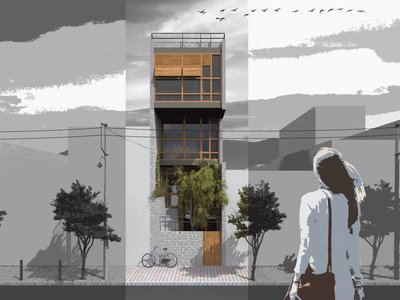
Compact & Sustainable Living in Piraeus: A Four-Level Family Home Built Around Light and Air
A narrow townhouse in one of Greece's densest port cities uses a central atrium and passive strategies to house three generations under one roof.


Explore Architecture Competitions
Discover active competitions in this discipline




The International Standard for Design Portfolios


The Global Benchmark for Architecture Dissertation Awards


The Global Benchmark for Graduation Excellence


Challenge to design a barrier free sports center
Comments (0)
Please login or sign up to add comments
No comments yet. Be the first to comment!