
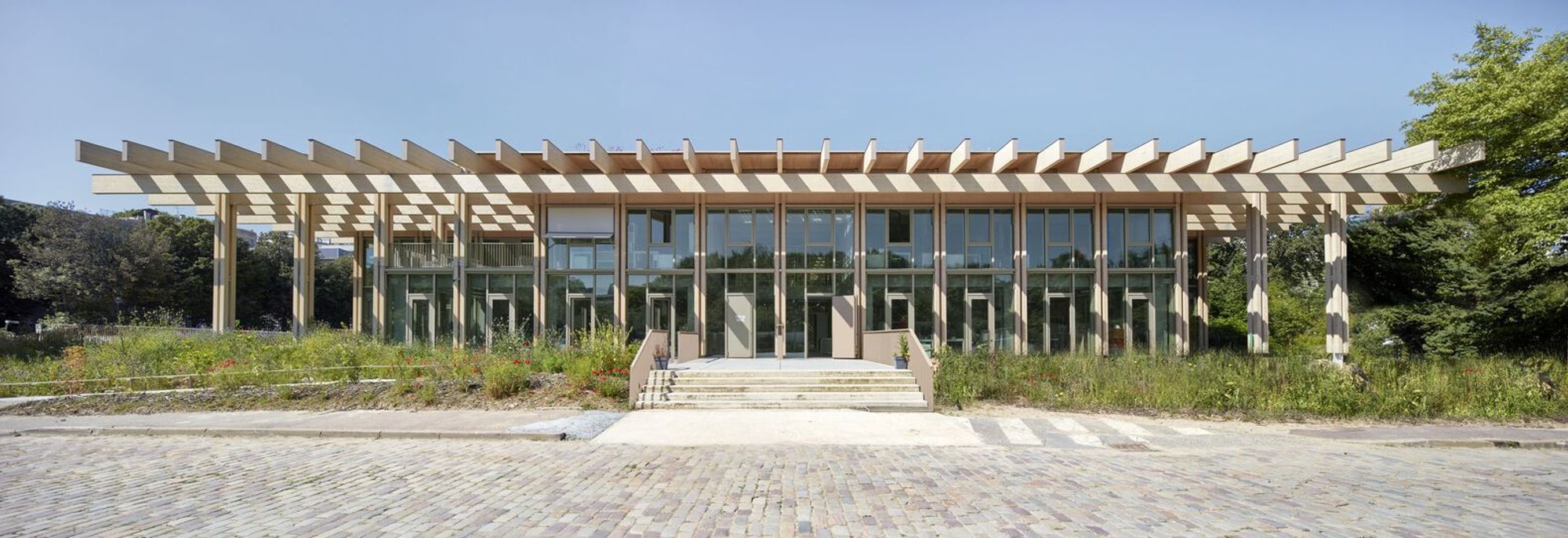
Pavillon Jardins by Atelier du Pont
Compact timber and concrete pavilion in Parc de la Villette combines flexible workplaces, restored landscape, and sustainable public architecture design.

Located in the heart of the Parc de la Villette in Paris, Pavillon Jardins by Atelier du Pont redefines the relationship between public architecture, landscape, and contemporary workspaces. Conceived as a new operational base for the teams managing the Parc de la Villette and the Grande Halle, the project replaces the former Cité Jardin: nine prefabricated buildings from 1982 that had reached an advanced state of deterioration: with a compact, adaptable, and environmentally responsible architectural intervention.
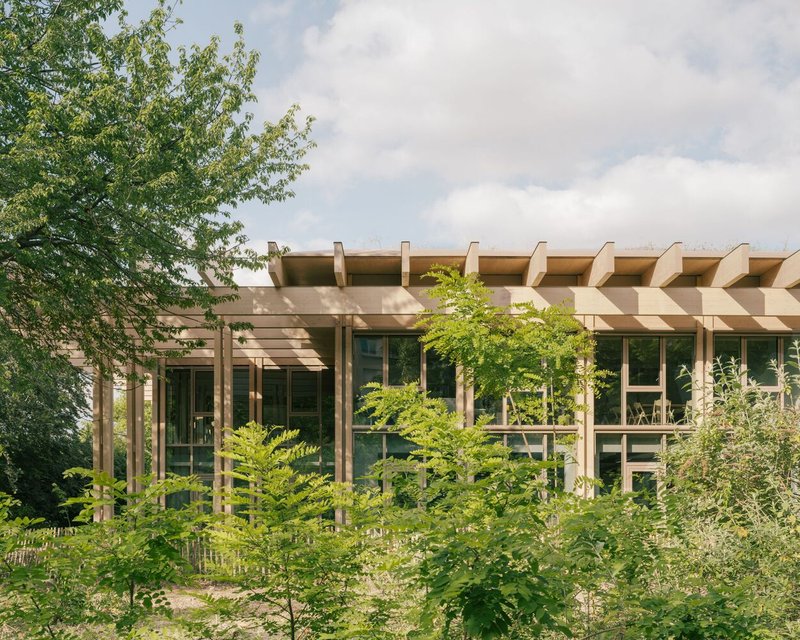
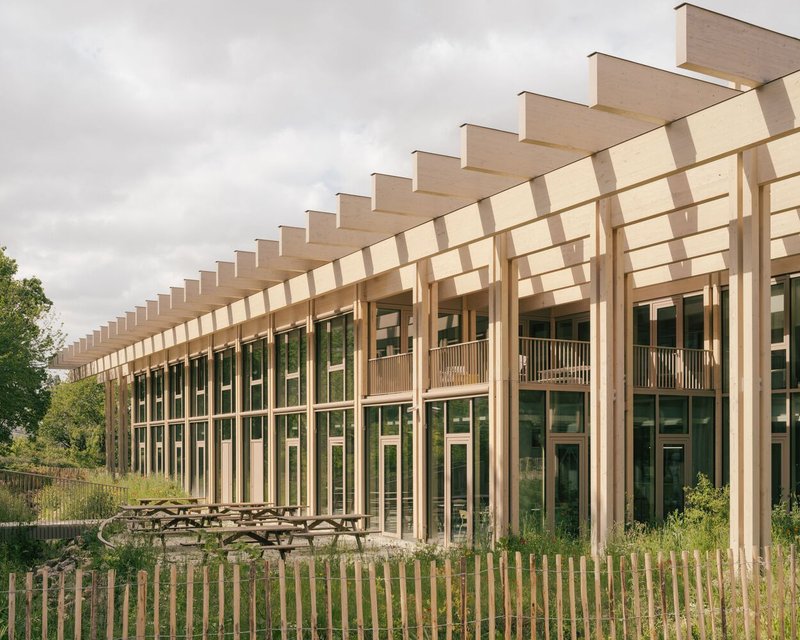
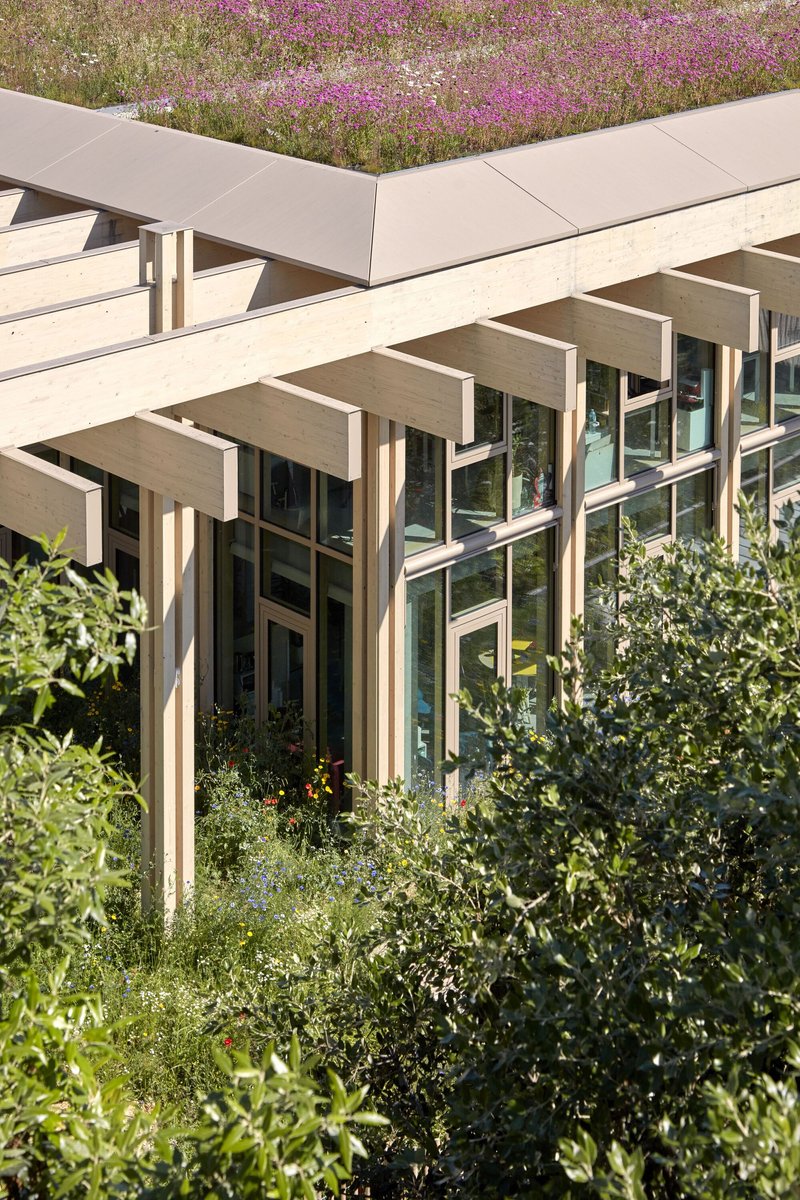
Developed for the Établissement Public du Parc et de la Grande Halle de la Villette (EPPGHV), the new building consolidates 155 workstations within a 3,000-square-meter footprint while restoring more than 5,000 square meters of green space to the public park. This strategic densification reinforces the ecological and civic ambitions of the site, freeing ground for landscape continuity and reconnecting visitors with the natural heritage of the park, including renewed access to the Fond de Rouvray dock.
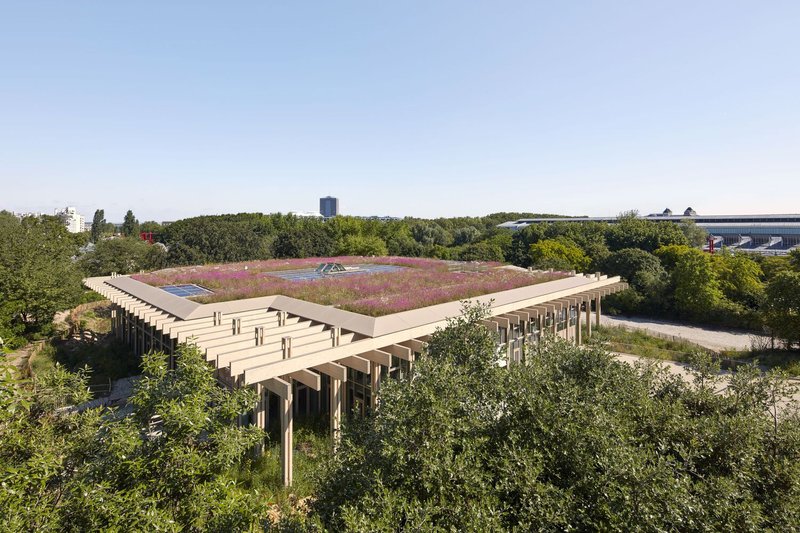
The architectural concept aligns closely with Bernard Tschumi’s original masterplan for the Parc de la Villette and its iconic Folies. Rather than imposing a singular formal gesture, Pavillon Jardins adopts a flexible and generic structural logic in which usage, movement, and events continuously redefine the identity of the place. Architecture and landscape interweave seamlessly, encouraging shared spaces and collective experiences while maintaining operational efficiency.
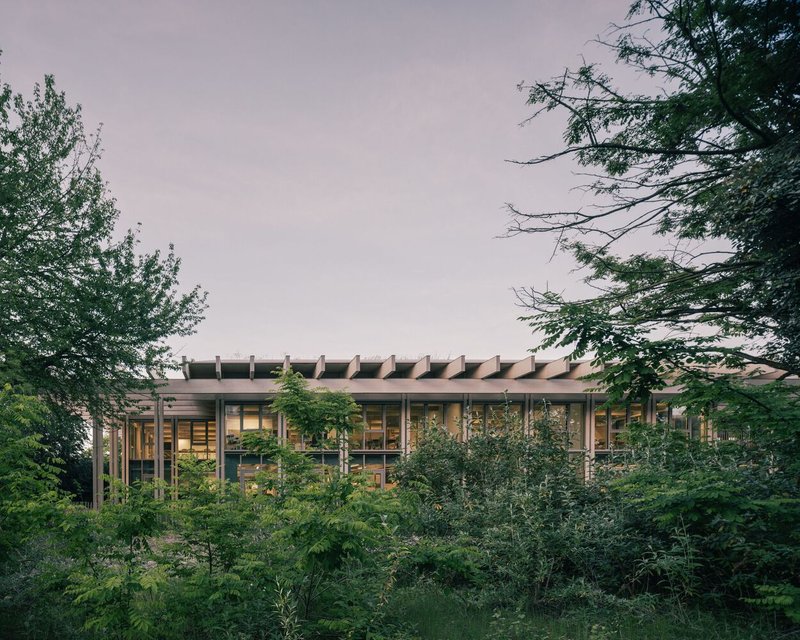
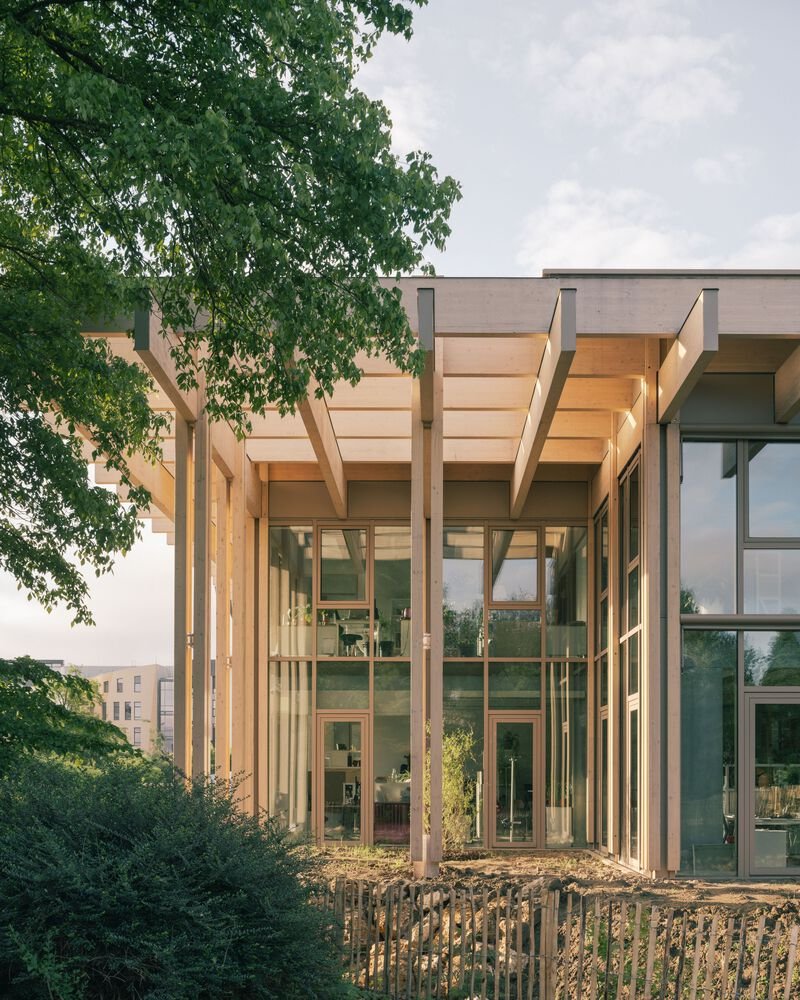
The building is composed of two interlocking structural systems that reflect both technical performance and environmental responsibility. A concrete framework provides structural strength and thermal inertia, while a timber structure introduces lightness and significantly reduces the project’s carbon footprint. With generous 12-meter spans, the structure liberates interior spaces from rigid constraints, allowing the building’s variable geometry to evolve alongside the needs of its users and the events it hosts.
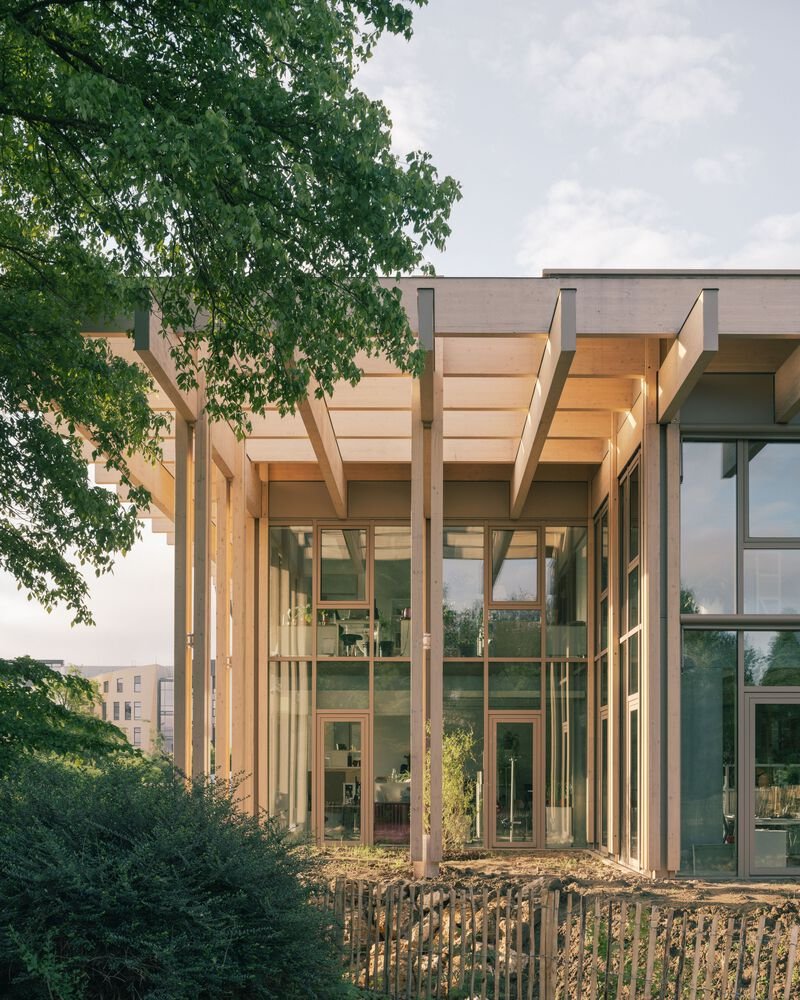
Compact by design, Pavillon Jardins minimizes its impact on the ground, preserving biodiversity and enhancing the ecological continuity of the park. This restrained footprint is a key element of the project’s sustainable strategy, supported by a multidisciplinary team including sustainable engineers, urban ecologists, landscape designers, and acoustic consultants. The result is a public building that balances technical precision with environmental sensitivity, embedding itself discreetly within its landscape context.
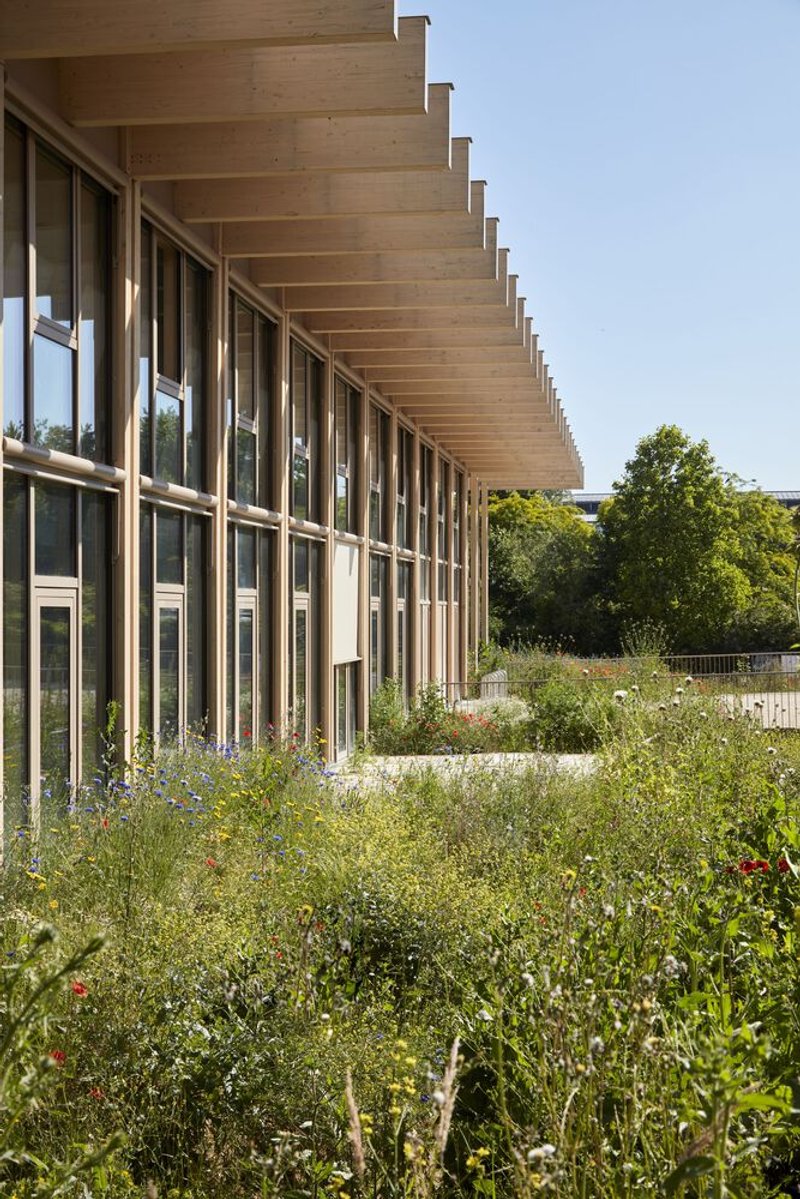
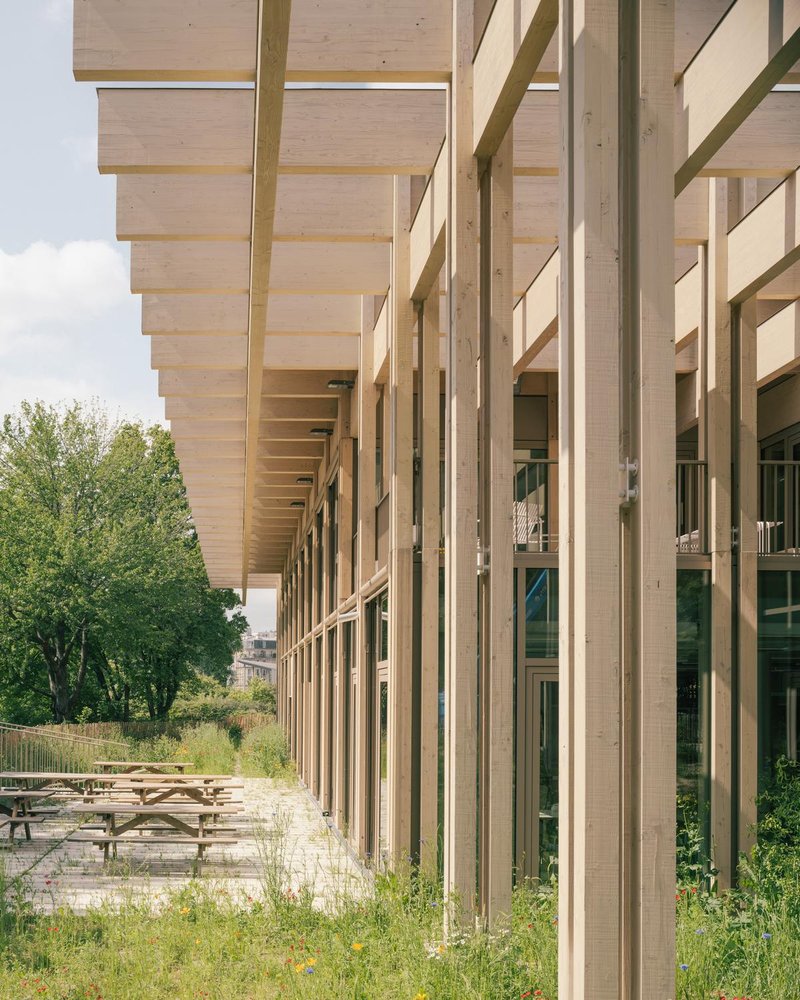
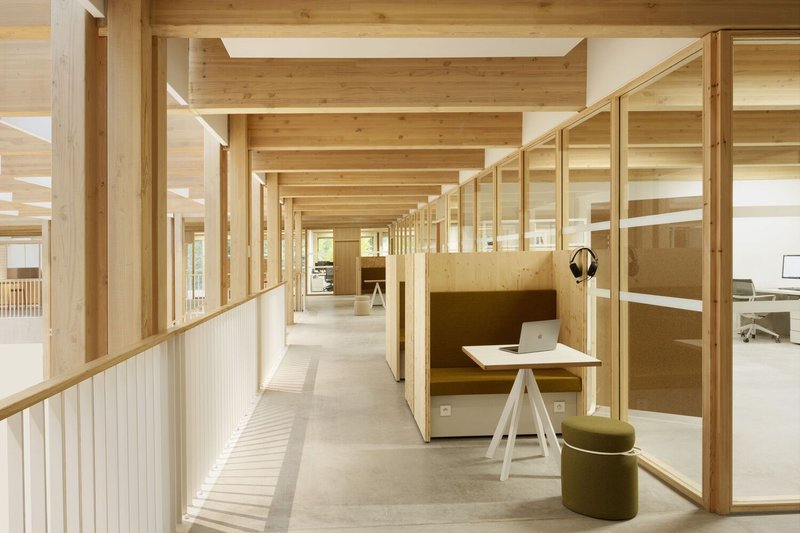
Inside, the architectural language continues with a tailor-made interior design conceived as a contemporary “base camp.” Organized over two levels around a central atrium, the interior is bathed in natural light filtered through the structural grid, creating an atmosphere reminiscent of an undergrowth canopy. At the heart of the building, a stepped staircase-gradin functions as a social and functional hub, accommodating presentations, conferences, informal meetings, and collective gatherings.
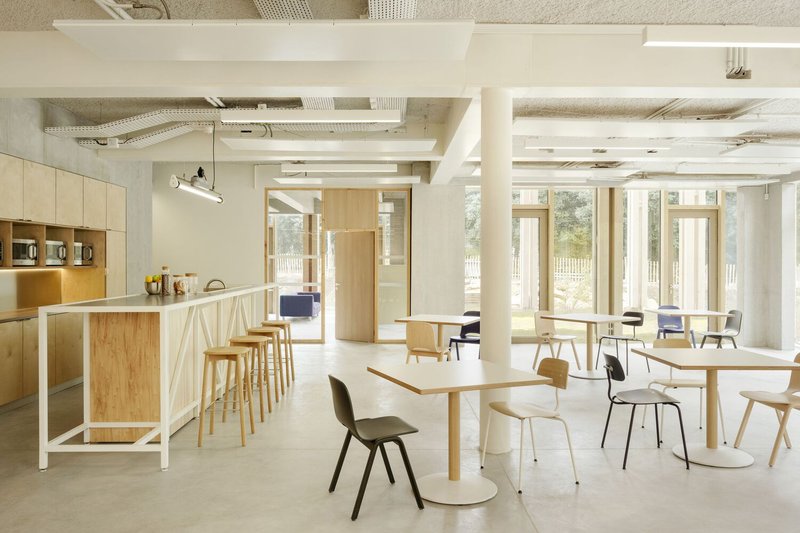
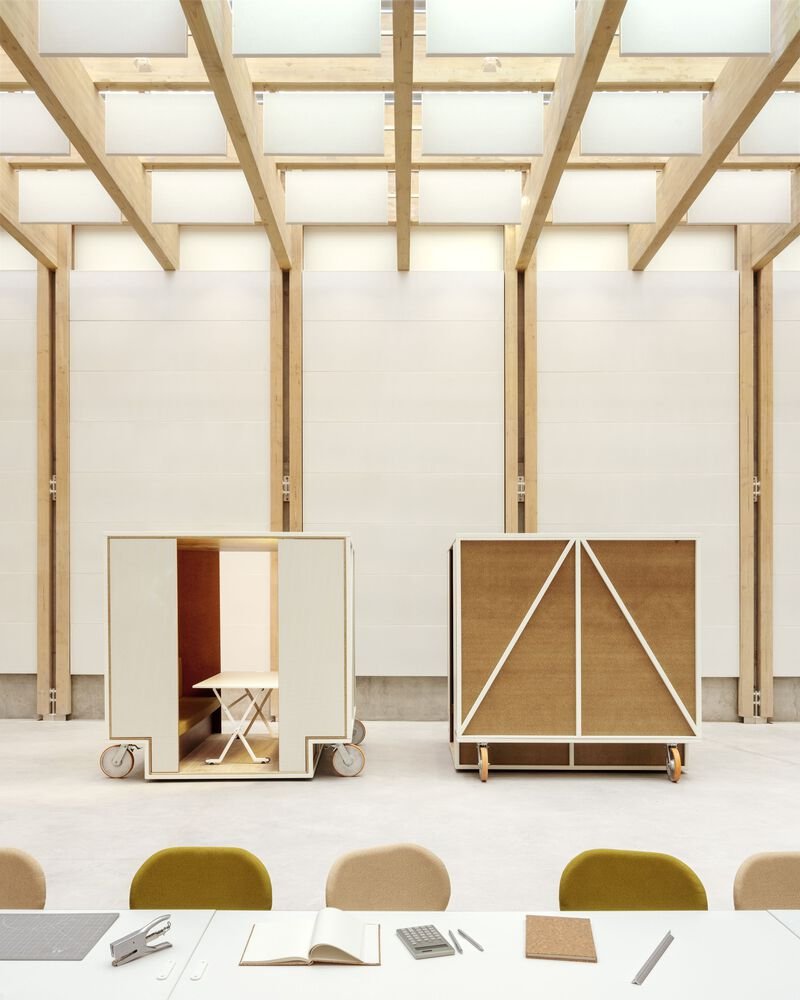
Flexible workspaces unfold around this central void, offering panoramic views of the surrounding park and its dense vegetation. Custom-designed micro-architectures punctuate the interior, housing meeting rooms, reprographics areas, coffee lounges, and shared facilities. These elements support a wide range of working modes while reinforcing the building’s adaptability. Developed in close collaboration with the users, the interior layout remains open and reconfigurable, with bespoke furniture designed by Atelier du Pont, some of which was produced directly by La Villette’s own teams.
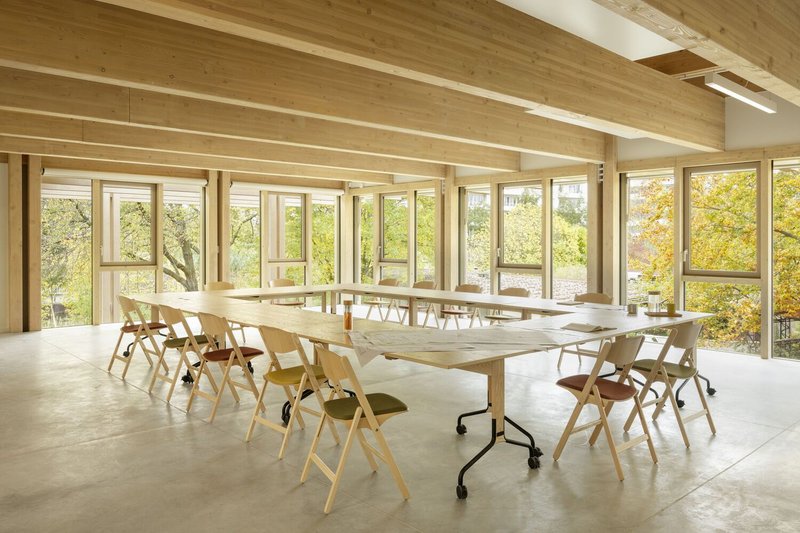
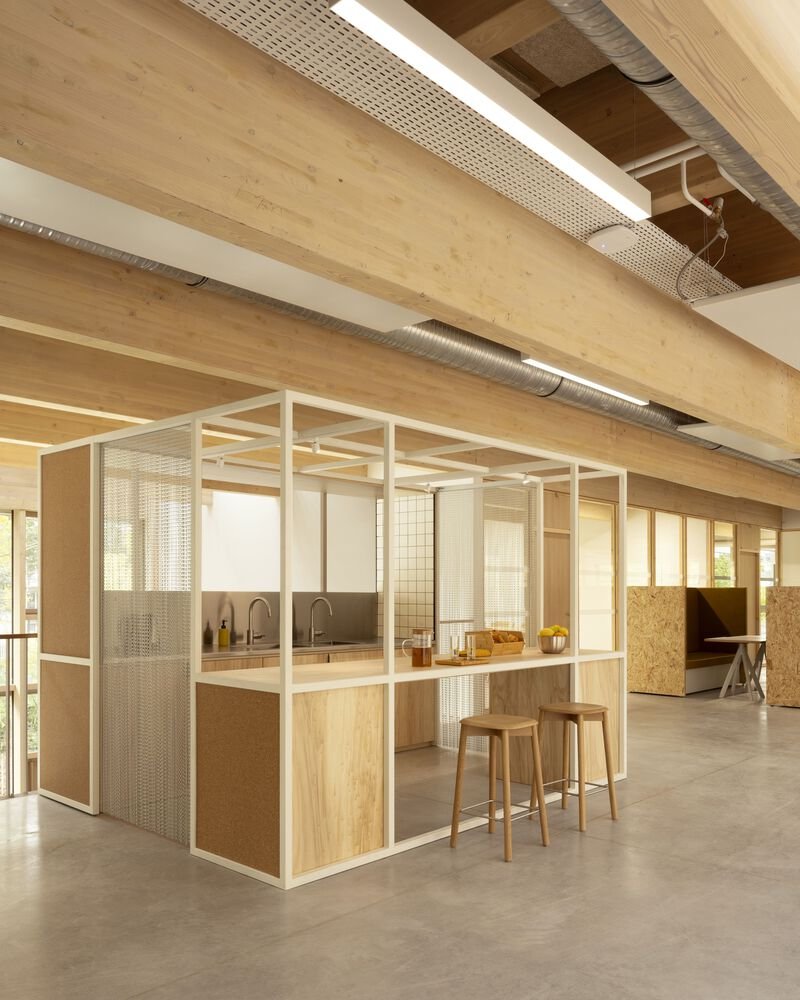
All photographs are works of Charly Broyez, Fred Delangle, Vincent Leroux




Popular Articles
Popular articles from the community

Free Architecture Competitions You Can Enter Right Now
No entry fees, real prizes. Here are the best free architecture competitions open for submissions in 2026.

Filtering Space: A Gradual Spatial Experience
From urban intensity to spatial calm.

Marvila Apartment Renovation in Lisbon: A Bright Minimalist Attic Transformation by KEMA Studio
Bright attic transformed into minimalist Lisbon apartment with skylights, sustainable materials, open plan layout, and industrial-inspired interior design elements.
Rede Arquitetos Builds an Open-Air School in Fortaleza That Doubles as a Neighborhood Living Room
Educar II SESC-CE folds sports, dance, and community gathering into a courtyard campus wrapped in mesh and tropical color.


Similar Reads
You might also enjoy these articles
Filtering Space: A Gradual Spatial Experience
From urban intensity to spatial calm.


The Ken Roberts Memorial Delineation Competition (Krob)
As the most senior architectural drawing competition currently in operation anywhere in the world, it draws hundreds of entries each year, awarding the very best submissions in a series of medium-based categories.

Waterfront Redevelopment and Urban Revitalization in Mumbai: Forging a New Dawn for Darukhana
A transformative waterfront redevelopment project reimagining Darukhana’s shipbreaking heritage into an inclusive urban future.

OUT-OF-MAP: A Call for Postcards on Feminist Narratives of Public Space
Rhizoma Design and Research Lab invites artists, designers, architects, researchers, and students to reflect on how feminist perspectives can reshape public space. Selected works will be exhibited in Barcelona, October 2026. Submissions open until 15 April 2026.


Explore Architecture Competitions
Discover active competitions in this discipline




The International Standard for Design Portfolios


The Global Benchmark for Architecture Dissertation Awards


The Global Benchmark for Graduation Excellence


Challenge to reimagine the Iron Throne
Comments (0)
Please login or sign up to add comments
No comments yet. Be the first to comment!