
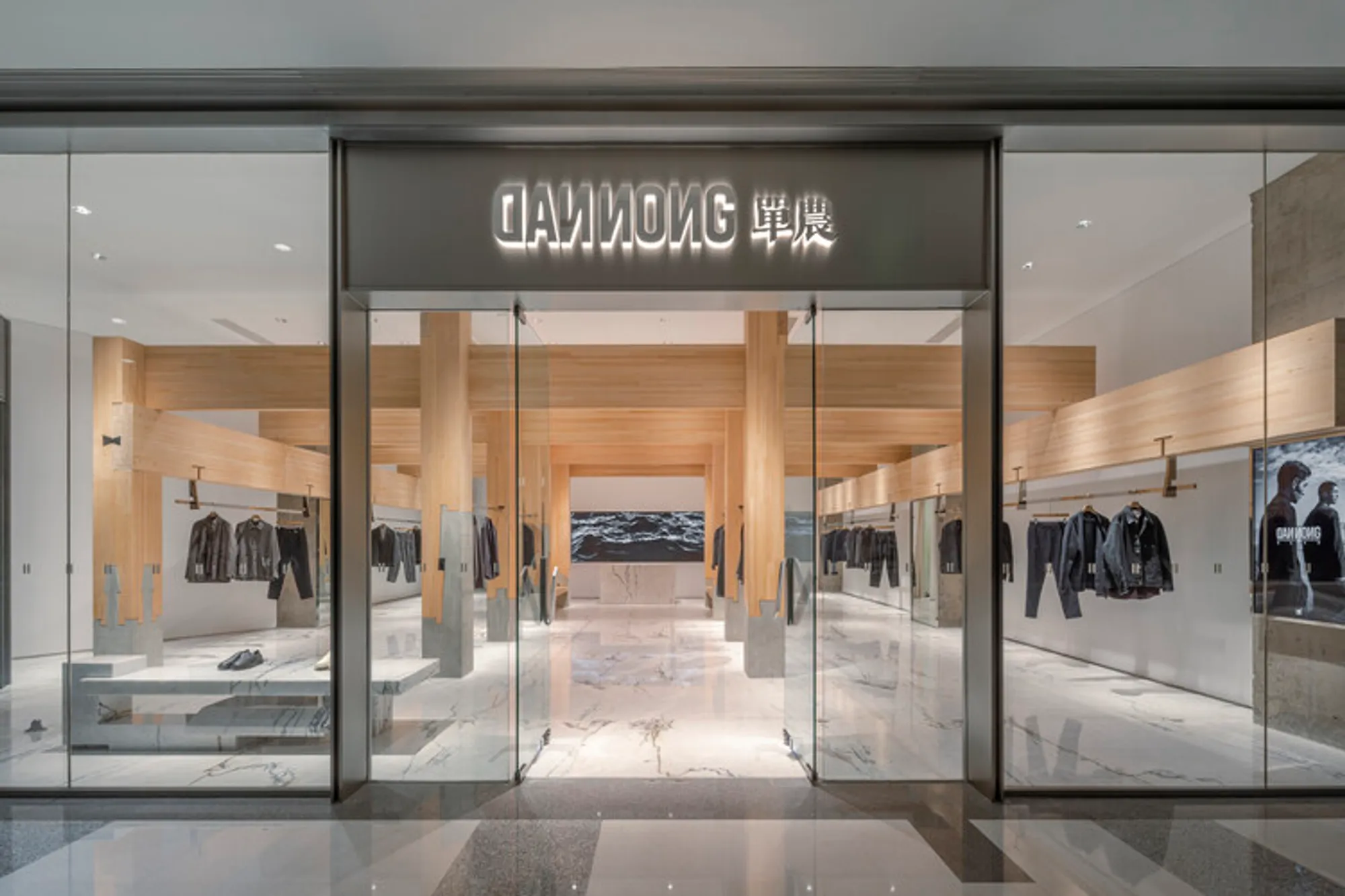
Pillar of Zen: DANNONG Store by LUO studio
A contemporary retail interior in Taiyuan that reinterprets traditional Chinese timber architecture, transforming clothing display into a calm ritual of living.


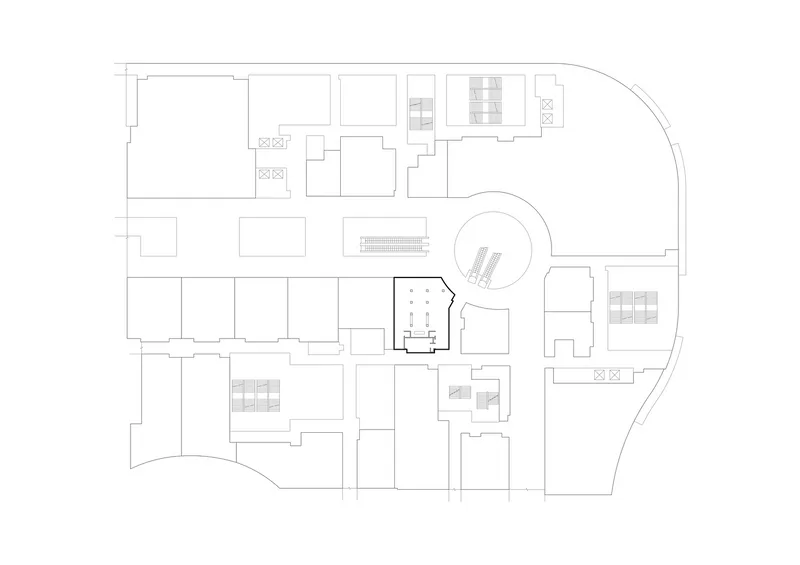
Located in Taiyuan, Shanxi Province, the Pillar of Zen, DANNONG Store by LUO studio transforms a compact retail interior into a meditative architectural construct rooted in the lineage of traditional Chinese timber architecture. Completed in 2024 within a contemporary commercial complex, the 171 m² store does far more than display garments, it reinterprets structural order, craftsmanship, and ritual as spatial experience.
Reframing Eastern Timber Architecture as a Contemporary Ritual of Dress
Shanxi is one of the most important regions for the preservation of ancient Chinese wooden architecture. Monumental structures such as Nanchan Temple and Foguang Temple stand as rare survivors of the Tang dynasty, embodying centuries of accumulated tectonic intelligence. Against this cultural backdrop, LUO studio posed a fundamental question: how can a contemporary clothing store resonate with such architectural heritage without resorting to imitation or nostalgia?


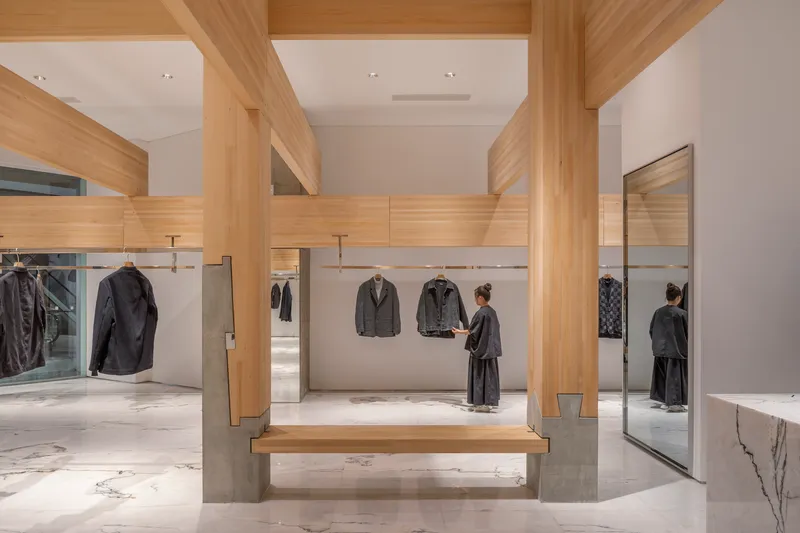
The answer emerges as a restrained yet powerful architectural proposition, an interior framed by timber columns and beams, where clothing is suspended lightly within a heavy, ordered structure, and everyday consumption is elevated into a quiet ritual.


Timber Frames as Cultural Memory
For centuries, the orthogonal timber frame has been the foundational structural system of Eastern architecture, shaping halls, temples, and dwellings alike. Defined by columns and beams arranged in rectilinear order, this system privileges clarity, modularity, and continuity. In graphic terms, both vertical and horizontal members read as “lines,” producing a spatial rhythm that is at once rational and ceremonial.
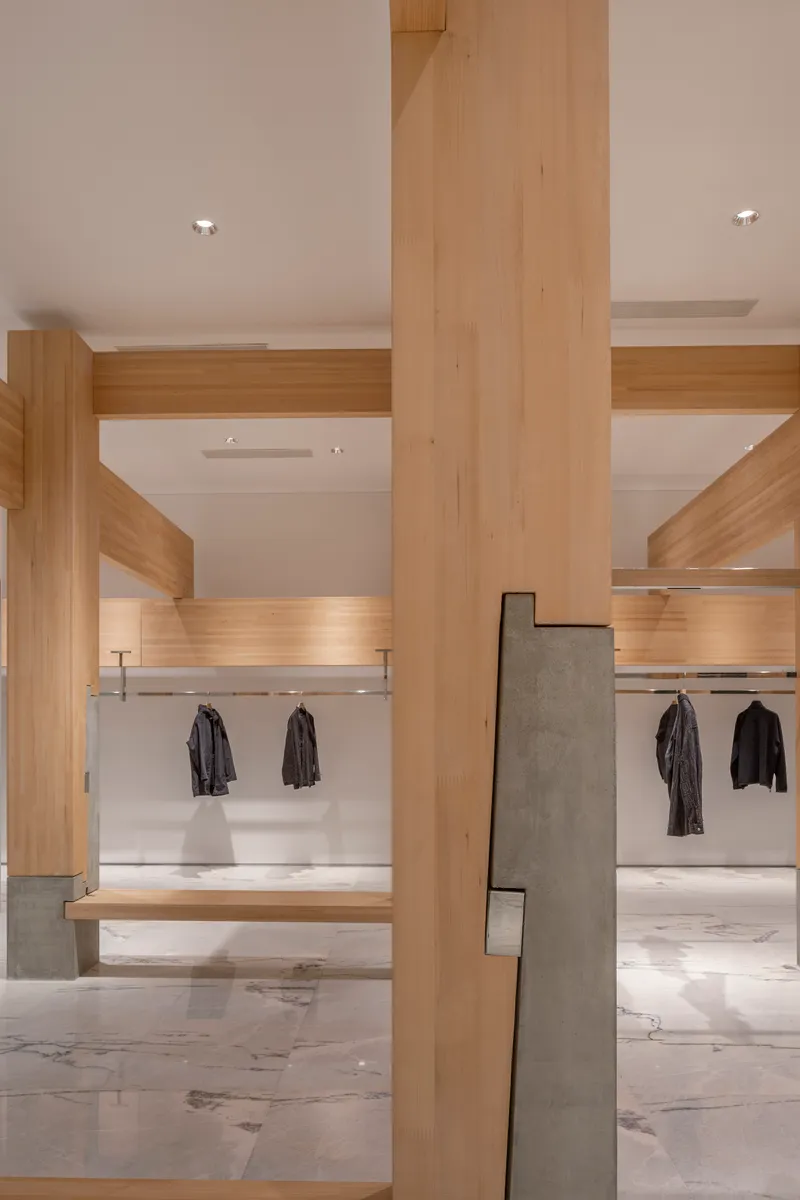
Garments, too, are displayed through lines, rods, hangers, and suspensions. LUO studio identifies this shared logic as a conceptual bridge between architecture and fashion. Within the reinforced-concrete shell of a modern commercial building, a traditional timber frame is grafted, not as decoration, but as an operative spatial system.

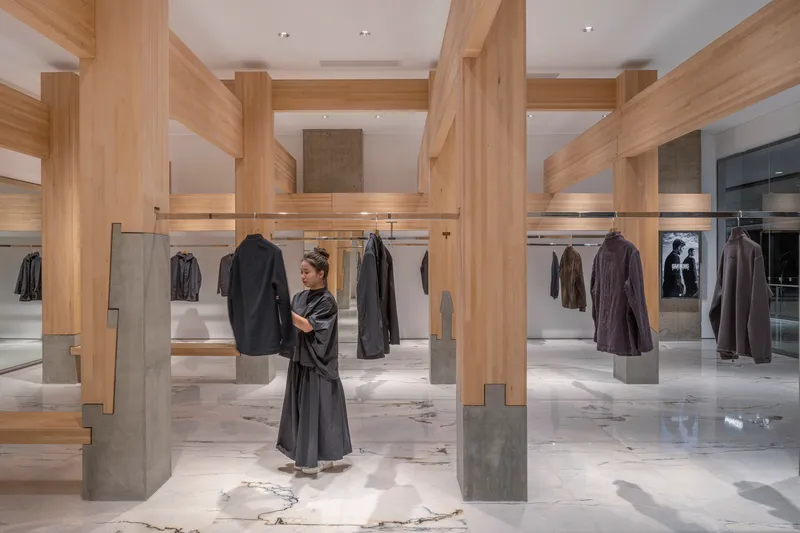
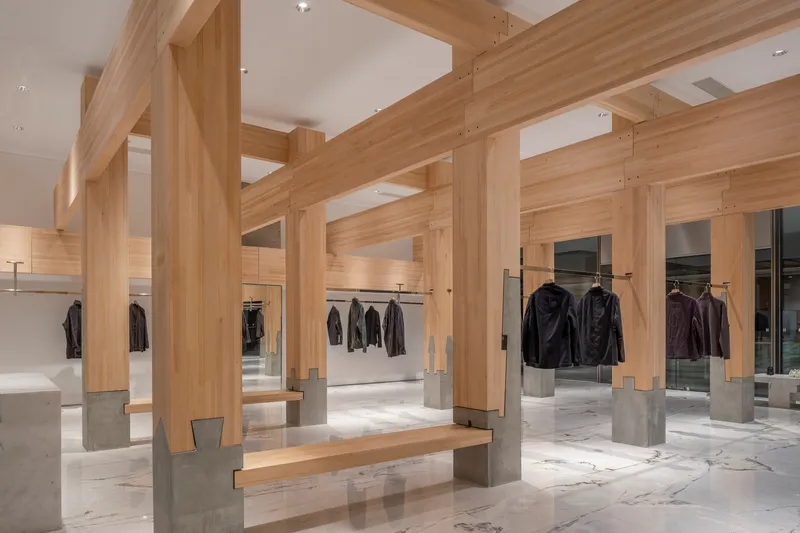
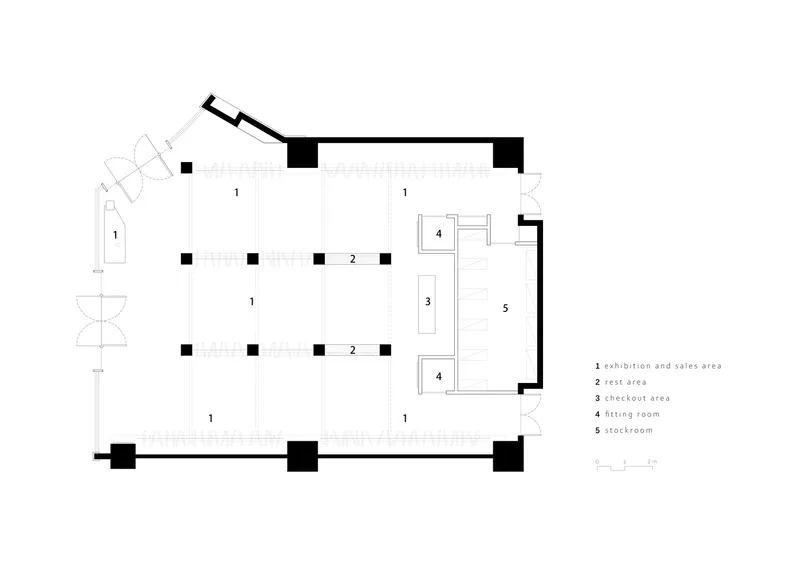
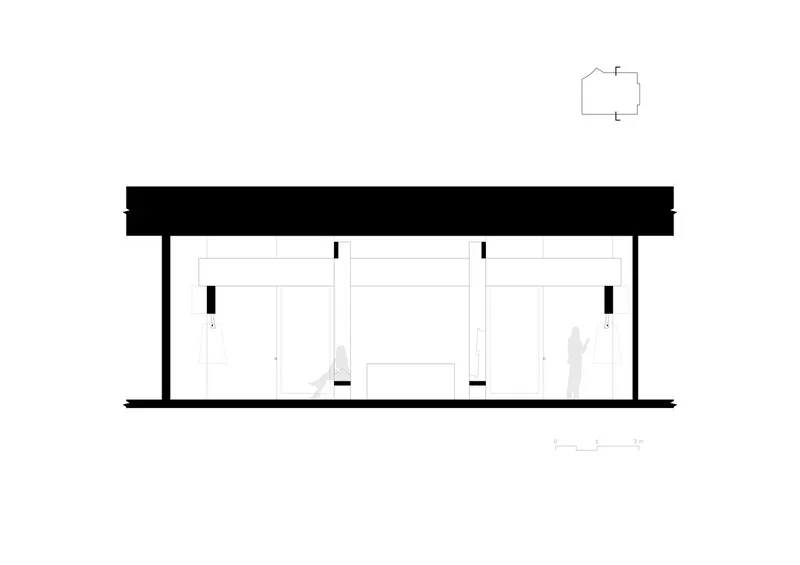
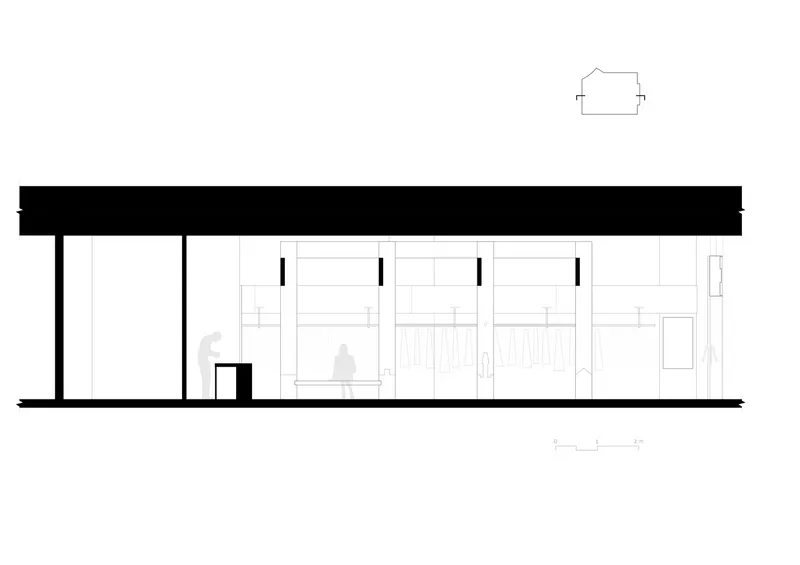
The project adopts a “three-bay, four-span” composition derived from classical timber architecture. The central bay establishes a clear axial sequence, from entrance to seating area, cashier, and visual focal point, while the two flanking bays accommodate long hanging rods for clothing display. The garments themselves reinforce the linear reading of beams and columns, blurring the boundary between structure and display.
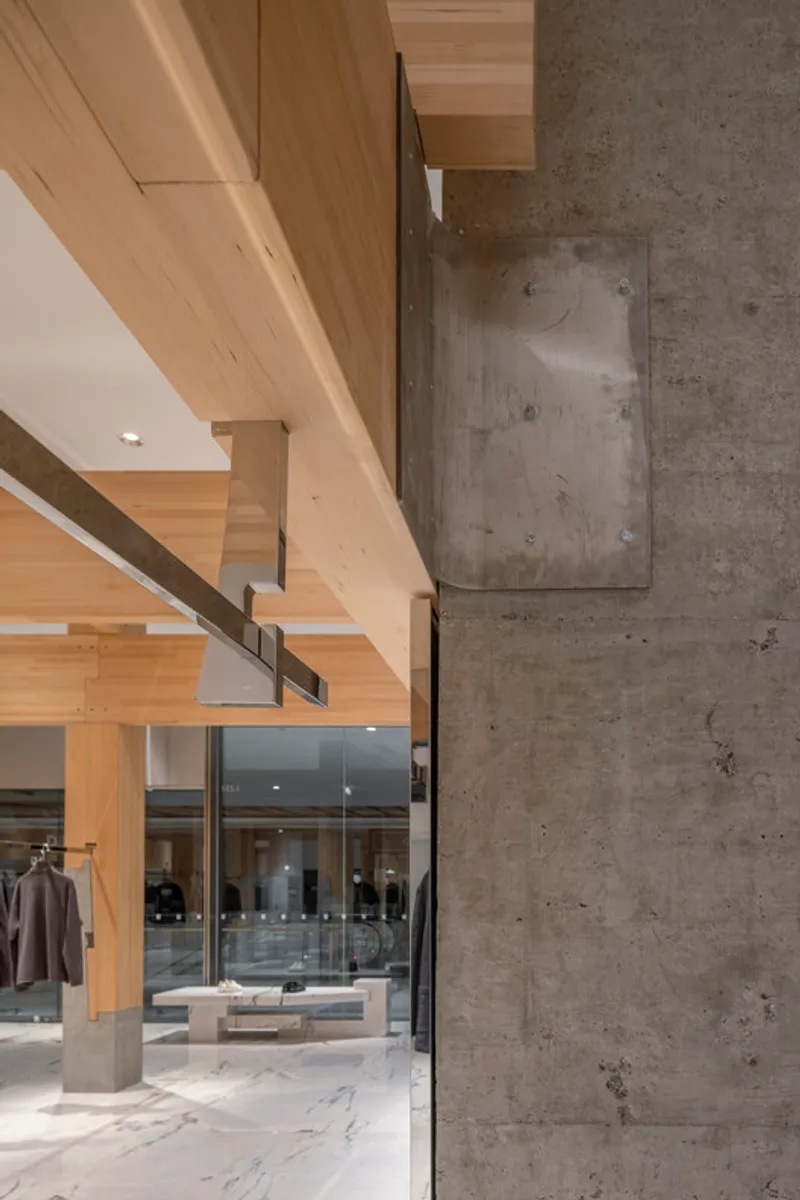
Weight and Lightness: Structure and Textile
Shanxi’s historic wooden buildings are characterized by their robust proportions and heavy timber members. Rather than minimizing structure, LUO studio embraces this sense of mass. Thick square timber columns and beams are deliberately selected to echo the tectonic gravity of regional precedents.
Suspended beneath these weighty elements, the clothing appears light, soft, and ephemeral. This deliberate contrast, coarse timber versus delicate fabric, mass versus lightness, sharpens the presence of both. The structure does not disappear behind merchandise; instead, it asserts itself as the spatial protagonist.
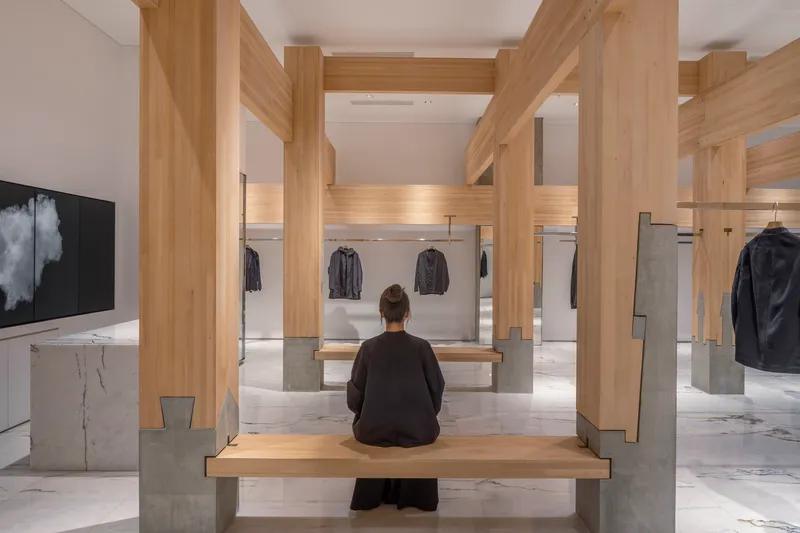
The effect is almost paradoxical: massive beams appear to suspend fragile objects, creating a visual tension that resonates with DANNONG’s brand ethos, meticulous attention to the smallest detail. Architecture and garment mutually intensify one another, each revealing the other’s qualities.
Mortise-and-Tenon as Spatial Language
At the heart of traditional Chinese wooden architecture lies the mortise-and-tenon joint, a system of connection that is at once structural, flexible, and deeply intelligent. Historically, these joints enabled buildings to withstand earthquakes, adapt to humidity, and allow repair without total reconstruction.
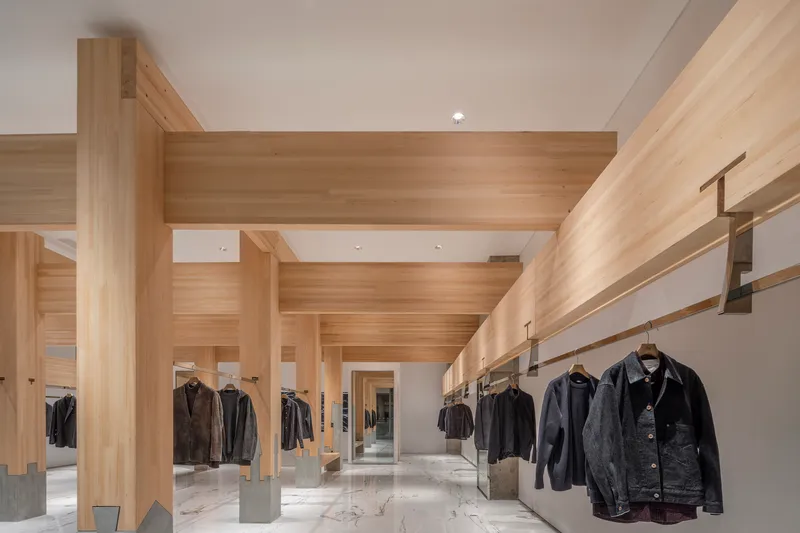
Rather than treating mortise-and-tenon as symbolic ornament, LUO studio reintroduces it as a living construction logic, scaled down and reinterpreted within the retail interior.
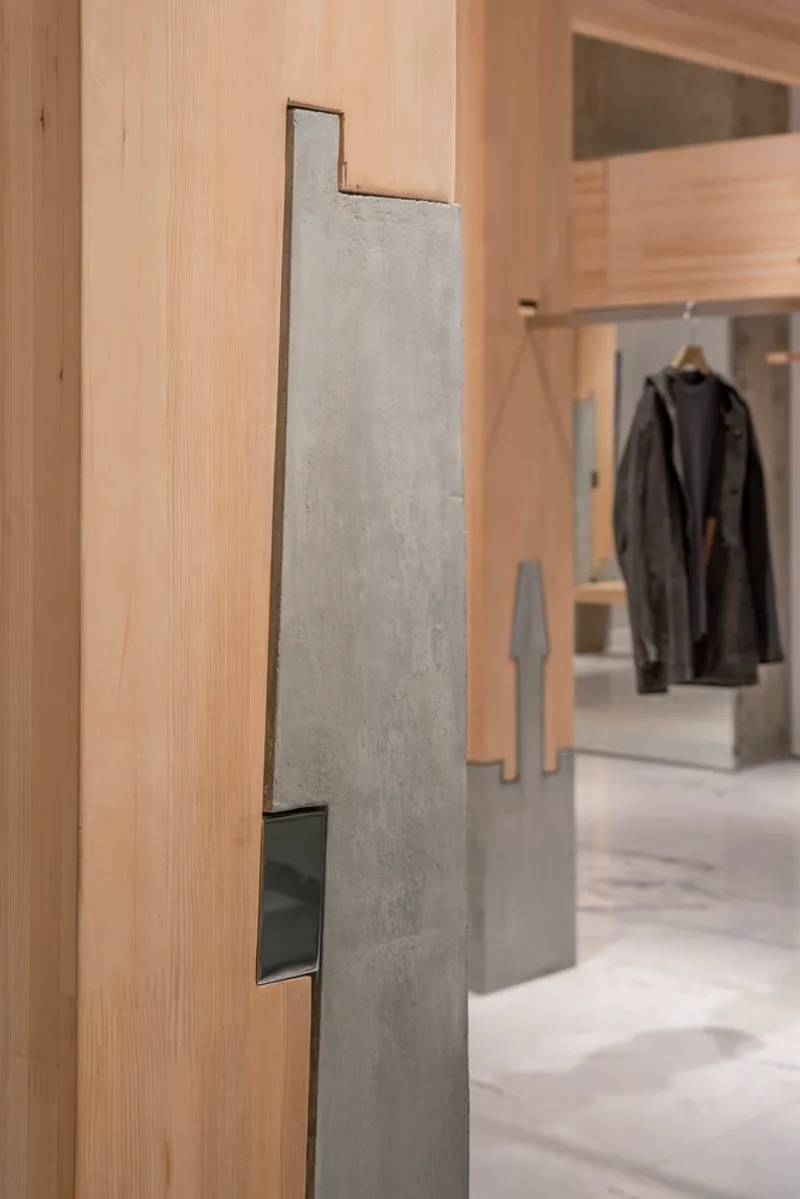
Extensive research and physical modeling informed the selection of four distinct joinery systems, each expressing a different structural logic and installation sequence:
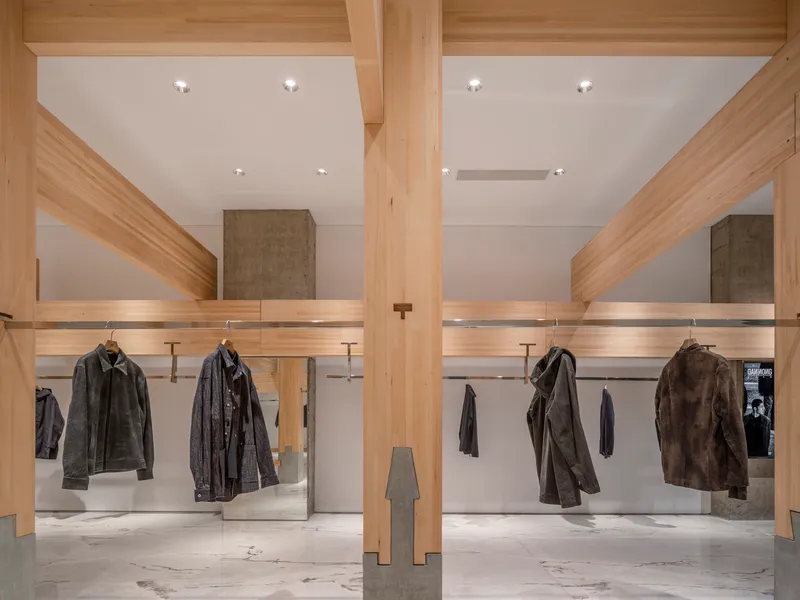

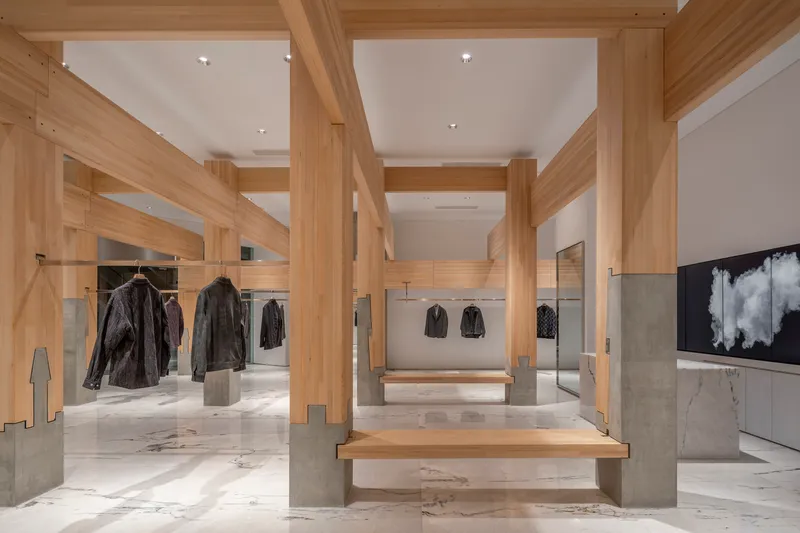
- The “Praying Mantis” MortiseInspired by a repair detail found at Nanchan Temple, this lateral-sliding joint allows insertion from the side, making it ideal for constrained conditions and corner applications.
- Low Cross MortiseA vertically interlocking joint that emphasizes compression and grounding, used where visual calm and stability are desired.
- Center-Pinned Palm MortiseTaller and more vertical, this joint introduces a subtle sense of uplift while maintaining structural clarity.
- 45-Degree Spatial Insertion JointA more complex connection requiring angled insertion, introducing spatial depth and constructional intrigue.
These joinery systems differ in form and logic, producing a layered tectonic narrative that rewards close observation.
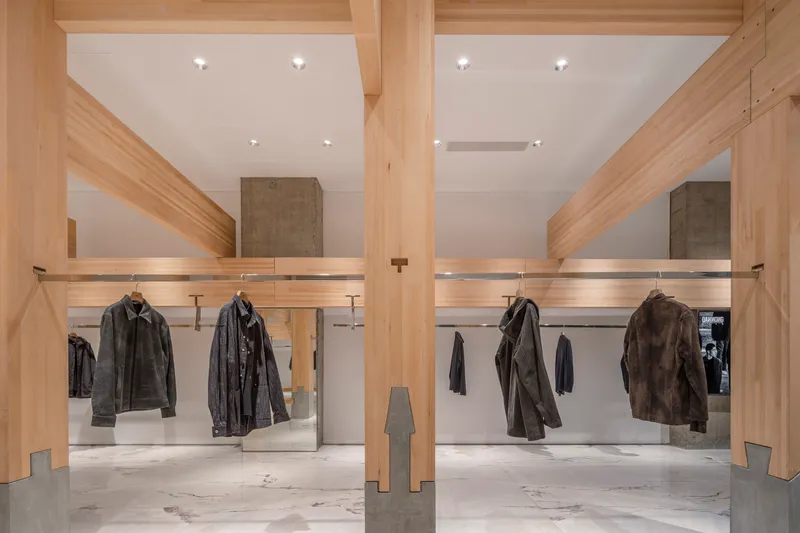
Columns, Beams, and Contemporary Constraints
In traditional timber buildings, column, beam connections often avoid direct mortise-and-tenon joints in favor of stacked or resting systems. However, modern constraints, transportation, prefabrication, and installation within a commercial shell, necessitated adaptation.
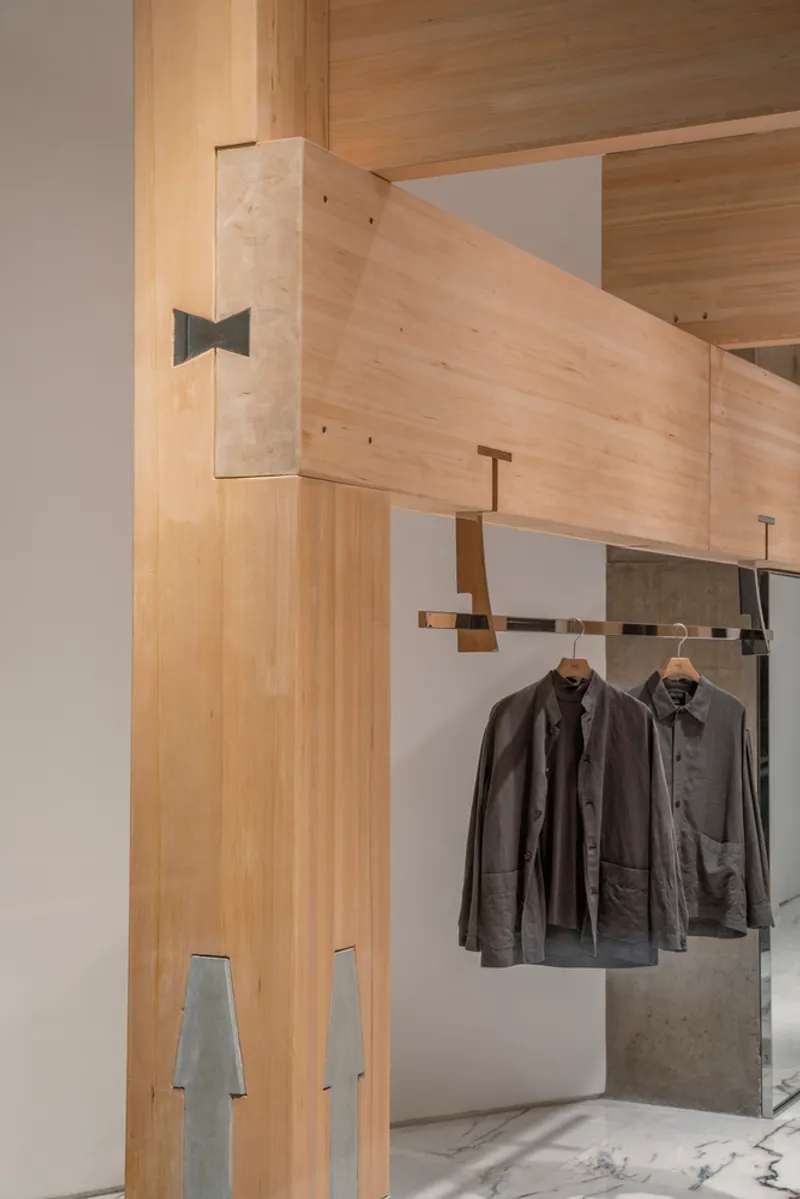
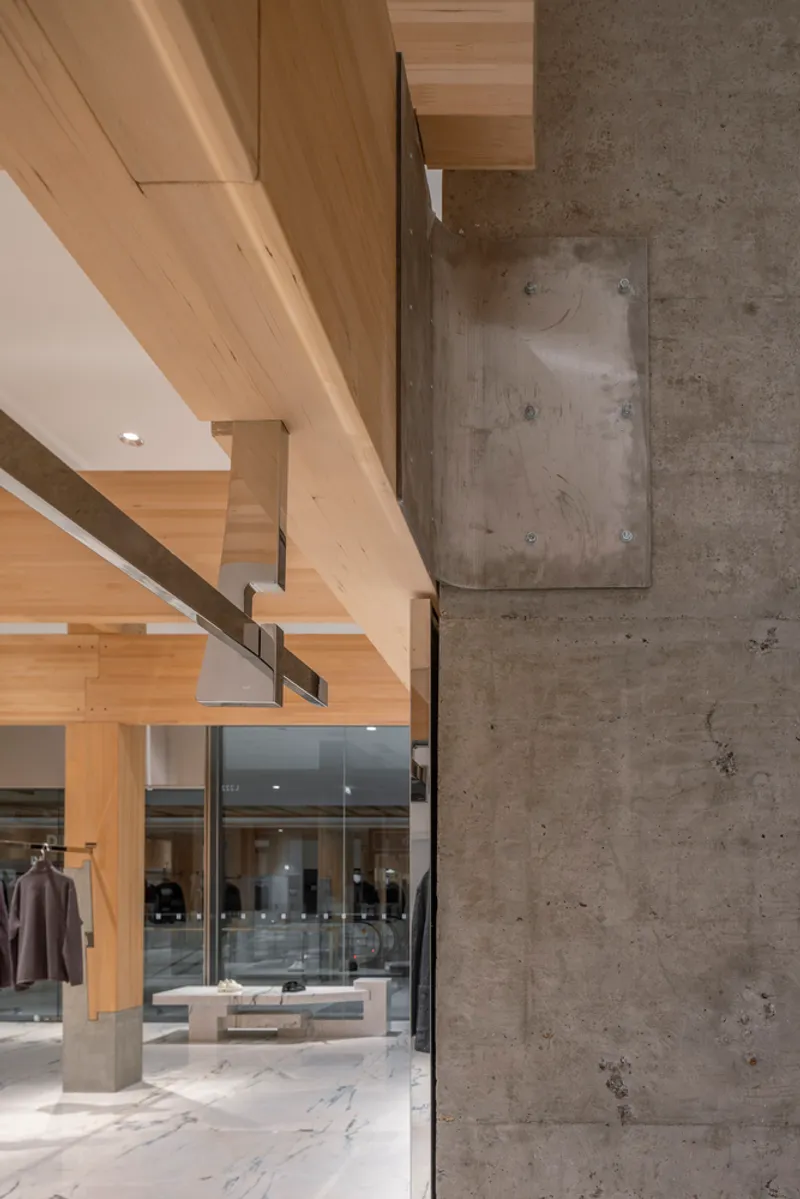
LUO studio employs semi-lapped joints between columns and beams, preserving structural coherence while accommodating segmented beams. The joints remain legible rather than concealed, allowing the construction process itself to become part of the spatial expression.
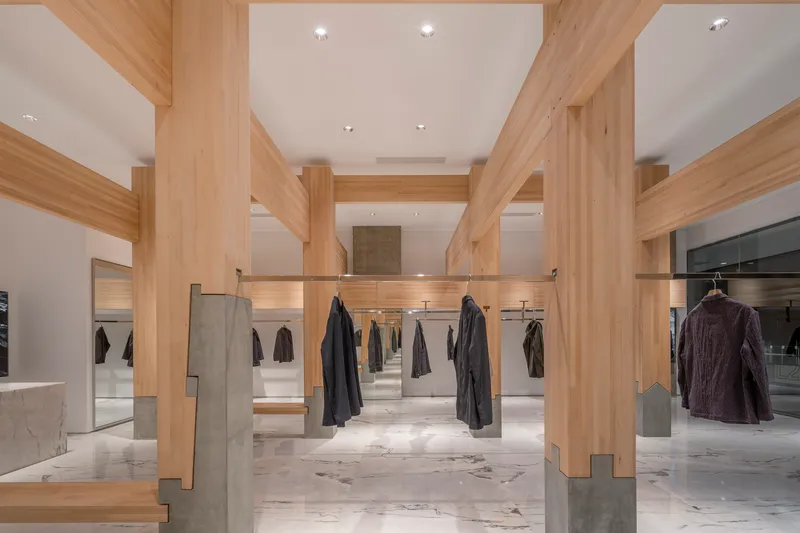
This decision reflects a broader project ethic: craft should be visible, not hidden. Structure becomes an educational artifact, revealing how things are made rather than masking their assembly.
Furniture as Structure, Structure as Furniture
In traditional Eastern architecture, furniture and building logic are deeply intertwined. LUO studio extends this principle by integrating secondary elements, seating, display rods, and fittings, into the same joinery language as the main structure.

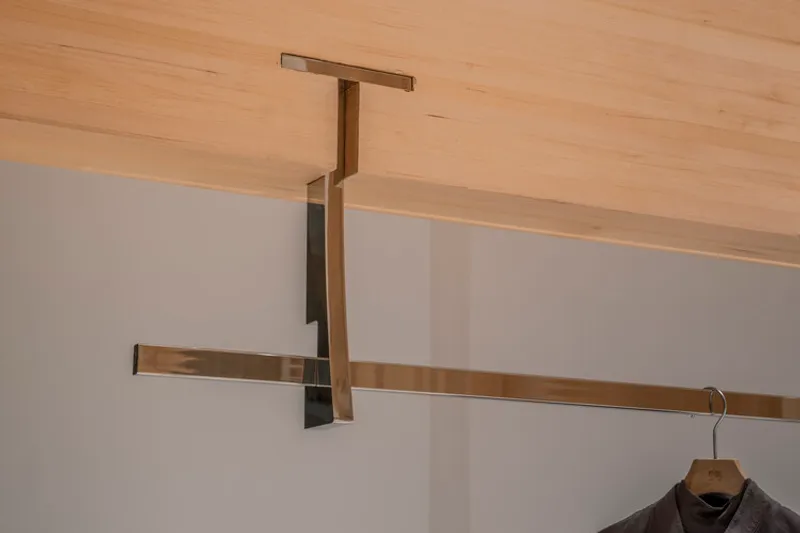
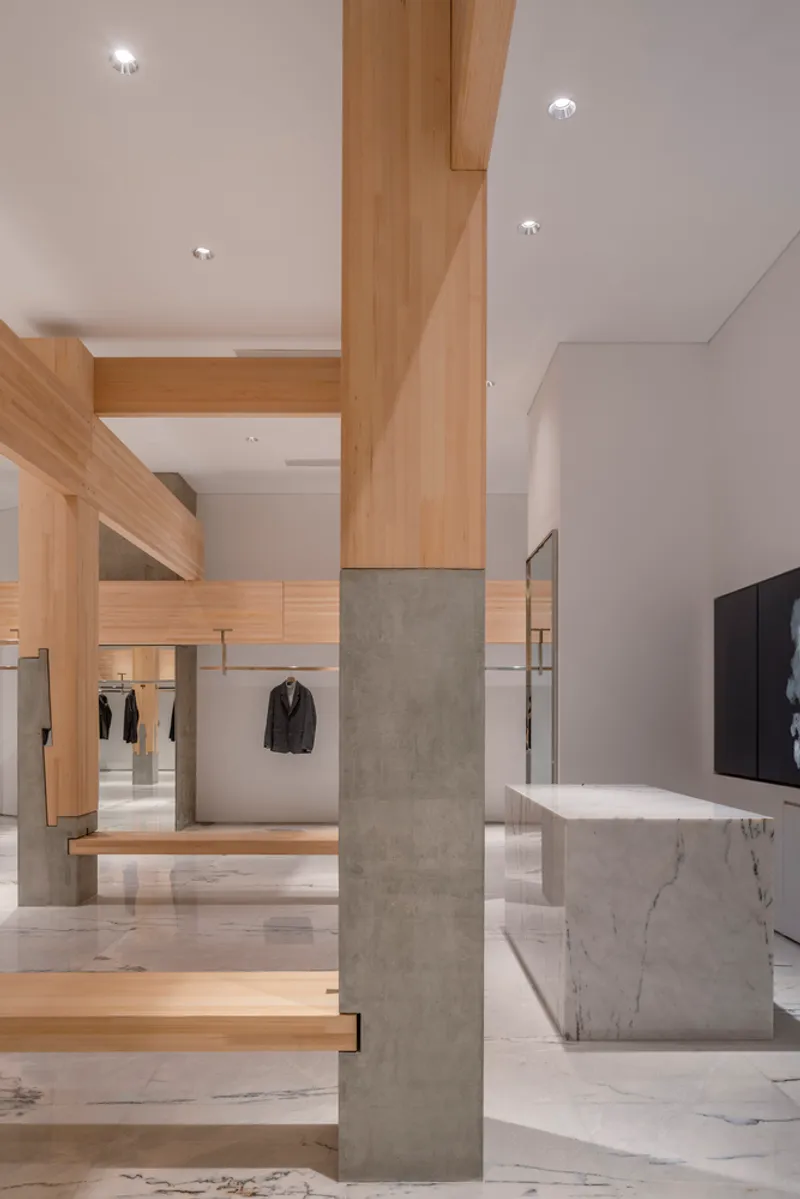
Benches are joined directly into concrete column recesses using mortise-and-tenon logic, becoming spatial extensions of the timber frame. Hanging rods are inserted through pre-cut mortises in the columns, with metal elements acting as tenons. This creates a continuous construction grammar from macro structure to micro detail.
Nothing feels arbitrary; every element appears to belong to a single system of thought. The space reads as one coherent object, rather than an assemblage of architecture, furniture, and retail fixtures.
Ritual, Market, and the Human Body
A retail interior is ultimately a space of human movement and encounter. The word “city” implies enclosure and gathering; “market” implies exchange. LUO studio reframes consumption not as excess, but as ritualized choice.
In an age of material abundance, clothing is no longer purely functional, it mediates identity, self-awareness, and presence. For this reason, the Pillar of Zen was never conceived simply as a shop. Stripped of garments, the space must still stand as a complete architectural work, defined by proportion, material honesty, rhythm, and calm.

Visitors move through frames, brush against timber, observe the interplay of light and shadow, and gradually slow their pace. Dressing becomes less about acquisition and more about attentive selection, a quiet dialogue between body, object, and space.
Minimalism Rooted in Craft
Despite its minimalist appearance, the project is anything but reductive. Every surface and joint is carefully considered, and all materials are treated with restraint and respect. Timber retains its natural tactility; metal elements are precise yet unobtrusive; concrete remains a silent background.
This approach reflects the epistemology of traditional timber construction, where materials are not disguised or over-processed, but allowed to express their inherent properties. The space achieves calm not through emptiness, but through ordered density, a clarity born of discipline.

Pillar of Zen as Contemporary Eastern Space
Ultimately, Pillar of Zen, DANNONG Store stands as a contemporary interpretation of Eastern spatial philosophy. It neither copies historical forms nor abstracts them into superficial motifs. Instead, it translates structural logic, craftsmanship, and ritual into a modern retail environment.
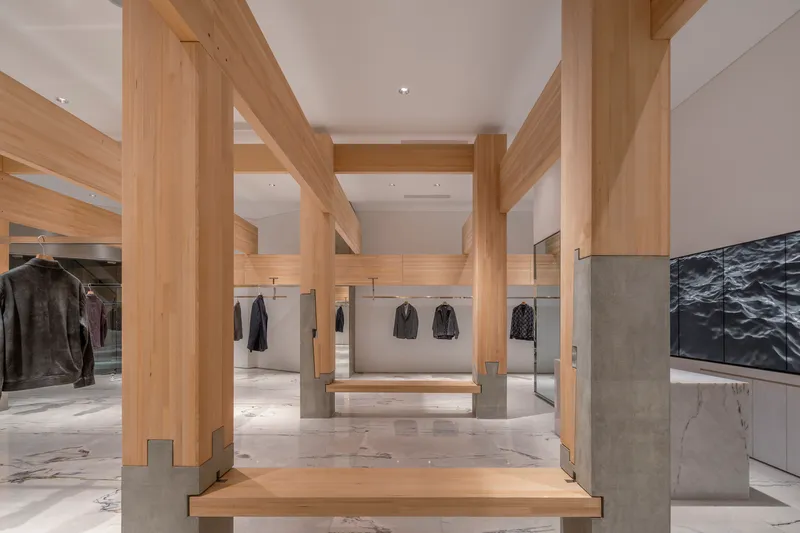
The project demonstrates how architecture can slow time, heighten perception, and reconnect daily actions with deeper cultural memory. Within a commercial complex, LUO studio creates a space that resists noise and excess, an interior where earnestness, showing up, and order quietly prevail.
Here, choosing clothes becomes a way of inhabiting space. And inhabiting space becomes a practice of living.
All the Photographs are works of Weiqi Jin




Popular Articles
Popular articles from the community


Conexión: Biophilic Design Reimagines High-Rise Living in Hong Kong
Conexión reimagines high-rise living in Hong Kong through biophilic design, green facades, shared spaces, daylight, water and nature within.

Co-life: Sustainable Architecture for Age-Friendly Community Living
Co-life reimagines sustainable architecture for seniors through courtyards, rammed earth, shared gardens, and spaces designed for belonging.

EW PARK: Sustainable Architecture Reimagines the Future of Urban Parking
EW PARK reimagines city parking as a modular wooden tower combining automation, solar energy, electric mobility, and adaptable urban design.

The Earth Pod: 3D Printed Homes for Resilient Refugee Communities
The Earth Pod reimagines refugee housing through 3D printed homes made from clay, combining resilience, self-sufficiency, and rapid shelter.


Similar Reads
You might also enjoy these articles


Hodi-Mandai Geram
Project Function: Preservation and revitalization of the Intangible heritage and socio-spatial identity of the Hodi by Housing, Cultural Memory Center, Sacred Grove, landscape, local tourism economy


Olio Towers: A Mid-Rise for Performers That Fuses Housing, Rehearsal, and Stage
Located blocks from Houston's Theater District, this modular tower stacks living units around a central performance atrium.

Oasis: Modular Green Housing Carved into Dhaka's Urban Fabric
A shortlisted Plugin Housing entry reclaims unauthorized settlements in Dhaka with stepped concrete volumes, green roofs, and ventilation-driven design.

Black Hole: A Floating Megastructure for the Post-Physical Era
Emiliano Mazzarotto envisions a spherical, self-scaling arena where e-sports, digital hotels, and holographic stadiums replace traditional public space.


Explore Architecture Competitions
Discover active competitions in this discipline



Challenge to reimagine the Iron Throne


Photograph architecture without architects


Illustrate the lost glory of Angkor Wat - Render Challenge


Design challenge to reuse E-waste
Comments (0)
Please login or sign up to add comments
No comments yet. Be the first to comment!