
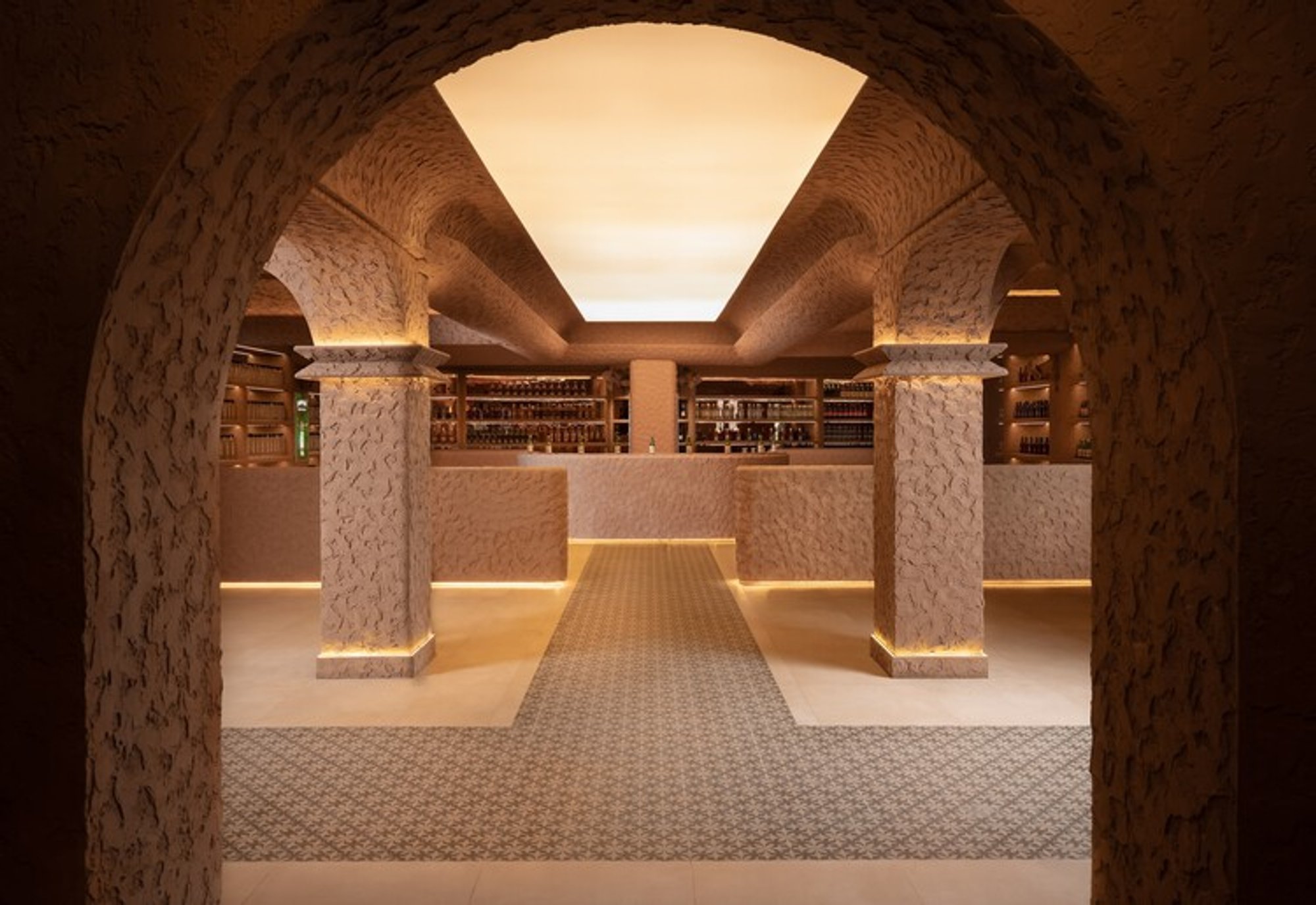
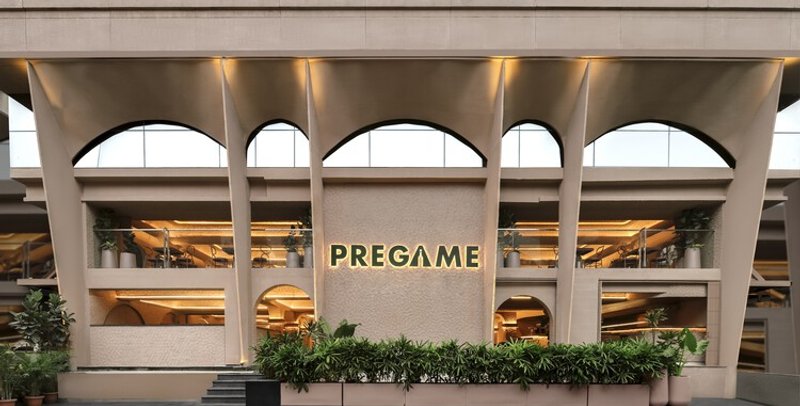
Pregame Concept Store and Bar By ATELIER ASTIL
A cave-inspired concept store and bar in Bengaluru, sculpted from textured surfaces, dramatic lighting, and maze-like circulation for immersive experiences.

A Subterranean Retail and Dining Experience Carved from Light, Texture, and Movement
Located in the heart of Bengaluru, India, Pregame Concept Store and Bar is a 929-square-meter hybrid destination that seamlessly merges retail, dining, and nightlife into a single immersive spatial experience. Designed by ATELIER ASTIL and completed in 2025, the project transforms a structurally constrained interior shell into a sculpted, maze-like environment inspired by ancient cave formations, subterranean passages, and excavation logic.
Rather than approaching the space as a conventional commercial interior, the design treats architecture as a carved mass, reinterpreting primordial spatial typologies through contemporary construction techniques, material innovation, and controlled lighting.
The Cave as Concept and Narrative
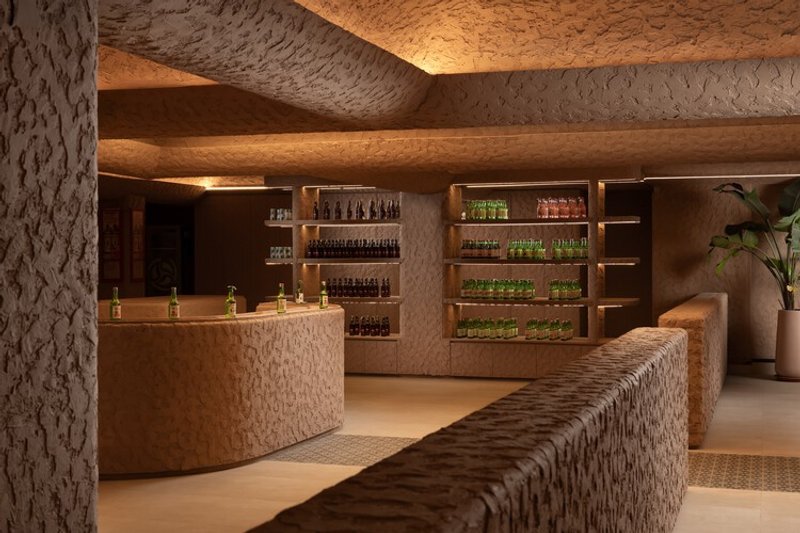
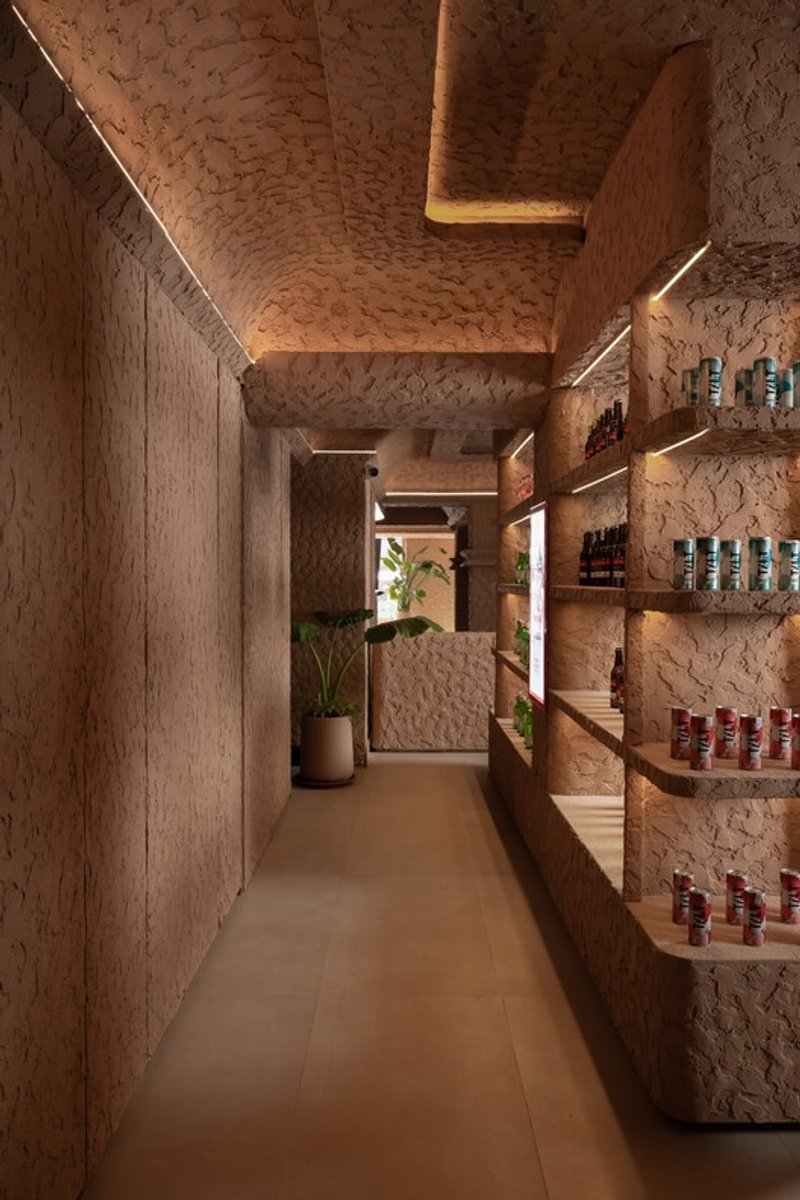
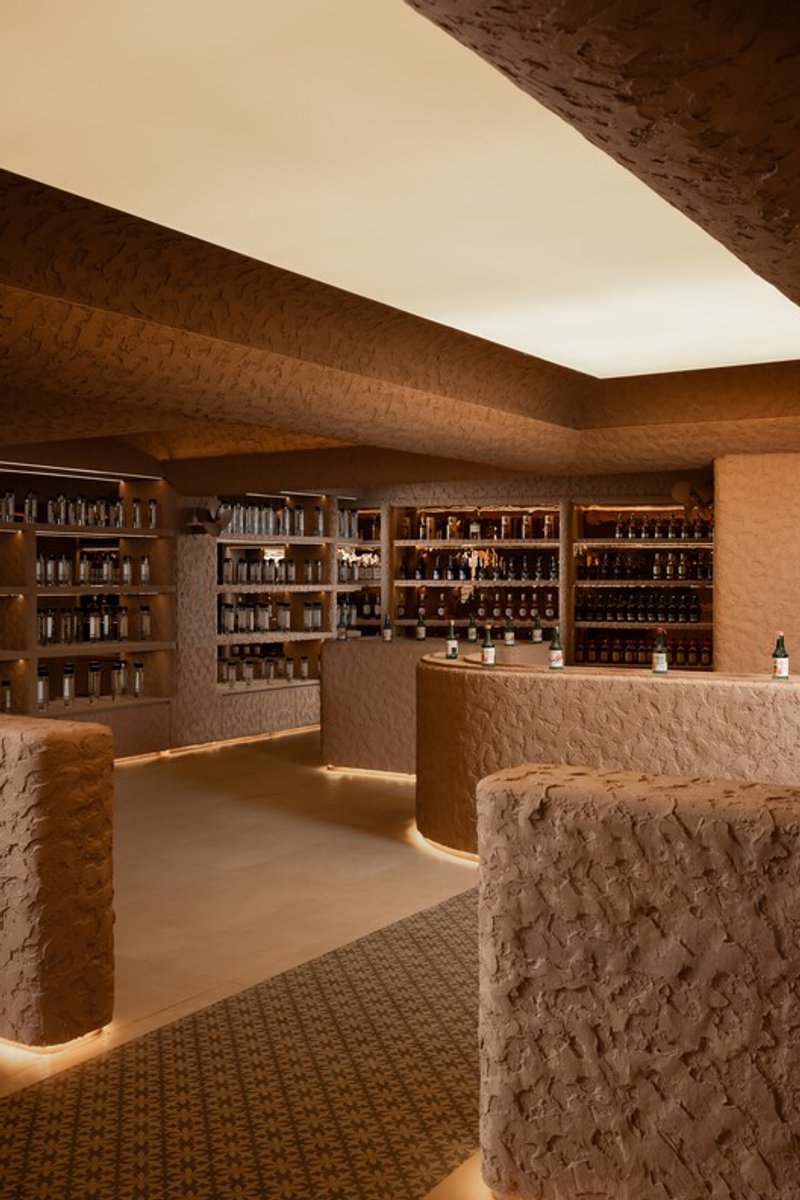
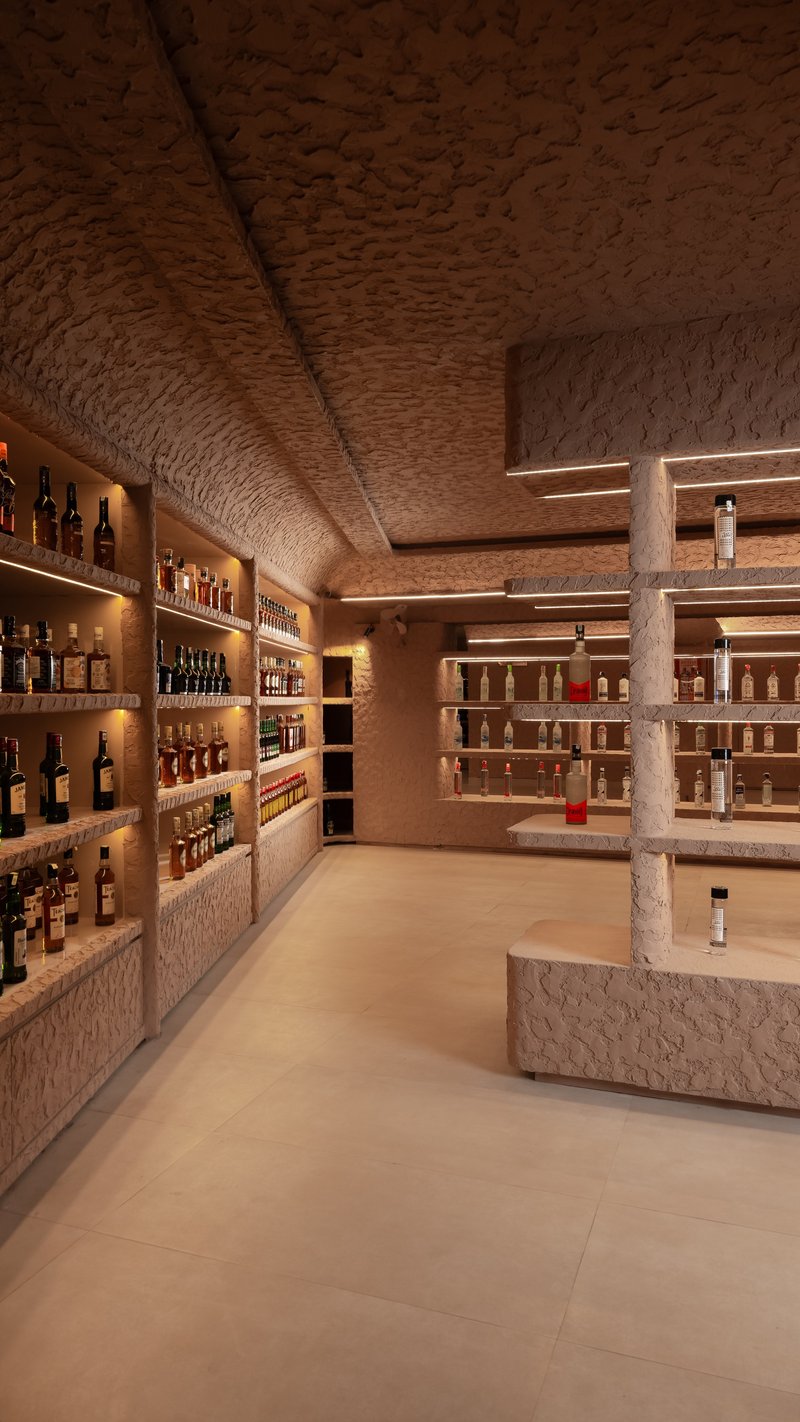
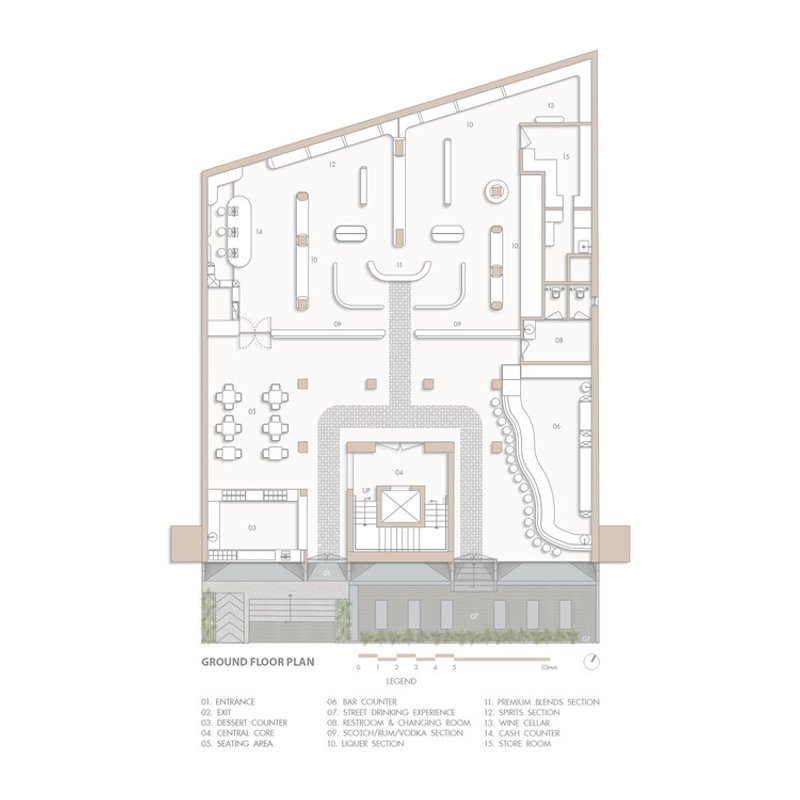
The experiential journey begins at the concept store, conceived as the first threshold of an imagined cave. Visitors enter a continuous spatial landscape where products are embedded within carved niches, recessed bands, and sculpted voids, dissolving the boundary between display and architecture. Retail becomes exploratory rather than transactional, encouraging curiosity and prolonged engagement.
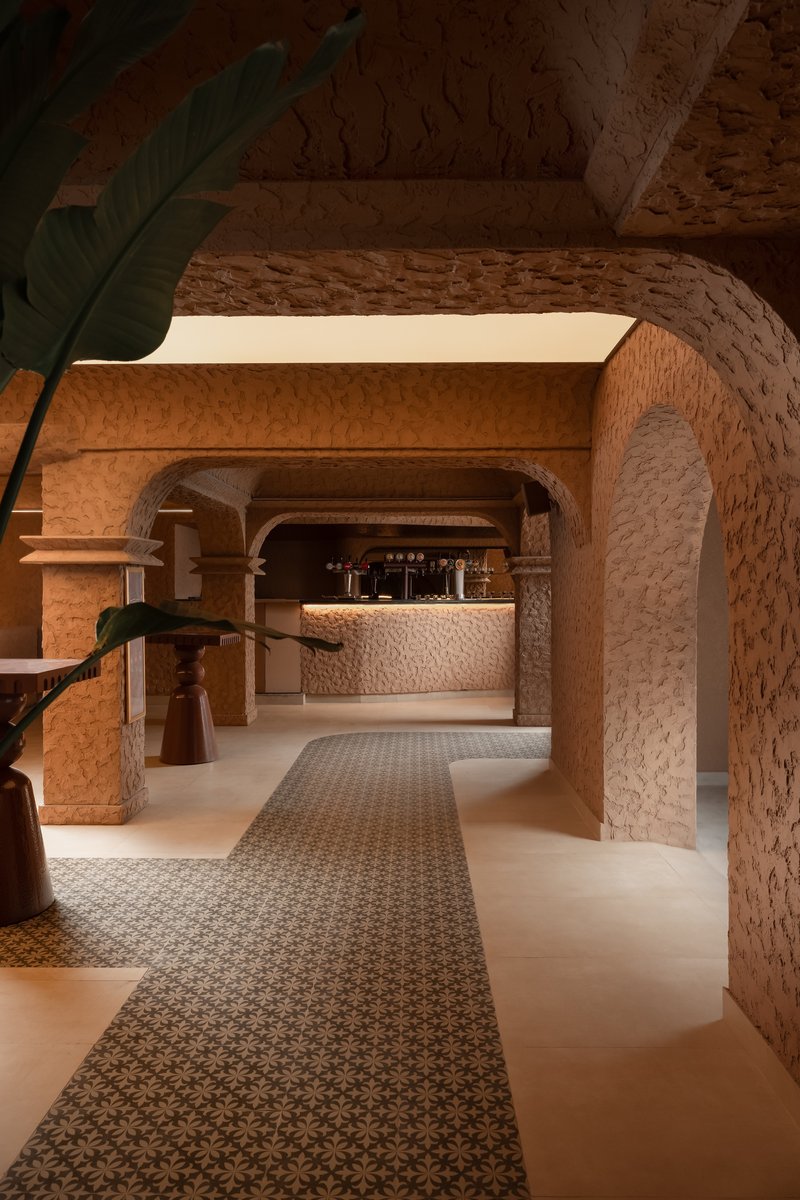
The circulation follows an intentionally maze-like sequence, guiding visitors deeper into the space. This orchestrated movement ensures a gradual immersion—first through the retail layer, then upward through carved passages toward the restaurant and bar—establishing a clear yet fluid experiential narrative.
Transforming Constraints into Architecture
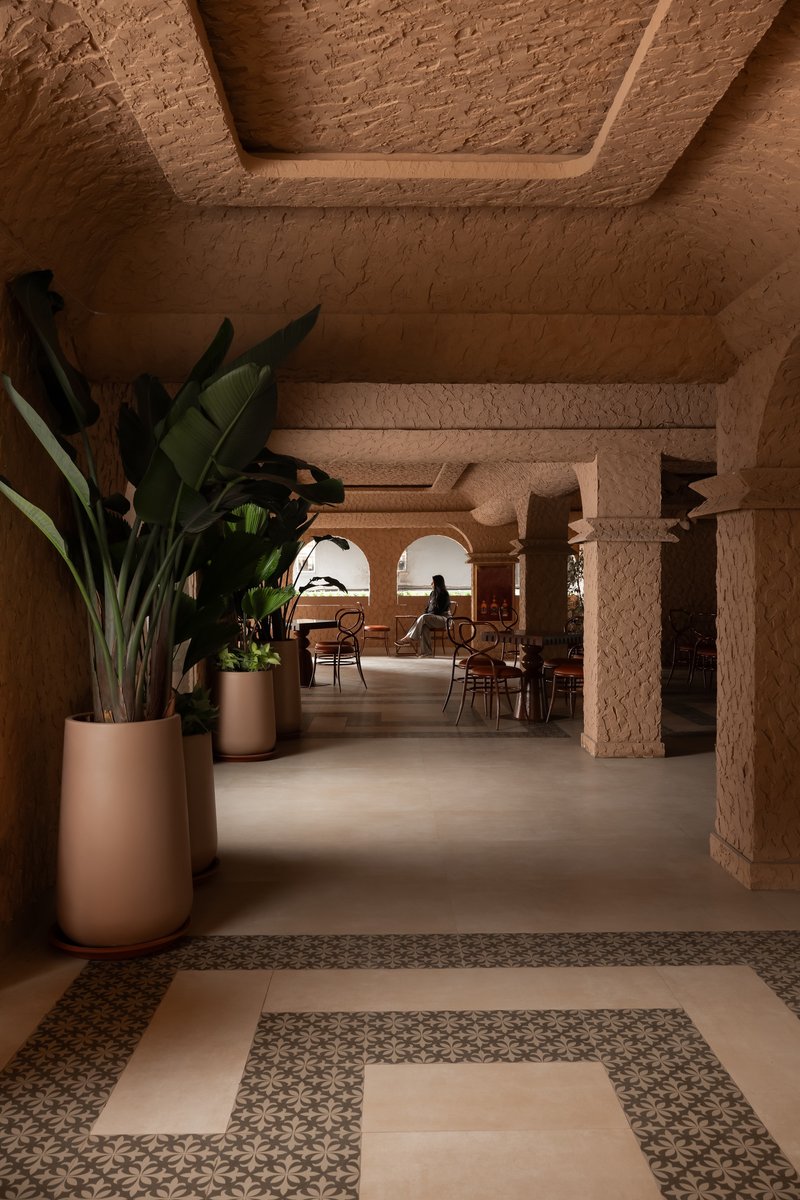
The site presented significant challenges, including low ceiling heights, exposed beams, and numerous structural columns. Instead of concealing these constraints, ATELIER ASTIL absorbed them into the design language. Columns expand into monolithic sculptural forms, beams dissolve into contoured ceiling profiles, and structure is reimagined as architecture itself.
This approach results in a unified interior where no element feels applied or decorative. Every surface contributes to a cohesive, muscular spatial identity—one that feels excavated rather than assembled.
A Monolithic Material System
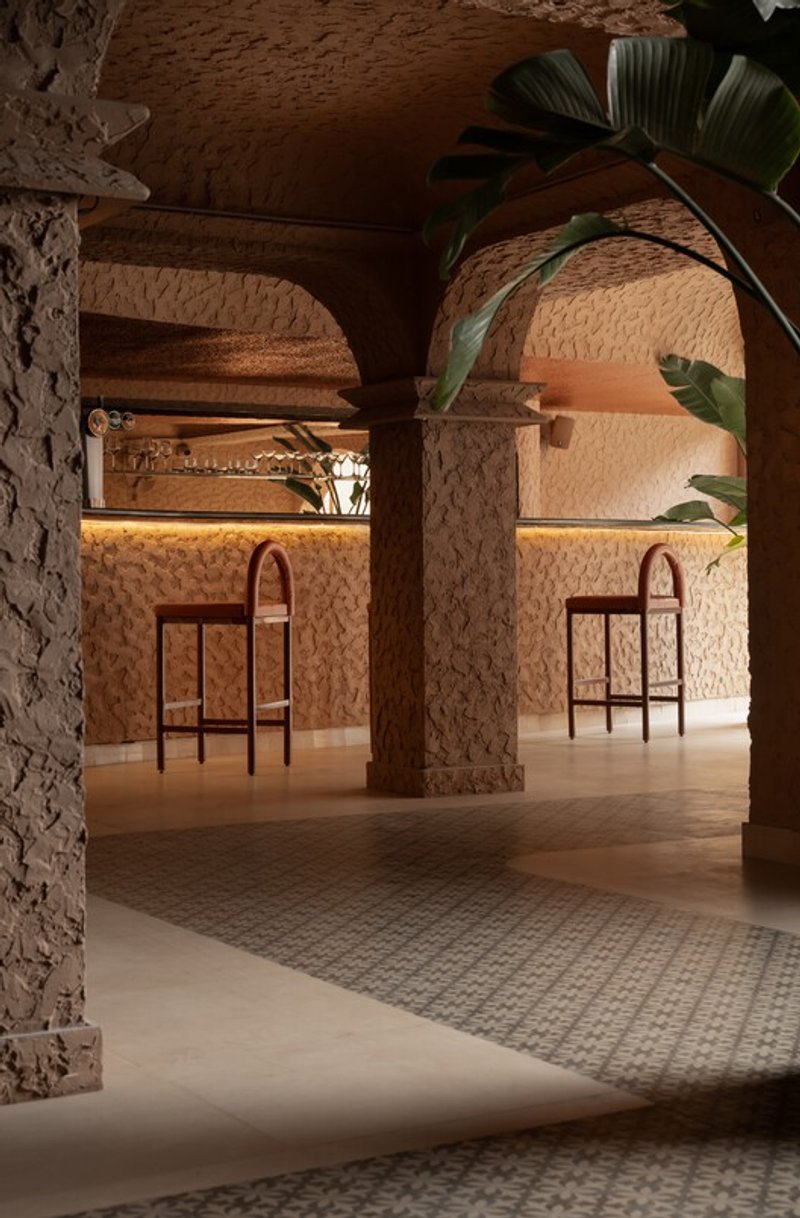
At the core of the project lies a continuous high-build textured envelope, developed through a calibrated layering process. Base plaster, high-build textured paint, micro-cement coats, and hand-troweled finishing layers are applied in successive passes, creating controlled variation in density, compression, and grain.
A concealed aluminum sub-frame system supports deeper recesses, overhangs, and consistent curvature, allowing precise shaping of organic forms and negative volumes. Once established, the textured skin seamlessly wraps walls, ceilings, beams, and columns, producing the illusion of a single carved stone mass.
The result is a technically integrated architectural system where structure, sub-structure, and finish operate as one continuous surface.
Light as an Emotional and Spatial Driver
Lighting is engineered as the emotional core of the project. A crafted overhead aperture simulates the presence of a skylight, introducing the illusion of natural top light into a site devoid of daylight. This soft illumination washes across textured surfaces, evoking the sensation of light filtering into an ancient cavern.
As evening sets in, layered cove lighting, recessed channels, and indirect illumination animate the space. Shadows move across ridges and curves, amplifying depth, tactility, and the handcrafted quality of the surfaces, reinforcing the subterranean narrative.
Dining Spaces and Human Scale
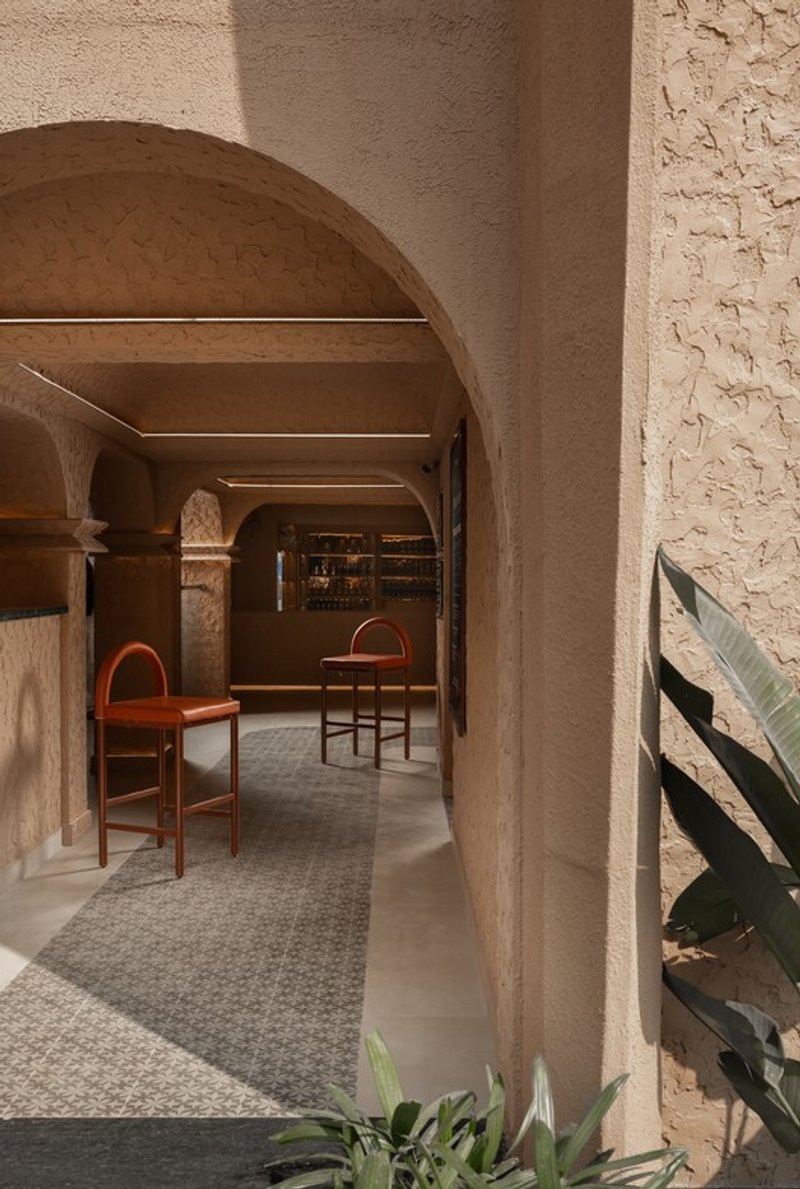
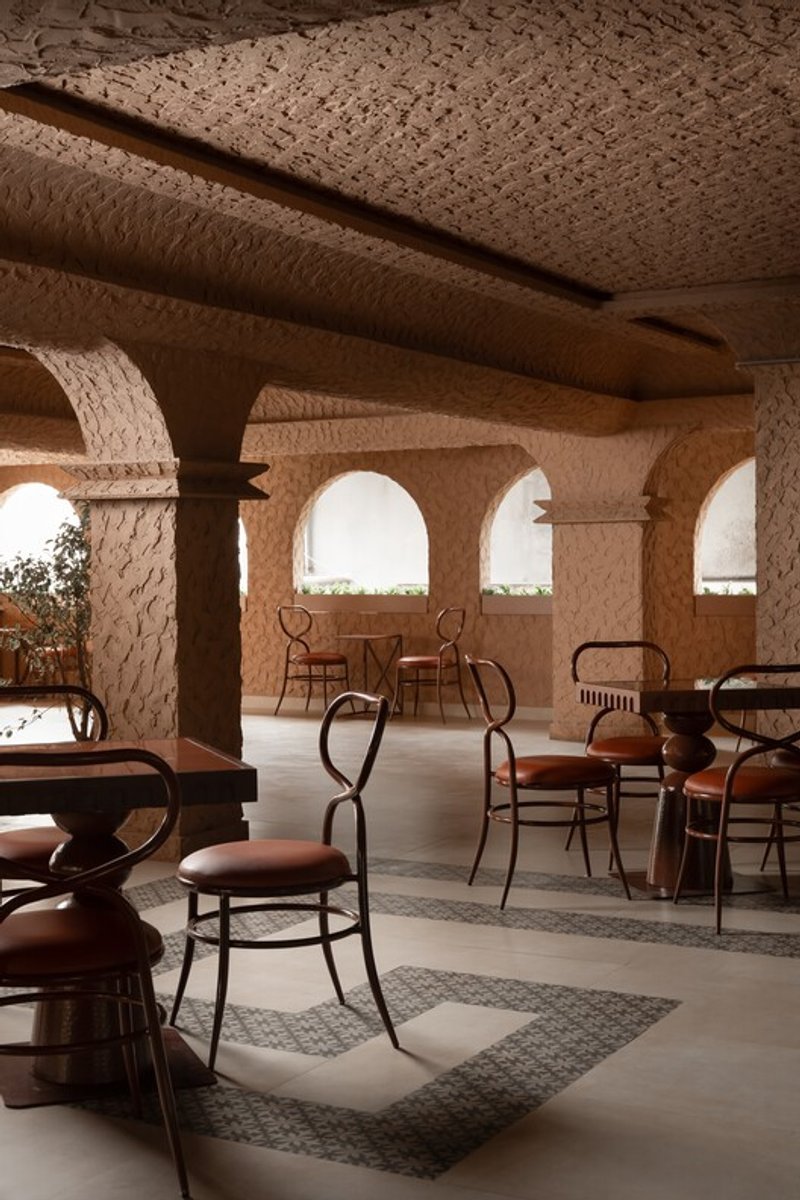
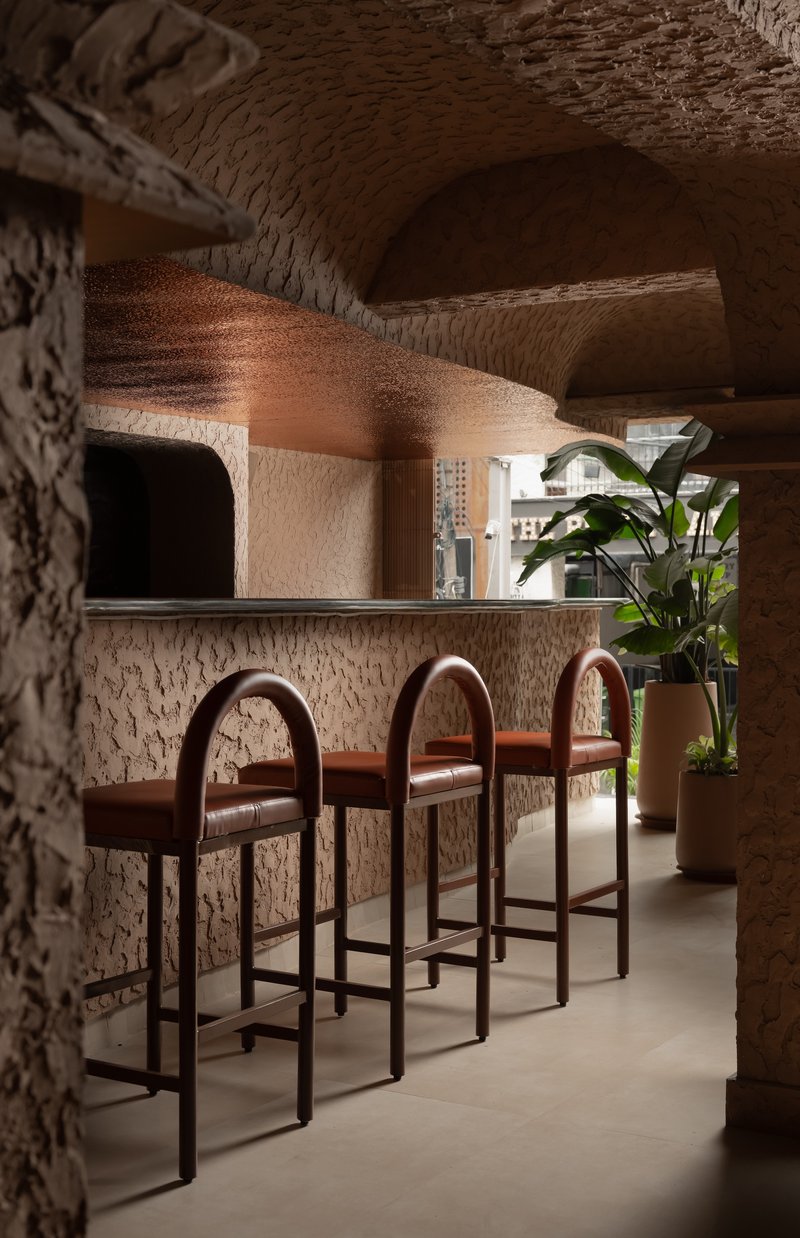
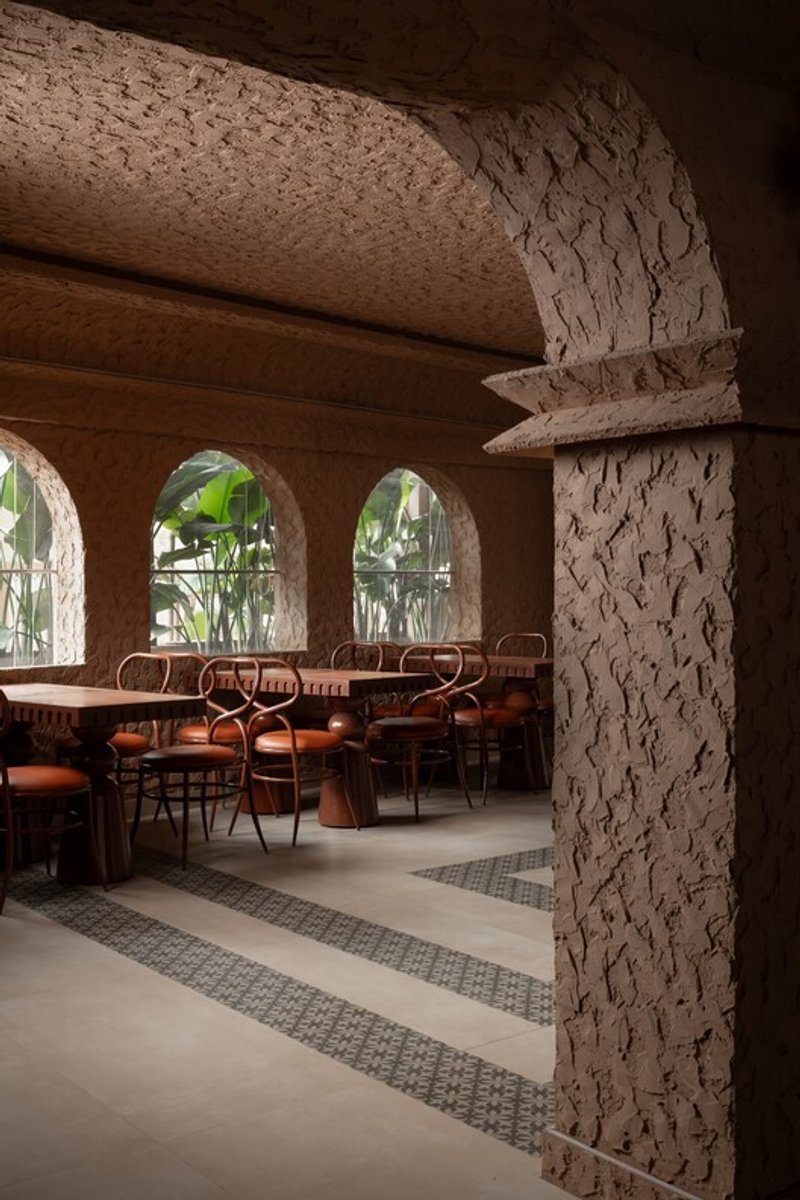
On the upper level, the restaurant and secondary bar extend the spatial experience. Sculpted alcoves create intimate dining pockets, while the bar—anchored by a rippled sheet-metal front—captures and diffuses light across its curved surface.
Throughout the project, organic, curve-based furniture provides a counterpoint to the monolithic envelope. A deliberate two-tone strategy defines the visual hierarchy: the architecture is rendered in a singular cave-like hue, while furniture elements introduce a warm terracotta palette, grounding the experience at a human scale.
A Hybrid Typology Reimagined
Pregame positions itself as a hybrid typology—part concept store, part restaurant, part bar—woven together through a multi-sensory, spatial journey. By transforming structural limitations into architectural opportunities and crafting an atmosphere defined by texture, shadow, and movement, the project offers a contemporary reinterpretation of ancient cavern architecture.
The exit sequence completes the narrative: as visitors descend back through the carved passages, the space gradually releases its intensity, returning them to the city with the feeling of having unearthed an experience—rather than simply visited a place.
All the photographs are works of Arjun Krishna




Popular Articles
Popular articles from the community


Split House: A Compact Urban Home Blending Privacy, Light, and Flexible Living in Japan
Compact Japanese home featuring DOMA space, flexible café potential, passive lighting, privacy zoning, and sustainable urban living design.
Gads Hill Early Learning Center by JGMA: Adaptive Reuse Shaping Community-Focused Educational Architecture
Adaptive reuse transforms fragmented structure into vibrant early learning center with playful façade, natural light, and community-focused sustainable design.

Solar Steam: A Climate-Responsive Architecture That Redefines the Monument
A climate-responsive memorial architecture that transforms heat, decay, and time into a living system reflecting humanity’s ecological impact.

Similar Reads
You might also enjoy these articles


The Ken Roberts Memorial Delineation Competition (Krob)
As the most senior architectural drawing competition currently in operation anywhere in the world, it draws hundreds of entries each year, awarding the very best submissions in a series of medium-based categories.

Waterfront Redevelopment and Urban Revitalization in Mumbai: Forging a New Dawn for Darukhana
A transformative waterfront redevelopment project reimagining Darukhana’s shipbreaking heritage into an inclusive urban future.
OUT-OF-MAP: A Call for Postcards on Feminist Narratives of Public Space
Rhizoma Design and Research Lab invites artists, designers, architects, researchers, and students to reflect on how feminist perspectives can reshape public space. Selected works will be exhibited in Barcelona, October 2026. Submissions open until 15 April 2026.


Documentation Work on Buddhist Wooden Temple
Architectural syncretism and cultural hybridity: A comparative study of the Buddhist temples in Chattogram Hill tracks


Explore Architecture Competitions
Discover active competitions in this discipline




The International Standard for Design Portfolios


The Global Benchmark for Architecture Dissertation Awards


The Global Benchmark for Graduation Excellence


Challenge to reimagine the Iron Throne
Comments (0)
Please login or sign up to add comments
No comments yet. Be the first to comment!