
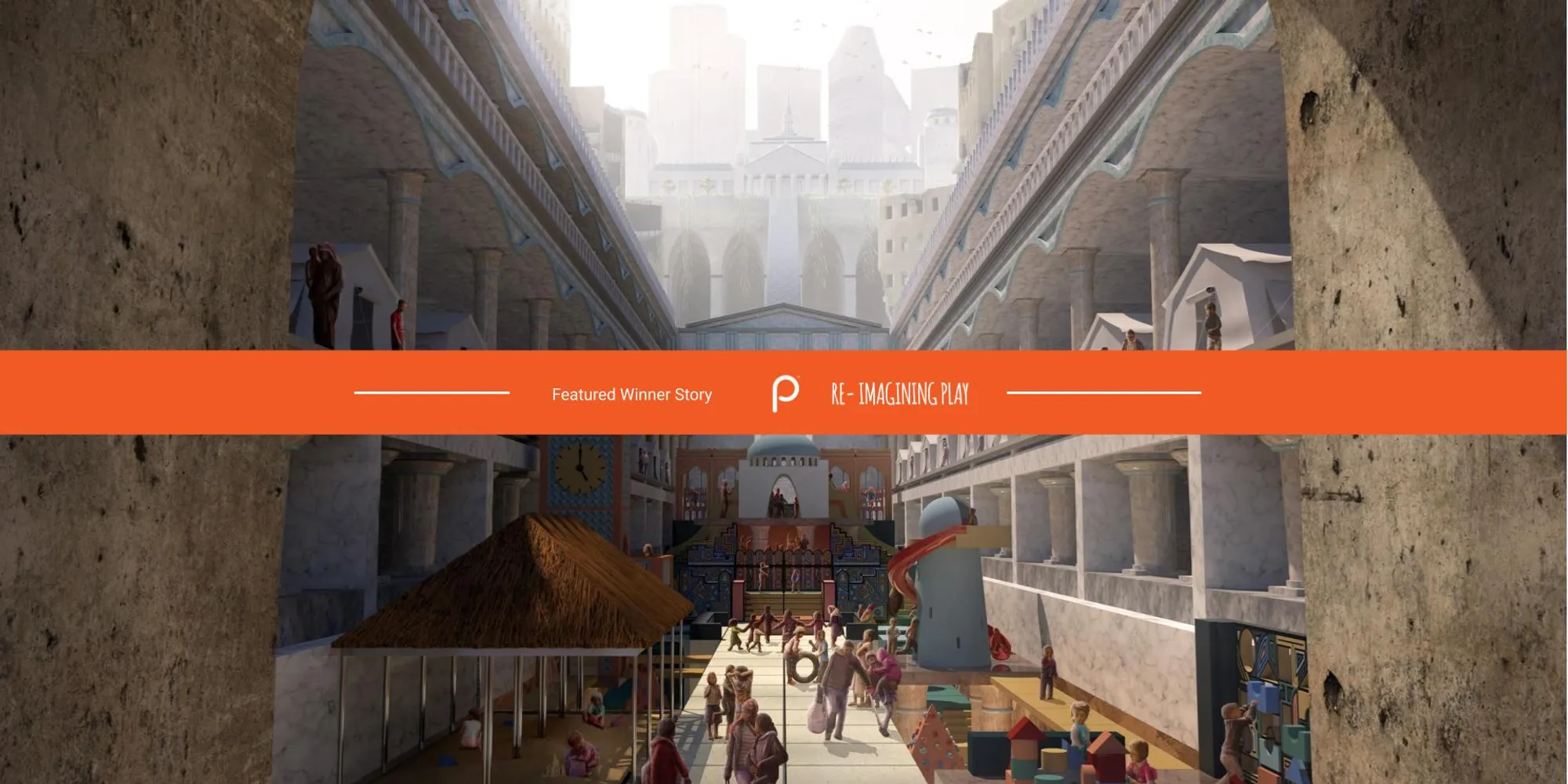
Designing resourceful playgrounds in refugee camps
Re-imagining Play - Result Story


Recent times have witnessed a shift in humanity like never before, more than 70 million people around the world are displaced from their homes. Fleeing their countries entirely due to persecution, war or violence, almost 25.9 million of these are seeking asylum in other countries, becoming refugees.
According to the Office of the UN High Commissioner for Refugees (UNHCR) out of a global population of 7.2 million school-age refugee children, four million do not attend lessons of any kind. Studies show child refugees are particularly vulnerable and are five times more likely never to go to school than non-refugee children on a global level.
How do we keep children engaged and safe, while also helping them overcome traumatic experiences? How do we help them develop the skills and abilities to make sense of their surroundings? How do we work towards helping them develop their communication, problem-solving & conflict resolution skills and let them know that there will be better days?
In most circumstances, play can be invigorating, stimulating, freeing and fun. Here it is much more than a fundamental form of therapy. A dedicated play space can ensure a safe and caring environment for kids to freely express themselves through the process of play.
Develop an architectural concept creating a safe, stable happy place for children in an otherwise chaotic world. Seeing this as a two-step problem, attempt to bring in education to the children, and secondly focus on letting the children be children.
Most importantly, make play the source of happiness it should be.
The jury for the competition consisted of esteemed designers, professionals, and academicians from around the world. The Lead Jurors for the competitions were as follows:
Kazi Fida Islam, Chairman & Principal Architect, River & Rain, Bangladesh
Gonzalo Iturriaga Atala, Architect, IA ARQUITECTOS, Chile
Gruber Andreas, Dr. Arch., architektgruber.com, Italy

Some of the Best of competition projects are:
Winning Project: Redefining Play
By: Hrushikesh Shah & Madhav Joshi
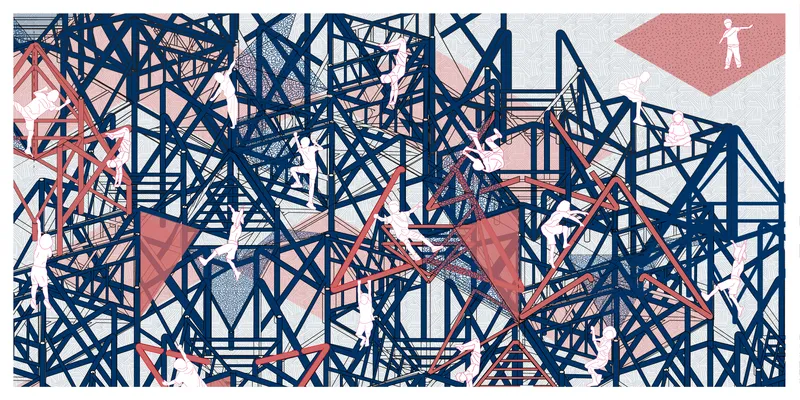
Description: Struggle, Despair, Loss, Memory, Loss of Identity are just a few abbreviations for the feelings of refugees. The idea was to design a Distraction, from the negative chaos of the refugee camps towards positive chaos of happiness, by creating a dynamic and provoking form.
-----------------
Runner - Up: Light, Sound and Air
By: Hanbyul Oh
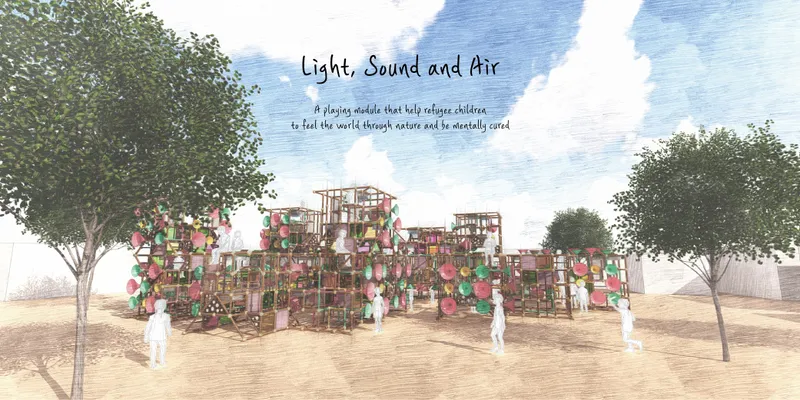
Description: A playing module that helps refugee children to feel the world through nature and be mentally cured.
-----------------
People’s Choice: Play-Hive
By: Noor Hamdan, Malak Al-Hawamdeh & Hala Ahmad
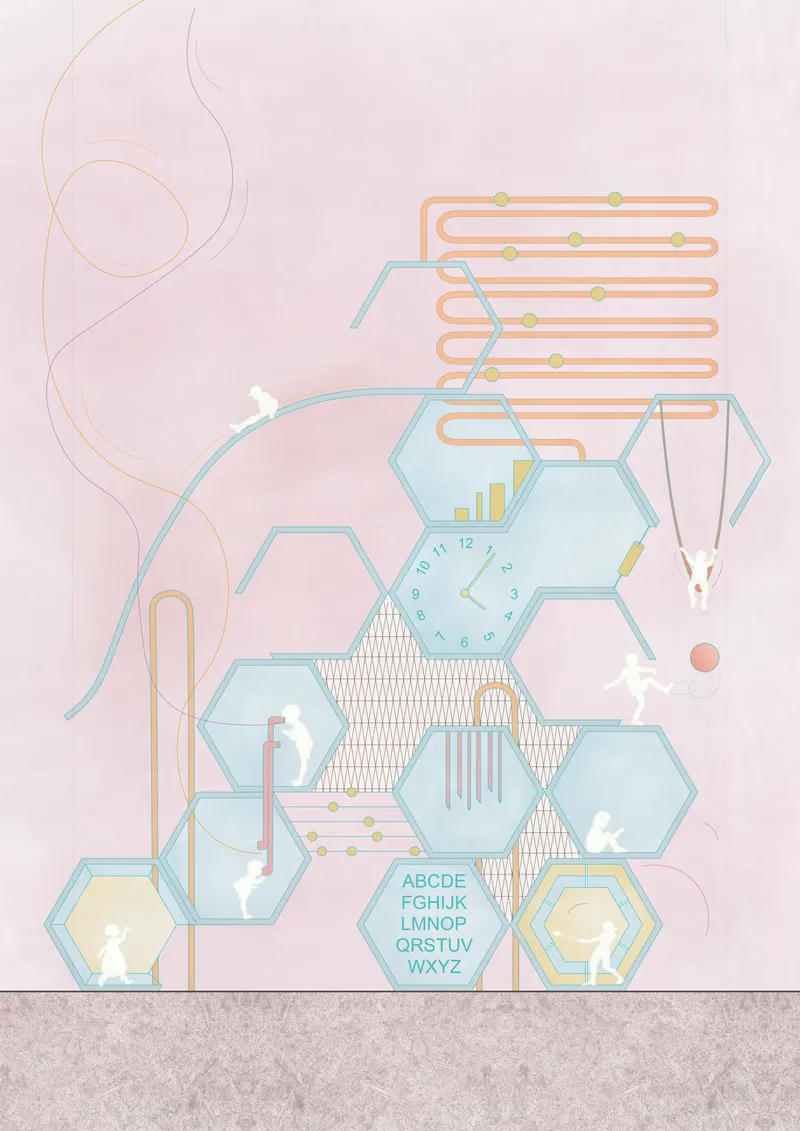
Description: Play Hive is a reflective educational installation catered for a safe environment that hosts an educational and entertaining hub for children. The structure of the hives is designed as a self-sufficient tool that allows for kids to play and learn without the need of schools or teaching instructors.
--------------------
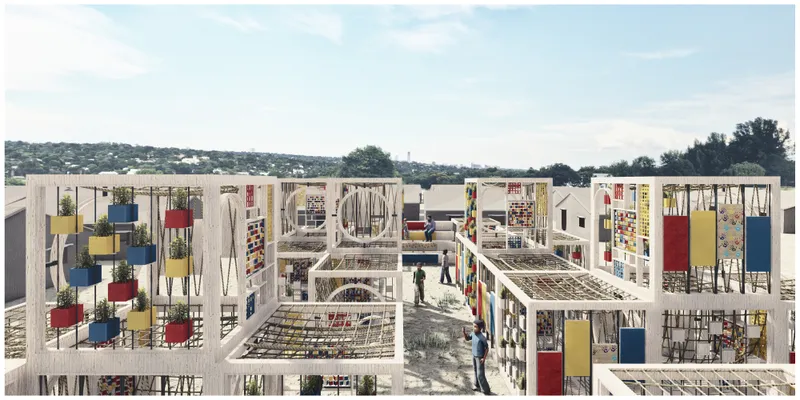
Editor’s Choice: Modular Playground
By: Till Connor
Description: A design for a modular playground consisting of a framed space structure to be deployed to refugee camps all over the world. It is envisioned that our design intervention through careful consideration of the design's end-user group - the children - we have designed opportunities for play supported by a safe and fun environment.
--------------------
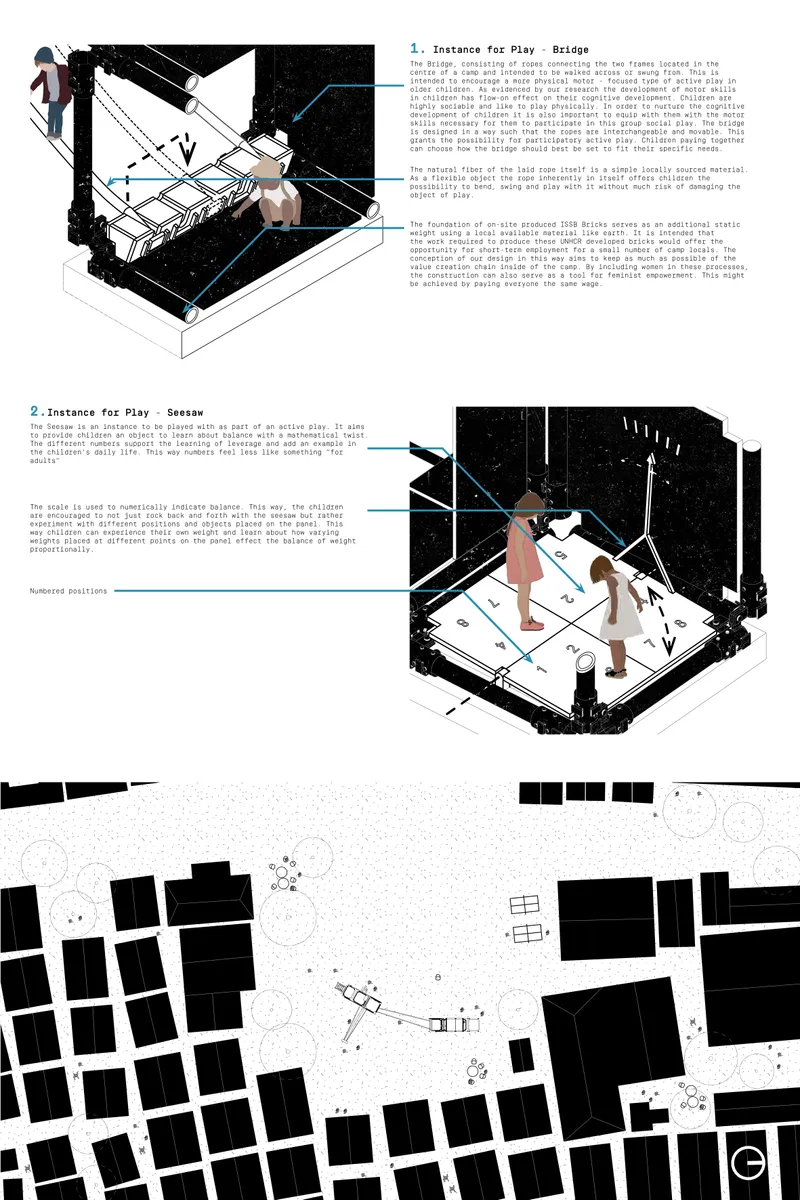
Editor’s Choice: Play: Fragments of Their World
By: Tom Gardner
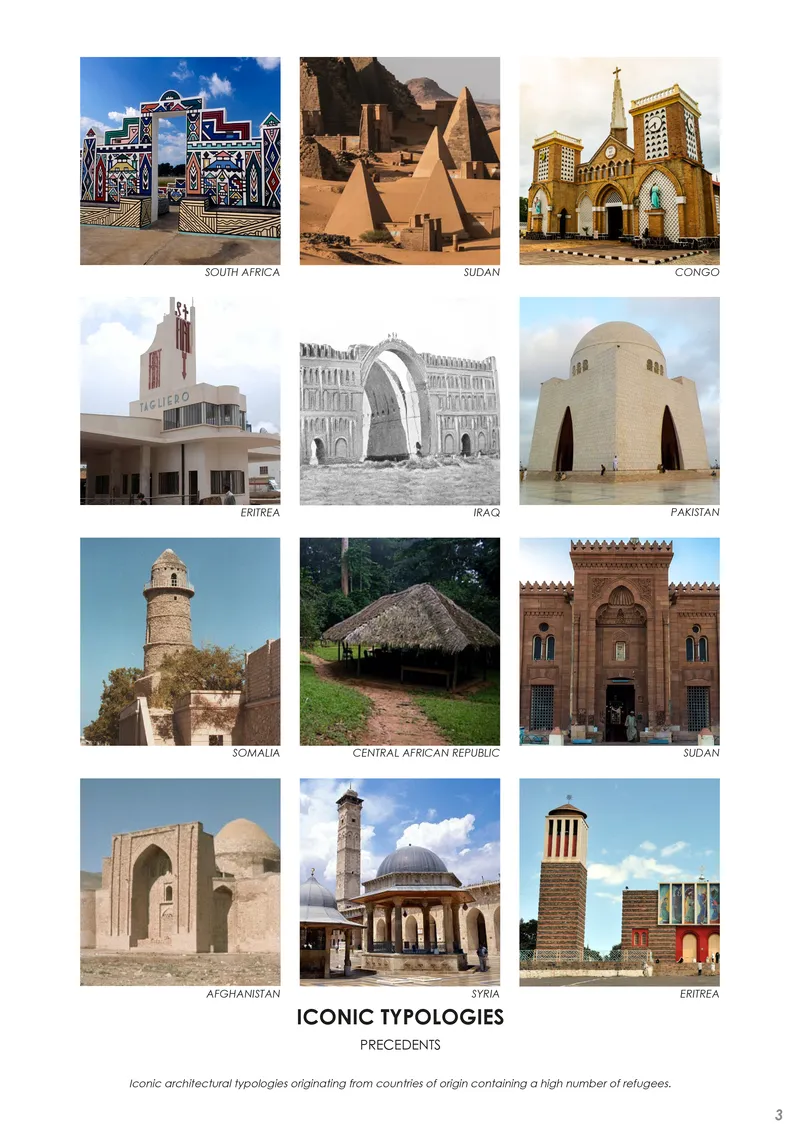
Description: During conflicts families flee their country, seeking refuge in temporary camps. A lack of resources and infrastructure leads to many children losing their freedom to learn, develop, and play. “Fragments of Their World” tackles these issues, using familiarity and the building of essential skills to provide the children with a brighter future.
--------------------
Editor’s Choice: The Faith
By: Abdallah Alfaouri
Description: A playground that affects the child's present and future, it aims to make the child play and learn to forget the difficulties of the present and have hope for the future, a group of ideas that develop the child's thinking in a fun way.
--------------------
Editor’s Choice: Reconstituted Play
By: Kertty Guo, Maple Ho, Matias Kubacsek & Abbey Roskos
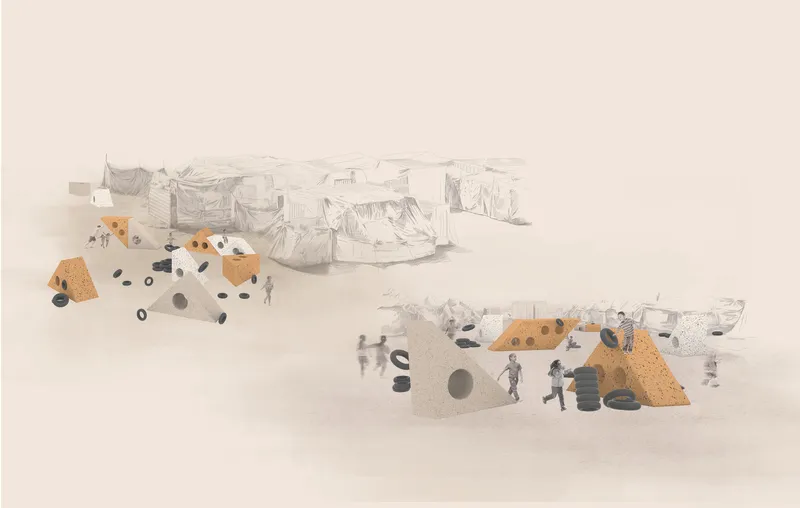
Description: At the core of our project is the idea of creating an adaptable play landscape. The modular design fits into varying spatial arrangements ranging from linear to central gathering. We seek to give children the ability to physically transform their own environment with our design kit simply facilitating this exchange.
--------------------
Editor’s Choice: Temporary Playground For A Permanent Place
By: Lily Whitehouse, Katarzyna Antoszyk & Zoe H
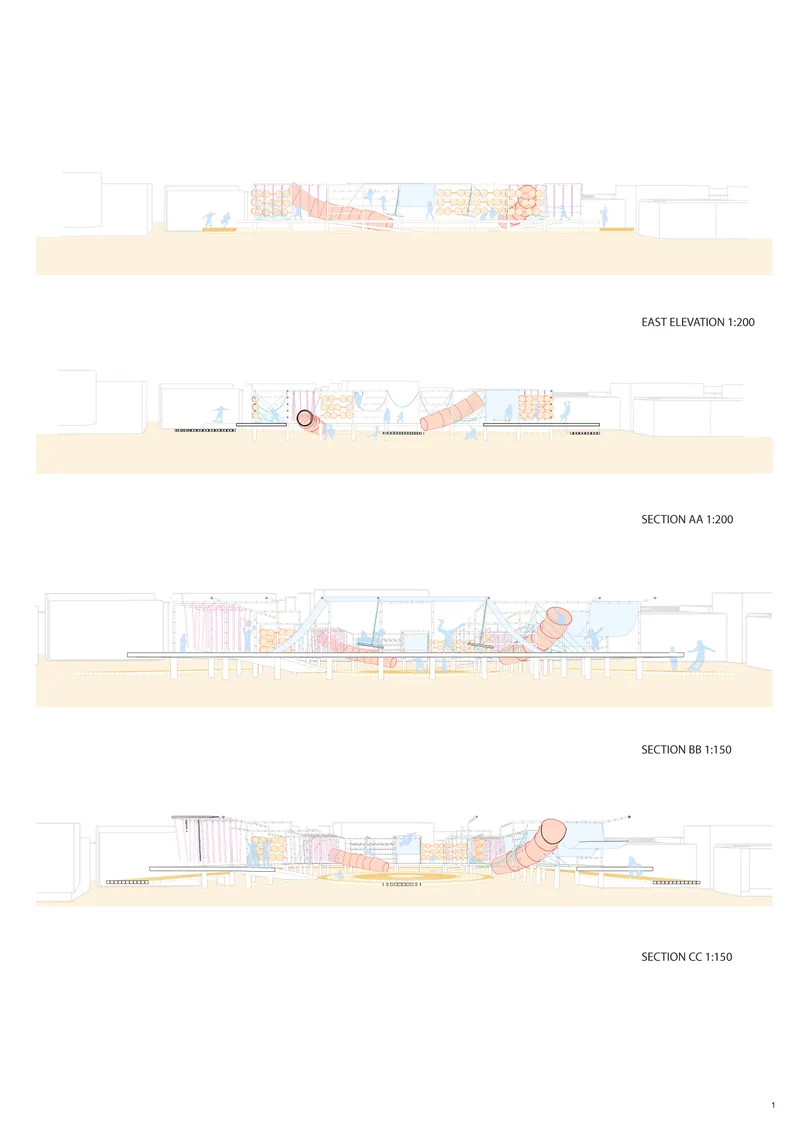
Description: “Temporary Playground For A Permanent Place” is a proposal for sensory play for children to freely explore their environment and foster resilience and confidence. The design responds to the site’s natural climate and physicality. It seeks to provide a feeling of safety in an otherwise challenging and unstable environment.
--------------------
Editor’s Choice: RE-UN Bound
By: Prateek Vikal, Manogna Malempati, Srivardhan Rajalingam & Lochan Aradhya M
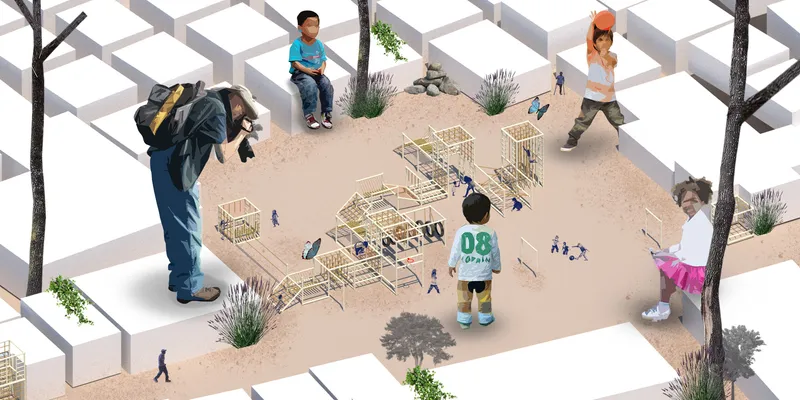
Description: The design targets a play for the refugee children, it emphasizes how play can do a lot more. Thinking beyond the conventional defined way of play and looking for possibilities of how different activities can help a child develop their communication, collaboration, creativity, and confidence were focused on. Play is a necessity!
--------------------
Editor’s Choice: 'Toolkit' of Self-Resilience
By: Calvin Thoo, Nurul Azman, Feeyz Mohammad & Lyana Ibrahim
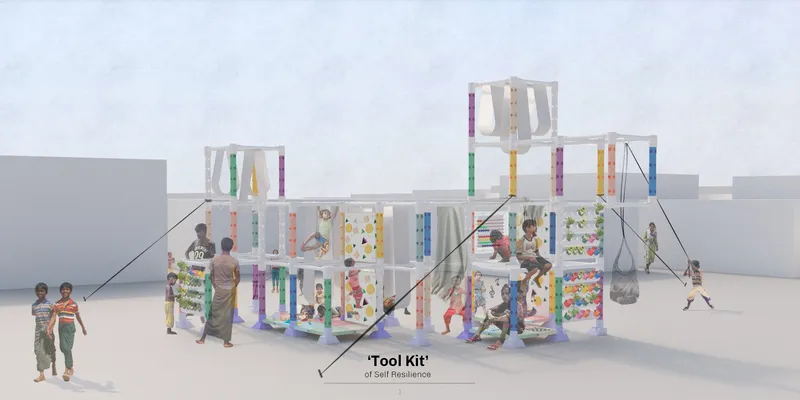
Description: The process of re-imagining play has created a set of design principles that are explored through a series of modular typologies that are geared towards addressing the socio-cultural issues in the Kutupalong refugee camp through adaptable and flexible design.
--------------------
Editor’s Choice: Connect
By: Marwa Al-Saqqar
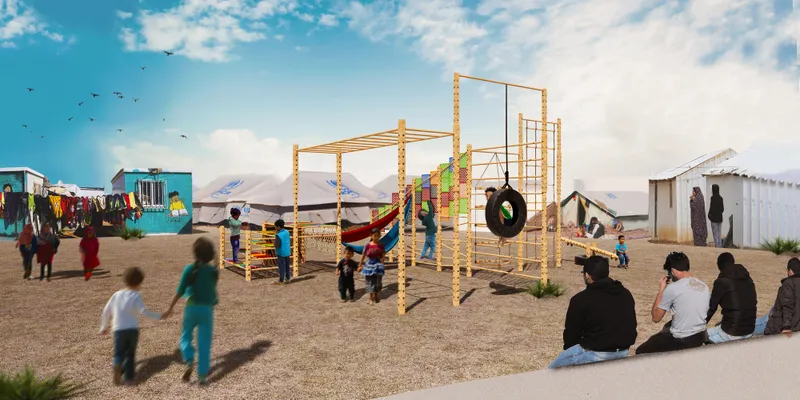
Description: “Connect” is a modular system that utilizes traditional and cultural materiality and building to create a sense of identity within space. It activates the senses, which helps children learn applicable skills such as collaboration, building, confidence, and communication as they use the camps to explore and find objects to add on to grow each module to play.
Discover the design brief here: https://uni.xyz/competitions/re-imagining-play/info/about
Discover the full results here: https://uni.xyz/competitions/re-imagining-play/entries
Follow us on social media: Facebook | Instagram | LinkedIn | Twitter | Youtube
Discover other design competitions to participate here: https://uni.xyz/competitions



Popular Articles
Popular articles from the community


Riyadh For All: Intergenerational Urban Design for Active Aging in Rabat
Riyadh For All reimagines urban design in Rabat with intergenerational co-living, adaptive courtyards, and Moroccan cultural exchange today.

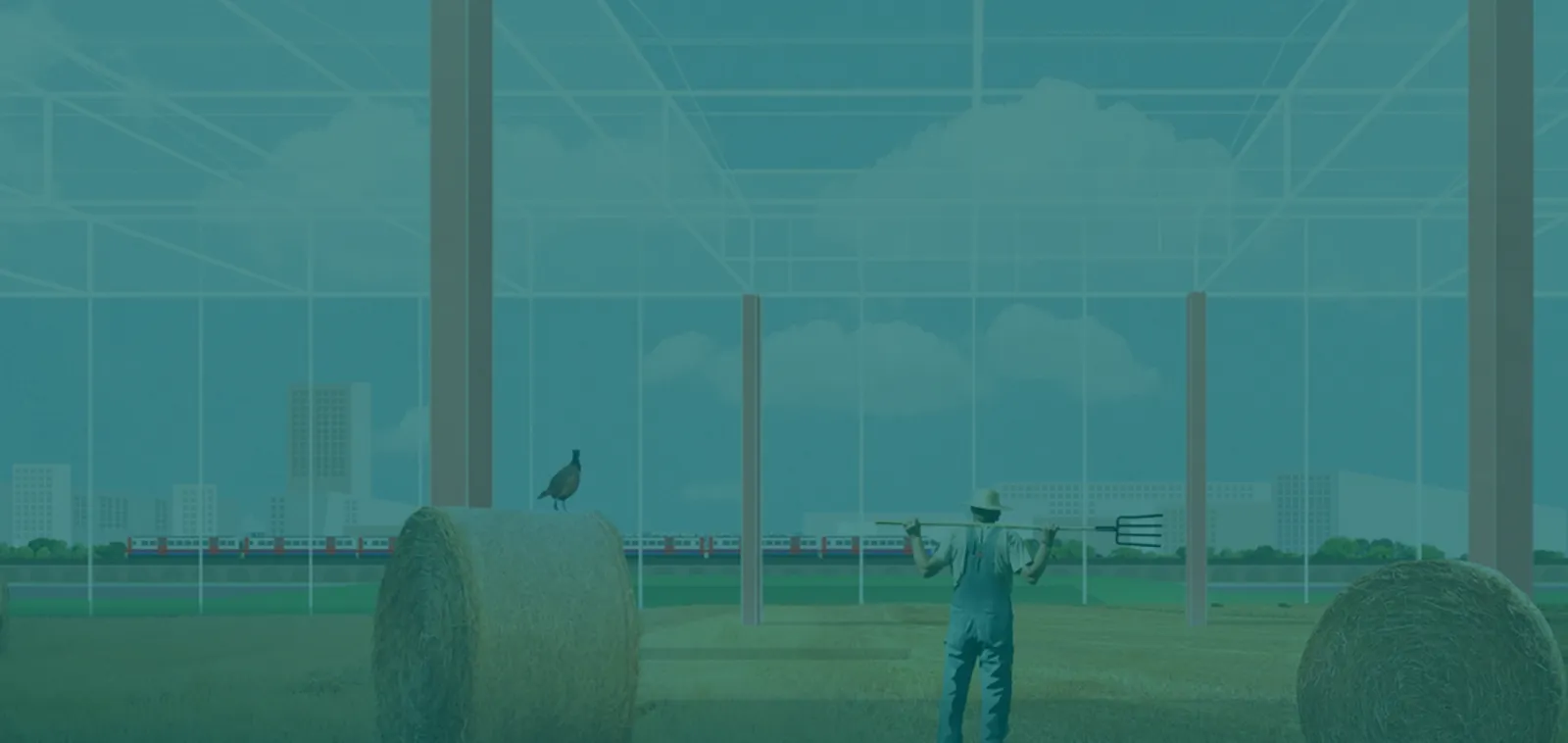
Play: Fragments of Their World
Familiar architecture becomes modular playground design, creating safe spaces where displaced children can learn, connect, imagine and play.

Lunar Spiral: Space Architecture Shaped by the Mathematics of the Universe
Lunar Spiral reimagines space architecture through Fibonacci geometry, lunar regolith, levitating habitats, and self-sustaining Moon living.

Co-Life: Senior Housing Design That Reconnects Older Adults With the City
Co-Life reimagines senior housing design through healing gardens, shared streets, workshops, and a sustainable community across generations.

Similar Reads
You might also enjoy these articles
Lunar Spiral: Space Architecture Shaped by the Mathematics of the Universe
Lunar Spiral reimagines space architecture through Fibonacci geometry, lunar regolith, levitating habitats, and self-sustaining Moon living.
The Main Dream: Modular Architecture for Play, Learning, and Community
A modular playground turns recycled plastic into adaptable spaces where refugee children can play, build, learn, and reconnect.
Play: Fragments of Their World
Familiar architecture becomes modular playground design, creating safe spaces where displaced children can learn, connect, imagine and play.

Wadi Rum Observatory: Desert Architecture Designed for the Night Sky
Wadi Rum Observatory turns desert architecture into a quiet instrument for astronomy, hiding research spaces under Jordan's starlit terrain.

Comments (0)
Please login or sign up to add comments
No comments yet. Be the first to comment!