
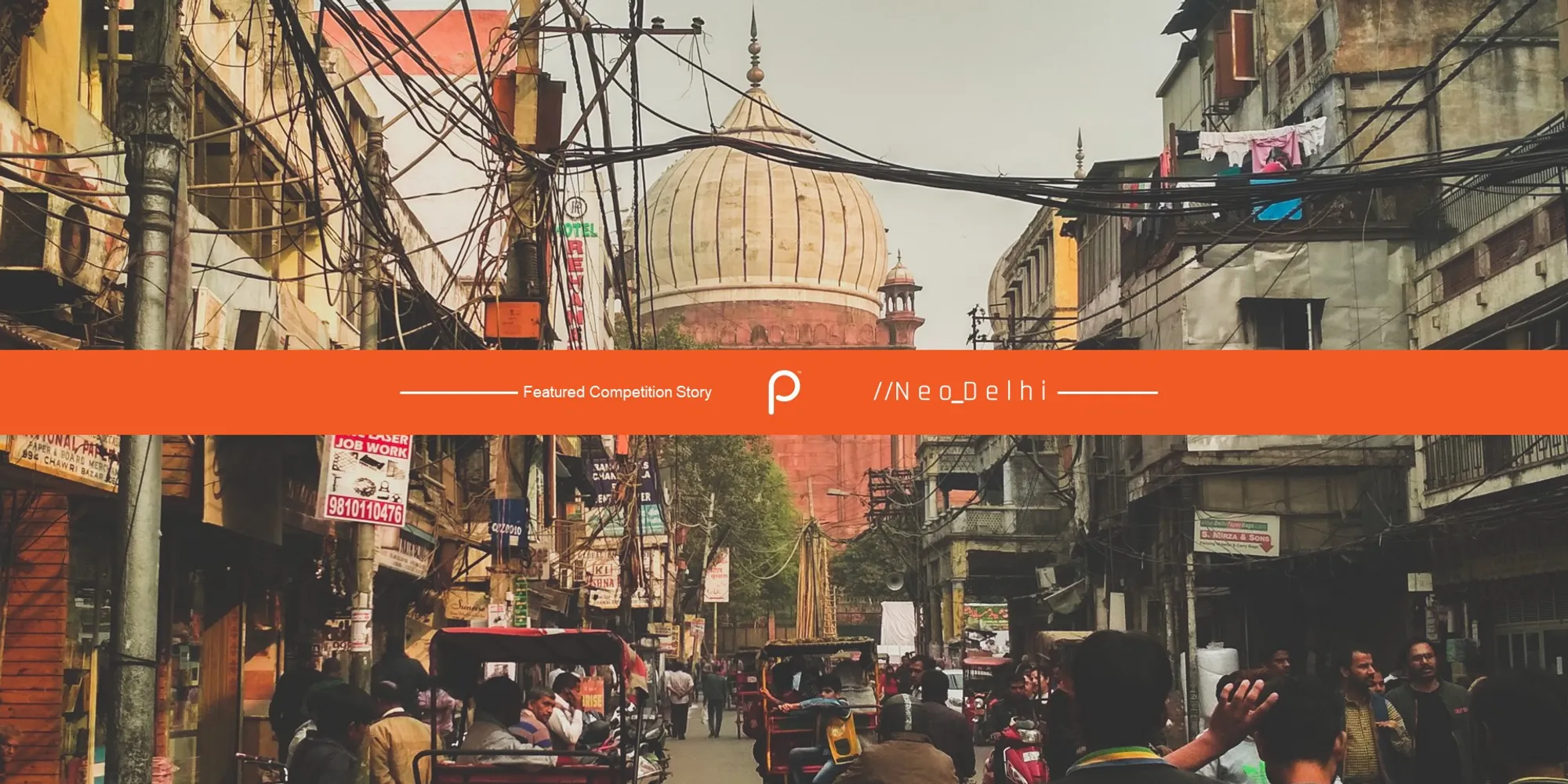
Re-Writing Delhi
Re-imagining the capital with the past present, and future


Background
New Delhi - the city of hope, filled with power and heritage. The capital city is the powerhouse of the country of India, the center of all political and administrative actions. With a rich and colorful history, the city has played host to many cultures and societies, remnants of which are still visible in small, forgotten streets within and on the outskirts of the city. Delhi also boasts of a diverse and wide population, owing to the variety of cultures that have settled in the city and brought up their future generations. The city of Delhi has been exposed to constant rewriting - a tirade of occupancy, demolition, and re-building, performed through the ages. Constantly inhabited since the 6th century B.C., Delhi has hosted various kingdoms and empires, the most impactful being the British colonization, which lent Delhi a new layout, planned and perfected with the carefully located political, administrative, and central business district (CBD).>
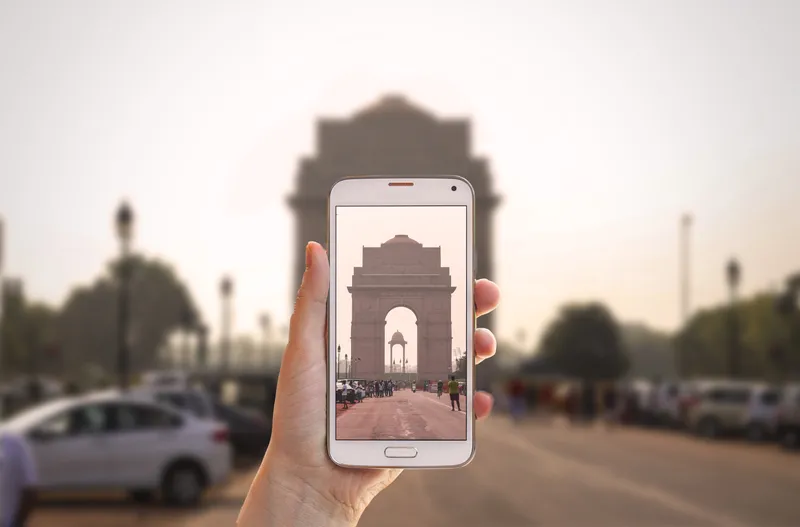
Image Credits: Shaurya Singh https://pixabay.com/users/photos_pixels-2904175/
Location of Delhi
The city’s borders have been pushed and pulled, and today sprawl across the outskirts, scaling beyond the old tattered villages to include a mass of glittering skyscrapers and concrete marvels that rival that of megacities like New York and Tokyo. New Delhi has now cemented its place in the list of sought-after international metropolitan cities in terms of tourism and development. At the same time, the city has also become a permanent fixture on the list of most polluted cities in the world.
The city’s skyline is now lined with a horizon-like smoke bubble that is gradually bleeding the city from within. Apart from a heavy air pollution index, Delhi is also privy to enormous traffic jams, increased crime rates, and an alarming rate of infrastructure development which is cutting down on open and green areas in the city. The rise of the city in economic and commercial aspects has led to an increased confluence of population, converging in the city to look for better job and living opportunities. The demands are as high as ever, and the city is sad, not able to keep up.

Image Credits: Aditya Saxena https://unsplash.com/@adityaries
The infrastructure of the city
Many reports have started recognizing Delhi as an ‘unlivable’ city, owing to the plethora of aforementioned urban issues being faced by the residents. Still, the development does not stop, and the crowd keeps on growing. The Delhi that was imagined in the 1912 Master Plan is not even close to the Delhi of today; which is maybe even worse than what was rewritten in the Master plan of 2021. With two years still to go, there still exists an opportunity to focus on smaller areas and redesign them in an issue-sensitive and meaningful manner. For example, instead of focusing on the city of Delhi as a whole, we tackle micro re-writes - for example, Connaught Place, the center of the city.
A part of British architecture, renowned as one of the key locations of Delhi, is the CBD, locally known as Connaught Place or C.P. It was conceived as the hub of business and commerce in the capital and thus intentionally planned in the center of the city. Connaught Place has now transformed from a commercial city center to a vibrant hub that offers not only commercial but institutional and recreational amenities as well. The area has played host to countless rallies, protests, events, celebrations, and festivals, and observes heavy footfall daily on account of the services it provides. Connaught Place is as renowned as the city of Delhi, and to talk of one inadvertently implies the talk of the other.
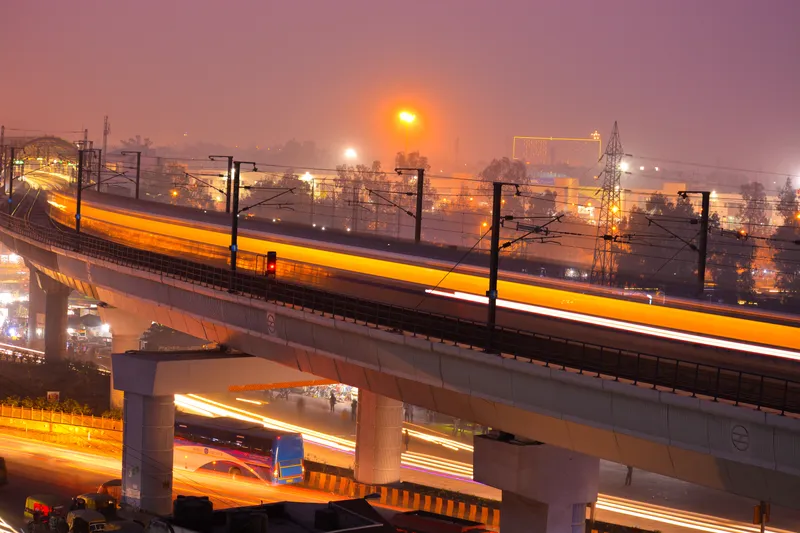
Image Credits: Rohit Kanwar https://www.pexels.com/@rohit1992
The infrastructure of Connaught Place stands tall still, conforming to British standards of architecture and highlighting the city’s growth to international fame. Even though CP is built in Colonial style, the cultural identity of Delhi is prevalent through the internal designs of the shops and offices. The government has also promoted the betterment of the center, recognizing it as one of the most important areas of Delhi and hence encouraging digital facilities and services to keep the area as updated as possible. Even today, old markets around Connaught Place are being restructured and pedestrian movement is being enhanced to increase the relevance of the center despite the urban trend of locating everything inside closed, vertical glass towers. Even with the strong preservation measures being taken for maintaining Connaught Place, the decades-old structures have started crumbling from within, and the hub is slowly decaying from within.
The safety of the people is gradually being put into question, yet the strong historic ties that the area holds make it impossible to re-imagine the area with a new safer, and smarter design. At the same time, it is important to focus our energies on updating the CBD to maintain safety, address urban issues and incorporate intelligent digital technologies, all the while preserving the essence of the area. Maybe with a new wave of micro re-writes like these, we will be able to conceive a ‘Neo Delhi’, that does not showcase a radical design overhaul but small, targeted redesigns that are prepared for the inhabitants of tomorrow.
On this note, COMMUN invites students and professionals with an idea of ‘Neo Delhi’, a challenge to analyze and redesign the heart of the city - Connaught Place-based on what it will look like in the next 50 years. Participants are urged to incorporate historic, commercial, and inclusive ties, and present a redesign that focuses on one or more of these factors: social, political, cultural, economic, ecological, and accessibility.
For more information on the competition, and registration, visit https://uni.xyz/competitions/neo-delhi/info/about.


Popular Articles
Popular articles from the community


The Ocean Hive: Sustainable Architecture for a Self-Sufficient Civilization at Sea
The Ocean Hive imagines sustainable architecture at sea, where modular habitats, algae, wave power and ocean waste sustain a growing colony.

Co-Life: Senior Housing Design That Reconnects Older Adults With the City
Co-Life reimagines senior housing design through healing gardens, shared streets, workshops, and a sustainable community across generations.

Riyadh For All: Intergenerational Urban Design for Active Aging in Rabat
Riyadh For All reimagines urban design in Rabat with intergenerational co-living, adaptive courtyards, and Moroccan cultural exchange today.

The Musturak Paradise: Senior Living Architecture for a Connected Future in Temara, Morocco
The Musturak Paradise reimagines senior living architecture in Temara via private homes, social spaces, culture, community, and shared care.

Similar Reads
You might also enjoy these articles

Bao Huynh Watercolor Atelier: A Serene Art Retreat in Hội An
Bao Huynh Watercolor Atelier in Hội An blends multifunctional art spaces, sustainable design, local materials, and family-friendly living in a serene environment.

Atelier Macri Concept Store Interior Design by CASE-REAL
Atelier Macri store features a "ko" counter, walnut wood details, cork displays, blending retail, gallery, and seamless customer experiences.

Manuel Vargas Izquierdo Stadium and High-Performance Sports Center: Architectural Excellence in Jalpa de Méndez
The Manuel Vargas Izquierdo Stadium blends sustainable design, inclusive sports facilities, and cultural-inspired architecture, revitalizing Jalpa de Méndez’s public spaces.

KAKR Buluh Awar Hall: Revitalizing Community and Ecology Through Bamboo Architecture
Community built bamboo hall revitalizes Buluh Awar village, empowering youth, restoring ecology, celebrating vernacular craftsmanship through sustainable architecture and culture.


Comments (0)
Please login or sign up to add comments
No comments yet. Be the first to comment!