

Rebirth Materials House by Housescape Design Lab
A compact guest house in Thailand transforms recycled glass and plastic into climate-responsive architecture that seamlessly blends with nature.


A Sustainable Guest House Reimagining Waste, Light, and Landscape in Northern Thailand
Located in Mae Raem, Thailand, the Rebirth Materials House by Housescape Design Lab is a compact yet conceptually rich architectural intervention that transforms discarded materials into a poetic, environmentally responsive guest house. Designed as a small extension to an existing residence, the 50-square-meter structure demonstrates how material reuse, local craftsmanship, and climate-sensitive design can converge to create meaningful contemporary architecture.
Context and Design Intent
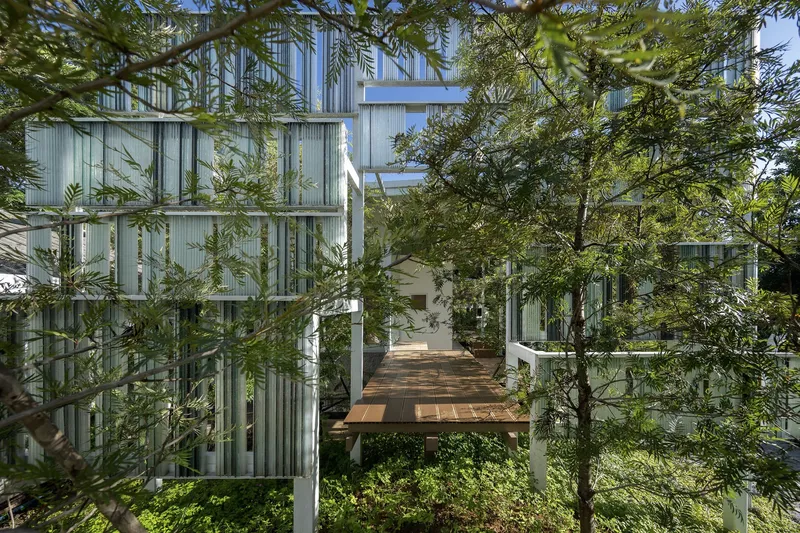
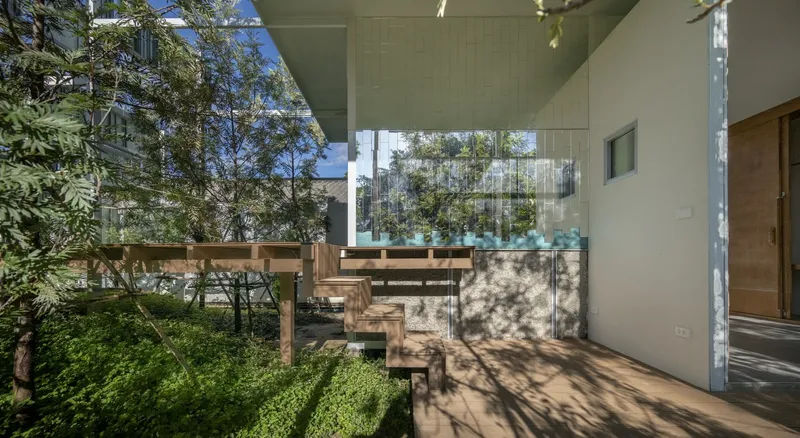
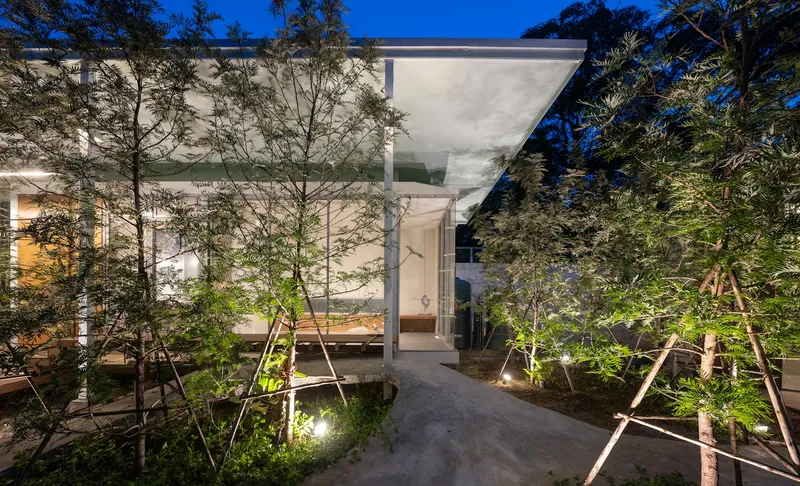
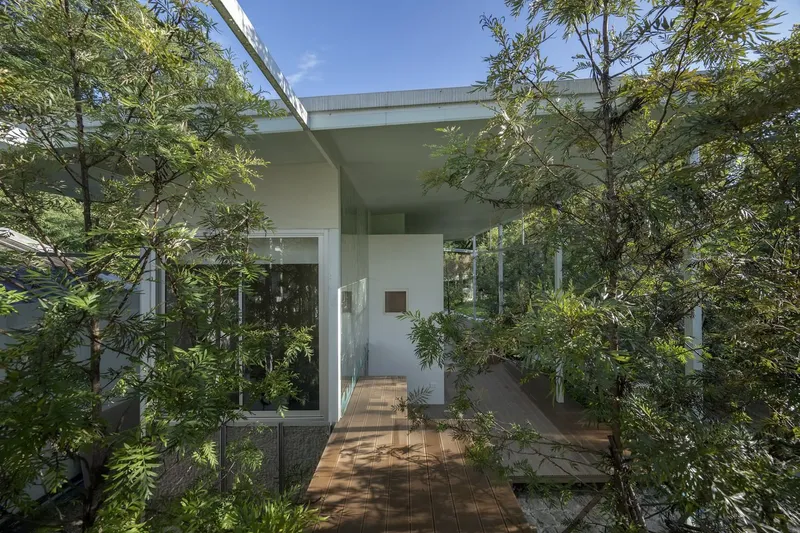
Positioned beside a lush garden within the property, the guest house was conceived to blend seamlessly into its natural surroundings rather than assert itself as a distinct object. With a modest program and uncomplicated spatial requirements, the project’s primary focus became its relationship to the landscape, light, and climate. The architects sought to dissolve the boundary between architecture and nature, allowing the building to feel like a natural continuation of the garden itself.
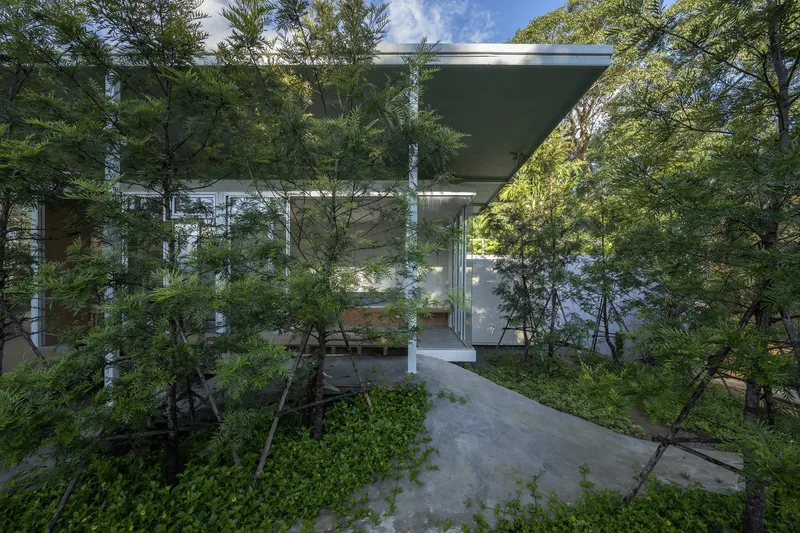
One of the earliest design challenges was the front façade, which faces intense afternoon sunlight and serves as the first visual encounter when approaching the site. Rather than using conventional shading devices, the design team explored innovative ways to filter light, soften glare, and visually integrate the building into its environment.
Reused Glass as a Climatic and Aesthetic Strategy
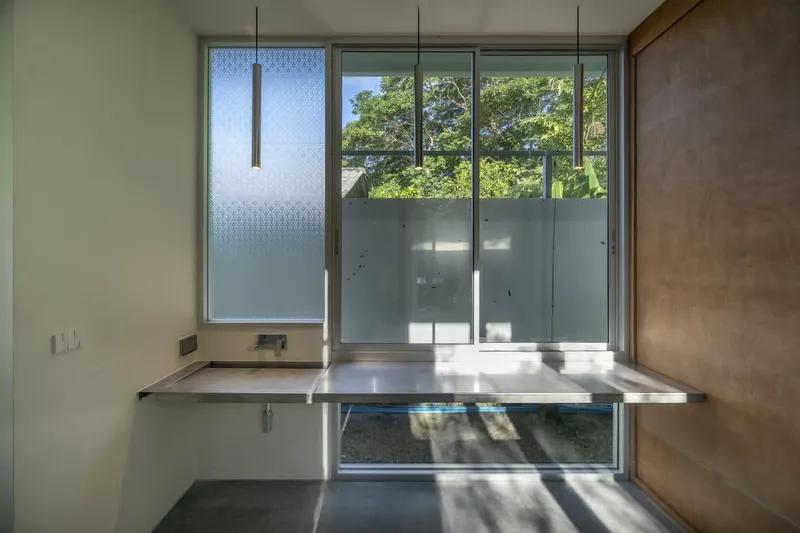
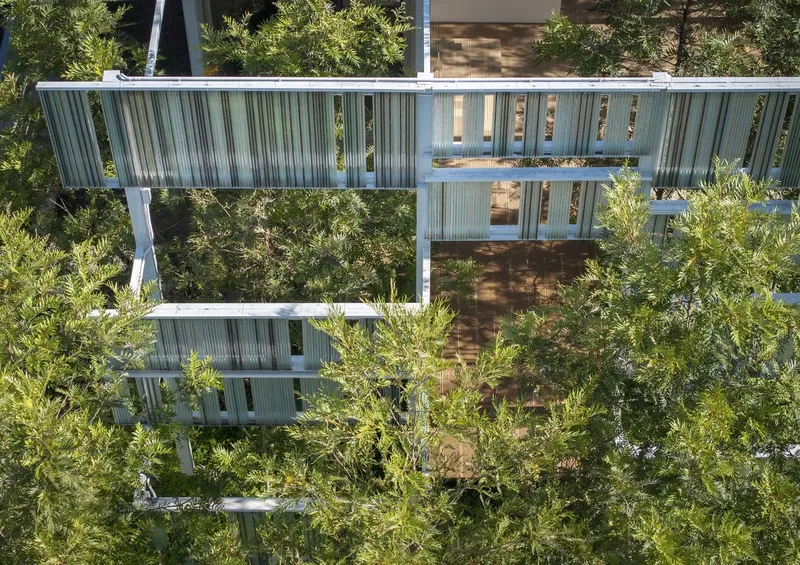
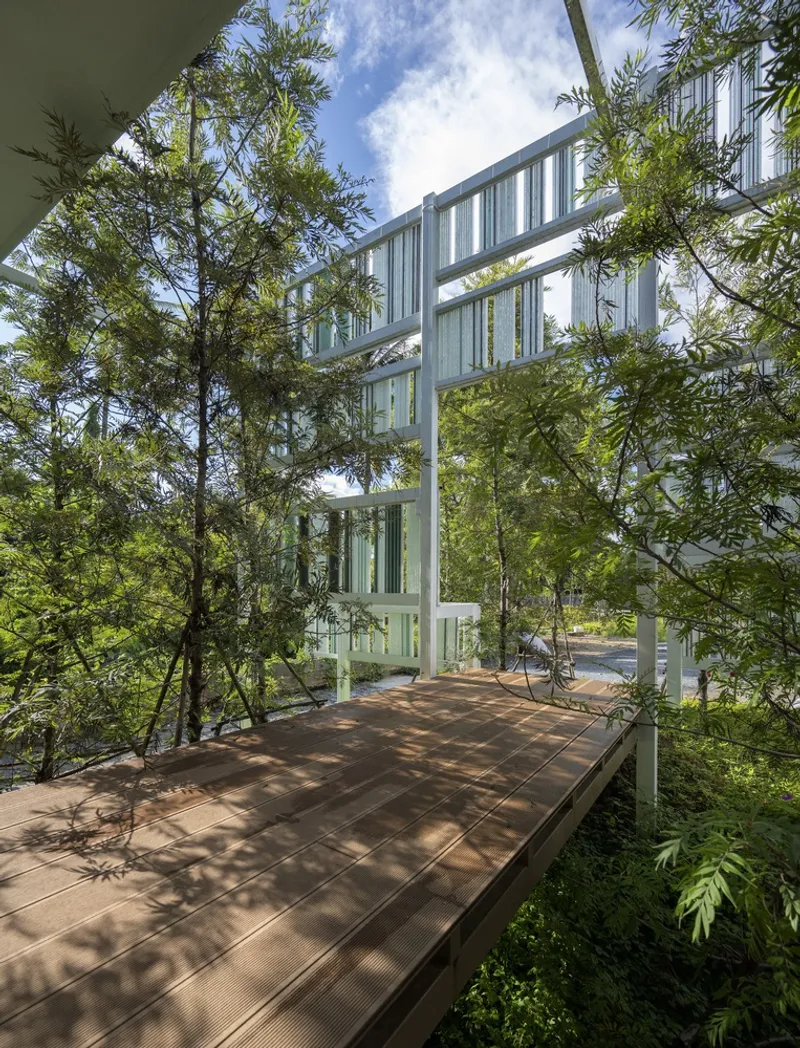
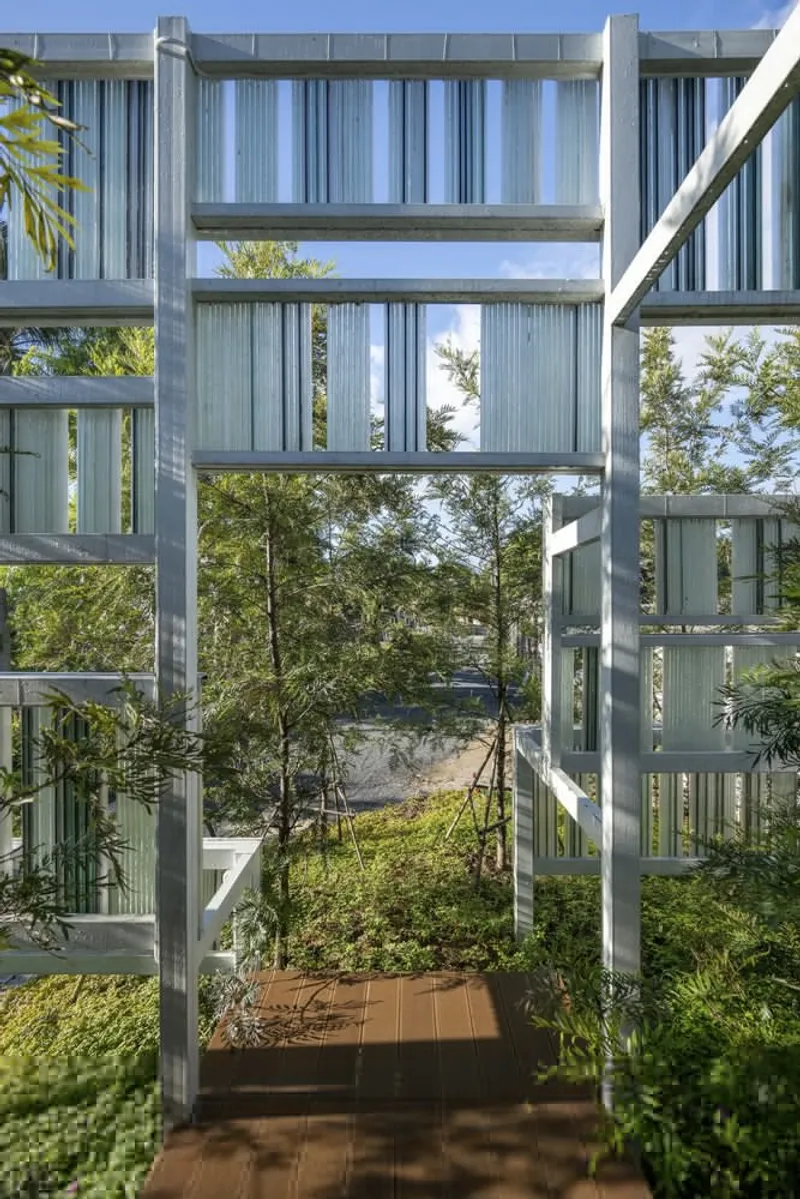
This inquiry led to the use of recycled glass edges, capable of both diffusing and reflecting sunlight. The glass panels were leftover materials salvaged from a factory in the Saraphi district, near northern Thailand’s largest industrial estate. Originally destined for recycling and reprocessing, the glass was instead preserved and reassembled, avoiding the high energy consumption typically required for melting and remanufacturing.
Drawing from previous experimental work, including the studio’s earlier Gimme Shelter project, the architects carefully calculated the weight, spacing, and arrangement of the glass panels to withstand local wind pressure. Gaps between panels allow air to pass through, ensuring structural stability while enhancing ventilation. The varied tones along the glass edges subtly respond to changing daylight conditions, creating a façade that shifts in color and transparency throughout the day.
Plastic Waste and Material Experimentation
In addition to recycled glass, the project incorporates plastic waste sourced from bottle caps, purchased from a local factory in Chiang Mai. Through extensive material testing, the architects explored how plastic fragments interact with light when layered within architectural assemblies. These plastic scraps, combined with broken wine bottles, were inserted into gaps between 10-millimeter-thick recycled tempered glass, forming a unique composite wall system.
Supported by a steel structure, this wall becomes both a functional enclosure and a material narrative, showcasing alternative construction possibilities that reframe waste as an architectural resource. The resulting surfaces produce textured shadows and subtle color variations, enriching the interior atmosphere without relying on conventional finishes.
The “Domestic Turn” and Local Craftsmanship
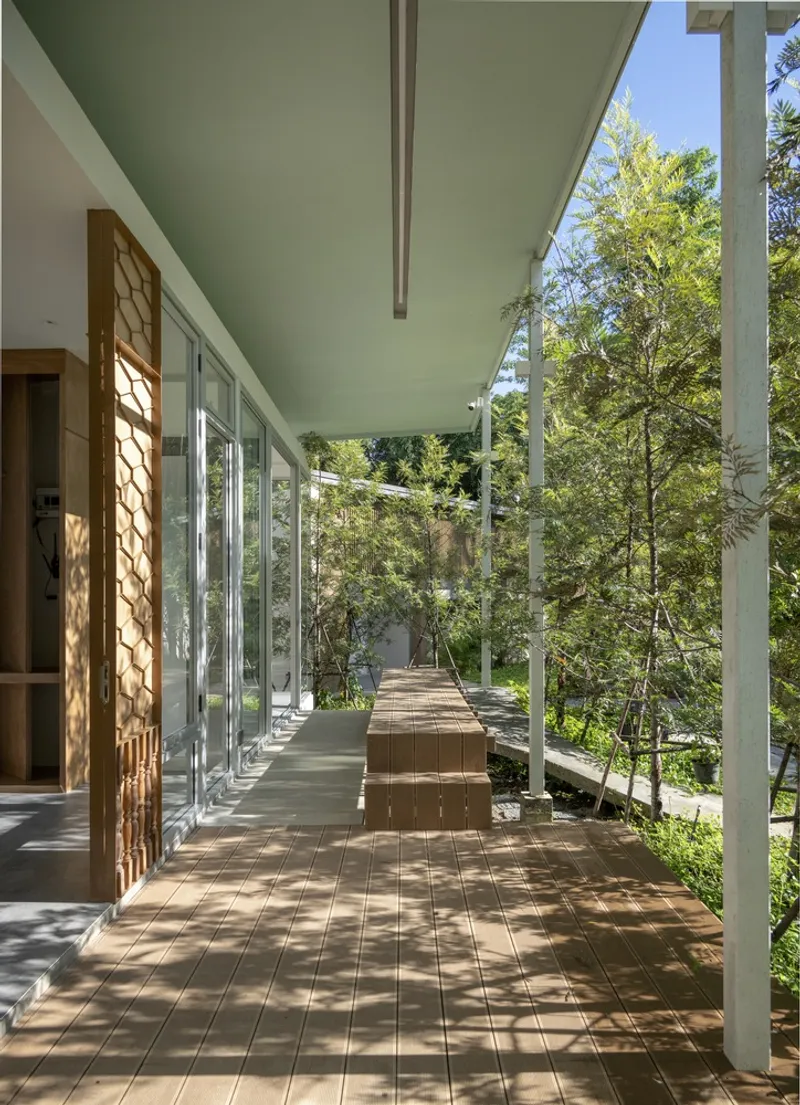
A key principle guiding the project was what the architects call a “Domestic Turn”—prioritizing materials and labor sourced within a 10-kilometer radius. This approach reduces transportation emissions while strengthening ties to local knowledge and craftsmanship. Wherever possible, materials from an old dismantled house were reused, including doors and windows that now carry traces of their previous life.
Original security bar patterns were reinterpreted as structural reinforcement for the front plywood wall, softened through the integration of reclaimed wooden stair balusters, locally known as lòok klûng ban-dai. These familiar domestic elements were carefully reassembled, allowing traditional forms to gain new relevance within a contemporary architectural language.
Blurring Boundaries Between Inside and Outside
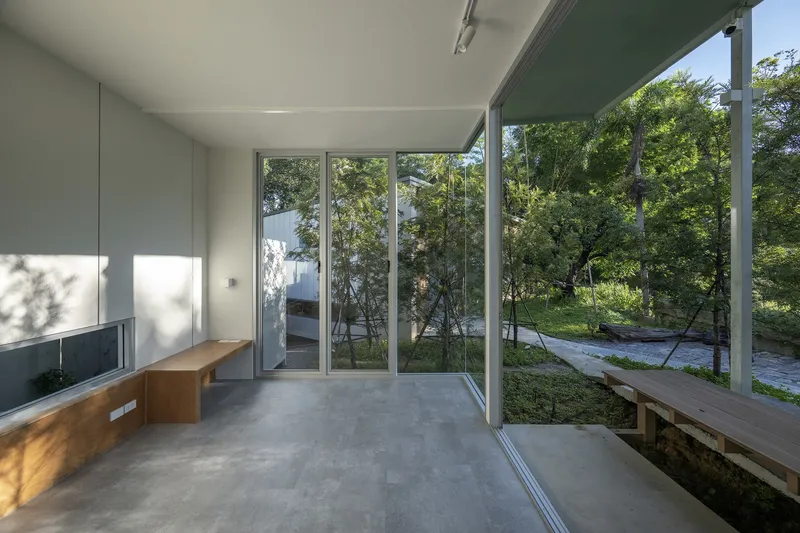
Throughout the project, the design maintains a strong commitment to human–nature balance. Large overhanging eaves, layered terraces, and transitional outdoor spaces create moments of pause before entering the house, encouraging occupants to slow down and engage with their surroundings. Rather than defining rigid thresholds, the architecture promotes an “inside-out, outside-in” spatial experience, where interior and exterior merge fluidly.
All photographs are works of Rungkit Charoenwat


Popular Articles
Popular articles from the community


Opera by the Sea Estonia: Three Shells Dissolving Architecture into Tallinn's Coastline
A winning opera house proposal replaces monumental form with interconnected shells that blur the boundary between building, park and Baltic Sea.

Singing Woman: Contemporary Architecture Inspired by Estonia’s Voice and the Sea
Singing Woman turns Estonia’s song culture into flowing opera house architecture, blending public life, landscape, sea, and national memory.

The Amber Palace Opera: A Geological Fiction Surfaces on Tallinn's Baltic Waterfront
Pierre Brillard reimagines a Baltic legend as a public landscape, opera house, and waterfront promenade rooted in Tallinn's coastal identity.

Manzana Morphosis: Stretching Barcelona's Grid into a Living Landscape for 2050
A radical reworking of the Eixample manzana turns density into a tool for generous public space, vertical ecology, and environmental performance.

Similar Reads
You might also enjoy these articles


Hodi-Mandai Geram
Project Function: Preservation and revitalization of the Intangible heritage and socio-spatial identity of the Hodi by Housing, Cultural Memory Center, Sacred Grove, landscape, local tourism economy


Olio Towers: A Mid-Rise for Performers That Fuses Housing, Rehearsal, and Stage
Located blocks from Houston's Theater District, this modular tower stacks living units around a central performance atrium.

Oasis: Modular Green Housing Carved into Dhaka's Urban Fabric
A shortlisted Plugin Housing entry reclaims unauthorized settlements in Dhaka with stepped concrete volumes, green roofs, and ventilation-driven design.

Black Hole: A Floating Megastructure for the Post-Physical Era
Emiliano Mazzarotto envisions a spherical, self-scaling arena where e-sports, digital hotels, and holographic stadiums replace traditional public space.

Explore Recycled Material Competitions
Discover active competitions in this discipline

Challenge to reimagine the Iron Throne

Photograph architecture without architects

Illustrate the lost glory of Angkor Wat - Render Challenge

Design challenge to reuse E-waste
Comments (0)
Please login or sign up to add comments
No comments yet. Be the first to comment!