
Recoding Urban Kampong Architecture: Reimagining Community Development in Jogoyudan
A visionary urban kampong architecture strategy that preserves culture while transforming Jogoyudan into a resilient, community driven settlement.

Urban kampongs represent one of the most complex and culturally rich settlement patterns in Southeast Asia. In Indonesian cities, these dense neighborhoods form an essential layer of the urban fabric, blending informal housing, social networks, and localized economic activity. However, rapid urbanization has placed increasing pressure on these communities, often resulting in fragmented development or displacement.
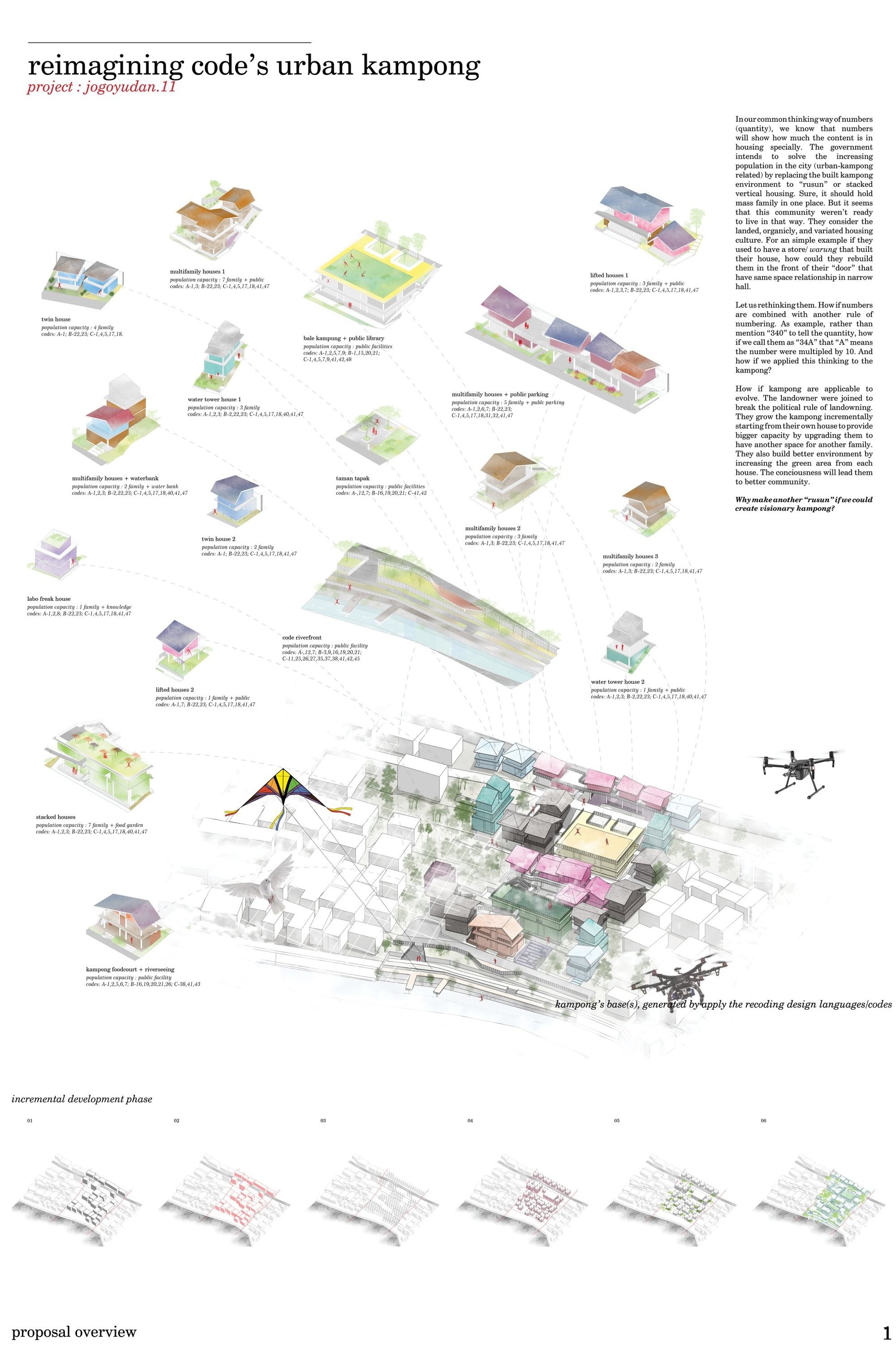
The thesis project "Recoding The Code's Urban Kampong" by Satria Permana proposes an alternative architectural strategy. Instead of replacing kampong settlements through large scale redevelopment, the project identifies the hidden spatial logic within existing kampong patterns and translates them into a new architectural system. The goal is to preserve the cultural identity of the kampong while enabling gradual urban improvement.
Through a method described as recoding kampong architecture, the thesis explores how traditional spatial patterns can be documented, analyzed, and redesigned to create a new generation of urban kampong environments.
Understanding the Urban Kampong Condition
Jogoyudan Kampong in Yogyakarta serves as the primary site of investigation. Located at the intersection between rural traditions and expanding urban infrastructure, the area reflects a common condition found in many Indonesian cities: an urban rural hybrid environment.
Although surrounded by urban growth, the kampong retains its informal housing clusters, narrow pedestrian alleys, and socially interconnected courtyards. Many residents are local workers and middle to lower income households whose lives depend heavily on the spatial relationships within the neighborhood.
Conventional redevelopment strategies often propose demolition and replacement with standardized housing blocks. However, such approaches risk destroying the intricate social networks and spatial intelligence embedded in kampong life.
This thesis challenges that model by proposing that kampongs contain a "code" composed of recurring spatial patterns. By decoding these patterns, architecture can generate new development strategies that evolve from within the community rather than imposing external forms.
The Concept of Recoding Kampong Architecture
The central concept of the project is the idea of recoding. This process involves three fundamental stages.
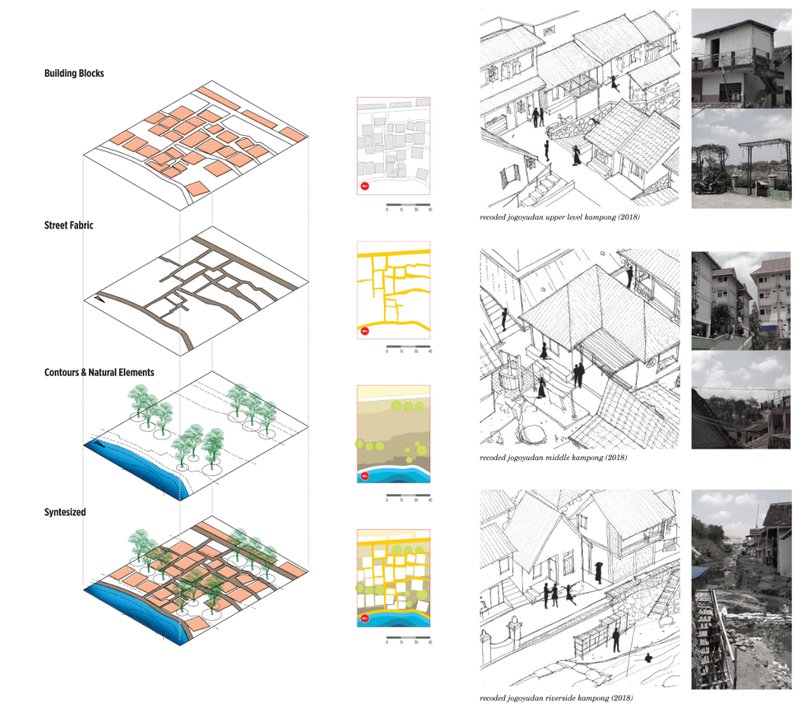
First, the spatial patterns of the kampong are recorded through mapping, observation, and diagrammatic analysis. These patterns include building blocks, street networks, public gathering spaces, and relationships with natural elements such as rivers and vegetation.
Second, the recorded patterns are reinterpreted through architectural thinking. Instead of copying the existing forms directly, the project analyzes their logic and reorganizes them into adaptable design modules.
Finally, the new spatial codes are translated into architectural proposals that allow the kampong to evolve while maintaining its identity.
This strategy transforms informal settlement patterns into a communicative design language that can be used by architects, communities, and planners.
Mapping the Spatial Code of Jogoyudan
The research phase carefully documents the physical structure of the kampong. Several layers of spatial analysis reveal how the neighborhood operates as a complex system.
The first layer focuses on building blocks, identifying clusters of houses that form small communal territories. These clusters define everyday social interactions and create semi private shared spaces.
The second layer examines the street fabric. Narrow alleys and interconnected paths function as circulation networks but also as social corridors where daily activities unfold.
The third layer analyzes natural elements, particularly the river edge that runs along the settlement. The river represents both a constraint and an opportunity, shaping how buildings adapt to topography and environmental conditions.
By synthesizing these layers, the project reveals a coherent spatial structure that guides the proposed architectural interventions.
Architectural Strategies for Incremental Development
Instead of proposing a single large masterplan, the project introduces a flexible system of architectural strategies that can be implemented gradually.
Stacked Housing Typology
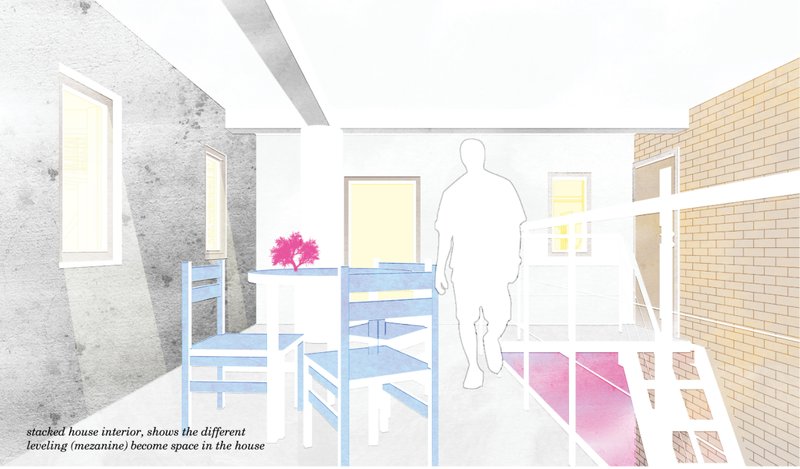
One of the key proposals is the stacked house. This typology maintains the small scale footprint of traditional houses while allowing vertical expansion. Multiple levels accommodate different functions, such as living spaces, working areas, and rooftop terraces.
The design integrates passive environmental strategies including cross ventilation, daylight optimization, and natural cooling. These features ensure that new housing remains affordable and environmentally responsive.
Kampong Public Spaces
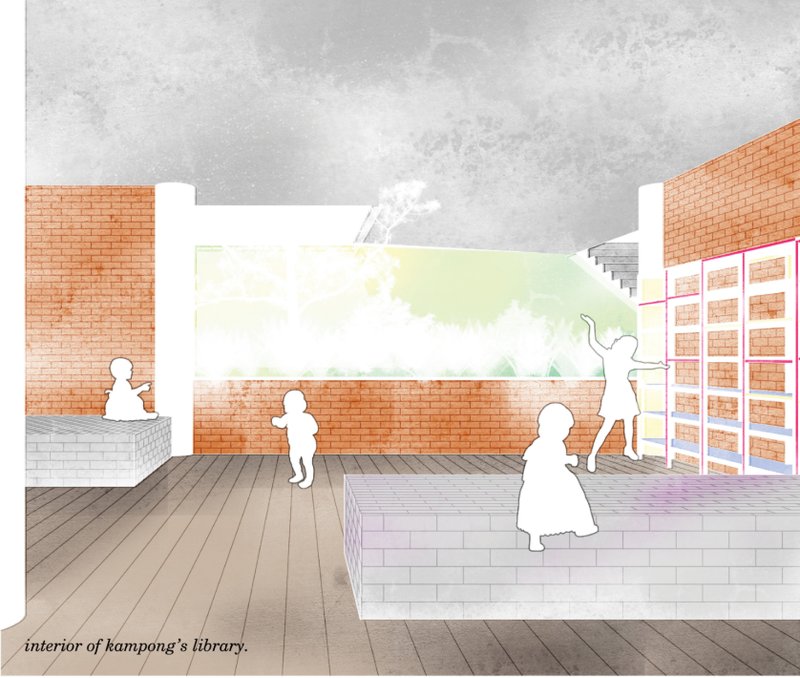
Public spaces play an essential role in kampong life. The proposal introduces communal courtyards, small libraries, and multipurpose halls that serve as social infrastructure.
These spaces strengthen the collective identity of the community while providing platforms for learning, cultural events, and local activities.
Riverfront Revitalization
The river edge is reimagined as an ecological and social corridor. New river decks, garden terraces, and pedestrian paths reconnect the community with the water landscape.
Instead of treating the river as a back boundary, the project transforms it into a central public space that supports recreation, environmental restoration, and flood resilience.
Architectural Language and Community Identity
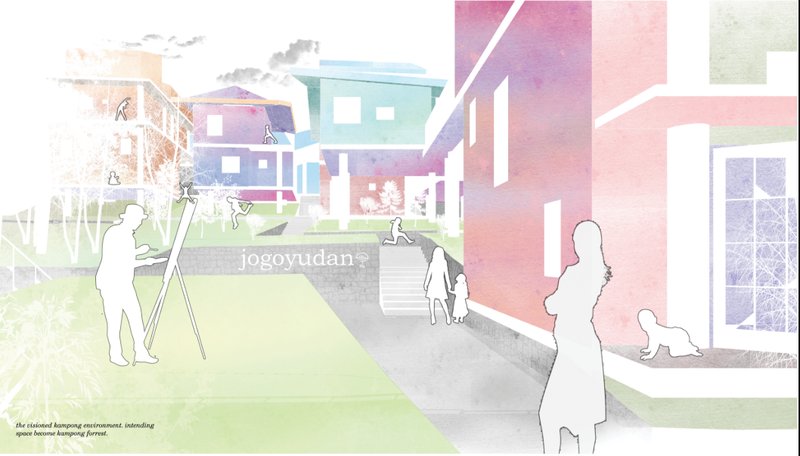
The architectural language of the proposal respects the visual character of the kampong while introducing contemporary spatial solutions. Roof forms, building proportions, and material textures draw inspiration from traditional houses but are reorganized to support modern living conditions.
Colorful facades and layered volumes create a vibrant urban landscape that reflects the dynamic life of the community. At the same time, modular construction methods allow the architecture to adapt to different household needs.
The project demonstrates that cultural preservation does not require static replication. Instead, identity can evolve through thoughtful reinterpretation of spatial traditions.
Social and Urban Impact
The proposed recoding method has implications beyond Jogoyudan. It offers a framework for addressing urban rural transitions in many developing cities where informal settlements coexist with expanding metropolitan areas.
In the short term, the strategy allows residents to improve their homes incrementally without losing their place in the community. Small architectural interventions such as facade improvements, shared courtyards, or vertical extensions can gradually transform the settlement.
In the long term, the approach contributes to a more balanced urban structure by bridging the gap between informal settlements and formal planning systems.
Toward a New Model of Urban Kampong Architecture
The thesis by Satria Permana proposes a powerful shift in how architects engage with informal settlements. Instead of seeing kampongs as problems to be removed, the project recognizes them as repositories of spatial intelligence.
By decoding and recoding their architectural patterns, designers can create new forms of development that are culturally grounded, environmentally responsive, and socially inclusive.
Ultimately, urban kampong architecture emerges not as a relic of the past but as a living model for resilient cities of the future.




Popular Articles
Popular articles from the community

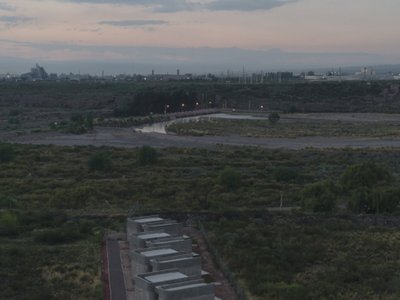
ONA Threads Four Board-Formed Concrete Cabins Along a 260-Meter-Deep Site in Mendoza
At the edge of Argentina's wine country, a set of curved concrete lodges negotiate a razor-thin parcel between city and mountain.
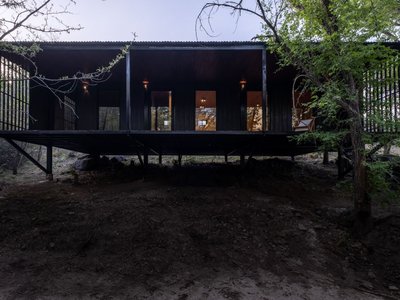
Pablo Senmartin Suspends a Steel-and-Timber Refuge Above a River Forest in Córdoba
An 80-square-meter dwelling on pilotis camouflages itself among the trees of Mayu Sumaj, designed to be dismantled without waste.
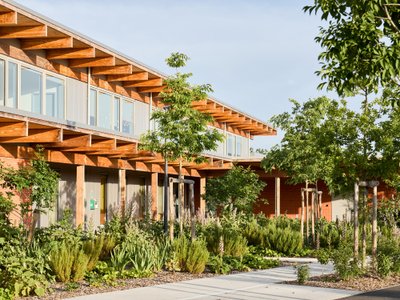
GGR Architectes Anchors a New Neighborhood in Frouzins with a Brick and Timber School Complex
A cruciform plan of terracotta brick and exposed wood frames four courtyards for 140 students outside Toulouse, France.
Non Architecture's Horrible Houses Competition Asks AI to Design the Ugliest Home Possible
A free global competition invited participants to use AI image generators to produce the most hideous house they could imagine.


Similar Reads
You might also enjoy these articles


Urban Forest: A Vertical Ecosystem for 5,000 Workers in Singapore's Changi Business Park
Radially stacked pods and layered green decks turn a 7-acre plot into 47 acres of ecological workspace projected for 2040.
interACT: A Wearable Transit Object That Turns Commuting Into Social Infrastructure
A backpack-mounted foldable device transforms walking, waiting, and riding into moments of shared comfort across Jakarta's transit network.

Lean On Barrier System: Where Traffic Safety Meets Chai Culture in Ahmedabad
A modular steel barrier doubles as informal seating and lean-on furniture at one of Ahmedabad's busiest intersections, keeping vendors in place.

The Black Bagh: A Living Monument Built from Water, Light, and Memory
On the banks of the Yamuna, two designers replace the myth of a marble mausoleum with a regenerative landscape of reflection and ritual.





Comments (0)
Please login or sign up to add comments
No comments yet. Be the first to comment!