
Ancient City Square: Modular Naxi Furniture for Lijiang's Heritage Plazas
A rotatable timber furniture system draws on tenon-and-mortise joinery and solar technology to serve tourists and locals in a UNESCO World Heritage city.


Thirty-one percent of visitors to Lijiang's ancient squares are there to take photographs, twenty-four percent are trying to eat street food, and almost none of them have anywhere to sit down. That gap between heritage spectacle and basic public comfort is the starting point for a modular furniture system that treats a UNESCO World Heritage site not as a museum but as a living urban room. The proposal roots itself in Naxi minority building traditions, reviving tenon-and-mortise timber joinery and double-slope roof geometries while embedding solar panels and rotatable joints that let each module respond to shifting pedestrian flows.
The project was developed by Summer Wang, Yuru Chen, Zidan Huang, and Zixun Dai. Their site analysis zeroes in on four key public squares in Lijiang Old Town, Yunnan Province: Maicaochang, Yuhe, Gucheng Garden, and Sifang Street Square. Each plaza is a nexus of local life and tourism yet lacks functional seating, dining surfaces, shade, and nighttime lighting. By mapping user behavior and climate data, the team arrived at a wood-based modular system tuned to the city's mild monsoon climate and its distinct wet and dry seasons.
A Self-Sufficient Module: Seating, Planters, and Solar Panels in One Assembly
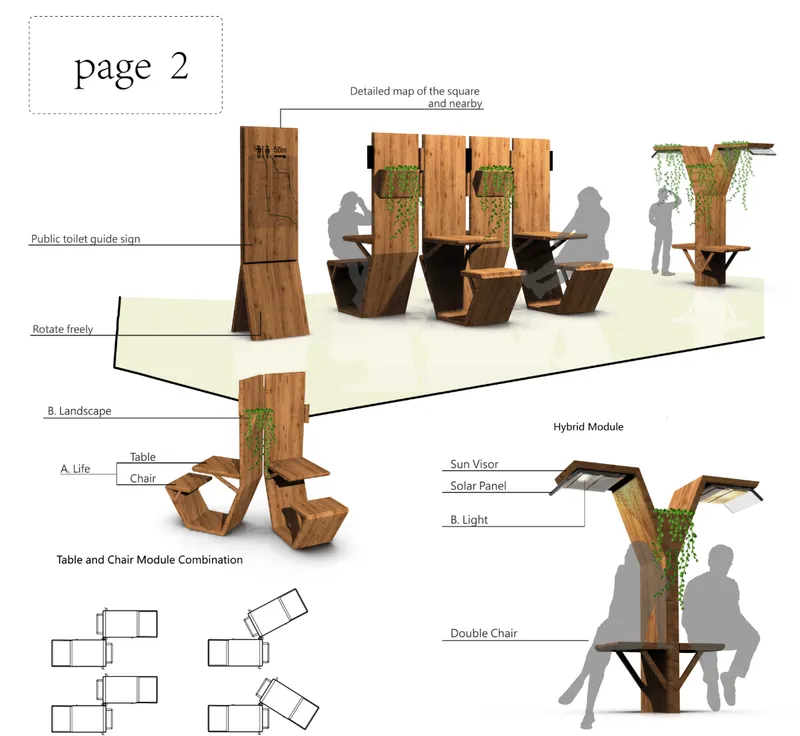
The exploded axonometric drawing lays bare the system's logic: discrete timber seating units lock together around integrated planters and rooftop solar panels, creating a single structure that can serve simultaneously as a bench, a dining table, a landscape feature, and a light source after dusk. Each module stores energy during the day and emits soft illumination at night, directly addressing safety concerns in the heritage district while eliminating the need for separate streetlight infrastructure.
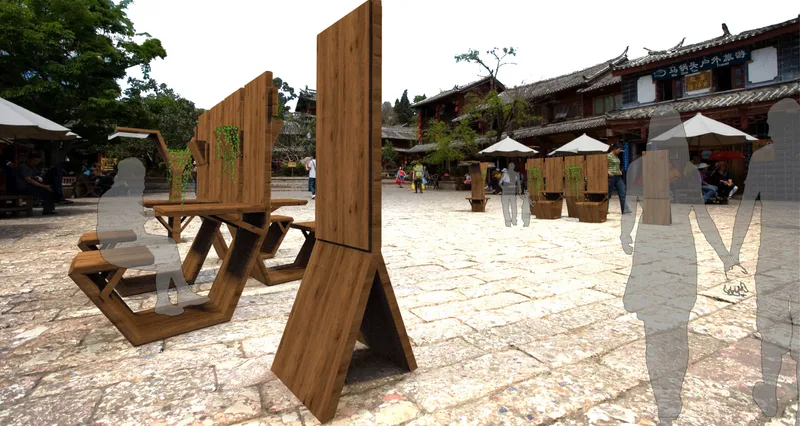
Rendered in a paved public square, the second image shows how the module reads in context. A planted screen provides partial shade and visual softening, while a folding table extends outward to give street-food vendors' customers what they currently lack: a surface to eat at. The proportions and natural wood textures are calibrated to sit comfortably alongside Lijiang's existing Naxi architectural vocabulary rather than announcing themselves as alien interventions.
Dovetails and Swallow Tails: Joinery as Cultural Statement
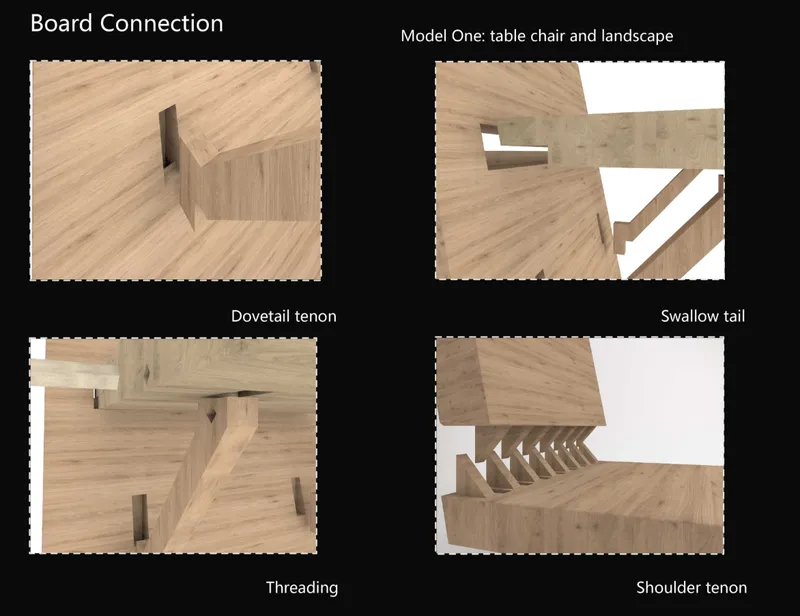
The detail renderings isolate the project's most compelling argument: that structural connection can carry cultural meaning. Dovetail tenons and swallow-tail joints replace nails and metal fasteners entirely, echoing the ancient Chinese construction wisdom the designers cite as a guiding principle. Beyond symbolism, this approach offers practical advantages. Mortise-and-tenon connections allow disassembly and reconfiguration without specialized tools, supporting the system's claim to modularity. The visible joinery doubles as ornament, giving each piece the tactile legibility of handcraft even when produced at a scale sufficient to furnish four major plazas.
Dimensioned for the Square: Technical Precision Behind the Concept
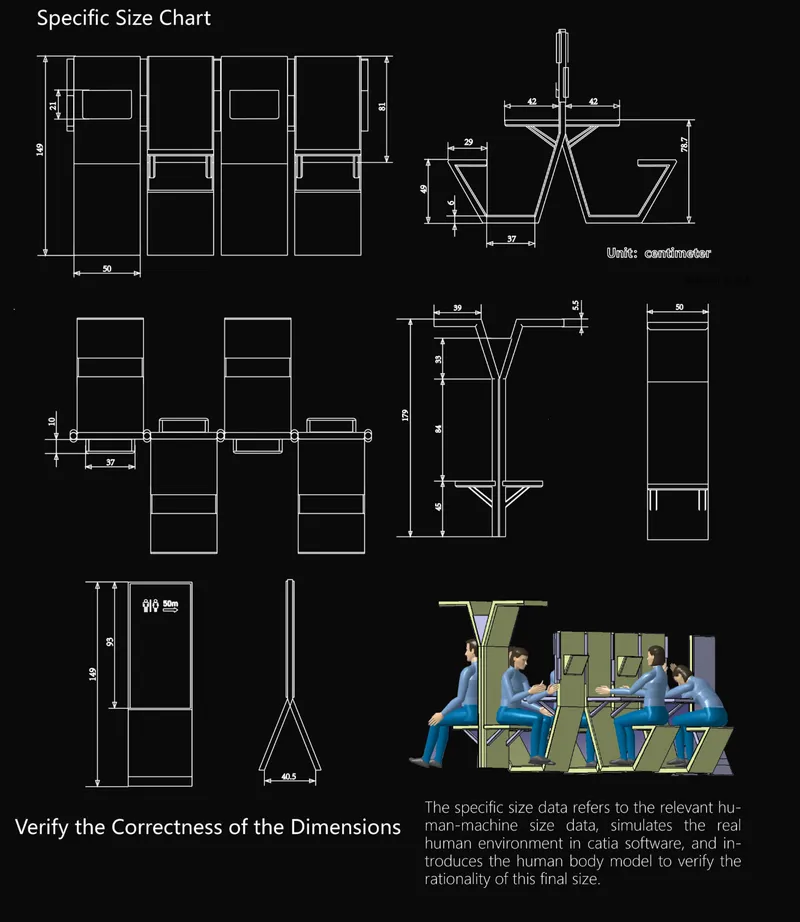
Elevation and plan drawings with full dimensions ground the proposal in buildable reality. The rotatable joints that allow modules to reorient based on street angles or pedestrian flow are detailed here alongside clearances, seat heights, and table depths. This level of resolution matters because heritage contexts are unforgiving: an object that is ten centimeters too tall or visually out of proportion can read as an intrusion rather than an enhancement. The designers' user research, which identified tourist groups (38%), couples (30%), and their primary activities, directly informed the sizing of communal and paired seating arrangements.
Physical Models: Testing Foldability and Light
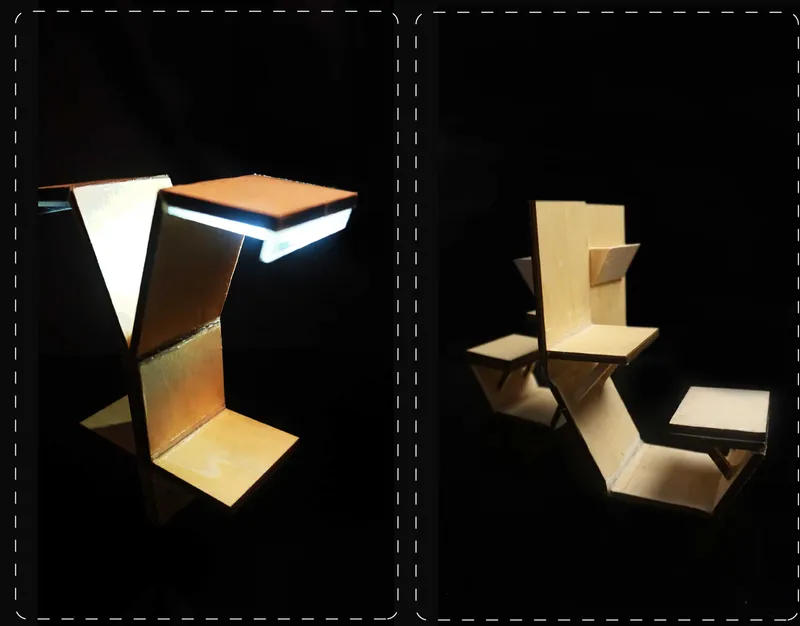
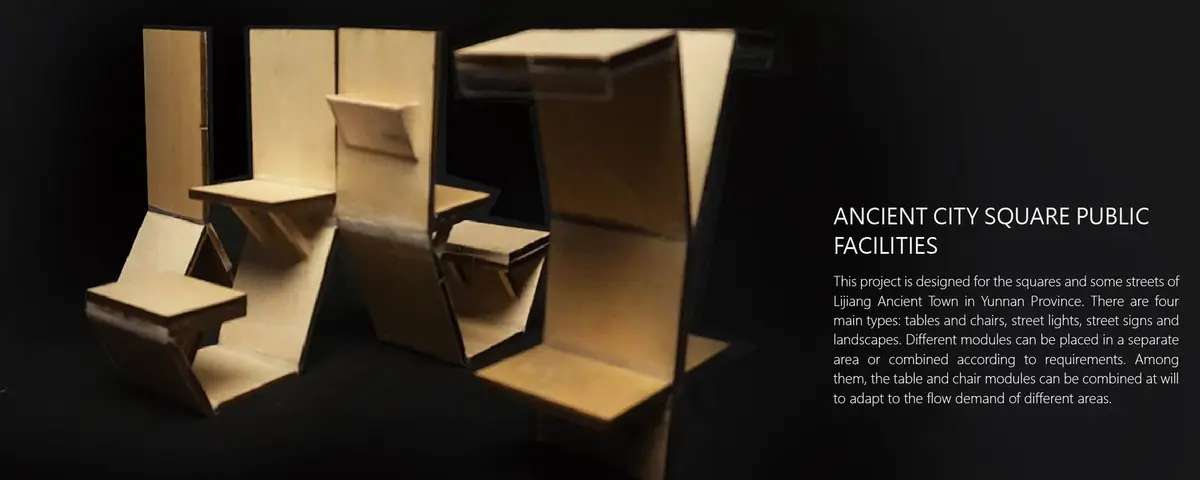
Photographed against a black backdrop, the physical study models of folding chair and table units confirm that the joinery and folding mechanisms work at a material level, not just on screen. The warm glow illuminating the models hints at the solar-powered lighting condition, showing how the furniture transforms from daytime seating into a softly lit nighttime landmark. Prototyping at this stage is a disciplined move; it forces confrontation with tolerances, grain direction, and hinge durability that renders alone cannot test.
Why This Project Matters
Heritage districts worldwide face a version of the same dilemma: how to insert contemporary public amenities without compromising the spatial and material identity that earned protection in the first place. This team's answer, rooting the formal language and construction logic of new furniture in the Naxi building tradition itself, reframes the problem. Rather than designing "invisible" infrastructure that pretends not to exist, they produce objects that actively extend the craft lineage of the place. The solar integration and rotatable joints are forward-looking, yet the dovetail joints and natural wood finishes make the modules feel as though they have always belonged.
What elevates the work beyond a competent product design exercise is the rigor of its urban analysis. The behavioral mapping, climate study, and square-by-square assessment of missing amenities provide a defensible brief that the modular system then answers point by point. For students and young professionals working in heritage urbanism, the project is a useful case study in letting research drive form, and in treating cultural continuity not as a constraint but as a generative design resource.
View the Full Project
About the Designers
Designers: Summer Wang, Yuru Chen, Zidan Huang, Zixun Dai
Enter a Design Competition on uni.xyz
uni.xyz runs architecture and design competitions year-round that reward proposals with spatial conviction and real site intelligence.
Project credits: ancient city square public facilities by Summer Wang, Yuru Chen, Zidan Huang, Zixun Dai.


Popular Articles
Popular articles from the community


Singing Woman: An Opera House That Performs Before the Curtain Rises
Ovidiu Cristian Pavel's conceptual opera house translates Estonia's choral identity into a sculpted waterfront landmark facing the Baltic Sea.


David Ortega Stacks a Two-Story Mexico City Penthouse Around a Steel Stair and a Pergola-Shaded Roof Terrace
In Colonia Roma, a 300 m² penthouse uses oak joinery, a planted steel stair and a slatted roof pergola to make a new-build apartment feel like a house.

FCC Arquitectura Expands a Portuguese Granite House with a Board-Marked Concrete Wing
In Portugal, JV House pairs a cleaned-up whitewashed and granite dwelling with a timber-shuttered concrete extension, courtyards and a garden pool.

Cube Design Draws an Ecological Corridor Between Two Shenzhen Hills with the Nankai Building
Beside Shenzhen's container docks, the Nankai Building pairs stacked balconies with a climbing green screen to connect two hillsides across its height.

Similar Reads
You might also enjoy these articles

Aquadapt: An Underwater Habitat That Rewrites Its Rooms by the Hour
Curved modules ring the seabed while one shell shifts from breakfast room to cinema, farm and football pitch as residents' needs change.

Play: Fragments of Their World: Remembered Architecture Rebuilt as a Modular Playground for Refugee Camps
Tom Gardner abstracts domes, arches and towers from the homelands of displaced families into a kit of child-scaled play parts for camp settlements.
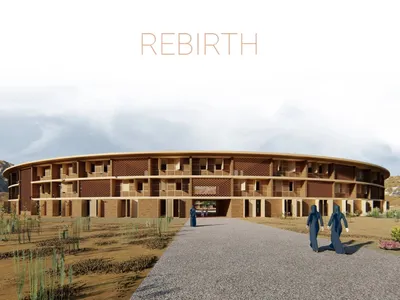
REBIRTH: A Circular Settlement Where Afghan Widows and Their Children Rebuild Life Together
A shortlisted Resile entry turns the circle into a protective ring of timber and brick, gathering homes, classrooms and gardens around a shared landscape.
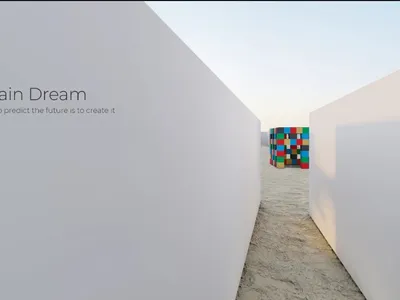
The Main Dream: A Recycled Plastic Kit That Lets Refugee Children Build Their Own Playground
Thirty-centimetre interlocking cubes that connect on three axes turn play into construction, letting children author the spaces they occupy.


Comments (0)
Please login or sign up to add comments
No comments yet. Be the first to comment!