

Retail of tomorrow - Redefining traditional retail
Results for post-pandemic retail store announced


Nature of trade
From shops to the arcade to the department store and retail emporium, there has been a constant evolution of stories. Simultaneously from subscription boxes to the rise of quality packaging and the conscious consumer, the shopping culture has been changing.
What remains constant though is the physical transaction taking place between consumer and seller. As they take part in exchanges but in the different typology of spaces. But in the world of e-commerce and now COVID-19, where physical gathering can lead to fatal consequences - the traditional form of trade is under threat.
The pandemic has shown that the traditional form of trade cannot answer the problems that are likely to spread through physical touch. Throughout the process of retail shopping, a consumer has to touch different surfaces, objects, and talk to different people. All of them being possible carriers. The uncertainty, lack of spatial flexibility in retail experience has led to a decrease in footfalls.
The presence of the e-market further disrupts the space. With around 44% of the urban population choosing to avail of online services even after the restrictions come down.
The ongoing pandemic, in its fragility, has shown us how dispensable traditional spaces can be. Even though consumer satisfaction remains a priority, there is a constant need for its architecture to evolve. The design system must be open for further upgrades and improvements.
Retail Stores, for a long, have formed a significant part in shaping public spaces as well as defining a particular neighbourhood and its people. As soon as we entered the realm of the digital age, the popularity of online shopping services shifted the transactions from physical retail stores to online. Now with the pandemic, the architecture of shops has further raised questions.
Brief of the competition
The brief was to design a retail store that redefined the traditional market prototype in today’s changing times. The architectural concept for a shop that could bring back the lost ritual of buying, that improved upon the deficiencies present in the trade process, recovered the lost human senses of a buyer, provided the possibility to sense all properties of the good, and cohesively included such possible solutions.
The jury for the competition consisted of esteemed designers, professionals, and academicians from around the world. The Lead Jurors for the competitions were as follows:
Ángel Verdasco, Director, Ángel Verdasco Arquitectos, Spain
Dan Brunn, Principal, Dan Brunn Architecture, United States
Callum Lumsden, Founder & Creative Director, Lumsden Design, United Kingdom
Tommy Kleerekoper, Founding partner / Creative Director, TANK, Netherlands
Nicholas Hofstede, Managing Director, Johnston Marklee, United States

Some of the Best of competition projects are:
Winning Project: CRATE MART
By: Kartik Sharma, Rohin Sikka, Gayatri Jain & Bharati Gupta
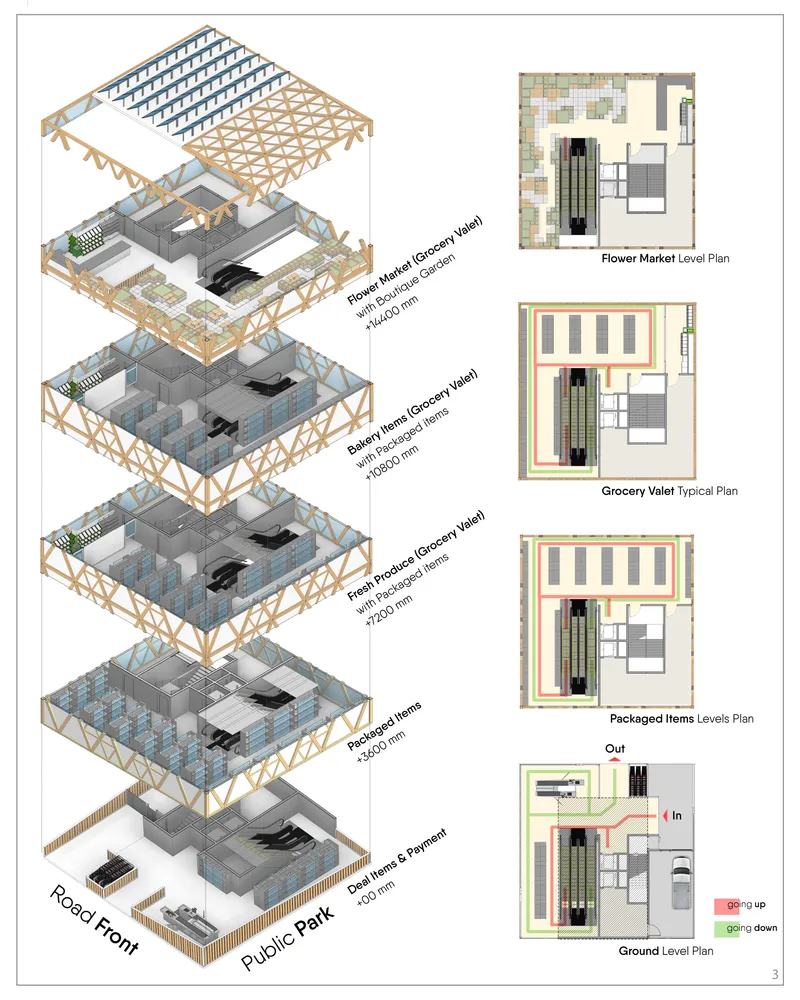
Fig: 1 Isometric plan and level plan
Description: The CRATE MART revolves around the REHABILITATION of the supermarket retail post-pandemic. The design is an architectural and technological exploration that enables a safer environment for the customers while also redefining one’s supermarket experience, welcoming them back to shop. The design is conceived to be modular in nature.
-----------------
People’s Choice: 'BUY-HUB'
By: Özge Bayam & Murat Sönmez
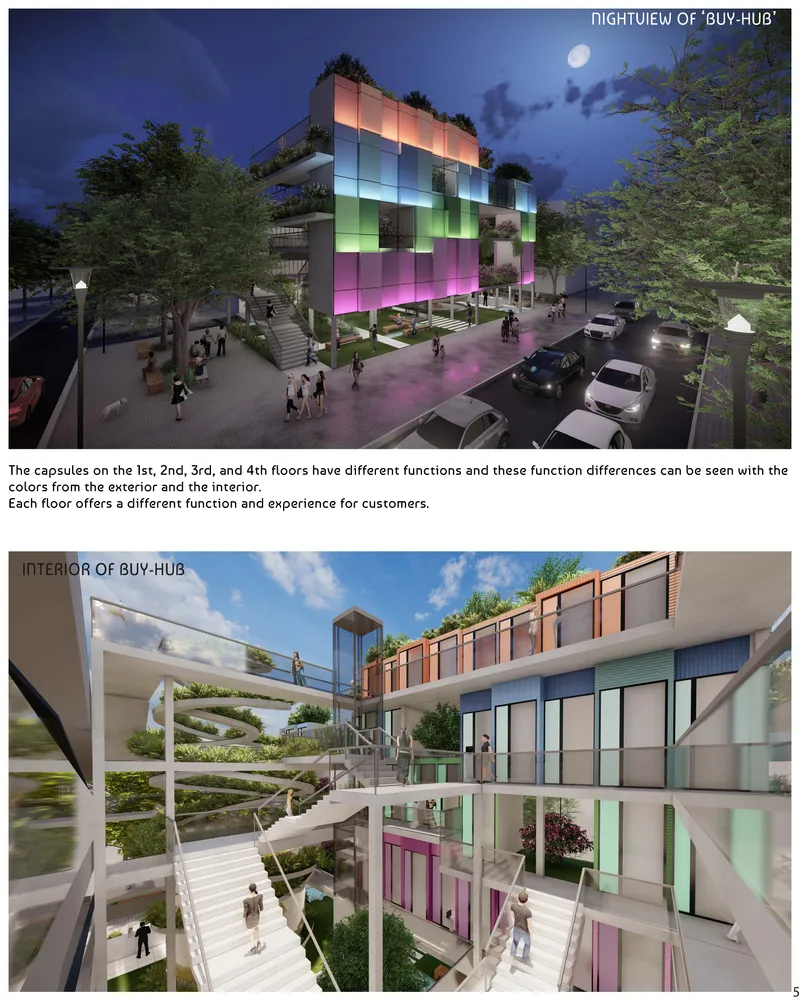
Fig: 2 Interior and exterior view of Buy-hub
Description: “The ‘Buy-Hub’ is beyond a conventional shopping experience; turns technology into an architectural object” This 'hub' of capsules creates a brand new shopping experience. Each capsule is actually a technological machine, and while these capsules provide a brand new shopping experience in the city, hub also aims to integrate green into the street.
Editor’s Choice: sustainable supermarket
By: Misak Terzibasiyan, Fatemeh Karami & candan budak
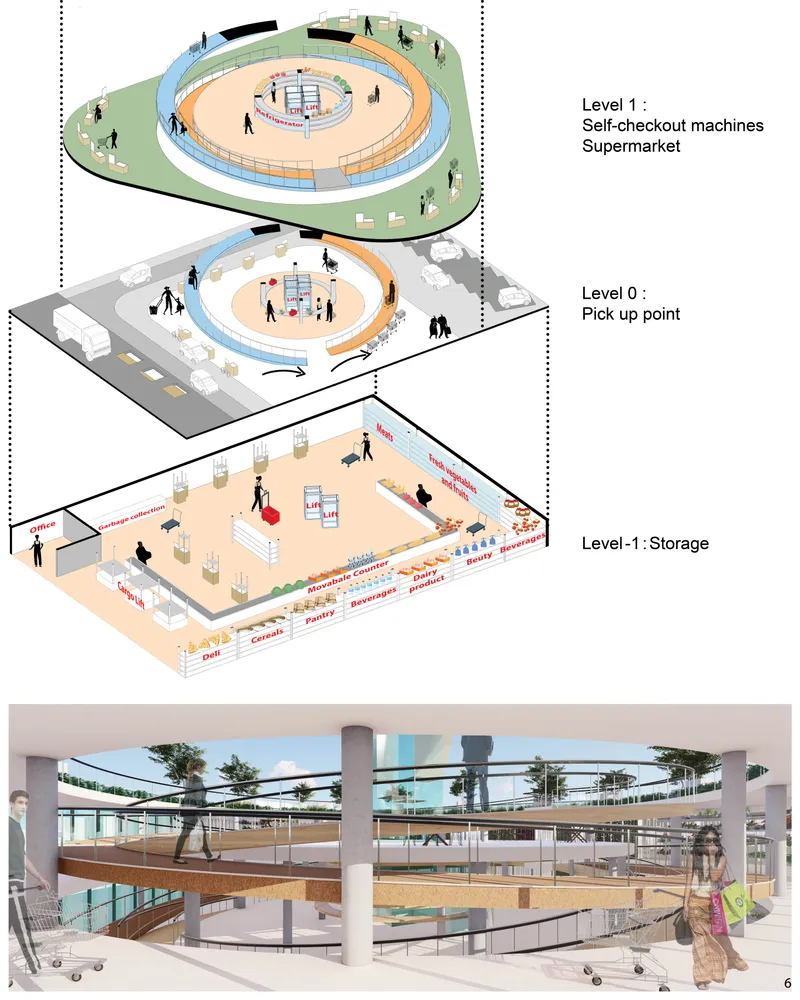
Fig: 3 Isometric plan
Description: We decided to include a small vertical farm on each floor along with a green roof where natural plants are grown. This helps people to focus on healthy, organic food bought locally and also creates green spaces in an urban area to offset carbon emissions. A rule is set to protect people’s distances and people’s circulation.
--------------------
Editor’s Choice: Click-Brick retail store design
By: yi'lin wan
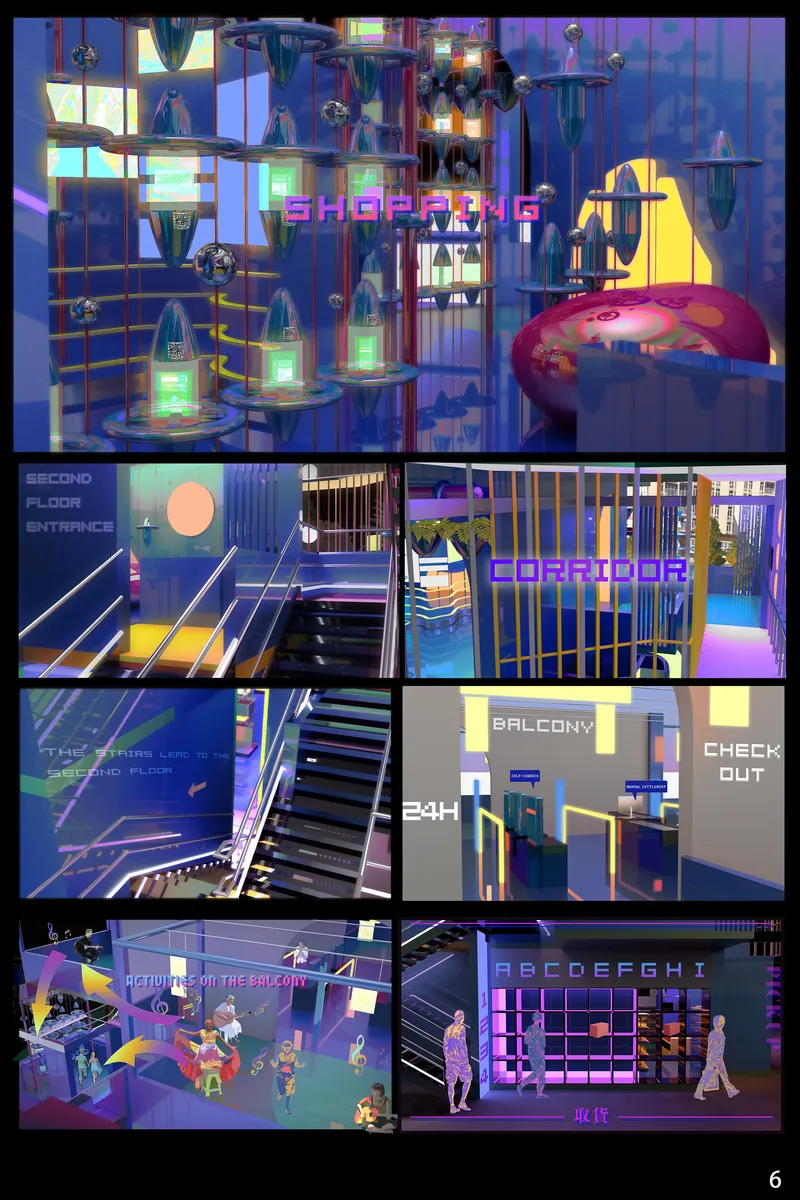
Fig: 4 Interior view
Description: Prefabricated modular architecture provides a strong flexibility and controllability for architecture. After providing the mode of architectural change, the architecture can be placed in any city in the world. The spatial layout and some details of the architecture can be adjusted according to the actual situation, so as to adapt to local conditions.
--------------------
Editor’s Choice: Flying Shop
By: Guillermo Garcia
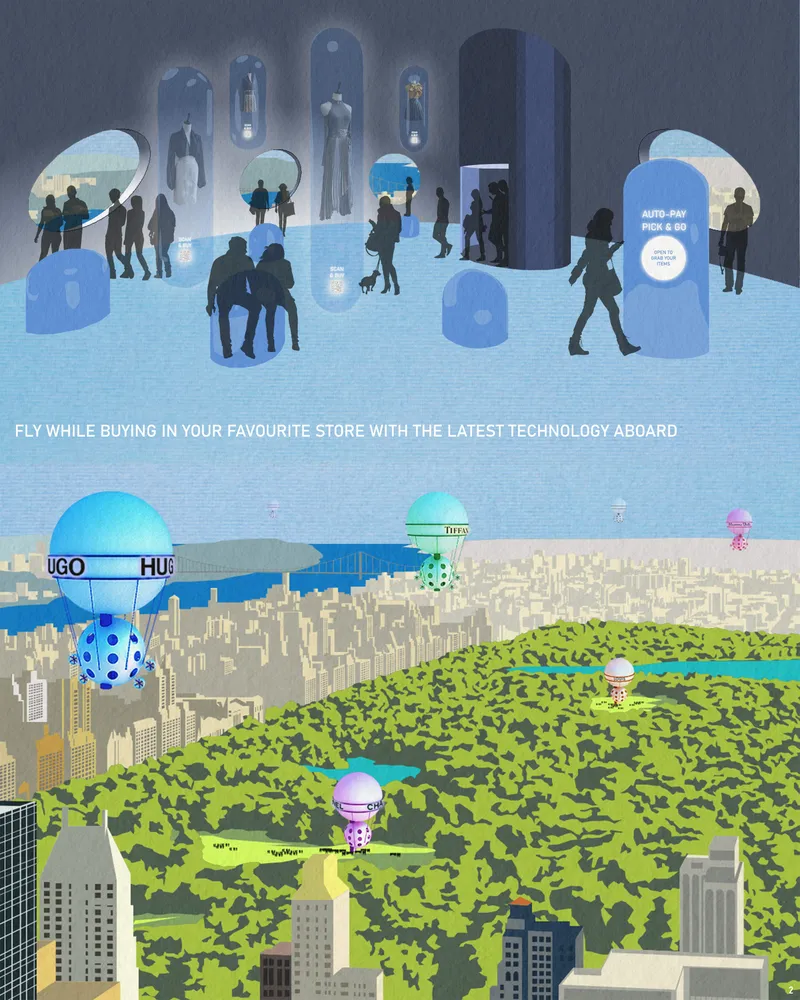
Fig: 5 Flying over NY City
Description: The brief is to design a retail store that redefines the traditional market prototype in today’s changing times. This proposal consists of an airship that hosts a shop inside. The buying experience becomes unique: buying while flying above in the sky.
Editor’s Choice: Escalation of Journeyman
By: Lai HuiLing, Eunice Tan & LEAN SE
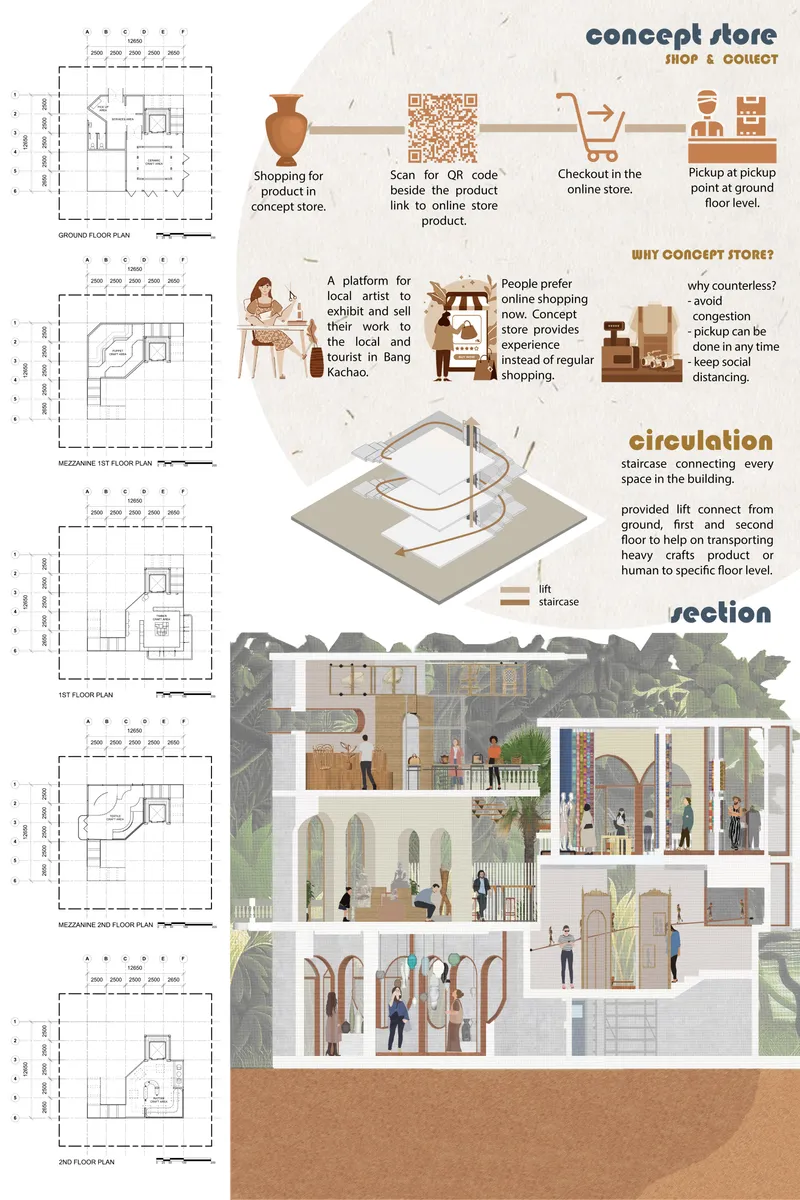
Fig: 6 Floor and section plan
Description: The ‘escalation of journeyman’ is a one-stop solution for everyone who wants to connect to the roots of their own or their destination city. The idea is to provide a holistic experience of a city’s authenticity all under one single roof.
--------------------
Editor’s Choice: Retail of Tommorrow
By: Yaying Feng, Zenn Lee, Hu yuxuan & Xxx Xie
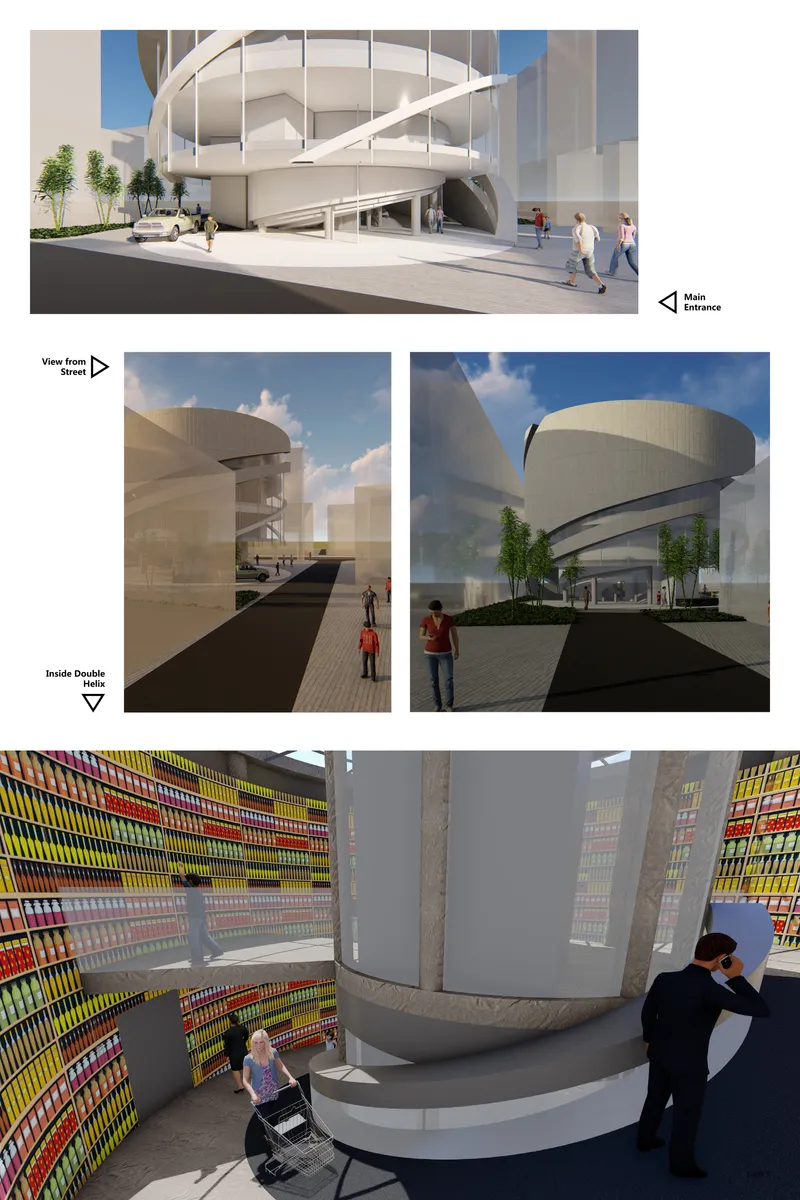
Fig: 7 Site view from different point
Description: This is a design guideline of a new retail space mode

Follow us on social media: Facebook | Instagram | LinkedIn | Twitter | Youtube
References (3)


Popular Articles
Popular articles from the community


longwave studio Reorganizes a 112 m² Tainan Apartment Around the Daily Routines of a Family and Two Cats
In Tainan, Taiwan, birch plywood, rust-red furniture and a freestanding plaster wall link arrival, storage, work and family life in one apartment.

David Macias Steps a Doorless Stone and Plaster House Down a Tropical Colombian Hillside
In the humid hills of Colombia, Threshold House replaces the front door with an open void and terraces its 850 m² down the slope instead of fighting it.

Jaramillo Van Sluys Arquitectura and Urbanismo Turn a Demolished Registry Lot in Quito into an Orchard Plaza
In Quito's Centro Histórico, a 2,800 m² plaza exposes the San Agustín convent wall and redraws its lost Augustinian orchard in volcanic stone.

U.GA Architects Wraps an Oval Rooftop Pool in Curved Board-Formed Concrete on Busan's Jeollidan-gil
In Busan's Jeonpo-dong, a 454 m² mixed-use block stacks a neighborhood facility, guest rooms and an oval rooftop pool inside spiraling concrete walls.

Similar Reads
You might also enjoy these articles


Aquadapt: An Underwater Habitat That Rewrites Its Rooms by the Hour
Curved modules ring the seabed while one shell shifts from breakfast room to cinema, farm and football pitch as residents' needs change.

Play: Fragments of Their World: Remembered Architecture Rebuilt as a Modular Playground for Refugee Camps
Tom Gardner abstracts domes, arches and towers from the homelands of displaced families into a kit of child-scaled play parts for camp settlements.
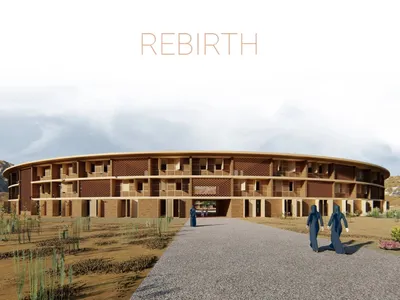
REBIRTH: A Circular Settlement Where Afghan Widows and Their Children Rebuild Life Together
A shortlisted Resile entry turns the circle into a protective ring of timber and brick, gathering homes, classrooms and gardens around a shared landscape.
The Main Dream: A Recycled Plastic Kit That Lets Refugee Children Build Their Own Playground
Thirty-centimetre interlocking cubes that connect on three axes turn play into construction, letting children author the spaces they occupy.

Explore Retail of Tomorrow Competitions
Discover active competitions in this discipline

Challenge to design luxury tourism on rails

VR headsets Storefront design competition

Designing a staircase for a client
Comments (0)
Please login or sign up to add comments
No comments yet. Be the first to comment!