
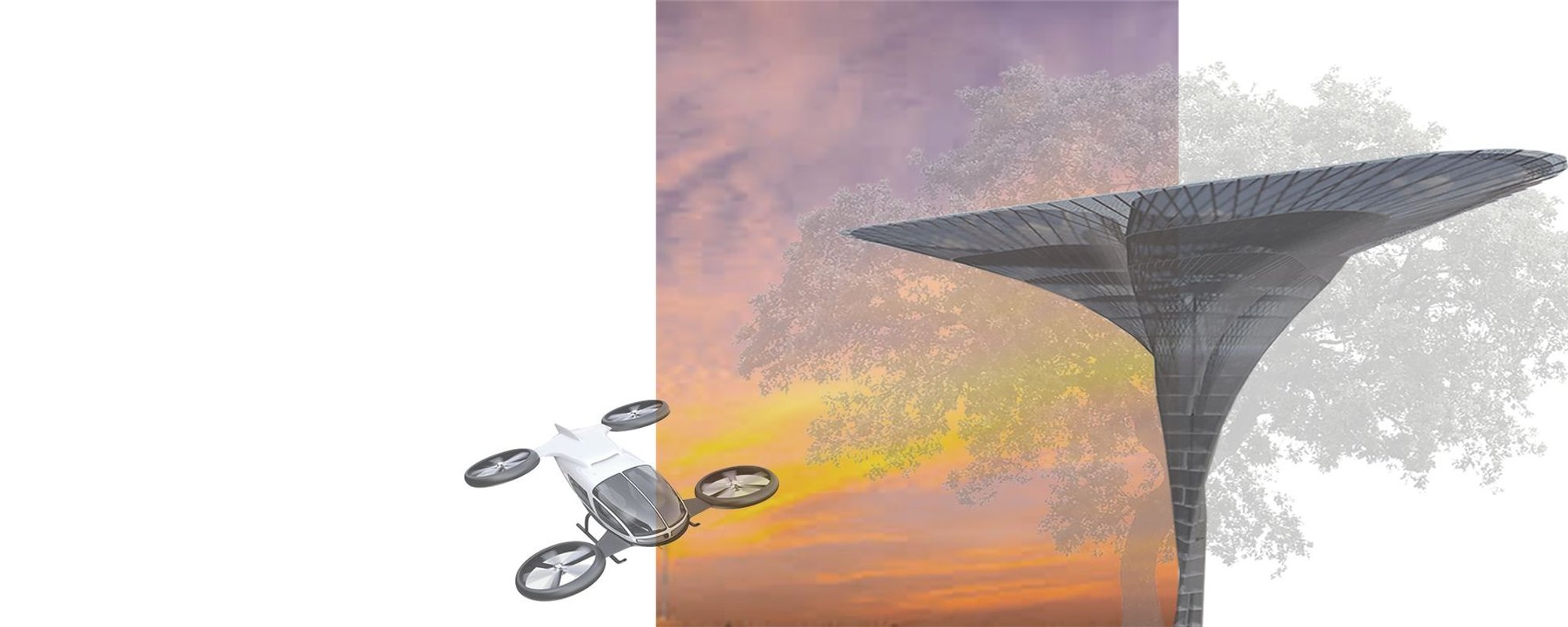
REUSE THE NATURE – A Visionary Approach to Sustainable Architecture
A biomimetic architectural vision inspired by trees, integrating renewable energy, water harvesting, and vertical urban ecosystems for future cities.

"Reuse the Nature" is a visionary proposal that explores how biomimicry can redefine the future of sustainable architecture. Designed by Ecenaz Tütüncü and Selahattin Nacar, the project takes direct inspiration from the systemic intelligence of trees—structures that harvest water, capture sunlight, produce shade, support life, and enrich ecosystems without generating waste. The concept imagines a monumental vertical habitat where architecture behaves like a living organism, integrating natural performance with advanced urban functions.
Through form, structure, and systems, the project proposes a new paradigm for high‑rise development—one that does not dominate nature but actively learns from it. The result is an architectural prototype that resembles a futuristic mega‑tree: a 1,300‑meter-high structure designed for climate adaptation, social gathering, mobility, and ecosystem restoration.
Biomimicry as the Design Foundation
At the core of the project is the biological logic of a tree. Trees are nature’s most efficient systems—multi‑functional organisms that:
- absorb water from the ground,
- collect and convert solar energy,
- filter the air,
- create habitat,
- and protect life around them.
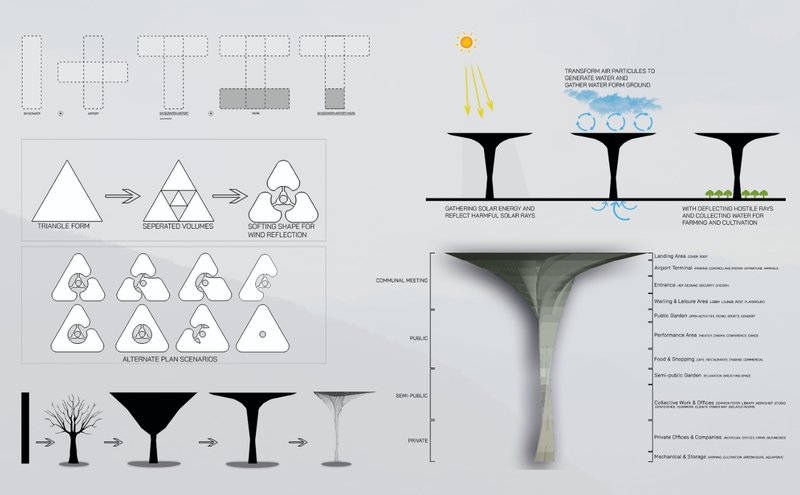
The project adapts these exact principles into architectural solutions. The large canopy at the top functions like a crown, shading urban areas below and collecting solar energy. The slender central core works like a trunk, channeling airflow and enabling vertical circulation. The triangular cluster formations at the base echo root systems, grounding the project physically and programmatically.
This biomimetic transformation—from triangle to softened forms to interconnected plan modules—generates spatial flexibility and aerodynamic performance.
Concept Evolution: From Geometry to Living Form
The design process begins with a simple triangle. As volumes separate and merge, the form evolves into a wind‑responsive geometry capable of diffusing air pressure and maximizing structural resilience at extreme heights.
Diagrammatic studies reveal:
- Triangle form → separated volumes for internal program distribution
- Softened shapes for wind reflection and stability
- Multiple cluster arrangements to allow urban and natural modules
These adaptive shapes support multifunctional uses, giving the tower the capacity to host public, semi‑public, and private programs seamlessly.
Solar, Wind, and Water Systems Inspired by Nature
1. Solar Energy Collection
The expansive crown gathers solar rays and filters harmful UV radiation. This canopy becomes a renewable energy field, generating clean power to support the vertical ecosystem.
2. Atmospheric Water Generation
Inspired by how trees pull moisture from the air and soil, the structure uses advanced air‑particle technology to produce fresh water from the atmosphere. The collected water then supports agriculture, green terraces, and internal water needs.
3. Wind Diffusion and Micro‑climate Control
The tapered "trunk" shape channels airflow for natural cooling. Its aerodynamic form reduces wind loads at extreme heights and stabilizes the entire megastructure.
This integration positions the project as a landmark of sustainable architecture—using natural strategies to solve climatic challenges.
Vertical Zoning: A Self‑Sustaining Urban Ecosystem
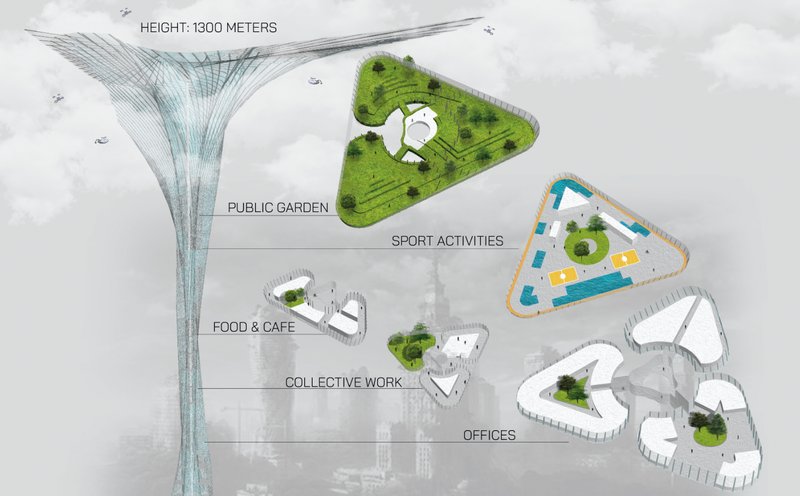
The tower features distinct zones stacked vertically, each serving environmental and social purposes.
Communal Meeting + Public Levels
- Waiting and leisure areas
- Public gardens and urban parks
- Performance arenas (theatre, cinema, concerts)
- Food terraces, cafés, marketplaces
Semi‑Public + Work Levels
- Collective workspaces
- Co‑learning hubs
- Labs and workshops
- Shared office clusters
Private + Operational Levels
- Individual workspaces
- Residence‑styled office modules
- Mechanical and storage systems
This gradient—from public at the top to private at the bottom—creates an inclusive yet efficient urban organism.
Floating Mobility & Future Transport Integration
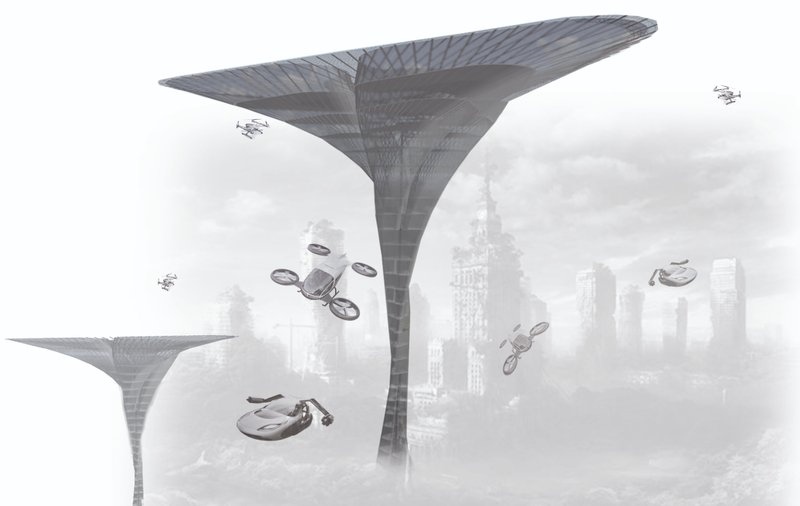
The imagery presents futuristic flying vehicles surrounding the structure—symbolizing a future in which vertical hubs become mobility anchors. The high altitude makes the tower an ideal landing and take‑off point for next‑generation aerial transport systems.
This connection between "FLY" and "tree life" echoes the conceptual analogy:
- Birds use trees for safety and navigation.
- Future flying vehicles may use vertical eco‑towers as urban mobility stations.
The 1300‑Meter Urban Forest Tower
The project visualizes the megastructure rising 1,300 meters above the urban fabric—a dramatic and symbolic height. Throughout the vertical span:
- Public gardens form lush elevated parks.
- Sports platforms enable recreational movement.
- Social nodes promote community engagement.
- Terraces host agriculture, leisure, and daily work.
The tower behaves like an ecosystem—supporting multiple activities while providing shade, resources, and energy.
A Sustainable Architecture Model for Future Cities
The vision of "Reuse the Nature" aligns with global aspirations for regenerative, climate‑positive architecture. It offers:
- A blueprint for zero‑waste skyscrapers
- A model for integrated renewable systems
- A reimagining of vertical urbanism
- A future where buildings act like living organisms
This project stands as a bold reminder that the solutions to our future challenges may already exist in the intelligence of natural systems.
"Reuse the Nature" is not just a futuristic megastructure—it is a manifesto for sustainable architecture. By embracing biomimicry, the project transforms a tree’s logic into a visionary urban organism capable of producing energy, water, shade, and community spaces. Designed by Ecenaz Tütüncü and Selahattin Nacar, the proposal challenges the boundaries of high‑rise design and presents a compelling pathway toward regenerative cities.
A future where architecture does not compete with nature—but grows from it.


Popular Articles
Popular articles from the community

Atelier Macri Concept Store Interior Design by CASE-REAL
Atelier Macri store features a "ko" counter, walnut wood details, cork displays, blending retail, gallery, and seamless customer experiences.

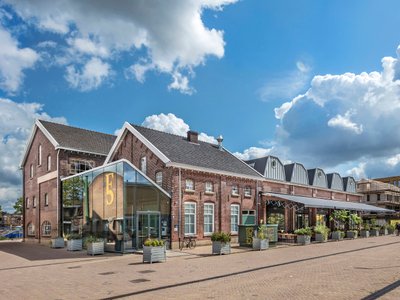
Fifth NRE Jazz Club – De Bever Architecten: Eindhoven’s Revitalized Cultural Hub
Historic gas factory transformed into Fifth NRE Jazz Club blending modern sustainability, jazz culture, dining, and heritage architecture seamlessly.
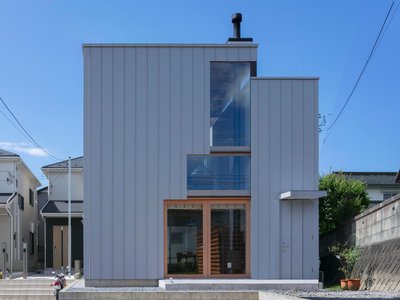
Split House: A Compact Urban Home Blending Privacy, Light, and Flexible Living in Japan
Compact Japanese home featuring DOMA space, flexible café potential, passive lighting, privacy zoning, and sustainable urban living design.
Similar Reads
You might also enjoy these articles

Digital Façade Design for our cities’ urban fronts
Prima Facie - Result Story
Protecting avian biodiversity: Bird observatories to help spread awareness & save rare bird species.
Results for ‘Fly’ - Landscape design competition out now
Connecting with nature: Forest interpretation center in Australia's Wollemi National Park
‘Asatti’ - Landscape design competition - Result story





Comments (0)
Please login or sign up to add comments
No comments yet. Be the first to comment!