

Reviving Industrial Heritage: Renovation of Nanjing Combat Machinery Factory by MIX Architecture
Historic factory in Nanjing transformed by MIX Architecture into a red-brick office park, blending industrial memory with nature and city.


Located in the northern urban fabric of Nanjing near the iconic Nanjing Railway Station, the Nanjing Combat Machinery Factory has undergone a thoughtful transformation by MIX Architecture, breathing new life into a forgotten post-industrial relic. Originally constructed in the 1950s during China’s era of rapid industrialization, the factory once stood as a powerful symbol of productivity. However, with urban sprawl and the relocation of manufacturing functions, the factory was eventually abandoned—left to deteriorate at the fringe of the community.
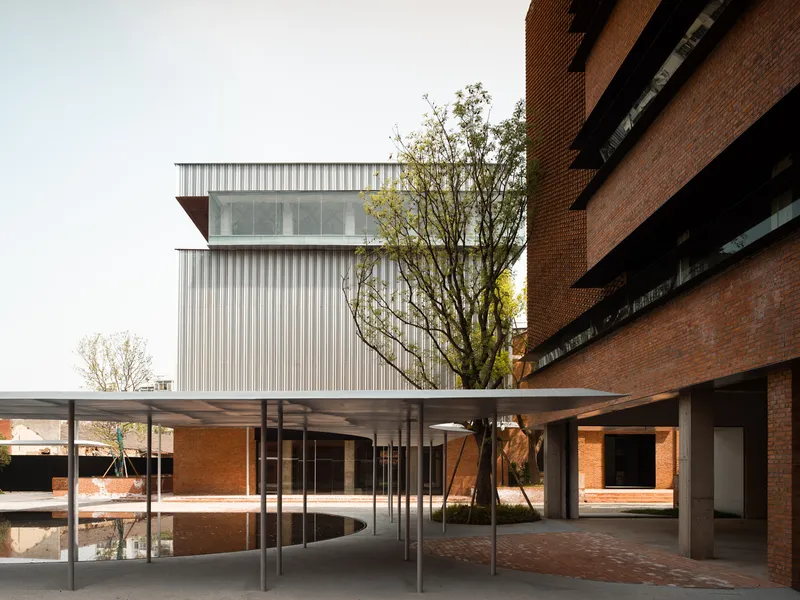

A Forgotten Industrial Icon Reimagined
Previous attempts in the early 2000s to revitalize the space as a creative industry hub failed to attract long-term engagement. Over time, nature reclaimed the red brick façades; vegetation crept across surfaces, and memories of the factory faded. Yet, in 2020, the site’s story took a transformative turn. A local developer entrusted MIX Architecture with the challenge of renovating the factory into a multifunctional innovation park, with office use as its core function.
Rather than erasing the past, the architects embraced the site’s layered narrative. Their design approach was grounded in historical continuity, material authenticity, and urban sensitivity. The goal was not only to revive the structure but to reconnect it with the city, its people, and its landscape.


Red as Narrative: Material Memory and Cultural Identity
The design centers around the theme of “red”—a symbolic and literal anchor. Three interpretations reinforce this color’s significance:
- Location: Situated on the west side of Hongshan (literally “Red Mountain”), the color references its geographical identity.
- Historical Context: Built during the 1950s, the era evokes what locals call the "red memory," symbolizing collective pride and resilience.
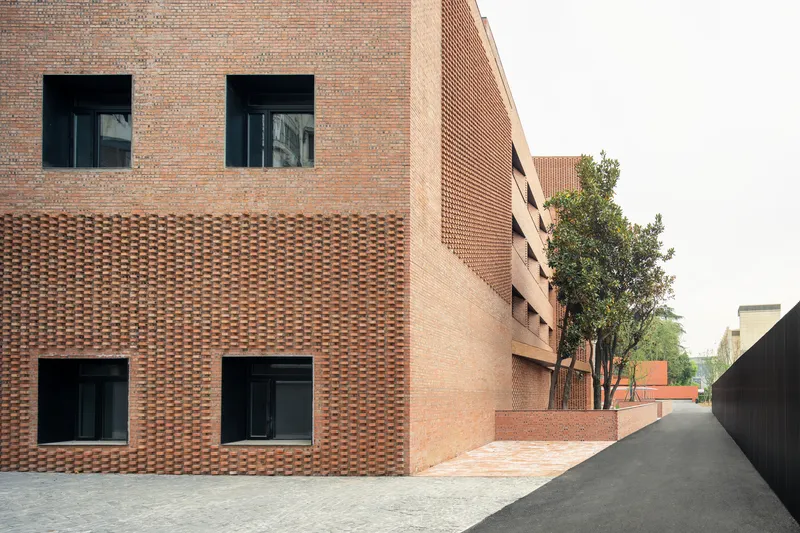
- Architectural Expression: The red brick façade stood out as the most powerful element of the original structure—its textural richness embodying time, craft, and place.
The architects chose to preserve and extend this identity through a palette of red-toned materials: reclaimed red bricks, red concrete blocks, terrazzos, and red-faced masonry. Each material layer reflects a different construction method and era, reinforcing the temporal depth of the site. This expressive materiality makes the factory feel both familiar and newly discovered.
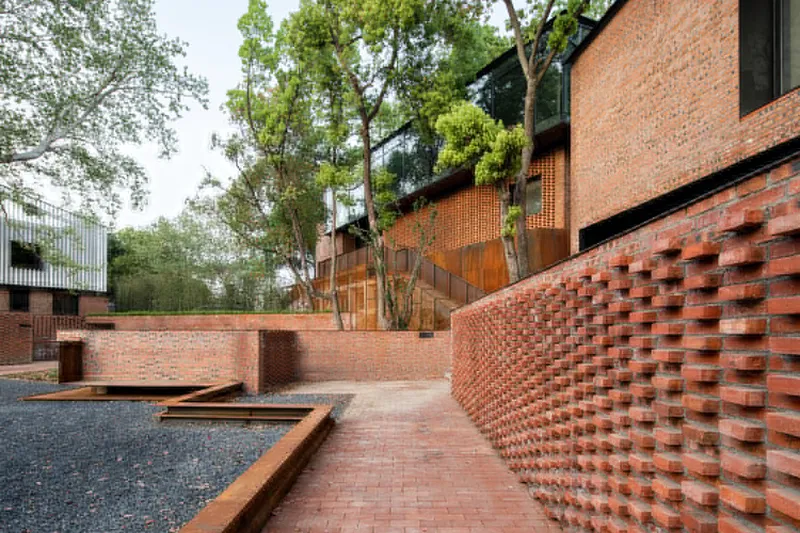

Human-Nature Dialogue Through Spatial Design
The renovation goes beyond surface-level aesthetics. A key aspect of the intervention was to establish a harmonious relationship between architecture and nature. Existing trees were carefully preserved, while new courtyards and low brick walls were introduced to frame spatial rhythms and transitions. These elements gently navigate the site’s elevation changes, define public and private zones, and ensure the unity of the overall master plan.
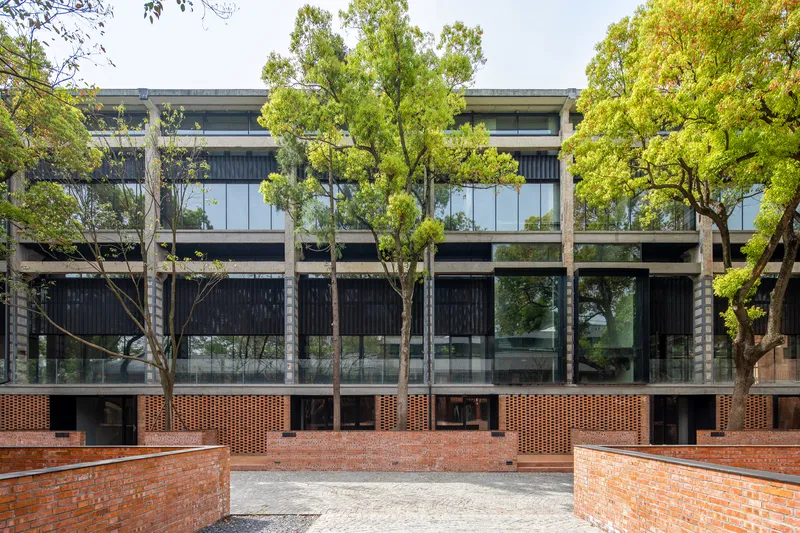
The sequence of experience was deliberately designed—from the street edge to the intimate interiors. Thick boundary walls guide visitors inward, softening the shift between exterior urban chaos and the calm interior zones. Generous windows create curated views of the surrounding mountains, allowing nature to become a daily backdrop for those working inside.


Experiential Layers: From Memory to Connection
MIX Architecture’s design philosophy emphasizes a three-stage user journey:
- Acknowledgement: From a distance, the building’s bold materiality signals its presence in the urban landscape.
- Feeling: As visitors approach, tactile surfaces and brick textures recall the building’s historical roots.
- Experience: Inside, spatial openness and views toward the natural landscape allow for emotional and sensory immersion.
The factory is no longer a relic—it becomes an urban mediator, connecting past and present, nature and culture, memory and innovation. This project reflects a larger trend in Chinese architecture: adaptive reuse of industrial buildings not just for practical function but for cultural storytelling.
The renovation of the Nanjing Combat Machinery Factory is an exemplar of sensitive urban renewal. Through deliberate material choices, spatial layering, and contextual awareness, MIX Architecture has reactivated a dormant landmark, transforming it into a space of contemporary productivity while preserving its industrial soul.

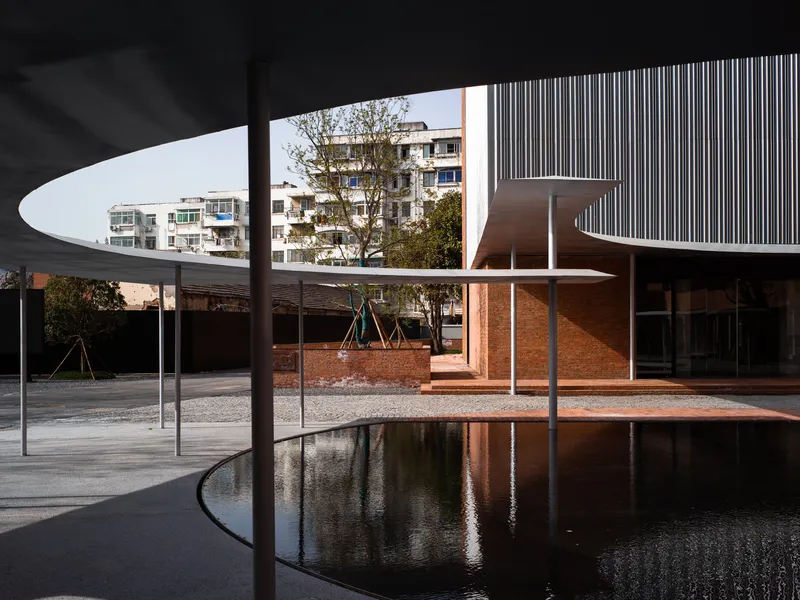

📌 Project Details
- Architects: MIX Architecture
- Location: Nanjing, Jiangsu Province, China
- Site Area: 11,224 m²
- Year of Completion: 2023
- Photography: Haiting Sun, Xiaobin Lv, Arch-Exist


Popular Articles
Popular articles from the community


GROUP A Strips a 1969 Rotterdam Harbor Headquarters to Its Frame and Wraps It in Timber Louvers
In Rotterdam's M4H harbor district, Ferro Offices reuses a 1969 frame, adds one timber storey and reaches BREEAM-NL Outstanding.

longwave studio Reorganizes a 112 m² Tainan Apartment Around the Daily Routines of a Family and Two Cats
In Tainan, Taiwan, birch plywood, rust-red furniture and a freestanding plaster wall link arrival, storage, work and family life in one apartment.

Cube Design Draws an Ecological Corridor Between Two Shenzhen Hills with the Nankai Building
Beside Shenzhen's container docks, the Nankai Building pairs stacked balconies with a climbing green screen to connect two hillsides across its height.

David Ortega Stacks a Two-Story Mexico City Penthouse Around a Steel Stair and a Pergola-Shaded Roof Terrace
In Colonia Roma, a 300 m² penthouse uses oak joinery, a planted steel stair and a slatted roof pergola to make a new-build apartment feel like a house.

Similar Reads
You might also enjoy these articles


Hodi-Mandai Geram
Project Function: Preservation and revitalization of the Intangible heritage and socio-spatial identity of the Hodi by Housing, Cultural Memory Center, Sacred Grove, landscape, local tourism economy


Olio Towers: A Mid-Rise for Performers That Fuses Housing, Rehearsal, and Stage
Located blocks from Houston's Theater District, this modular tower stacks living units around a central performance atrium.

Oasis: Modular Green Housing Carved into Dhaka's Urban Fabric
A shortlisted Plugin Housing entry reclaims unauthorized settlements in Dhaka with stepped concrete volumes, green roofs, and ventilation-driven design.

Black Hole: A Floating Megastructure for the Post-Physical Era
Emiliano Mazzarotto envisions a spherical, self-scaling arena where e-sports, digital hotels, and holographic stadiums replace traditional public space.

Explore Office Building Competitions
Discover active competitions in this discipline

Challenge to reimagine the Iron Throne

Photograph architecture without architects

Illustrate the lost glory of Angkor Wat - Render Challenge

Design challenge to reuse E-waste
Comments (0)
Please login or sign up to add comments
No comments yet. Be the first to comment!