
San Saba House Extension by adamo-faiden + Supervoid | Rome, Italy
San Saba House Extension reconfigures a historic Rome building, blending steel, terracotta, and terraces for seamless indoor-outdoor contemporary living.

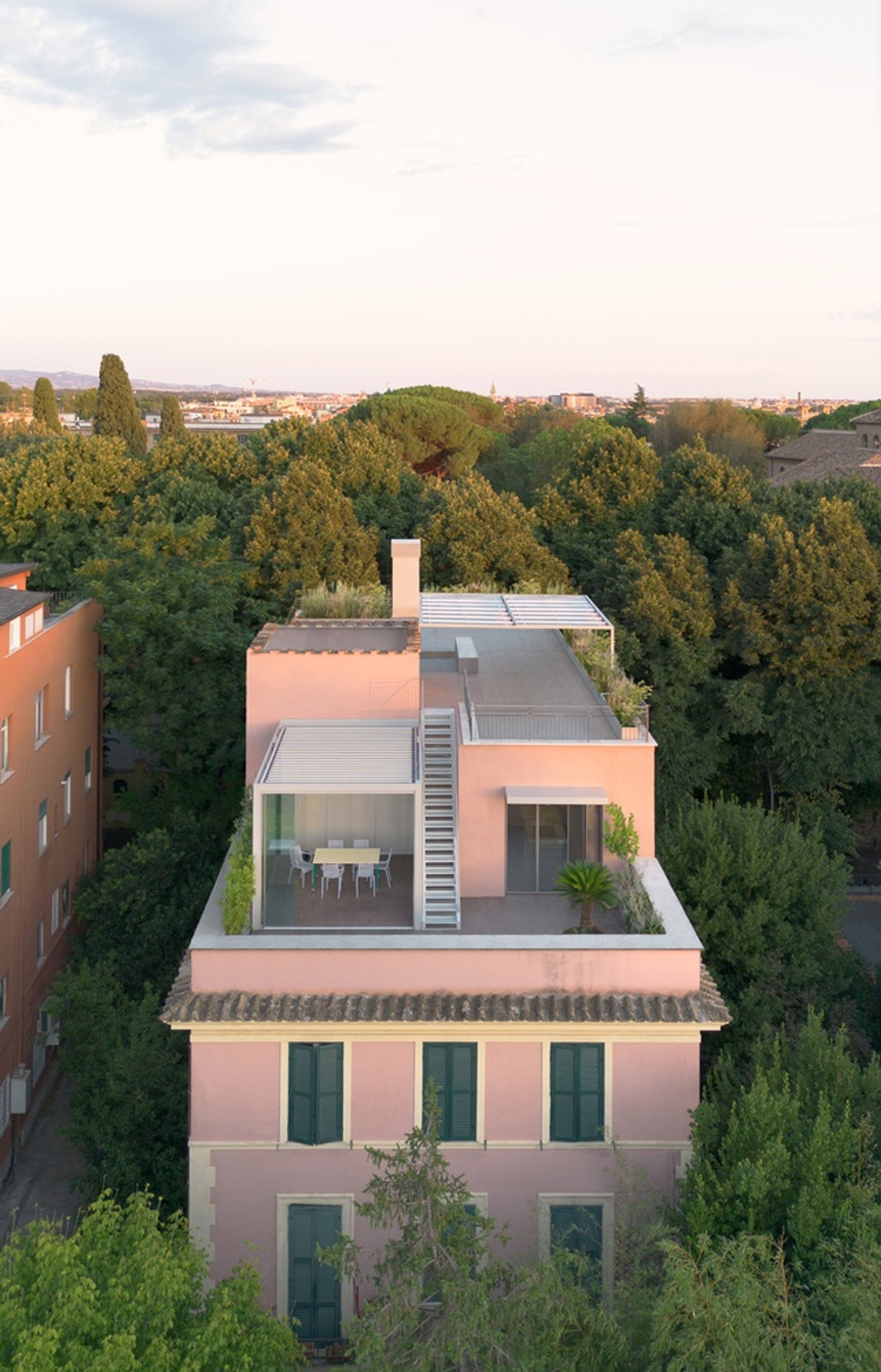
The San Saba House Extension is a masterful collaboration between Buenos Aires–based Adamo-Faiden and Rome–based Supervoid, transforming a five-story early 20th-century building into a contemporary residential landmark. Completed in 2023, this project balances historical preservation with modern design innovation, redefining urban living in the historic San Saba neighborhood of Rome.
Reimagining Historic Architecture
This project reinterprets the original early 20th-century structure while adapting it to modern lifestyles. By completely reconfiguring the apartment layout, the designers relocated the main living areas from the Via Flaminio Ponzio façade to a central internal terrace, creating a private, sunlit heart for the home. This intervention not only enhances the spatial flow but also maximizes connection with the surrounding landscape.
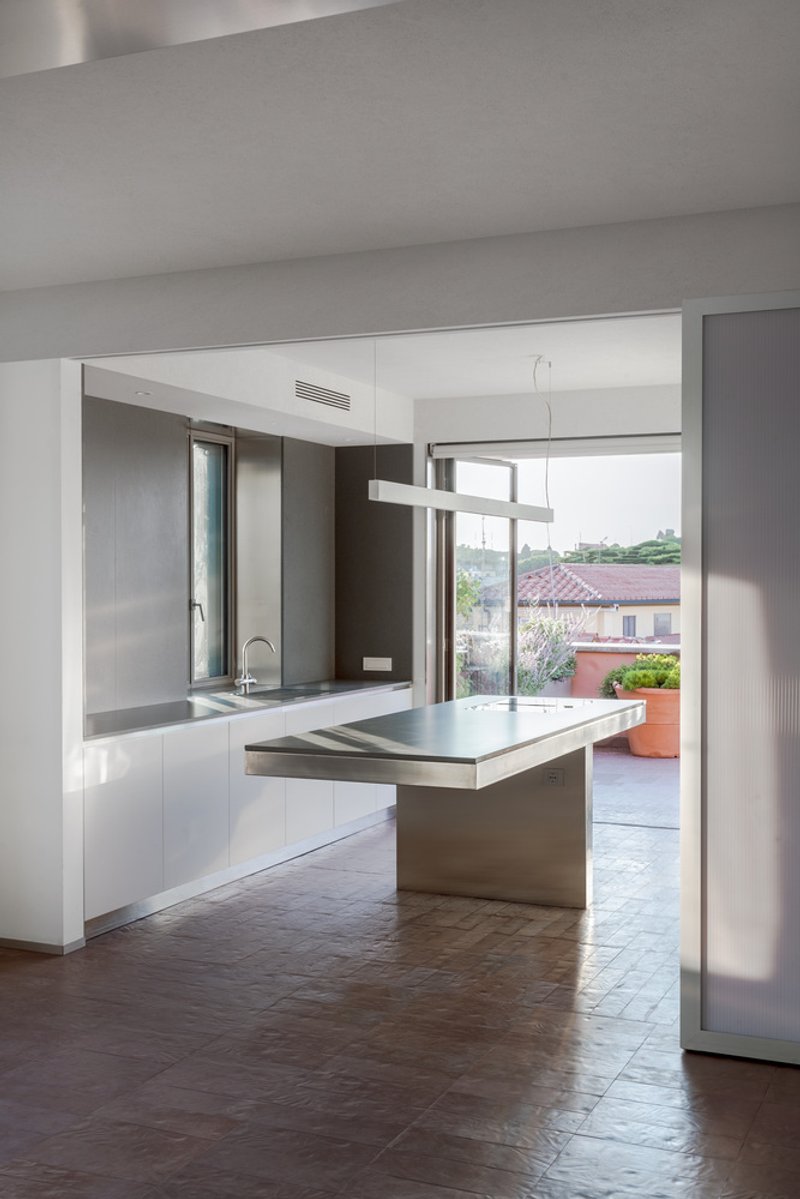
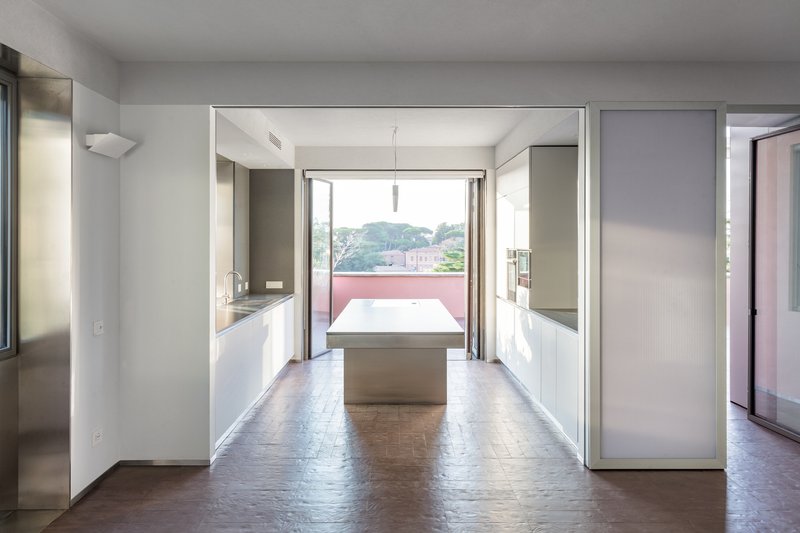
A large folding glass door links the kitchen to the terrace, creating a seamless indoor-outdoor experience and allowing natural light to permeate the living areas. The design emphasizes fluidity, openness, and the visual expansion of space, transforming everyday living into an immersive experience with nature.
Fluid Indoor-Outdoor Connection
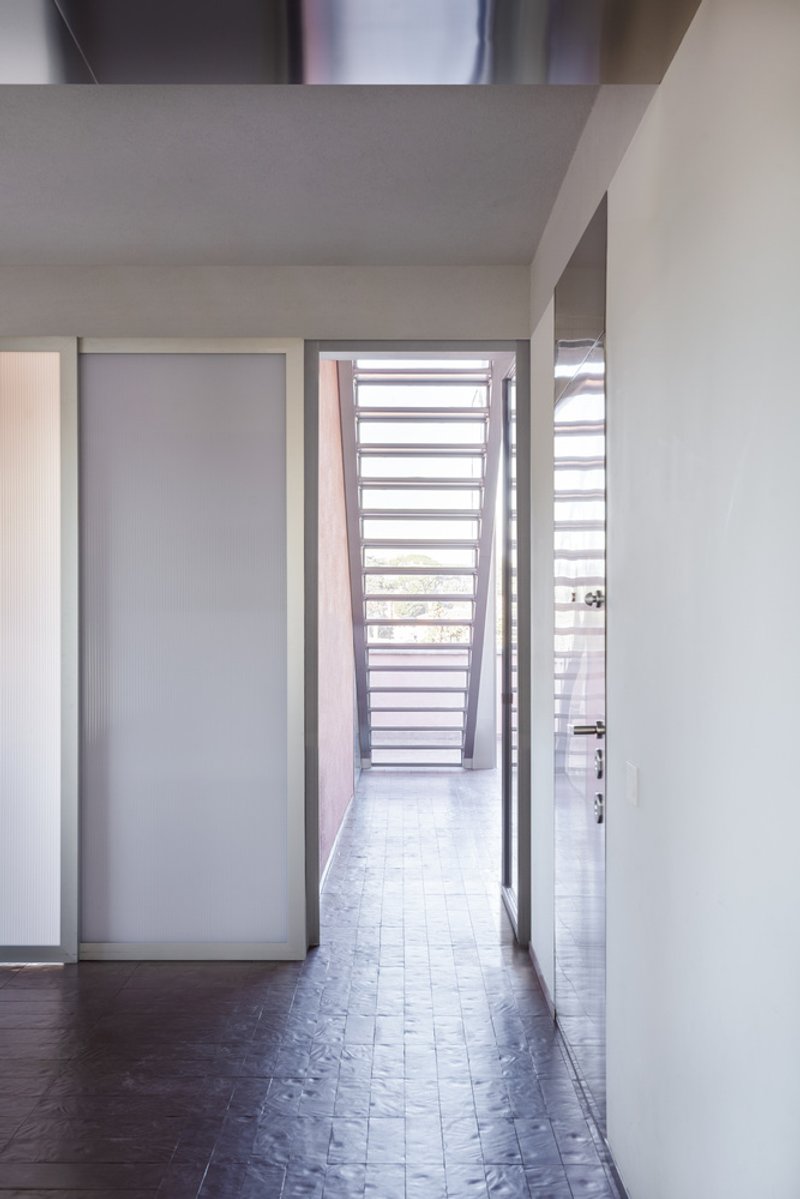
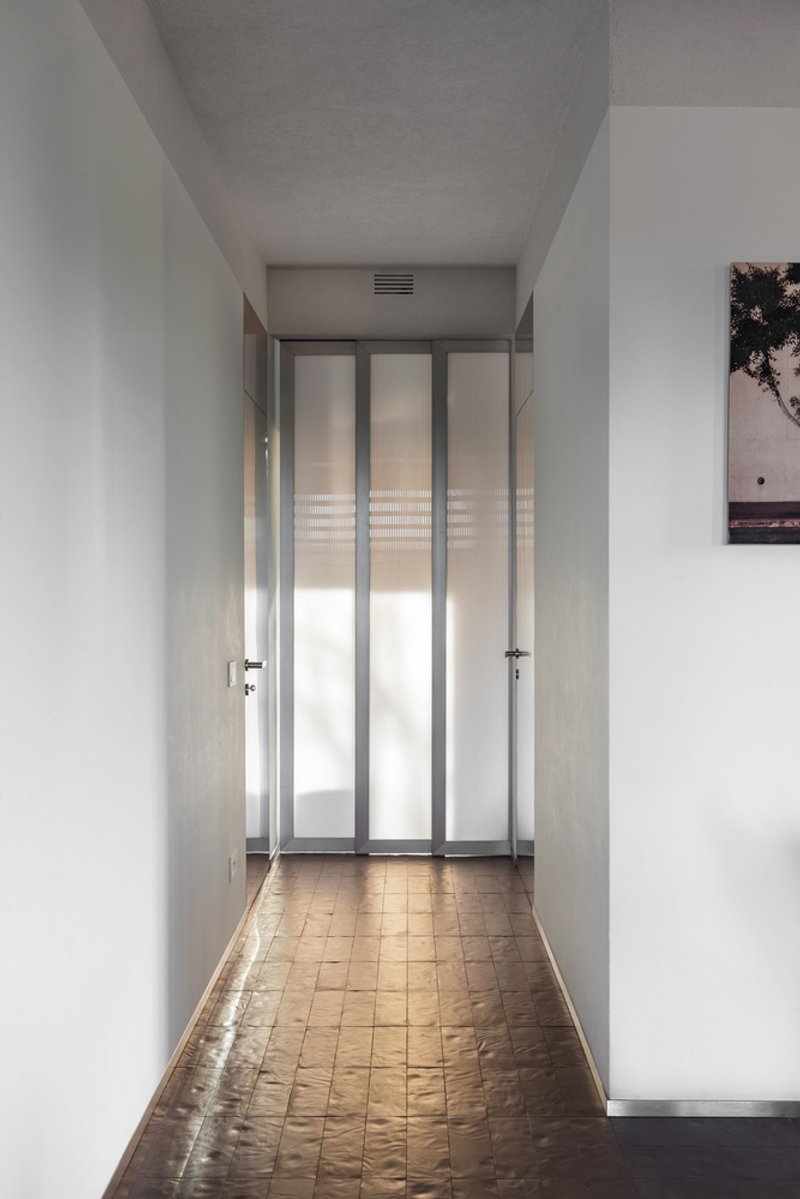
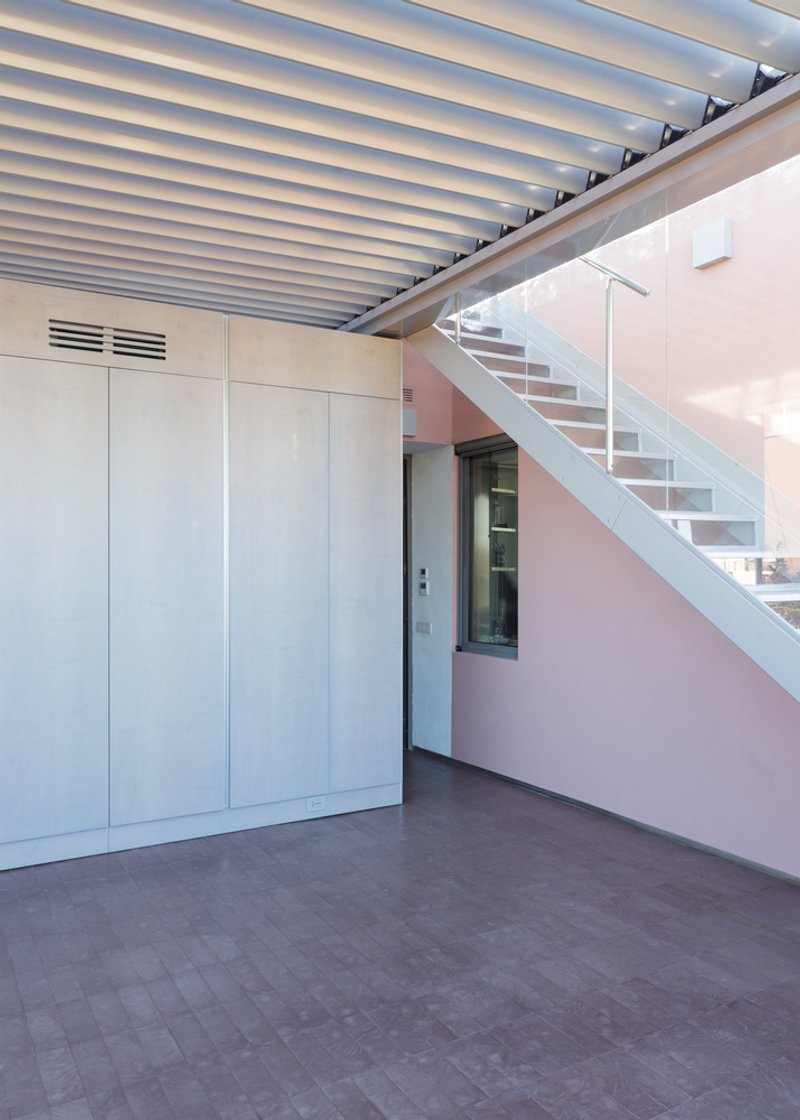
A newly designed external staircase, perfectly aligned with the building’s central axis, establishes a continuous dialogue between the interior and exterior. This connection unfolds through intermediate spaces framed by sleek metal structures and polycarbonate sliding doors, guiding movement while preserving transparency and light.
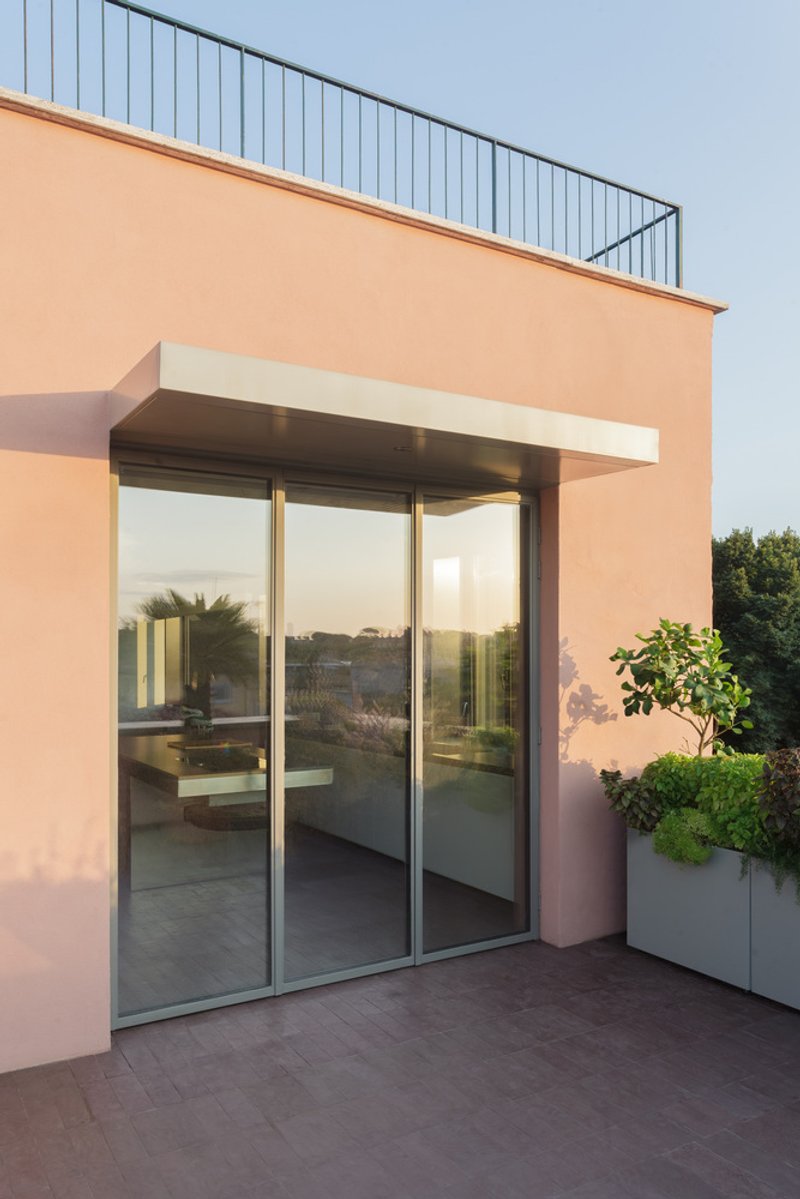
The terraces are conceived as a series of open-air rooms, framed with lush perimeter vegetation, which extends the living spaces into the landscape. These outdoor extensions create a dynamic interplay between private and communal areas, enhancing the sense of spatial continuity throughout the residence.
Materiality and Interior Design
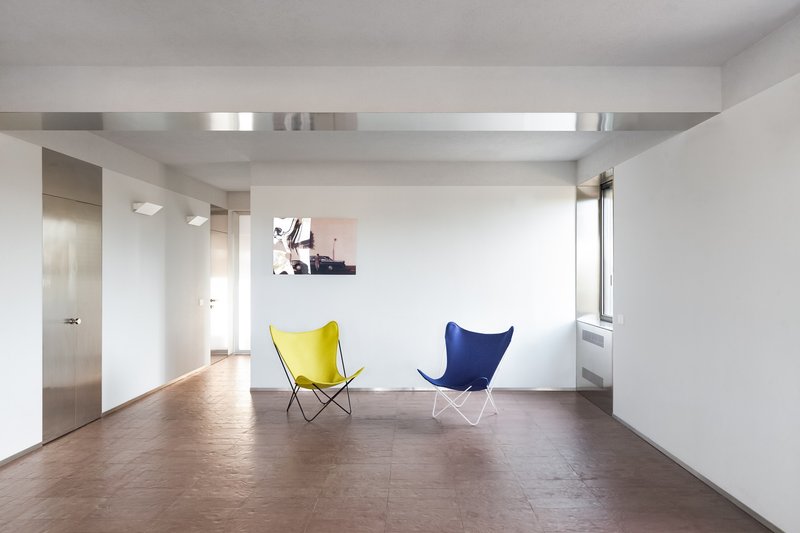
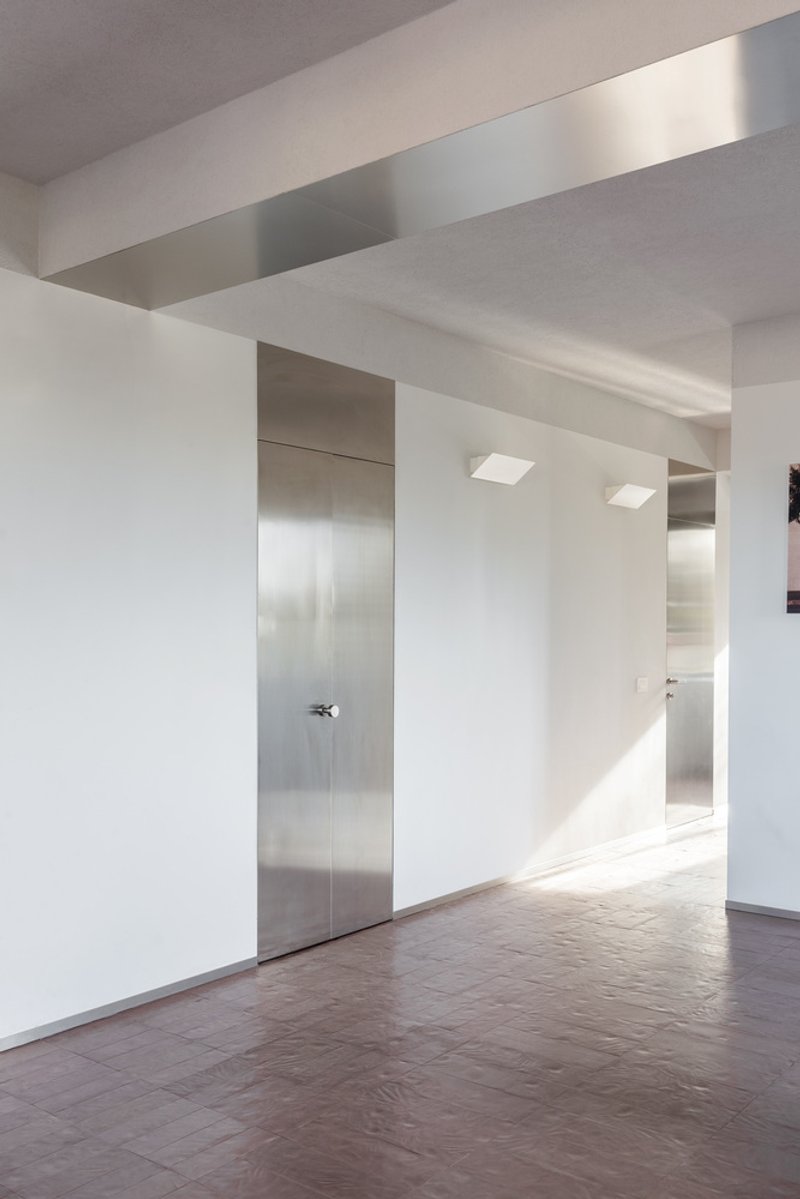
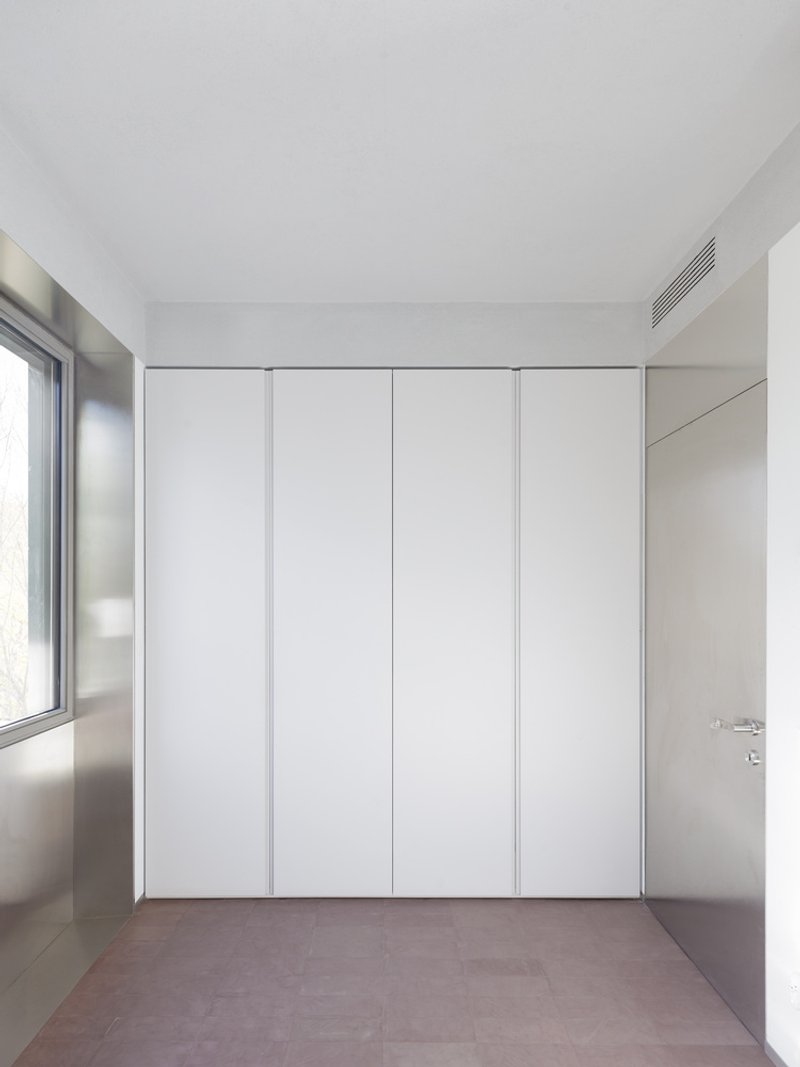
In stark contrast to the building’s thick brick walls, key interior elements—including doors, window frames, fan coil casings, the kitchen, and select furniture—are clad in steel sheet, creating a reflective, almost dematerialized effect that interacts subtly with natural light.
A handcrafted terracotta floor from Fornace De Martino in Salerno runs continuously across the main level, providing warmth, texture, and a tactile connection to the Mediterranean tradition of craftsmanship. Lighting by O/M Light - Osvaldo Matos further accentuates the spatial qualities, emphasizing textures, reflections, and architectural rhythm throughout the interior.
Contemporary Adaptation of Historic Urban Living
The San Saba House Extension exemplifies thoughtful adaptive reuse and contemporary refurbishment. By balancing historical architecture with modern interventions, the project demonstrates how urban residences can evolve to meet modern demands while respecting their heritage.
This extension not only enhances functional living but also enriches the architectural dialogue of Rome’s urban fabric. It highlights how innovative design strategies—careful spatial reconfiguration, material experimentation, and seamless indoor-outdoor integration—can transform historical residences into vibrant modern homes.




Popular Articles
Popular articles from the community

Fifth NRE Jazz Club – De Bever Architecten: Eindhoven’s Revitalized Cultural Hub
Historic gas factory transformed into Fifth NRE Jazz Club blending modern sustainability, jazz culture, dining, and heritage architecture seamlessly.

Free Architecture Competitions You Can Enter Right Now
No entry fees, real prizes. Here are the best free architecture competitions open for submissions in 2026.

Solar Steam: A Climate-Responsive Architecture That Redefines the Monument
A climate-responsive memorial architecture that transforms heat, decay, and time into a living system reflecting humanity’s ecological impact.
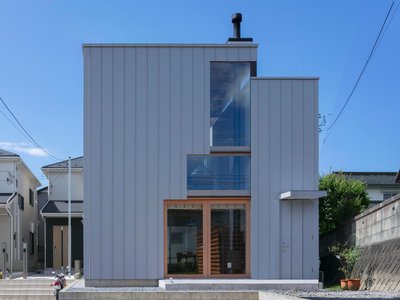
Split House: A Compact Urban Home Blending Privacy, Light, and Flexible Living in Japan
Compact Japanese home featuring DOMA space, flexible café potential, passive lighting, privacy zoning, and sustainable urban living design.

Similar Reads
You might also enjoy these articles


The Ken Roberts Memorial Delineation Competition (Krob)
As the most senior architectural drawing competition currently in operation anywhere in the world, it draws hundreds of entries each year, awarding the very best submissions in a series of medium-based categories.
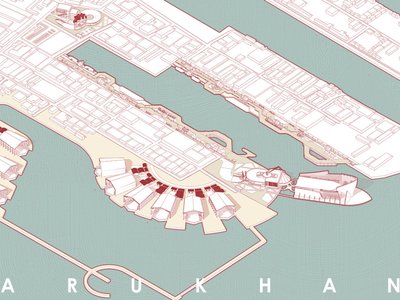
Waterfront Redevelopment and Urban Revitalization in Mumbai: Forging a New Dawn for Darukhana
A transformative waterfront redevelopment project reimagining Darukhana’s shipbreaking heritage into an inclusive urban future.

OUT-OF-MAP: A Call for Postcards on Feminist Narratives of Public Space
Rhizoma Design and Research Lab invites artists, designers, architects, researchers, and students to reflect on how feminist perspectives can reshape public space. Selected works will be exhibited in Barcelona, October 2026. Submissions open until 15 April 2026.


Documentation Work on Buddhist Wooden Temple
Architectural syncretism and cultural hybridity: A comparative study of the Buddhist temples in Chattogram Hill tracks


Explore Architecture Competitions
Discover active competitions in this discipline




The International Standard for Design Portfolios


The Global Benchmark for Architecture Dissertation Awards


The Global Benchmark for Graduation Excellence


Challenge to reimagine the Iron Throne
Comments (0)
Please login or sign up to add comments
No comments yet. Be the first to comment!