

Sherpa Strips a Seoul Brick Building Back to Its Bones for Vonzrr Café
In Seodaemun-gu, a two-storey café finds calm by refusing concept and embracing the beauty of existing imperfections.


There is a particular kind of restraint that takes more nerve than spectacle. In a city where café design has become a competitive sport of bold concepts and Instagram bait, Sherpa went the other direction with Vonzrr Café. Tucked into an existing red brick building on Yeonhui-ro in Seoul's Seodaemun-gu district, the project begins from a clear conviction: too much concept makes people uncomfortable. Rather than layering on a theme, the studio peeled back to the building's original character and then furnished it with a quiet vocabulary of white oak, veneer, and natural light.
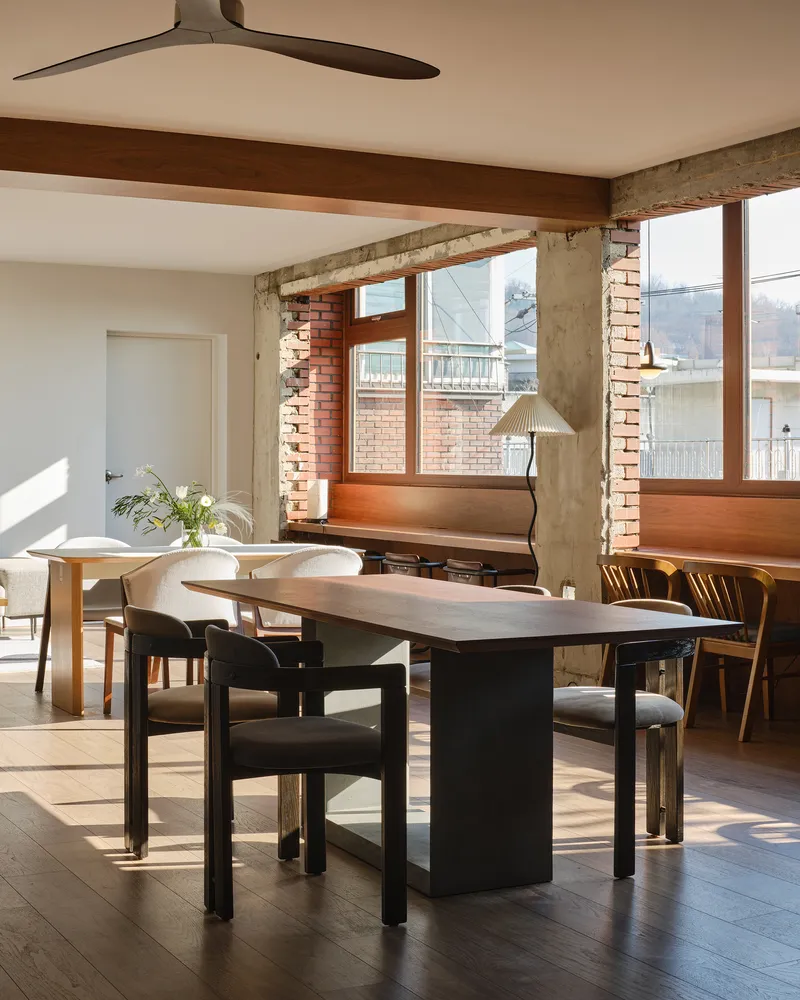
What makes the 198 square metre space worth studying is the method of that restraint. Sherpa did not renovate the building into anonymity. They exposed its imperfections, left the concrete ceilings raw, kept the red brick columns visible, and wired in subtle lighting that makes the existing structure feel deliberate rather than neglected. The result is a café that functions like a living room: a place built for drinking, resting, talking, and working, where the architecture recedes so the activities can come forward.
Brick, Concrete, and the Value of Not Hiding
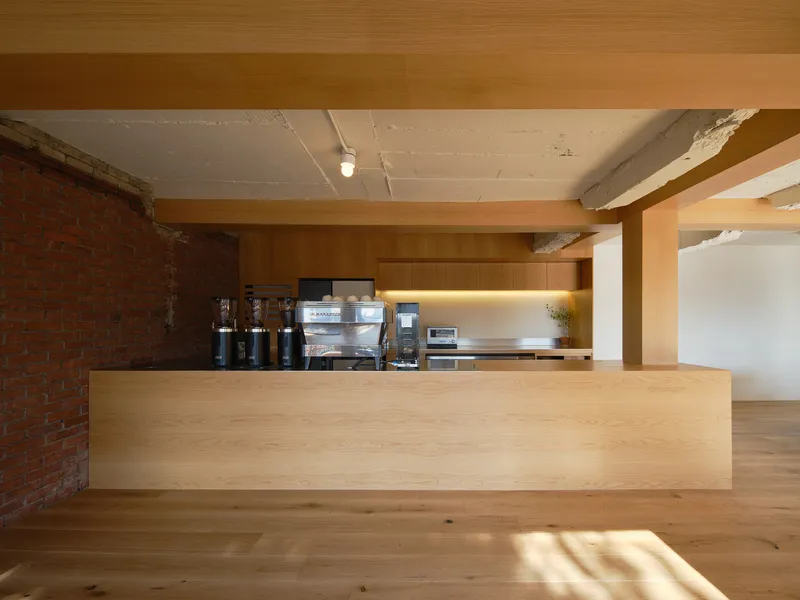
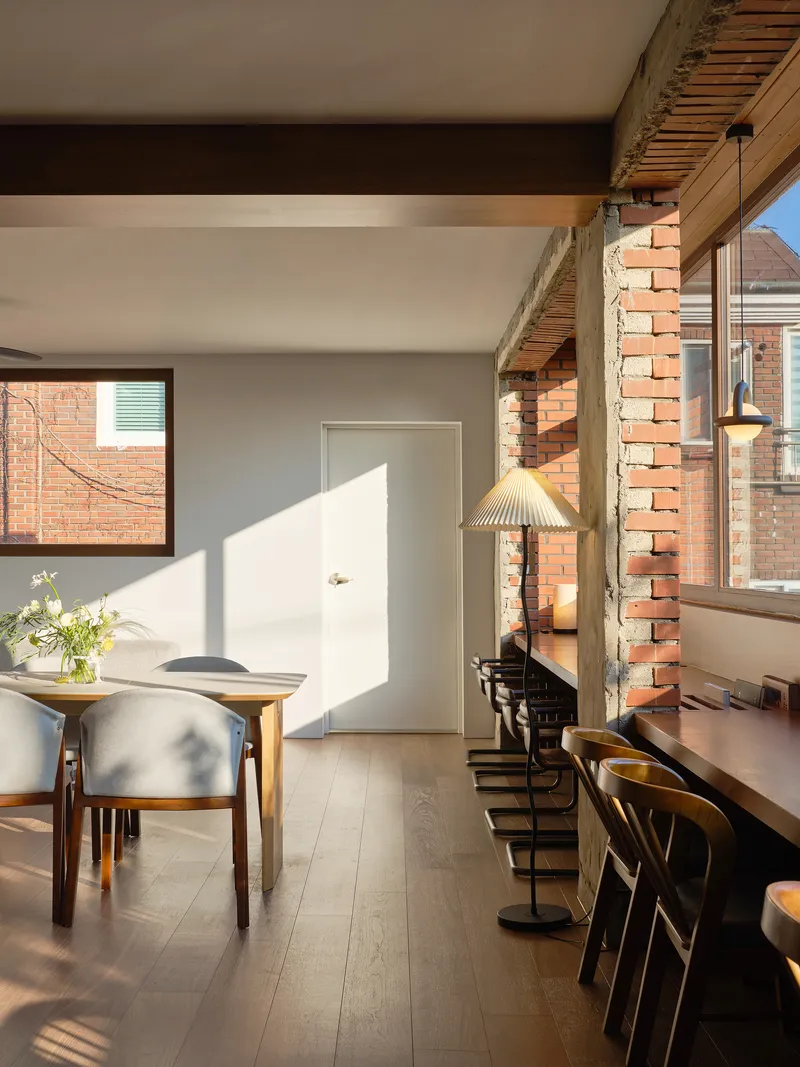
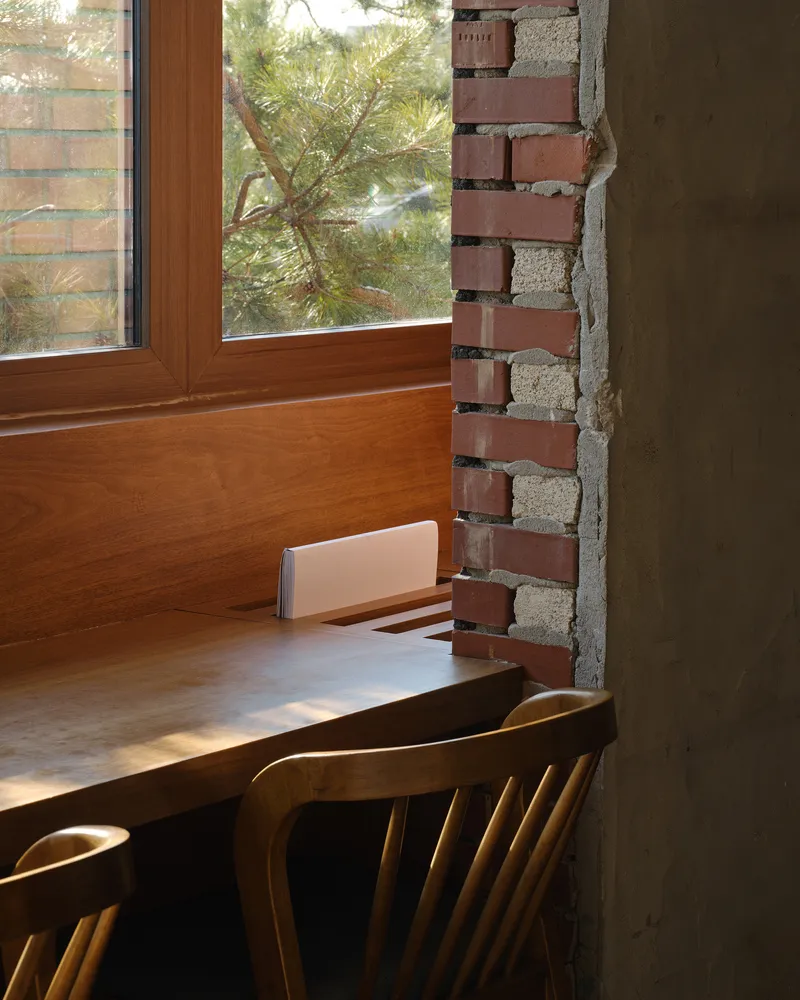
The existing building's red brick and poured concrete are the dominant materials, and Sherpa treats them less as finishes than as found objects. Mortar joints are left unpointed in places, the concrete ceiling beams show their formwork grain, and the brick columns stand as structural artifacts rather than decorative accents. It is a deliberate refusal to polish.
Against this rough backdrop, the timber insertions read clearly. The service counter sits against a full-height brick wall, its light oak surface sharp and clean. The effect is one of careful contrast: warm wood mediating between the patron and the building's industrial past, never competing with it.
The Forecourt and Its Pine Tree
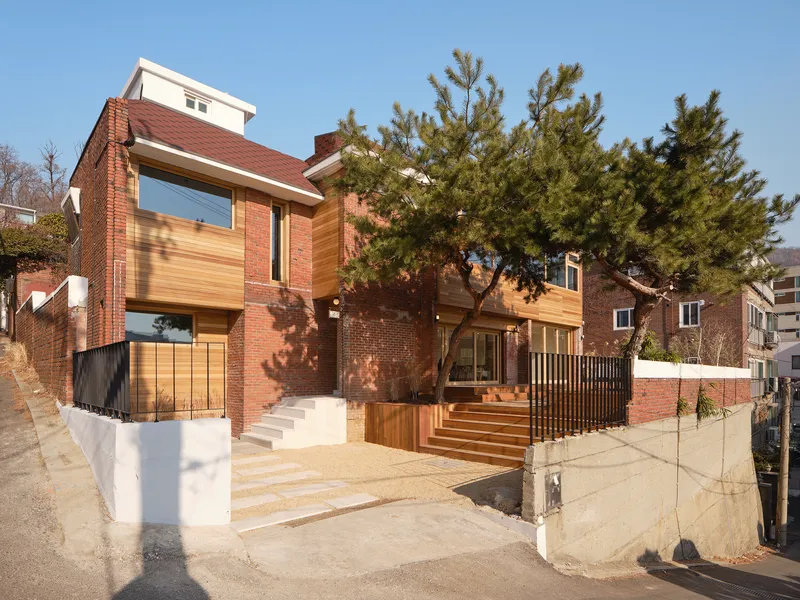
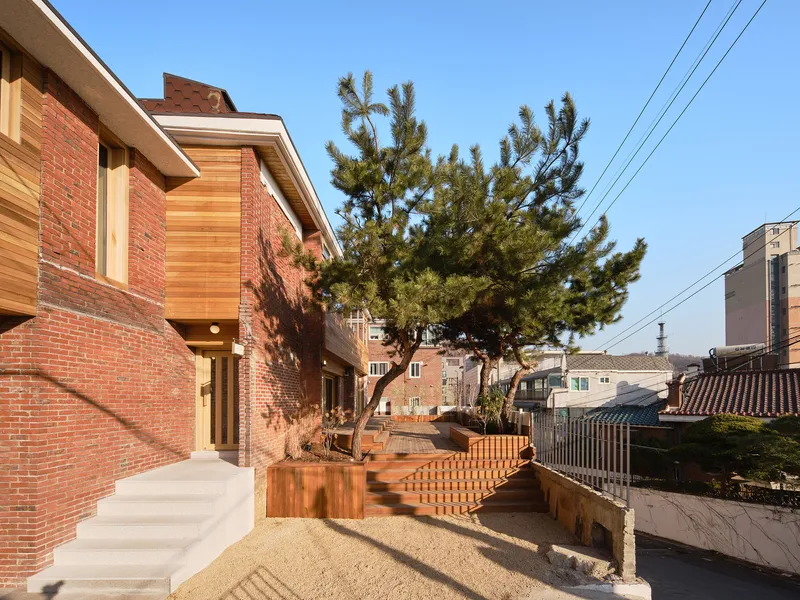
At street level, a mature pine tree anchors the approach. Sherpa built tiered timber decking around it, creating an outdoor threshold that is part courtyard, part entrance sequence. The tree is not ornamental; it is structural to the experience of arriving, forcing you to slow down before you cross into the interior.
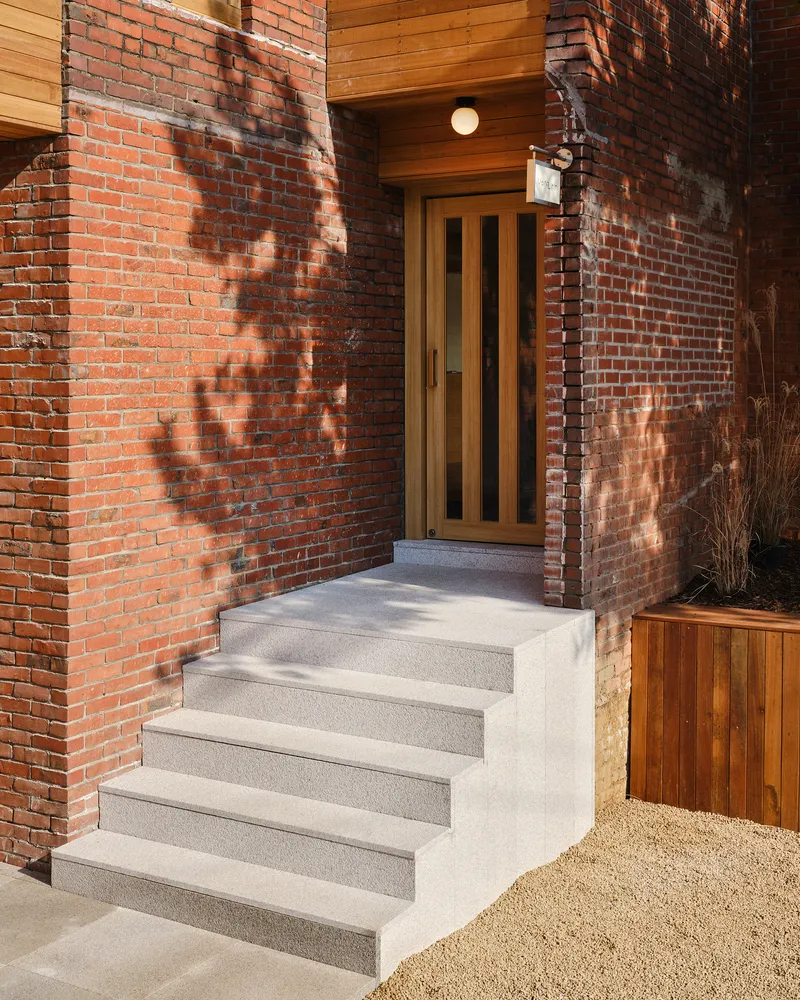
The poured concrete entry stair against weathered brick is the project's most telling detail. There is no attempt to match old and new. The concrete is unapologetically fresh against the aged wall, and the honesty of that juxtaposition sets the tone for everything inside. The building's age is not a problem to solve; it is the primary asset.
A Residential Calm Across Two Floors
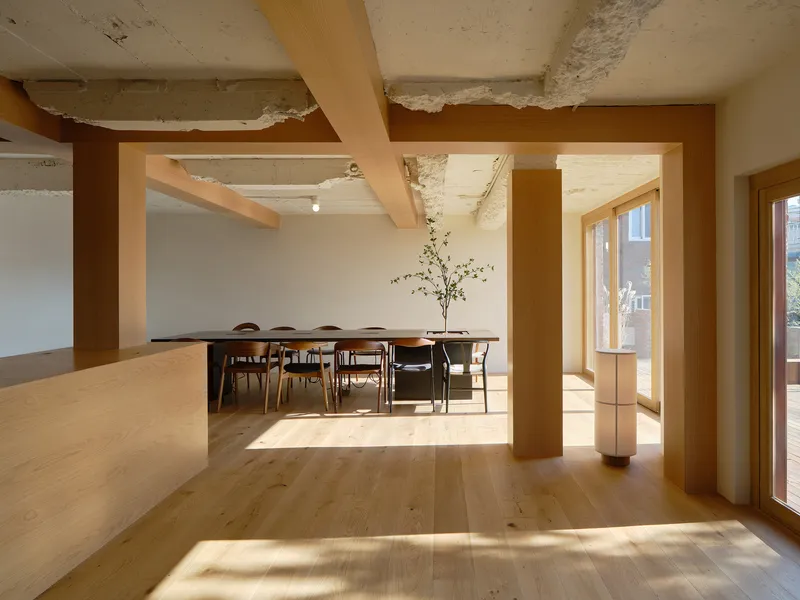
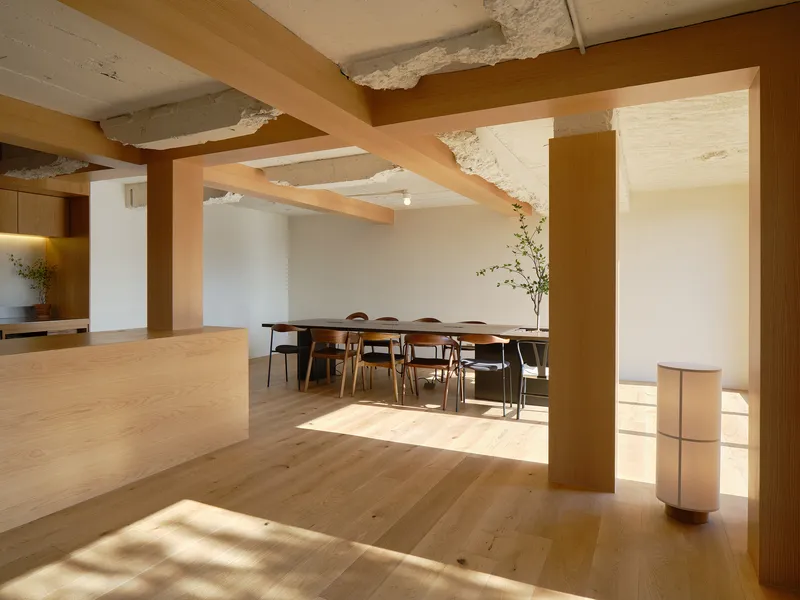
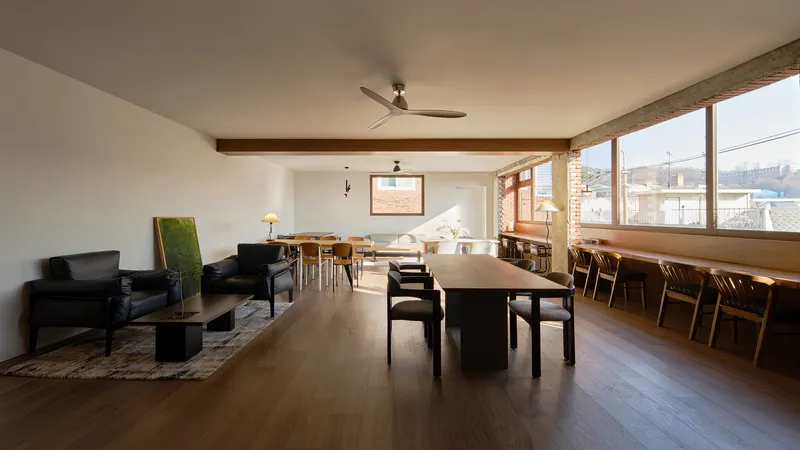
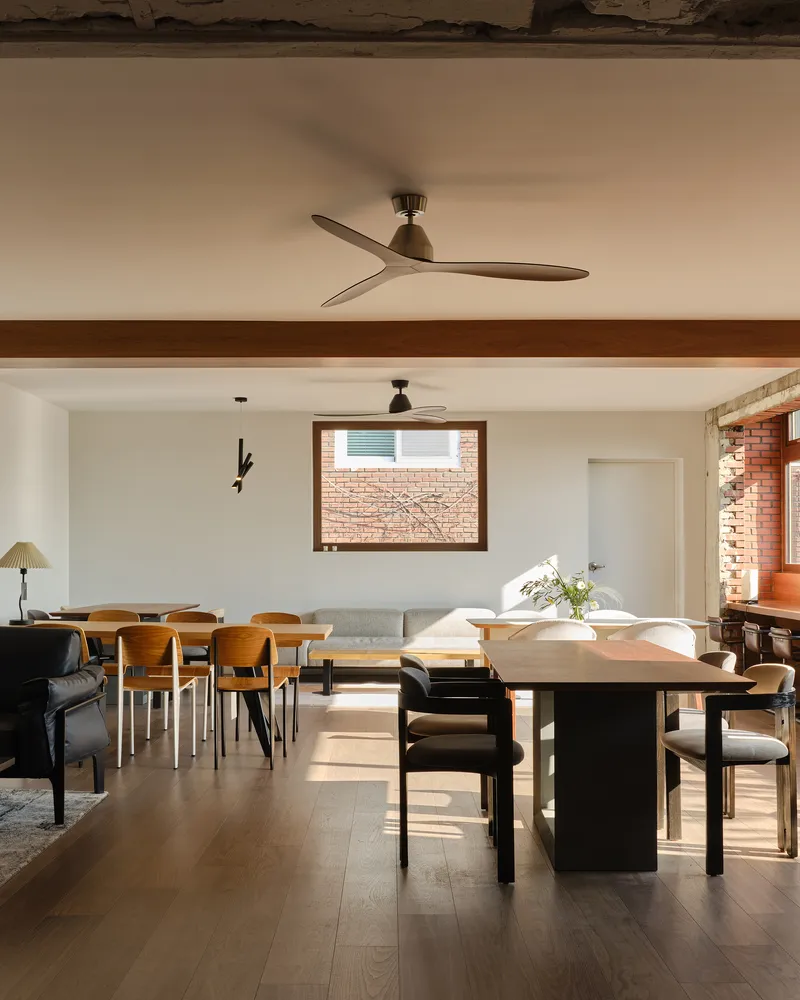
Sherpa describes the atmosphere as residential, and the open plan of both floors bears that out. On the ground level, timber columns frame a dining area beneath exposed concrete beams with afternoon light pooling across the white oak floor. Upstairs, ribbon windows overlook neighboring rooftops, and a long brick wall anchors the room. The proportions feel domestic, not commercial.
The seating arrangements are deliberately varied. Window seats, freestanding tables, counter perches: none are identical, and none demand a particular behavior. You can work here, or you can do nothing. The architecture provides options without prescribing a mood, which is the whole point of minimizing what Sherpa calls "space individuality."
The Staircase as Threshold
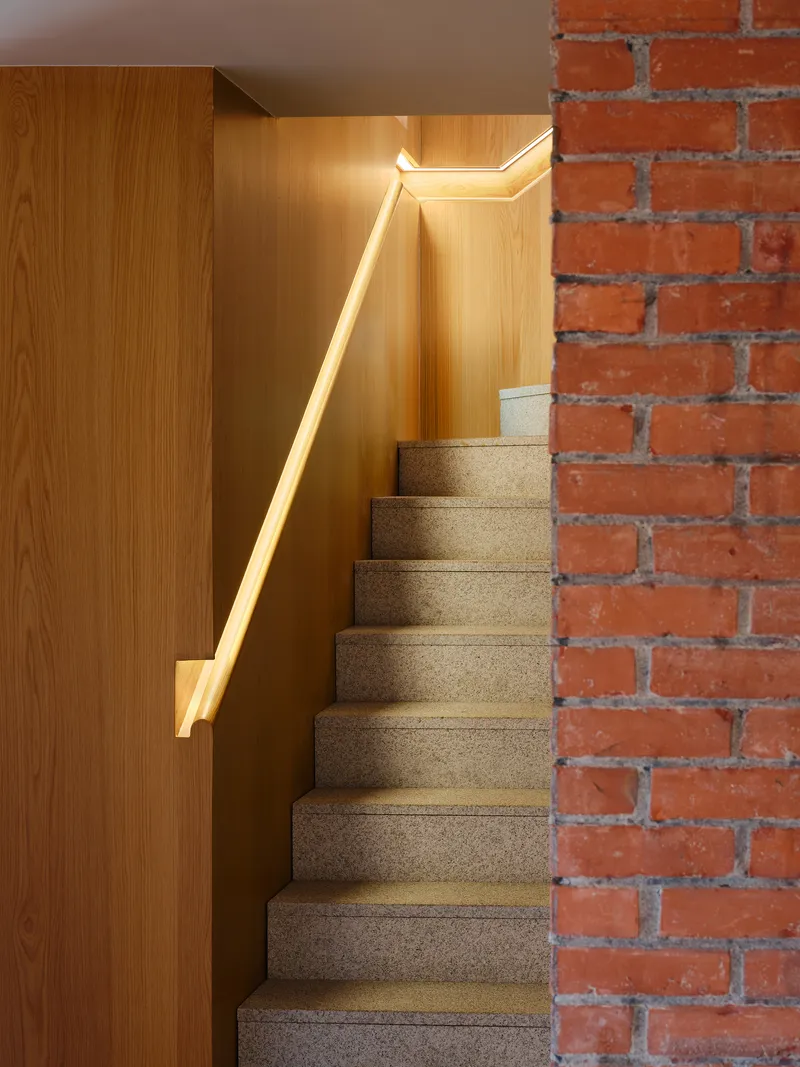
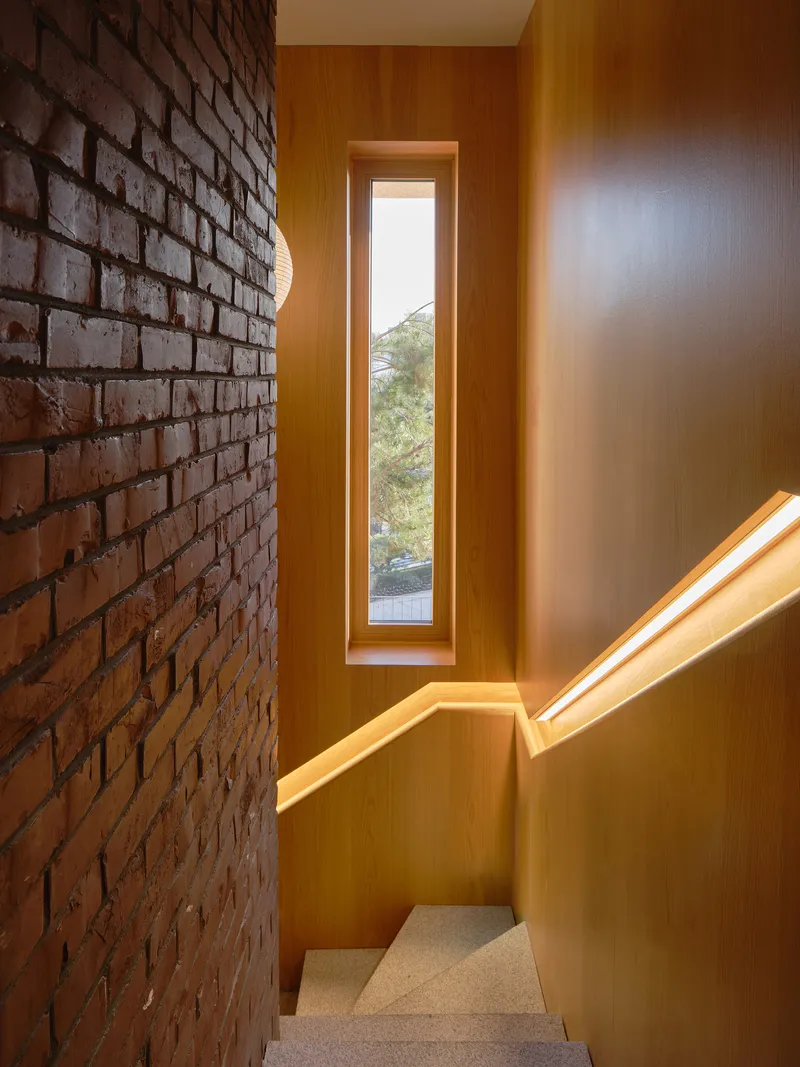
The stair connecting the two floors does more than circulate. It transitions moods. Built in terrazzo with a down-lit recess that doubles as handrail lighting, it manages to feel both substantial and weightless. The recess eliminates the visual clutter of a traditional handrail while providing a practical guide, a small move that has an outsized effect on the sensation of moving between levels.
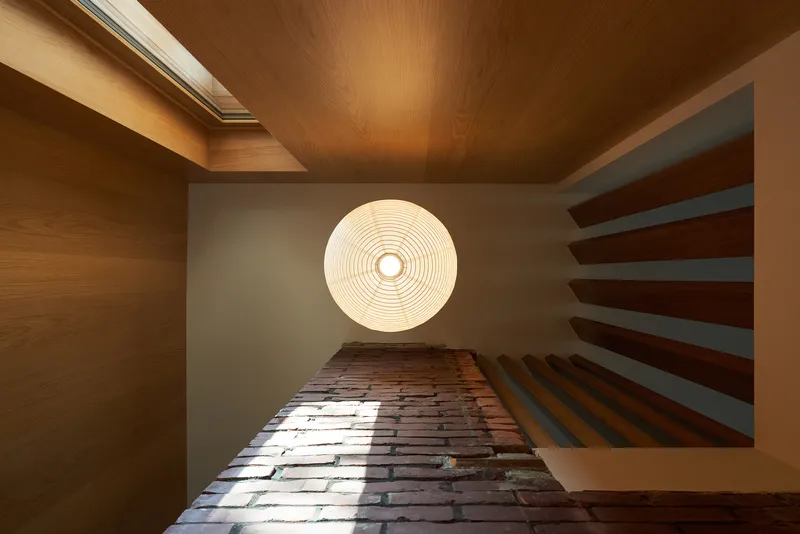
Narrow vertical windows in the stairwell frame slices of exterior greenery, pulling the courtyard pine and surrounding vegetation into the vertical circulation. Looking up through alternating timber treads toward a circular ceiling fixture, the stair becomes almost contemplative. It is the most designed moment in the building, and it earns its attention because the rest of the space is so restrained.
Veneer, Light, and Built-In Furnishings
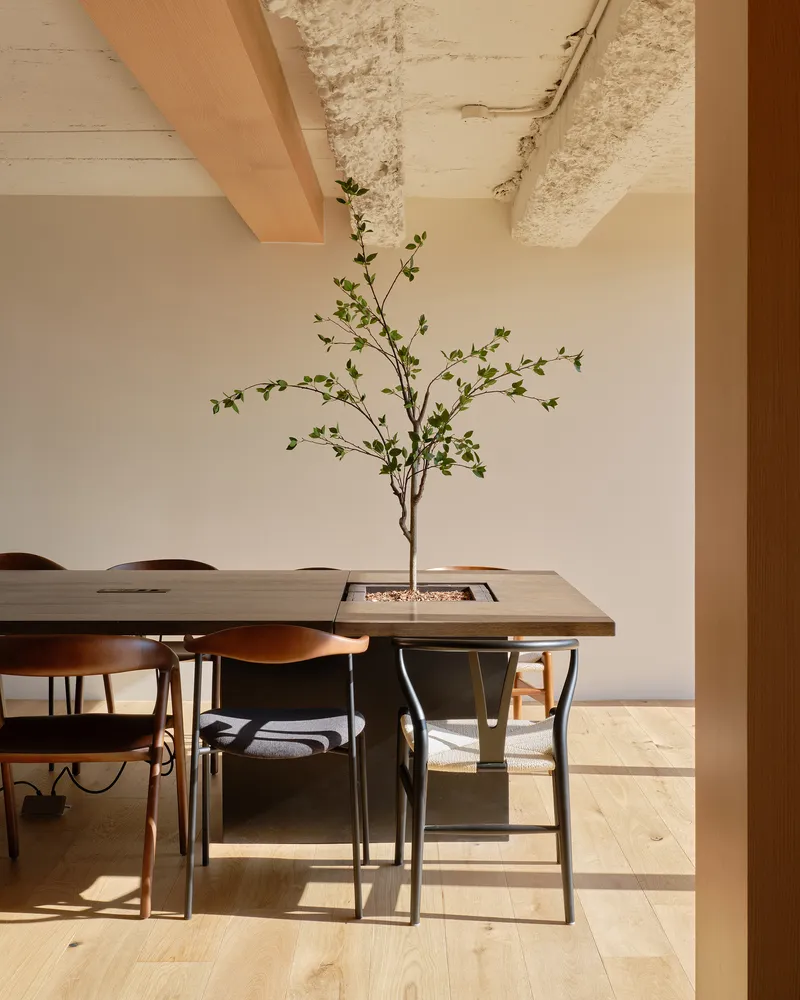
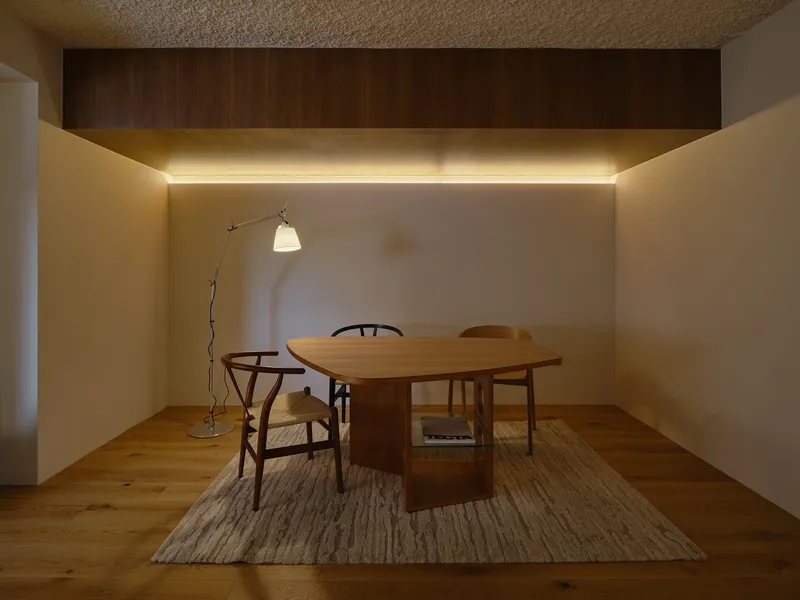
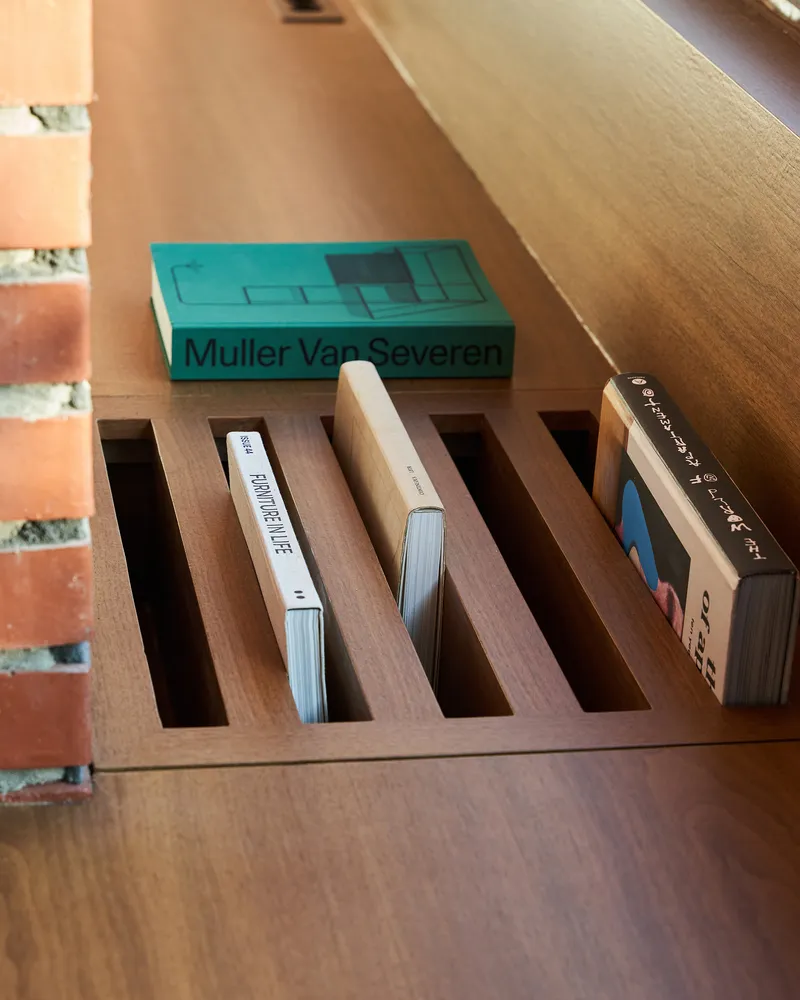
Veneer is the workhorse finish here, applied to tables, ceiling panels, and custom shelving. A slotted bookshelf beside a brick wall holds its own without calling attention to its craft; a recessed timber ceiling panel frames a small dining nook with cove lighting for evening use. These are bespoke furnishings that look inevitable rather than designed, which is always harder to achieve than it appears.
A dining table with an integrated planter and branch centerpiece sits beneath the bare concrete ceiling. It is the kind of detail that could tip into preciousness, but the rawness of the ceiling overhead keeps it grounded. Sherpa consistently uses this counterbalance: a refined element paired with something unfinished, so neither dominates.
Screens, Shadows, and After Dark
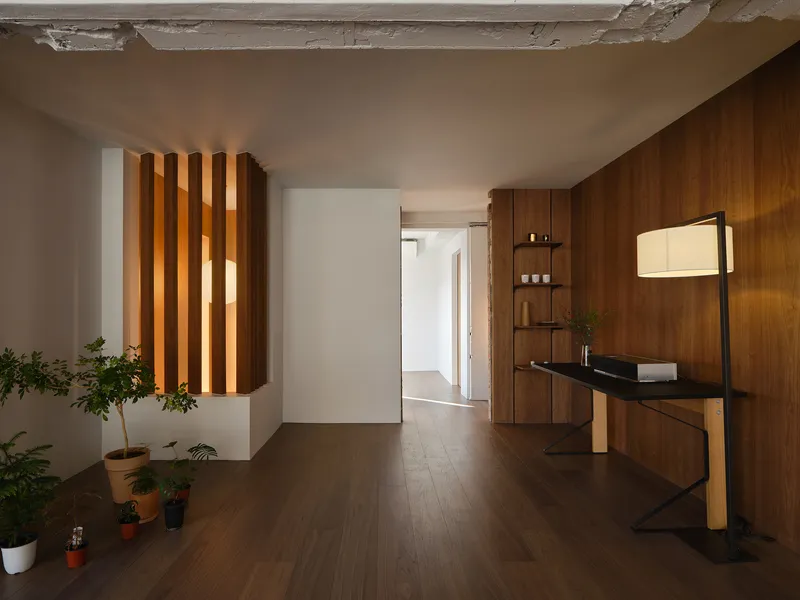
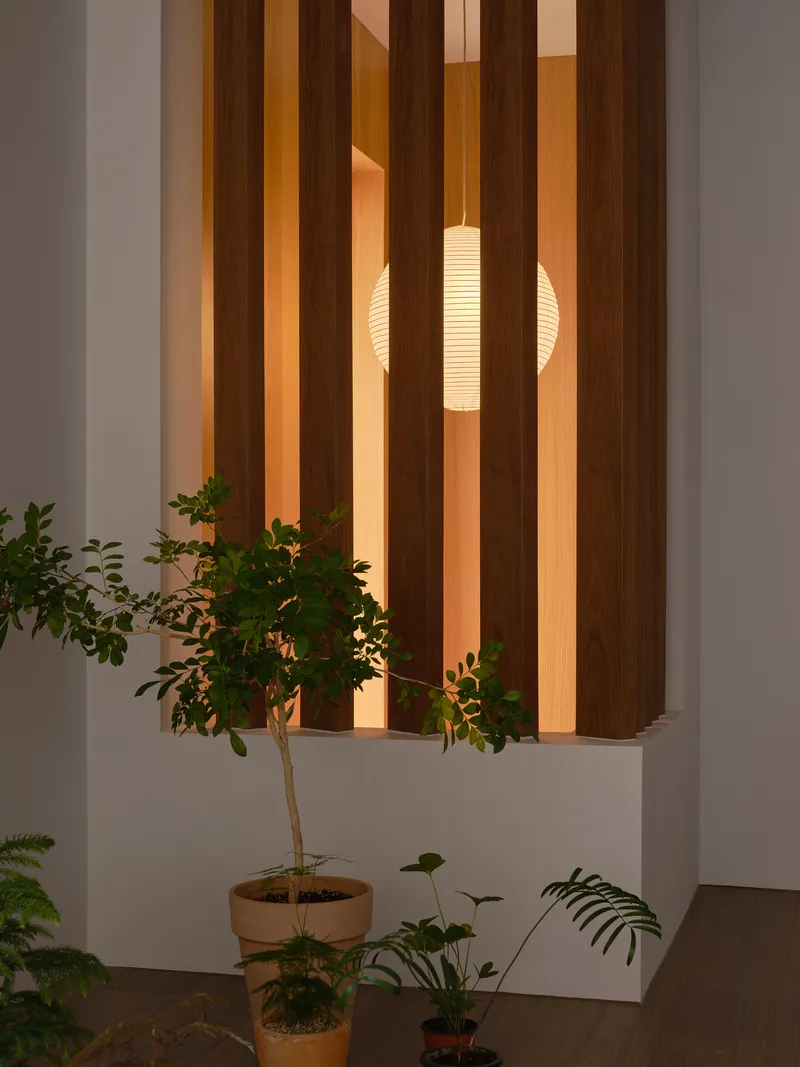
Vertical timber slat screens with warm backlighting appear at key interior transitions, casting linear shadows that shift through the day. At night, the effect intensifies: paper lanterns glow behind potted greenery, and the walnut paneling takes on a deeper warmth. The café is clearly designed to work in two registers, daylight and evening, and neither feels like an afterthought.
Horizontal timber trim beneath the upper-floor brick wall frames a window with quiet precision. The detailing is minimal but specific, holding the line between raw structure and habitable warmth. It is the kind of millwork that disappears if you are not looking for it, which is exactly where good café architecture should live.
Context and Roofscape
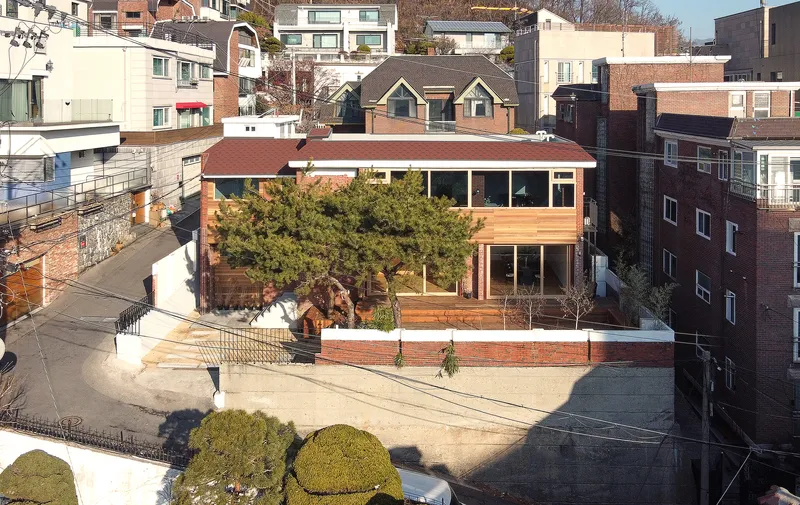
From above, the flat-roofed building sits modestly among its residential neighbors. It does not announce itself as a café from the roofline; it reads as a house, which reinforces Sherpa's residential intent. The surrounding context of low-rise Seoul housing provides a texture of lived-in normalcy that the interior absorbs rather than resists.
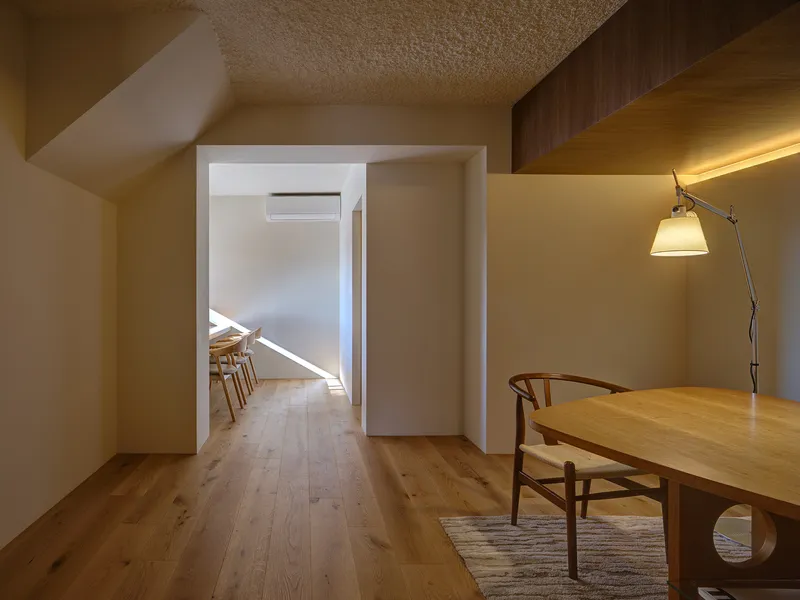
Inside, sloped hallway ceilings and brick-pier window seats give the second floor an attic-like intimacy. Morning light through the east-facing windows catches the oak flooring at a low angle, and the exposed brick piers cast long, defined shadows. These are not designed moments; they are consequences of accepting the building as it is.
Why This Project Matters
Vonzrr Café matters because it demonstrates that concept-driven design is not the only route to a memorable commercial interior. In Seoul's saturated café market, where thematic excess is the norm, Sherpa's refusal to impose a narrative on the space is itself a position. The building's imperfections are not tolerated; they are the design. That distinction is critical. It shifts the conversation from "what look are we going for" to "what does this building already want to be," and the answer here is a calm, materially honest room where people can simply be.
For designers working on adaptive reuse at the small commercial scale, the project offers a practical lesson in economy. Veneer, white oak floors, strategic lighting, and the discipline to leave brick and concrete alone accomplish more than a full renovation would. The budget is in the editing, not the adding. That is a harder sell to most clients, and a harder skill for most architects, which is exactly why the result deserves attention.
Vonzrr Café by Sherpa. Located in Seodaemun-gu, Seoul, South Korea. 198 m². Completed in 2023. Photography by In and Out.
About the Studio
Share Your Own Work on uni.xyz
If projects like this are the kind of work you want to make, uni.xyz is a place to publish your own, find collaborators, and enter design competitions.


Popular Articles
Popular articles from the community


David Ortega Stacks a Two-Story Mexico City Penthouse Around a Steel Stair and a Pergola-Shaded Roof Terrace
In Colonia Roma, a 300 m² penthouse uses oak joinery, a planted steel stair and a slatted roof pergola to make a new-build apartment feel like a house.

Jaramillo Van Sluys Arquitectura and Urbanismo Turn a Demolished Registry Lot in Quito into an Orchard Plaza
In Quito's Centro Histórico, a 2,800 m² plaza exposes the San Agustín convent wall and redraws its lost Augustinian orchard in volcanic stone.

U.GA Architects Wraps an Oval Rooftop Pool in Curved Board-Formed Concrete on Busan's Jeollidan-gil
In Busan's Jeonpo-dong, a 454 m² mixed-use block stacks a neighborhood facility, guest rooms and an oval rooftop pool inside spiraling concrete walls.

Architekt Andreas Gruber Scatters 23 Dark Timber Chalets Across a South Tyrolean Forest Edge
In Molini di Tures, Amonti Chalets breaks a resort into a hamlet of gabled timber houses, with parking, storage and services pushed into the slope.

Similar Reads
You might also enjoy these articles


LAVA Architecten Gives Vocational Education a Sawtooth-Roofed Face on a Mechelen School Campus
In Mechelen, Belgium, a 2,053 m² STEM school on a 6×6 m grid turns workshops and classrooms into rooms that can be rearranged as teaching changes.

KEMA Studio Turns a Derelict Marvila Attic into a 60 m² Lighthouse Apartment Above Lisbon
In Lisbon's Marvila district, a rebuilt roof, four skylights and two plywood volumes turn an unlivable attic into a bright home facing the Tagus.

Pixel Gardens: One Repeated Module Stacked Into a Terraced Social Housing Tower for Famagusta
Salem Bader's shortlisted housing tower builds a vertical neighbourhood from one repeated module, offsetting units to carve terraces, light and air.

Bao Huynh Watercolor Atelier: A Serene Art Retreat in Hội An
Bao Huynh Watercolor Atelier in Hội An blends multifunctional art spaces, sustainable design, local materials, and family-friendly living in a serene environment.

Explore Cafe Competitions
Discover active competitions in this discipline

Challenge to design luxury tourism on rails

VR headsets Storefront design competition

Designing a staircase for a client
Comments (0)
Please login or sign up to add comments
No comments yet. Be the first to comment!