

Solhagaparken Residential Complex: A Sustainable Urban Living Solution by Murman Arkitekter
Solhagaparken Residential Complex by Murman Arkitekter blends sustainable materials, modern design, and urban connectivity for efficient, eco-friendly living in Stockholm.


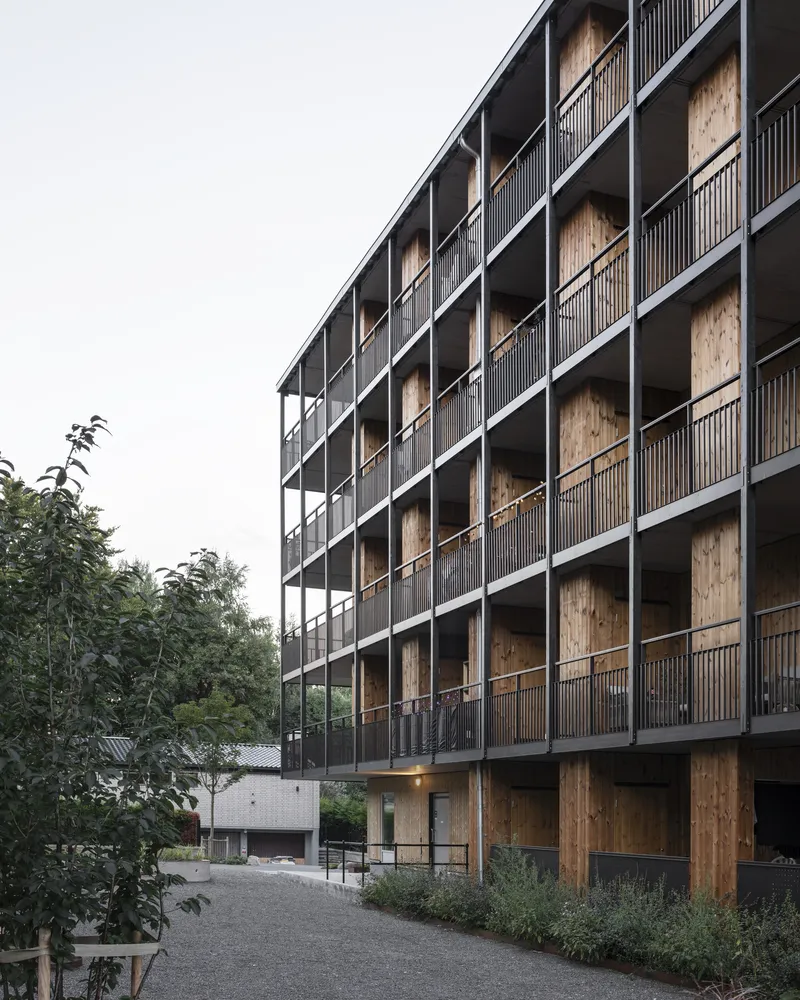
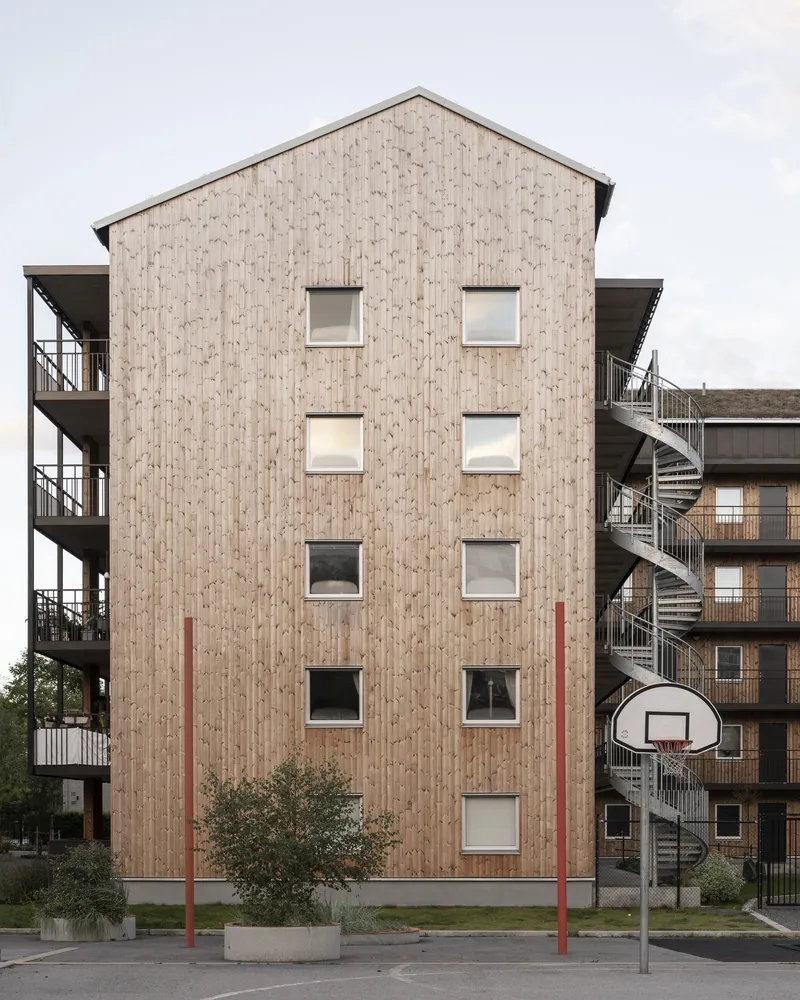
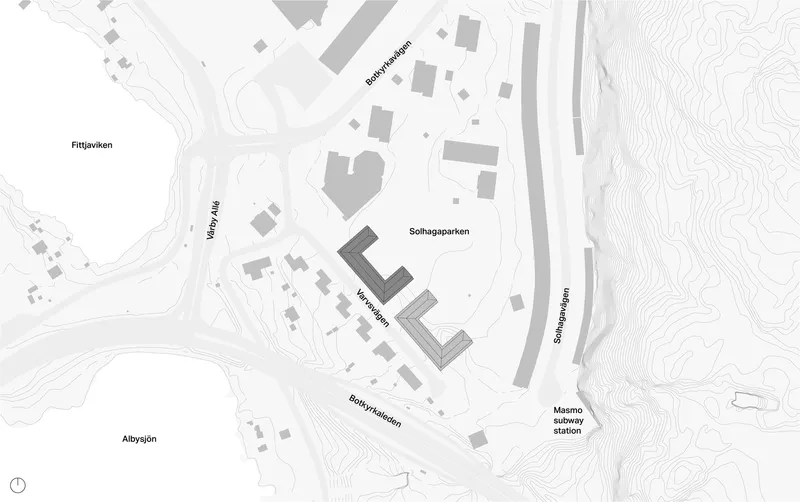
Located in Masmo, Vårby, Sweden, the Solhagaparken Residential Complex is a contemporary housing project designed by Murman Arkitekter. Completed in 2021, this five-story development spans 5,120 square meters and integrates seamlessly with the surrounding landscape, offering modern, sustainable living near Stockholm.
Urban Context and Architectural Integration
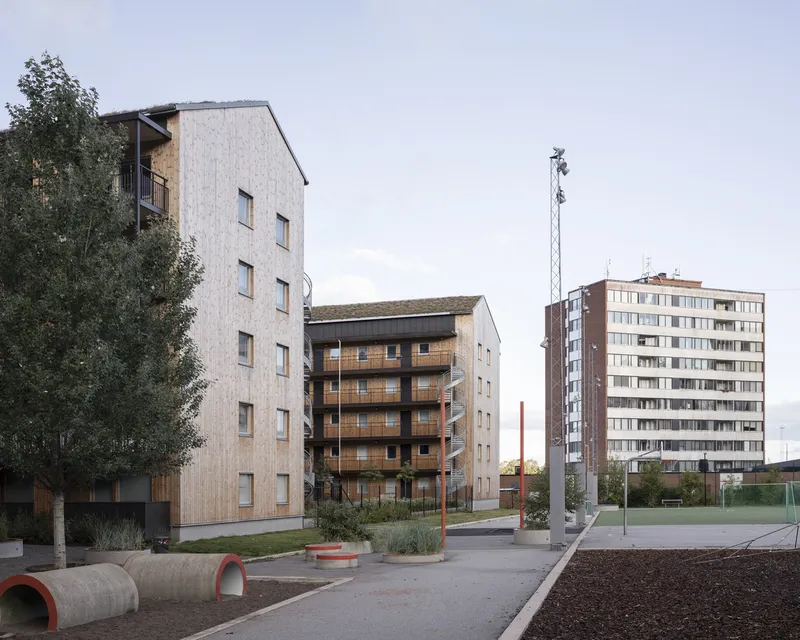
Masmo, a suburb approximately 20 kilometers south of Stockholm, is known for its mix of modernist architecture, lush green spaces, and efficient public transport links. The area, originally developed in 1964, features large red brick apartment buildings surrounding Solhagaparken, a central green hub. The new residential complex respects the area's existing urban fabric while introducing contemporary design elements that enhance the neighborhood’s livability.
Bordered by Botkyrkaleden and Södertäljevägen highways, Masmo presents a dynamic urban environment with contrasting landscapes—from the steep Masmoberget slopes to the westward waterways connecting Huddinge and Botkyrka. The Solhagaparken project is carefully designed to respond to these conditions, ensuring both aesthetic appeal and functional efficiency.
Innovative Design for Urban Living
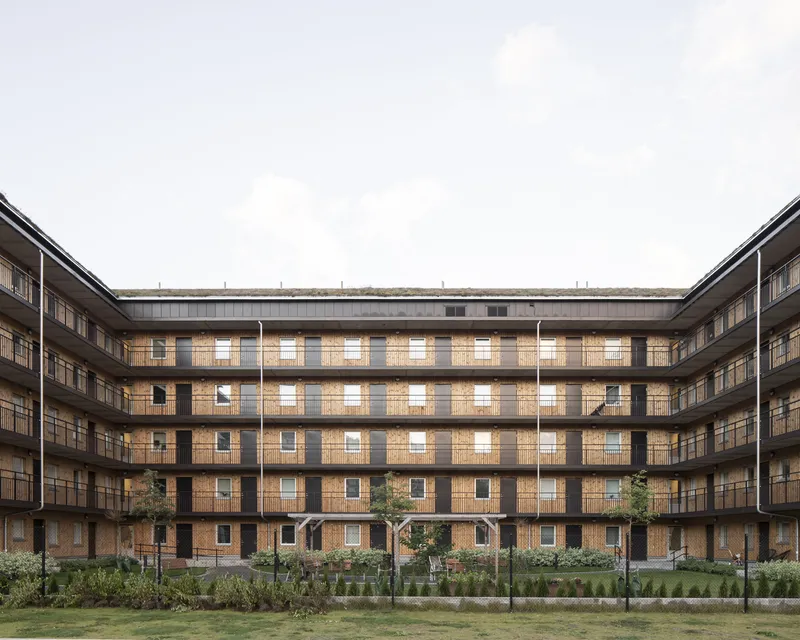
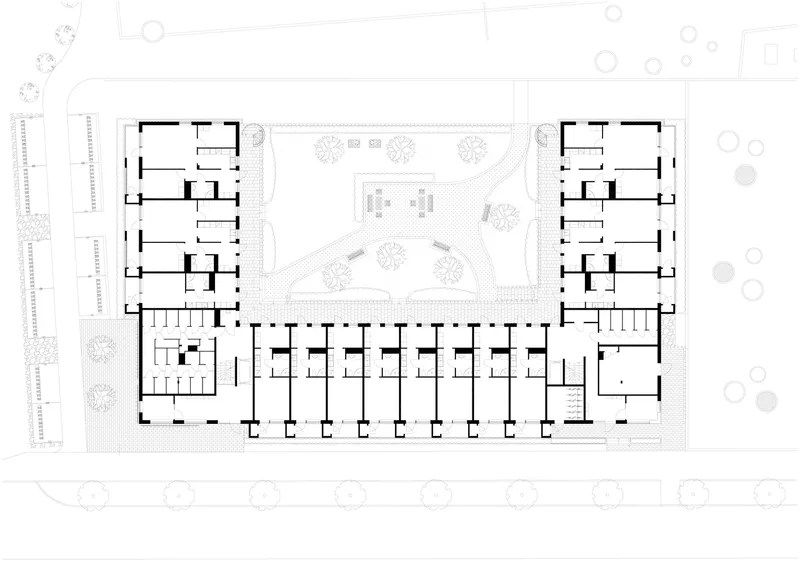
The U-shaped building layout maximizes natural light and optimizes acoustic insulation, providing residents with comfortable living spaces despite nearby traffic noise. The structure is strategically placed along Varvsvägen, enclosing a protected inner courtyard adjacent to Solhagaparken.
Key design features include:
- Dual-aspect apartments for enhanced natural ventilation and daylight.
- Outdoor walkways offering access to the apartments from the inner courtyard.
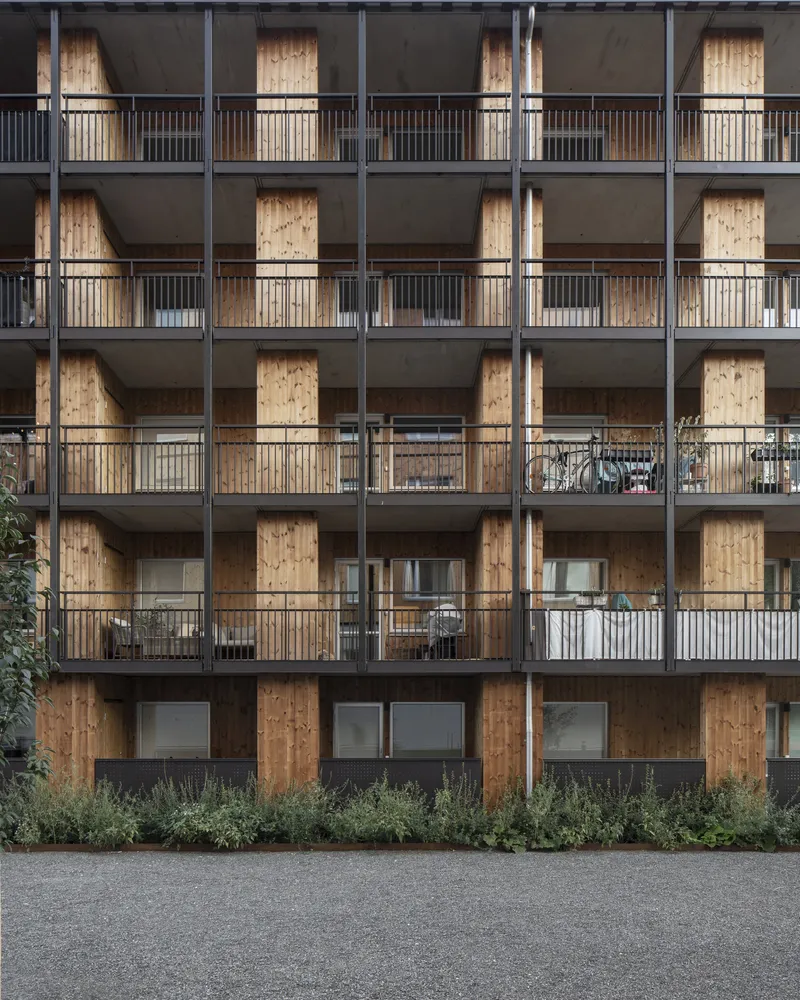
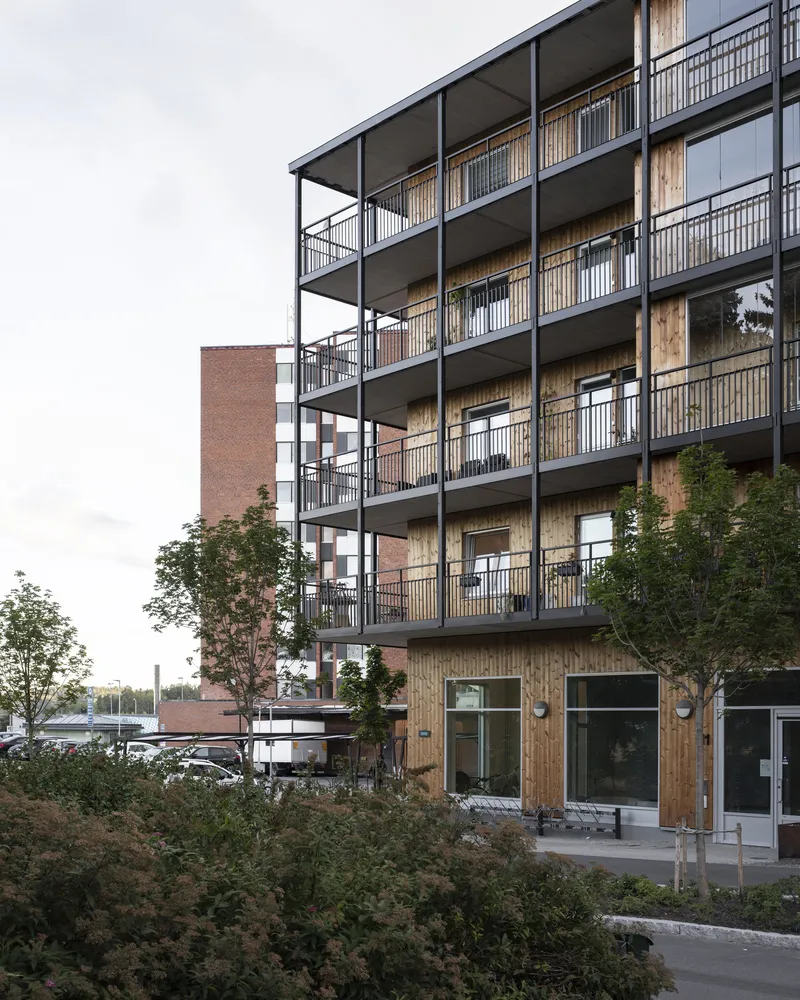
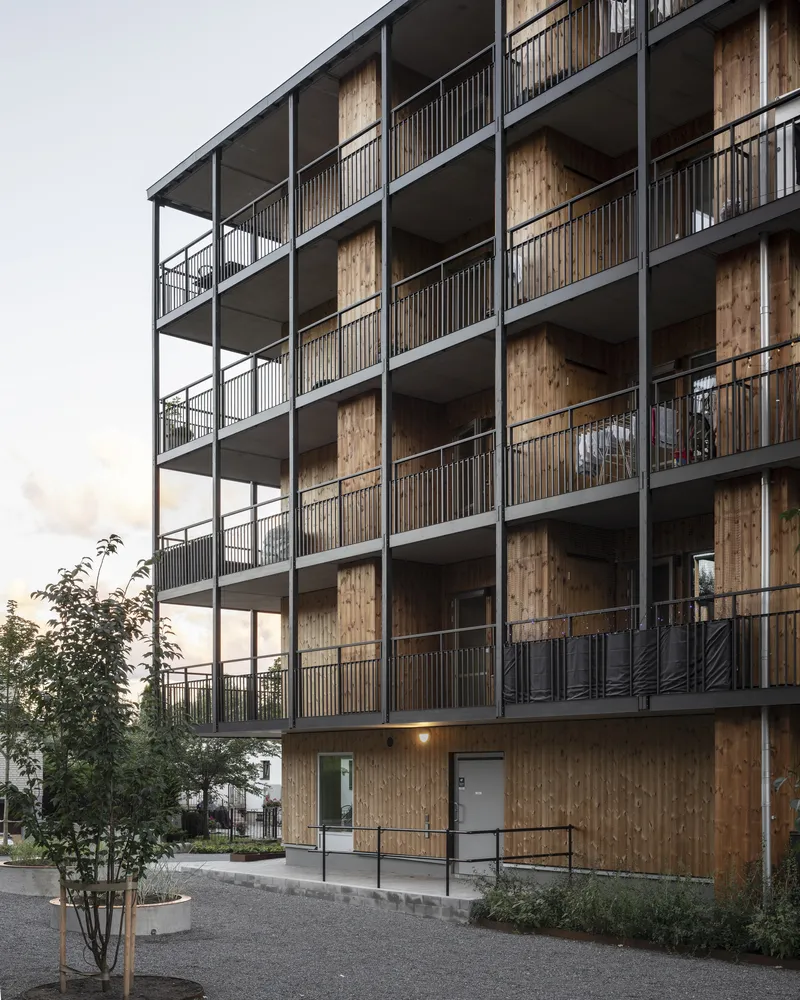
- Generous balconies along the street-facing façade, designed to balance privacy, noise reduction, and usability.
- Integrated storage units between balconies to create semi-private outdoor spaces.
- Partially glazed balconies on exposed apartments, further reducing noise impact.
Sustainable Materials and Construction
The project emphasizes sustainability through locally sourced, eco-friendly materials. The facades feature thermally treated wood, ensuring durability while blending harmoniously with the surrounding natural environment. Windows and balcony doors are crafted from anodized aluminum, known for its longevity and low maintenance requirements.
Other notable material choices include:
- Dark brown steel railings and balcony details, adding a sense of unity and modernity.
- Vertical wooden pillars, painted in a complementary brown shade, reinforcing the building’s architectural identity.
Enhancing Community and Connectivity
The Solhagaparken Residential Complex is more than just an apartment building—it contributes to the urban regeneration of Masmo by introducing cost-effective, well-designed homes near public transportation hubs. The majority of the new apartments are compact, catering to modern urban dwellers seeking accessibility and efficiency.
With sustainable design, thoughtful urban planning, and a strong connection to its natural surroundings, Solhagaparken sets a new benchmark for residential architecture in Sweden.
All Photographs are works of Johan Dehlin


Popular Articles
Popular articles from the community

Temporary Home for Dogs: A Reversed Zoo Rethinks Animal Shelter Architecture
In Bucharest, a sinuous corridor and freed landscape flip the logic of containment, designing a shelter that works to make itself unnecessary.

Cloaked Colonization: A Mobile Underwater Habitat That Moves Like a Fish
Micah Abaya's shortlisted EHC Pacific entry reimagines ocean settlement as a dispersed network of self-sustaining architectural organisms.
Opera by the Sea Estonia: Three Shells Dissolving Architecture into Tallinn's Coastline
A winning opera house proposal replaces monumental form with interconnected shells that blur the boundary between building, park and Baltic Sea.
Tsunami Convergenics: Turning Catastrophic Ocean Forces into Underwater Housing Infrastructure
A speculative underwater settlement off the coast of Onagawa, Japan, treats tsunamis and typhoons as energy sources rather than threats.

Similar Reads
You might also enjoy these articles


Hodi-Mandai Geram
Project Function: Preservation and revitalization of the Intangible heritage and socio-spatial identity of the Hodi by Housing, Cultural Memory Center, Sacred Grove, landscape, local tourism economy


Olio Towers: A Mid-Rise for Performers That Fuses Housing, Rehearsal, and Stage
Located blocks from Houston's Theater District, this modular tower stacks living units around a central performance atrium.

Oasis: Modular Green Housing Carved into Dhaka's Urban Fabric
A shortlisted Plugin Housing entry reclaims unauthorized settlements in Dhaka with stepped concrete volumes, green roofs, and ventilation-driven design.

Black Hole: A Floating Megastructure for the Post-Physical Era
Emiliano Mazzarotto envisions a spherical, self-scaling arena where e-sports, digital hotels, and holographic stadiums replace traditional public space.

Explore Residential Building Competitions
Discover active competitions in this discipline

Challenge to design mud housing for contemporary communities

Challenge to reimagine the Iron Throne

Photograph architecture without architects

Illustrate the lost glory of Angkor Wat - Render Challenge
Comments (0)
Please login or sign up to add comments
No comments yet. Be the first to comment!