
South Sanlin Station: A New Vision for Urban Transportation Architecture
This article explores South Sanlin Station’s innovative approach to urban transportation architecture, integrating metro infrastructure with ecological design and public space.

Integrating Infrastructure with Nature
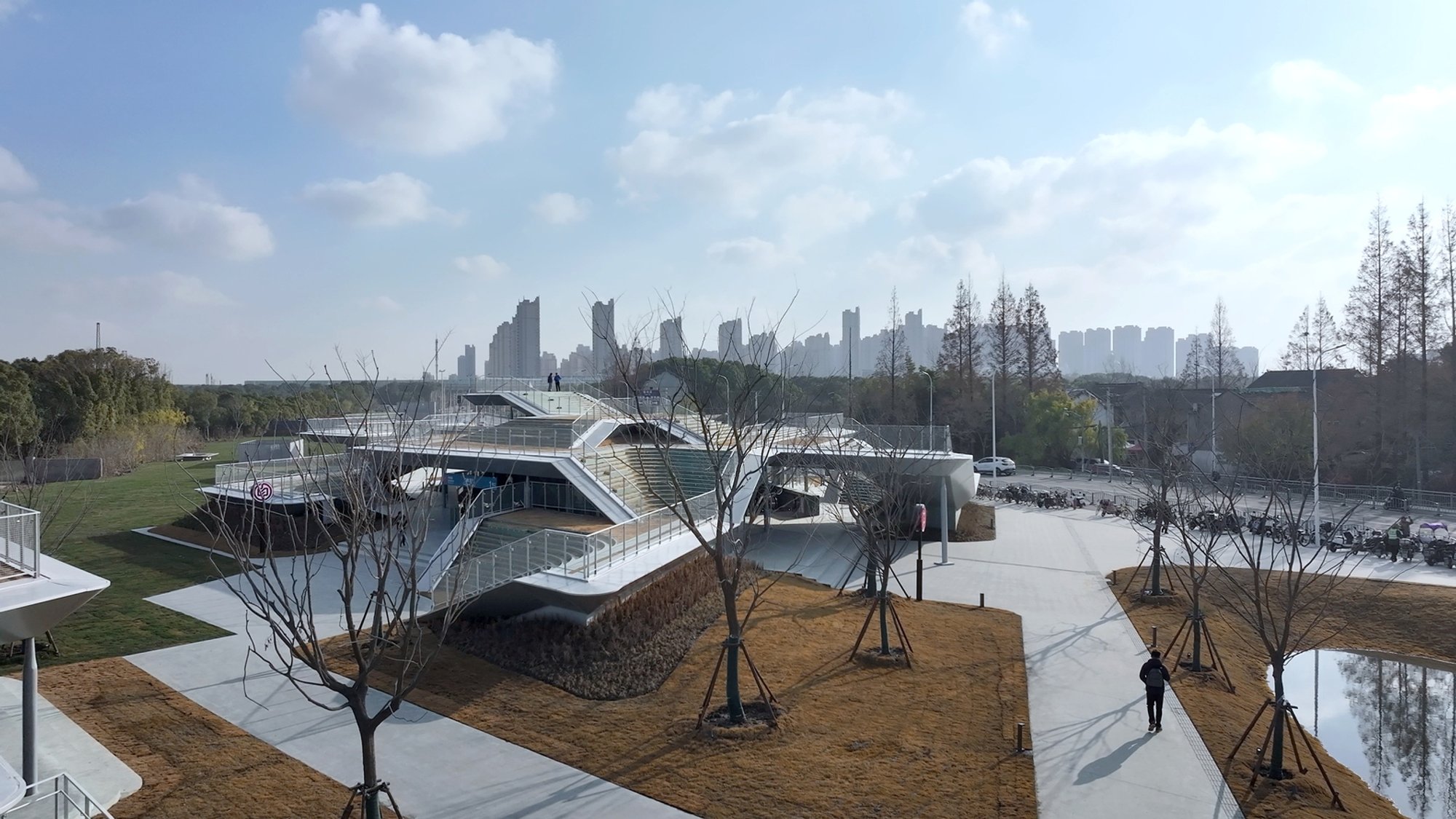
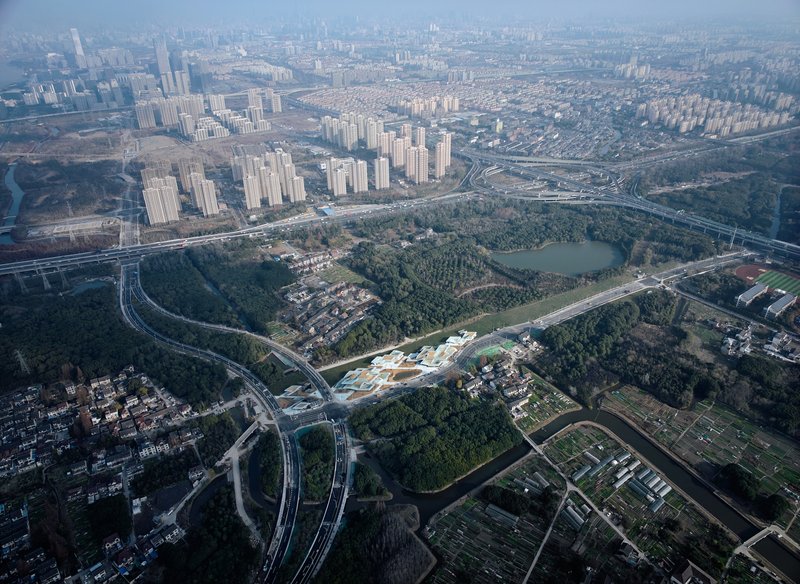
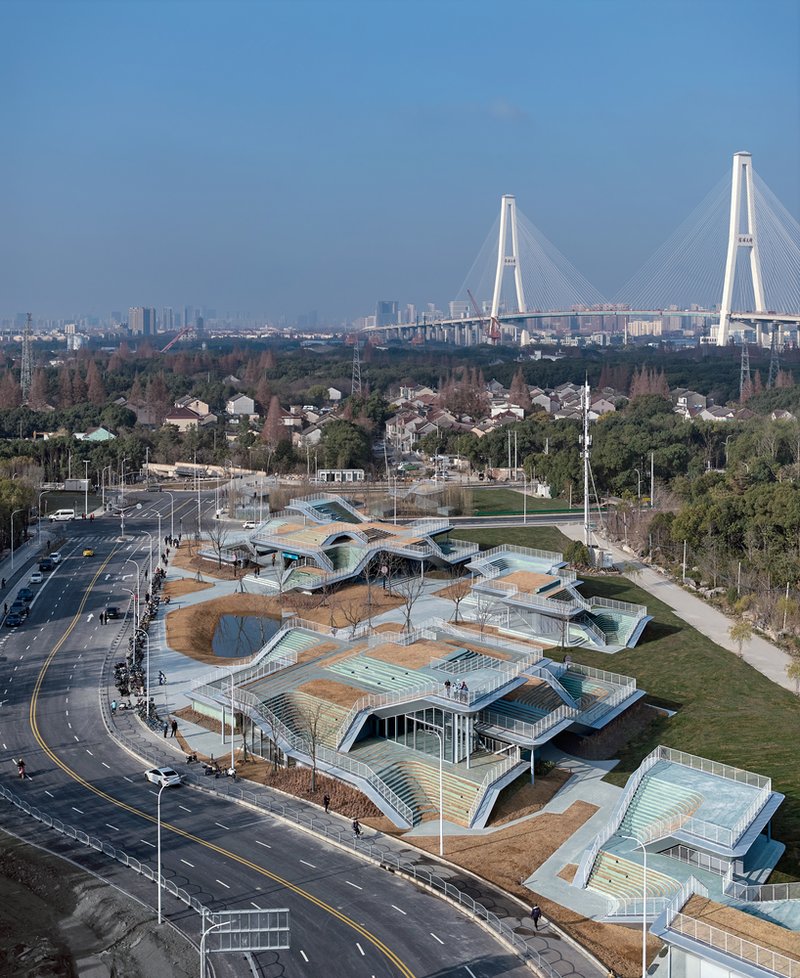
South Sanlin Station, a key part of the Shanghai Airport Link, is redefining urban transportation architecture by blending transit infrastructure with ecological design. Situated on the east side of the Huangpu River, this station transforms the conventional perception of metro stations by merging seamlessly with the surrounding green corridor. Designed by TJAD Original Design Studio, the station moves beyond its primary function of transit to become an integral component of the urban landscape.
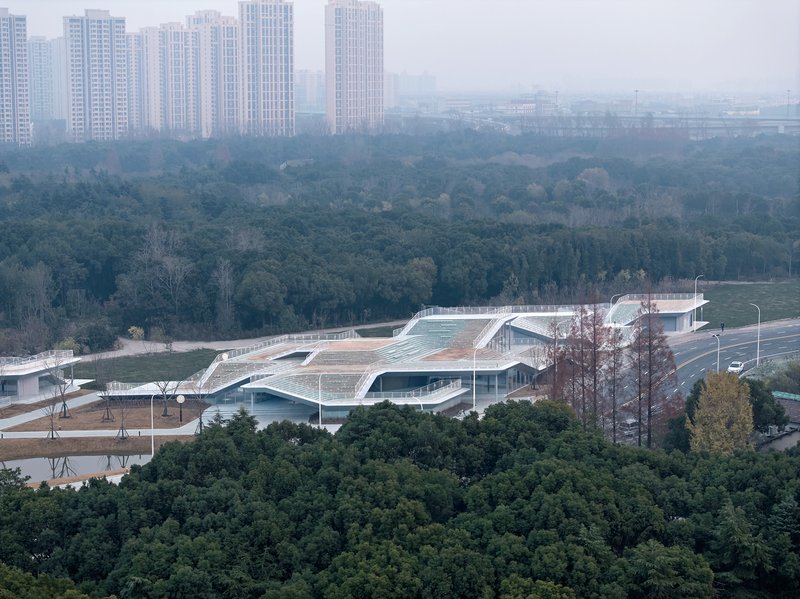
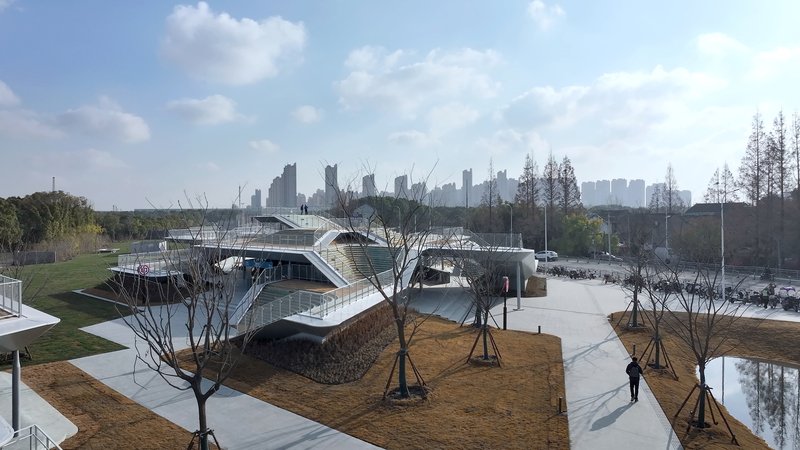
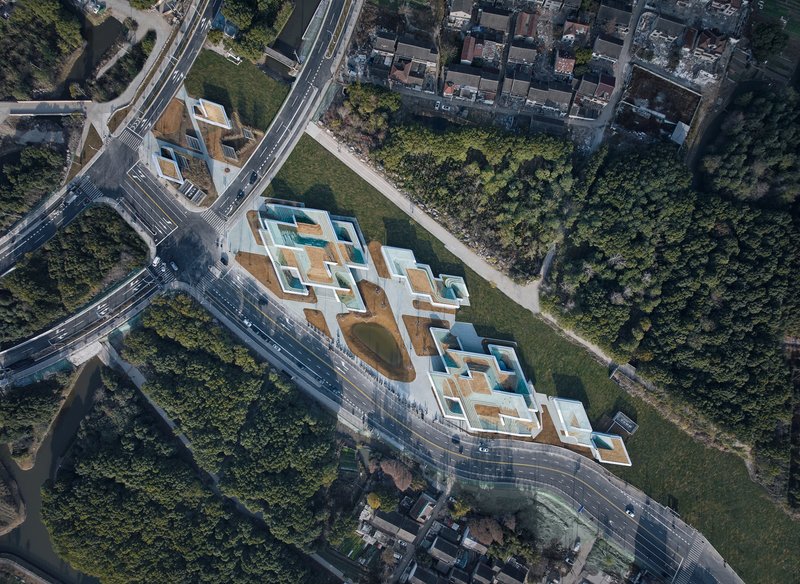
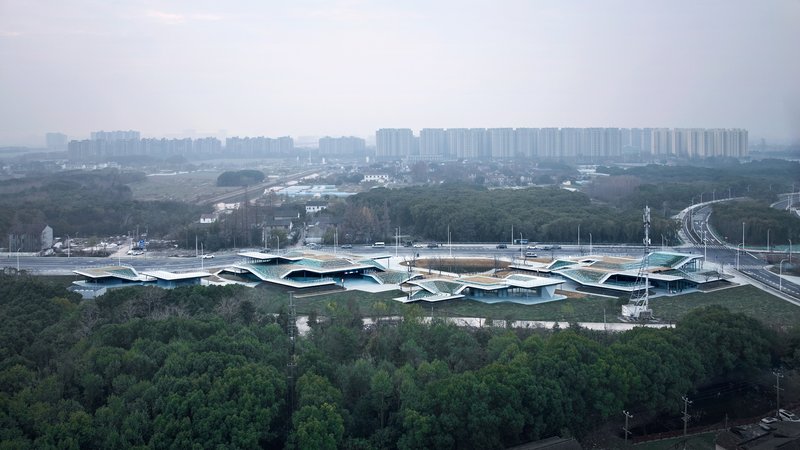
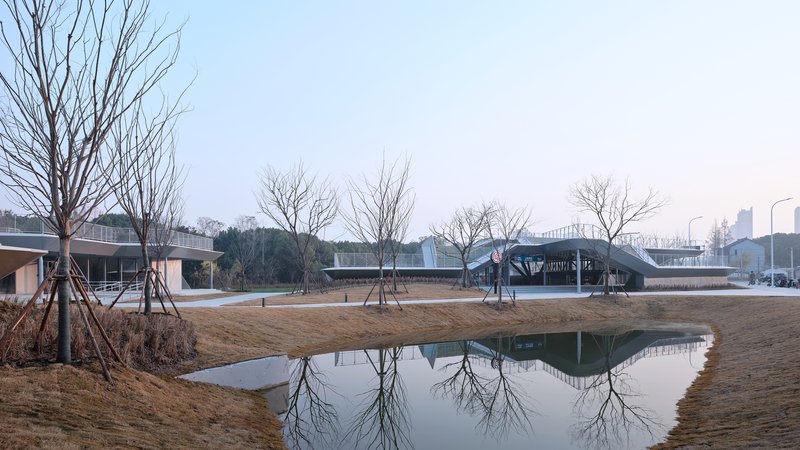
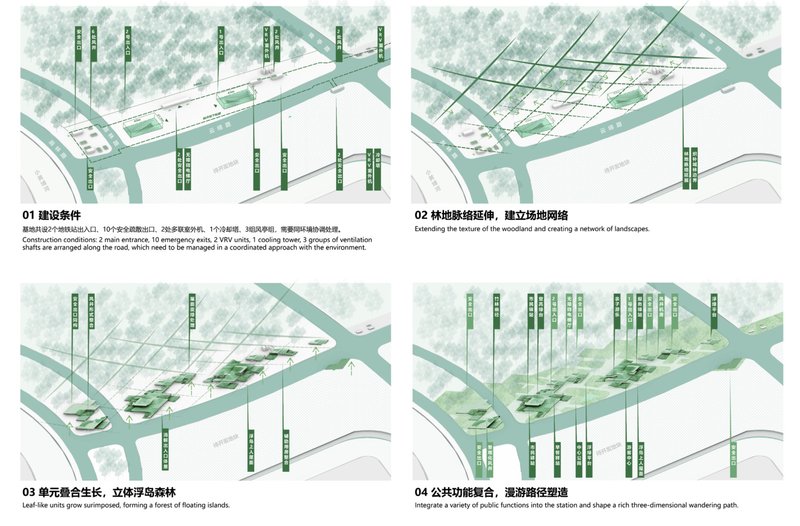
The design is guided by the concept of "Meandering In Forest," where the built form dissolves into the natural setting. The station extends the northern woodland, integrating ecological patches that unify infrastructure with the environment. This approach eliminates the rigid boundaries between transportation hubs and green urban spaces, fostering a park-like station model that prioritizes pedestrian experience and environmental harmony.
Redefining the Role of Metro Stations
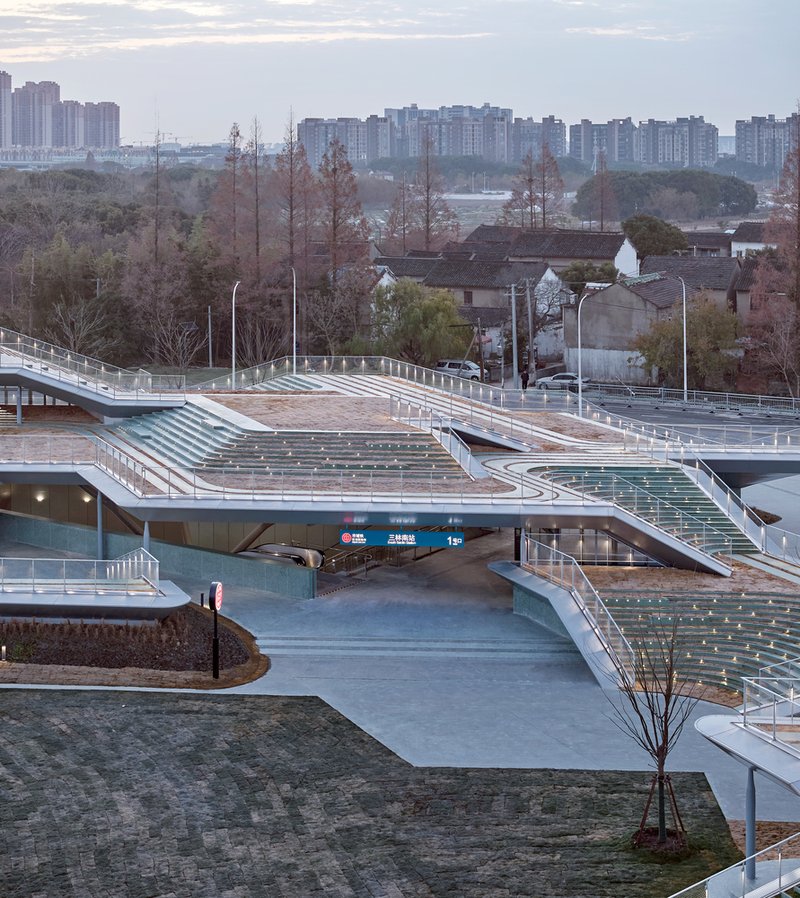
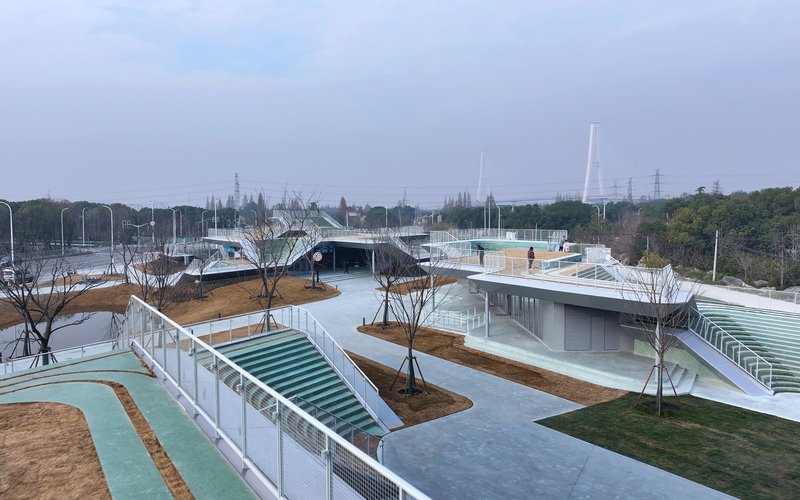
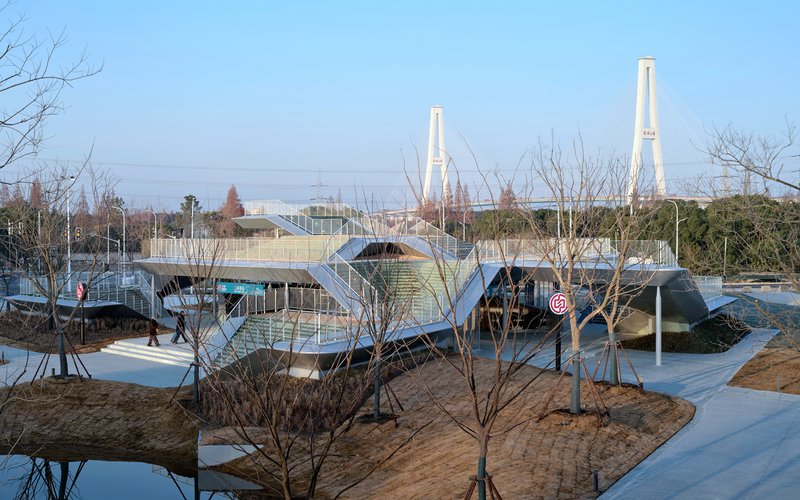
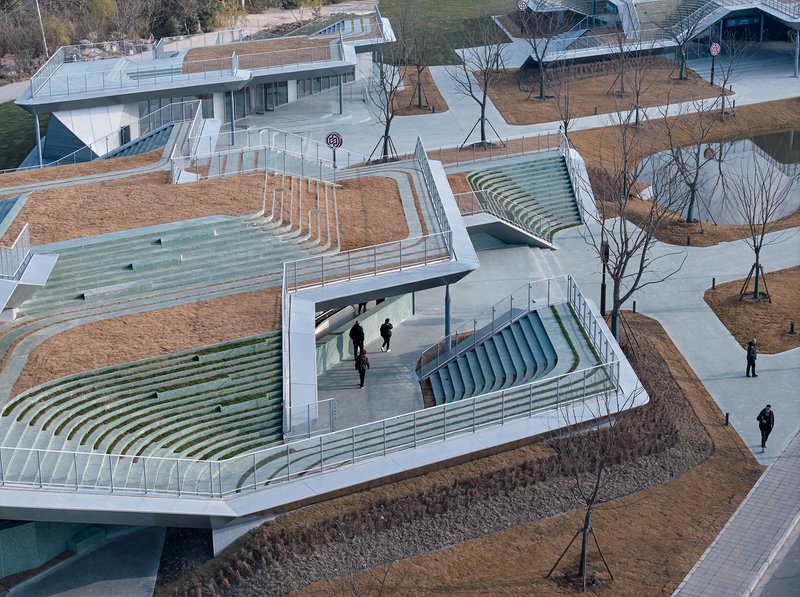
Urban transportation architecture is often characterized by sterile, utilitarian spaces, but South Sanlin Station reimagines the metro station as a vibrant urban asset. The landscape-driven design incorporates an artificial forest on the south side of the natural woodland, creating a continuous green link between the station and the city. The roof functions as a three-dimensional floating island park, offering spaces for relaxation and social engagement.
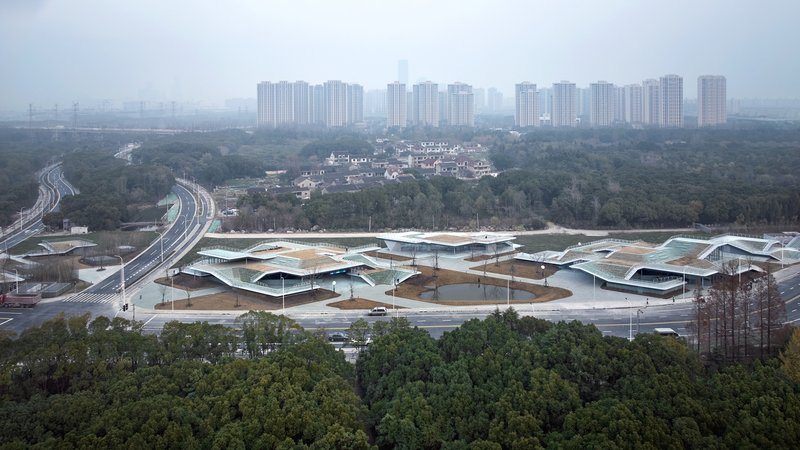
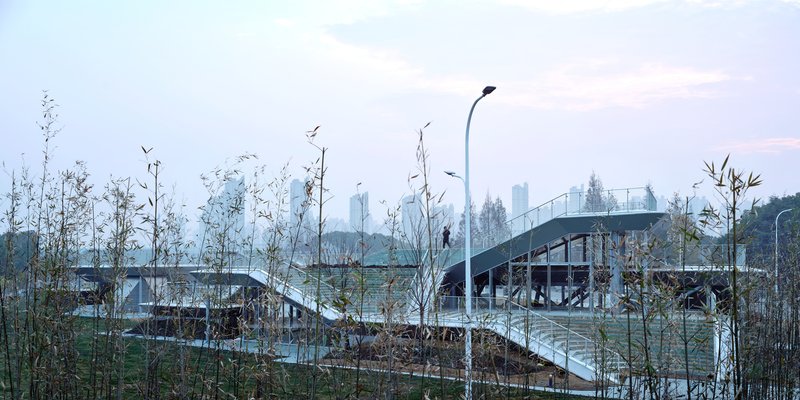
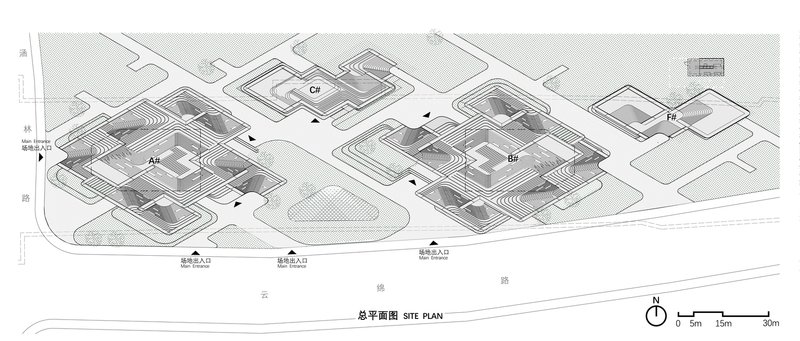
Strategically positioned ventilation shafts and cooling towers are integrated into the landscape with green slopes and flower borders, ensuring that technical infrastructure elements do not disrupt the visual and ecological continuity of the site. The overlapping layers of greenery, plazas, and pathways establish a network that connects the station to the broader urban fabric.
Architecture that Responds to the Site
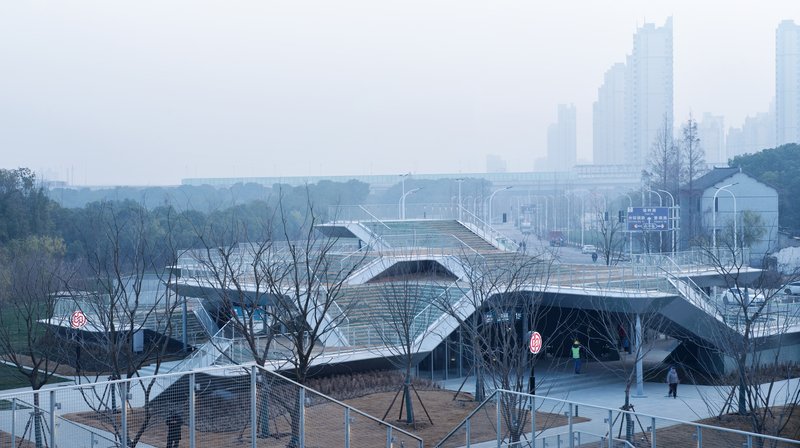
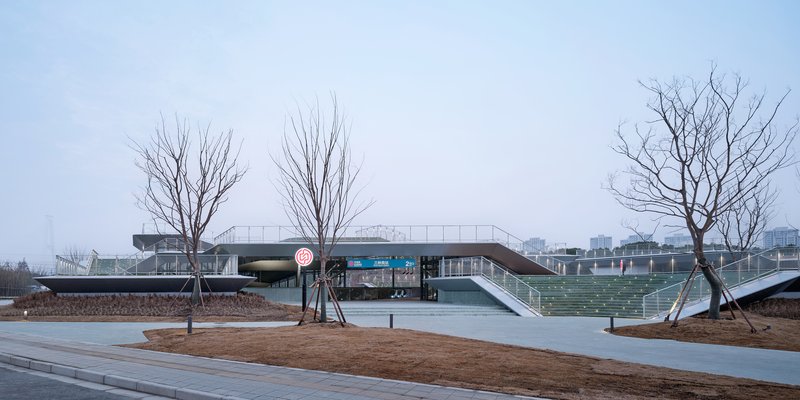
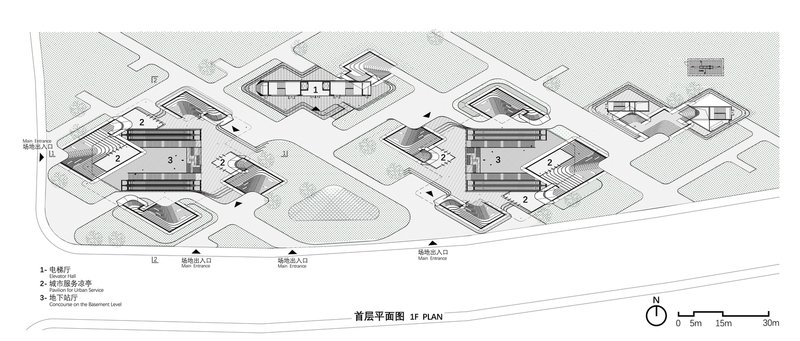
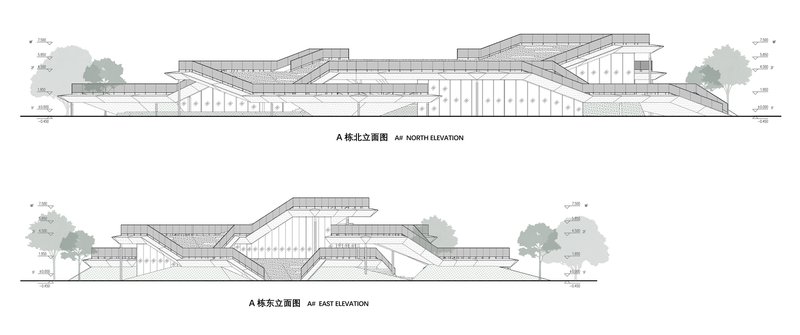
South Sanlin Station embraces a localized design approach rather than a standardized, one-size-fits-all model. The architectural form emerges from the landscape, creating a multi-layered floating island effect. The diamond-shaped modules of the station entrances, emergency exits, and ventilation systems contribute to a cohesive architectural identity while minimizing the perceived scale of the structure.
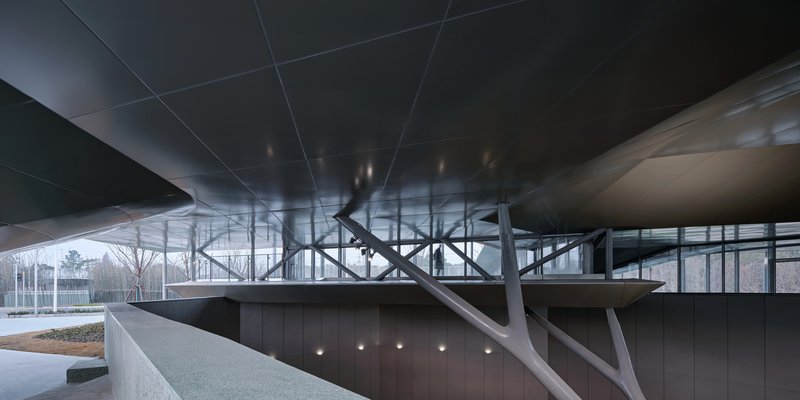
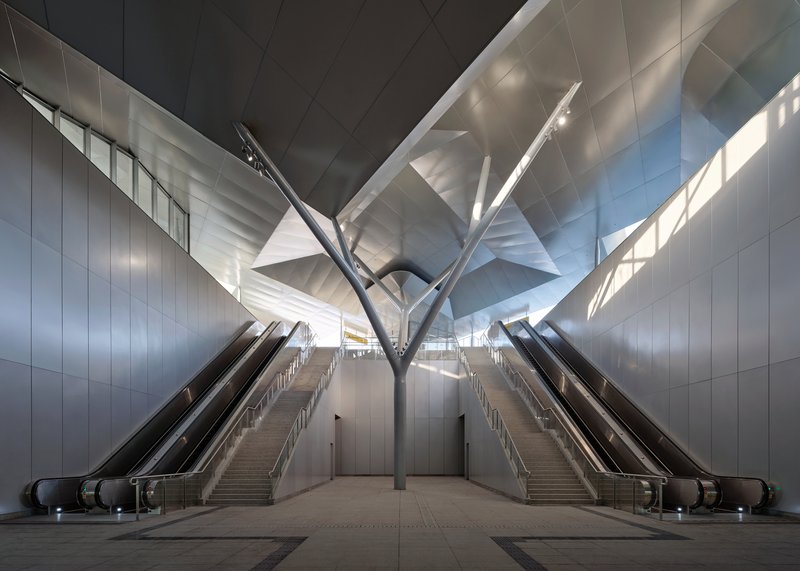
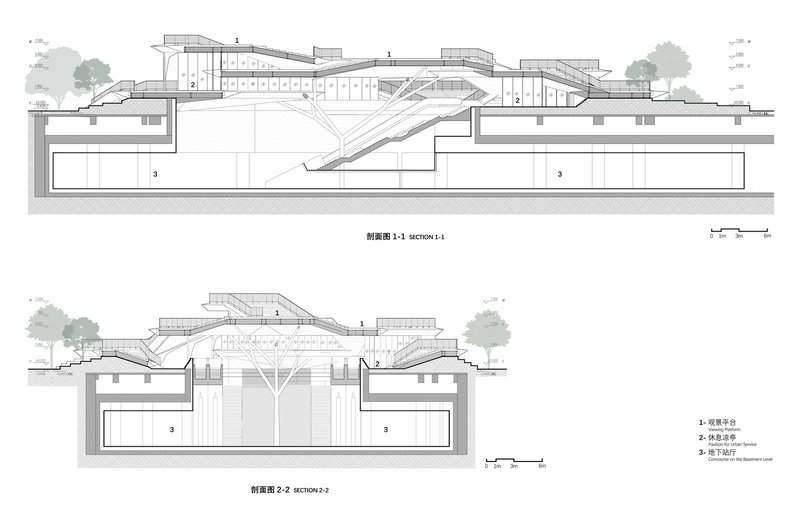
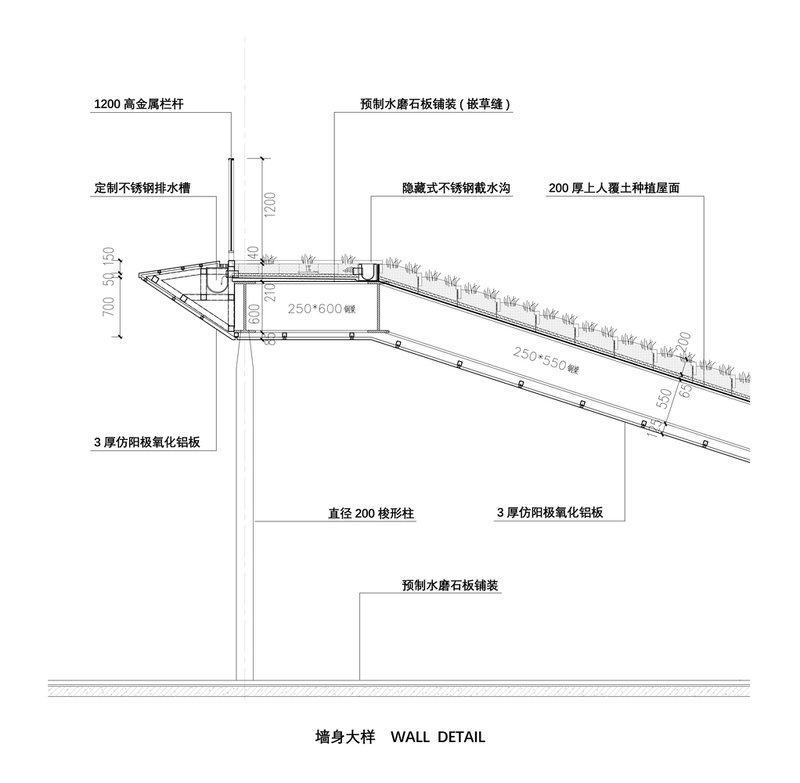
A key structural innovation is the use of tree-shaped columns that distribute vertical loads, enhancing the openness of the underground concourse. These columns, inspired by the surrounding forest, create an organic spatial experience while improving the station’s structural efficiency. The lightweight spindle-shaped framework ensures a seamless transition between underground and aboveground spaces, reinforcing the design’s fluidity.
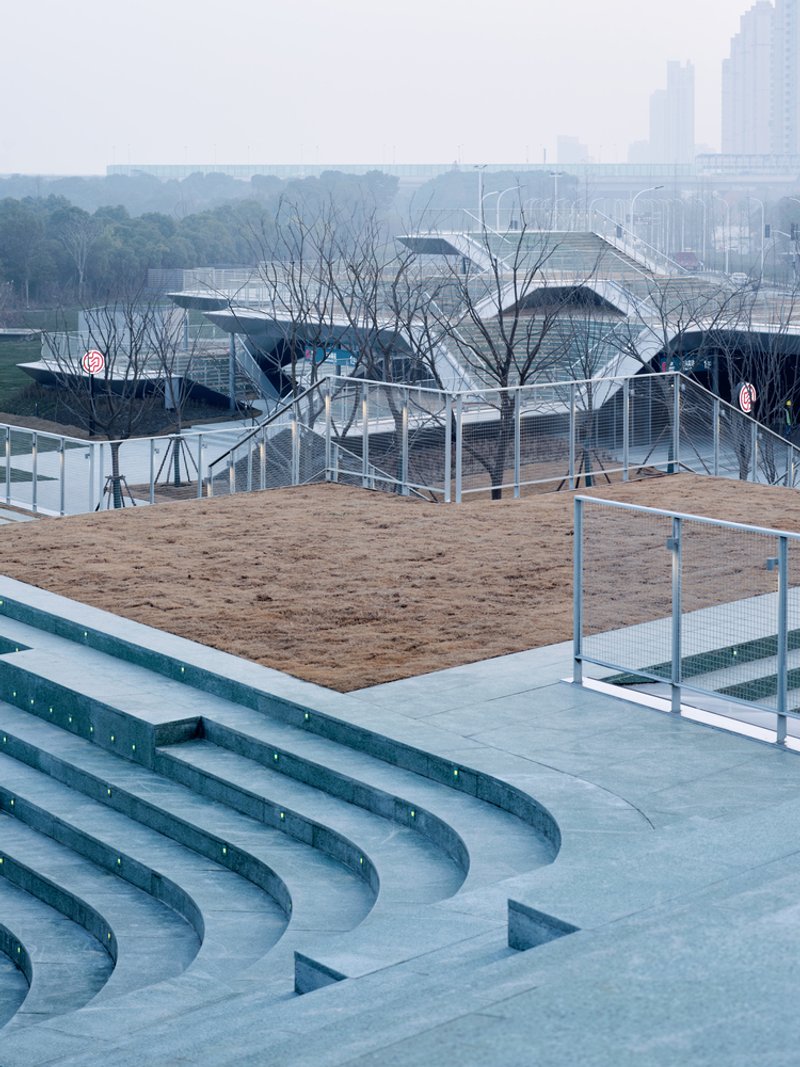
A Socially Inclusive Urban Space
Beyond its role as a transit hub, South Sanlin Station serves as a public destination that enhances urban life. The open rooftop park provides spaces for walking, relaxation, and community interaction, transforming the station into a civic gathering point. The varying elevations of the roof platforms, ranging from 2.45 meters to 8 meters, offer dynamic views of the city, forest, and nearby villages, fostering a unique visual and spatial experience.
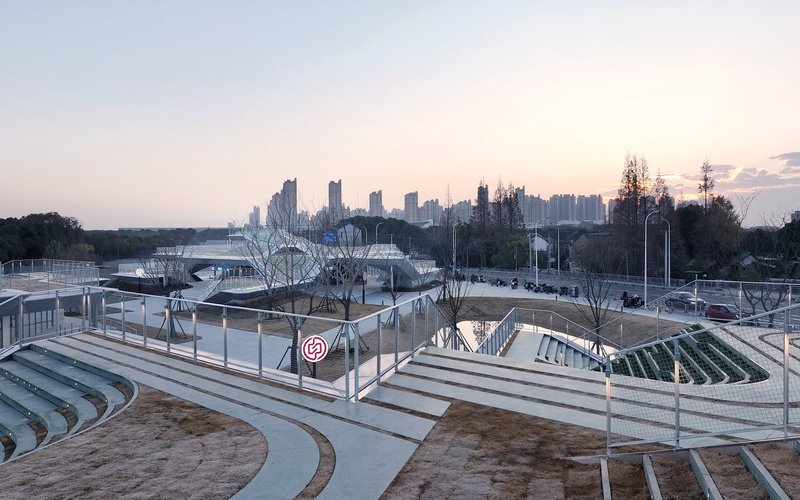
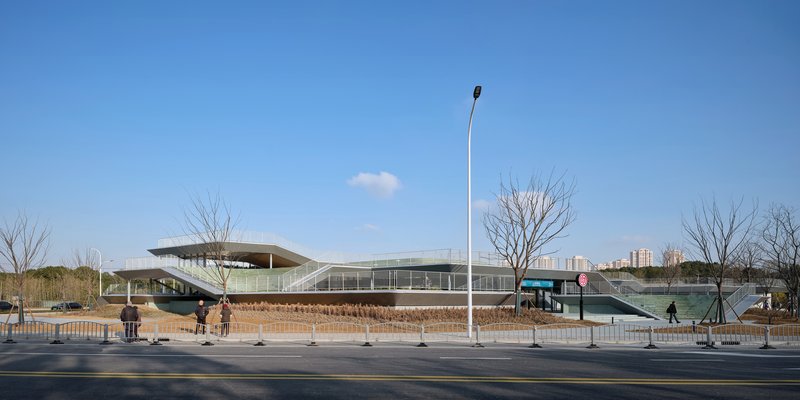
Flexible public service areas have been incorporated into the station, allowing for future adaptability. These spaces can accommodate functions such as visitor centers, parent-child activity zones, and citizen engagement hubs, ensuring that the station remains relevant to the evolving needs of the community.
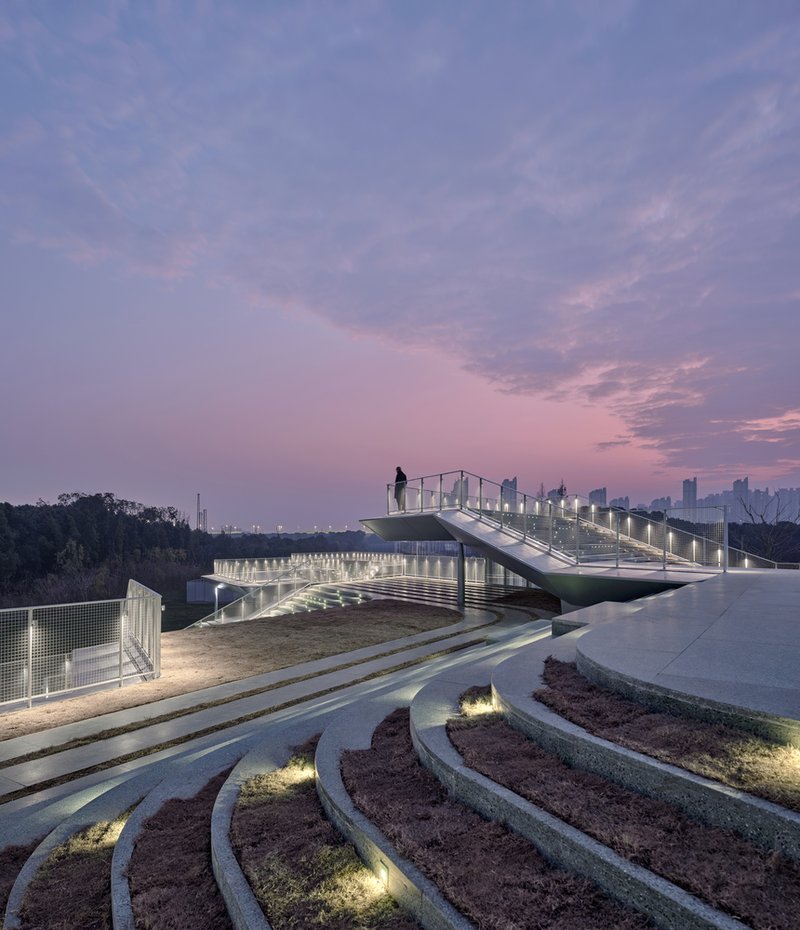
A Model for the Future of Transit-Oriented Design
South Sanlin Station exemplifies a paradigm shift in urban transportation architecture, where infrastructure is no longer a passive component of the city but an active, evolving space that engages with its surroundings. The station's ability to transition from a mere point of transit to a vibrant, interactive public realm sets a precedent for future urban mobility projects.
By integrating transit, landscape, and public amenities, the station creates a more humane and ecologically sensitive approach to metro infrastructure. South Sanlin Station is not just a place to pass through—it is a place to explore, to stay, and to connect with the city in a new and meaningful way.
All Photographs are works of ZY Architectural Photography



Popular Articles
Popular articles from the community


Solar Steam: A Climate-Responsive Architecture That Redefines the Monument
A climate-responsive memorial architecture that transforms heat, decay, and time into a living system reflecting humanity’s ecological impact.


The Ken Roberts Memorial Delineation Competition (Krob)
As the most senior architectural drawing competition currently in operation anywhere in the world, it draws hundreds of entries each year, awarding the very best submissions in a series of medium-based categories.
Flamboyant House by Juliana Camargo + Prumo Projetos
Modern Brazilian house integrating existing tree, pool, and volumes with glass, wood, and transitional spaces blending interior, exterior, and landscape seamlessly.
Louis Malle Cinema: A Limestone Cultural Landmark Revitalizing Community Life in Prayssac
Limestone cinema extension with public forecourt, blending heritage and modern design to create flexible cultural spaces and strengthen community interaction.

Similar Reads
You might also enjoy these articles

Bamboo Housing Challenge 2026: Design Affordable, Sustainable Homes Using Bamboo
An international design competition by Bamboo U and IBUKU inviting architects and designers to reimagine affordable housing using bamboo — with the winning design built full-scale in Bali.

Computational Design & Education: Beegraphy Design Awards Introduces 7th Category (Featuring Jiyun's Innovative Approach)
Dive into Beegraphy’s 7th Design Awards category, where computational design meets education to create immersive, interactive learning tools, inspired by Jiyun’s work.
From Parametric Lighting to Urban Furniture: Join the 2nd Workshop in Beegraphy’s Computational Design Series
Dive into Cutting-Edge Design Techniques and Practical Applications with Industry Experts

Introducing Sphere by UNI: Pioneering a New Era in AEC Industry
Unlocking Global Potential with BIM and Agile Management


Explore Architecture Competitions
Discover active competitions in this discipline




The International Standard for Design Portfolios


The Global Benchmark for Architecture Dissertation Awards


The Global Benchmark for Graduation Excellence


Challenge to reimagine the Iron Throne
Comments (0)
Please login or sign up to add comments
No comments yet. Be the first to comment!