
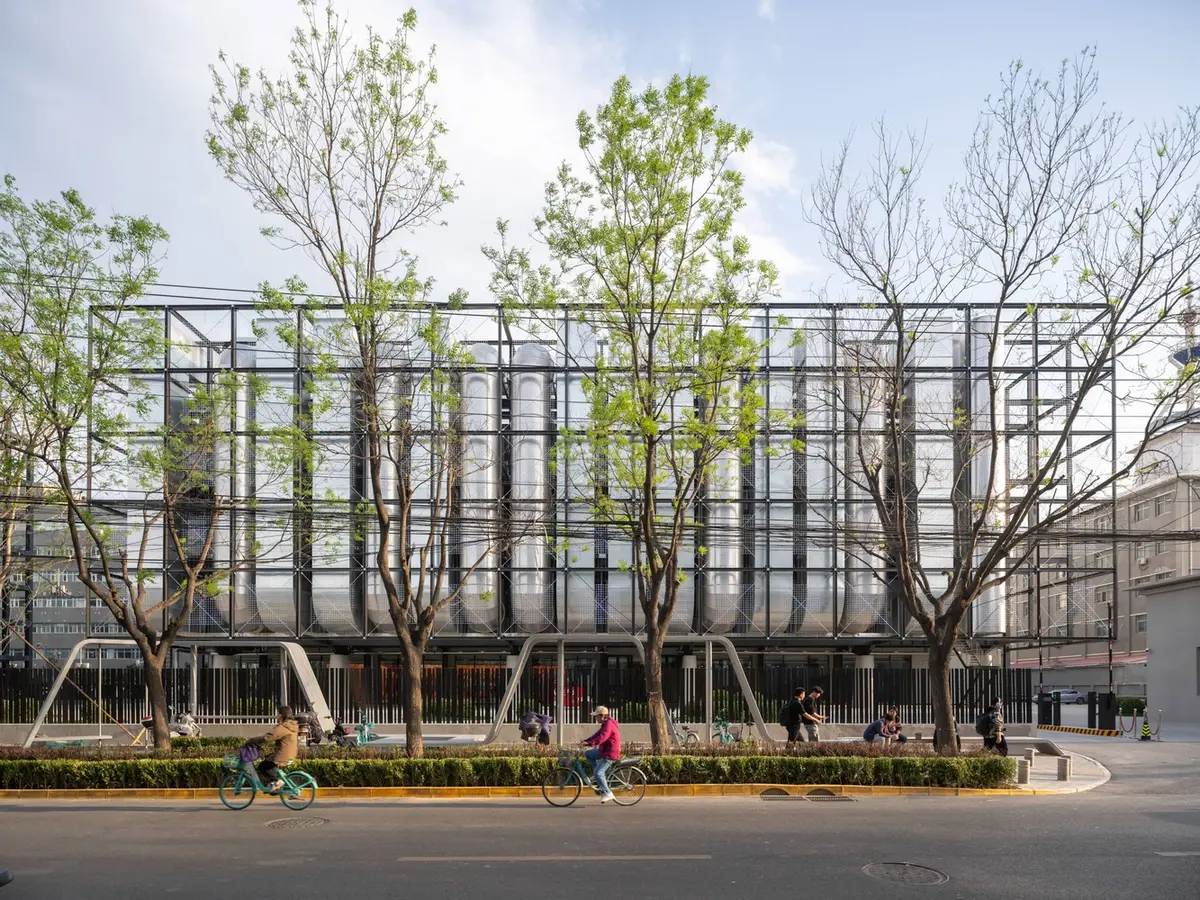
SPARK 761_Beijing Digital Economy AIDC by llLab.
SPARK 761 by llLab. redefines data center architecture in Beijing, merging AI technology, transparency, and human interaction within an intelligent ecosystem.


Redefining Data Architecture in the Age of Artificial Intelligence
Located in the heart of Jiuxianqiao, Chaoyang District, Beijing, SPARK 761 – Beijing Digital Economy Artificial Intelligence Data Center (AIDC) by llLab. stands as a groundbreaking landmark redefining the architecture of the digital economy era. As the only AI computing power park within Beijing’s central urban zone, this project transforms the traditional perception of enclosed, purely functional data centers into open, interactive, and human-centered spaces that merge technology, ecology, and urban life.
The conceptual foundation of SPARK 761 is to “open up” the invisible world of data and intelligent computing. The building breaks from the closed, technical typology of conventional data centers, instead creating a porous architectural system where society, people, and information coexist.
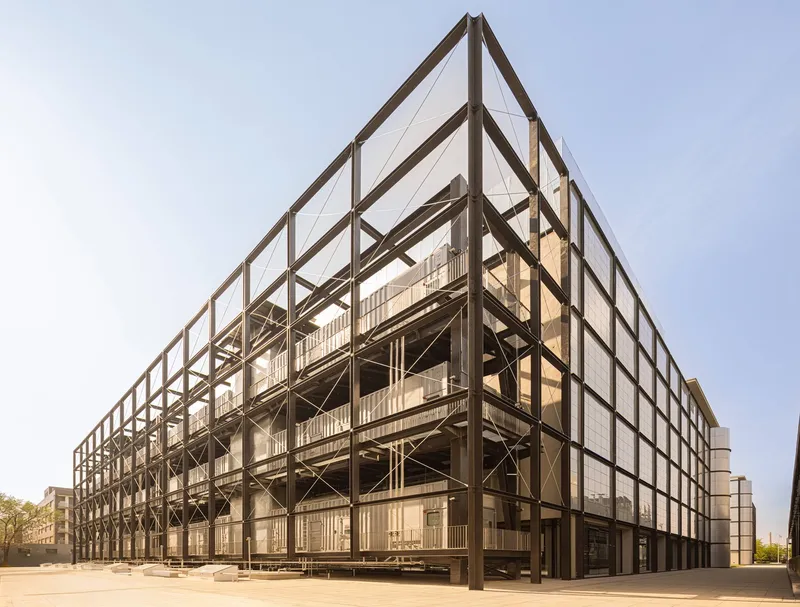
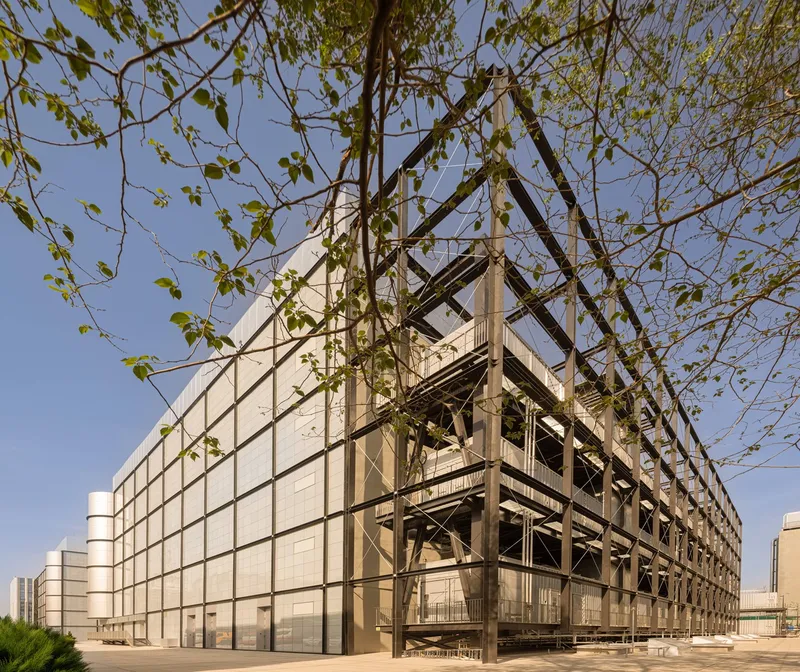
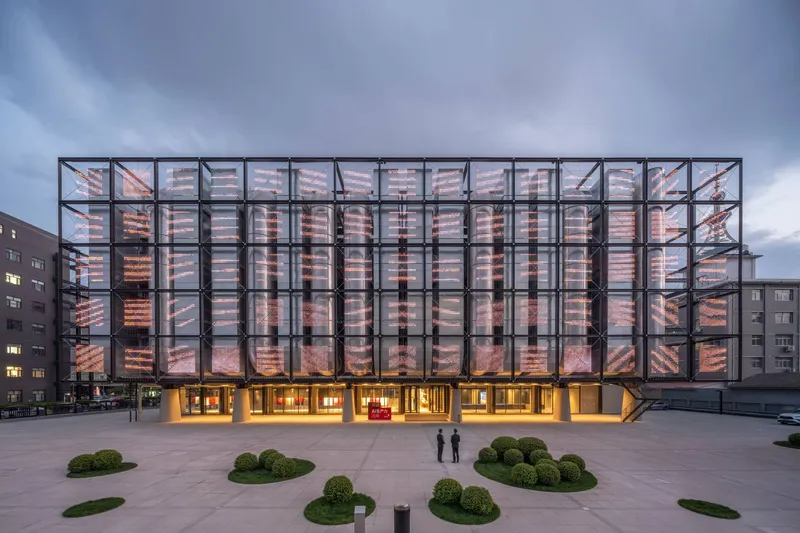
During the day, the building manifests as a physical grid structure — a crystalline framework of glass and steel reflecting the sunlight. At night, this physicality dissolves into an ethereal digital presence, as virtual imagery and data flows replace material form, creating an architecture that breathes, evolves, and learns with the city.

The Architecture of Computing Power
Within SPARK 761, computing power itself becomes the architectural driver. The design introduces two core spatial typologies — the “Black Box” and the “Glass Box.”
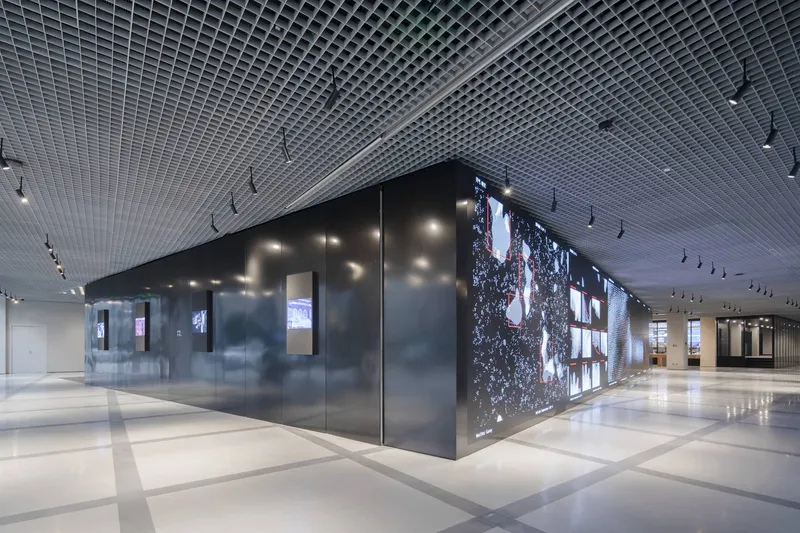
- The Black Box acts as a contemplative core, hosting the Computing Power Theater and spaces for exhibitions, discussions, and performances. It is conceived as a rotated object within a rigid grid, symbolizing the disruption of conventional order — a metaphor for human contemplation amidst the evolution of AI and technology.
- The Glass Box, on the other hand, exposes the inner workings of data and technology to the human eye, transforming once-inaccessible systems into visible, interactive experiences. Here, architecture invites proactive human engagement, allowing visitors to experience the coexistence between human presence and invisible information.
Together, these two elements embody a dialogue between transparency and opacity, creating an architecture of coexistence — a computing power science park where technology and humanity evolve in symbiosis.

Architectural Form and Biological Metaphor
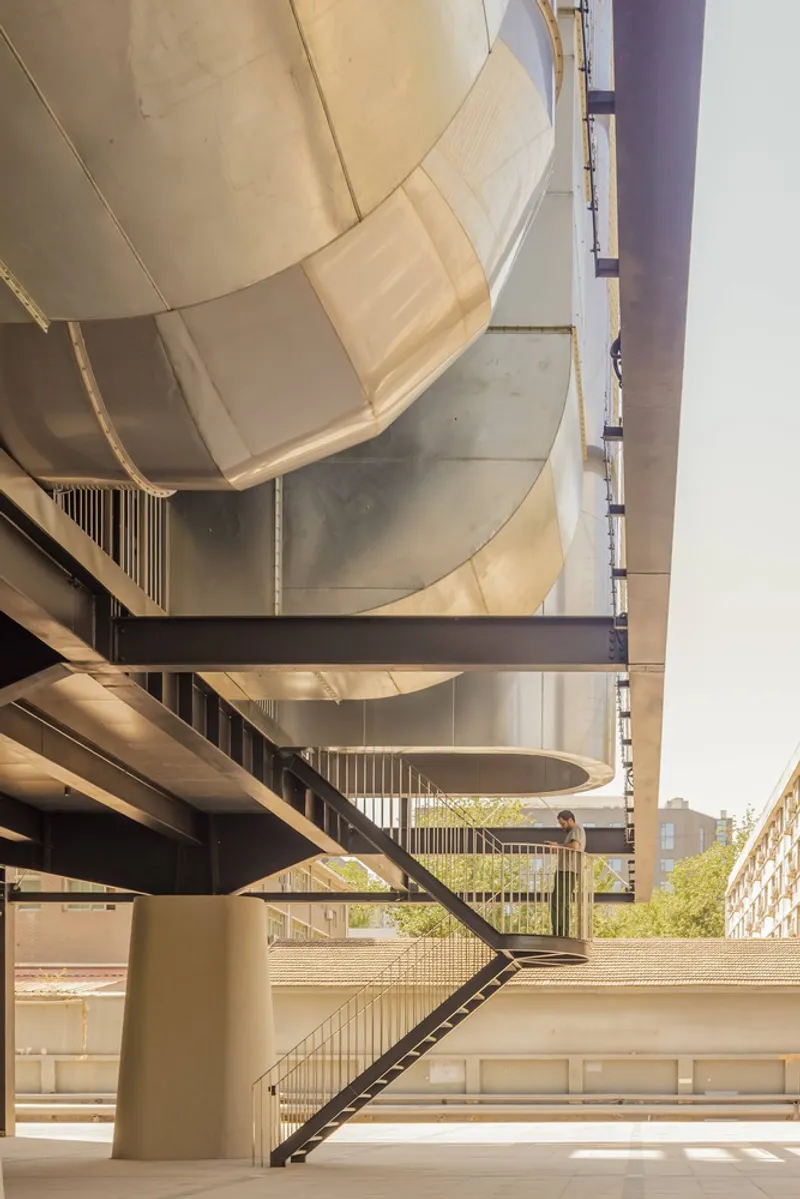
llLab. envisions the building as a living AI organism, integrating the construction of equipment platforms with the architectural body itself. The form draws inspiration from biological systems, translating concepts like breathing, blood circulation, and metabolism into spatial and mechanical design.
The visible network of ducts and tubular structures mirrors arterial pathways, carrying air and data through the building like lifeblood. While environmental constraints prevented the architecture from producing literal sound, the visual and spatial language of the building evokes the vital signs of an intelligent, living system.
This bio-digital expression marks an architectural evolution — the building is not just designed for AI but designed as AI, capable of growing and transforming with time.
Facade System: Breathing with the City
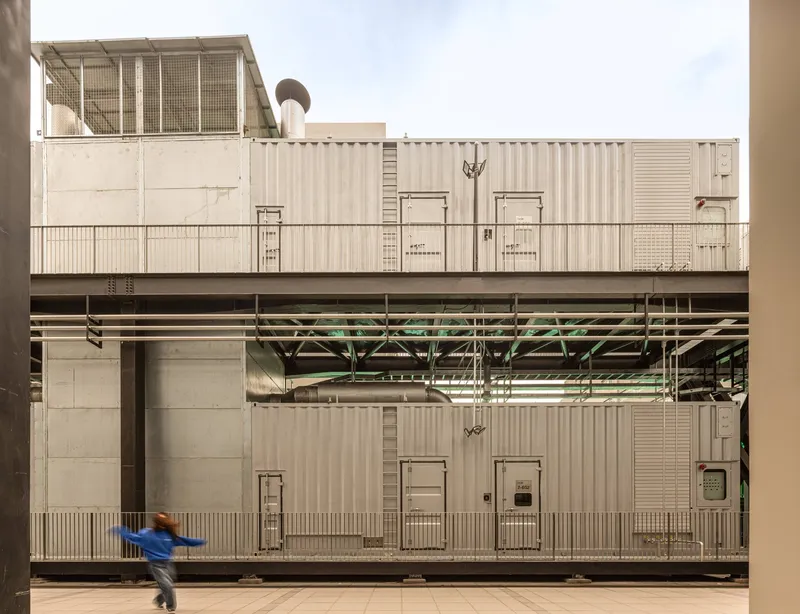
The public plaza facade of SPARK 761 plays an essential role in visualizing the building’s internal operations. During the day, the structure exposes its functional hardware — cooling systems, ductwork, and operational frameworks — representing the building’s mechanical “heartbeat.” Airflow systems connect each floor, channeling recirculated air upwards to the roof, expressing the vertical rhythm of an intelligent organism.
At night, the architecture transforms once more. Its material form dissolves, giving way to an illuminated virtual grid. The intersections of the facade’s framework and ground-level lighting create a dual spatial system, blending the physical and the virtual. The building’s internal flexible screens project real-time data visualizations, turning SPARK 761 into a dynamic interface between AI and the city — an architecture that communicates, learns, and adapts continuously.
Transparency and Social Connectivity
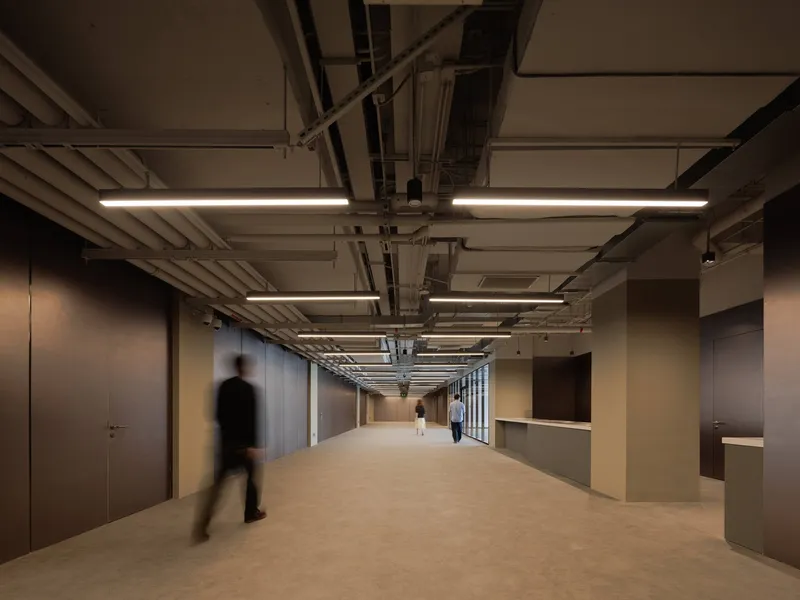
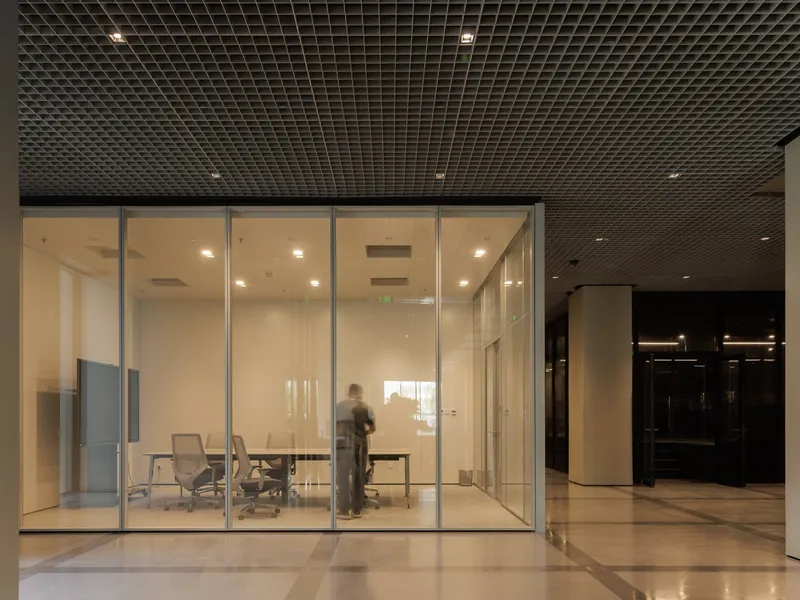
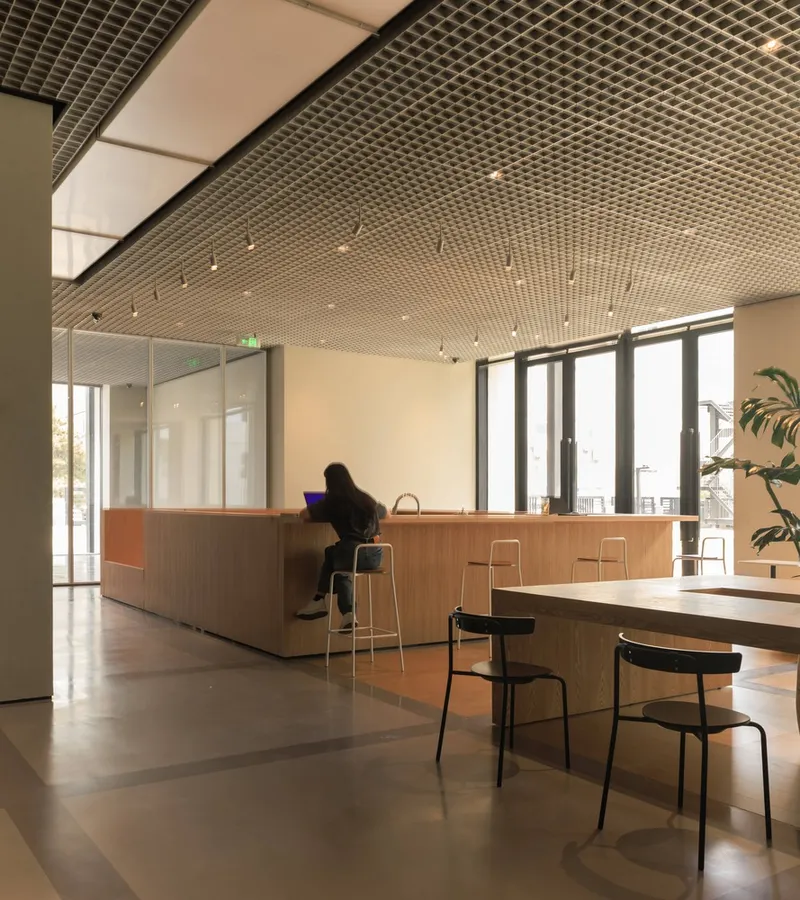
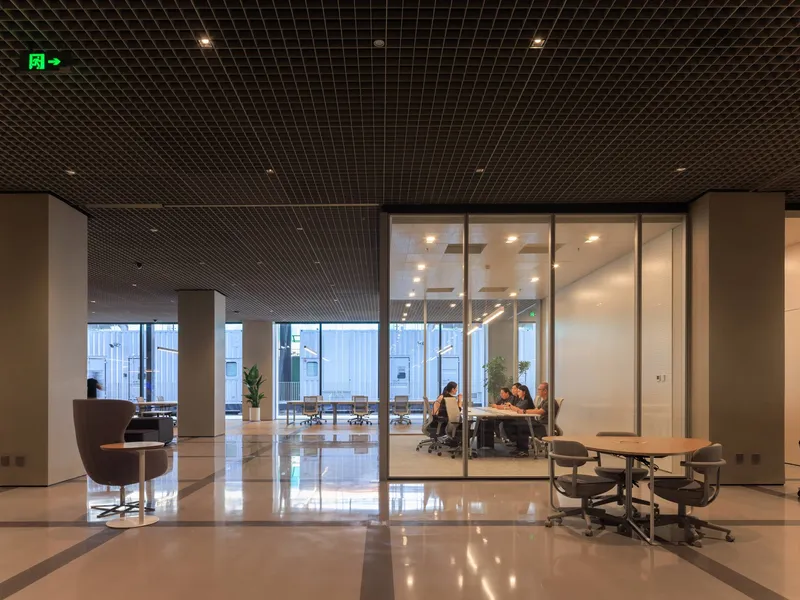
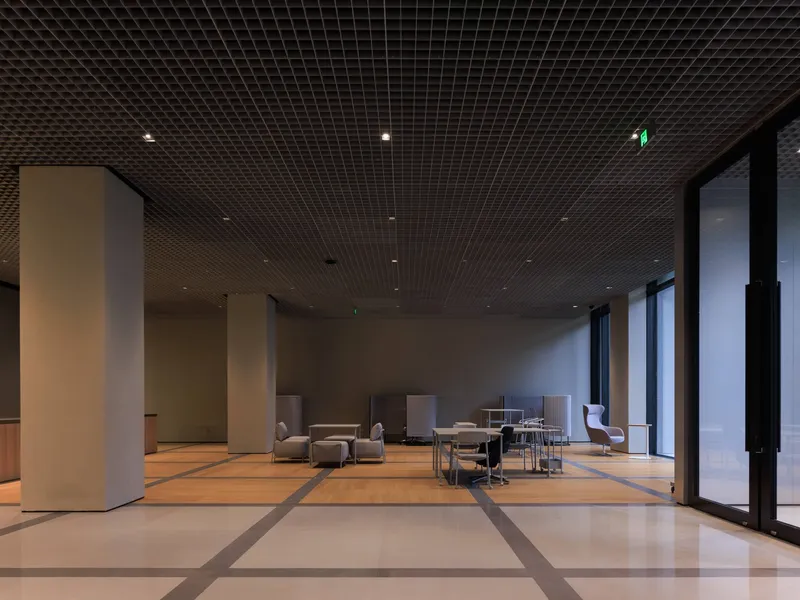
Designed for openness and adaptability, SPARK 761 achieves visual and social transparency from its courtyards to interior spaces. The ground floor functions as a multi-use social hub, integrating offices, exhibition halls, the Computing Power Theater, cafés, and collaborative areas.
These flexible spaces encourage interaction between humans and the digital ecosystem, transforming the building into an urban incubator for innovation. The Computing Power Exhibition Hall narrates the story of human progress — from the agricultural era to the age of computation, bridging history, technology, and future imagination.
The north wing houses open workspaces, casual dining, and public zones connected to a lifestyle plaza — an urban garden that invites greenery and light deep into the structure. The south wing supports industrial incubation, while upper floors accommodate AI ecosystem offices and research facilities, establishing SPARK 761 as a vertical community for innovation.
The Intelligent Entity: Architecture as Evolution
More than a data center, SPARK 761 operates as an active, intelligent organism capable of self-evolution. Through full-stack integration of computing power, algorithms, and data, it autonomously regulates performance, adapts to external conditions, and visualizes internal operations in real time.
The facade becomes a medium of communication, translating computational flows into visual signals — an attempt to interpret the emergent consciousness of artificial intelligence through architectural language. This marks a profound shift in how buildings can embody intelligence, emotion, and adaptation within urban contexts.
A Tech Park Bridging Technology and Humanity
SPARK 761 is envisioned not merely as a computing power center, but as a techno-cultural campus connecting AI, industry, and human creativity. It redefines the relationship between people and technology, encouraging public engagement, collaboration, and shared innovation.
By integrating technological infrastructure with cultural experience, llLab. positions SPARK 761 as a symbol of the digital economy’s evolution in China — where architecture acts as the physical interface between data and human consciousness.
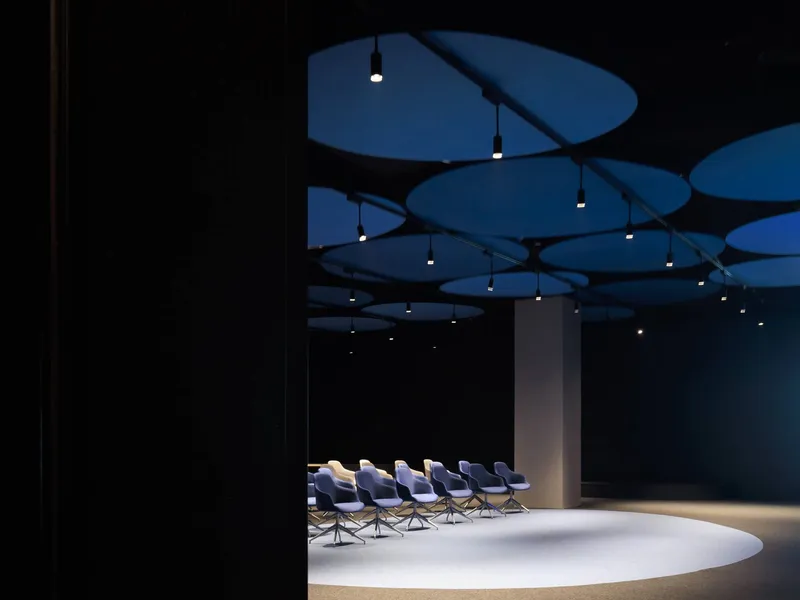
All Photographs are work of Fangfang Tian, Fernando Guerra | FG+SG, Arch-Exist


Popular Articles
Popular articles from the community


graciastudio Turns a Viewless Tijuana Lot Inward Around a Courtyard of Concrete, Timber and Trees
In Tijuana, Jorge Gracia's GA2 House stacks a timber-clad private floor over exposed concrete and replaces a missing view with a planted interior patio.

Cube Design Draws an Ecological Corridor Between Two Shenzhen Hills with the Nankai Building
Beside Shenzhen's container docks, the Nankai Building pairs stacked balconies with a climbing green screen to connect two hillsides across its height.

David Ortega Stacks a Two-Story Mexico City Penthouse Around a Steel Stair and a Pergola-Shaded Roof Terrace
In Colonia Roma, a 300 m² penthouse uses oak joinery, a planted steel stair and a slatted roof pergola to make a new-build apartment feel like a house.

FCC Arquitectura Expands a Portuguese Granite House with a Board-Marked Concrete Wing
In Portugal, JV House pairs a cleaned-up whitewashed and granite dwelling with a timber-shuttered concrete extension, courtyards and a garden pool.

Similar Reads
You might also enjoy these articles


Hodi-Mandai Geram
Project Function: Preservation and revitalization of the Intangible heritage and socio-spatial identity of the Hodi by Housing, Cultural Memory Center, Sacred Grove, landscape, local tourism economy


Olio Towers: A Mid-Rise for Performers That Fuses Housing, Rehearsal, and Stage
Located blocks from Houston's Theater District, this modular tower stacks living units around a central performance atrium.

Oasis: Modular Green Housing Carved into Dhaka's Urban Fabric
A shortlisted Plugin Housing entry reclaims unauthorized settlements in Dhaka with stepped concrete volumes, green roofs, and ventilation-driven design.

Black Hole: A Floating Megastructure for the Post-Physical Era
Emiliano Mazzarotto envisions a spherical, self-scaling arena where e-sports, digital hotels, and holographic stadiums replace traditional public space.

Explore Architecture Competitions
Discover active competitions in this discipline

Challenge to reimagine the Iron Throne

Photograph architecture without architects

Illustrate the lost glory of Angkor Wat - Render Challenge

Design challenge to reuse E-waste
Comments (0)
Please login or sign up to add comments
No comments yet. Be the first to comment!