
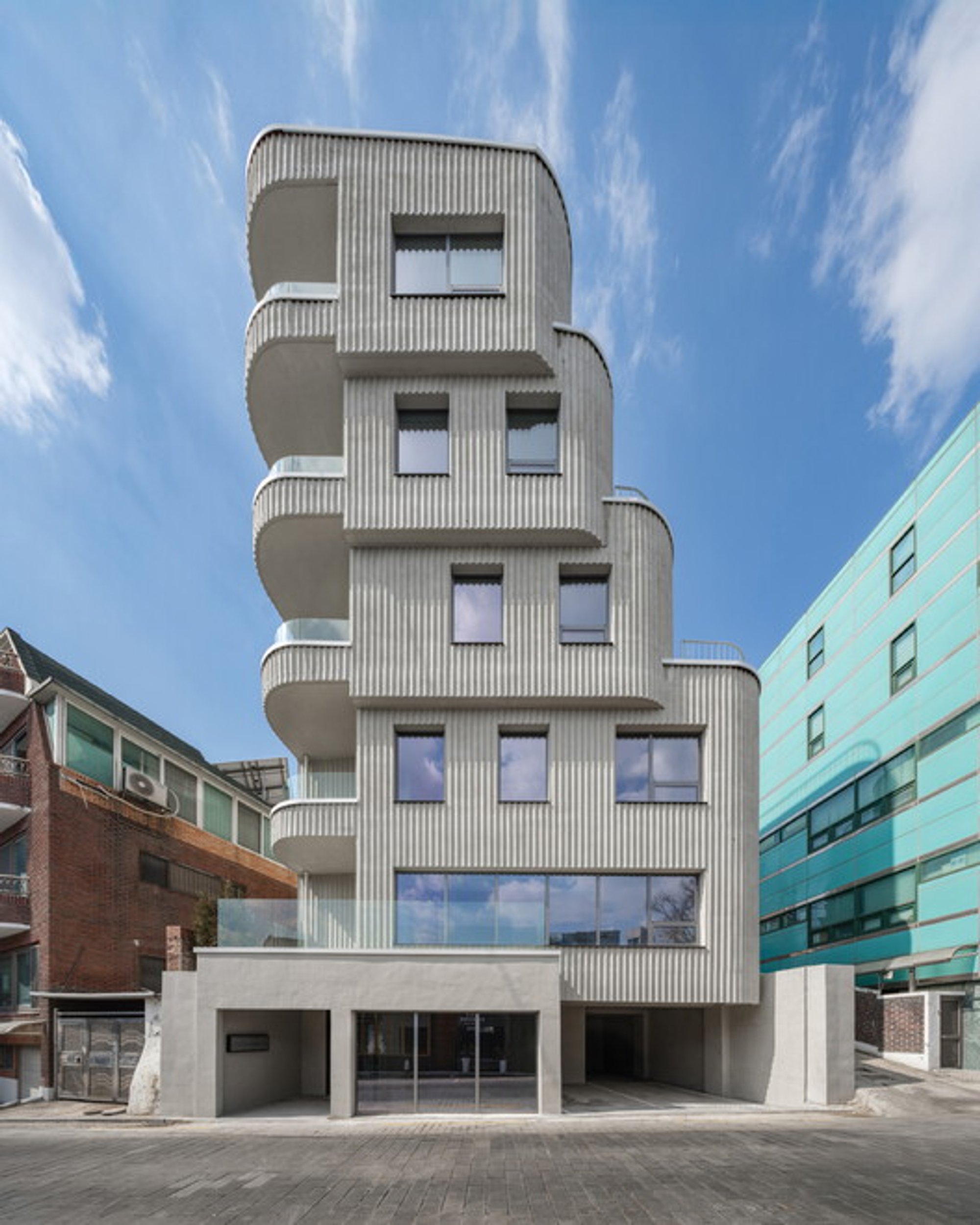
STACK by Johanjun Architects – A Sculptural Commercial Landmark in Seongbuk-dong, Seoul
Pencil House is a transformed office space featuring bright minimalist interiors, improved insulation, and a distinctive elongated façade resembling a pencil.

STACK, designed by Johanjun Architects, is a striking commercial building located in the culturally rich neighborhood of Seongbuk-dong, Seoul. Completed in 2025, the 105 m² project stands as a modern architectural intervention in an area known for its traditional homes, historic sites, and the tranquil atmosphere that contrasts with the hyper-dense urban fabric of central Seoul.
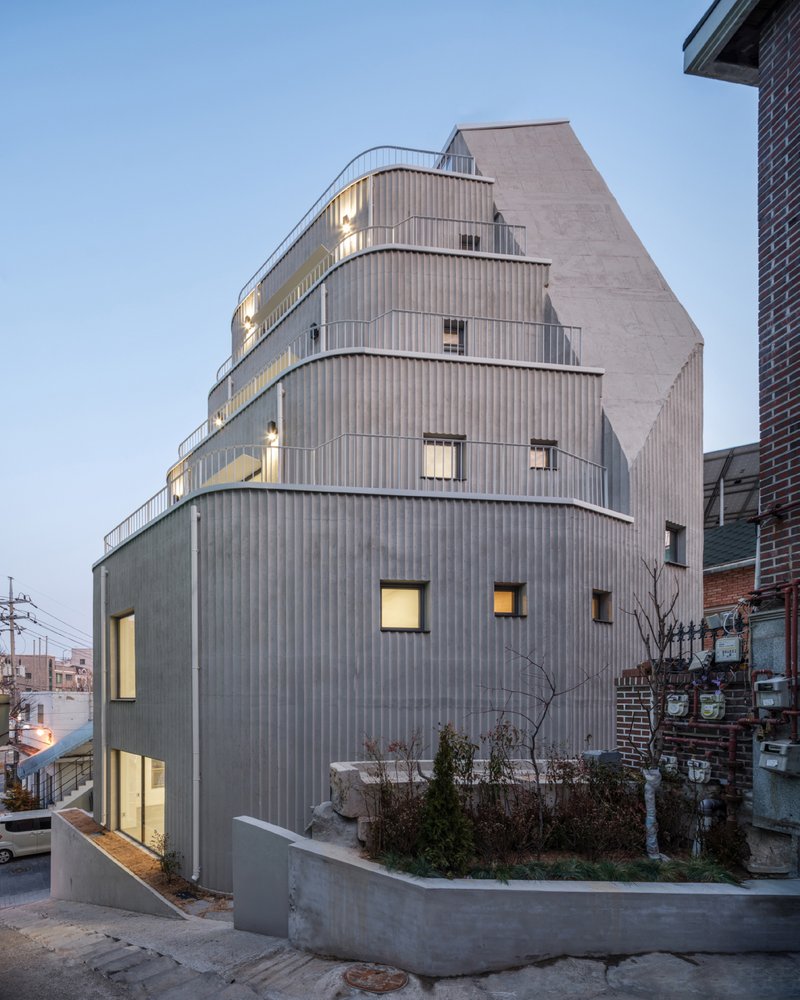
A Site Rich with History and Urban Texture
Seongbuk-dong, once lined with the residences of literati, artists, and prominent figures, still carries the layered memories of its past. The architects were already familiar with the site, passing it frequently after relocating their own office to the neighborhood. The plot, perched on a sloping terrain and formerly hosting a house later converted into a small commercial facility, presented both challenges and opportunities.
The steep topography, stone retaining wall, and proximity to the road required careful structural planning. Despite the risks associated with excavation and civil complaints, the architects embraced the project as an opportunity to create a building deeply rooted in its context.
Design Inspired by Bedrock and Urban Visibility
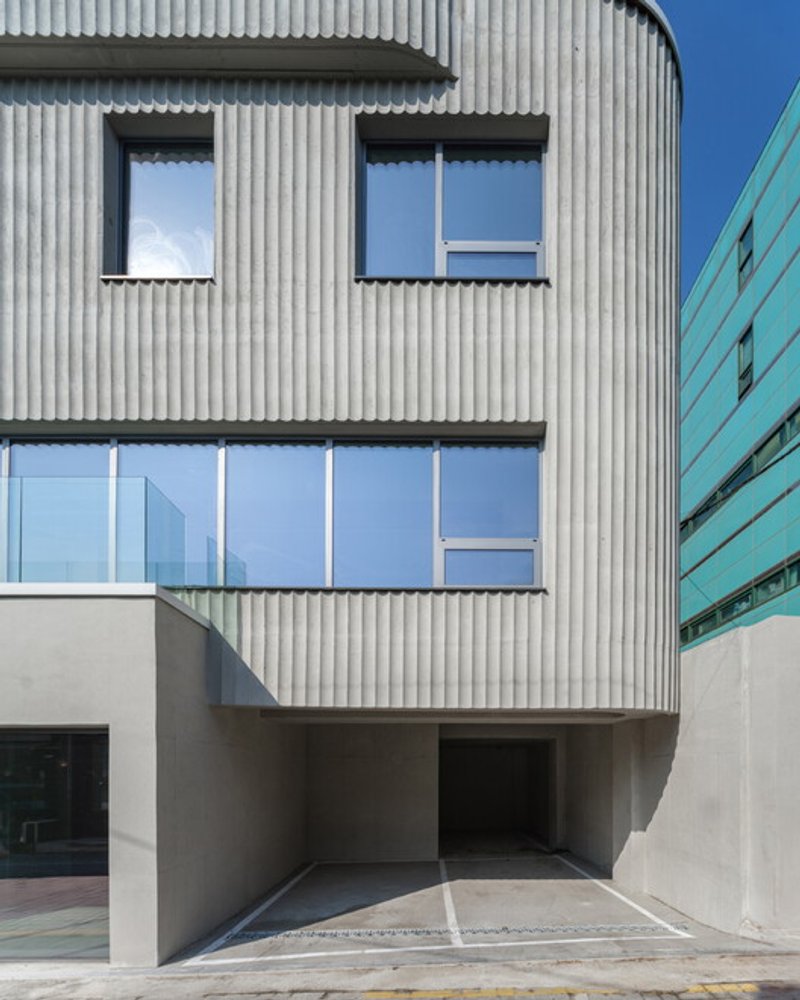
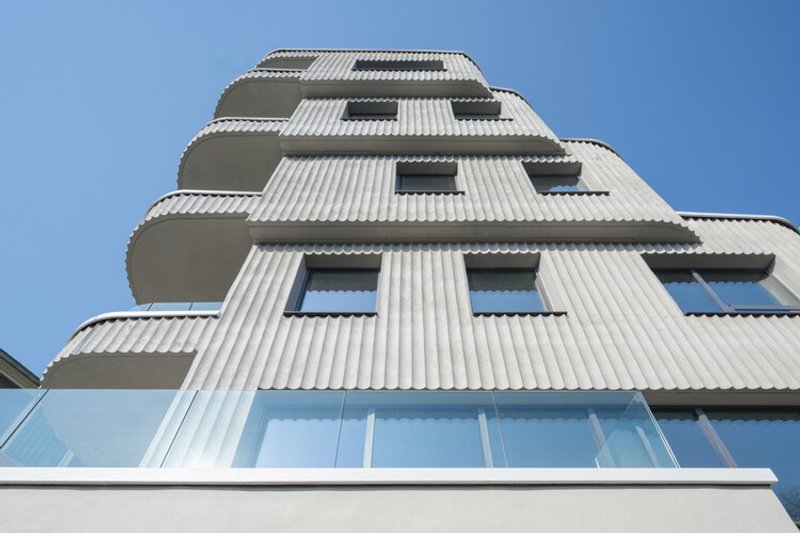
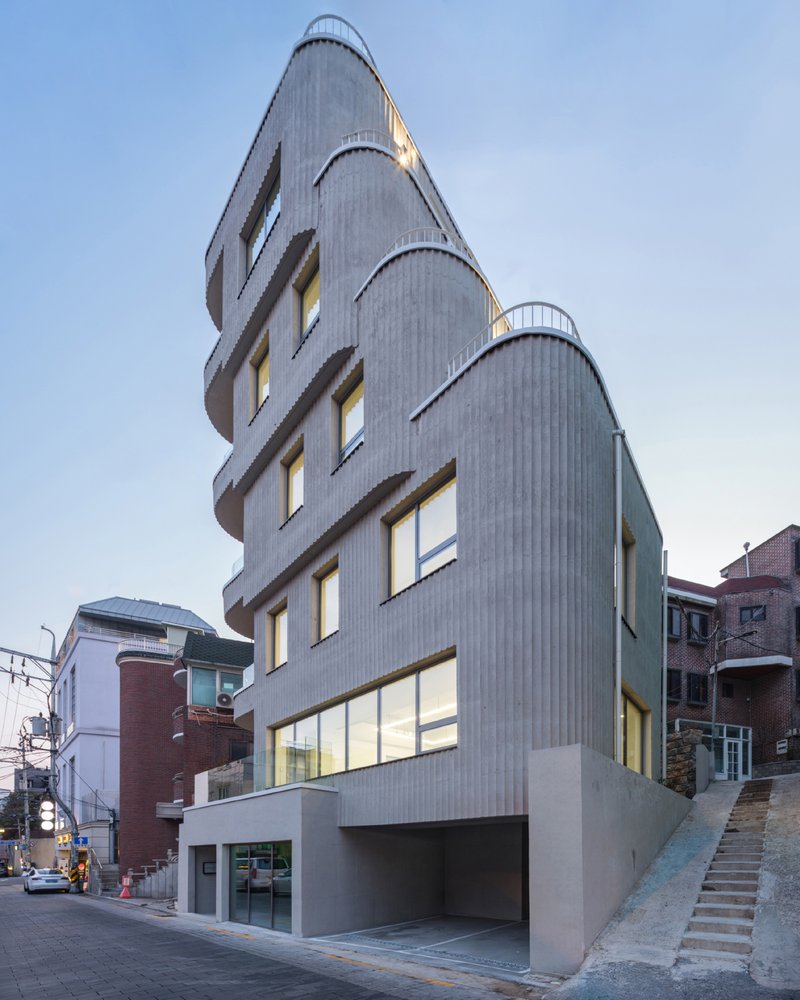
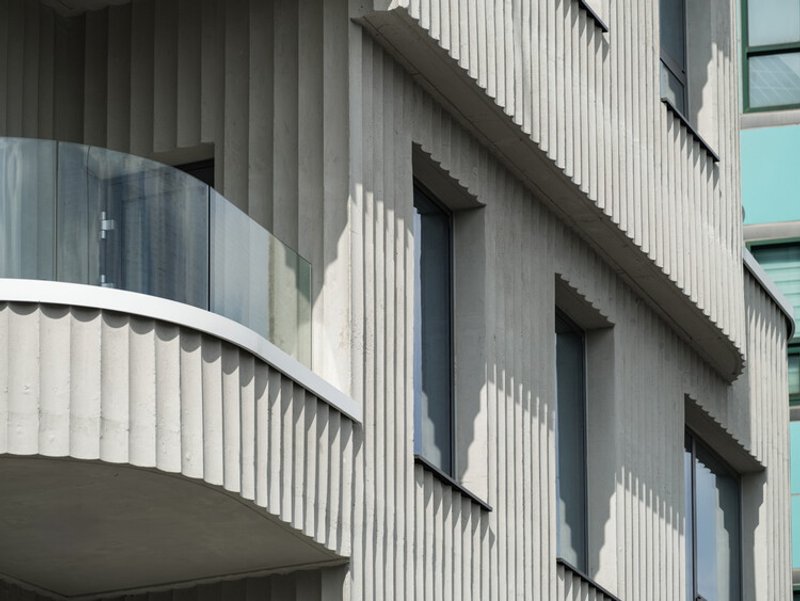
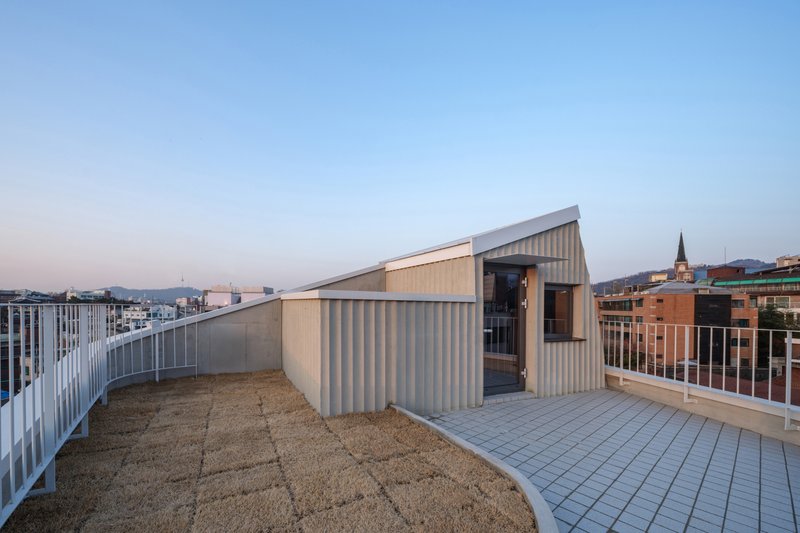
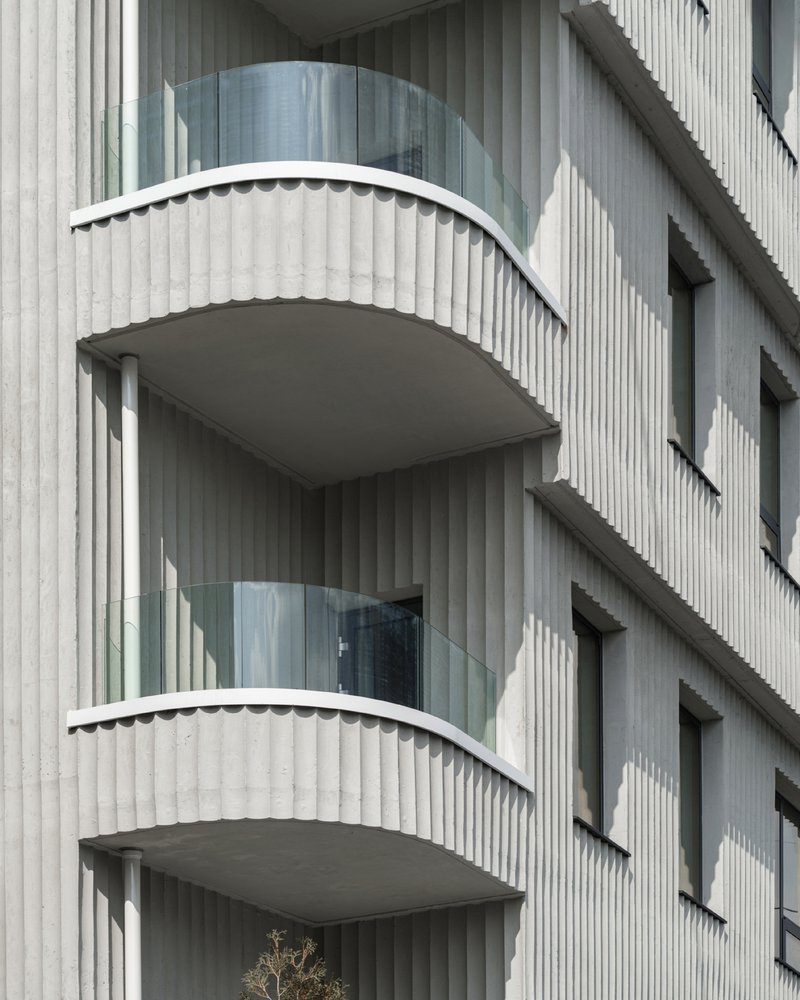
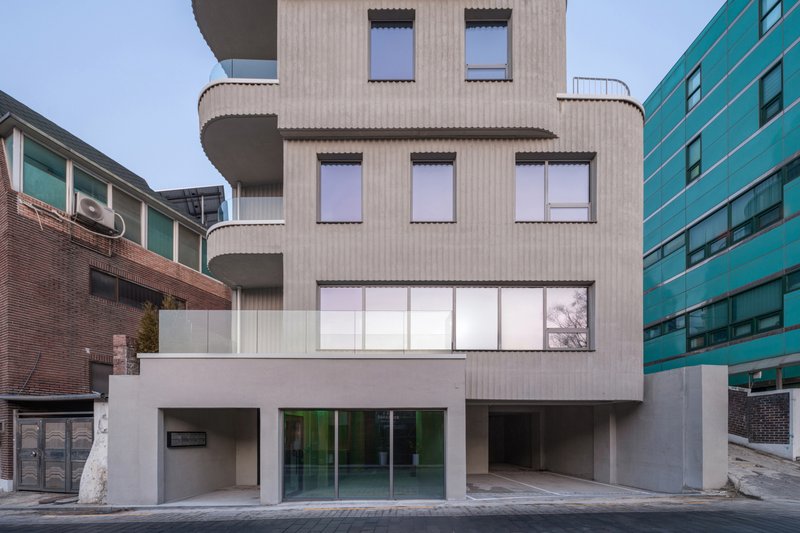
Because of its high visibility from Seongbuk-ro, one of the main roads in the area, the building needed a memorable façade. Johanjun Architects chose exposed concrete with a vertical pattern, evoking the feeling of a monolithic form carved directly from the mountainous bedrock of Bukhansan.
The site's geology made basement construction difficult, but direct road access was a major asset. The architects combined functionality with sculptural expression, maximizing the commercial appeal of the building while adhering to zoning and daylight regulations.
Dynamic Massing and Regulatory Constraints
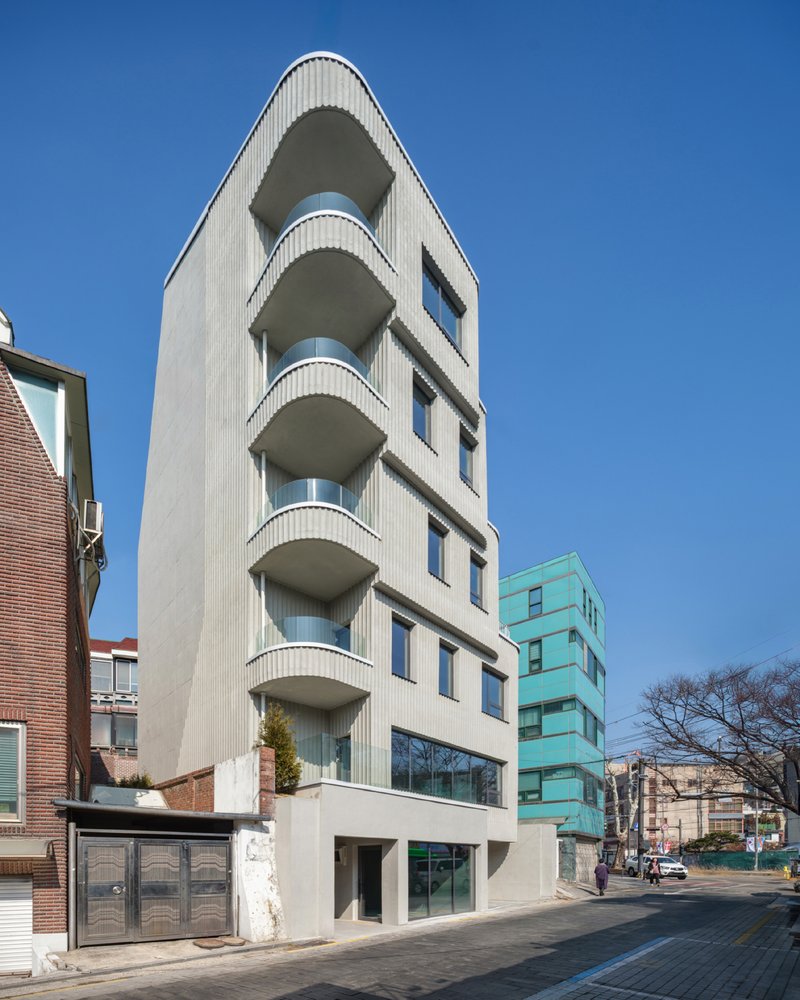
The northern side of the property faced tight restrictions due to North-Facing Daylight Regulation (Jeongbuk Iljo). To translate this required set-back into a visually expressive form, the massing steps forward from the third floor upwards. This stacking effect creates tension and movement on the façade, making the building stand out from the street while subtly navigating the legal conditions.
A Personal Memory Hidden in the Architecture
One of the most unique aspects of STACK is a personal homage embedded within the design. The previous building had housed a beloved local burger shop, Yum Yum Burger, which the architect often visited. As a quiet tribute, he incorporated subtle rounded forms reminiscent of stacked burger buns into the façade. Although this story was never revealed to the client, it adds emotional depth and narrative meaning to the project.
Efficient Construction and Urban Craftsmanship
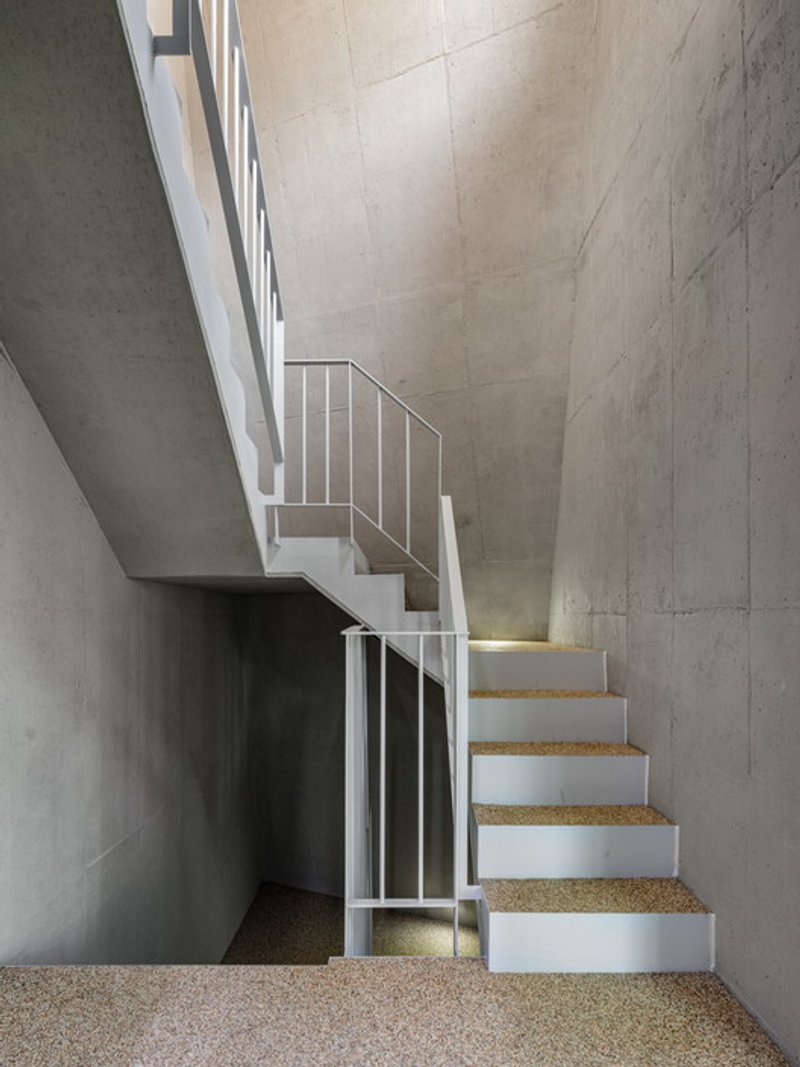
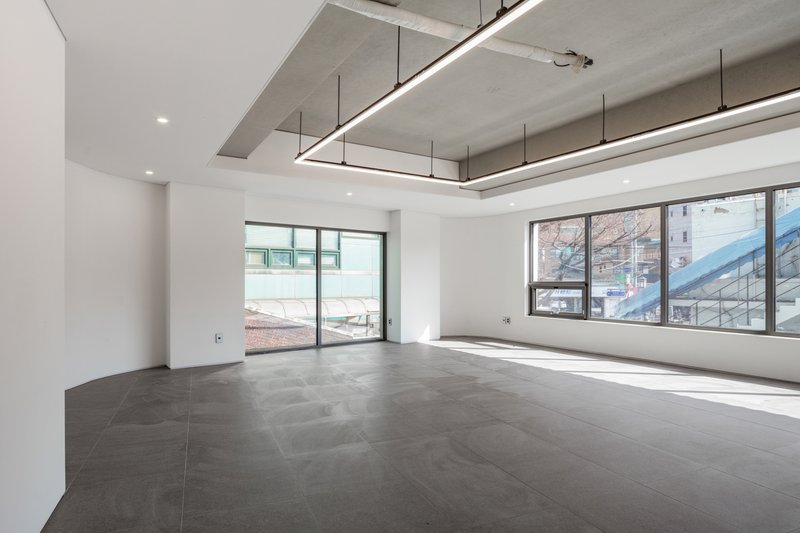
The building’s exterior softens at the corners, allowing the façade to wrap seamlessly across surfaces. Inside, clean and minimal design choices ensure flexible use for future tenants. Despite construction challenges—from sloped conditions to neighborhood constraints—the project was completed safely and successfully, earning the client’s satisfaction and adding a contemporary landmark to Seongbuk-dong.
STACK embodies the spirit of Seoul’s evolving urban landscape, where memory, history, and modern architectural expression come together in a compact yet impactful structure.
All the photographs are works of Mongsang




Popular Articles
Popular articles from the community



Alton Cliff House: A Harmonious Retreat by f2a Architecture in Lake Country, Canada
Alton Cliff House blends corten steel, prefabrication, and sustainable design, creating a luxurious, energy-efficient retreat perched on Canadian cliffs.
Split House: A Compact Urban Home Blending Privacy, Light, and Flexible Living in Japan
Compact Japanese home featuring DOMA space, flexible café potential, passive lighting, privacy zoning, and sustainable urban living design.

Solar Steam: A Climate-Responsive Architecture That Redefines the Monument
A climate-responsive memorial architecture that transforms heat, decay, and time into a living system reflecting humanity’s ecological impact.


Similar Reads
You might also enjoy these articles


The Ken Roberts Memorial Delineation Competition (Krob)
As the most senior architectural drawing competition currently in operation anywhere in the world, it draws hundreds of entries each year, awarding the very best submissions in a series of medium-based categories.

Waterfront Redevelopment and Urban Revitalization in Mumbai: Forging a New Dawn for Darukhana
A transformative waterfront redevelopment project reimagining Darukhana’s shipbreaking heritage into an inclusive urban future.

OUT-OF-MAP: A Call for Postcards on Feminist Narratives of Public Space
Rhizoma Design and Research Lab invites artists, designers, architects, researchers, and students to reflect on how feminist perspectives can reshape public space. Selected works will be exhibited in Barcelona, October 2026. Submissions open until 15 April 2026.


Documentation Work on Buddhist Wooden Temple
Architectural syncretism and cultural hybridity: A comparative study of the Buddhist temples in Chattogram Hill tracks


Explore Architecture Competitions
Discover active competitions in this discipline




The International Standard for Design Portfolios


The Global Benchmark for Architecture Dissertation Awards


The Global Benchmark for Graduation Excellence


Challenge to reimagine the Iron Throne
Comments (0)
Please login or sign up to add comments
No comments yet. Be the first to comment!