
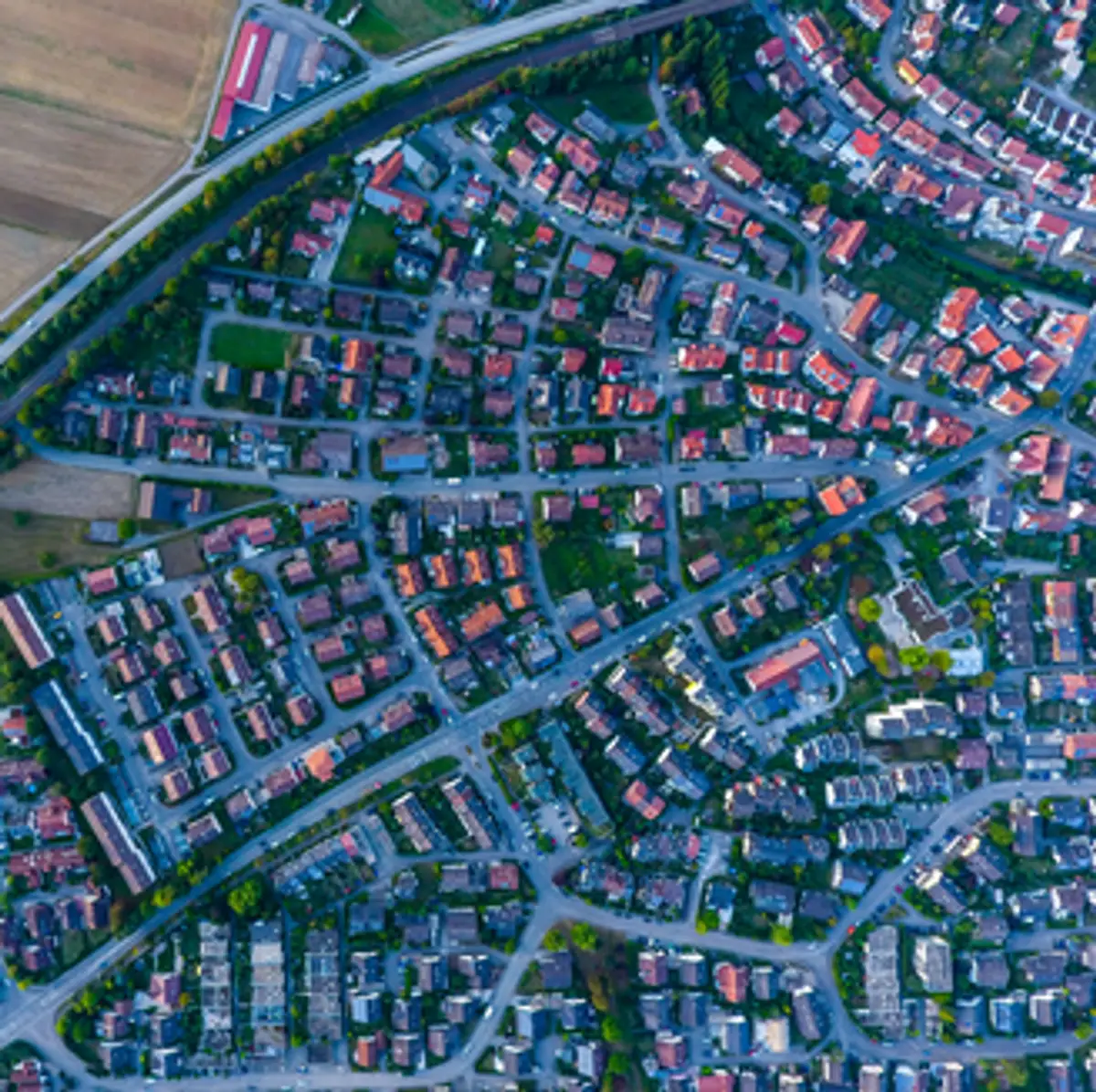
City of Hope
A city that gives hope to people by starting debates and discussions on the street.

A protest is a statement or action that shows disapproval or disagreement towards something. It can be an event in which people gather to show their disapproval towards something as well. By protesting, people alter the agenda and start a debate.
The challenge was to create a utopia for design for protest. Under the Rise category of the competition, a temporary settlement design for occupation had to be designed at the neighbourhood level for 10,000 protestors.
The site was chosen on the Delhi NCR - GT Road due to its administrative and historic importance which helps in enhancing the agenda of the protest and will also be noticeable by the public.
The concept was to design a temporary settlement for protestors without causing any hindrance. Protestors have the right to agitate, but they can't block the roads.
Zoning has been done in such a way that there won't be any chaos and also the visitors/protestors will be getting proper guidance regarding the site. Different zones have been designed according to their function.
Units were initially designed taking up inspiration from umbrellas which will be a convertible structure. It could have been used as a congregation space in the daytime and as a residential structure during the night. Experimentation was then done by designing an inflatable structure which can accommodate 1,000 people, but then it takes a lot of power for inflation and the material is prone to wear and tear. Pyramidal tents using bamboo frames and fabric were designed. This ideation was dropped as it had too much negative space and was not insulative enough. After all these explorations, we came to the idea of cargo inspired structures wherein steel frames for the outer structure and paper tubes sandwiched between PVC boards were used. The residential areas are designed in clusters using prefab materials.
The congregation space has been designed using bamboo frames, bamboo curtains as flaps and tensile fabric as the roof.
The kitchen has been designed using bamboo framed walls and asbestos sheets. To make the kitchen bigger, portable walls are made using steel frames and bamboo plywood and roofs using PVC rolling sheets.
Sanitation units are of bio-toilets.
A meeting space/multipurpose hall has been designed in such a way that bamboo frames are tied to the trees and bamboo panels are used for roofing.
A space has been allocated for vehicles to do the loading/unloading of goods or people so that it doesn't hinder the traffic.
Bridge: To not hinder the traffic on the highway due to pedestrian crossing, a bridge has been designed connecting the site across the highway.
Proximity: The services/resources will be easily accessible and the management of services has been made easy due to the existence of secondary and tertiary roads within the site.
Protests deal with psychology along with physical phenomena. Temporariness and flexibility are tools to design such protest spaces. Thus, an architect's role is to provide them with their shelter needs which should be climate-responsive and also moulding the space better such that it is noticeable by the public and thus helps in enhancing the agenda of the protest.

Popular Articles
Popular articles from the community


graciastudio Turns a Viewless Tijuana Lot Inward Around a Courtyard of Concrete, Timber and Trees
In Tijuana, Jorge Gracia's GA2 House stacks a timber-clad private floor over exposed concrete and replaces a missing view with a planted interior patio.

LT2A and OPEN Architectes Thread a Brick and Glass High School Through a Wooded Belgian Campus
In Braine-l'Alleud, a 3,000 m² wing for Collège Cardinal Mercier pairs pale brick with a glazed colonnade, deferring to a small chapel and a dense wood.

Cube Design Draws an Ecological Corridor Between Two Shenzhen Hills with the Nankai Building
Beside Shenzhen's container docks, the Nankai Building pairs stacked balconies with a climbing green screen to connect two hillsides across its height.


Singing Woman: An Opera House That Performs Before the Curtain Rises
Ovidiu Cristian Pavel's conceptual opera house translates Estonia's choral identity into a sculpted waterfront landmark facing the Baltic Sea.

Similar Reads
You might also enjoy these articles
The Rhythm of Seasons
A Farmers' Market Connecting Nature and the City

More Than a Building-Designing a Living System
More Than a Building-Designing a Living System
Base Beyond
DESERT COMPOUND ARID: TOURISM OF ABSENCE AND ABUNDANCE

Comments (0)
Please login or sign up to add comments
No comments yet. Be the first to comment!