
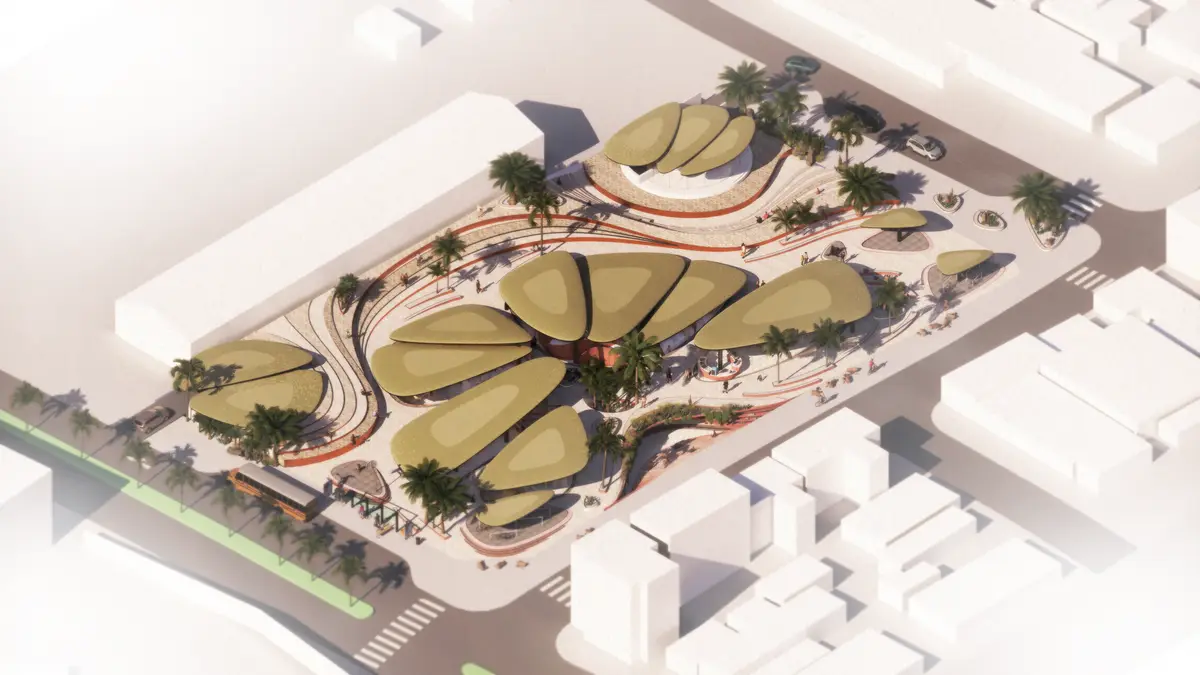
SUB-TERRA: CULTURAL OASIS FOR ARTS AND EDUCATION
With the interpretation and adoption of vernacular passive thermal comforts principles, the cultural center is an underground incubator for arts to be created and inspired, a public gathering forum for people to learn, enjoy and expand the rich and unknown culture of the north of Chile.

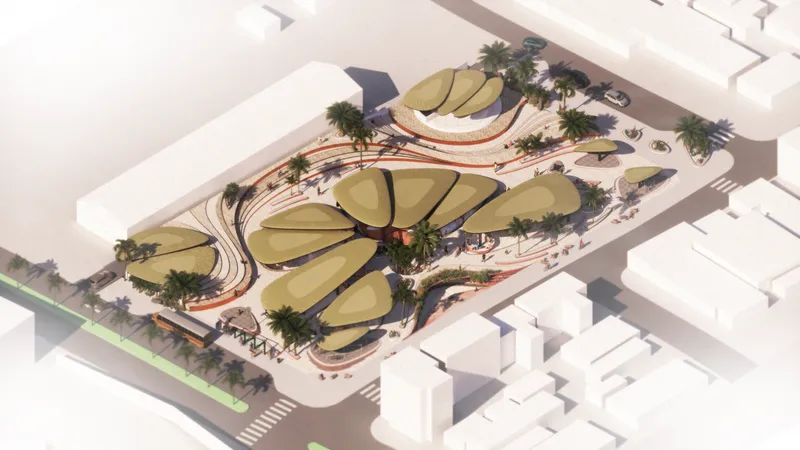
1. Concept
“These housing sites are composed of several semi-underground enclosures of circular shape, built with stones nailed vertically and joined with seaweed ash mortar mixed with earth...Three or four of these structures clustered around
a central courtyard where much of the daily activity took place, family
and community”. (1)
Inspired by the ancient constructions made by the natives Changos, and learning from the accumulated knowledge of local architecture and its thermal principles, the project aims to be a unique space for the creation and promotion of regional culture.
 Chango´s settlement (1)
2. Location
The coast of Antofagasta it is characterized by the presence of a cold desert climate with abundant sunshine, cold nights, strong westerly winds, abundant humidity, morning mists and the absence of precipitation. This determines the main design drivers to cope with the impacts of climate.
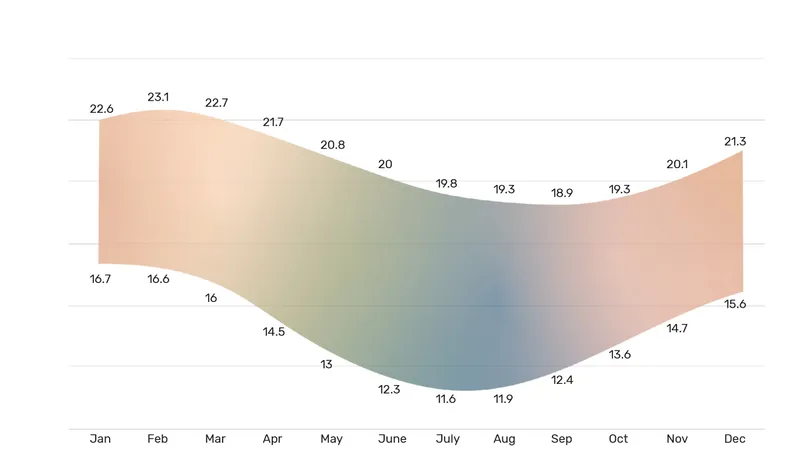 Anual temperature
Being the most populated city of the north of Chile and with a recently growing high rise building development, more than the half of the population is 65 + years old, with this group being the least educated (2). This reveals the urge to provide inclusive spaces and activities for older generations as well for young people with a top-notch technology infrastructure. This can help the city to be not only a dormitory for workers but a place to stay for innovate, learn and spread north culture.
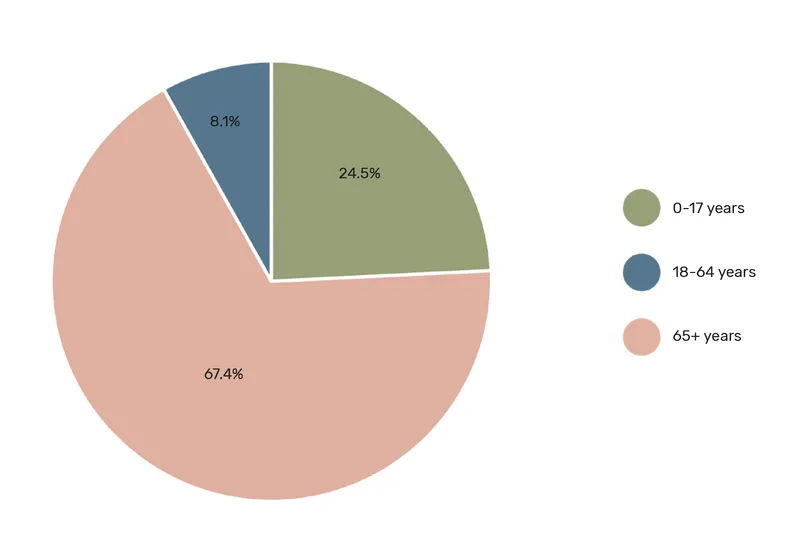 Demography
3. Process
The first step was to define some key elements that could help us understand what the culture of Antofagasta is, taking in consideration two principles:human and nature. This relations set the conceptual guidelines to make the first decisions about form, program and materiality.
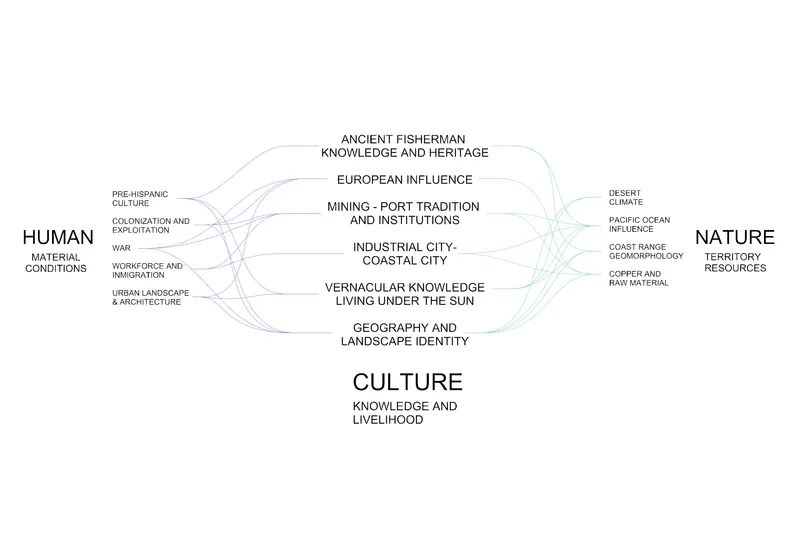 Conceptual map (4)
4. Methods
The starting point was study the history of the territory following the same two principles: human and nature. After a brief study of the knowledge left by the Changos -a precolonial nomad tribe that first inhabited these territories- and its constructions, a study of how local architecture has adapted to this specific territory was made. With this and study of urban context, we established a zoning and a number of specific passive design strategies that the project takes to interact with the environment.
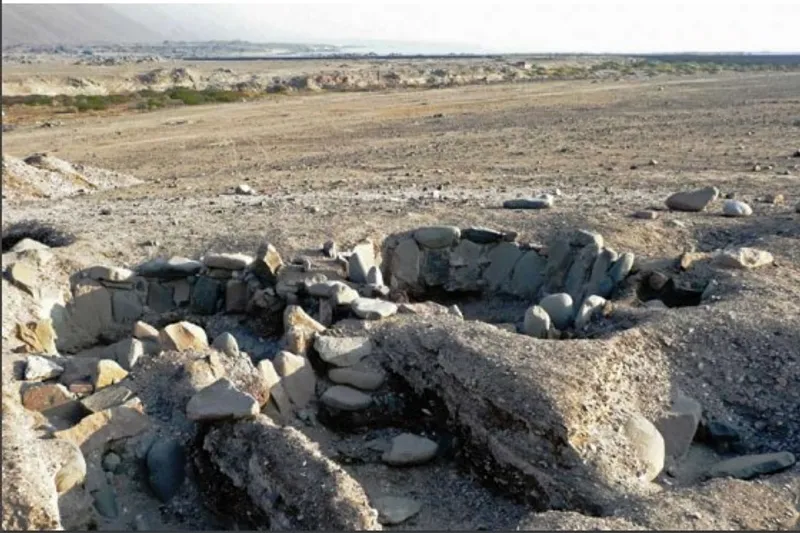 Chango´s settlement (1)
5. Program
The project can be examined three dimensionally. The vertical layers represent the accumulation of the “times”. From the ground level plaza takes shapes of railway, industrial landscape which dominantly change the setting of the modern Antofagasta, to the underground space mimicking the copper-mining-scape around the region, as the project goes deeper underground, it can be traced back to the first building typology made by the local ancestor.
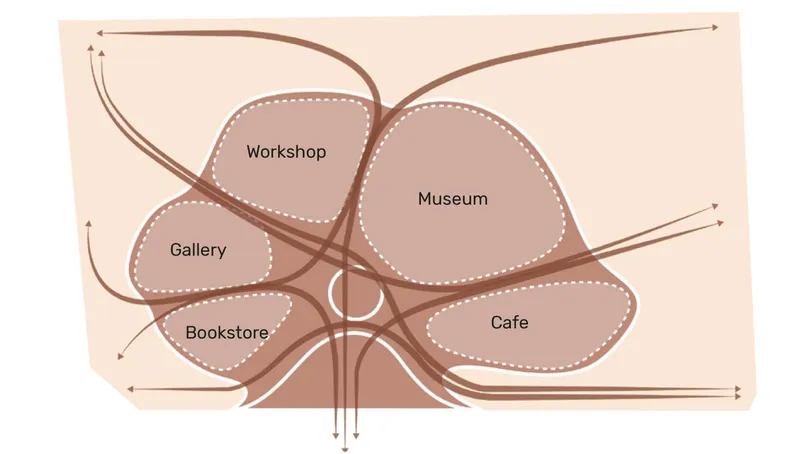 Flow diagram and zoning
Horizontally, the organization of the different programs carries a fundamental perspective toward the concept of “cycles”. By placing each of them radially spread out, we first set up the cycle of “art”. First the art was produced in the workshop, then depending on the scale and media, the art works can be exhibited or displayed in gallery or museum space, where visitors can ponder upon the pieces and experience them through their own sensations.
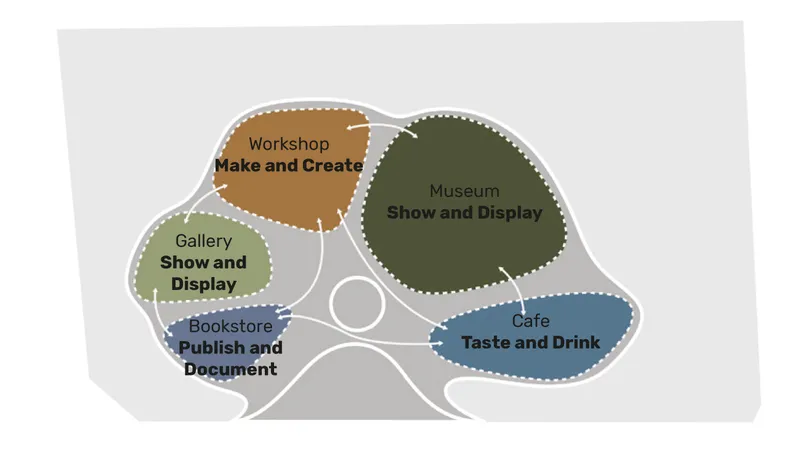 Zoning
Furthermore, the cycle ends, or begins again in the cafe and bookshop, as the places of possible transformation of the senses happen. Through the publication, art creations could be documented and spread.
 Landform process
The corner condition of the site suggests that all sides of the project need to be as equally accessible and visible from any point similar to an open plaza.
The project gives priority to the pedestrians leaving the main access facing the local street Lima. The car entrance is placed next to Iquique street, and the exit is set to be allocated at the opposite corner next to the local street Tarapacá.
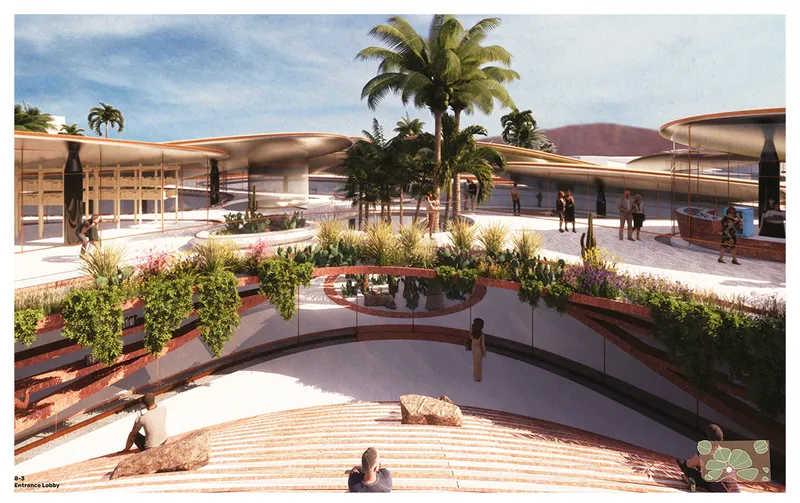 View from entrance
The public program such as the bookshop and coffee are accessible from the ground level. The rest of the program remains underground to leave an open space for public gatherings.
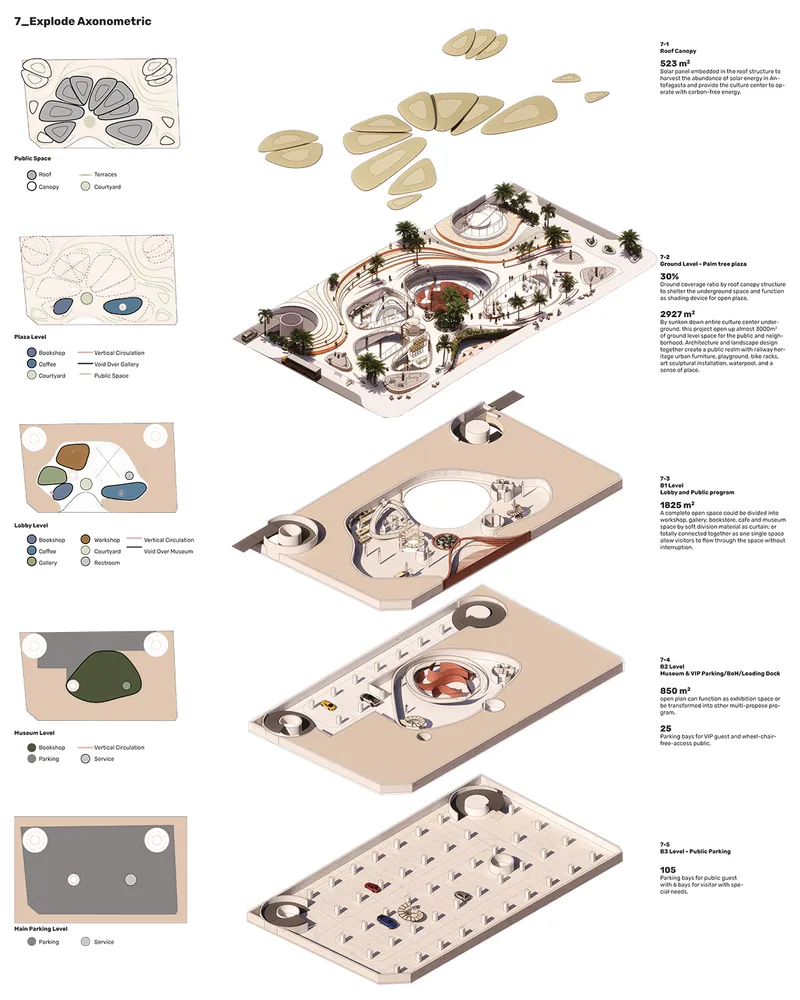 Programme
6. Materiality
The intention is to resemble the ruins of the stones construction of the natives and the natural-artificial landscape of the mining landscape as these textures represents a recognizable image of Antofagasta.
The structure is made up of a pallete of pigmented earth tone reinforced concrete. For the secondary elements, corten steel, bronze and glass.This materials are chosen because of the adaptation to the territory. Thermal mass is achieved by concrete structure. The roof structure is made of light ventilated steel trusses enveloped by a corten steel skin. The main idea is to blend naturally with the north landscape and provide thermal confort to the interior.
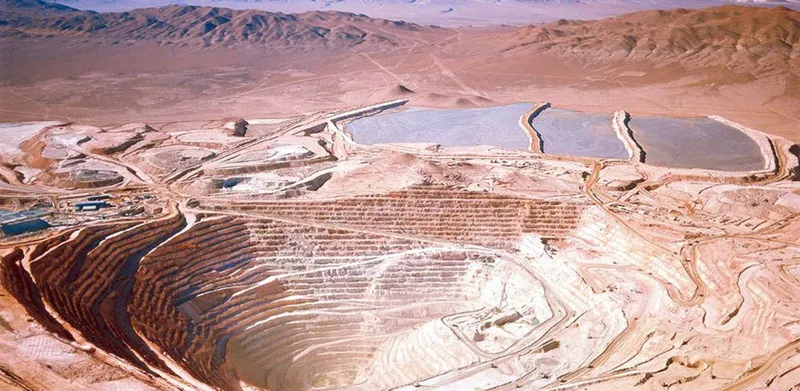 Copper Mine, Antofagasta
7. Design objectives
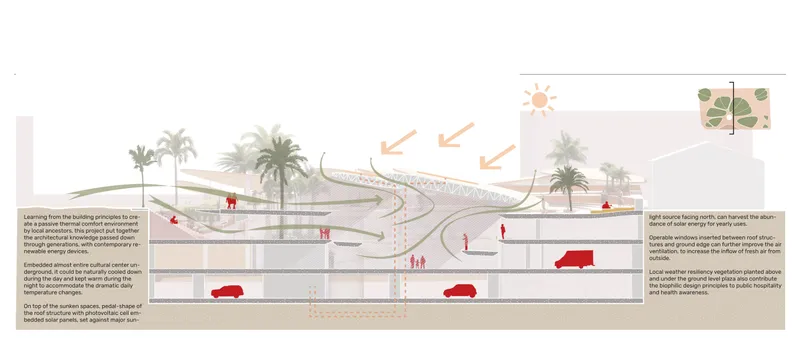
The first decision is to protect the building from the insolation by creating a multi-level underground space covered by massive wing roofs that emulates the stones of native constructions. The program follows the principle of the Changos settlement organization system: a group of organic underground spaces linked to a central communal space.
Thick walls, compact volumes, wing roofs with a setback facade, underground construction, venturi and chimney effect through the roofs are some of the examples of vernacular and local architecture that the project has adopted to interact with the environment and provide thermal confort through passive design strategies.
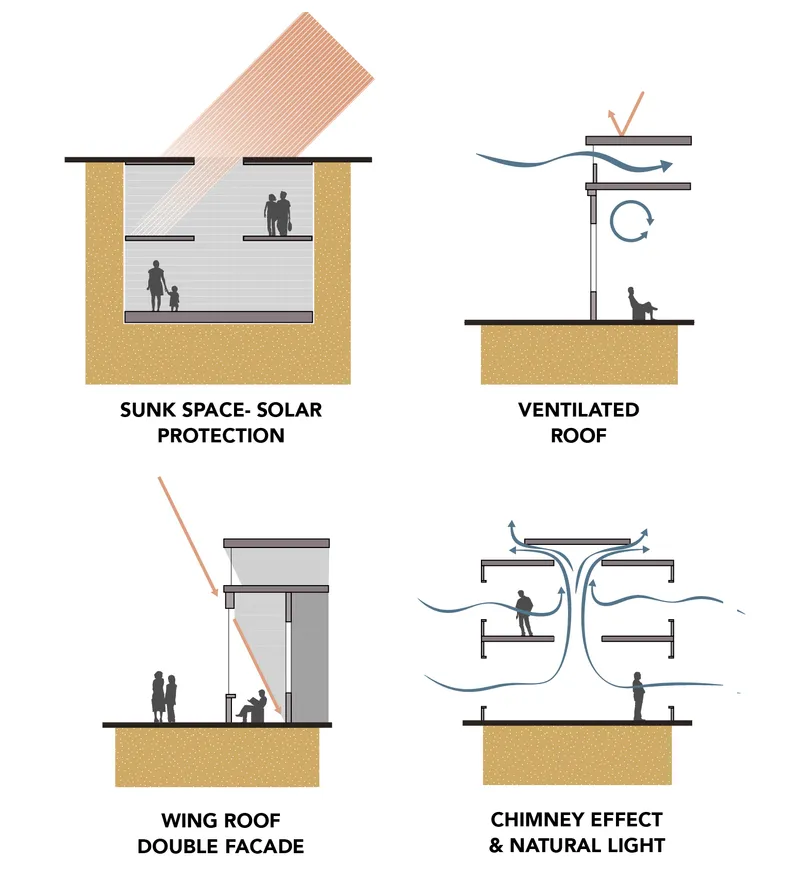 Passive design strategies (4)
Knowing the subterranean condition of the project and taking in consideration what the earth digging process involves, the project use part of the excavated earth to create the terraces that form the artificial landscape on the plaza level.
8. Programming
The amount of space left in the -2 floor is intended for future expansions of the project that could include an auditorium, or a multi-use space for events.
9.Phasing
Even though the copper industry represents an important economic activity, as it represents 10% of the GDP and more than half of the exportations, the negative effects of the mining process on the health of people and the land, such as tailings or the high demand of natural resources like water to operate are well known. This can indicate a future where the extraction and all the associated activities such as transportation, may come to an end.
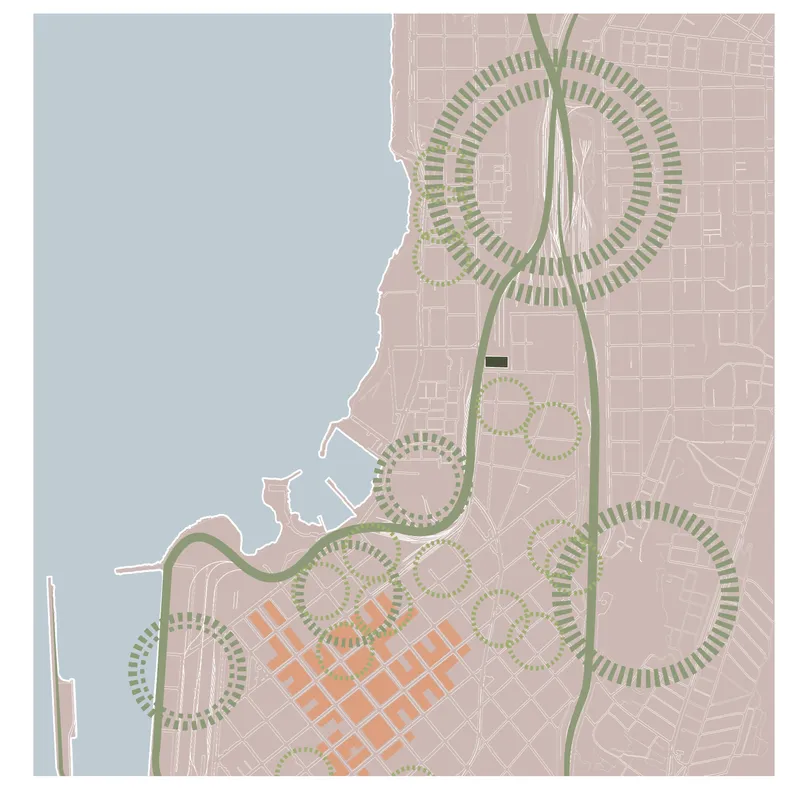 Future impact. Cultural venues, public schools and historic district as a net.
As the location of the project is right next to the railway site, which occupies a considerable area into the city´s grid, the possibilities of transformation are there to imagine. A big green public space for the city that replace the railway inaccesible area into a theme park with playgrounds, facilities and public services. The cultural center would be then a part of a larger system that links pubic spaces with cultural buildings.
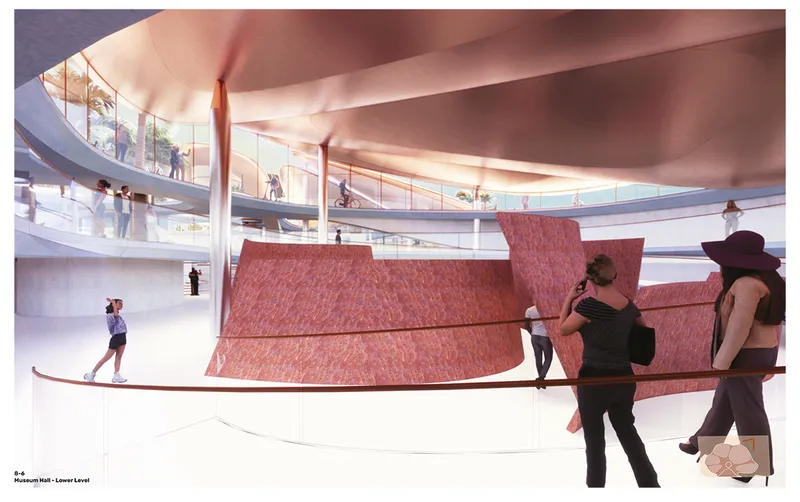 View from Museum
10. Final notes
"Culture is the deep exercise of idenitity" (3)
If culture can be defined by the relation between human and nature, we understand culture as an in-movement process that can be determined mostly by the material conditions of a human group. The relation between the first human group inhabiting the desert and coast territory, was shaped by the desert, the ocean an its resources. These natural conditions defined their culture and their constructions. Their settlements, ships, and tools left a unique trail of knowledge about how to intervene within nature by using minimum resources.
The natives constructions, the life under the soil and the sun, the relation between human and nature that has forged the ways of what Antofagasta is and its cultural identity.
The future is now, artificial intelligence can change the work-life balance in favor to the people, letting space to develop the human spirit and free time. Antofagasta can become a place to stay, to innovate and hold the identity and culture as a treasure. The main goal of the center is to become second home for the people. An agent of change in people`s life by giving them safe space for education, culture and leisure.
(1) Fishermen of the fog: The Changos and their ancestors-Chilean Museum of Pre Colonial Art
(2) Socio-Economic Characterization of Antofagasta. Ministry of Social Development and Family
(3) Julio Cortázar, argentinian writer
(4) From the authors

Popular Articles
Popular articles from the community


Hill & Cross Opera: Sculptural Opera House Architecture Shaped by Tallinn’s Landscape and Identity
Hill & Cross Opera reimagines opera house architecture in Tallinn through its sculptural hill, civic plaza, glass wave and a luminous cross.

Play: Fragments of Their World
Familiar architecture becomes modular playground design, creating safe spaces where displaced children can learn, connect, imagine and play.

Little Red Riding Hood: Architectural Design as a Journey Through Fear, Light, and Storytelling
Little Red Riding Hood reimagines the fairy tale through architectural design shaped by fear, light, scale, memory, uncertainty, and choice.

Co-life: Sustainable Architecture for Age-Friendly Community Living
Co-life reimagines sustainable architecture for seniors through courtyards, rammed earth, shared gardens, and spaces designed for belonging.

Similar Reads
You might also enjoy these articles

Day and Night Park: A Time-Based Urban Newsstand in Beijing
A temporary urban newsstand in Beijing blending travel, light, and reading through poetic colors, compact form, and community-focused design.

Modernist Patio Renovation in El Masnou, Barcelona by Oliver Segura Arquitectura + Cebrià Arquitectura
Modernist patio renovation blending tradition and innovation with a movable pool, leveled floors, and Catalan materials in El Masnou.
Alto Residencial Coop: Cooperative Housing Development in Santiago de Compostela by Carbajo Barrios Arquitectos
A linear cooperative housing complex blending white volumes and perforated metal façades, enhancing community living, natural light, privacy, and urban integration.
Vil Genis School by BPA ARCHITECTURE – Massy, France
Vil Genis School in Massy, France, features sustainable design, south-facing classrooms, community integration, accessible spaces, and modern educational architecture.

Explore Cultural Center Competitions
Discover active competitions in this discipline


Challenge to reimagine the Iron Throne

Photograph architecture without architects

Illustrate the lost glory of Angkor Wat - Render Challenge

Design challenge to reuse E-waste
Comments (0)
Please login or sign up to add comments
No comments yet. Be the first to comment!