
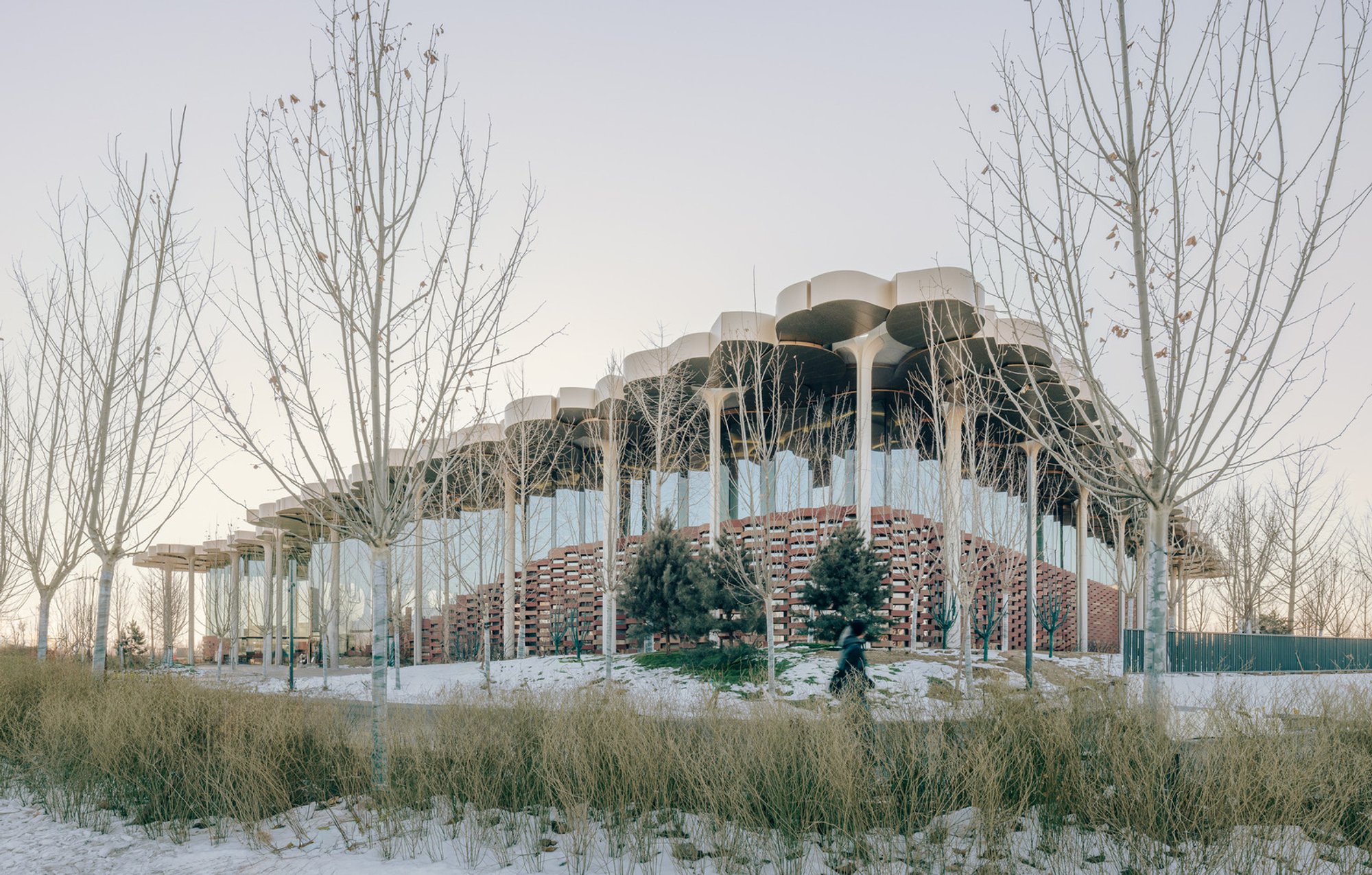
Sustainable Library Architecture: Inside the Beijing Sub-Center Library by Snøhetta
The Beijing Sub-Center Library by Snøhetta showcases innovative, sustainable design, redefining libraries as cultural and community hubs.

A New Cultural Landmark in Tongzhou
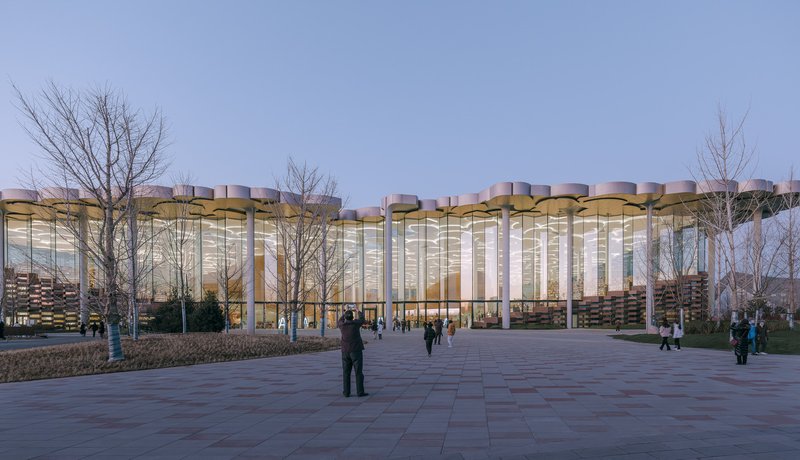
The Beijing Sub-Center Library, designed by Snøhetta, redefines the concept of libraries in the digital age. Situated in the Tongzhou District, a growing cultural hub and eastern gateway to Beijing, this library serves as one of three major cultural institutions transforming the area. Beyond its role as a repository for books, the library is a dynamic public space fostering community, learning, and cultural exchange, underscoring its place in the broader urban fabric of Beijing.
Revitalizing the Library in the Digital Era
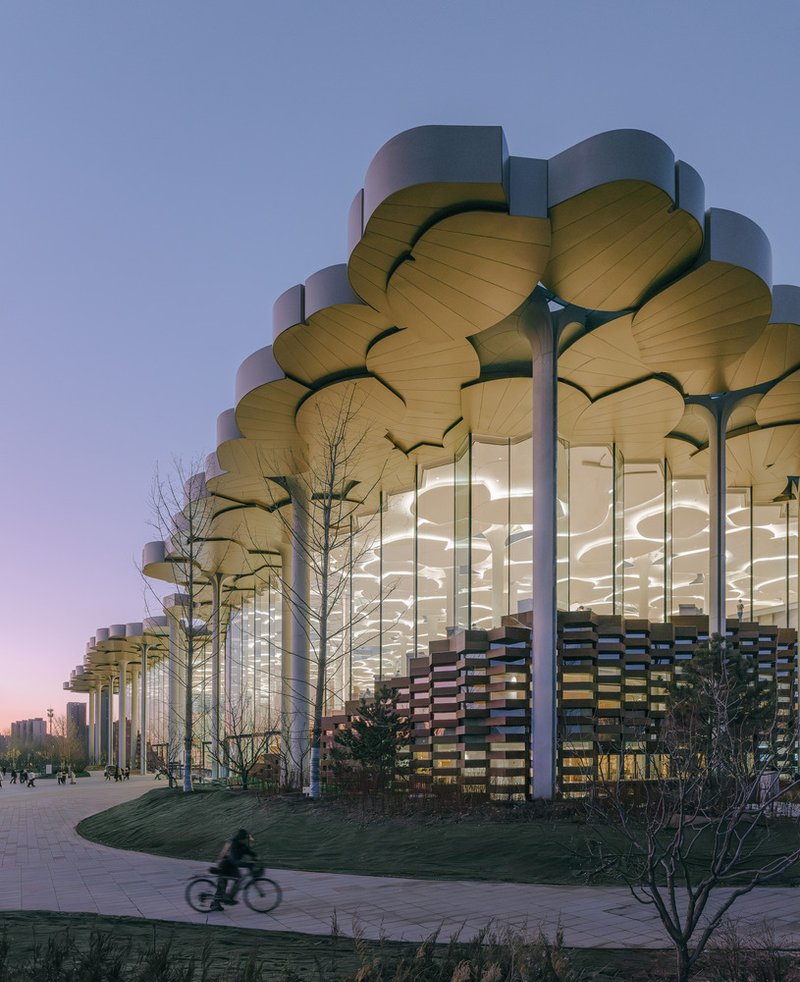
In an era where information is increasingly digitized, libraries face challenges to remain relevant. Snøhetta addresses this with the Beijing Sub-Center Library, which celebrates the tactile and immersive experience of physical books. By combining a functional design with a picturesque setting surrounded by hills, trees, and the Tonghui River, the library reconnects users to the joy of reading and to their natural surroundings.
Kjetil Trædal Thorsen, Snøhetta's co-founder, emphasizes the enduring appeal of libraries, stating, “It is up to us to reinterpret the relationship between body, mind, and surroundings to rekindle the joy of reading away from the screen.”
Architectural Vision and Design
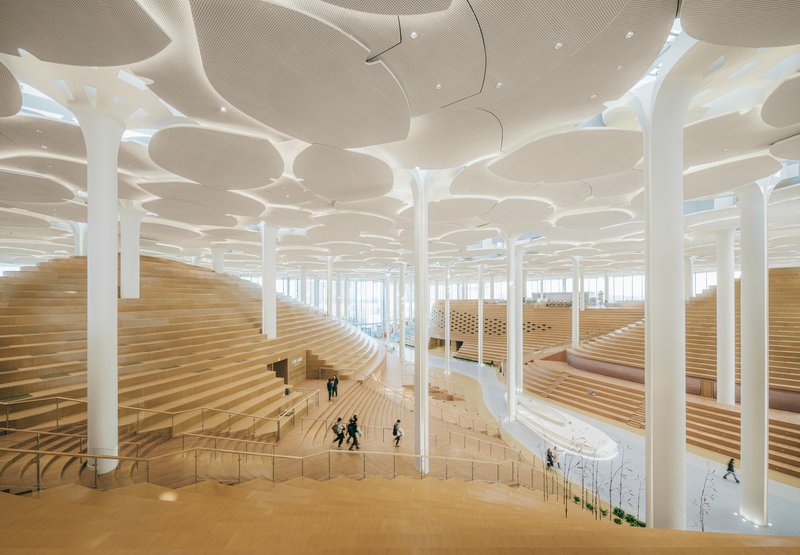
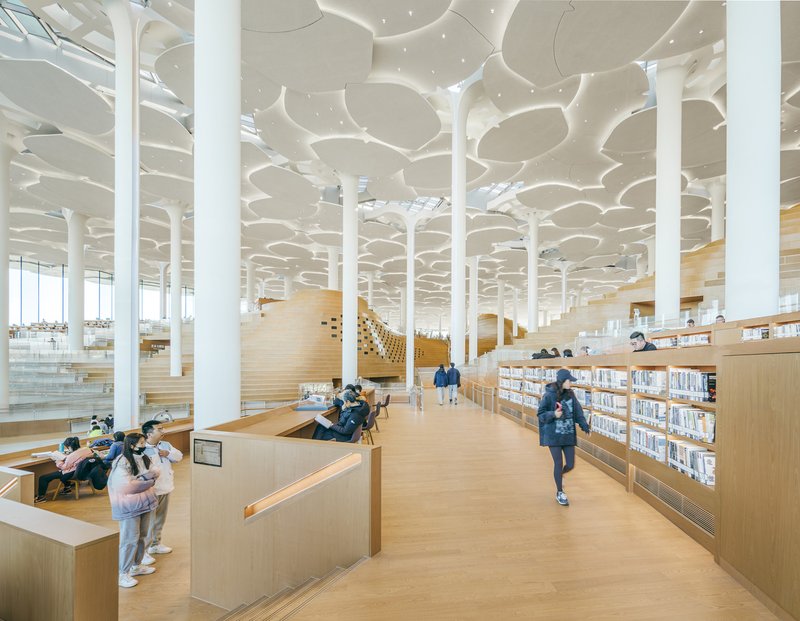
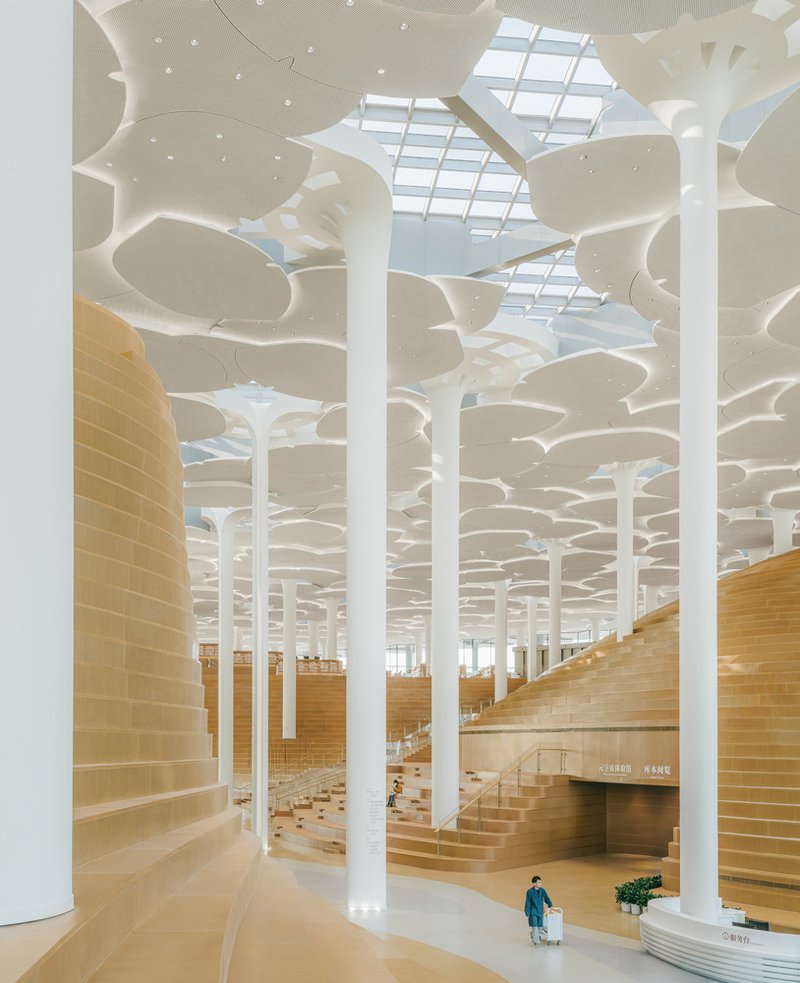
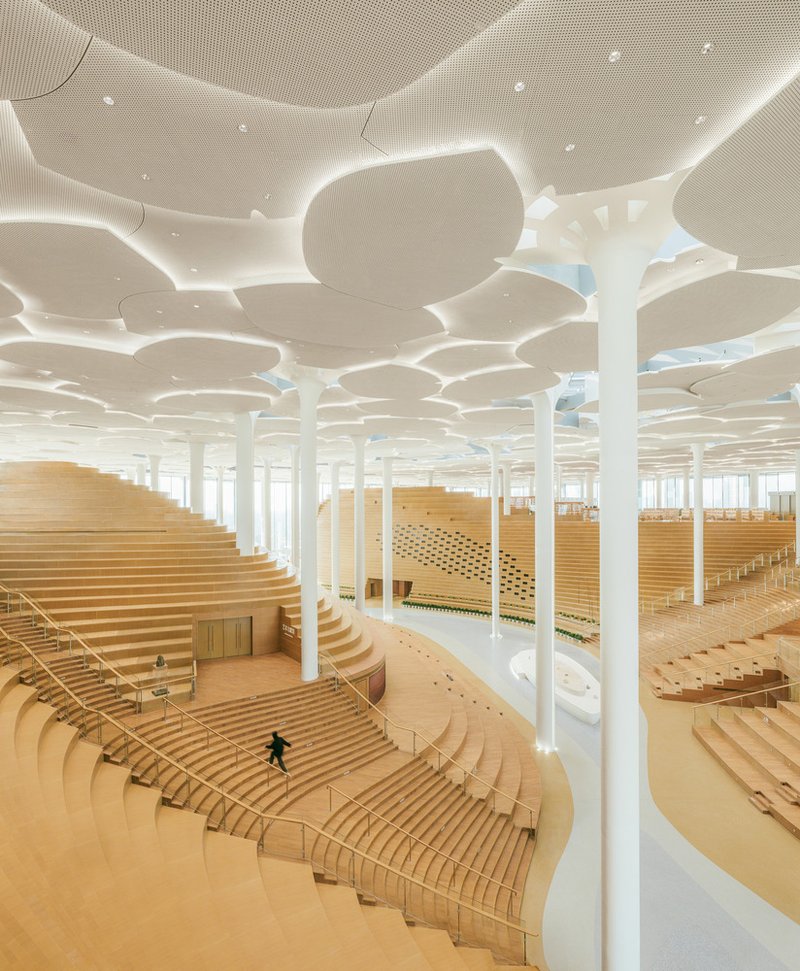
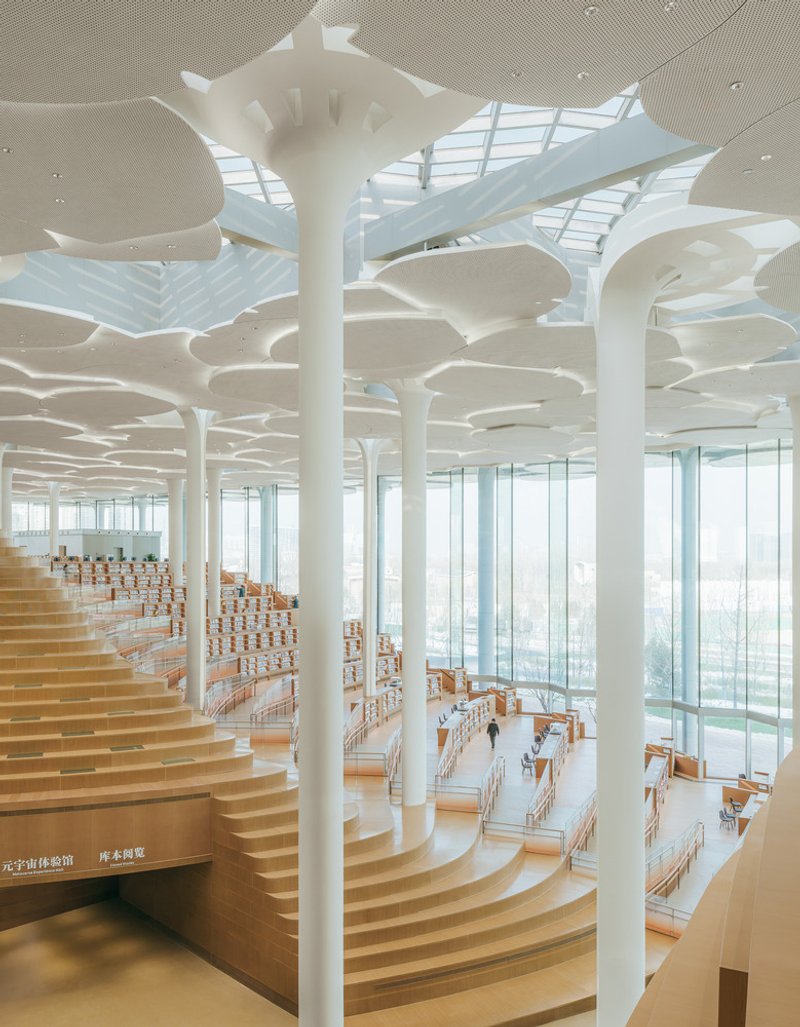
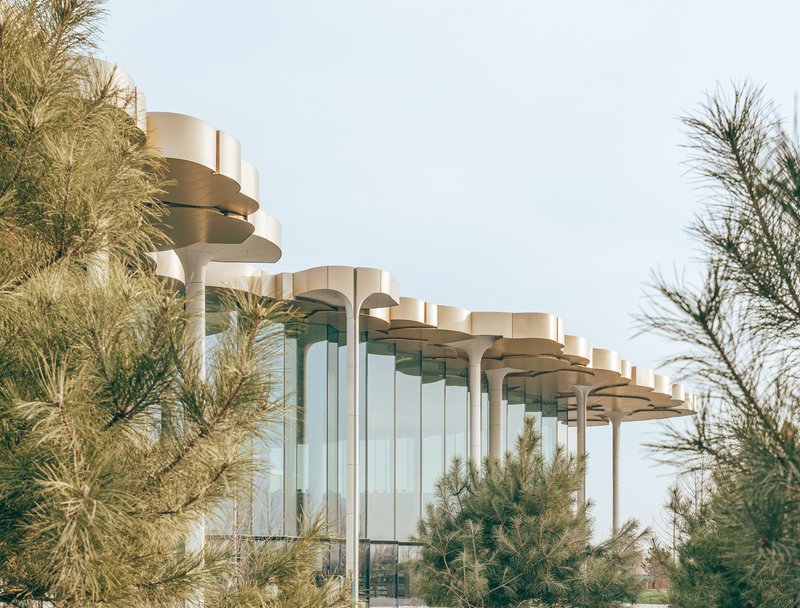
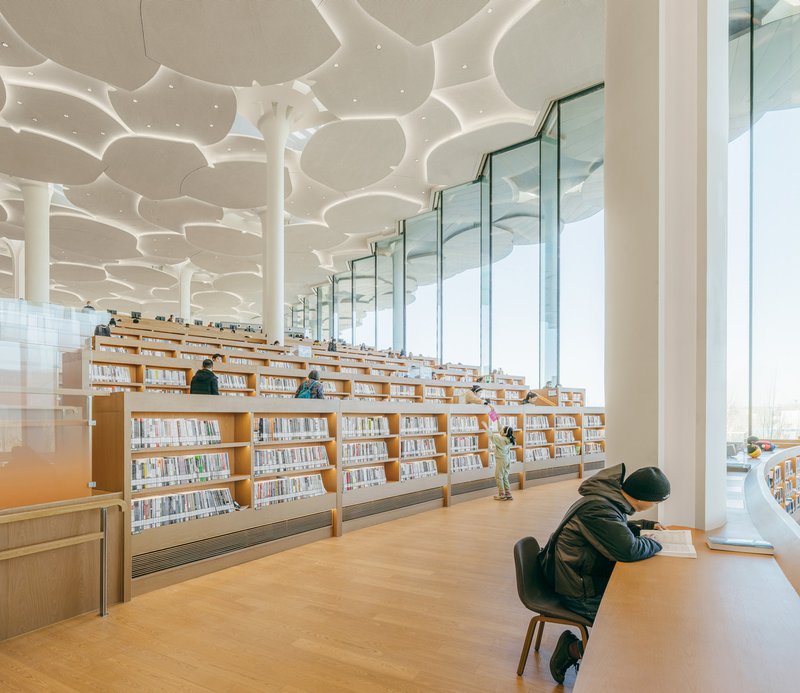
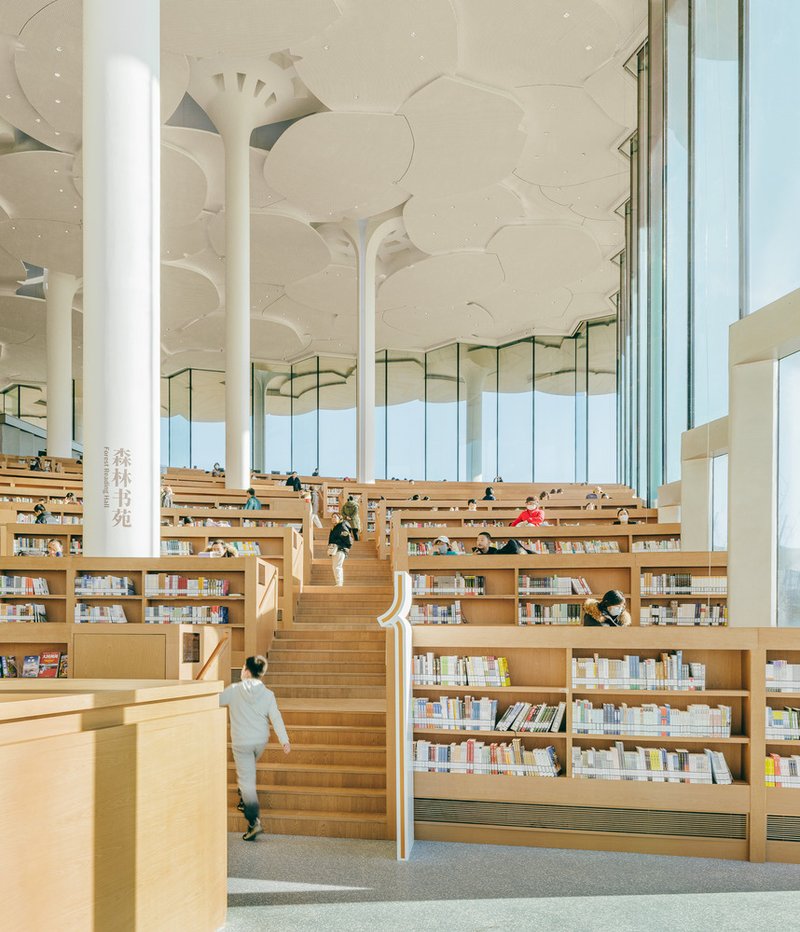
The library’s glass-lined structure establishes a strong connection between its interior and the surrounding landscape. At its core lies the Valley, a 16-meter-tall atrium designed as the primary circulation path, mirroring the flow of the nearby Tonghui River. This sculptural interior landform integrates seating, shelving, and pathways, creating a vibrant, terraced space for relaxation, quiet reading, and social interaction.
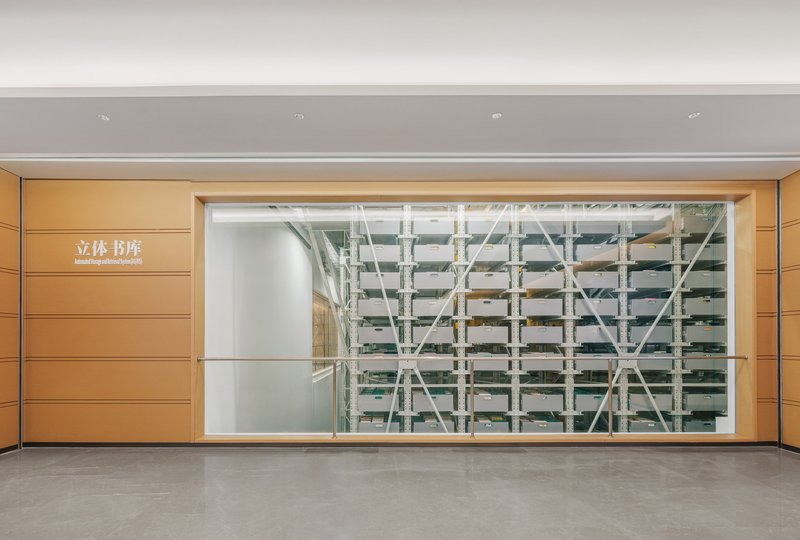
Semi-private reading areas and conference rooms are nestled within the terraces, while open spaces house one of the largest Automated Storage and Retrieval Systems (ASRS) for books globally.
A Canopy of Knowledge
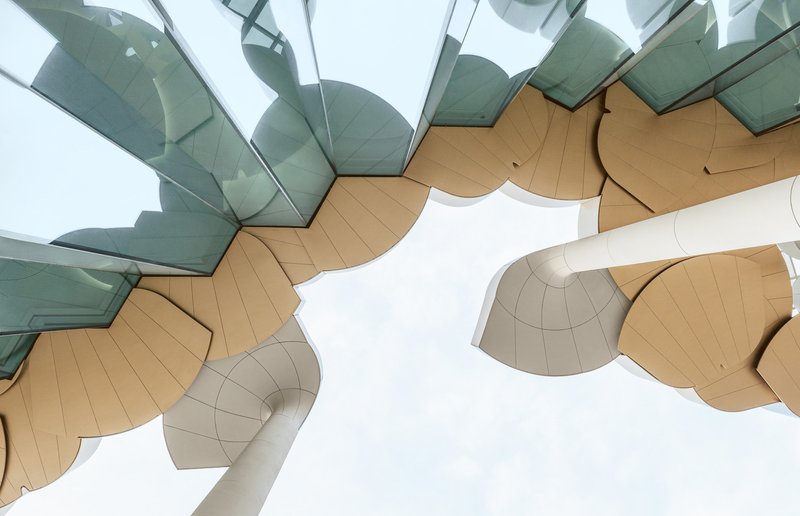
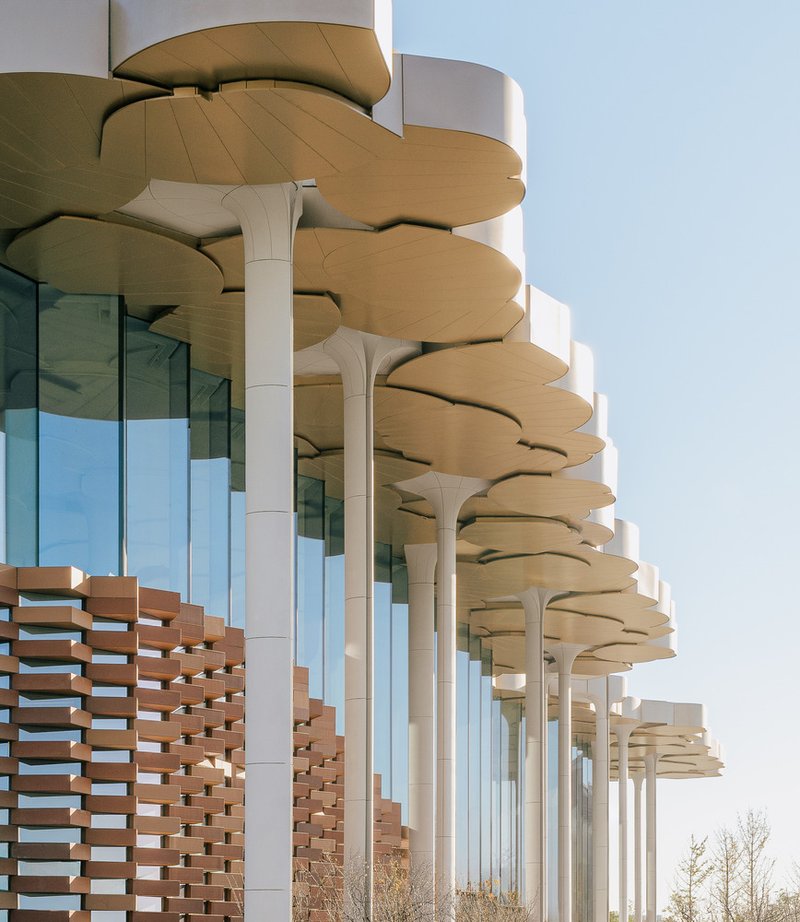
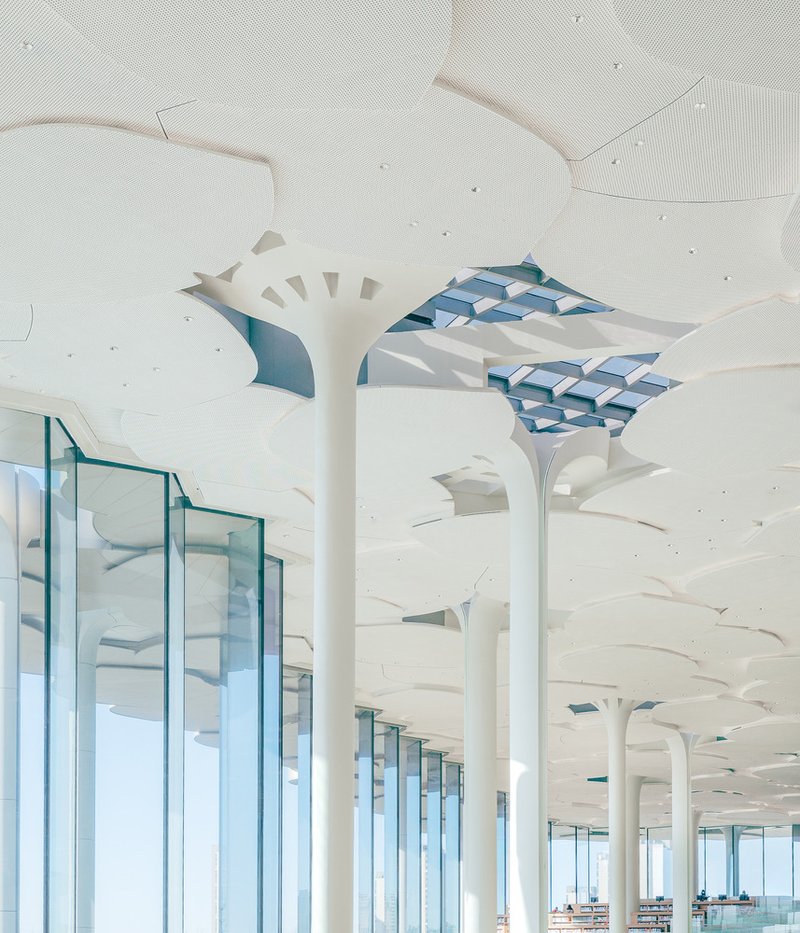
The interior is crowned by slender, tree-like columns inspired by the ginkgo tree, a species native to China. These columns, with their leaf-shaped panels, form a canopy that filters natural light into the space, creating a serene reading environment. The design draws on the symbolism of ginkgo trees to evoke a sense of longevity, wisdom, and cultural heritage.
Robert Greenwood, Director of Asia Pacific at Snøhetta, notes, “This is a place where you can be sitting under a tree, reading your favorite book. The library fosters an intergenerational quality, encouraging visitors to share stories and books with loved ones.”
Nature and Sustainability
Snøhetta’s design integrates the library into its natural setting while prioritizing sustainability. The building has achieved China’s highest sustainability certification, the GBEL Three Star, by minimizing embodied and operational carbon emissions. Key features include a rationalized structural grid to reduce waste, modular construction elements for efficiency, and a green infrastructure system that reuses rainwater for irrigation.
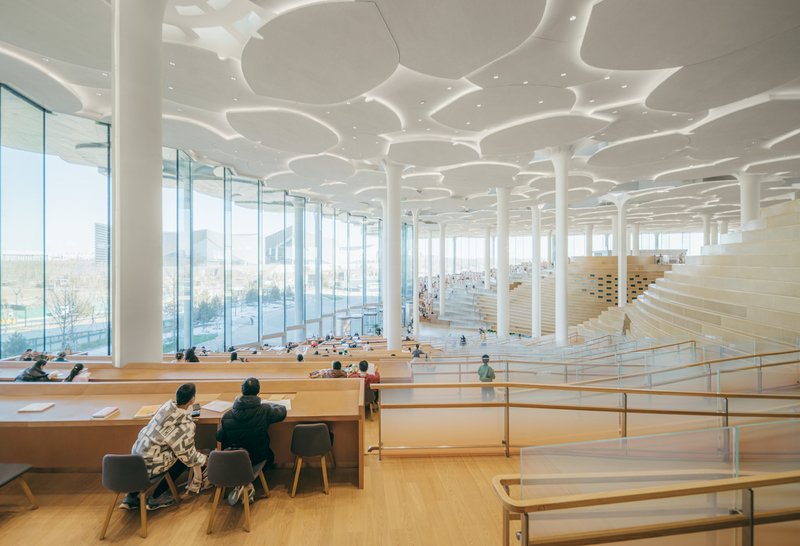
The library also utilizes photovoltaic elements in its roofing to generate renewable energy, while insulated low-E glass minimizes heat transfer, ensuring energy efficiency without compromising the expansive views of the surrounding landscape.
A Gateway to Culture and Innovation
The Beijing Sub-Center Library is more than a building; it is a testament to the evolving role of libraries as community anchors. The design reflects a commitment to fostering human connection, intellectual growth, and environmental stewardship. By blending modern technology with traditional forms of learning, the library provides a space for exhibitions, performances, and dialogue, ensuring its continued relevance in the digital era.
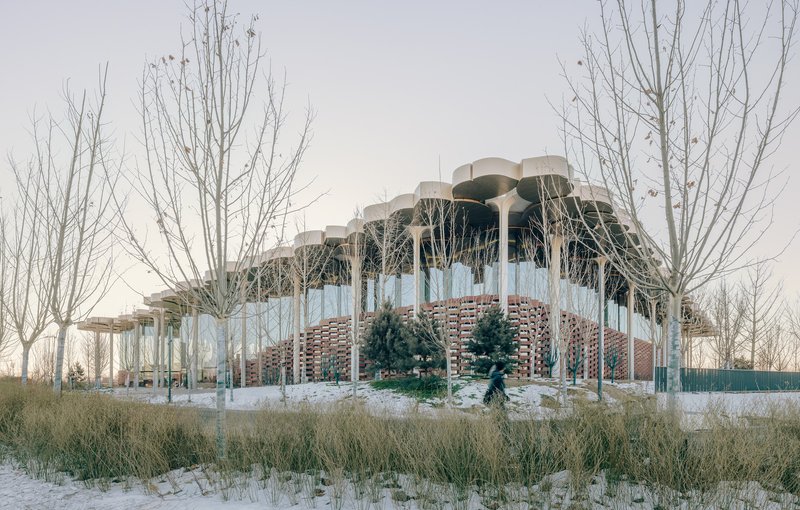
The Beijing Sub-Center Library by Snøhetta exemplifies sustainable library architecture, bridging the gap between tradition and innovation. As a cultural landmark, it not only enriches its community but also sets a global benchmark for library design in the 21st century.
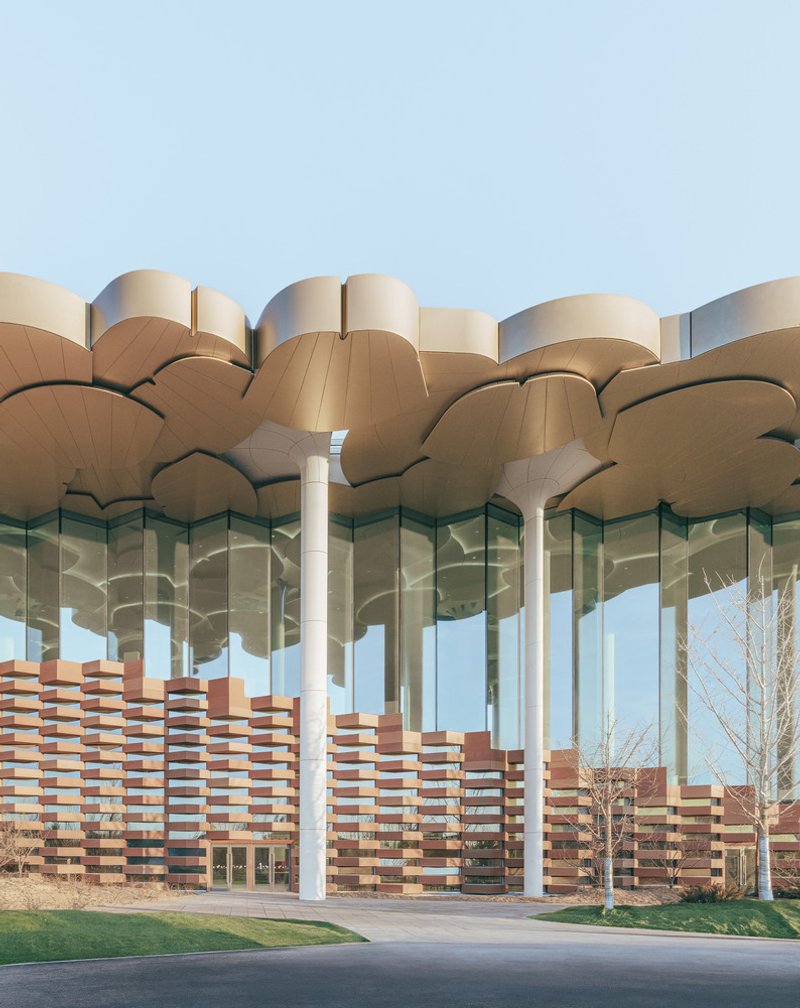
All Photographs are work of Yumeng Zhu



Popular Articles
Popular articles from the community

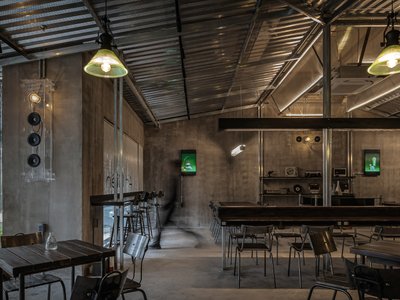
An Miên Lumière Cafe by xưởng xép, Ho Chi Minh City, Vietnam
An industrial-inspired café where layered steel and warm light create a dynamic, immersive environment shaped by reflection, depth, and perception.
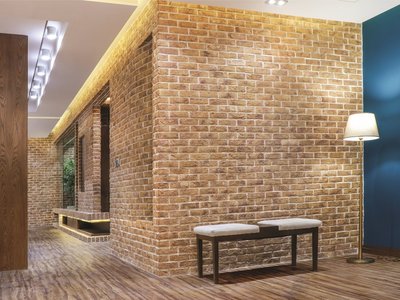
A Contemporary Take on Iranian Residential Architecture
A modern interior design in Mashhad that reinterprets brick, light, and spatial flow to create a warm, contemporary residential architecture.

Solar Steam: A Climate-Responsive Architecture That Redefines the Monument
A climate-responsive memorial architecture that transforms heat, decay, and time into a living system reflecting humanity’s ecological impact.


The Ken Roberts Memorial Delineation Competition (Krob)
As the most senior architectural drawing competition currently in operation anywhere in the world, it draws hundreds of entries each year, awarding the very best submissions in a series of medium-based categories.

Similar Reads
You might also enjoy these articles
The Ken Roberts Memorial Delineation Competition (Krob)
As the most senior architectural drawing competition currently in operation anywhere in the world, it draws hundreds of entries each year, awarding the very best submissions in a series of medium-based categories.

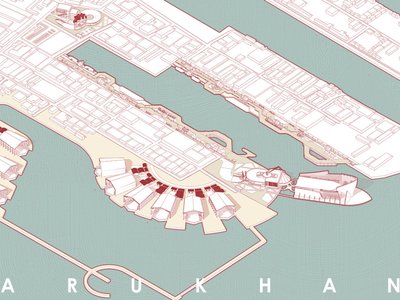
Waterfront Redevelopment and Urban Revitalization in Mumbai: Forging a New Dawn for Darukhana
A transformative waterfront redevelopment project reimagining Darukhana’s shipbreaking heritage into an inclusive urban future.
OUT-OF-MAP: A Call for Postcards on Feminist Narratives of Public Space
Rhizoma Design and Research Lab invites artists, designers, architects, researchers, and students to reflect on how feminist perspectives can reshape public space. Selected works will be exhibited in Barcelona, October 2026. Submissions open until 15 April 2026.

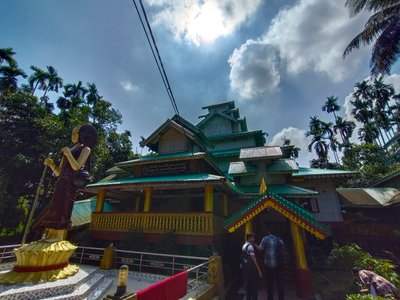
Documentation Work on Buddhist Wooden Temple
Architectural syncretism and cultural hybridity: A comparative study of the Buddhist temples in Chattogram Hill tracks


Explore Architecture Competitions
Discover active competitions in this discipline




The International Standard for Design Portfolios


The Global Benchmark for Architecture Dissertation Awards


The Global Benchmark for Graduation Excellence


Challenge to reimagine the Iron Throne
Comments (0)
Please login or sign up to add comments
No comments yet. Be the first to comment!