
Sustainable School Architecture with Rammed Earth Construction – Le Vau Pavilion by L'Atelier Senzu
This article explores the Le Vau Pavilion's sustainable design, using rammed earth to create an eco-friendly, community-centered school space in Paris.


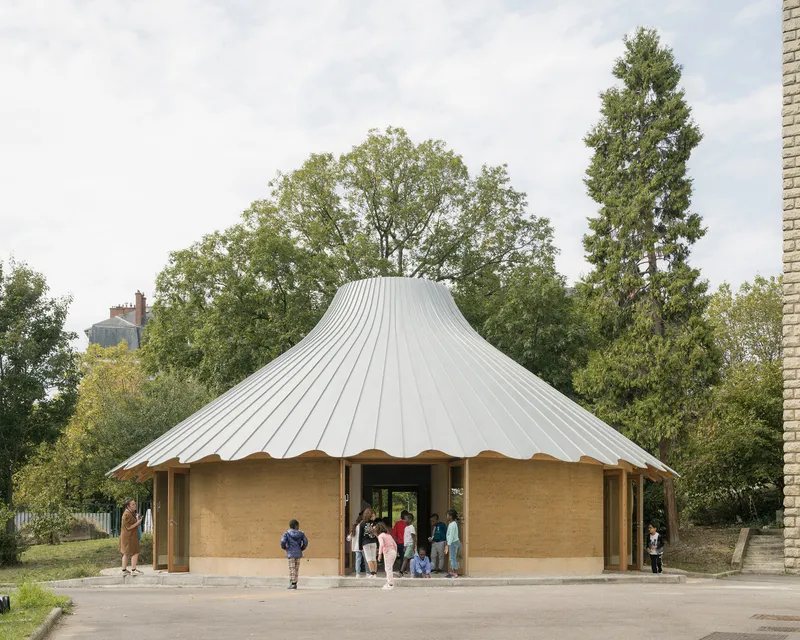
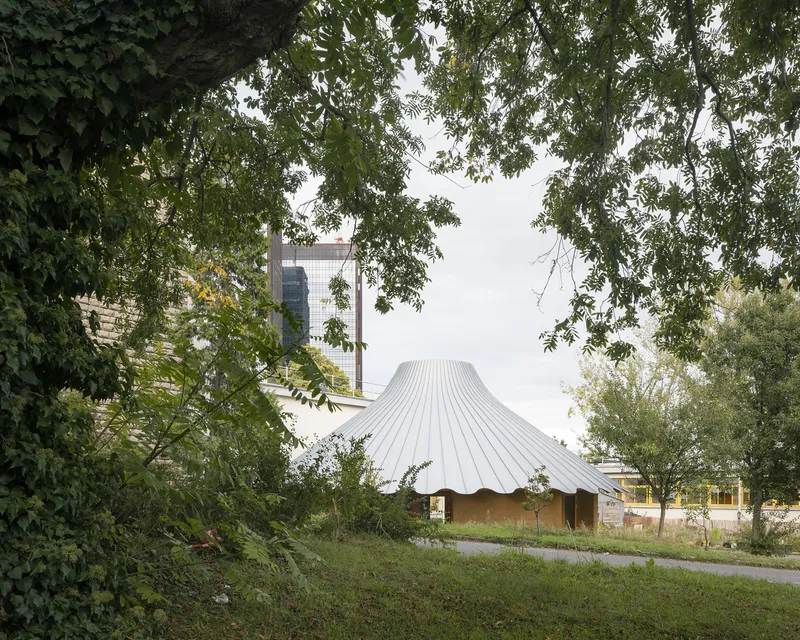
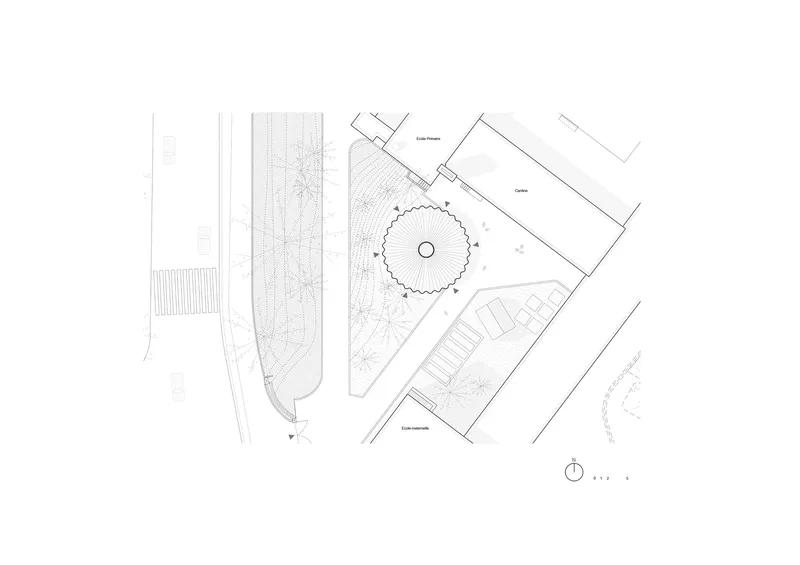
In Paris's 20th arrondissement, the Le Vau Educational Pavilion stands as a pioneering example of sustainable school architecture. Designed by L'Atelier Senzu and completed in 2023, this 100-square-meter space is crafted from rammed earth and wood, prioritizing environmental consciousness and community engagement. Serving as a model for integrating sustainable practices in educational facilities, Le Vau Pavilion contributes to both local ecology and architectural innovation in the heart of an urban school complex.
The Vision Behind Le Vau Pavilion’s Design
An Oasis for Learning and Community
Funded by the OASIS program and the City of Paris’s participatory budget, Le Vau Pavilion serves multiple purposes: it offers a space for collective learning, fosters stronger school-community connections, and addresses critical sustainability goals. The Pavilion was conceptualized to bridge the gap between educational institutions and the surrounding community, inviting both parents and students into an inclusive and inviting space that reshapes perceptions of traditional school architecture.
Design Concept and Architectural Philosophy
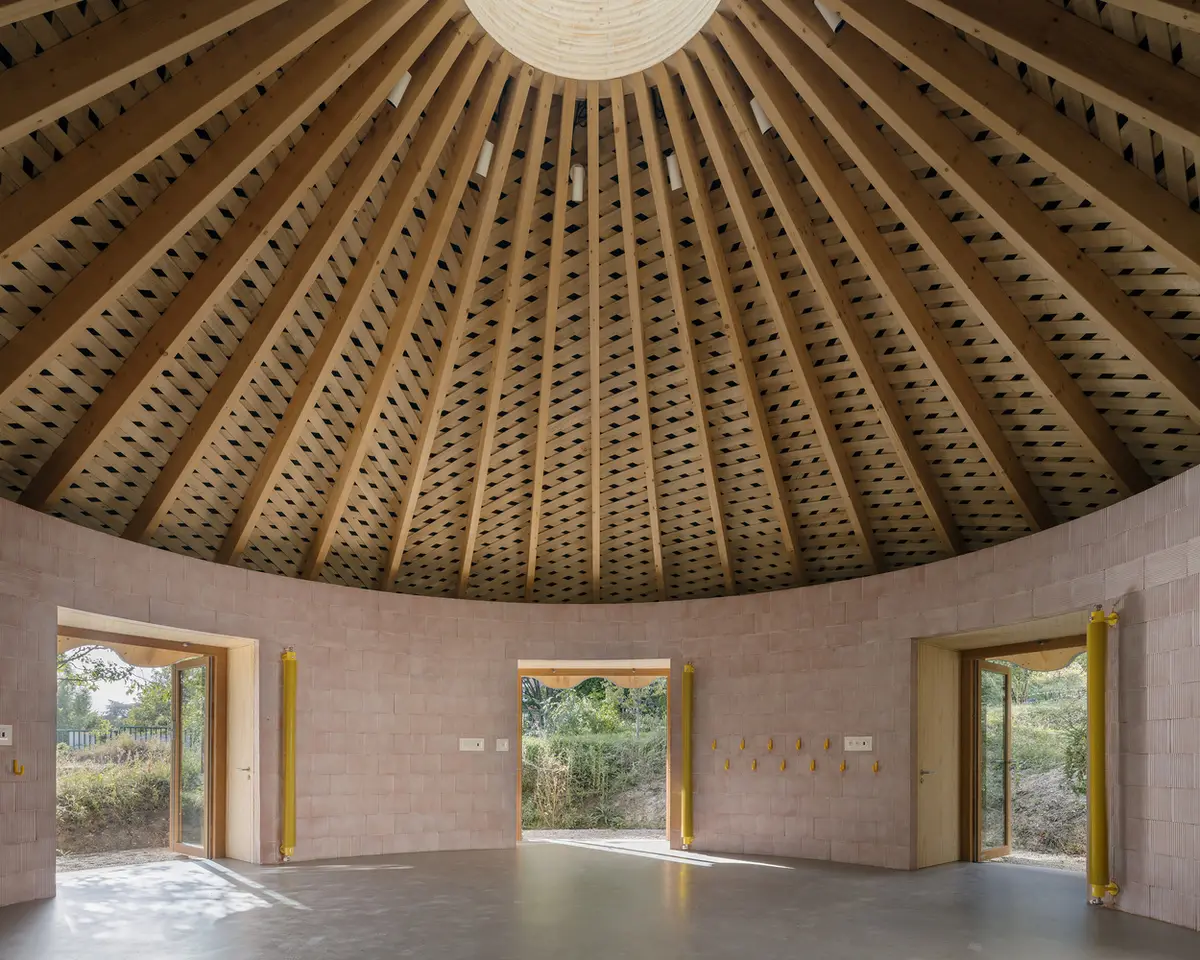
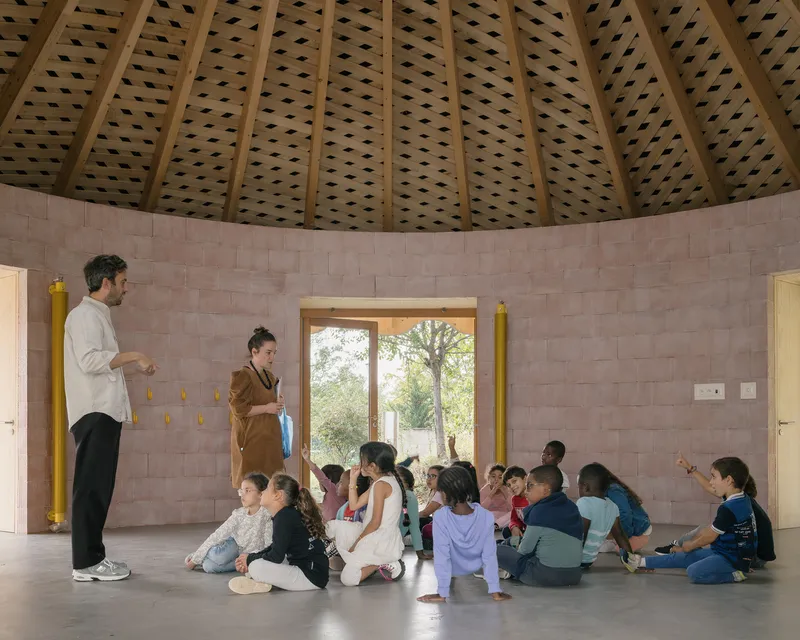
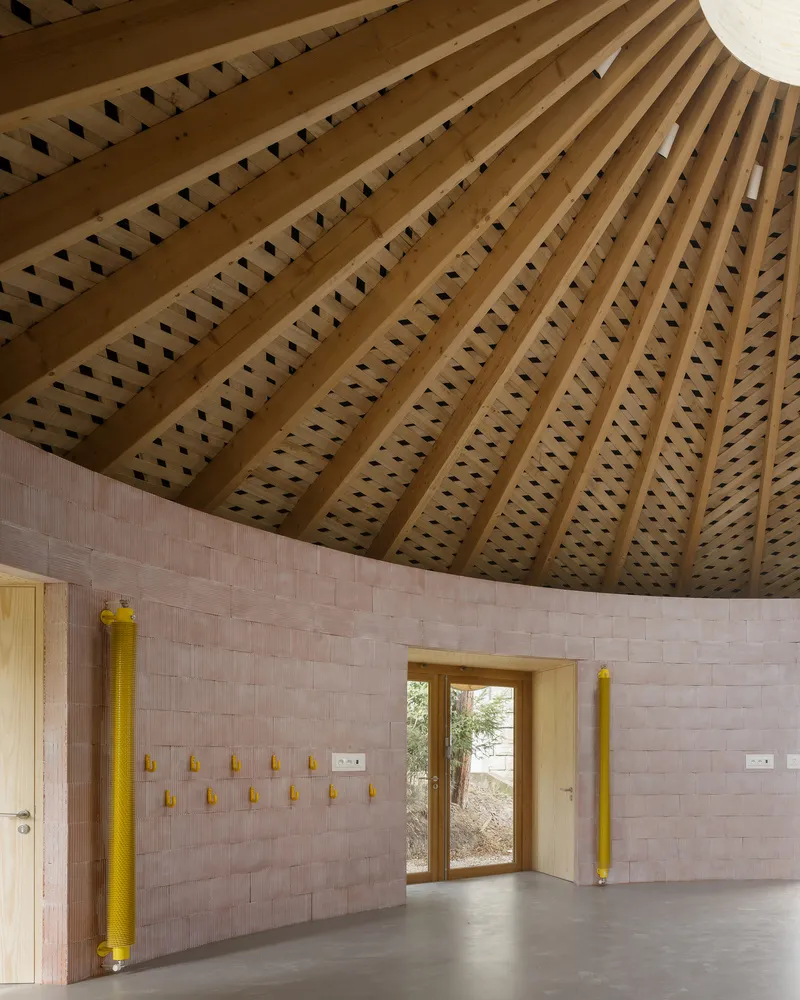
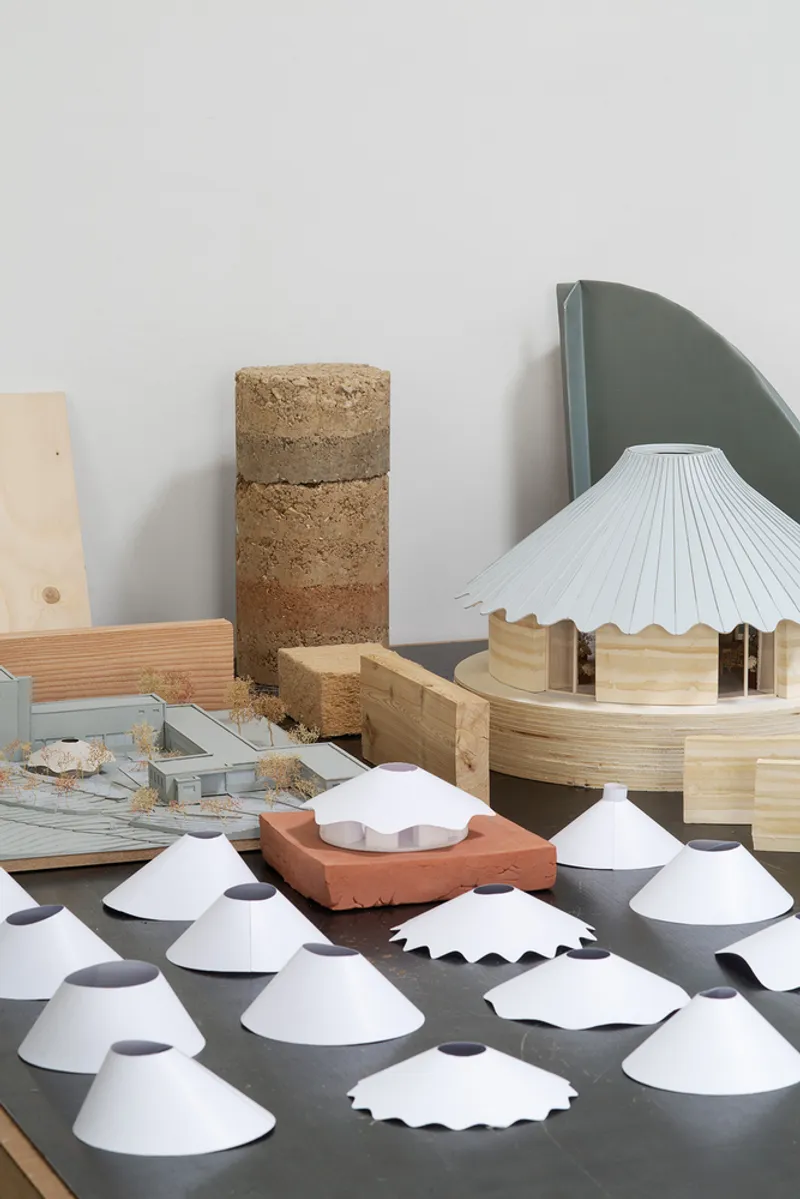
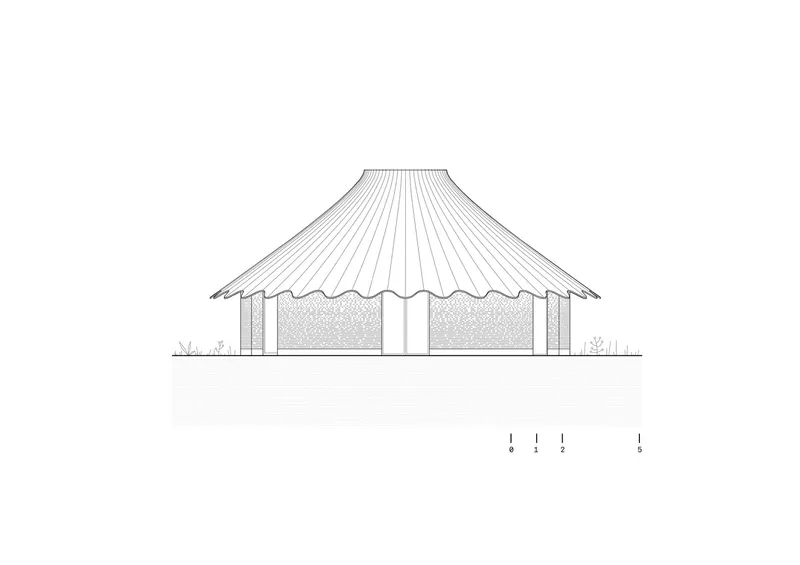
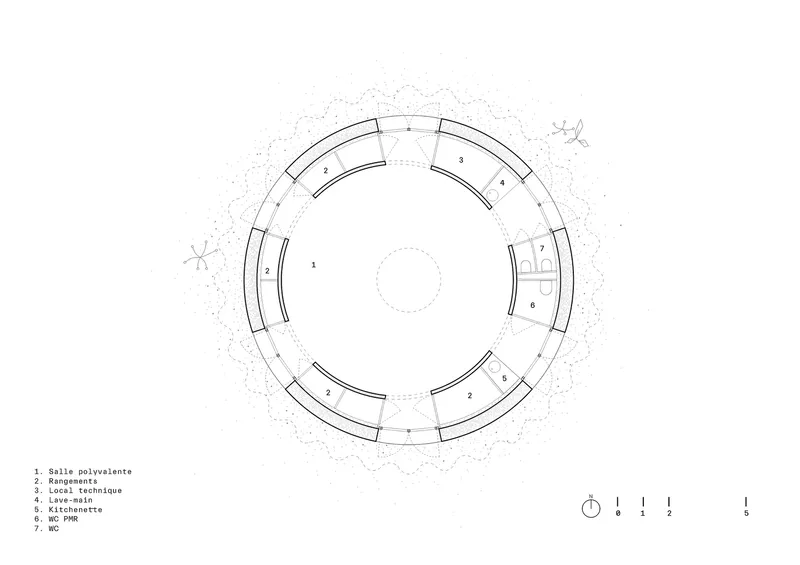
One of the defining features of Le Vau Pavilion is its circular geometry, a departure from conventional school designs. This layout is not only visually striking but also functional, promoting an egalitarian atmosphere that encourages interaction and collaboration. The circular shape minimizes hierarchy by providing equal visibility from all sides, drawing inspiration from traditional carousels to create a "360-degree" experience.
Sustainable Materials and Eco-Friendly Practices
The Choice of Rammed Earth
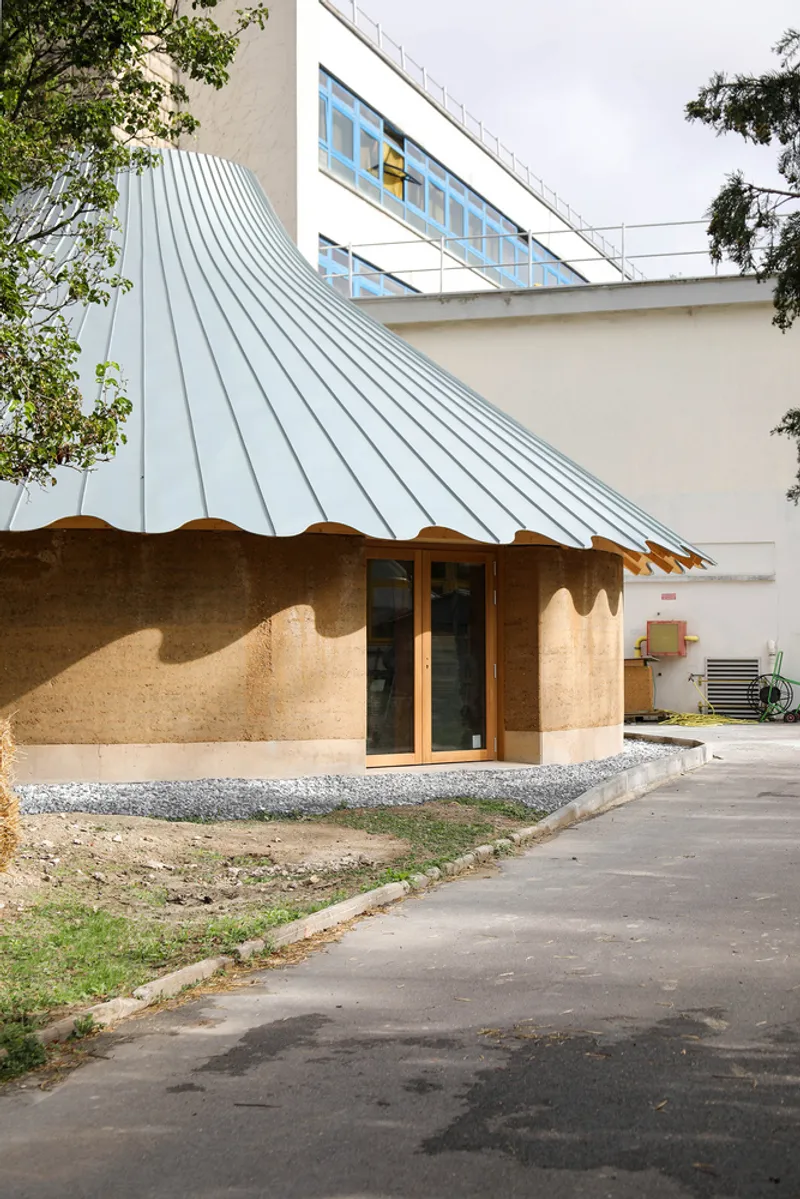
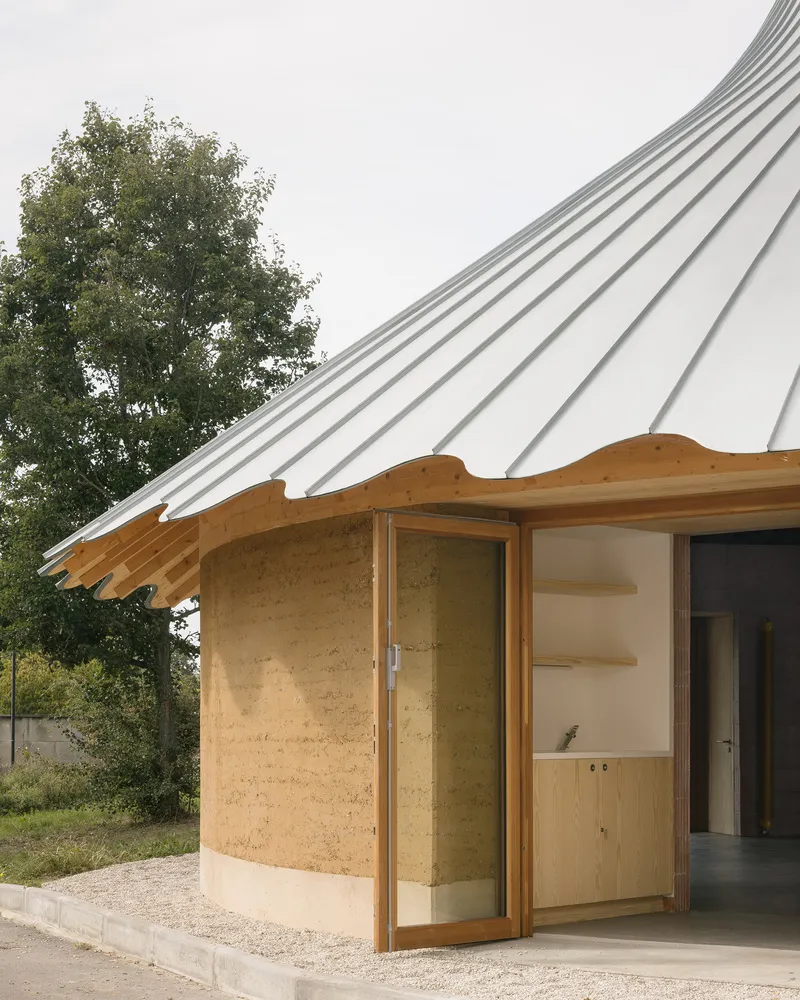
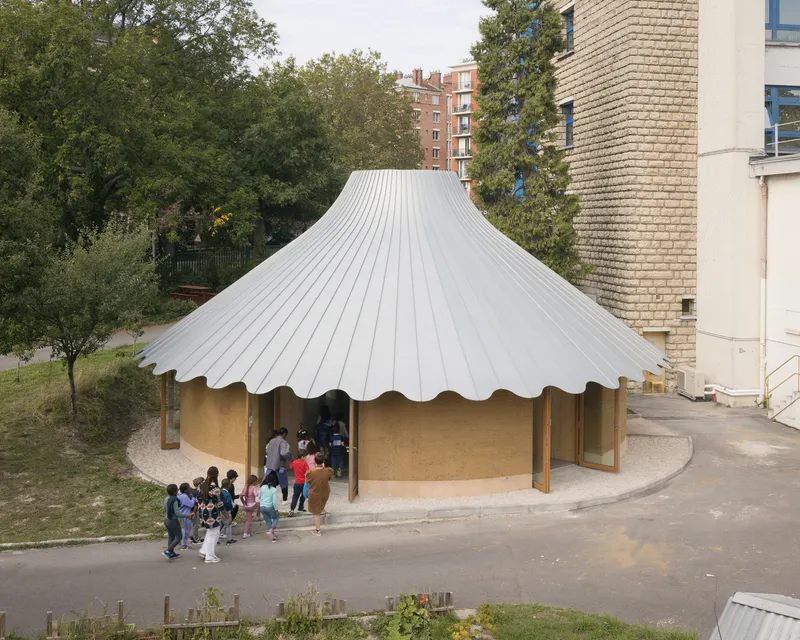
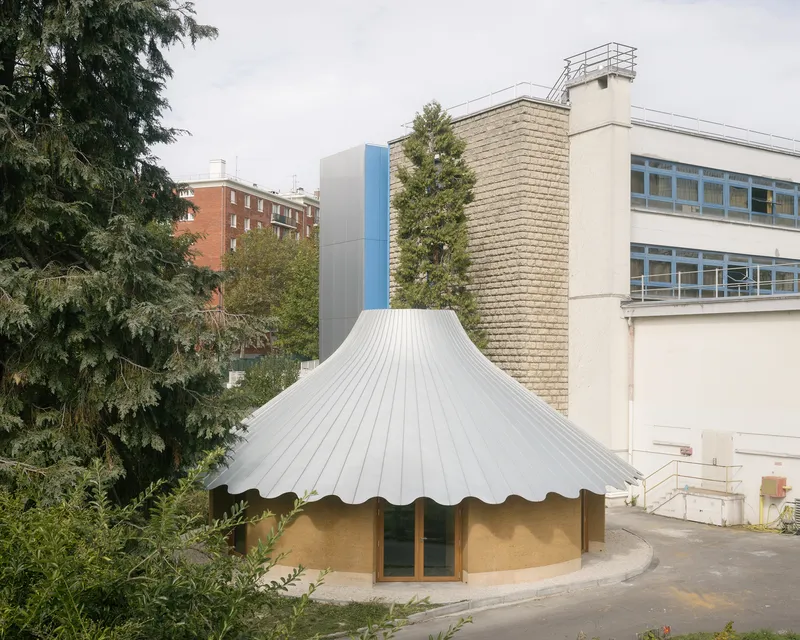
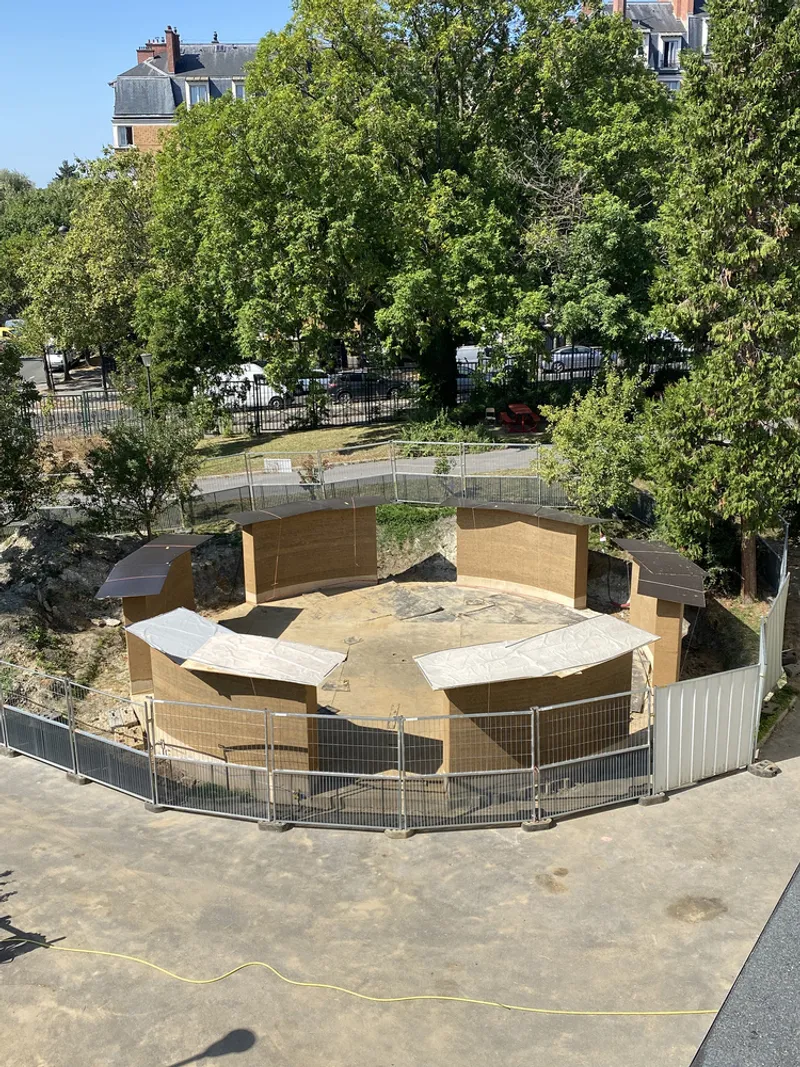
Le Vau Pavilion holds the distinction of being the first load-bearing rammed earth building in Paris, marking a major step forward in sustainable urban architecture. Rammed earth is celebrated for its structural durability, natural thermal regulation, and eco-friendly characteristics. The Pavilion’s walls are built from geosourced and biosourced materials, contributing to its carbon-neutral footprint and aligning with the broader goals of the OASIS program to create greener, more resilient urban spaces.
Eco-Conscious Building Practices
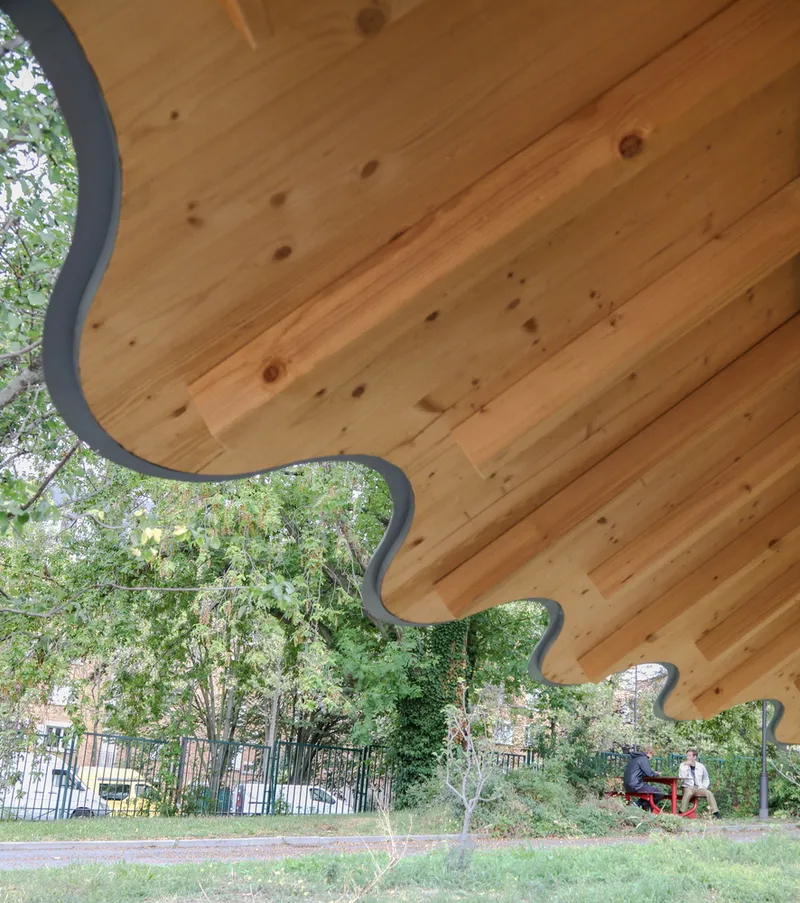
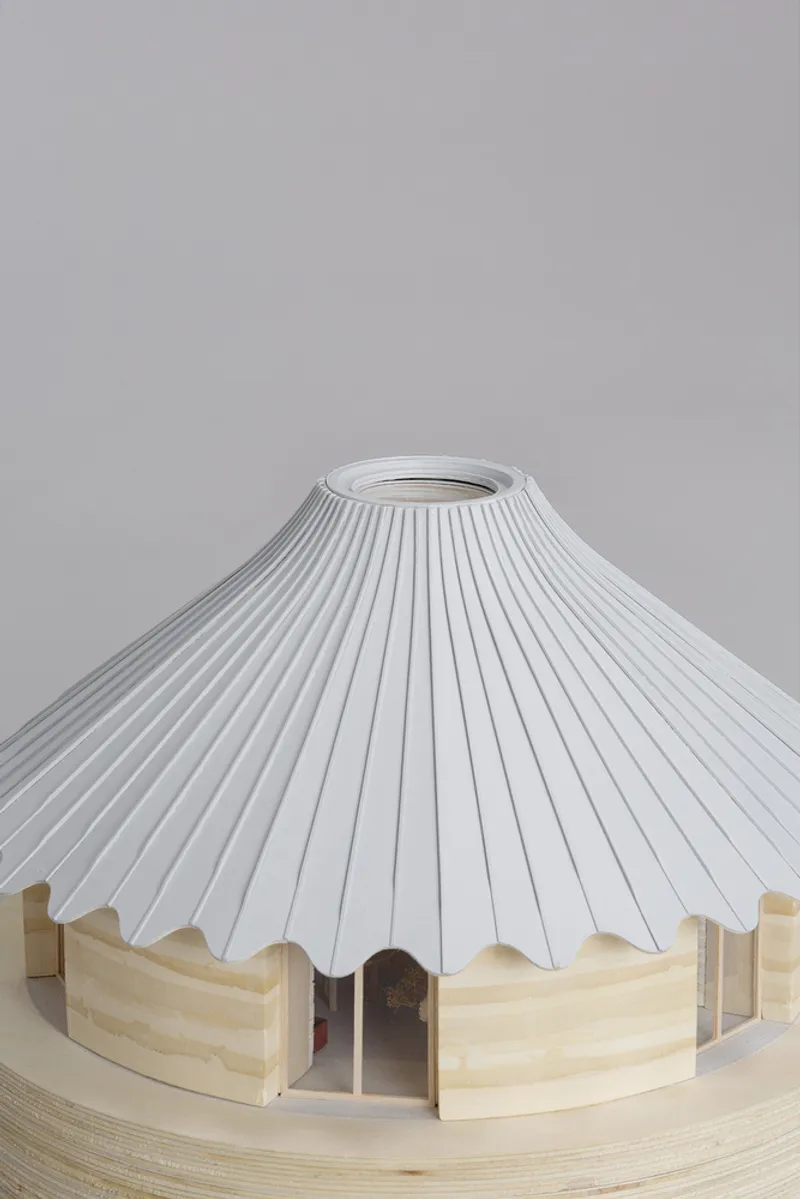
Every material used in the Pavilion, from RHEINZINK’s prePATINA ECO ZINC panels to pine plywood, was selected for sustainability. These components minimize embodied carbon, while natural materials enhance indoor air quality and the sensory environment. The Pavilion exemplifies sustainable architecture, utilizing materials that harmonize with the environment while meeting the demands of modern educational spaces.
Functionality and Community Engagement
Dual-Purpose Design: A Space for Education and Community
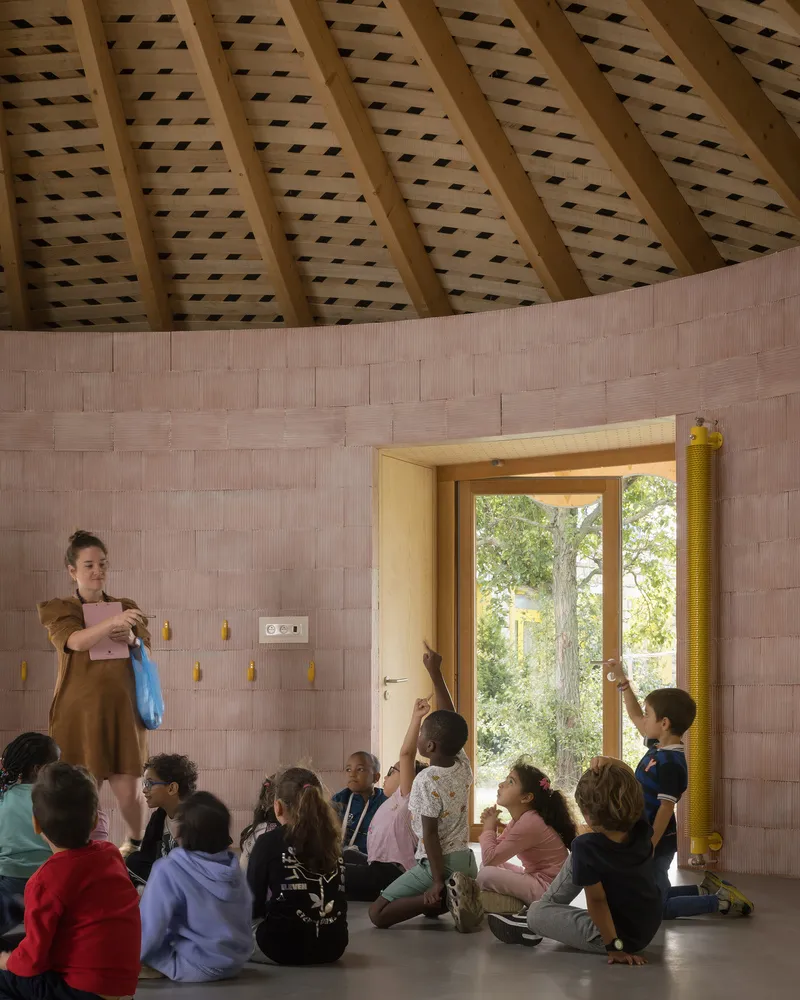
Le Vau Pavilion serves as a multifunctional space, seamlessly integrating educational and community activities. By creating a space that welcomes both students and parents, the Pavilion bridges the gap between home and school, building trust and community through inclusive design.
This project is part of a broader initiative to reimagine school spaces as communal hubs, featuring vegetable gardens, orchards, and picnic areas that encourage outdoor learning and social interaction. By fostering these connections, L'Atelier Senzu has created a building that not only meets educational needs but also addresses the social and ecological challenges of urban school design.
Innovative Use of Circular Layout in School Architecture
The Pavilion’s circular design encourages flexible arrangements for educational activities, making it a highly adaptable space. This innovative approach enables diverse seating arrangements, from group discussions to individual study, and creates a sense of inclusivity.
Environmental Impact and Climate Goals
Contributing to Decarbonization in Urban Spaces
Le Vau Pavilion’s sustainable school architecture aligns with global climate goals by reducing the carbon impact of building construction. By using local materials and sustainable building techniques, it provides a model for how educational spaces can actively contribute to a city’s climate objectives. This project underscores the potential for architecture to inspire sustainable practices in urban environments, addressing the growing need for decarbonization in construction.
The Pavilion as a Climate-Responsive Solution
As part of Paris's urban greening efforts, the Pavilion is strategically positioned to combat urban heat while providing a welcoming shelter for the community. The rammed earth walls act as a thermal buffer, keeping interiors cool in the summer and warm in the winter, significantly reducing the need for artificial heating and cooling.
Key Takeaways and Future Implications for Sustainable School Architecture
The Le Vau Educational Pavilion by L'Atelier Senzu demonstrates the potential of sustainable school architecture. Its innovative circular design, integration of rammed earth, and eco-conscious material choices make it a model for future projects aiming to combine environmental responsibility with educational functionality. This Pavilion exemplifies how school architecture can go beyond traditional classroom spaces to become community assets that prioritize ecological resilience and human connection.
By rethinking the role of educational buildings within urban settings, the Le Vau Pavilion not only addresses the needs of students but also fosters stronger community ties, setting a new standard for sustainable school design.
The Le Vau Pavilion offers a groundbreaking example of sustainable school architecture that balances design innovation, environmental sustainability, and community engagement. Through the use of rammed earth and circular design principles, L'Atelier Senzu has created a space that is as functional as it is inspirational. As urban schools worldwide look for ways to address climate challenges, the Le Vau Pavilion sets a precedent for a future where educational facilities are integral to sustainable urban ecosystems.

All photographs are work of Stijn Bollaert


Popular Articles
Popular articles from the community


LT2A and OPEN Architectes Thread a Brick and Glass High School Through a Wooded Belgian Campus
In Braine-l'Alleud, a 3,000 m² wing for Collège Cardinal Mercier pairs pale brick with a glazed colonnade, deferring to a small chapel and a dense wood.

longwave studio Reorganizes a 112 m² Tainan Apartment Around the Daily Routines of a Family and Two Cats
In Tainan, Taiwan, birch plywood, rust-red furniture and a freestanding plaster wall link arrival, storage, work and family life in one apartment.

Jaramillo Van Sluys Arquitectura and Urbanismo Turn a Demolished Registry Lot in Quito into an Orchard Plaza
In Quito's Centro Histórico, a 2,800 m² plaza exposes the San Agustín convent wall and redraws its lost Augustinian orchard in volcanic stone.

David Macias Steps a Doorless Stone and Plaster House Down a Tropical Colombian Hillside
In the humid hills of Colombia, Threshold House replaces the front door with an open void and terraces its 850 m² down the slope instead of fighting it.

Similar Reads
You might also enjoy these articles


Hodi-Mandai Geram
Project Function: Preservation and revitalization of the Intangible heritage and socio-spatial identity of the Hodi by Housing, Cultural Memory Center, Sacred Grove, landscape, local tourism economy


Olio Towers: A Mid-Rise for Performers That Fuses Housing, Rehearsal, and Stage
Located blocks from Houston's Theater District, this modular tower stacks living units around a central performance atrium.

Oasis: Modular Green Housing Carved into Dhaka's Urban Fabric
A shortlisted Plugin Housing entry reclaims unauthorized settlements in Dhaka with stepped concrete volumes, green roofs, and ventilation-driven design.

Black Hole: A Floating Megastructure for the Post-Physical Era
Emiliano Mazzarotto envisions a spherical, self-scaling arena where e-sports, digital hotels, and holographic stadiums replace traditional public space.

Explore Pont-Aven School Competitions
Discover active competitions in this discipline

Challenge to design public laboratory

Challenge to reimagine the Iron Throne

Photograph architecture without architects

Illustrate the lost glory of Angkor Wat - Render Challenge
Comments (0)
Please login or sign up to add comments
No comments yet. Be the first to comment!