
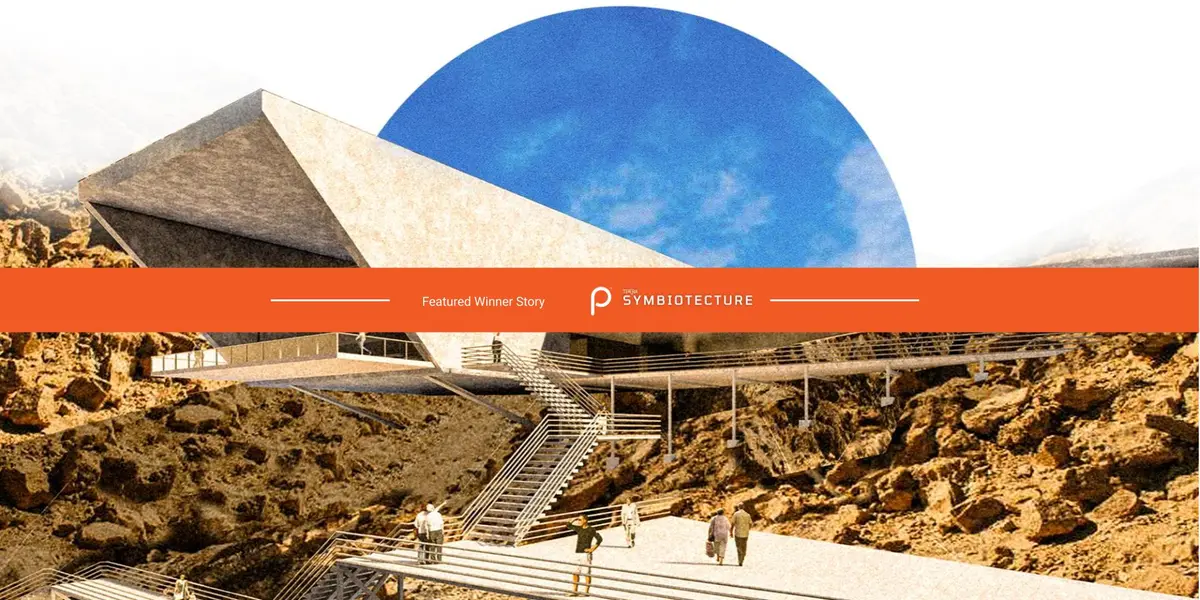
Archaeological park in the Mines of Rio Tinto, Spain.
A geological park design challenge, Symbiotecture - Result Story


The condition of contemporary society is struggling to find itself in common identity values condensed in a recognizable iconography. Assuming that in contemporaneity it is an achievable goal, yet it turns to be an accumulation of dislocated and dislocating experiences. Perhaps for this very reason, it's now a good time to reconsider the debate between nature and architecture but with new assumptions.
A usual way we move close to this idea is by wrapping things up under the term ‘sustainability’, which deals with this entire issue in a lot of fragments. Eventually leaving an unsatisfied need for an architecture that homogeneously condenses a theme that is not only technological, nor exclusively formal or typological. Instead of an ethical and structural connection between humans and society with nature, and a huge opportunity of how architecture be an element of mediation between them.
The competition brief was to design an archaeological park in the Mines of Rio Tinto Spain.
The aim of this competition was to go far beyond a simple, even if necessary, use of nature as a product, but wants to push the architectural experimentation through a process of hybridization of two. In usual architecture discourse, they are apparently different bodies and two different languages how can we merge boundaries between both?
The design question of the competition was:
How can architecture manifest itself like a human body where the architectural spaces can be understood as an extension of it? How can the structure of the territory itself with the corresponding morphological and topographical variations be fused with the nature it is surrounded with?
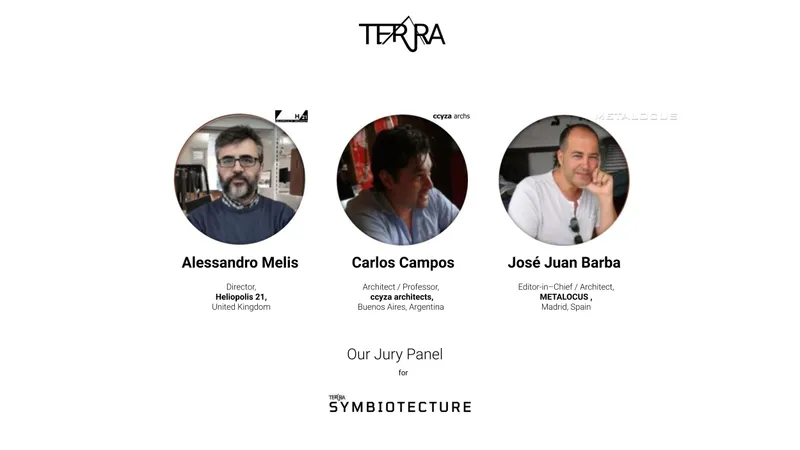
The jury for the competition consisted of esteemed designers, professionals, and academicians from around the world. The Lead Jurors for the competitions were as follows:
Alessandro Melis, Director, Heliopolis 21, United Kingdom
Carlos Campos, Architect / Professor, ccyza architects, Buenos Aires, Argentina
José Juan Barba, Editor-in–Chief / Architect, METALOCUS, Madrid, Spain
Some of the Best of competition projects are:
Winning Project: Symbiotecture
By: Sanny Ng & Iris Lee
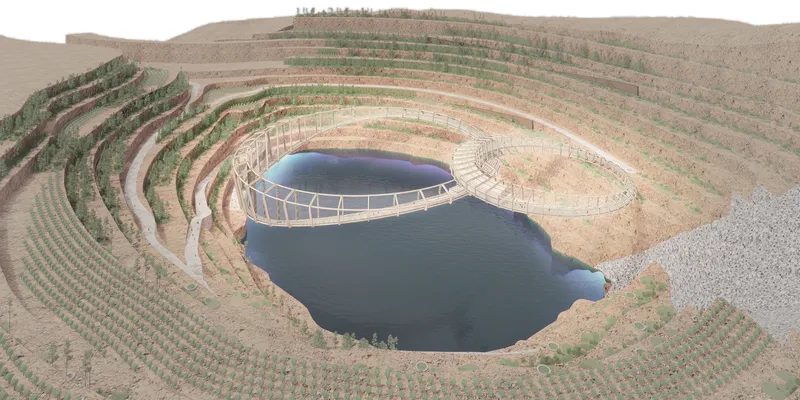
Description: A geological park design challenge.
-----------------
People’s Choice: Symbiotic Archeology Lab
By: Jose Carlos & Anna Denardin
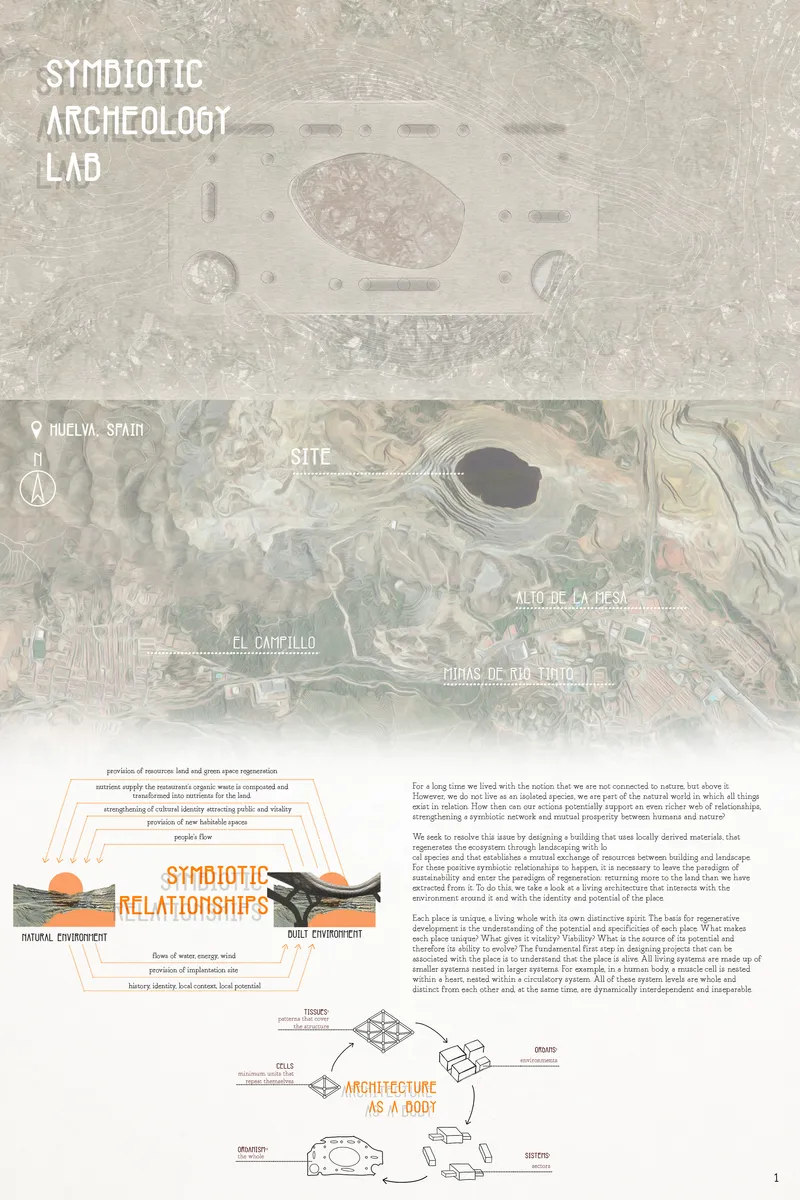
Description: This project aims to support an even richer web of relationships, strengthening a symbiotic network of mutual prosperity between humans and nature.
-----------------
Editor’s Choice: Art Wave
By: Misak Terzibasiyan
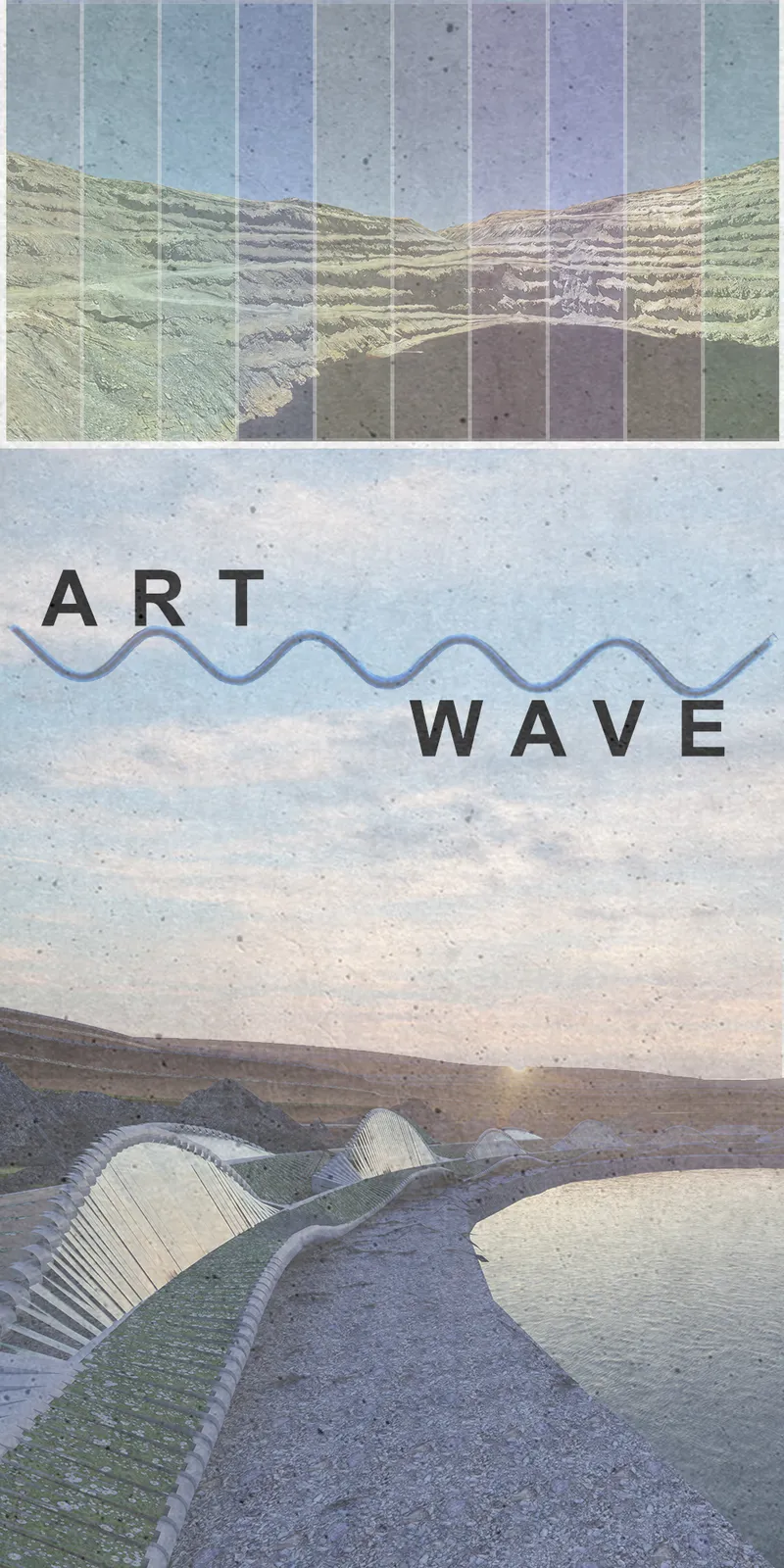
Description: This idea shows fully integrating building and site planning into the landscape planning process. Designing with pathways presents a spatial design approach for adaptive landscapes. This aim to study spatial design based on pathways can help develop more adaptive and sustainable landscapes.
--------------------
Editor’s Choice: REMISSION
By: Joshua Walton

Description: An Archaeological Park located in the mines of Huelva, Spain, that creates a symbiotic relationship with the site and develops ecosystems.
-----------------------
Editor’s Choice: Verge Geopark
By: Mark Manrique
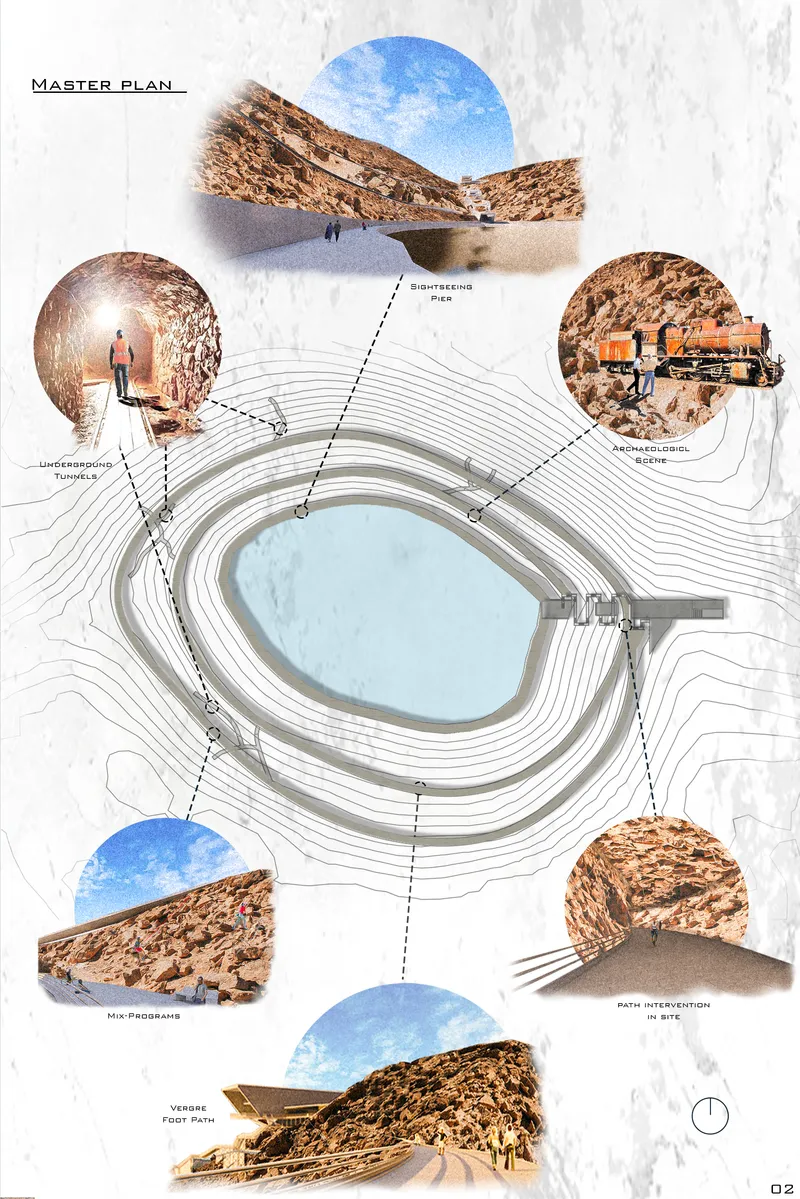
Description: Verge is a geological park in the Rio Tinto mines that is designed to be integrated into the artificial environment of the Corta Antalya mine with minimal site intervention.
-----------------------
Editor’s Choice: NUEVA ATALAYA
By: Vincent Tiburcio
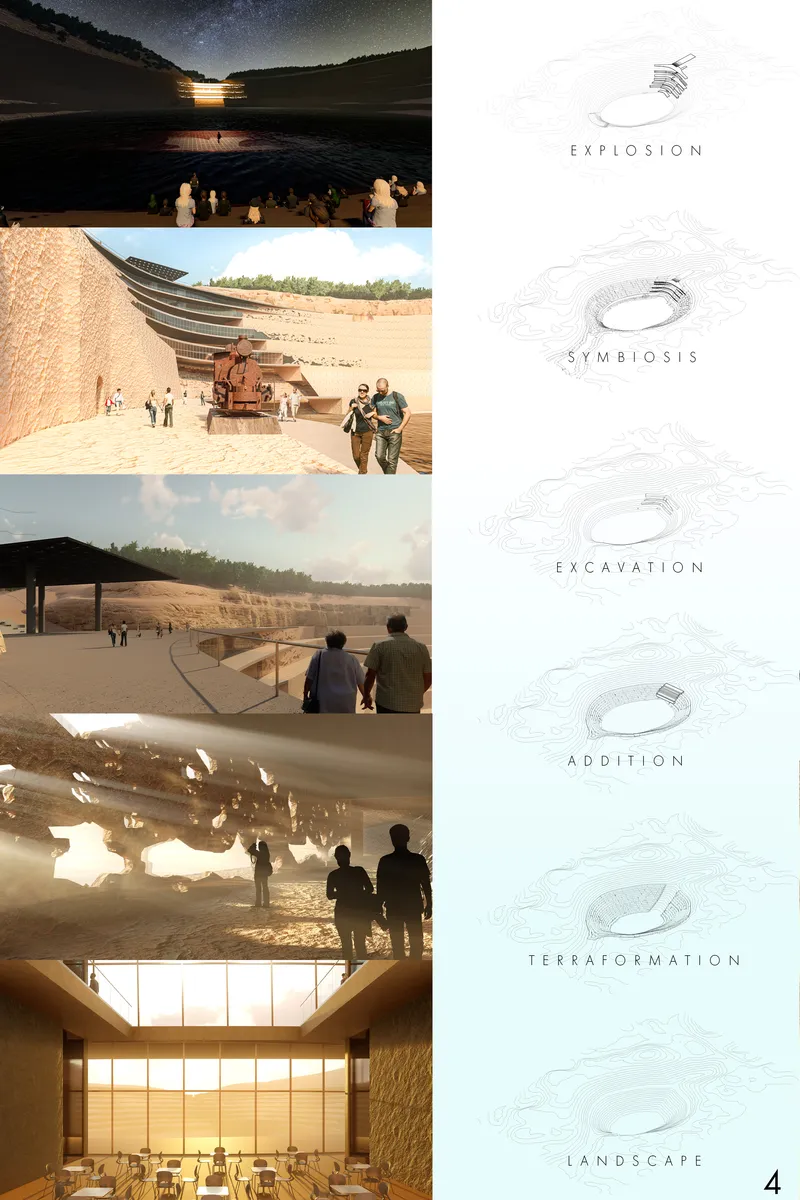
Description: The site of Rio Tinto is located in Andalusia, Spain. Home of one of the biggest man-made open pit mine is the host for a symbiotic architecture where the concept of reclamation becomes an inspiration to shape this project.
Discover the design brief here: https://uni.xyz/competitions/symbiotecture/info/about/
Discover the full results here: https://uni.xyz/competitions/symbiotecture/entries/
Follow us on social media: Facebook | Instagram | LinkedIn | Twitter | Youtube
Discover other design competitions to participate here: https://uni.xyz/competitions


Popular Articles
Popular articles from the community


The Amber Palace Opera: A Geological Fiction Surfaces on Tallinn's Baltic Waterfront
Pierre Brillard reimagines a Baltic legend as a public landscape, opera house, and waterfront promenade rooted in Tallinn's coastal identity.

Manzana Morphosis: Stretching Barcelona's Grid into a Living Landscape for 2050
A radical reworking of the Eixample manzana turns density into a tool for generous public space, vertical ecology, and environmental performance.

Singing Woman: Contemporary Architecture Inspired by Estonia’s Voice and the Sea
Singing Woman turns Estonia’s song culture into flowing opera house architecture, blending public life, landscape, sea, and national memory.

Opera on the Sea: Driftwood Logic Shapes a Timber Opera House on Estonia's Coast
Trevor Orgill's opera house translates the entangled drift of floating timber into a civic building where wood, water, and music converge.

Similar Reads
You might also enjoy these articles
The Amber Palace Opera: A Geological Fiction Surfaces on Tallinn's Baltic Waterfront
Pierre Brillard reimagines a Baltic legend as a public landscape, opera house, and waterfront promenade rooted in Tallinn's coastal identity.
Dynamic Modules Shelter: A Telescopic Ring for Mountain Pilgrimage
A circular modular framework of steel, bamboo, and fabric grows vertically with demand, wrapping communal ground in adaptable shelter.
Singing Woman: Contemporary Architecture Inspired by Estonia’s Voice and the Sea
Singing Woman turns Estonia’s song culture into flowing opera house architecture, blending public life, landscape, sea, and national memory.
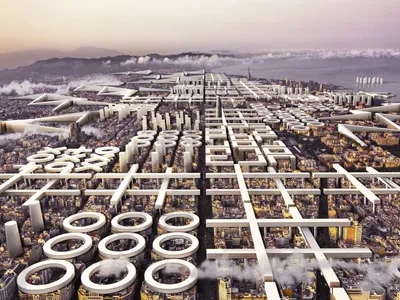
HYPERBLOCK: Flexible Urban Design for Barcelona’s Future City
HYPERBLOCK reimagines Barcelona as flexible urban design, layering density, daylight, public space and adaptable housing above Cerdà’s grid.

Comments (0)
Please login or sign up to add comments
No comments yet. Be the first to comment!