

Taihang Xinyu Art Museum by Wang Chong Studio: A Landmark of Culture, Stone, and Nature
Taihang Xinyu Art Museum by Wang Chong Studio blends stone, landscape, and culture, creating a sustainable landmark uniting art, community, and nature.


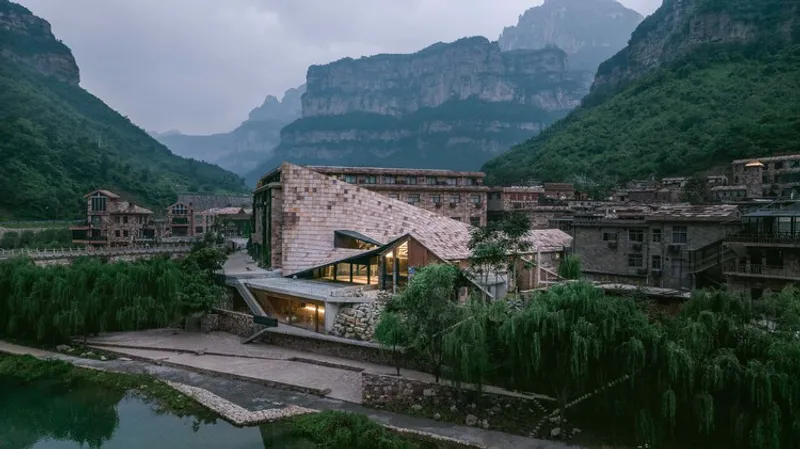
Nestled in the breathtaking Taihang Mountains near Shibanyan Town, Linzhou, Anyang, Henan Province, the Taihang Xinyu Art Museum by Wang Chong Studio emerges as a powerful cultural landmark. Completed in 2022, this 1,500 m² museum is not only a hub for art and community but also a striking example of how architecture, landscape, and tradition can merge into one cohesive vision.
A Cultural Gateway to Shibanyan Town
Located at the entrance of Taihang Grand Canyon Scenic Area, Shibanyan Town has been promoted in recent years as the "Valley of Chinese Painting." As one of northern China’s most important sketching and cultural tourism destinations, the town needed a building that would serve multiple roles:
- A cultural landmark reflecting the spirit of Linzhou.
- A living room for artists, particularly painter Meng Xinyu, who has long captured the beauty of Taihang in his work.
- A sustainable tourism catalyst that provides economic and cultural value for locals.
To achieve this, a tripartite cooperation model was established between government, artists, and private investors. The result is an art museum that balances aesthetic education, public benefit, and sustainable tourism development.
Between Mountains and Villages: A New Landmark Typology
The site is triangular, surrounded by tall and low buildings, sitting at the edge of a bridge where the urban village fabric meets the dramatic mountain backdrop.
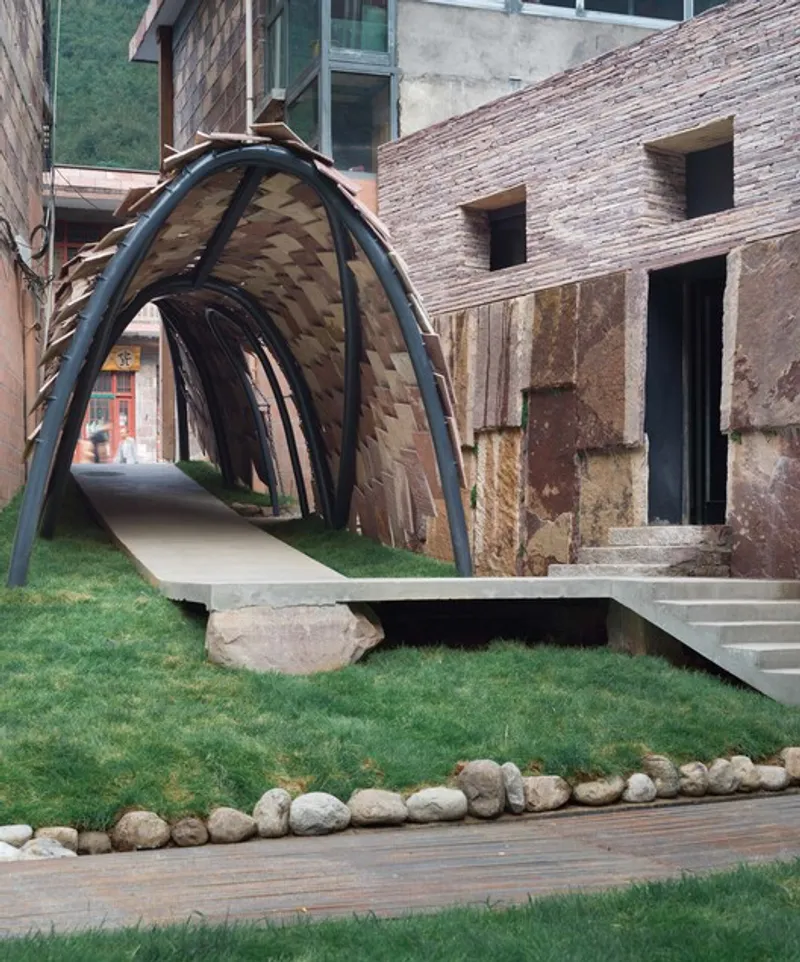
The architects resisted typical museum typologies:
- The “white cube” box — alien to rural China.
- The nostalgic sloped-roof vernacular — easily overshadowed by urban clutter.
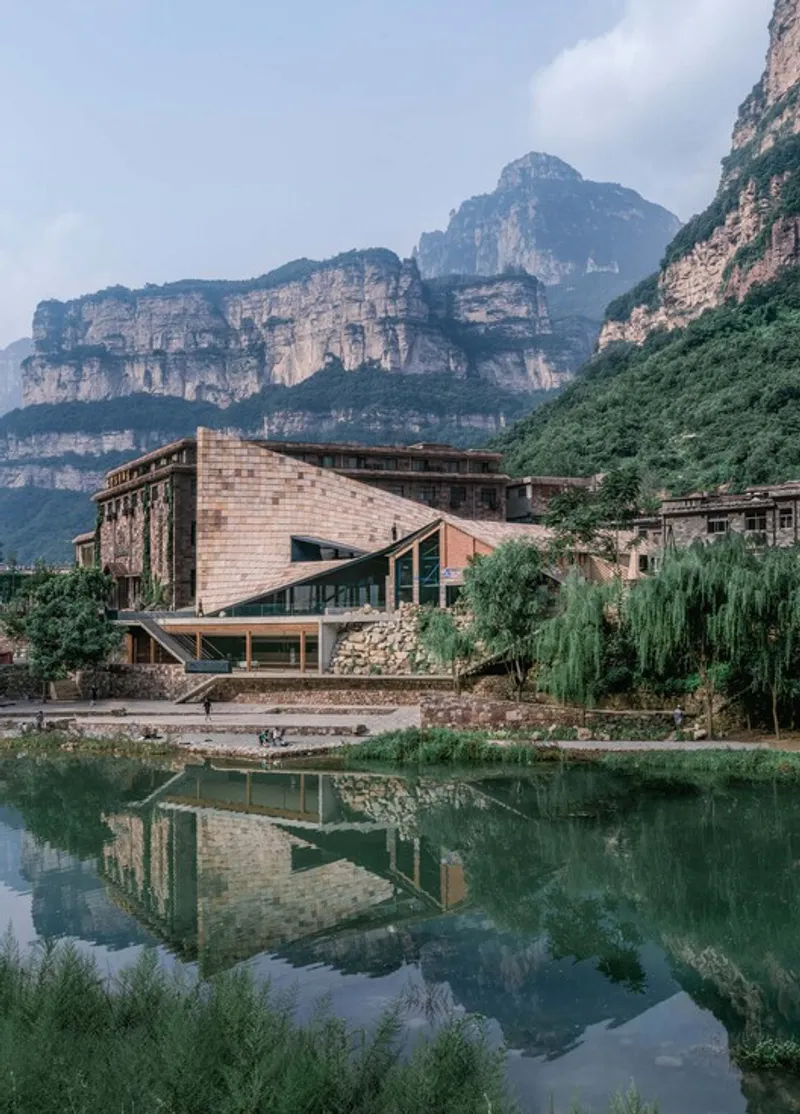
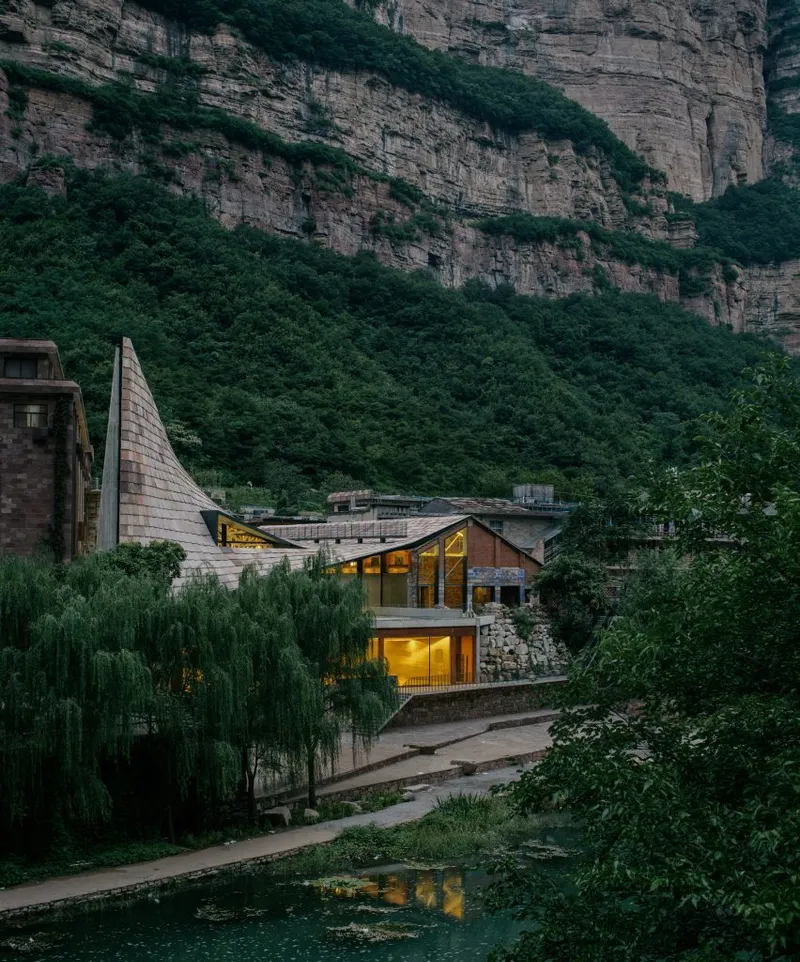
Instead, Wang Chong Studio proposed an “atypical landmark”, inspired by Fan Kuan’s Northern Song Dynasty painting "Travelers amid Streams and Mountains". The museum balances the rigid geometries of man-made townswith the organic slopes of Taihang’s cliffs, embodying a philosophy of harmony yet difference.
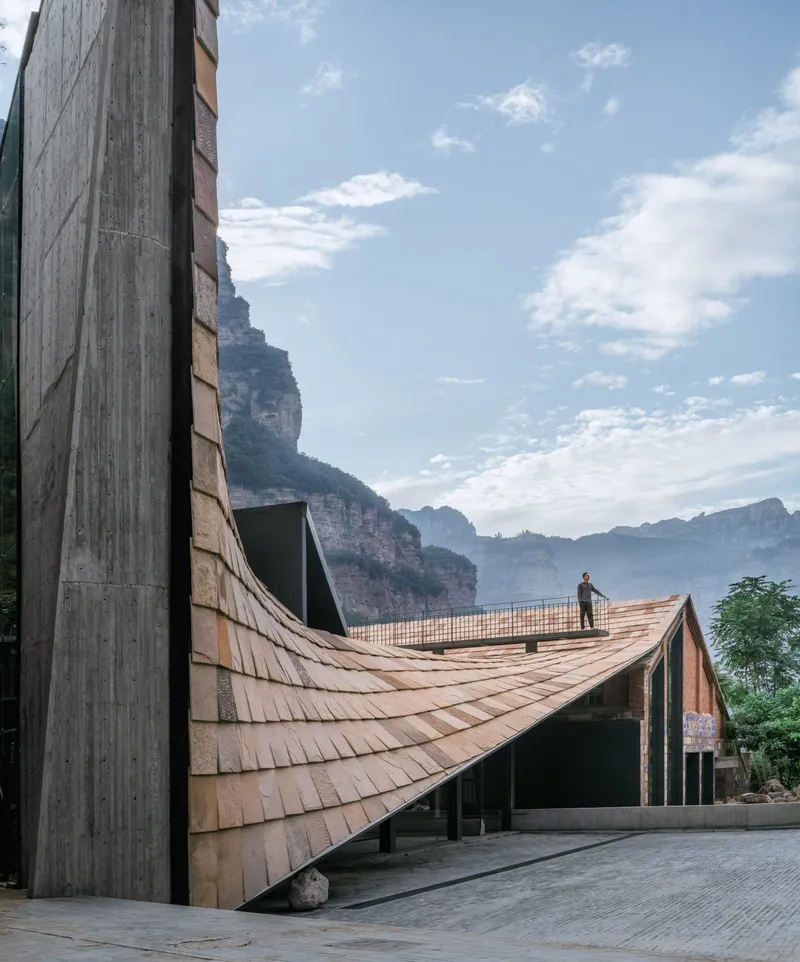
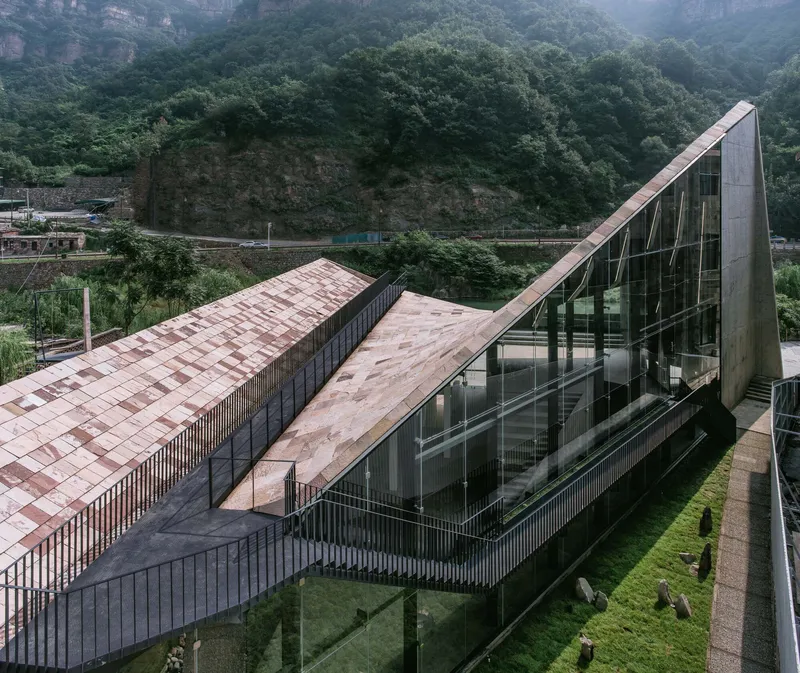
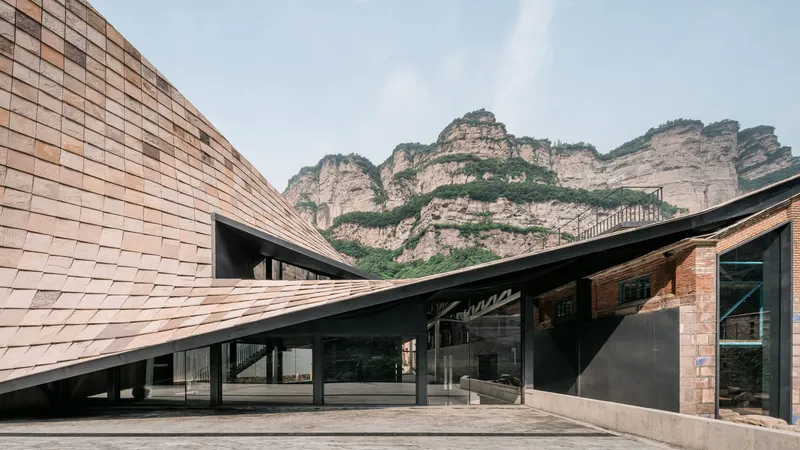
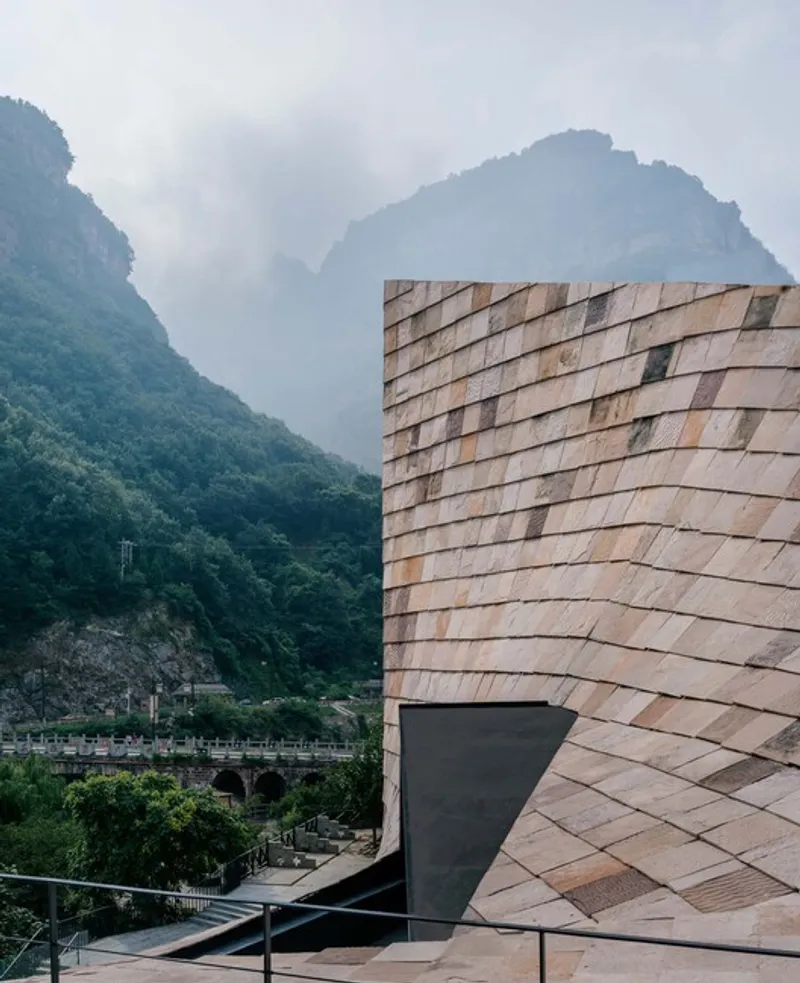
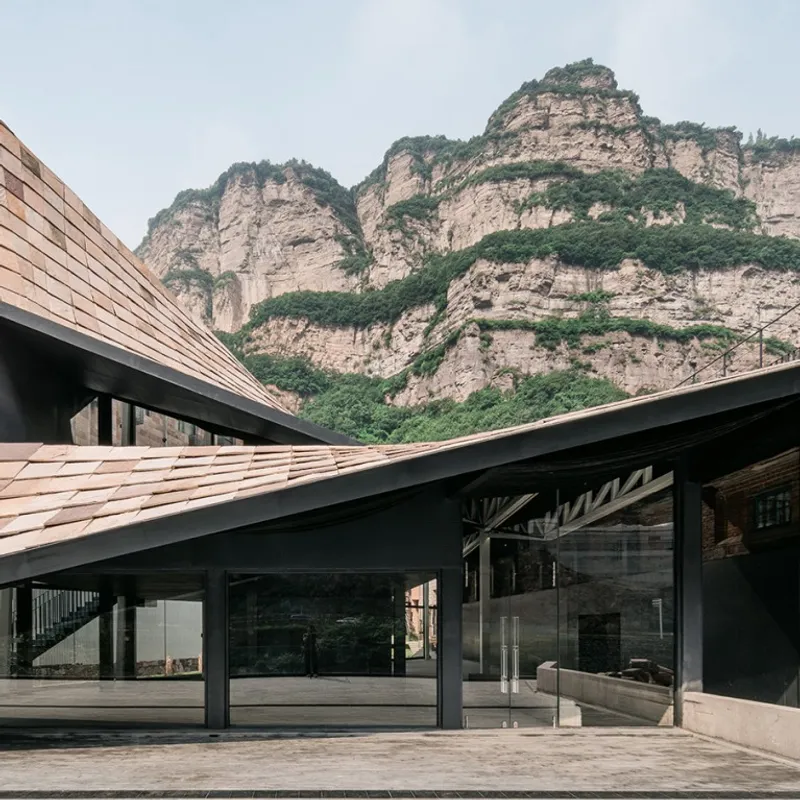
The result is a porous, sloping form that feels as though it grew directly out of the mountains, blending natural stone textures with modern construction methods.
Building with Stone: Past Meets Present
Shibanyan’s history is deeply tied to stone. From terraced fields and stone houses to participation in the construction of the legendary Red Flag Canal, stone craftsmanship has defined local culture for centuries.
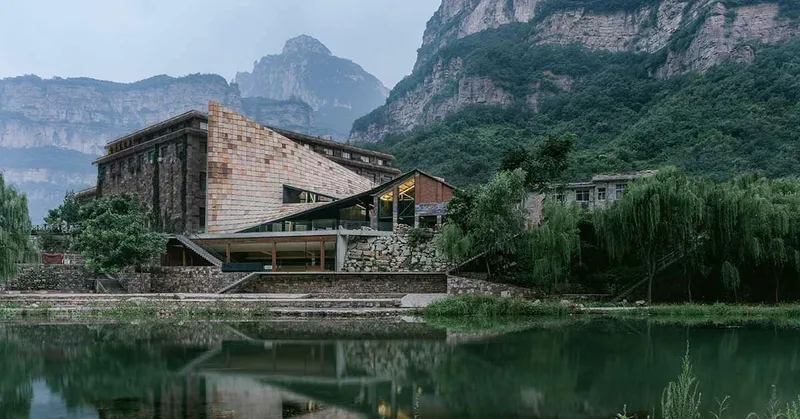
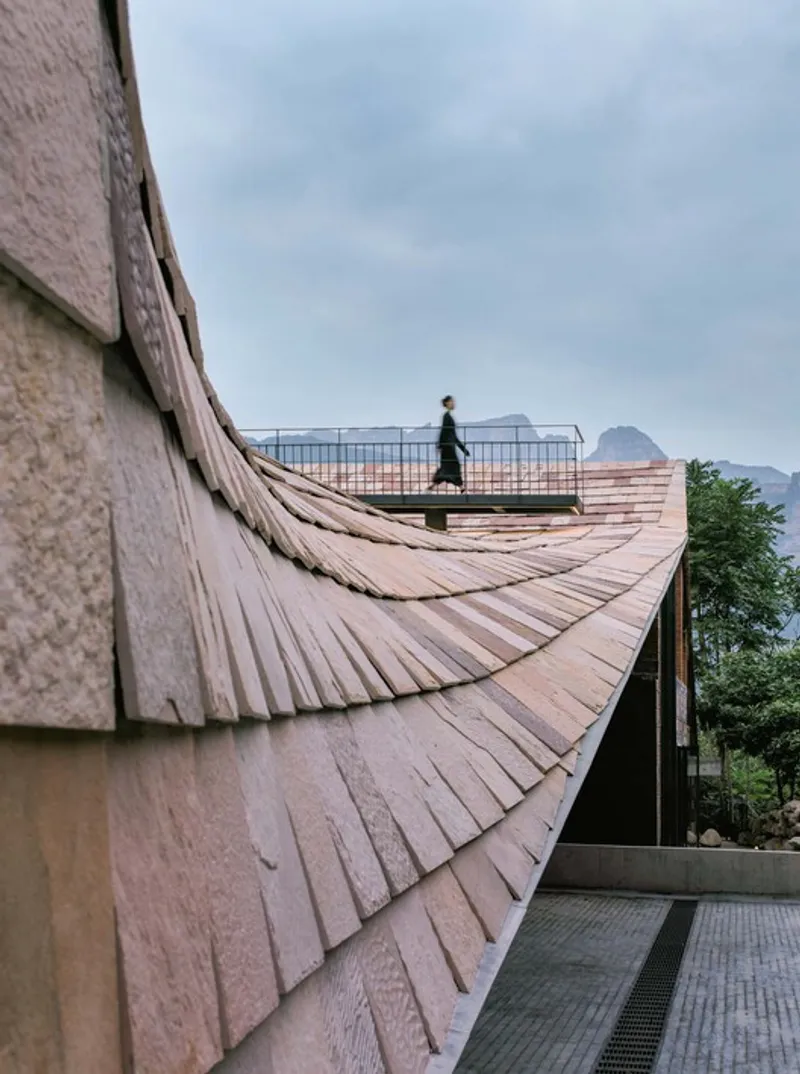
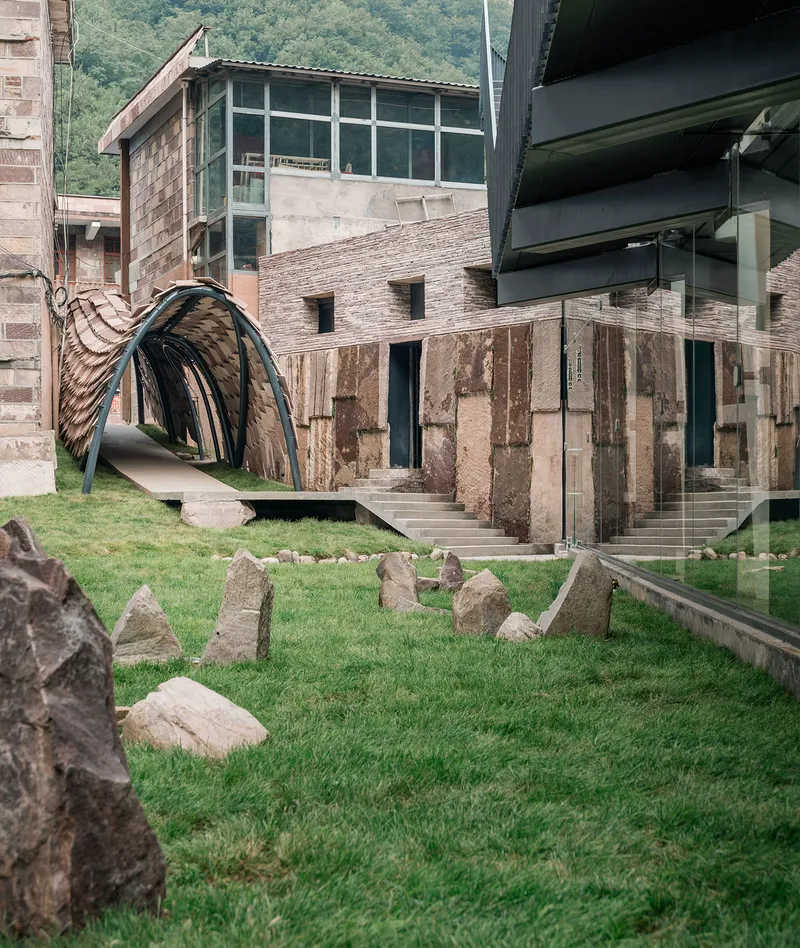
The museum revives this heritage through recycled red sandstone slabs and traditional masonry techniques, integrated with efficient steel structures. More than 1,600 stone slabs, weighing over 70 tons, were collected and mounted to create the museum’s striking roofscape.
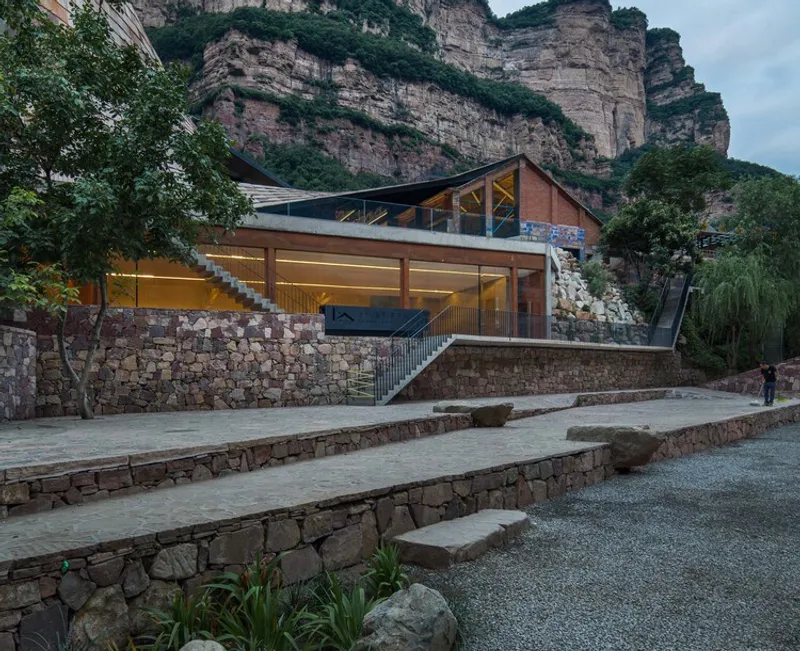
During construction, large stones unearthed from the hillside were repurposed:
- As retaining walls for the restaurant.
- As foundations for the warehouse mezzanine.
- As landscape elements along the riverbank and gardens.
This approach not only honors tradition but also promotes sustainable architecture, minimizing resource waste and reconnecting with local identity.
Spaces of Mystery, Intimacy, and Community
The Taihang Xinyu Art Museum is designed as a sequence of journeys — echoing mountain paths and streams:
- A narrow cave-like entrance opens to a wide central courtyard.
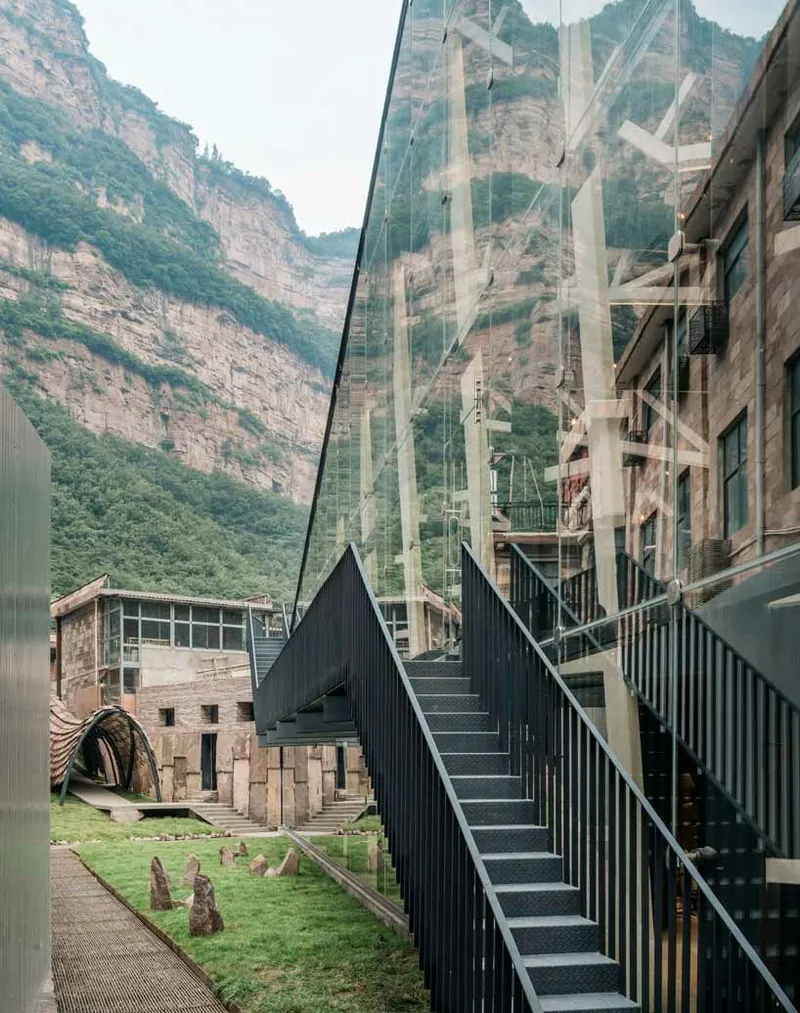
- Layered terraces and zigzag paths connect the town to the river.
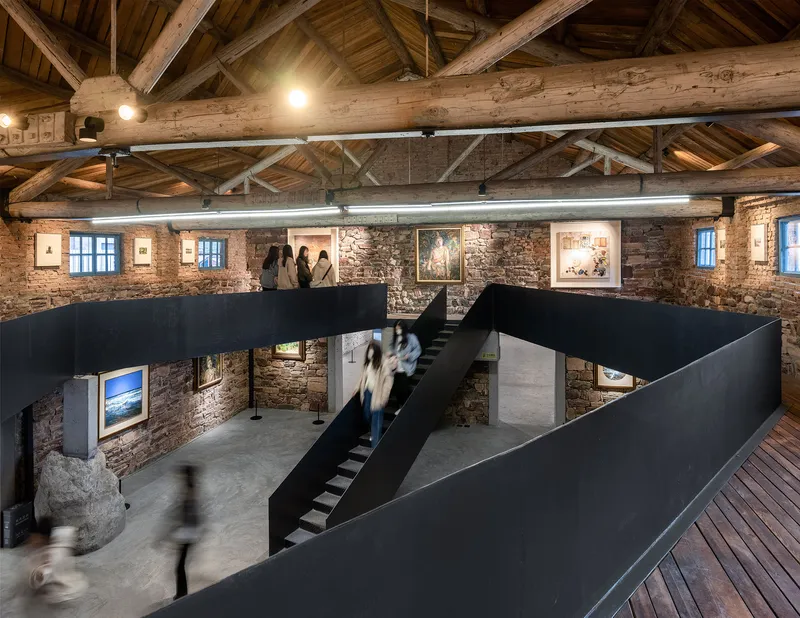
- Double-height galleries and warehouse conversions create spaces for both contemplation and grandeur.
- A riverside restaurant, dug into the hillside with panoramic glass walls, offers sweeping views of mountains and water.
- Roof terraces become public plazas, hosting everything from art conferences to community square dances.
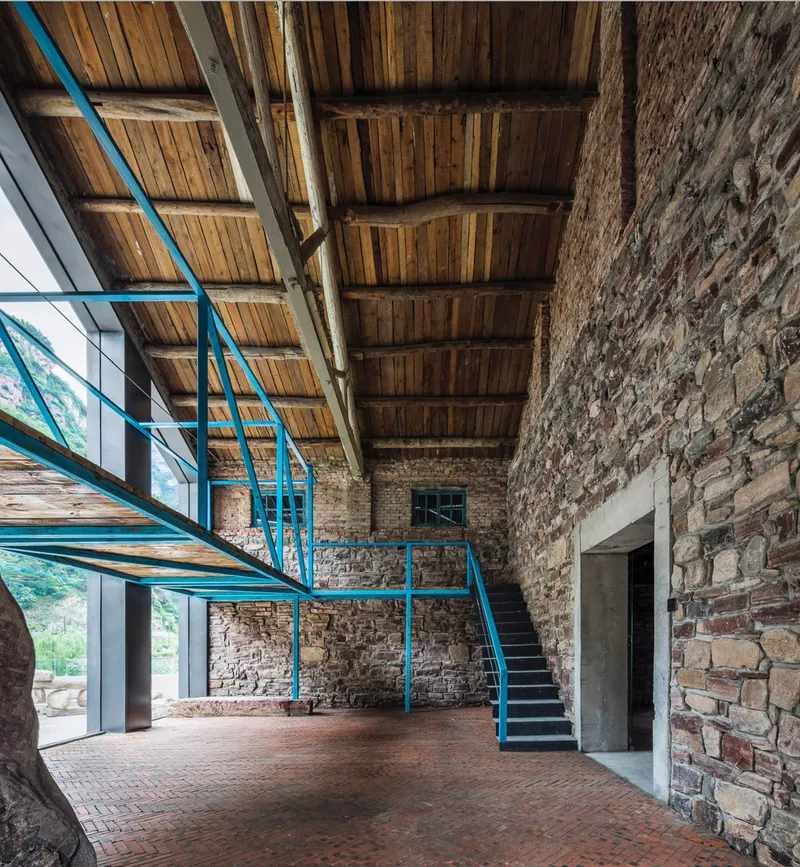
Inside, the contrast of rough stone walls, natural boulders, red terrazzo floors, and steel structures creates a balance between rustic tradition and contemporary expression.

More Than a Museum: A Public Cultural Field
Unlike traditional art museums, often perceived as elitist or alien, this project emphasizes participatory public art. It is:
- A gallery for exhibitions.
- A community living room.
- A platform for cultural exchange between locals, artists, and tourists.
- A public space for sketching students, children, and visitors.

The museum blurs boundaries between daily life, art, and nature. It offers flexibility, ambiguity, and openness, adapting over time to serve as a stage, playground, marketplace, and cultural hub.
A New Chapter for Taihang’s Cultural Landscape
The Taihang Xinyu Art Museum stands as a living testament to sustainable architecture, cultural revitalization, and place-making. It merges ancient stone traditions with modern design strategies, creating a space that feels simultaneously timeless and contemporary.
By fostering cultural tourism, artistic creation, and community life, the museum exemplifies how architecture can be both a landmark and a living organism, growing organically within its landscape and people’s daily lives.
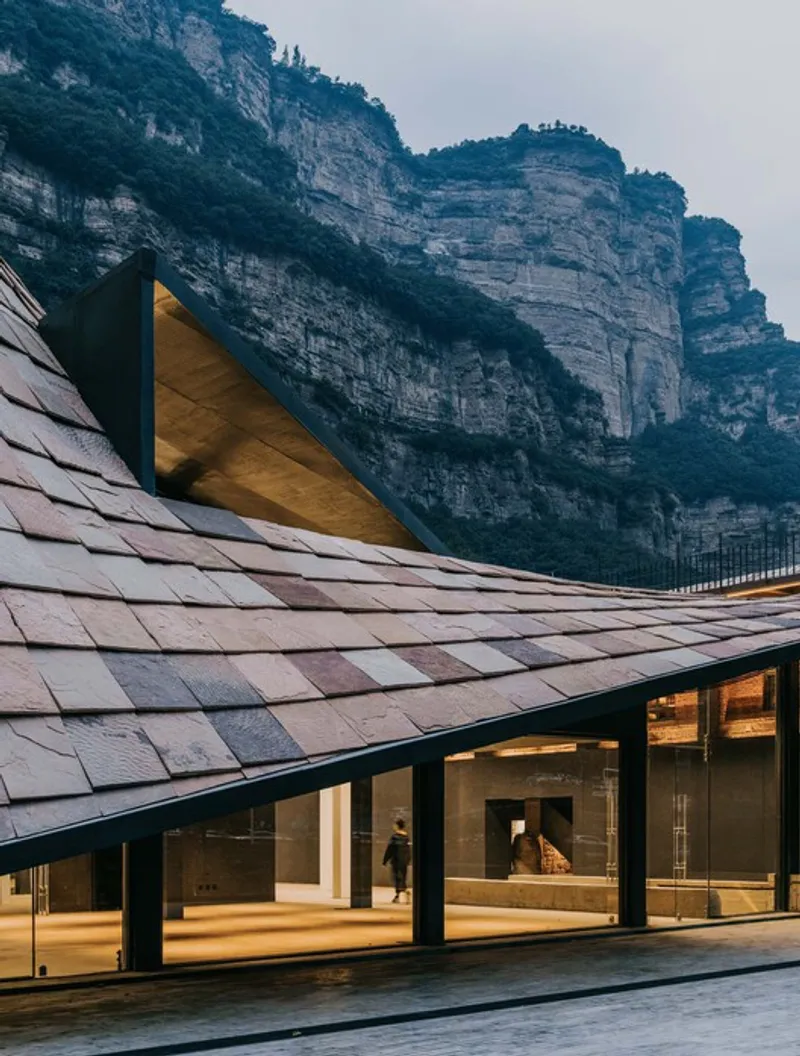
All the photographs are works of Coppak Studio, Yumeng Zhu



Popular Articles
Popular articles from the community


Hill & Cross Opera: Sculptural Opera House Architecture Shaped by Tallinn’s Landscape and Identity
Hill & Cross Opera reimagines opera house architecture in Tallinn through its sculptural hill, civic plaza, glass wave and a luminous cross.

The Ocean Hive: Sustainable Architecture for a Self-Sufficient Civilization at Sea
The Ocean Hive imagines sustainable architecture at sea, where modular habitats, algae, wave power and ocean waste sustain a growing colony.

Play: Fragments of Their World
Familiar architecture becomes modular playground design, creating safe spaces where displaced children can learn, connect, imagine and play.

Lunar Spiral: Space Architecture Shaped by the Mathematics of the Universe
Lunar Spiral reimagines space architecture through Fibonacci geometry, lunar regolith, levitating habitats, and self-sustaining Moon living.


Similar Reads
You might also enjoy these articles


Hodi-Mandai Geram
Project Function: Preservation and revitalization of the Intangible heritage and socio-spatial identity of the Hodi by Housing, Cultural Memory Center, Sacred Grove, landscape, local tourism economy


Olio Towers: A Mid-Rise for Performers That Fuses Housing, Rehearsal, and Stage
Located blocks from Houston's Theater District, this modular tower stacks living units around a central performance atrium.

Oasis: Modular Green Housing Carved into Dhaka's Urban Fabric
A shortlisted Plugin Housing entry reclaims unauthorized settlements in Dhaka with stepped concrete volumes, green roofs, and ventilation-driven design.

Black Hole: A Floating Megastructure for the Post-Physical Era
Emiliano Mazzarotto envisions a spherical, self-scaling arena where e-sports, digital hotels, and holographic stadiums replace traditional public space.


Explore Cultural Architecture Competitions
Discover active competitions in this discipline



Challenge to reimagine the Iron Throne


Photograph architecture without architects


Illustrate the lost glory of Angkor Wat - Render Challenge


Bring back Drive In's
Comments (0)
Please login or sign up to add comments
No comments yet. Be the first to comment!