![Tanpopo Restaurant by TRAIL [practice]](https://ojo2mx38l6.execute-api.ap-south-1.amazonaws.com/image/eyJidWNrZXQiOiJ1bmktYmxvZyIsImtleSI6IjQzLzkzMGEwY2EzLWI2YTktNDg3YS1hZjk3LTg2Y2M4YzgzZjkxMy91bmllZGl0b3JpYWwyMDI2LTAxLTMxVDE2LTI0LTMzLTUwNzMxNi5qcGciLCJlZGl0cyI6eyJyZXNpemUiOnsid2lkdGgiOjUwfSwianBlZyI6eyJxdWFsaXR5IjoxMH0sImZsYXR0ZW4iOmZhbHNlLCJub3JtYWxpc2UiOmZhbHNlfX0=)
![Tanpopo Restaurant by TRAIL [practice]](https://ojo2mx38l6.execute-api.ap-south-1.amazonaws.com/image/eyJidWNrZXQiOiJ1bmktYmxvZyIsImtleSI6IjQzLzkzMGEwY2EzLWI2YTktNDg3YS1hZjk3LTg2Y2M4YzgzZjkxMy91bmllZGl0b3JpYWwyMDI2LTAxLTMxVDE2LTI0LTMzLTUwNzMxNi5qcGciLCJlZGl0cyI6eyJyZXNpemUiOnsid2lkdGgiOjIwMDAsImZpdCI6Imluc2lkZSJ9LCJqcGVnIjp7InF1YWxpdHkiOjg1fSwiZmxhdHRlbiI6ZmFsc2UsIm5vcm1hbGlzZSI6ZmFsc2V9fQ==)
Tanpopo Restaurant by TRAIL [practice]
An open-kitchen ramen restaurant in Athens blending metal, wood, and street interaction to transform casual dining into architectural performance.

Located in the heart of Athens, Tanpopo Restaurant is a contemporary Japanese eatery that redefines casual dining through openness, performance, and spatial fluidity. Completed in 2023, the 182 m² project transforms ramen culture into an immersive architectural experience, where cooking, serving, and street life merge seamlessly.
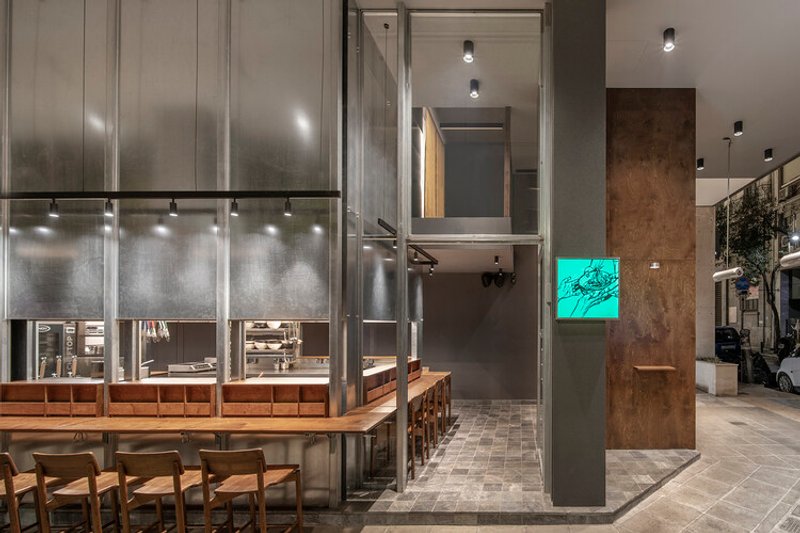
Designed by TRAIL [practice] under the leadership of Manos Babounis, the restaurant reflects a deep interest in how food, space, and urban movement intersect.
Cultural Reference: From Dandelion to Ramen
“Tanpopo” is the Japanese word for dandelion and also references the cult film Tampopo, which follows a woman’s journey to master ramen-making.
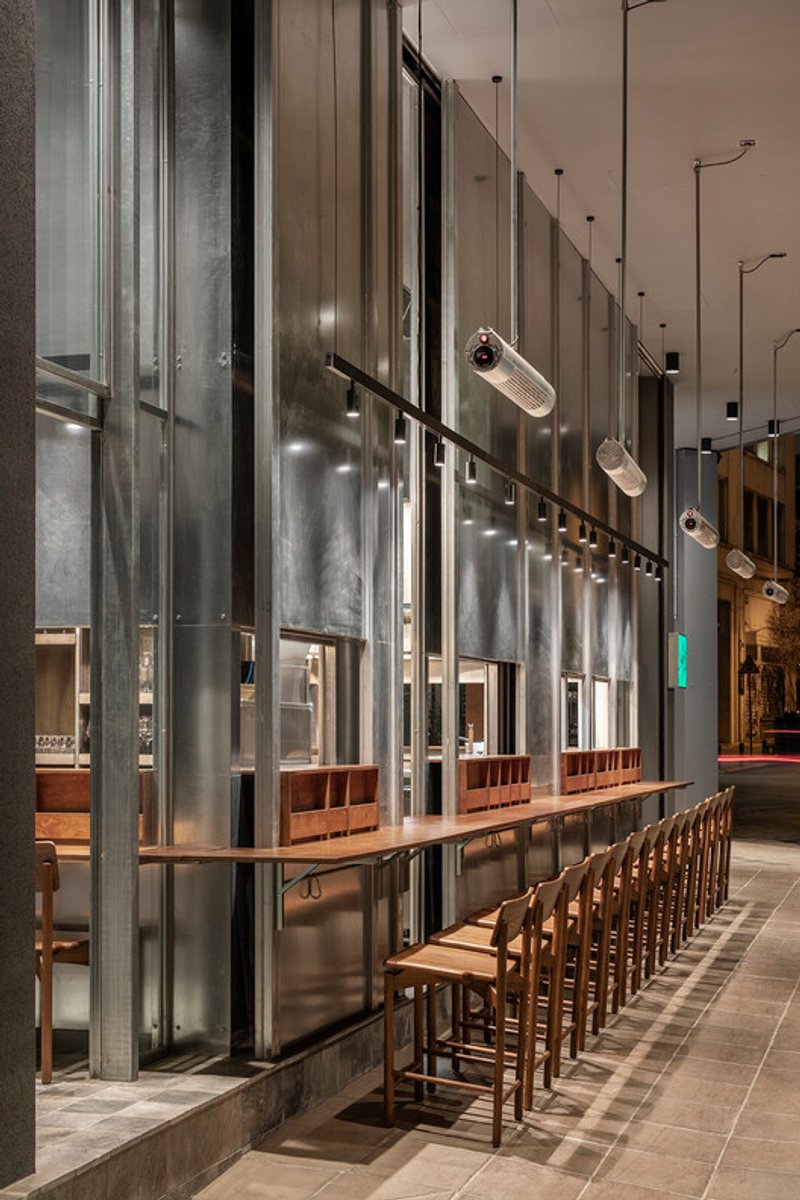
This narrative of dedication, craftsmanship, and everyday poetry informs the restaurant’s identity. Tanpopo in Athens translates these themes into architecture, presenting ramen not simply as food, but as a shared cultural ritual.
Urban Context: Engaging the Sidewalk
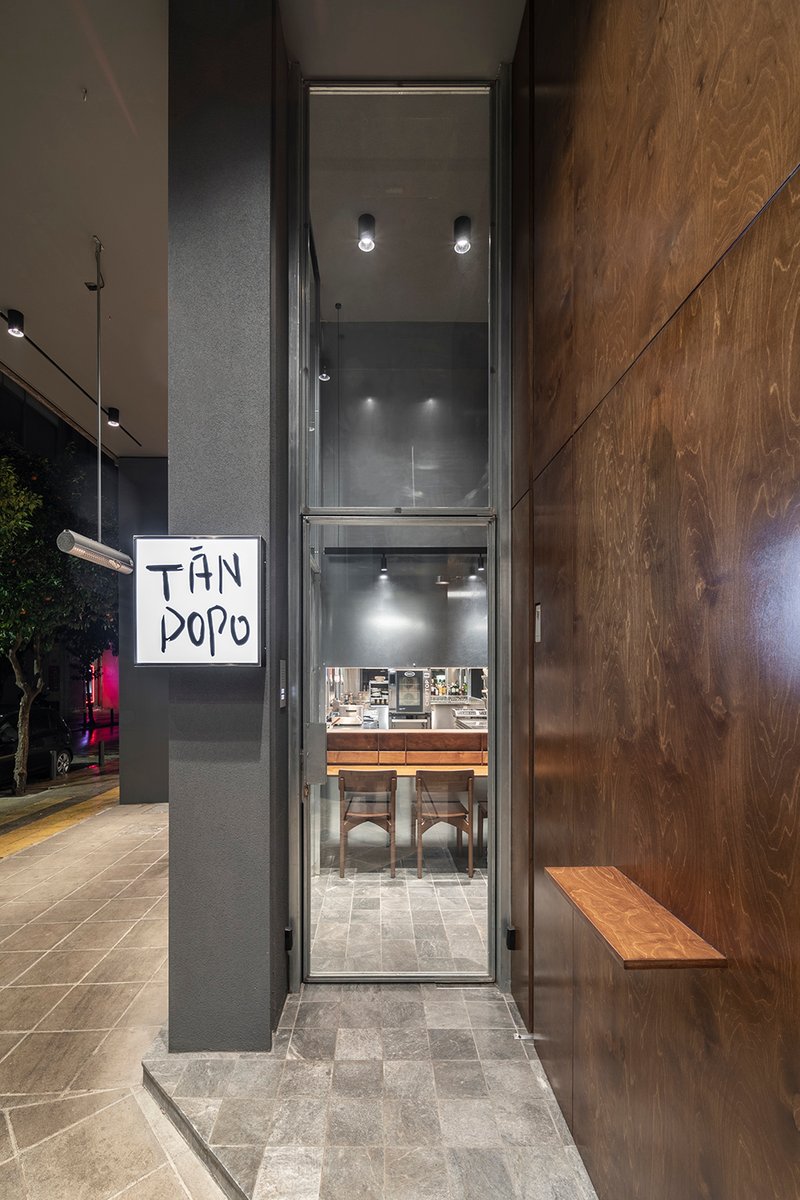
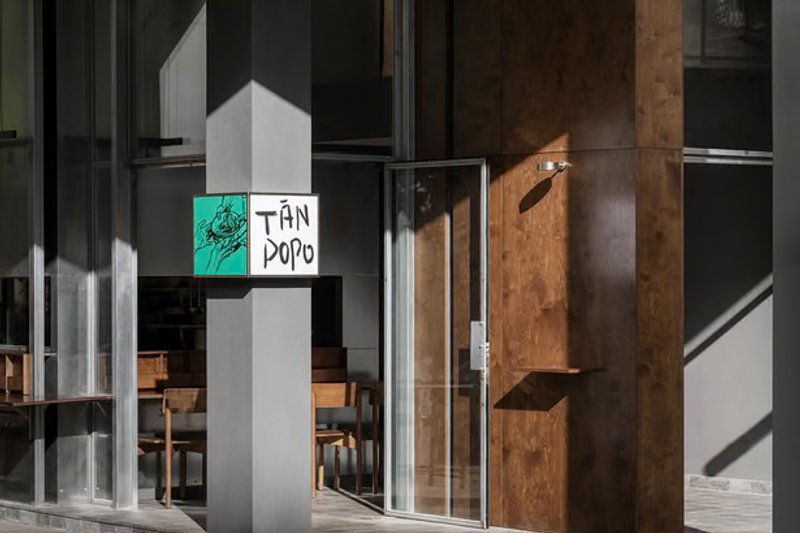
Situated behind Klafthmonos Square, the restaurant directly engages with pedestrian movement. Rather than isolating itself from the street, Tanpopo adopts a canteen-like typology that extends activity outward.
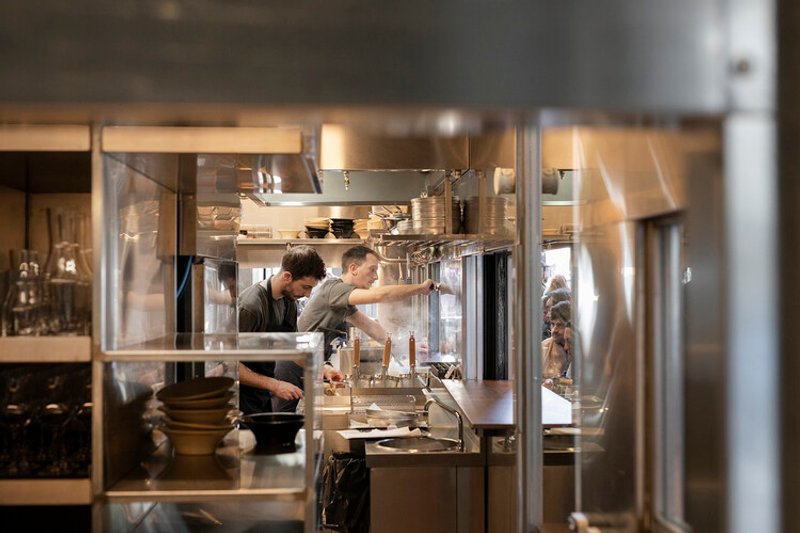
Urban Strategy
- Visual openness to the sidewalk
- Cooking visible from outside
- Fluid entry and exit
- Informal seating atmosphere
- Continuous street interaction
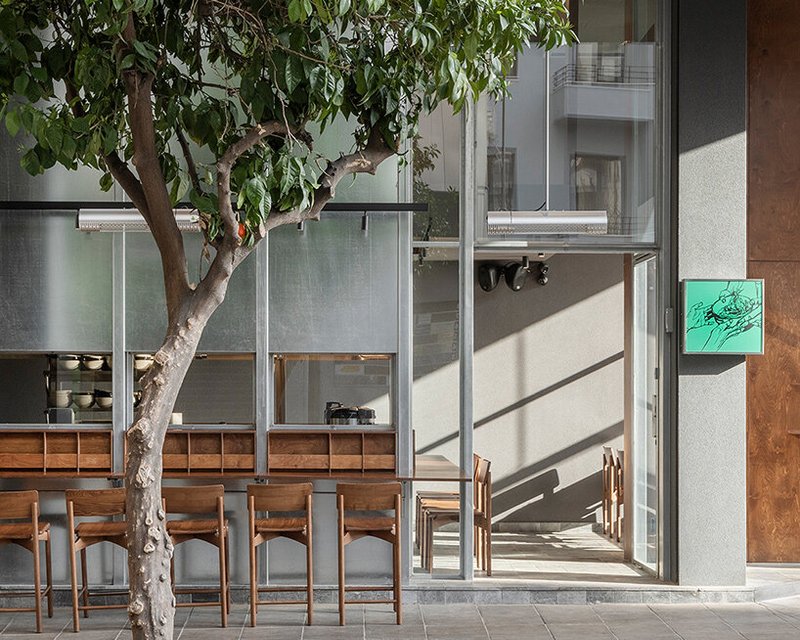
This approach dissolves the boundary between interior and exterior, making the restaurant part of everyday urban life.
Design Concept: Blurring Public and Private
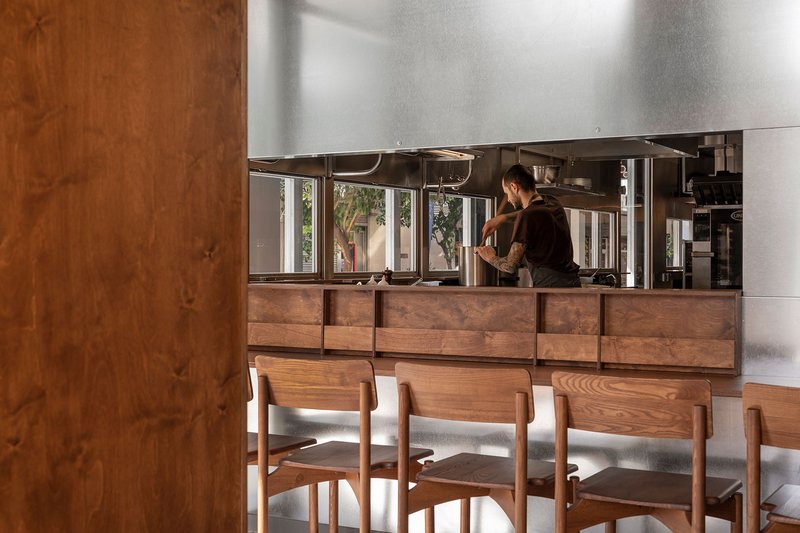
The core intention of the project is to erase the traditional separation between kitchen and dining space.
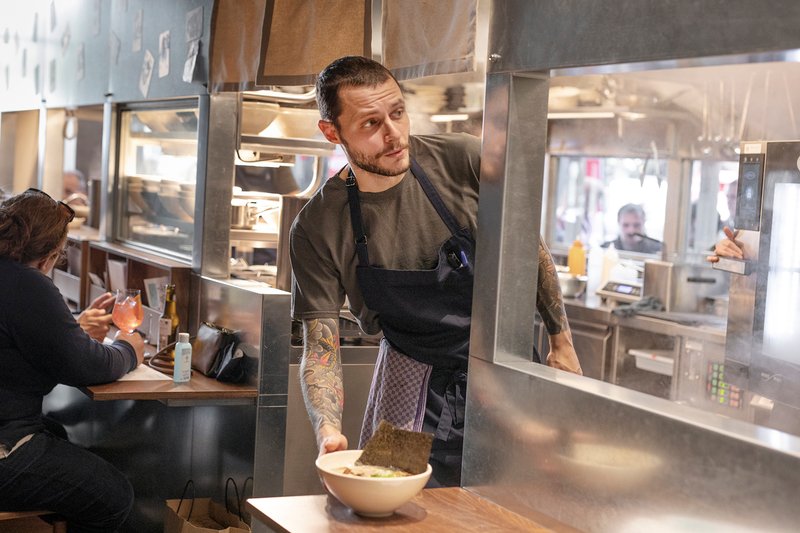
Instead of hiding food preparation, the design places it at the forefront, turning cooking into a live performance. Visitors are invited to witness every step, from boiling broth to plating noodles.
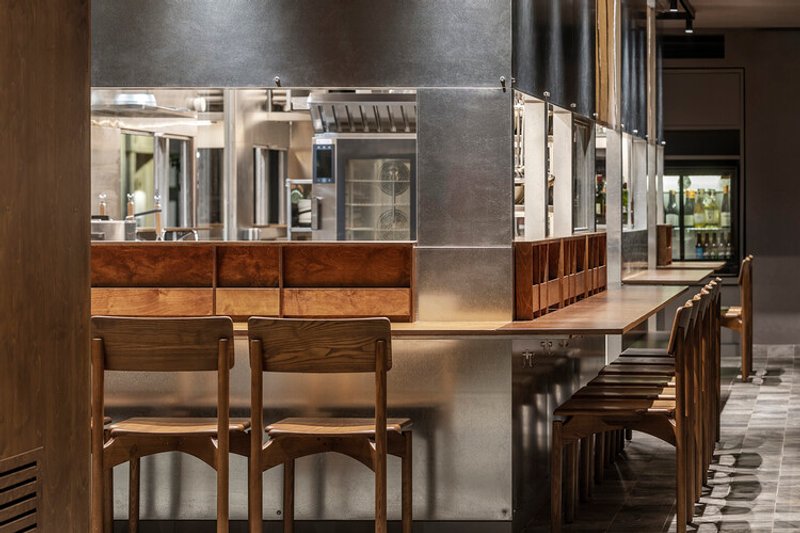
This transparency fosters trust, immediacy, and emotional connection between chef and customer.
The Open Kitchen as Spatial Core
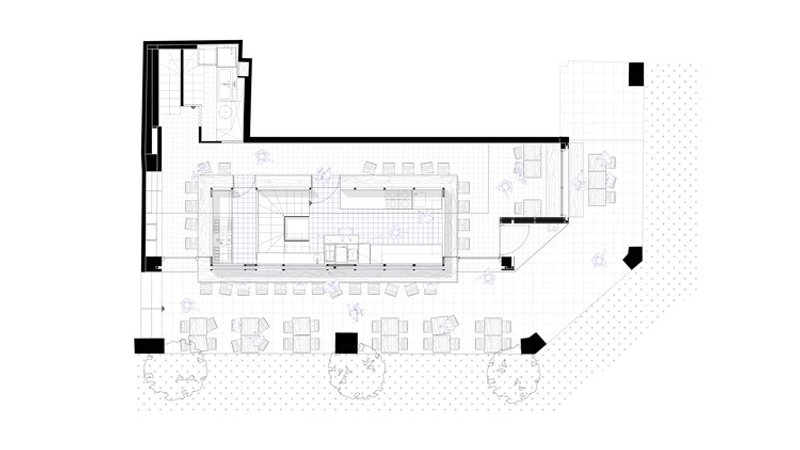
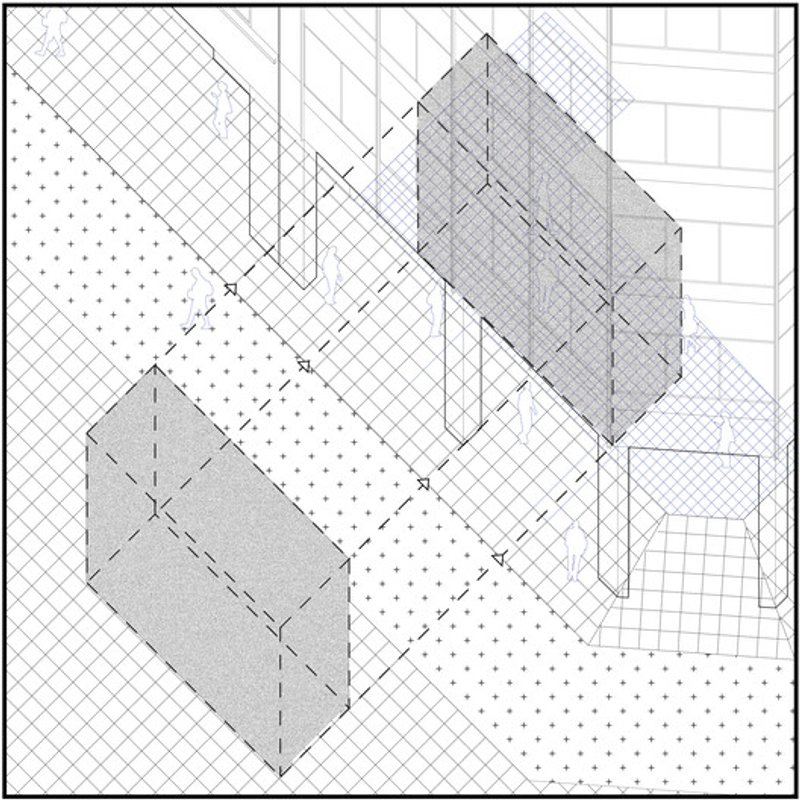
At the heart of Tanpopo lies a freestanding, double-height metal structure that houses the kitchen.
Key Characteristics
- Structurally independent frame
- Potentially movable system
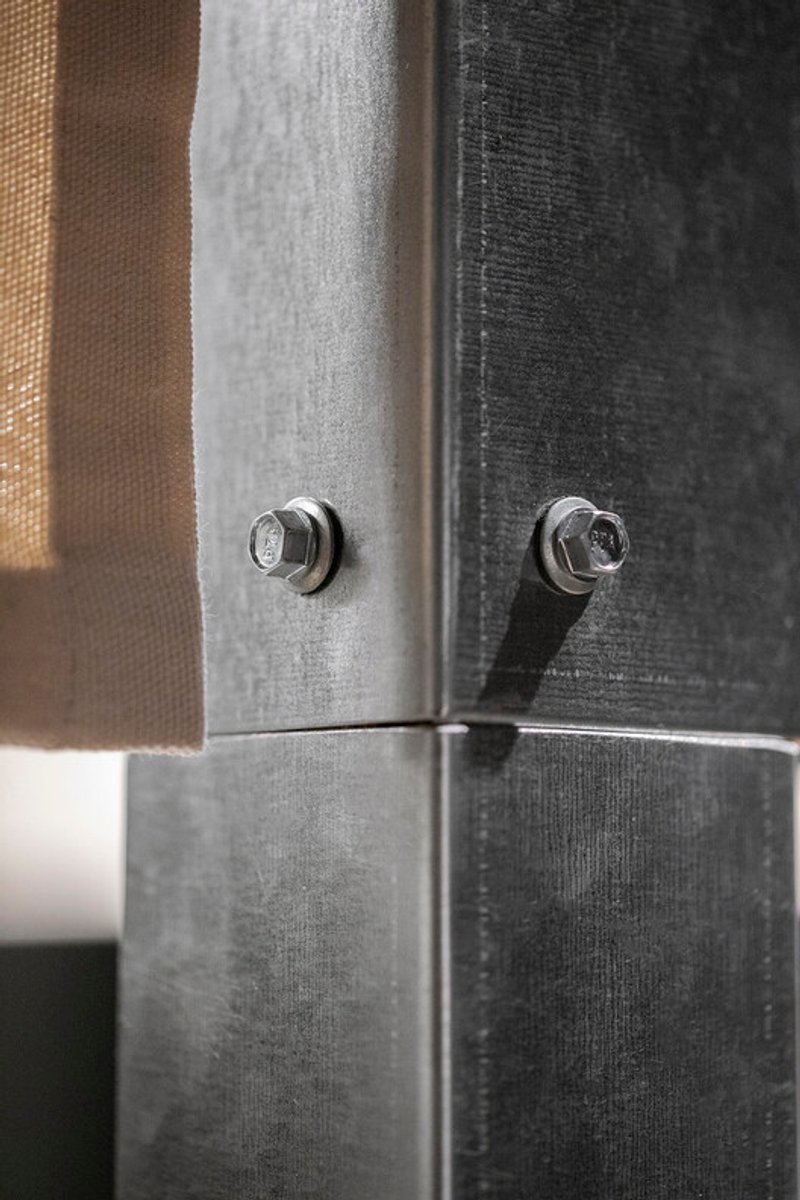
- Geometric steel construction
- Central spatial anchor
- Full visual transparency
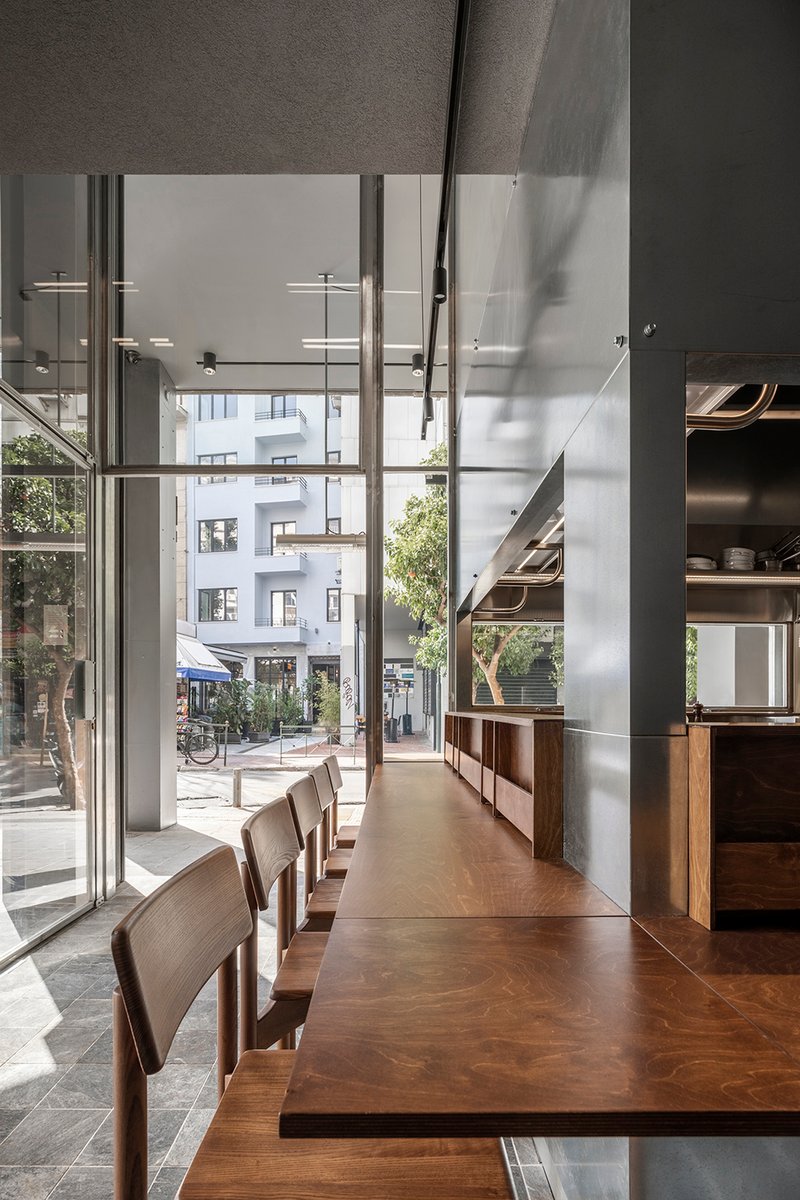
This frame operates as an “independent universe” within the restaurant, with its own rhythm and discipline. Around it, circulation, seating, and service organically unfold.
Circulation and Flow
Movement through the space is carefully choreographed. Customers flow naturally between street, counter, seating, and exit without congestion.
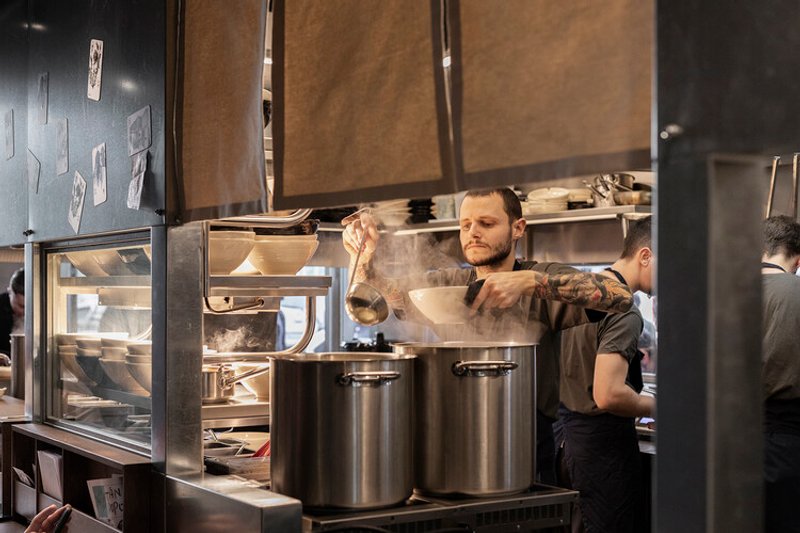
Spatial Organization
- Kitchen at the core
- Counters as interaction nodes
- Benches along circulation paths
- Clear visual axes
- Minimal partitions
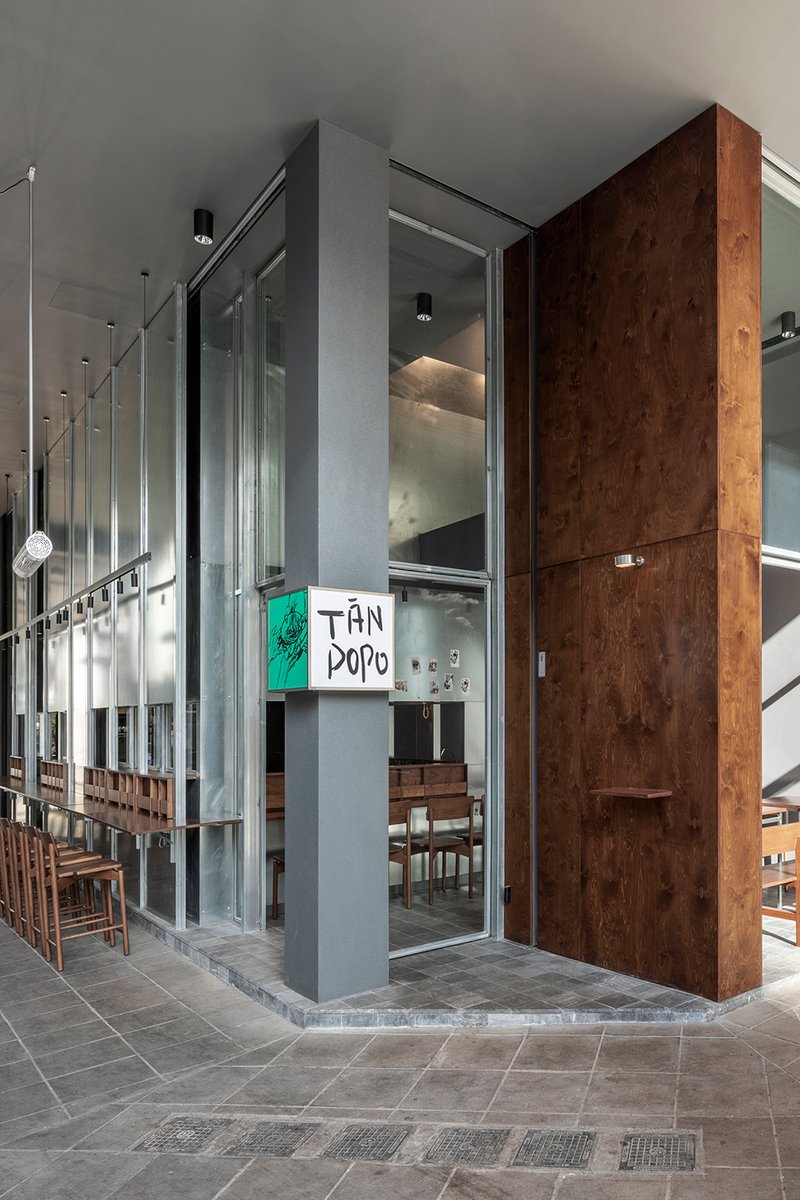
This layout reinforces continuity between preparation and consumption, eliminating hierarchical separation.
Materiality: Expressing Transience
The material palette reflects the eat-and-go nature of ramen culture: direct, efficient, and tactile.
Primary Materials
- Stainless steel (kitchen)
- Gray-toned plaster (walls)
- Aliveri marble (details)
- Natural wood (benches)
- Glass elements
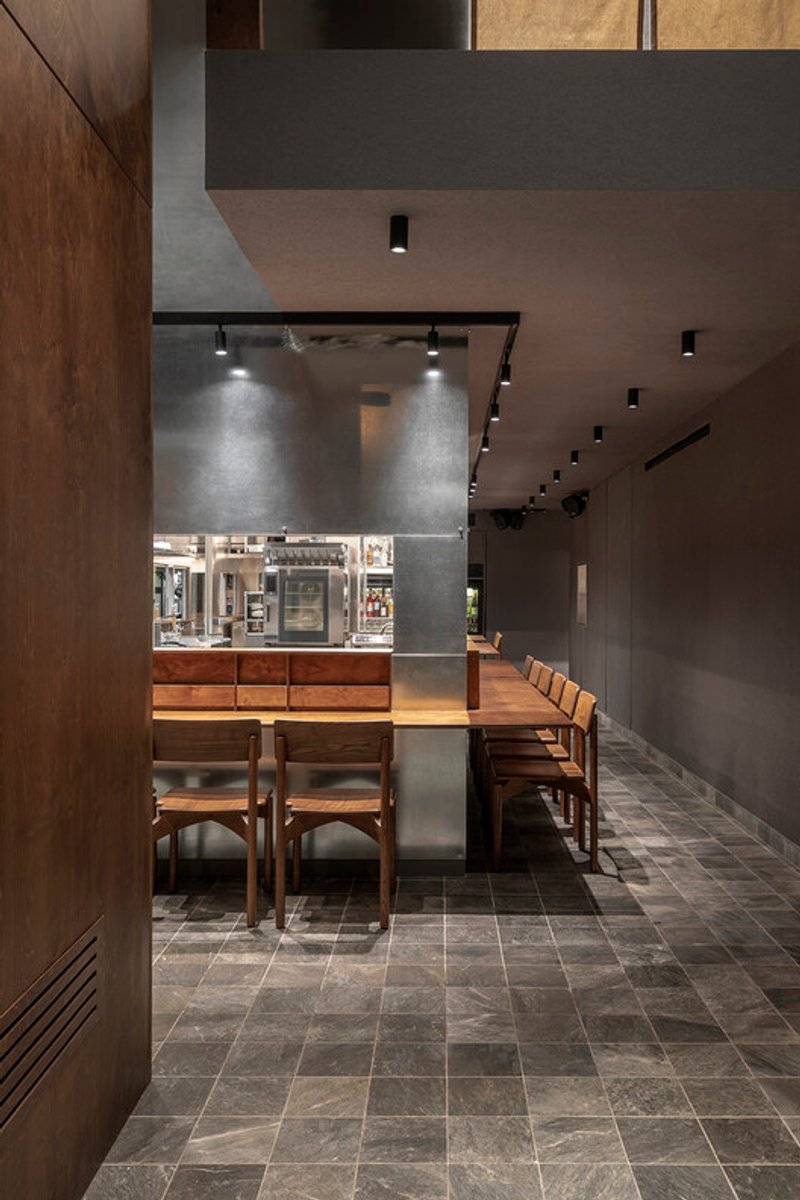
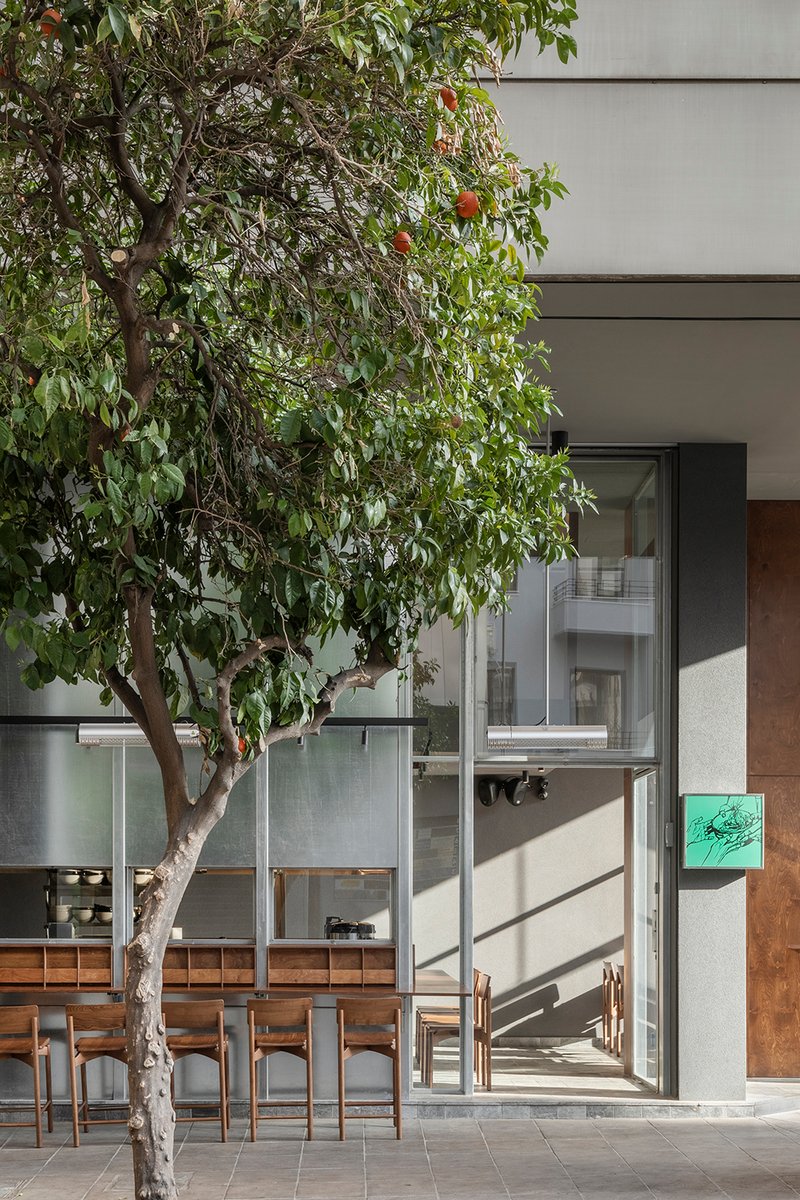
Metal dominates the kitchen zone, emphasizing hygiene and precision. In contrast, plaster and marble soften the dining area, introducing warmth and texture.
Tactility and Visual Continuity
Although materials vary in texture, they are unified through restrained color tones. Smooth steel transitions into rough plaster and processed marble without abrupt visual breaks.
This balance creates:
- Sensory richness
- Subtle zoning
- Visual calm
- Material coherence
- Human-scale comfort
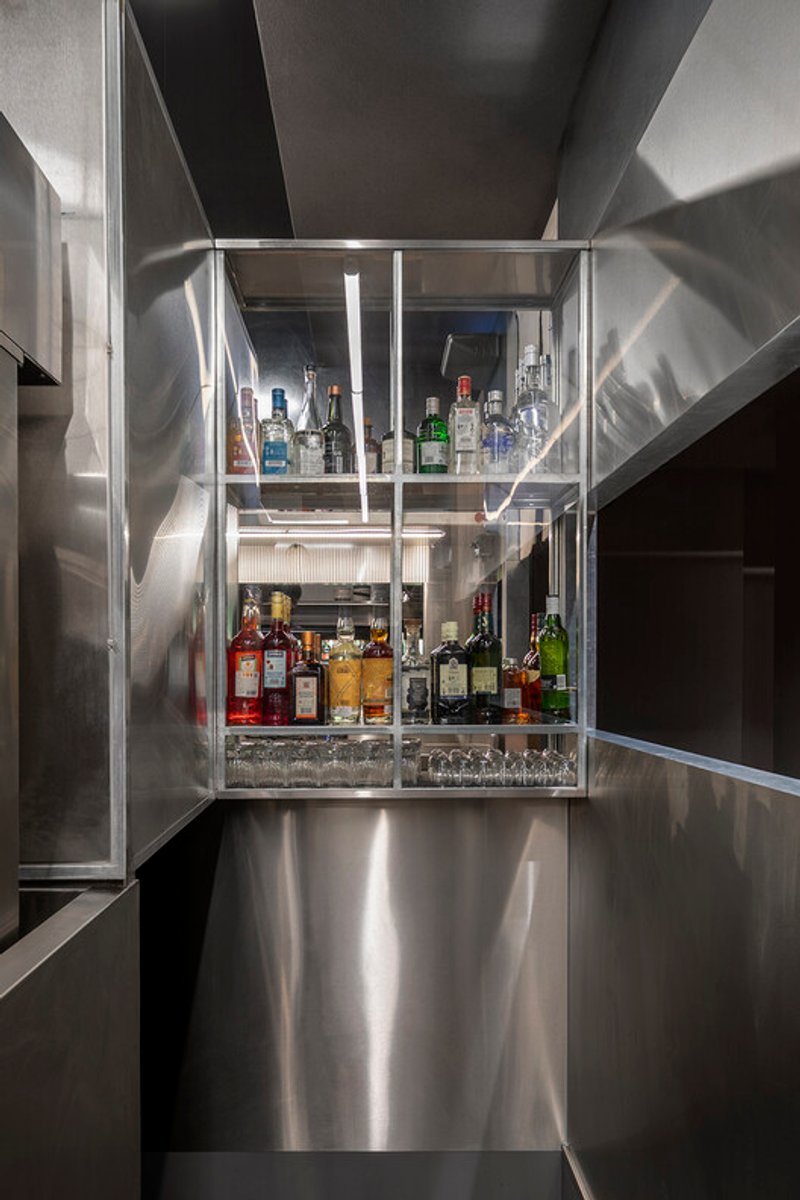
The space feels both industrial and intimate, efficient yet welcoming.
Furniture and Informality
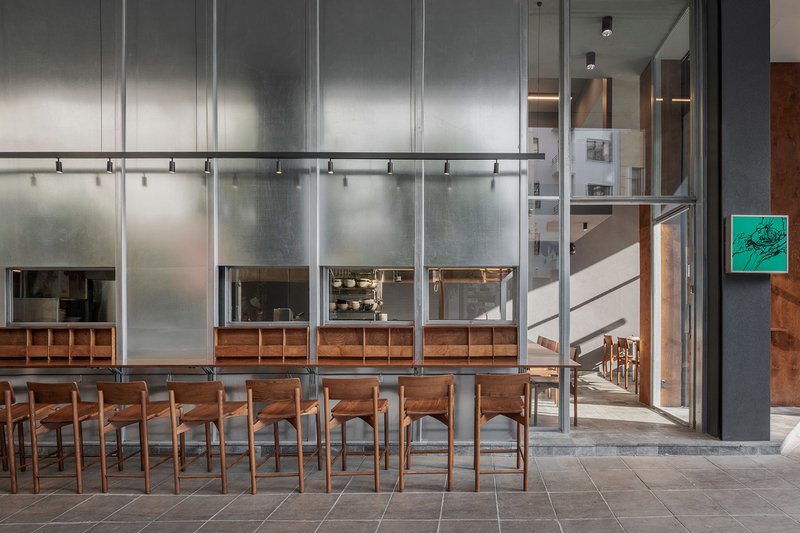
Wooden benches, inspired by traditional Japanese and European canteens, reinforce the casual character of the restaurant.
Role of Furniture
- Encourages quick turnover
- Supports communal dining
- Maximizes seating capacity
- Facilitates circulation
- Enhances familiarity
Their placement ensures that movement remains uninterrupted, even during peak hours.
Counters as Social Interfaces
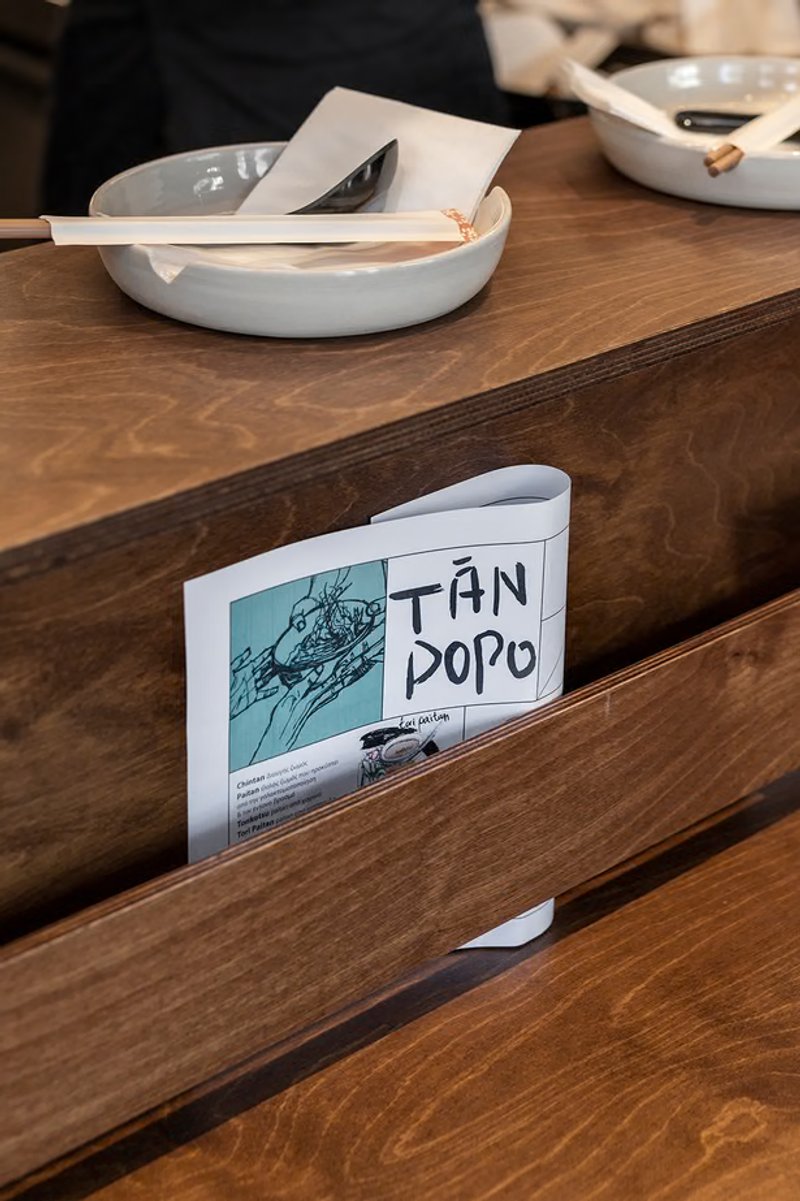
The food counters are the primary points of interaction between chefs and guests.
Here, ramen is served directly from the kitchen to the customer, reinforcing immediacy and authenticity. These moments of exchange transform dining into a social ritual rather than a transactional act.
Lighting and Atmosphere
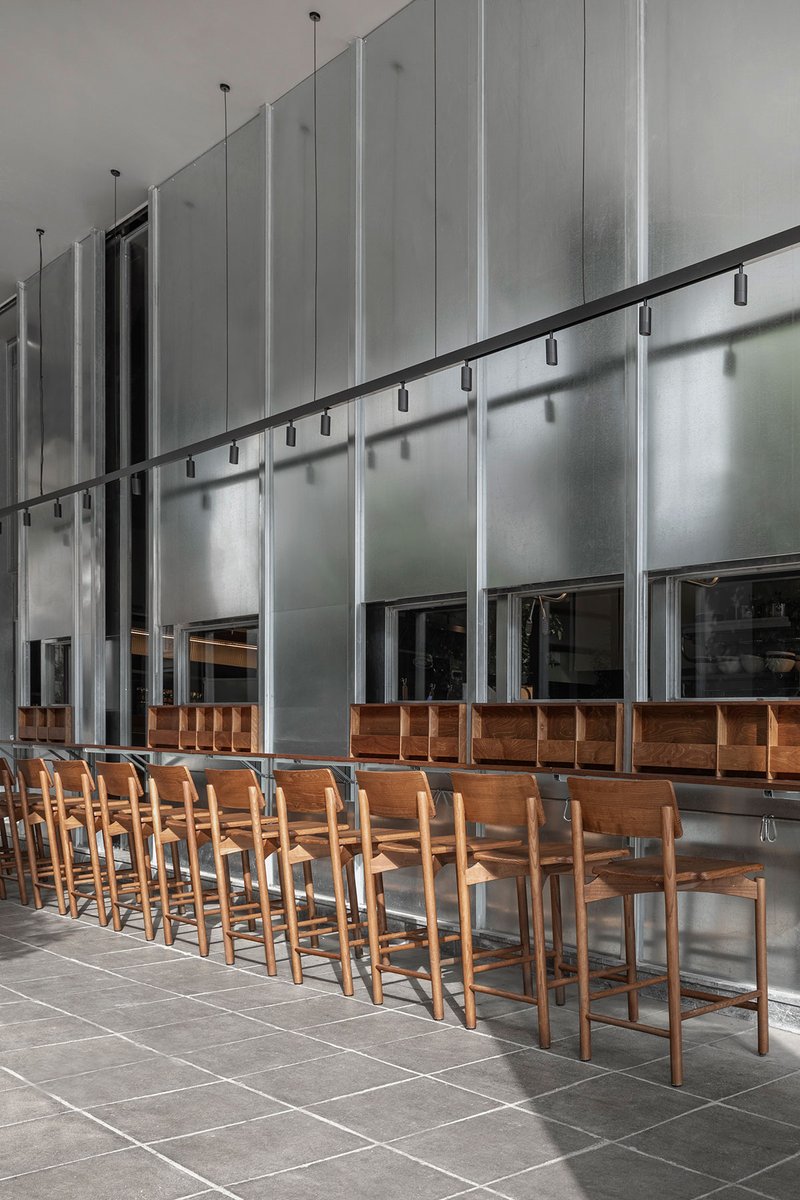
Lighting is designed to support both function and mood.
Lighting Strategy
- Focused task lighting in kitchen
- Warm ambient light in seating areas
- Reflections on metal surfaces
- Highlighting of textures
This layered system enhances the visual drama of cooking while maintaining a relaxed dining environment.
Redefining Fast Dining
Tanpopo challenges the typical perception of quick-service restaurants. While service is efficient, the spatial experience is rich and engaging.
Instead of rushing customers, the architecture encourages observation, interaction, and appreciation of craft.
The result is a hybrid space: fast yet meaningful, casual yet carefully curated.
Sustainability Through Simplicity
Rather than relying on complex technologies, the project emphasizes durability and adaptability.
Sustainable Aspects
- Long-lasting metal structures
- Minimal finishes
- Flexible layout
- Reusable core frame
- Reduced material waste
This pragmatic approach supports long-term use while minimizing maintenance.
Architecture as Culinary Performance
At Tanpopo, architecture does not merely contain dining, it stages it.
Cooking becomes choreography. Steam, sound, movement, and light form a multisensory performance visible from street to table.
In this way, the restaurant transforms everyday ramen into an urban spectacle.
A Contemporary Model for Restaurant Design
Tanpopo Restaurant stands as a strong example of how hospitality interiors can merge transparency, efficiency, and emotional engagement.
By integrating kitchen, street, and seating into a unified spatial system, TRAIL [practice] offers a fresh model for small-scale urban dining spaces.
The project proves that even modest restaurants can deliver powerful architectural narratives.
All the Photographs are works of Margarita Yoko Nikitaki




Popular Articles
Popular articles from the community

Alton Cliff House: A Harmonious Retreat by f2a Architecture in Lake Country, Canada
Alton Cliff House blends corten steel, prefabrication, and sustainable design, creating a luxurious, energy-efficient retreat perched on Canadian cliffs.
Rede Arquitetos Builds an Open-Air School in Fortaleza That Doubles as a Neighborhood Living Room
Educar II SESC-CE folds sports, dance, and community gathering into a courtyard campus wrapped in mesh and tropical color.
Split House: A Compact Urban Home Blending Privacy, Light, and Flexible Living in Japan
Compact Japanese home featuring DOMA space, flexible café potential, passive lighting, privacy zoning, and sustainable urban living design.

Free Architecture Competitions You Can Enter Right Now
No entry fees, real prizes. Here are the best free architecture competitions open for submissions in 2026.


Similar Reads
You might also enjoy these articles

Filtering Space: A Gradual Spatial Experience
From urban intensity to spatial calm.


The Ken Roberts Memorial Delineation Competition (Krob)
As the most senior architectural drawing competition currently in operation anywhere in the world, it draws hundreds of entries each year, awarding the very best submissions in a series of medium-based categories.

Waterfront Redevelopment and Urban Revitalization in Mumbai: Forging a New Dawn for Darukhana
A transformative waterfront redevelopment project reimagining Darukhana’s shipbreaking heritage into an inclusive urban future.

OUT-OF-MAP: A Call for Postcards on Feminist Narratives of Public Space
Rhizoma Design and Research Lab invites artists, designers, architects, researchers, and students to reflect on how feminist perspectives can reshape public space. Selected works will be exhibited in Barcelona, October 2026. Submissions open until 15 April 2026.


Explore Architecture Competitions
Discover active competitions in this discipline




The International Standard for Design Portfolios


The Global Benchmark for Architecture Dissertation Awards


The Global Benchmark for Graduation Excellence


Challenge to reimagine the Iron Throne
Comments (0)
Please login or sign up to add comments
No comments yet. Be the first to comment!