

Terrace Coffee Table: Carving Mountain Farmland into a Tabletop That Still Works as One
Hemal Patel turns the stepped fields of terrace farming into a CNC-carved timber surface, where every level is dimensioned for everyday objects.


Most coffee tables ask nothing of their top surface except that it be flat. The Terrace Coffee Table starts from the opposite premise: what if the tabletop were a piece of ground, shaped by slope and use the way a hillside is shaped by generations of farmers? The result is a surface treated as an architectural section, with a meandering ridge and a sequence of stepped levels that read as landscape first and furniture second, without ever giving up the second role.
Designed by Hemal Patel and published as a project on uni.xyz, the table takes its cue from the terrace farming of mountainous regions in the Far East and South America. Those agricultural landforms are records of negotiation between topography, gravity and human labour. Patel compresses that negotiation into an object measuring L128 × W92 × H37 cm, manufactured in the UK and intended for living rooms, studios, lounges and commercial interiors alike.
A Ridge Down the Middle, Fields on Either Side
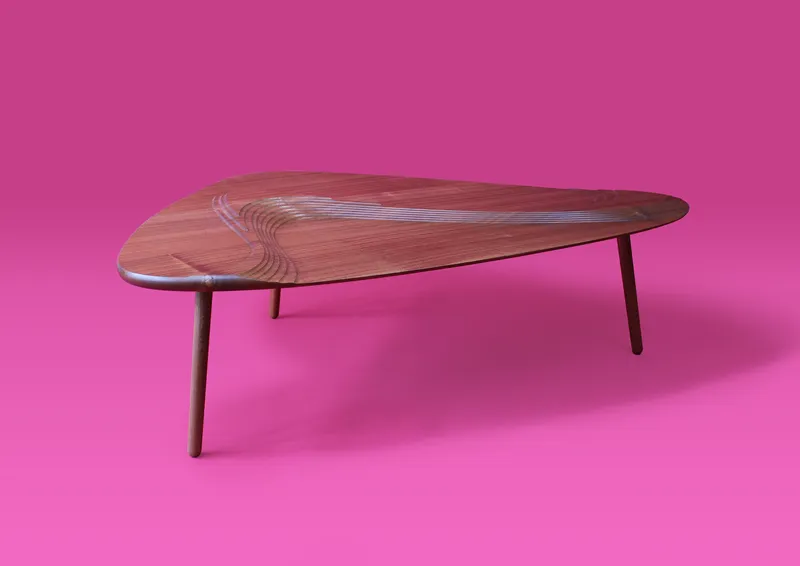
Set against a saturated pink backdrop, the table reveals its rounded triangular top and three-legged stance, with carved contour lines sweeping across the timber. The organising move is a central ridge that winds across the length of the piece like a miniature mountain range. From it, terraces step down on both sides, producing flat expanses at different heights. The pink setting isolates the object almost as a model on a plinth, and that is a fair reading: this is a topographic model you can put a mug on.
The key claim in the design is that these levels are not ornamental grooves. Each terrace is dimensioned to hold everyday items, including A3-sized documents. That constraint is what separates the project from sculpture. Plenty of designers carve landscape into wood; fewer commit to the discipline of making each plateau large enough to earn its keep. Section, hierarchy and rhythm, the vocabulary of building design, are doing real work here at furniture scale.
Where Machine Precision Meets the Hand at the Edge
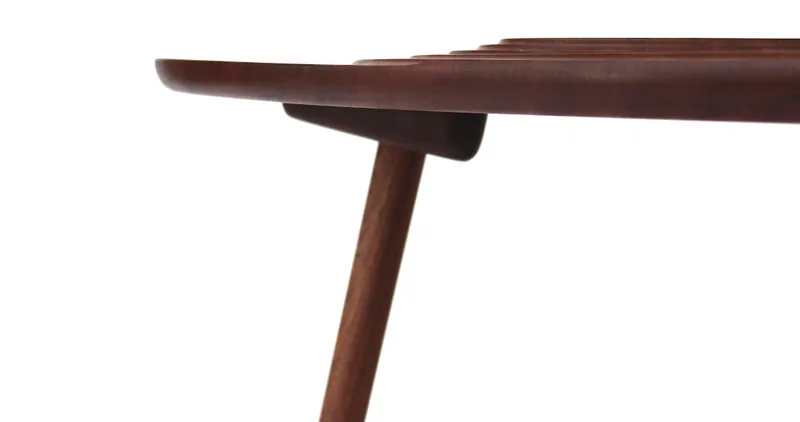
The side close-up turns attention away from the carved top and toward the structure: a tapered round leg meeting the underside through an angled wooden bracket. This junction matters because the table is designed as a flat-pack system. Shipping it in pieces reduces storage space and transport emissions, and the bracket is where that ambition becomes physical. The detail is restrained, which is the right call; the top carries all the expressive weight, so the support stays quiet.
Patel pairs CNC machining, which handles the precise carving of the stepped terraces, with hand-finishing that softens edges and refines the surface. It is a sensible division of labour. The machine guarantees that each level sits where it should; the hand ensures the result does not feel like a printout. Assembly is described as taking minutes, a promise that, if it holds, makes the sustainability argument far more credible than a certification logo alone.
A Landscape That Changes as the Room Changes
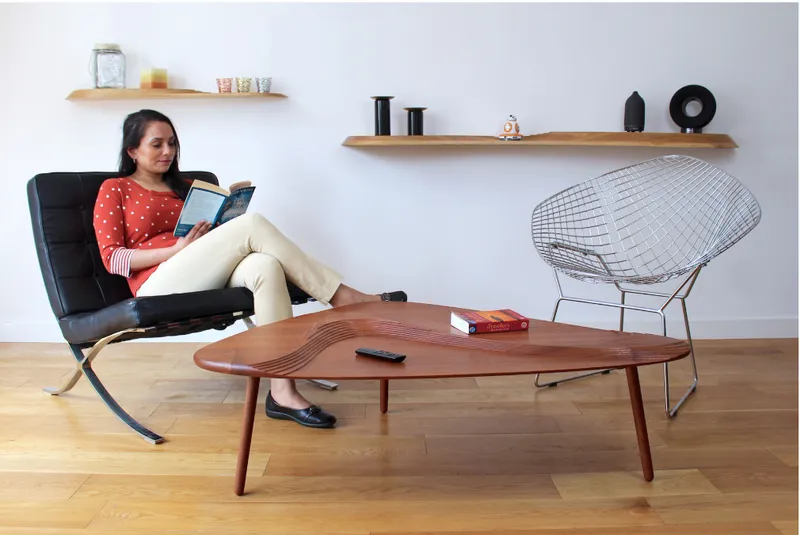
Placed beside a black leather lounge chair, with a wire chair and floating shelves behind, the table settles into a domestic scene rather than dominating it. Its low 37 cm height keeps it within reach of a seated reader, and the soft contours prevent the carved geometry from feeling aggressive in a lived-in room.
What the static photograph cannot fully convey is how the surface behaves over a day. Like any architectural relief, the terraces depend on light. As daylight shifts, shadows travel across the grooves and deepen or flatten the ridges, so the table reads differently from the sofa than it does from the doorway. That temporal quality is the most architectural thing about it: the object is experienced in movement and over time, not just viewed.
Plan and Section: Reading the Grain Against the Contours
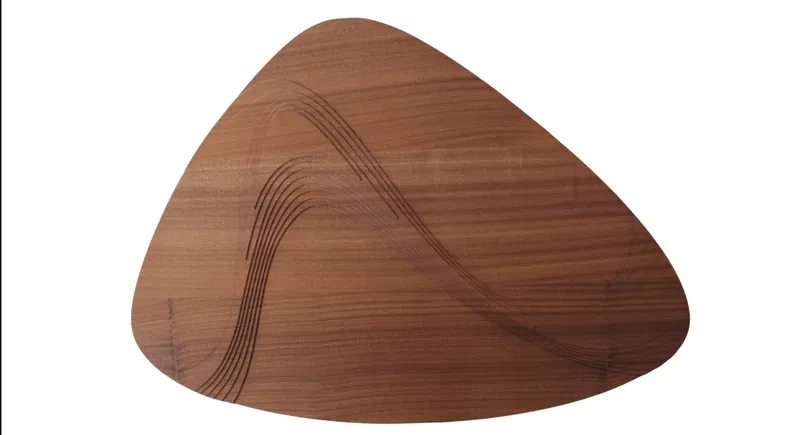
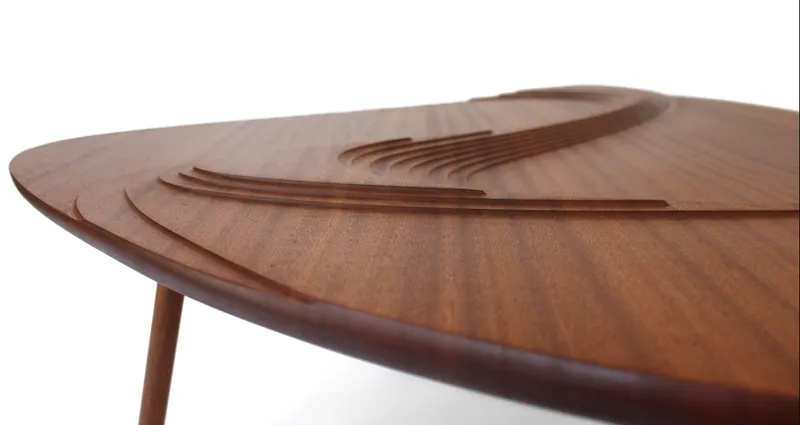
The top-down view functions as a plan drawing. Fine carved lines sweep across the walnut, and they do not follow the grain; they cut across it. That tension between the material's own pattern and the imposed topography gives the surface its depth. The table is offered in Sapele, Maple, Oak and American Black Walnut, and each species will shift this relationship: a pale, tight-grained Maple will let the contours dominate, while walnut's darker figure competes with them in a richer way.
The low-angle close-up is the section to that plan. Here the stepped ridges rise across the surface in clear increments, with a tapered leg below the softened edge. It is the most convincing image in the set, because it shows the terraces as actual levels rather than surface lines. Every table is oiled to seal and protect the timber, and FSC-certified wood is used wherever possible, so the finish enhances the tactile reading of each step instead of glossing over it.
Why This Project Matters
The Terrace Coffee Table is a reminder that the thinking students develop for buildings, sections, landforms, the choreography of light, transfers directly to objects. Patel does not simply borrow the image of terraced farmland; he borrows its logic. Terraces exist to make sloping ground usable, and this table applies the same principle to a carved surface, insisting that every level remain functional.
It is also a grounded piece of production thinking. Choosing a range of timbers, specifying responsible sourcing, combining CNC accuracy with hand-finishing and designing for flat-pack transport all show a designer considering how an idea reaches a room, not only how it looks in a render. For young designers looking to move between architecture and product, this project offers a clear model: start with a landscape, keep the use honest, and let the material do the rest.
View the Full Project
About the Designers
Designer: Hemal Patel
Enter a Design Competition on uni.xyz
uni.xyz runs architecture and design competitions year-round that reward proposals with spatial conviction and real site intelligence.
Project credits: Terrace Coffee Table by Hemal Patel.


Popular Articles
Popular articles from the community


Singing Woman: An Opera House That Performs Before the Curtain Rises
Ovidiu Cristian Pavel's conceptual opera house translates Estonia's choral identity into a sculpted waterfront landmark facing the Baltic Sea.
Temporary Home for Dogs: A Reversed Zoo Rethinks Animal Shelter Architecture
In Bucharest, a sinuous corridor and freed landscape flip the logic of containment, designing a shelter that works to make itself unnecessary.
Tsunami Convergenics: Turning Catastrophic Ocean Forces into Underwater Housing Infrastructure
A speculative underwater settlement off the coast of Onagawa, Japan, treats tsunamis and typhoons as energy sources rather than threats.

Cloaked Colonization: A Mobile Underwater Habitat That Moves Like a Fish
Micah Abaya's shortlisted EHC Pacific entry reimagines ocean settlement as a dispersed network of self-sustaining architectural organisms.

Similar Reads
You might also enjoy these articles

Maya Harvest: A Cacao Resort Village Rooted in Mayan Tradition and Local Craft
Situated within a Tabasco cacao plantation, this shortlisted resort proposal merges vernacular materials with hands-on cultural immersion.
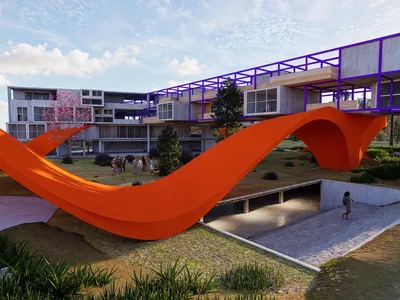
Harmonia: A River-Shaped Community That Grows Over Decades in Boa Vista
Curved pathways and modular grid structures along the Branco River create a phased settlement designed to evolve from 2030 to 2050.

The Architecture of Bathing: A Mughal Hammam Reimagined Across the Yamuna
Charlotte May's honorable mention entry for The Black Taj reinterprets Agra's bathing rituals through red sandstone, water, and framed views of the Taj Mah
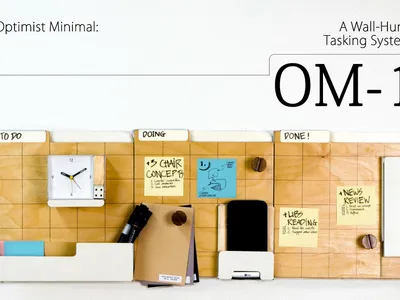
Om-1: A Wall-Hung System That Moves Your Workspace Off the Desk
Modular plywood boards, magnetic pegs, and utility elements migrate clutter from the horizontal surface to the vertical plane.

Explore Coffee Table Competitions
Discover active competitions in this discipline

Design challenge to equip cities with modern furniture

Competition to design a workstation for architects

Packaging challenge - Design meets sustainability
Comments (0)
Please login or sign up to add comments
No comments yet. Be the first to comment!