
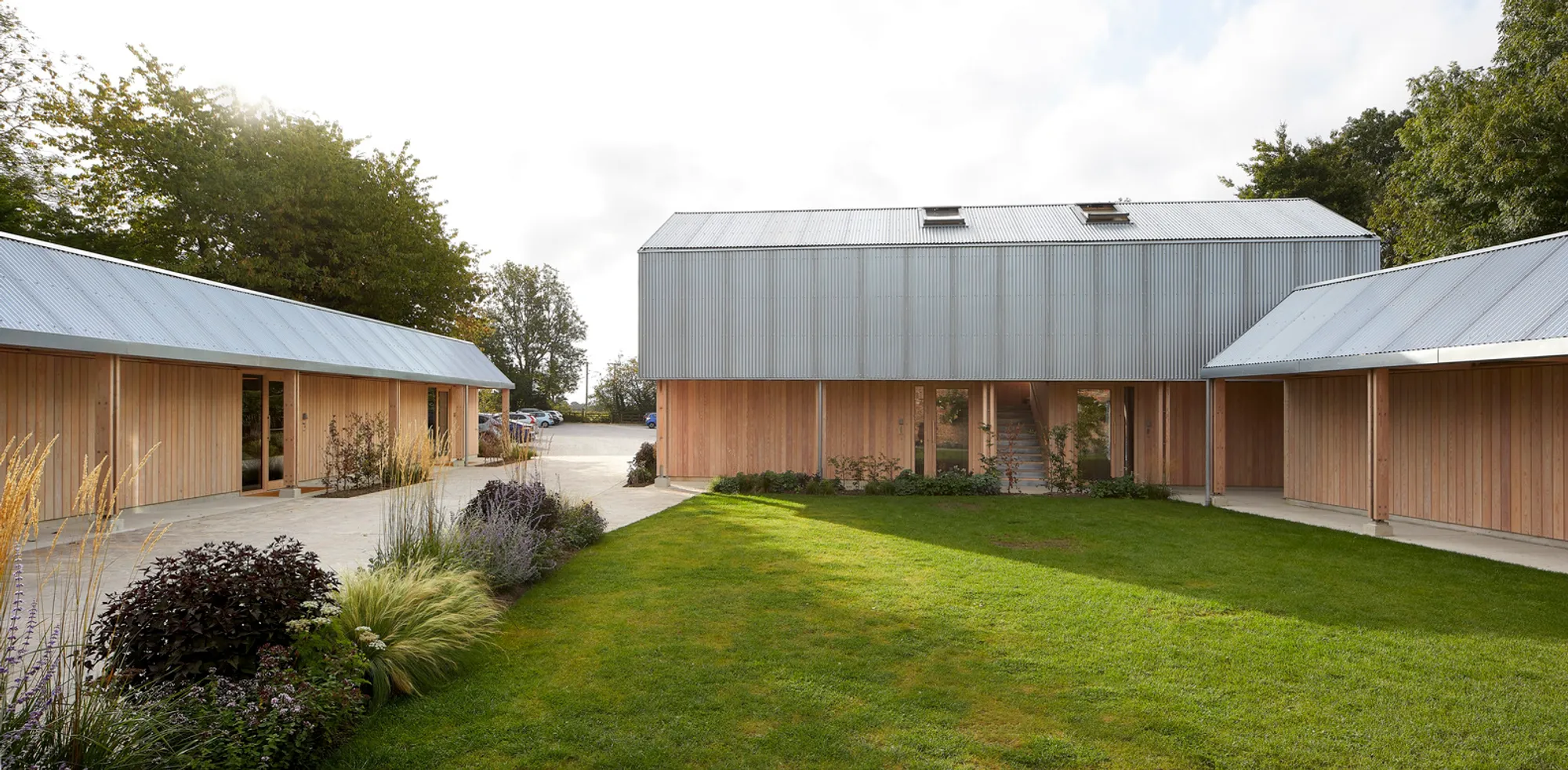
The Alice Hawthorn: A Sustainable Transformation of Nun Monkton’s Historic Pub
The Alice Hawthorn, redesigned by De Matos Ryan, is a sustainable Grade II listed pub with guest rooms, courtyard, and community focus.


Historical Context
At the confluence of the Rivers Ouse and Nidd, Nun Monkton was historically an important northern trade hub. Travelers frequently stayed overnight, but over time, changes in transportation and socio-economic shifts led to the closure of local taverns. The Alice Hawthorn remains the village’s last public house, a vital social hub threatened by economic decline.
Community-Centered Design
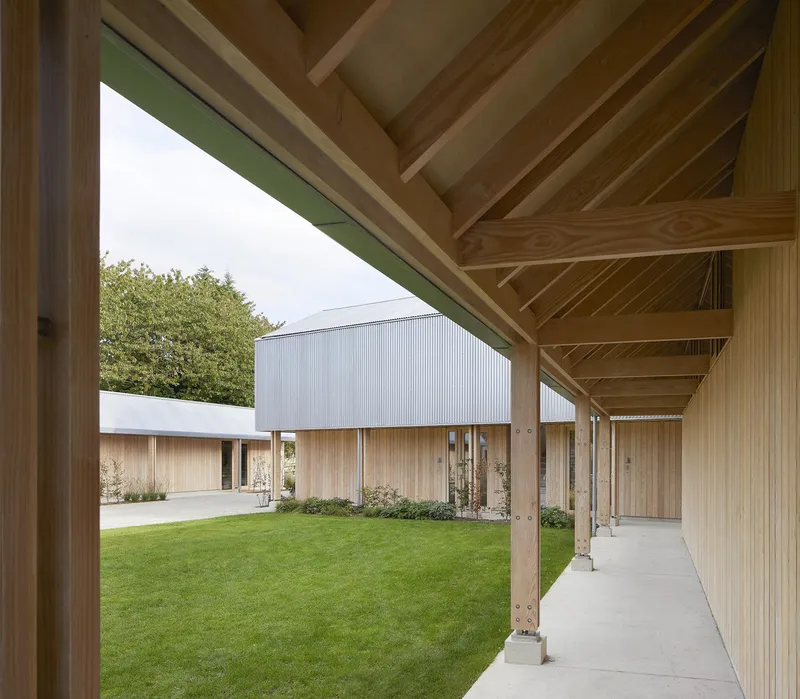
Close consultations with Harrogate Borough Council and local residents shaped the project. One villager described the comforting feeling of seeing the pub lights on at night—a key community sentiment that informed the design. Every decision prioritized community needs, ensuring the pub’s restoration strengthened social cohesion.
Architectural Concept
Inspiration from the Norse ‘Garth’
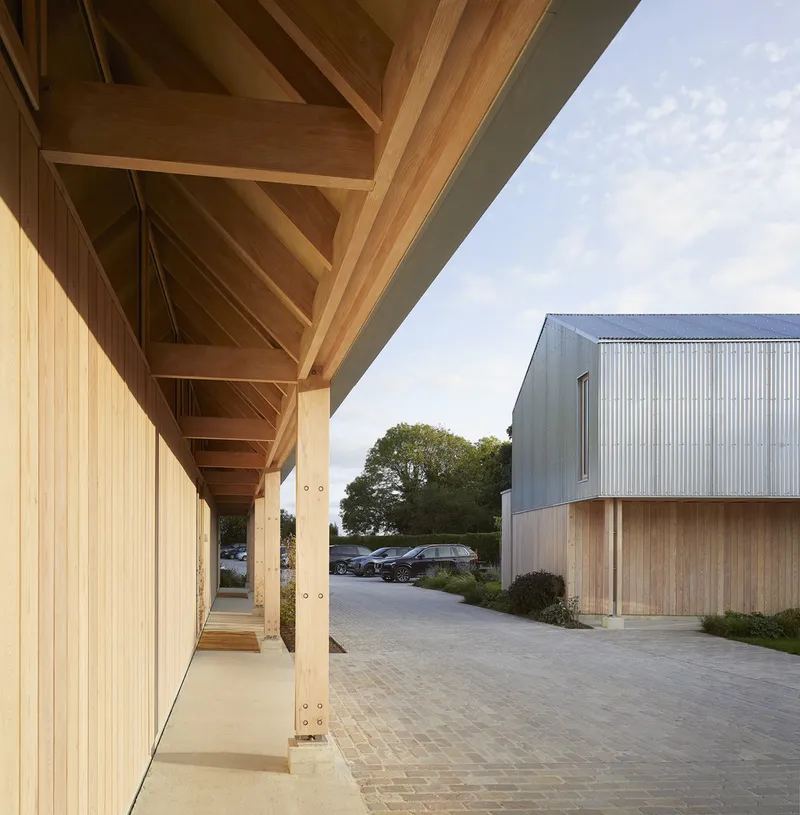
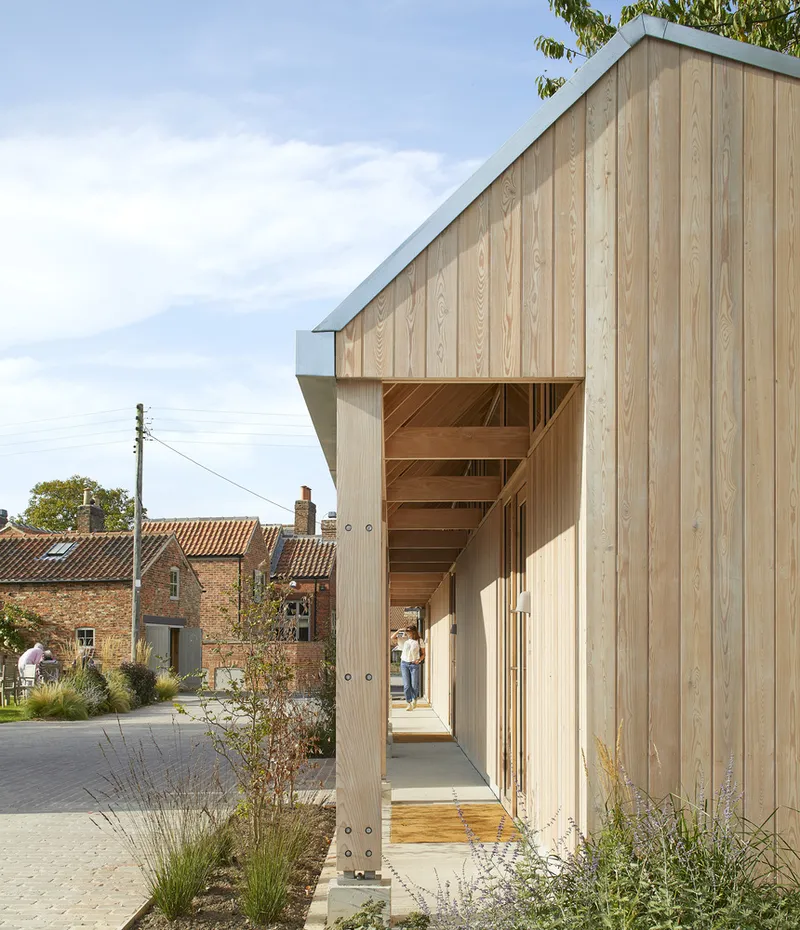
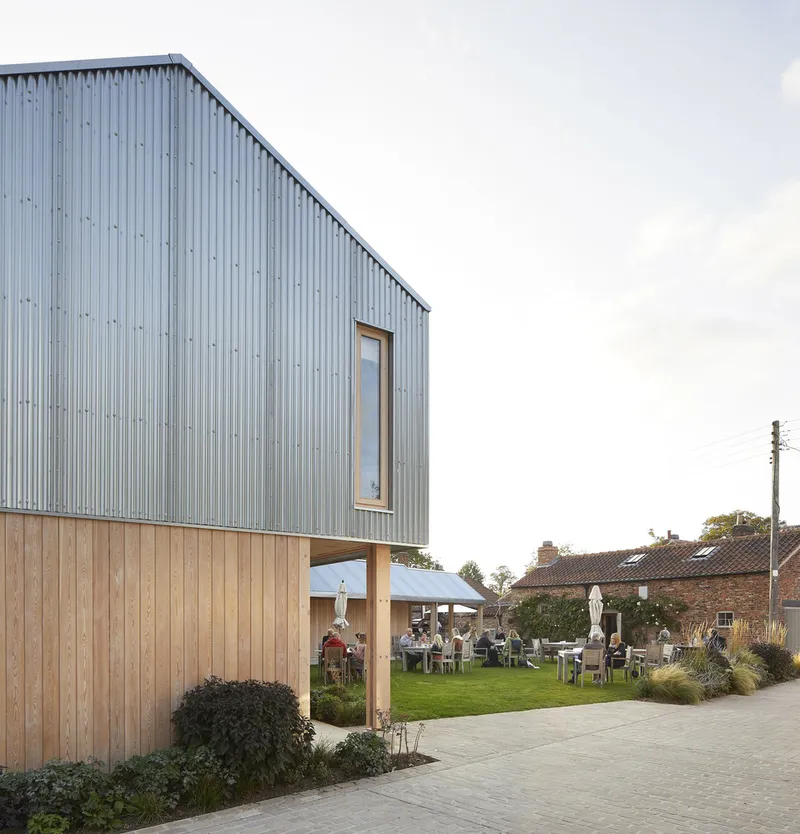
The design draws from the Norse concept of a ‘garth’—a grassy cloister or village green extension. The new courtyard creates a sense of enclosure, promoting communal gatherings while connecting the pub to its historic surroundings.
Guest Accommodation
The twelve ensuite bedrooms are distributed across:
- Pub First Floor: Four rooms integrated within the original structure
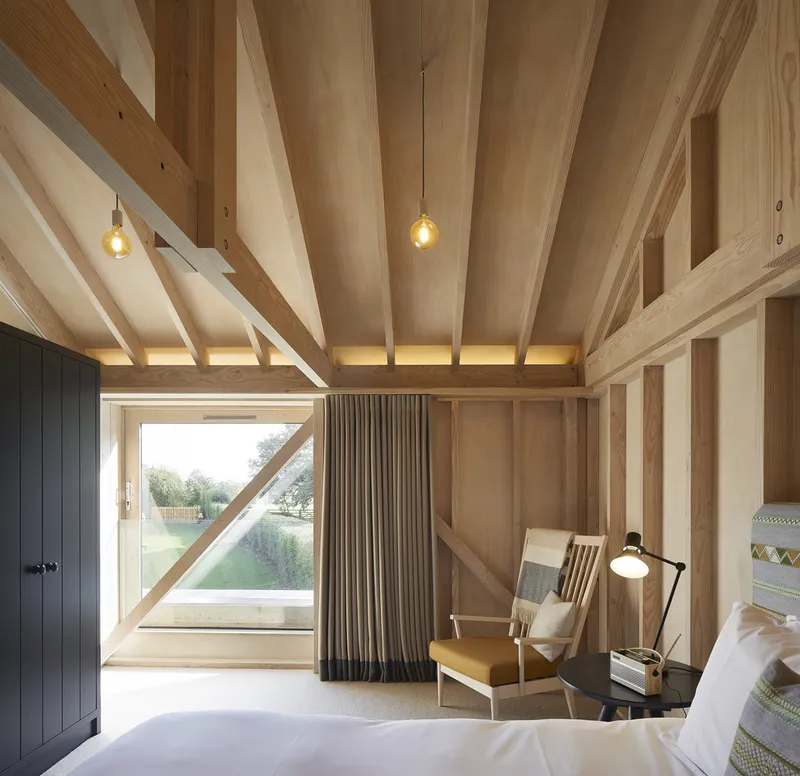
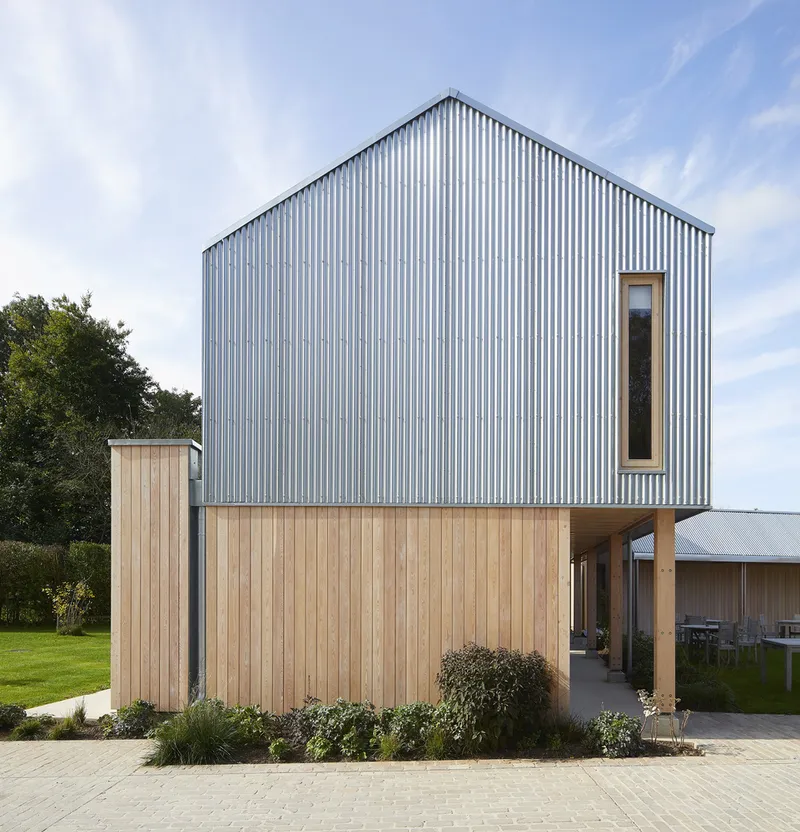
- New Timber-Framed Buildings: Eight rooms surrounding the courtyard, including the Sheds, Field Barn, Stables, and Tack Room
Each room features hand-painted motifs (Saddle, Stirrup, Flax, Barley, Wheat, Hay), while interiors showcase timber, poplar plywood, and linocut prints by local schoolchildren.
Materiality & Construction
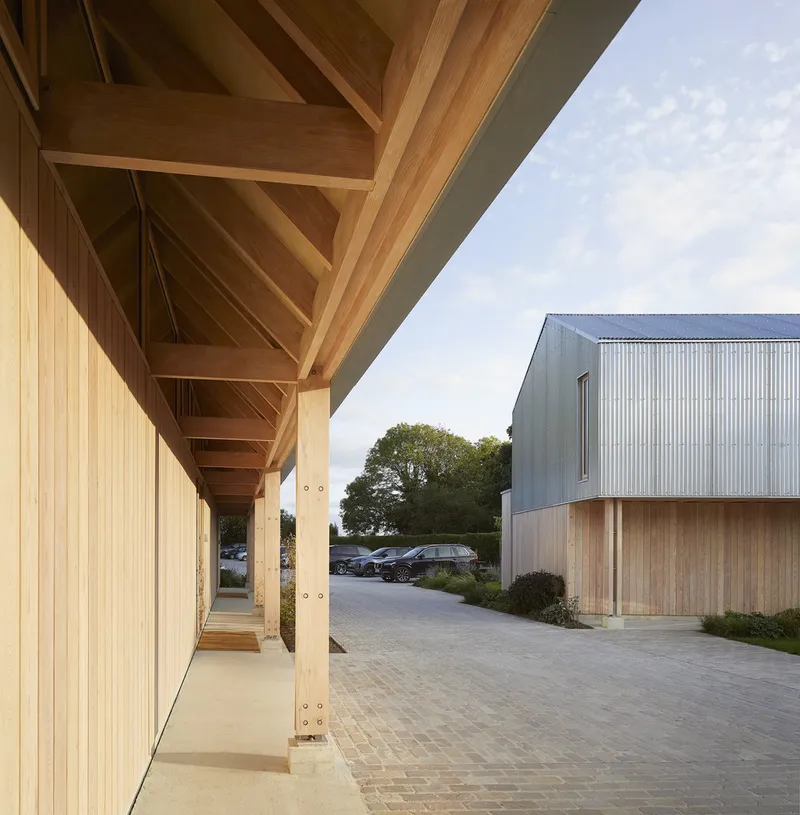
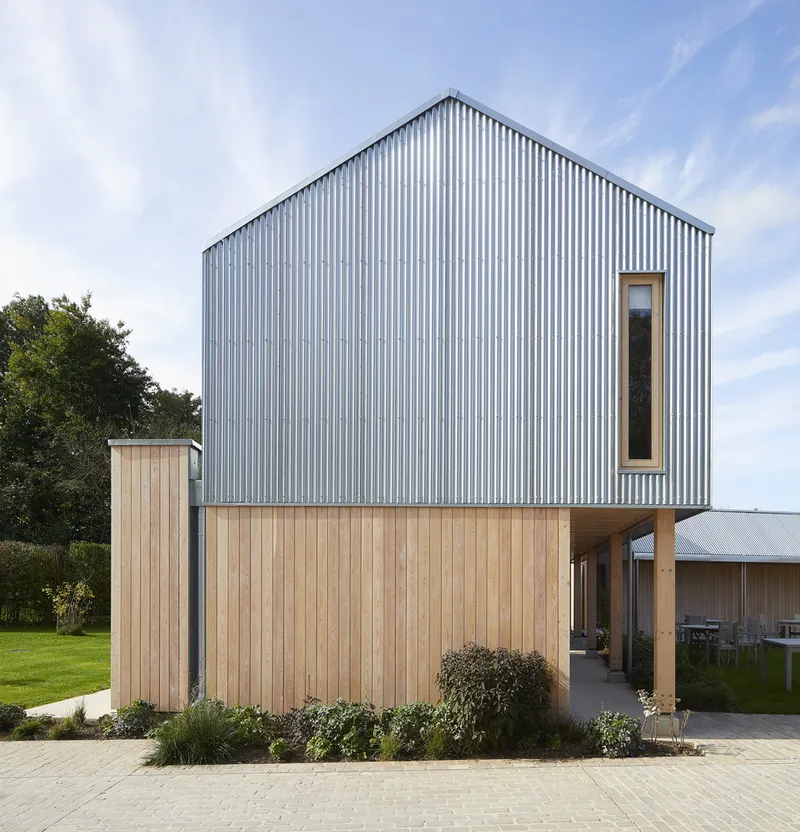
The design uses authentic agricultural materials, such as:
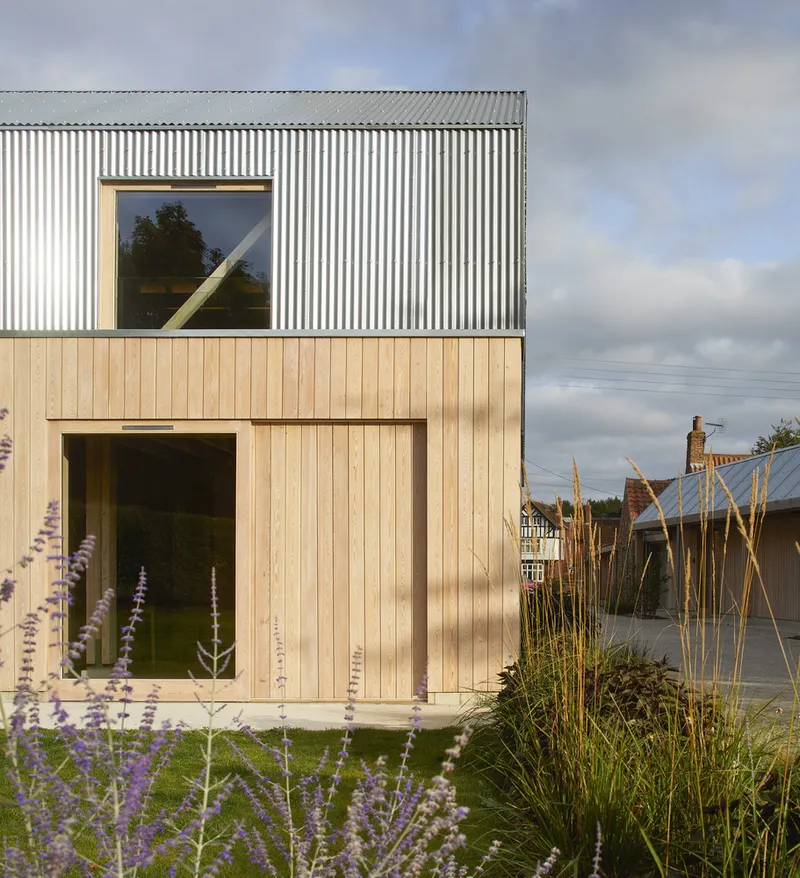
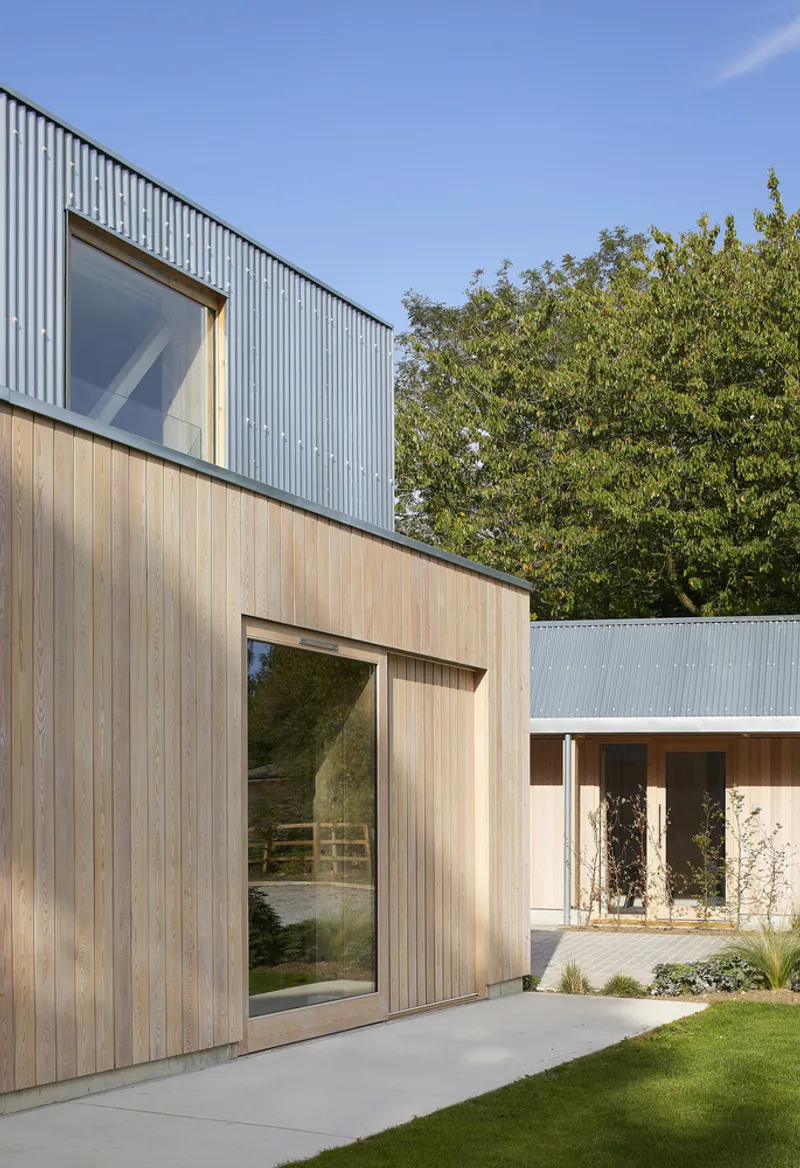
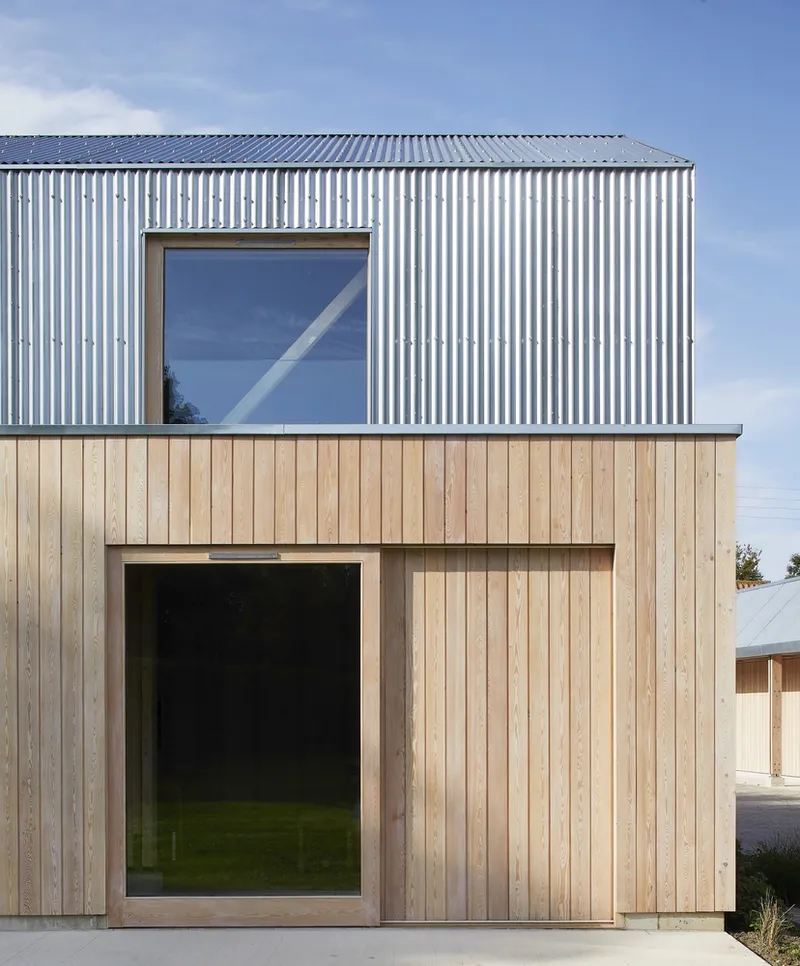
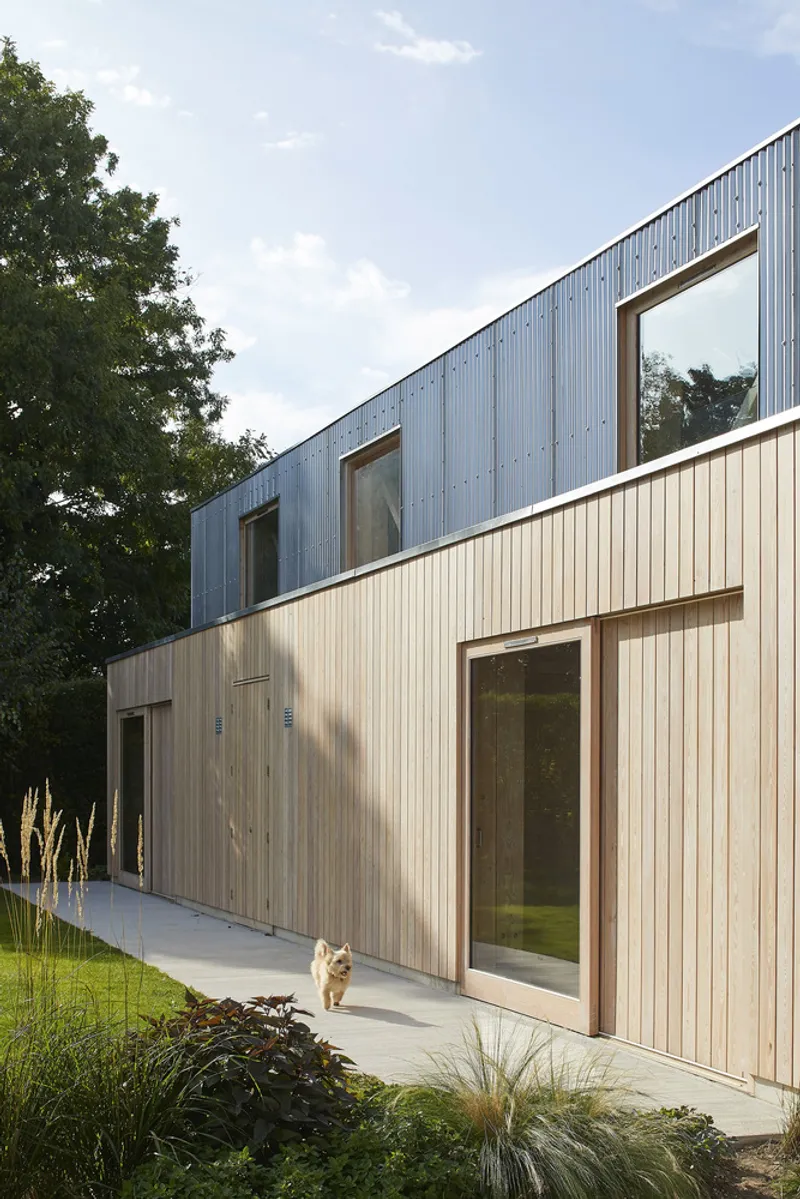
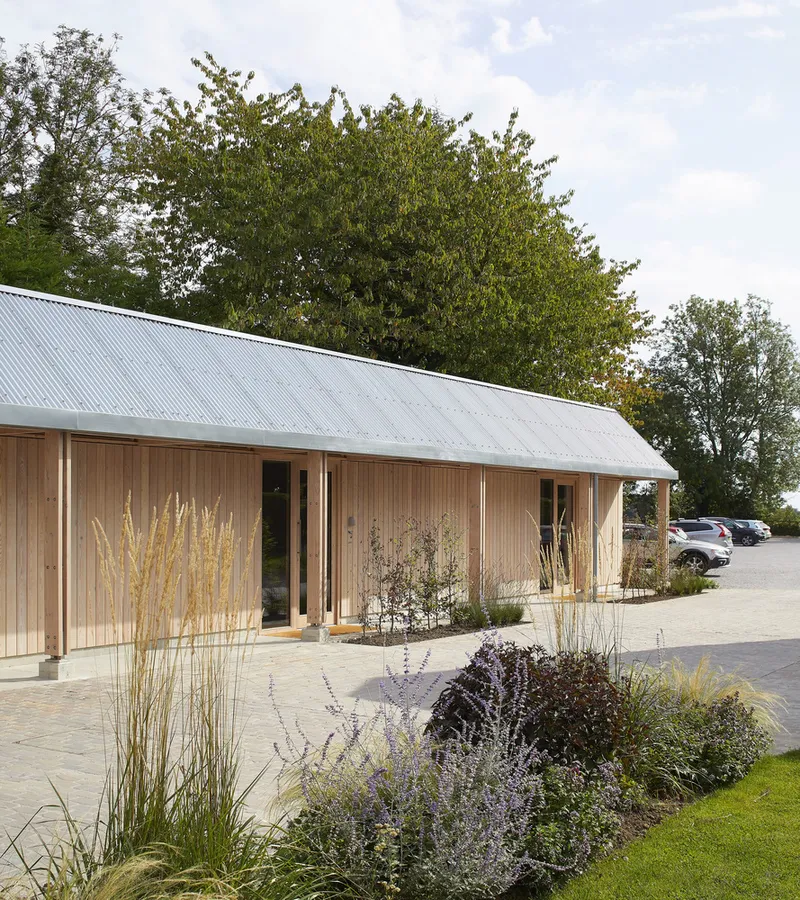
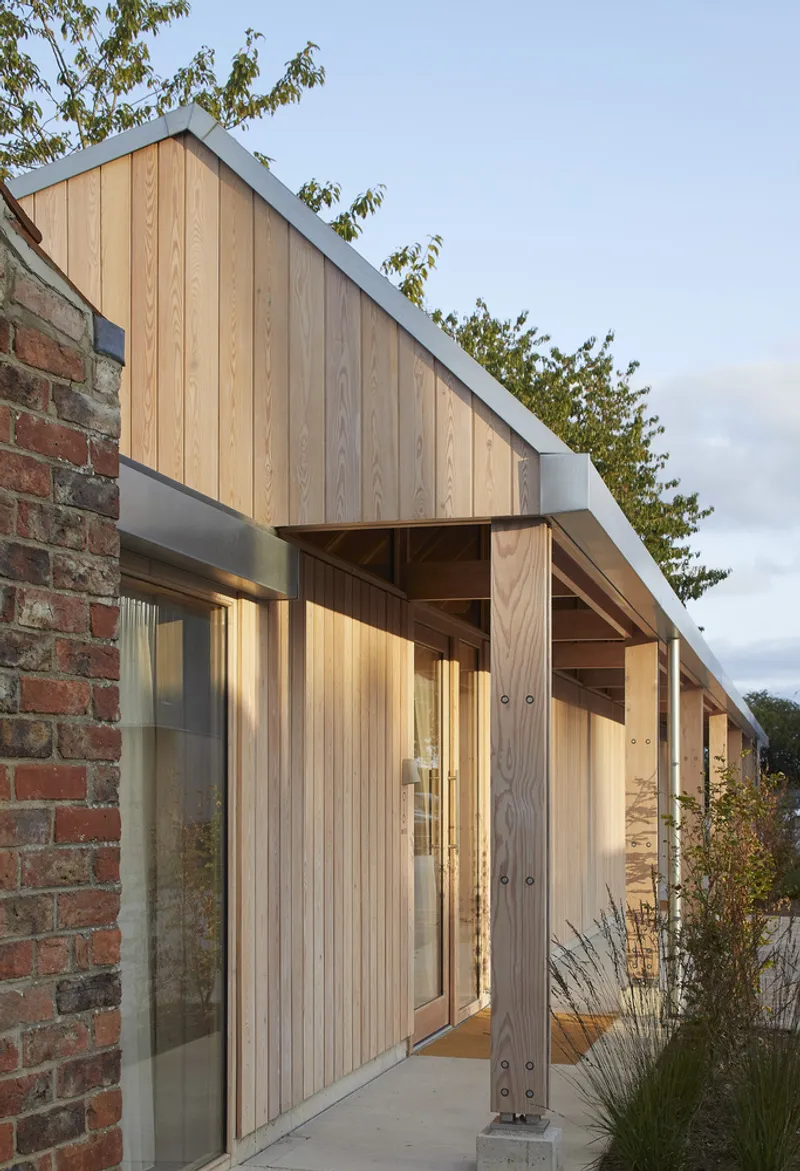
- Larch Cladding
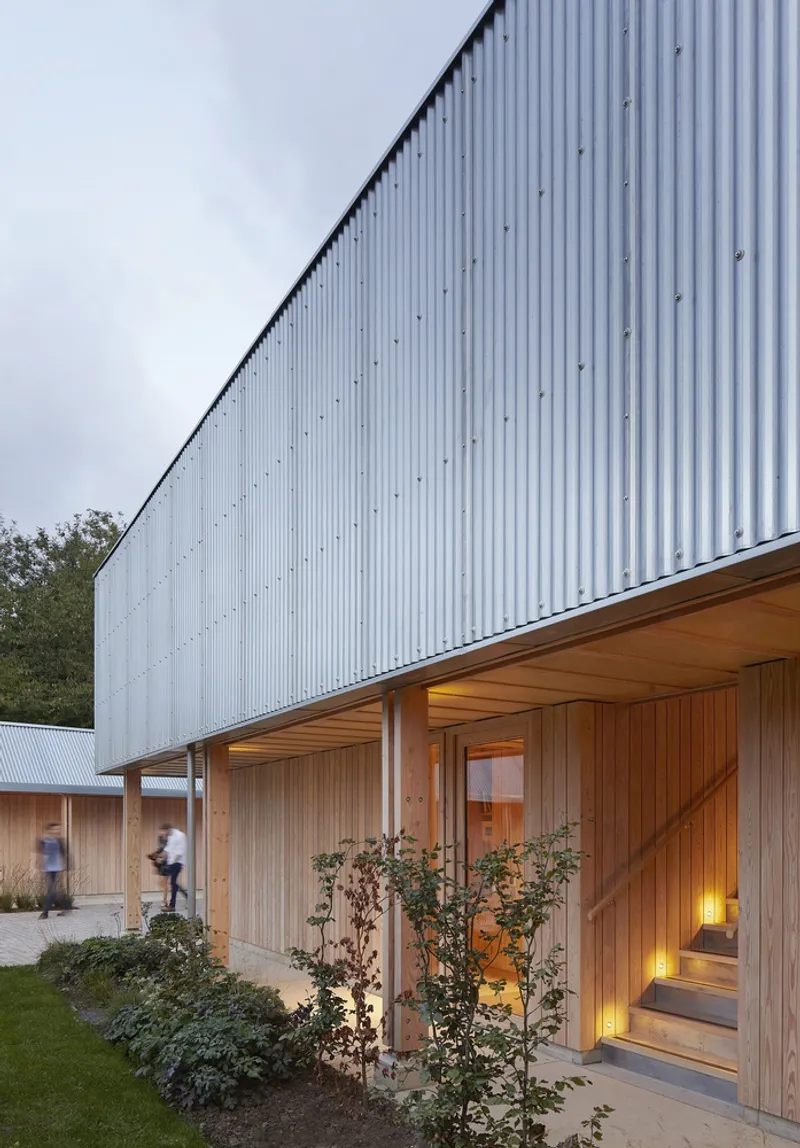
- Galvanized Corrugated Steel Roofing
- Douglas Fir Frames
The architecture reflects the surrounding informal farmsteads, blending seamlessly with the rural environment. Structural simplicity ensures the buildings appear as naturally integrated extensions of the landscape.
Sustainability & Eco-Friendly Design
The Alice Hawthorn incorporates multiple sustainable strategies:
- Ground Source Heat Pump for heating and hot water
- High-performance insulation and airtightness exceeding Part L2A building regulations
- Natural ventilation via clerestory windows and rooflights
- Solar shading through roof overhangs
- Low-energy LED lighting and water-efficient fixtures
- Sustainable Drainage System with permeable paving and underground attenuation tanks
The project achieved an EPC ‘A’ rating while enhancing biodiversity through native planting and the re-establishment of a medieval-style orchard to supply the pub kitchen.
New Facilities & Amenities
- Sheds: Staff accommodation and two bedrooms
- Field Barn: South-facing two-story building with four guest rooms
- Tack Room: Wheelchair-accessible bedroom and outdoor kitchen shelter
- Stables: Three guest rooms with larch cladding and galvanized steel roofs
Level threshold access ensures the site is fully inclusive and accessible to all visitors.
Economic & Social Impact
The redevelopment has:
- Increased visitor footfall and dwell time
- Generated new revenue streams for the pub and restaurant
- Strengthened the local economy by encouraging spending
- Preserved the village’s social hub, reinforcing community identity



Popular Articles
Popular articles from the community


Co-life: Sustainable Architecture for Age-Friendly Community Living
Co-life reimagines sustainable architecture for seniors through courtyards, rammed earth, shared gardens, and spaces designed for belonging.

Co-Life: Senior Housing Design That Reconnects Older Adults With the City
Co-Life reimagines senior housing design through healing gardens, shared streets, workshops, and a sustainable community across generations.
EW PARK: Sustainable Architecture Reimagines the Future of Urban Parking
EW PARK reimagines city parking as a modular wooden tower combining automation, solar energy, electric mobility, and adaptable urban design.

AL-JANNAH: Sustainable Architecture and Permaculture for Afghan Widows
AL-JANNAH uses sustainable architecture and permaculture to create resilient oasis of housing, learning, work and renewal for Afghan widows.

Similar Reads
You might also enjoy these articles


Hodi-Mandai Geram
Project Function: Preservation and revitalization of the Intangible heritage and socio-spatial identity of the Hodi by Housing, Cultural Memory Center, Sacred Grove, landscape, local tourism economy


Olio Towers: A Mid-Rise for Performers That Fuses Housing, Rehearsal, and Stage
Located blocks from Houston's Theater District, this modular tower stacks living units around a central performance atrium.

Oasis: Modular Green Housing Carved into Dhaka's Urban Fabric
A shortlisted Plugin Housing entry reclaims unauthorized settlements in Dhaka with stepped concrete volumes, green roofs, and ventilation-driven design.

Black Hole: A Floating Megastructure for the Post-Physical Era
Emiliano Mazzarotto envisions a spherical, self-scaling arena where e-sports, digital hotels, and holographic stadiums replace traditional public space.

Explore Hospitality Building Competitions
Discover active competitions in this discipline



Challenge to reimagine the Iron Throne


Photograph architecture without architects


Illustrate the lost glory of Angkor Wat - Render Challenge


Design challenge to reuse E-waste
Comments (0)
Please login or sign up to add comments
No comments yet. Be the first to comment!