
The Aqueous
Flow Competition
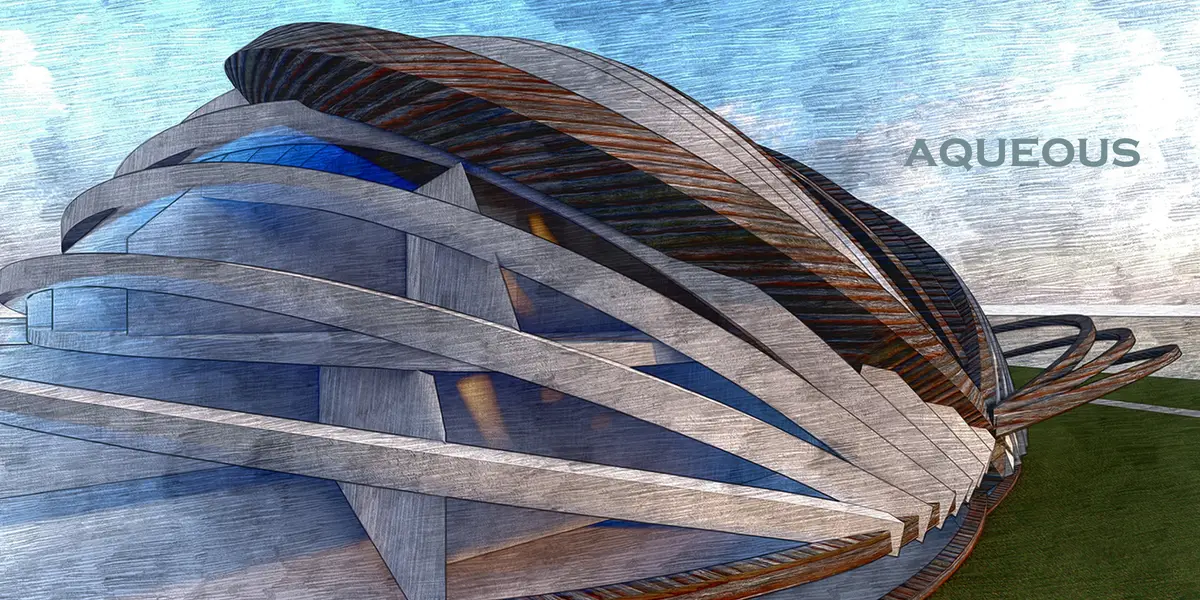
The Aqueous strived to bring education and research of marine life together in a cohesive manner. This Institution is a way to promote and offer study abroad opportunities to future students interested in marine life. Who are also looking to expand and improve their ways of learning and hands-on experience. The building itself covers topics such as the design of programs, international housing, and sustainability (the filtration and re-use of water). The design revolves metaphorically around water, but also physically interacts with water as well. Below we will further explain the ideas behind the design process and our sources of inspiration.
The inspiration behind the form of architecture was water. To bring water and architecture together we looked at some of the qualities that water has like fluidity, plasticity (flexibility), and versatility. Which lead us to further look into how water interacts within nature, itself, and the different formations it can make. For instance some of the formations we found were vortexes (whirlpools), currents, waves, and swells. We utilized water to organize programs, as an artistic element, an interactive armature, and a filtration system. The overall building mass was split into two different but connected units to help organize and combine similar programs. In doing this we were able to make a fully public unit and a semi-public unit. What connects the two is the shared access to a semi-private outdoor landscape. This landscape acts as a small interconnecting courtyard and is located in between the two masses. Having two units separated the different noise levels, circulations, and capacity needs for each setting. Which helped provide the amount of space needed to create an efficient flow of foot traffic and organizational logic to the different programs. The armature was also inspired by water, where soft flows that take after the formation of waves and small maneuvers established a structural shading device to control the amount of sun that would enter the building. In addition water was also brought into the building as an interactive tool, inspired by glass bottom boats. Making the two main first floors be glass, so that one could feel like they are literally on the water, interacting and feeling the connection to the water and marine life.
The way we organized and decided the position of the building was inspired by the waters edge. It was key for us to have some of the zones placed alongside the water's edge to allow for easy access to the canal. The access was made possible by placing the building on the water, creating a fluid connection between the building and the existing canal. As well as having a waterfront view from the first floor cafe and second floor library balcony. The building bends and connects together creating an enclosed courtyard that both structures share. A space where users can step outside, get fresh air, reflect, meet up, eat lunch or just take breaks. This main space is what separates the two main building programs, the Marine Research Zone (East / City side) and the Educational Zone (West / Water side). Breaking up the programs and having the connected courtyard allows for the space to be a collaborative and interactive zone between the two main buildings. Being an important part of bringing education and Marine life together for future ways of learning.
The Marine Research Zone, located on the city side making it the fully public building consists of the entry point that was dictated by the existing pathways, an auditorium, lecture halls, and research rooms. The entrance acts as a welcoming, inviting and engaging lobby. Where you could find help at a general information desk, or have the option to go attend an event in the auditorium (on the left), hear a lecture in one of the lecture halls (also on the left), or get some research done in the research labs (on the right). The educational Zone, located on the water side making it more of a semi-public building consists of the international housing, a cafe and lounge area, meeting rooms, offices, and a library with study rooms and an outdoor balcony looking out to the water. Combining all of these programs allowed the building to provide more of the interactive zones for the study abroad students. The programs were organized from the first floor being quiet to the third floor being the quietest, but all still having a view towards the water. The study abroad students have direct access to the cafe on the first floor. The second floor has a library, with private individual study rooms, and two balconies. One that is outdoors looking out towards the canal, and one indoors with a view towards the cafe below. Lastly the third floor has meeting rooms and offices that could be used for conferences and private meetings.
Having a study abroad program with on site housing for international students was an additional program we thought of adding and providing. To promote Norway’s style of living (culture) and link it to the future way of studying marine life. Norwegians are proud of their outdoors, respect their standards of it, and are always looking into new ways to improve it. Being that their main mode of transportation is through water. They are also very big on outdoor activities, it's a big part of their everyday life and is something they do all year round.
In thinking of their love and respect for their environment as well as their innovative ways of sustainable living, it inspired us to create a sustainable armature to not only work for the building but also help improve the city. Since the nearby canal is contaminated due to hydropower plants, leakage from sewers and marine litter which directly decrease the water quality. Therefore, our ideal plan is to filter and reuse the water. The armature would act as a building structure, shading device, as well as a filtration system. By pumping water from the canal, filtering it, then recycling it back into the canal. The design of the filtration system was a crucial part of the design, being that we wanted the water of the canal to be the main source of water and power for the building. To provide for the showers, toilets, sink as well as reducing the dependability of hydroelectric power.
In short, this project addressed topics such as the design of programs and spaces, site connection, sustainability through a water filtration system, and lastly providing educational opportunities by promoting Norway’s culture and their connection to the water.

Popular Articles
Popular articles from the community


Temporary Home for Dogs: A Reversed Zoo Rethinks Animal Shelter Architecture
In Bucharest, a sinuous corridor and freed landscape flip the logic of containment, designing a shelter that works to make itself unnecessary.

Manzana Morphosis: Stretching Barcelona's Grid into a Living Landscape for 2050
A radical reworking of the Eixample manzana turns density into a tool for generous public space, vertical ecology, and environmental performance.

Opera by the Sea Estonia: Three Shells Dissolving Architecture into Tallinn's Coastline
A winning opera house proposal replaces monumental form with interconnected shells that blur the boundary between building, park and Baltic Sea.

Extended Shell: Retrofitting Kolkata's Balconies as Living Urban Thresholds
A modular retrofit system recovers the social and environmental intelligence of Kolkata's historic verandas for contemporary Park Street residents.

Similar Reads
You might also enjoy these articles

The Rhythm of Seasons
A Farmers' Market Connecting Nature and the City
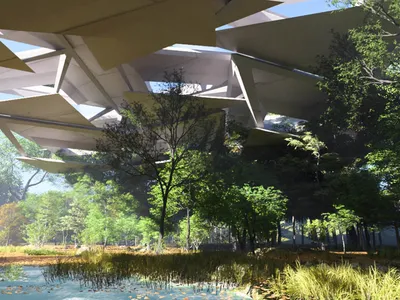

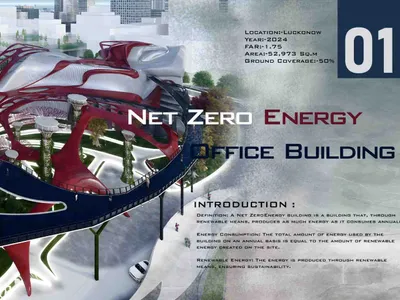
More Than a Building-Designing a Living System
More Than a Building-Designing a Living System
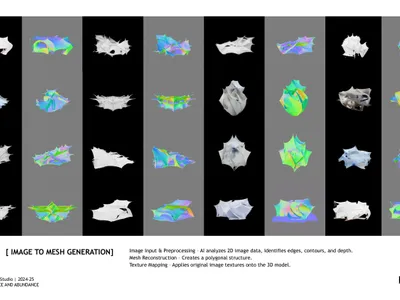
Base Beyond
DESERT COMPOUND ARID: TOURISM OF ABSENCE AND ABUNDANCE

Explore Architecture for Water Competitions
Discover active competitions in this discipline


Challenge to reimagine the Iron Throne

Photograph architecture without architects

Illustrate the lost glory of Angkor Wat - Render Challenge

Design challenge to reuse E-waste
Comments (0)
Please login or sign up to add comments
No comments yet. Be the first to comment!