
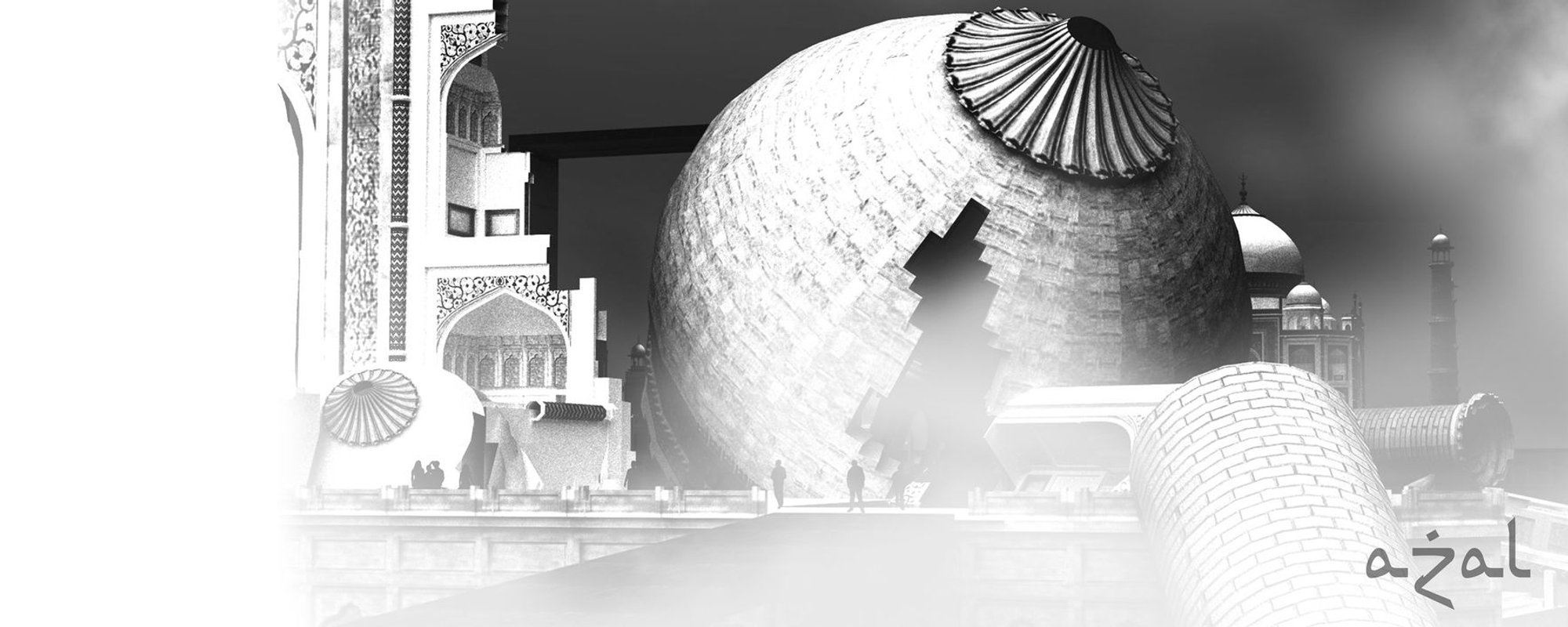
The Black Taj – Kinesthetics of the Ruins
A poetic interpretation of the Black Taj that redefines architectural heritage conservation through emotion, touch, and timeless ruins.

Reinterpreting the Myth of the Black Taj
Among the most enduring legends in Indian architecture is the story of The Black Taj - Kinesthetics of the ruins - YMVG39, a mythical twin of the white marble wonder. The tale speaks of Shah Jahan’s dream to build his own tomb—an equal counterpart to the Taj Mahal—on the opposite bank of the Yamuna, in Mehtab Bagh. But destiny had other plans. Deposed by his son Aurangzeb, Shah Jahan never saw his vision materialize. What remains is the echo of an unbuilt monument—an idea suspended between love and loss, devotion and defiance.
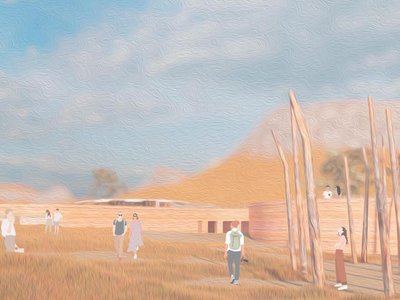
The project “Kinesthetics of the Ruins”, titled Azal (meaning eternity), architects Gautami, Nikhil, Atharva, and Sanket G. Jangam takes this legend beyond history into architectural heritage conservation and sensory experience. It reimagines the unbuilt Black Taj not as a structure of stone, but as a living embodiment of emotion and decay.
Shortlisted entry of The Black Taj
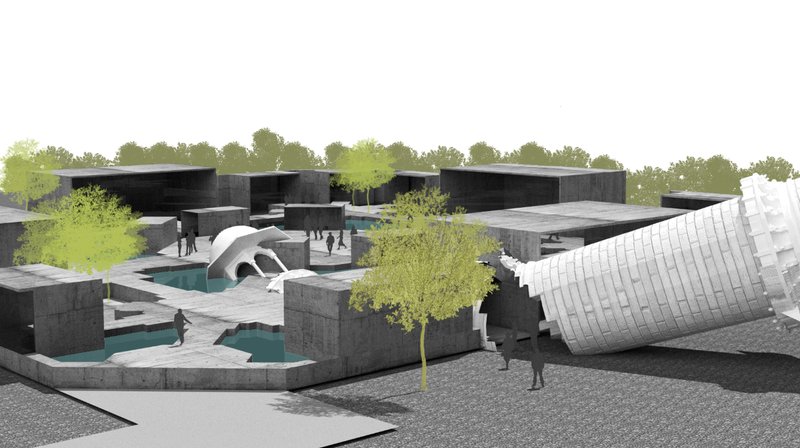
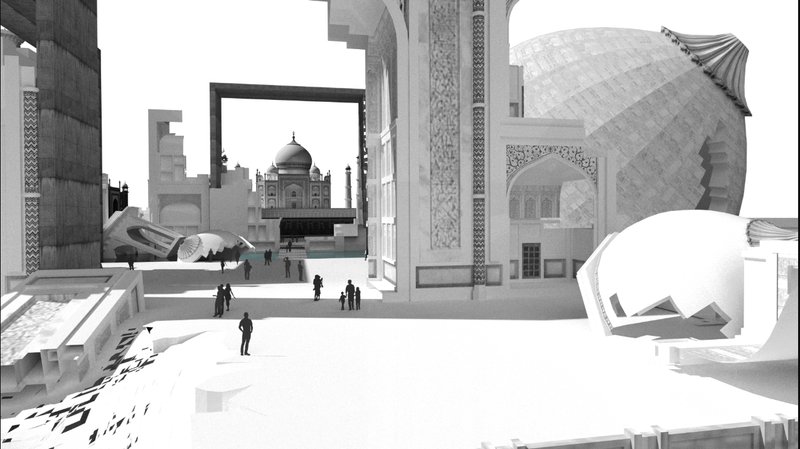
Kinesthetics of Memory and Touch
The concept positions The White Taj as a symbol of vision, while The Black Taj represents touch—an architecture that invites not just admiration from afar, but tactile engagement. Visitors can feel the fragments, walk among broken domes, and inhabit the voids of forgotten geometry. In doing so, the design turns ruin into revelation. The tactile experience transforms visitors into participants of time itself—touching the fragments of a dream that once belonged to an emperor.
Through this approach, Azal embodies kinesthetic architecture, where perception, movement, and physical interaction evoke emotional responses. The design’s fractured surfaces and monumental remnants capture the duality of perfection and imperfection, suggesting that even in decay, beauty persists.
The Architecture of Ruins
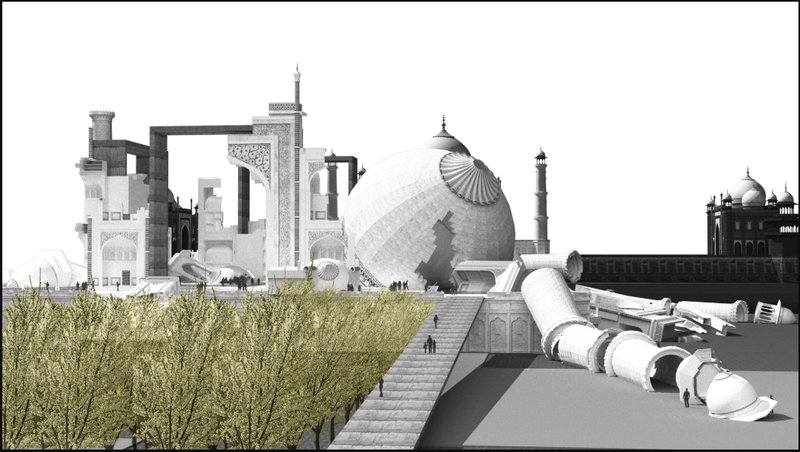
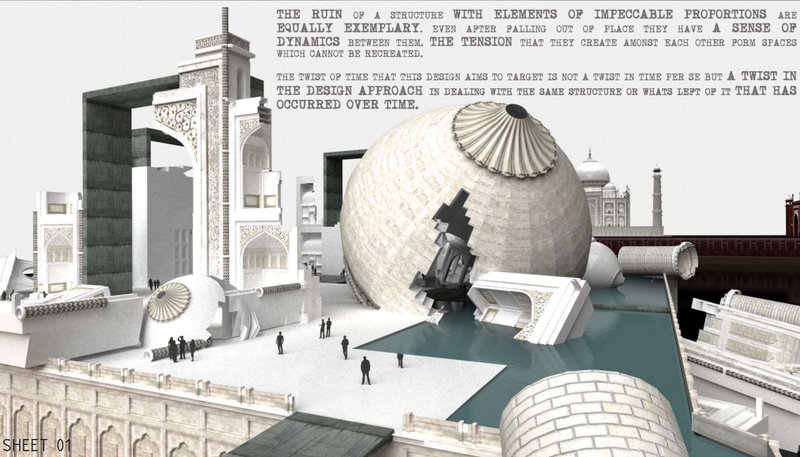
The designers—Gautami, Nikhil, Atharva, and Sanket G. Jangam—interpret the ruin not as failure but as an architectural language in its own right. The elements of impeccable Mughal proportions still hold harmony even in disarray, generating a new kind of spatial tension between what stands and what has fallen.
This interplay mirrors the philosophy of Architectural Heritage Conservation, where the goal is not to restore the past to its original state but to preserve the traces of time. Each broken arch, fallen dome, and incomplete axis becomes part of a poetic narrative about impermanence and eternity.
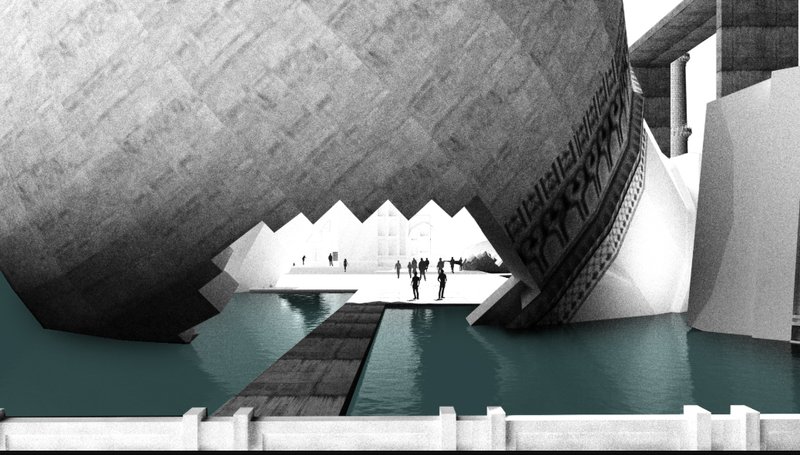
Site, Vision, and the Dying River
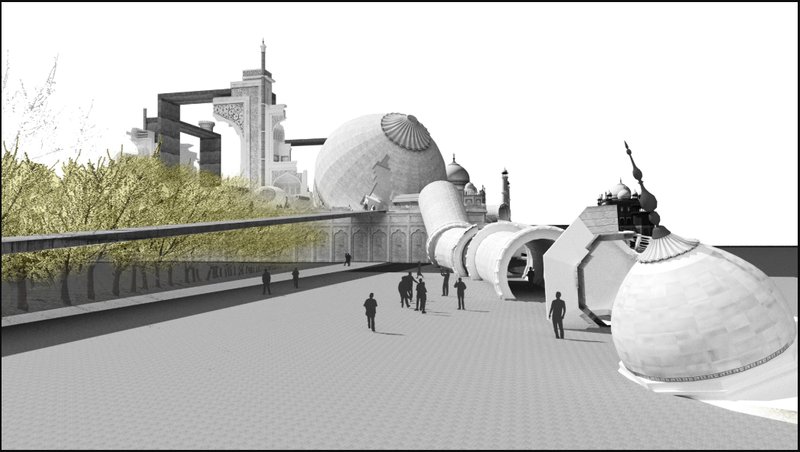
Set within the historical context of Mehtab Bagh, across the river from the Taj Mahal, the project reconnects the site to its ecological and cultural roots. The Yamuna—once a vibrant artery of Mughal Agra—is reimagined as both a witness and a victim of time. The “Call of the Dying River” section reinterprets this relationship, transforming the waterfront into a reflective landscape where ruins converse with the water’s flow. The ruins are not just architectural objects; they become instruments of memory, echoing the lost rhythm of Mughal garden cities.
Spatial Experience and Symbolism
The journey through Azal is deeply experiential—visitors move through courts, collapsed corridors, and monumental voids. The design’s choreography of sightlines and tactile elements evokes a kinesthetic dialogue between body and space. Each vista frames the Taj Mahal across the river, establishing a metaphysical connection between love and hatred, creation and destruction, white and black.
The ruined dome, half-sunken and fractured, becomes the project’s emotional nucleus—a metaphorical heart that beats with Shah Jahan’s unfulfilled desire. The visitors’ path through the fragmented geometry mirrors the passage of time itself, an immersive lesson in how architecture becomes memory.
The Twist in Time
The designers call their reinterpretation a twist in time, not form. Instead of reconstructing what might have been, they imagine what remains—embracing absence as an architectural act. This approach underlines a critical philosophy in heritage conservation architecture: to preserve the authenticity of ruins while reactivating their relevance in the present. Through this duality, Azal blurs the boundaries between design and archaeology, myth and modernity, permanence and decay.
“The Black Taj – Kinesthetics of the Ruins” is more than a proposal; it is an architectural meditation on eternity. It questions how time transforms monuments into memories, and how the tactile nature of ruins can awaken deeper human connections with history. By embracing fragmentation and emotional duality, Azal celebrates what remains rather than mourns what is lost—turning the myth of the Black Taj into a timeless reflection on architectural heritage conservation and the eternal dialogue between love and hate.



Popular Articles
Popular articles from the community


The Ken Roberts Memorial Delineation Competition (Krob)
As the most senior architectural drawing competition currently in operation anywhere in the world, it draws hundreds of entries each year, awarding the very best submissions in a series of medium-based categories.


Gads Hill Early Learning Center by JGMA: Adaptive Reuse Shaping Community-Focused Educational Architecture
Adaptive reuse transforms fragmented structure into vibrant early learning center with playful façade, natural light, and community-focused sustainable design.

Atelier Macri Concept Store Interior Design by CASE-REAL
Atelier Macri store features a "ko" counter, walnut wood details, cork displays, blending retail, gallery, and seamless customer experiences.

Free Architecture Competitions You Can Enter Right Now
No entry fees, real prizes. Here are the best free architecture competitions open for submissions in 2026.


Similar Reads
You might also enjoy these articles
Digital Façade Design for our cities’ urban fronts
Prima Facie - Result Story
Protecting avian biodiversity: Bird observatories to help spread awareness & save rare bird species.
Results for ‘Fly’ - Landscape design competition out now
Connecting with nature: Forest interpretation center in Australia's Wollemi National Park
‘Asatti’ - Landscape design competition - Result story


Explore Architecture Competitions
Discover active competitions in this discipline




The International Standard for Design Portfolios


The Global Benchmark for Architecture Dissertation Awards


The Global Benchmark for Graduation Excellence


Challenge to design an urban locus of culture and heritage
Comments (0)
Please login or sign up to add comments
No comments yet. Be the first to comment!