
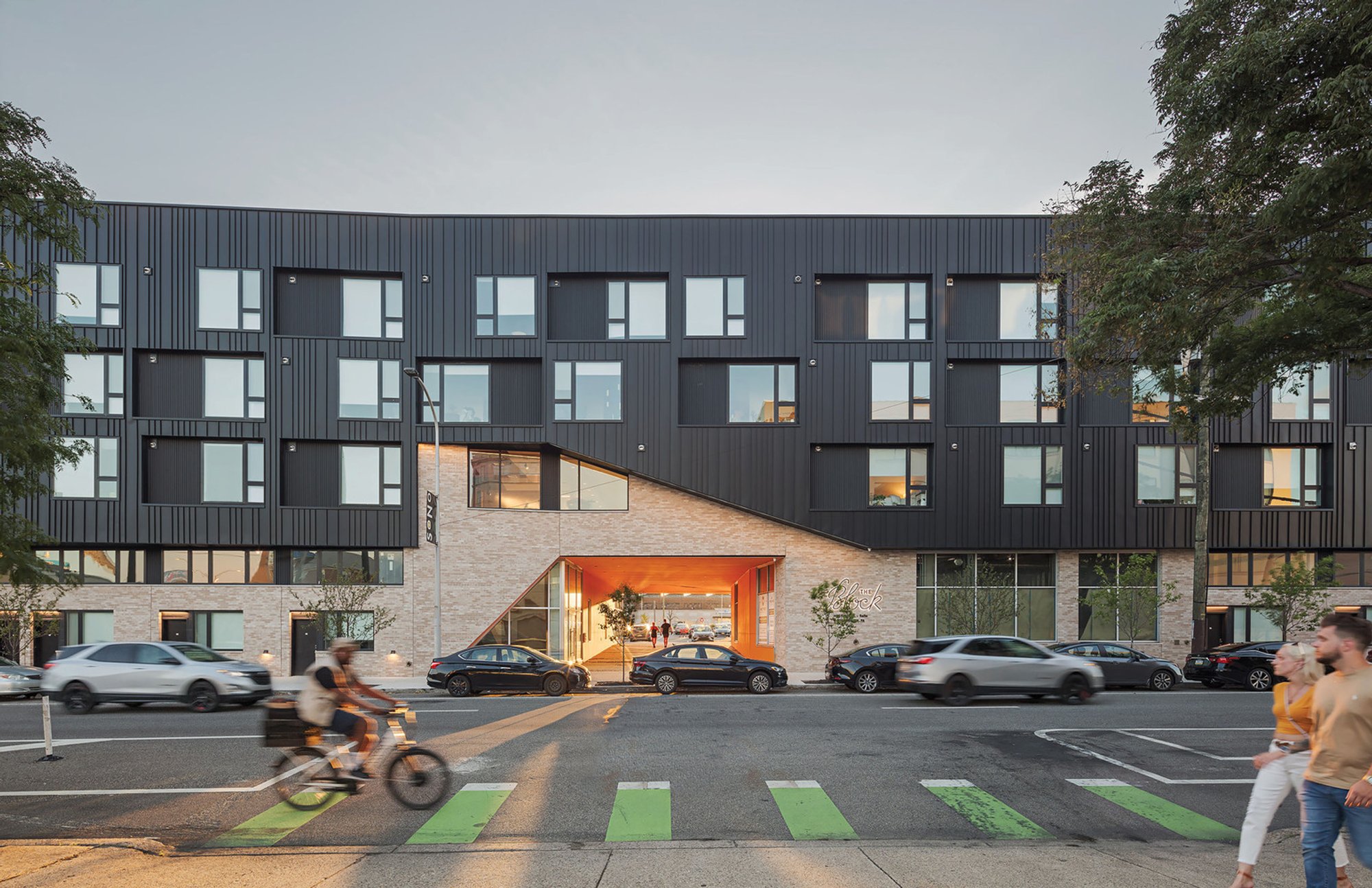
The Block by ISA Redefines Mixed-Use Urban Living in Philadelphia
Mixed-use building transforms parking lot into vibrant urban hub, enhancing walkability, density, and community through innovative circulation and porous design.

Located in the dynamic Callowhill district of Philadelphia, The Block by ISA represents a forward-thinking approach to urban infill architecture. Designed as a 49-unit mixed-use residential development, this project transforms a previously underutilized surface parking lot into a vibrant, pedestrian-friendly environment. With a built area of approximately 58,200 square feet, the building reimagines how density, walkability, and commercial activity can coexist within a historically car-oriented urban fabric.
This project addresses one of the most pressing challenges in contemporary urban design: how to convert large, inactive sites—often dominated by parking—into lively, people-centered spaces without erasing existing economic infrastructures.
Urban Context and Regeneration Strategy
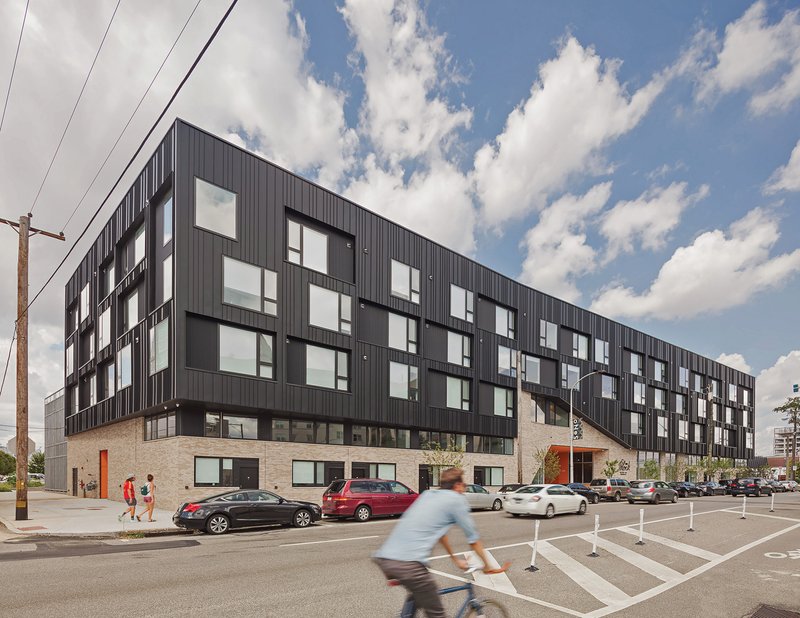
The Callowhill neighborhood has long been characterized by industrial remnants, warehouses, and large-format retail developments. While these “big box” typologies bring essential amenities, they often disrupt street life due to expansive surface parking lots and inactive facades.
The Block strategically intervenes in this condition by inserting residential density into an existing commercial ecosystem. Rather than replacing the adjacent warehouse—previously adapted into retail and a local brewery—the project complements it. By doing so, the development reinforces the site’s economic vitality while enhancing its spatial and social qualities.
This approach exemplifies adaptive urban regeneration, where architecture works with existing conditions rather than against them, creating a more sustainable and context-sensitive model for city growth.
Architectural Concept and Spatial Organization
At its core, The Block is defined by a hybrid program that merges residential units, live/work spaces, and ground-floor retail. The building is carefully positioned along the 5th Street frontage, activating the streetscape with human-scale interactions.
The ground level accommodates retail spaces that engage directly with the surrounding parking lot and commercial activity. Meanwhile, live/work units along the street edge blur the boundary between domestic and professional life, supporting flexible urban lifestyles.
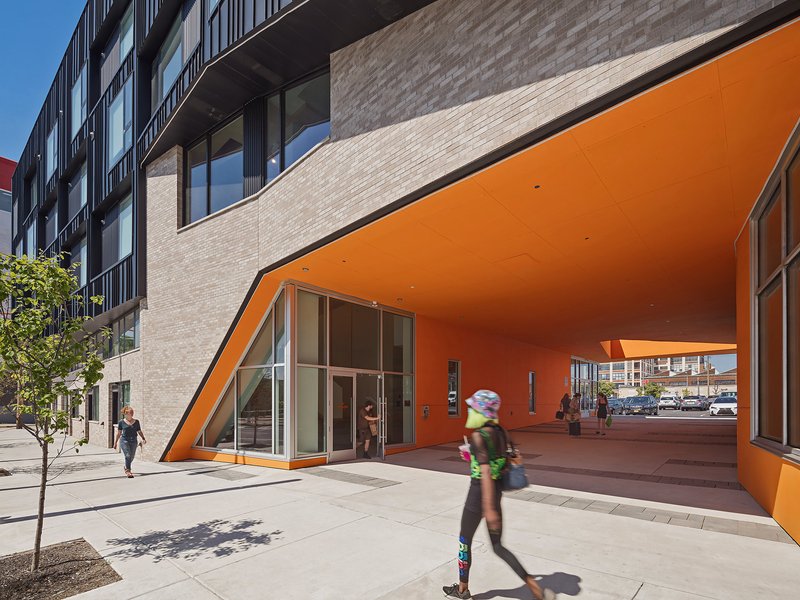
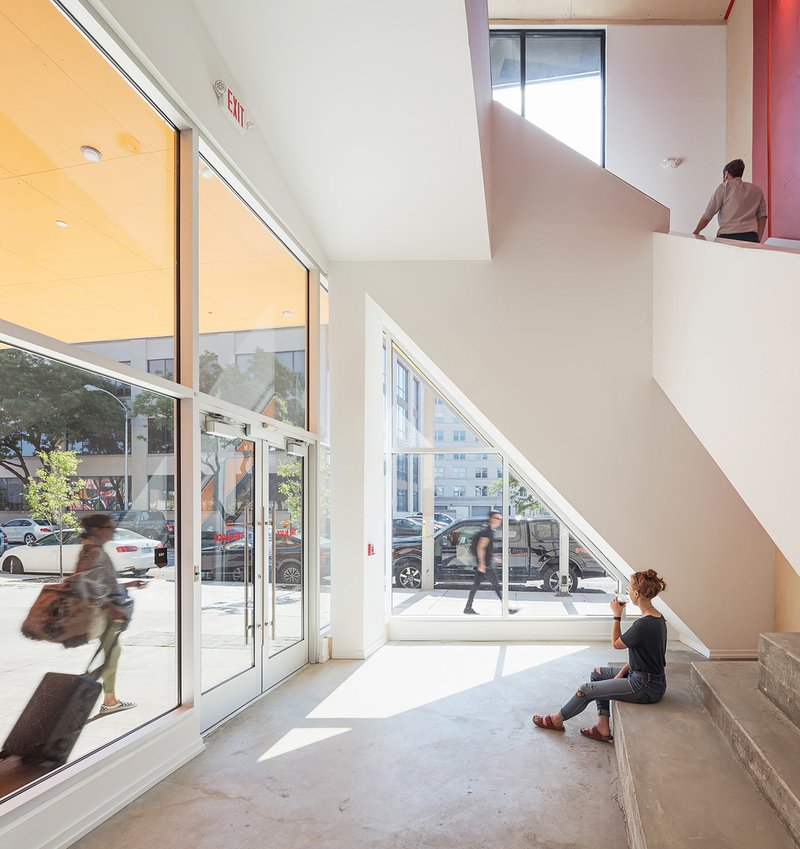
One of the project’s most distinctive features is a pedestrian passageway that cuts through the building at ground level. This design move enhances permeability, allowing people to move freely through the site and strengthening connections between different urban zones.
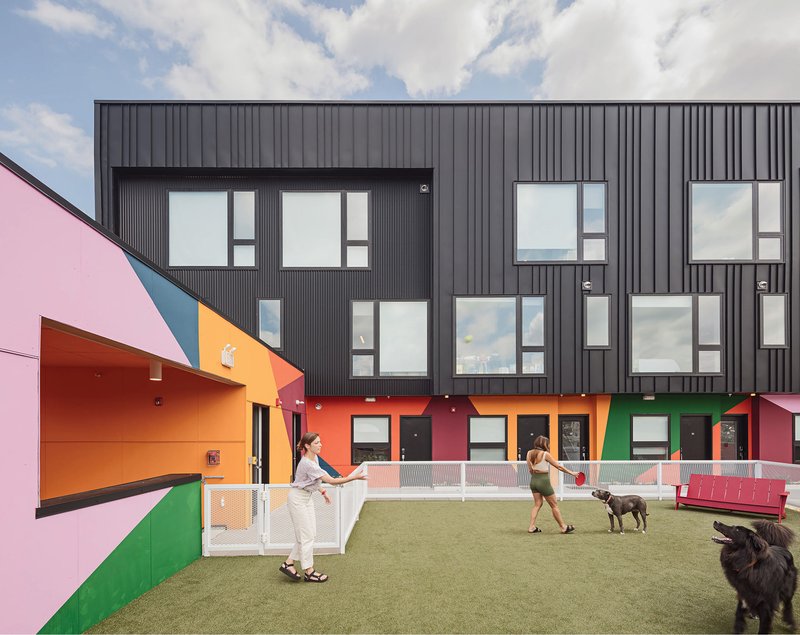
Above, a shared rooftop terrace provides a communal space for residents, encouraging social interaction while offering views of the evolving cityscape.
Innovative Circulation Inspired by Rowhouse Typology
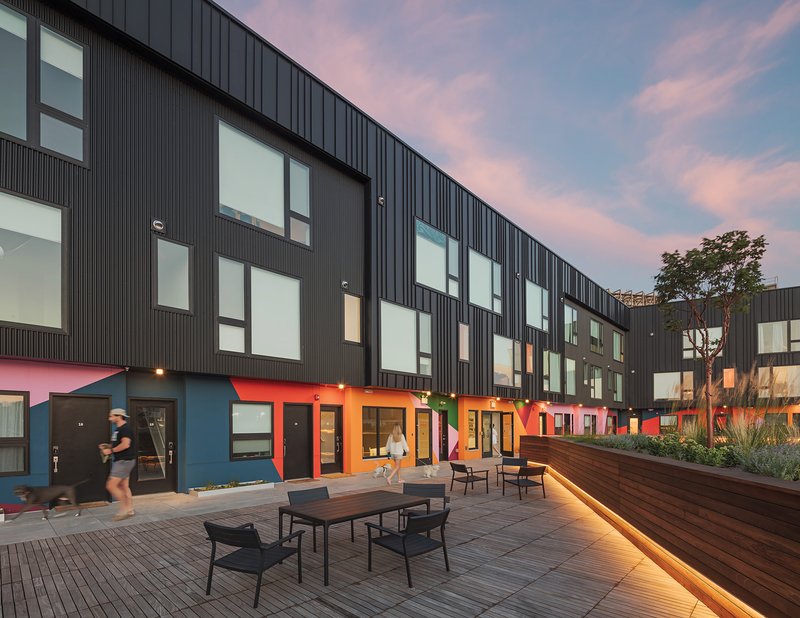
A defining aspect of the project is its unconventional approach to circulation. Drawing inspiration from Philadelphia’s traditional rowhouse architecture, the design minimizes enclosed interior corridors.
Instead, circulation is organized around an elevated landscaped deck, which serves as the primary access route for upper-level units. This strategy offers multiple benefits:
- It reduces reliance on artificially lit corridors
- Enhances natural ventilation and daylight access
- Creates semi-public outdoor spaces that foster community interaction
This open circulation system transforms movement through the building into an experiential journey, where residents engage with greenery, light, and views rather than enclosed hallways.
Massing, Porosity, and Visual Connectivity
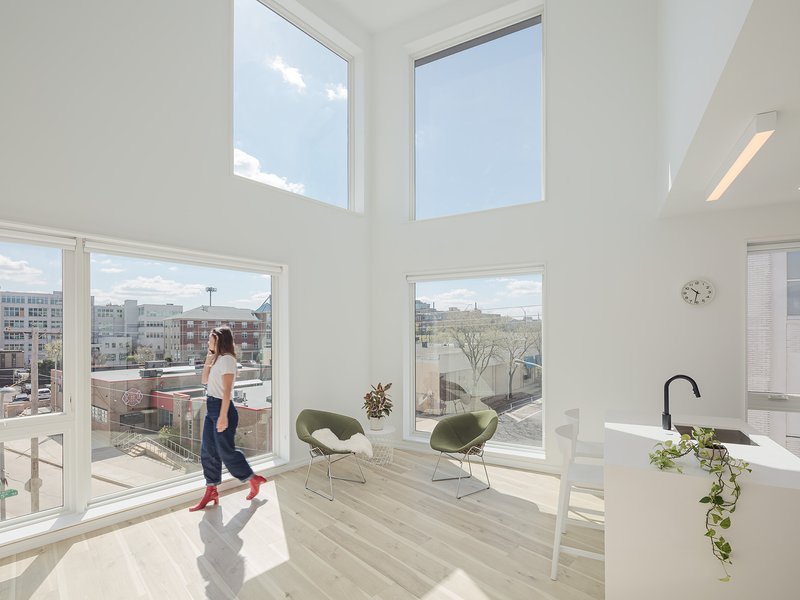
The architectural massing of The Block is carefully articulated to create a sense of porosity and openness. Apertures are carved into both the plan and section of the building, producing voids that:
- Frame unexpected views
- Allow light to penetrate deep into the structure
- Enhance cross-ventilation
- Strengthen visual connections between interior and exterior spaces
These spatial interruptions break down the scale of the building, making it more approachable and visually dynamic. The result is a layered architectural composition that responds to both pedestrian and urban scales.
Materiality and Construction Approach
The project employs a robust palette of materials that balance durability with aesthetic refinement. Key contributors include Sherwin-Williams, Sioux City Brick, and Andersen Windows, among others.
These materials are selected not only for their performance but also for their ability to resonate with the industrial character of the surrounding context. Brick facades, large window openings, and carefully integrated lighting systems contribute to a cohesive architectural identity.
The use of high-quality finishes and systems ensures longevity while supporting the building’s environmental and functional performance.
Landscape Integration and Outdoor Living
Landscape design plays a crucial role in shaping the project’s identity. Developed in collaboration with Jonathan Alderson Landscape Architects, the outdoor spaces are seamlessly integrated into the building’s circulation and social framework.
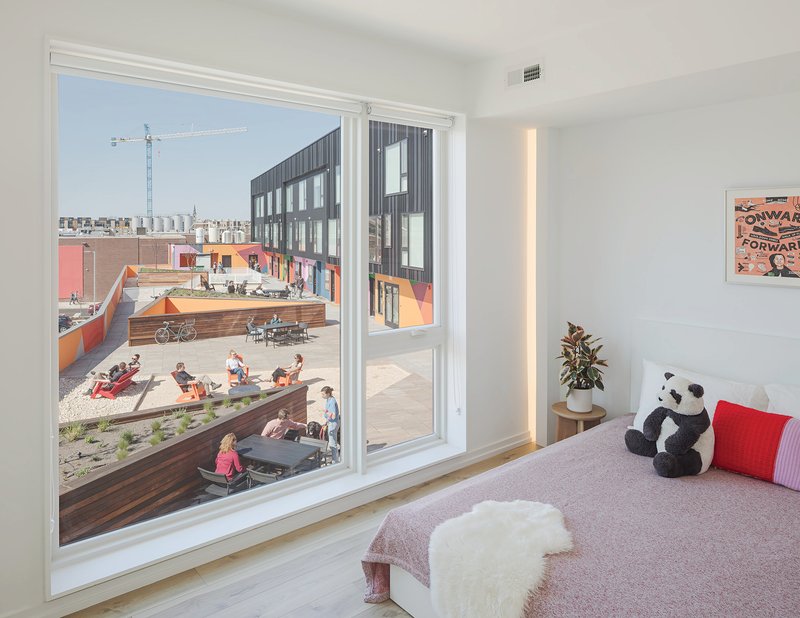
The elevated deck doubles as a green spine, introducing vegetation into the heart of the building. This not only enhances visual appeal but also improves microclimatic conditions, contributing to thermal comfort and urban biodiversity.
The rooftop terrace further extends this landscape strategy, offering a shared amenity that promotes relaxation, socialization, and community building.
Engineering and Technical Collaboration
The realization of The Block is the result of a multidisciplinary collaboration involving leading engineering and design firms. Structural systems were developed by Cooke Brown Structural Engineers, while MEP solutions were provided by Holstein White Inc.
Civil engineering by Bohler Engineering ensures efficient site planning and infrastructure integration. Meanwhile, lighting design by LAM PARTNERS enhances both functional and experiential qualities of the spaces.
This collaborative approach underscores the complexity of contemporary mixed-use developments and the importance of integrated design processes.
Enhancing Walkability and Urban Life
One of the project’s most significant contributions is its impact on urban walkability. By introducing residential density and activating ground-level spaces, The Block transforms a previously inactive site into a lively urban node.
The inclusion of pedestrian pathways, active frontages, and mixed-use programming encourages foot traffic and reduces reliance on cars. This shift aligns with broader urban planning goals aimed at creating more sustainable and livable cities.
The project demonstrates how thoughtful design can reconcile the coexistence of car-oriented infrastructure with pedestrian-friendly environments
A New Typology for Mixed-Use Development
The Block introduces a novel typology that bridges the gap between large-scale retail developments and human-centered urban design. By layering residential, commercial, and social functions within a single structure, the project creates a multifunctional environment that adapts to contemporary lifestyles.
This hybrid approach reflects evolving urban trends, where flexibility, density, and community engagement are key drivers of architectural innovation.
A Model for Future Urban Infill Projects
The Block by ISA stands as a compelling example of how architecture can transform underutilized urban spaces into vibrant, sustainable communities. Through its innovative circulation, porous massing, and integration of landscape and mixed-use programming, the project redefines the potential of infill development in dense urban contexts.
By addressing the challenges of car-centric planning while enhancing walkability and social interaction, The Block offers a replicable model for future developments in cities worldwide.


Popular Articles
Popular articles from the community

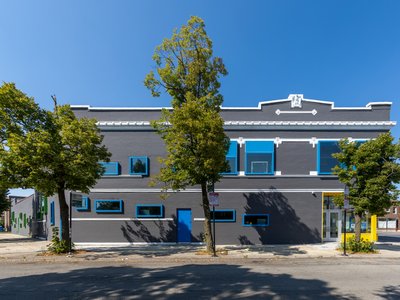
Gads Hill Early Learning Center by JGMA: Adaptive Reuse Shaping Community-Focused Educational Architecture
Adaptive reuse transforms fragmented structure into vibrant early learning center with playful façade, natural light, and community-focused sustainable design.

Solar Steam: A Climate-Responsive Architecture That Redefines the Monument
A climate-responsive memorial architecture that transforms heat, decay, and time into a living system reflecting humanity’s ecological impact.

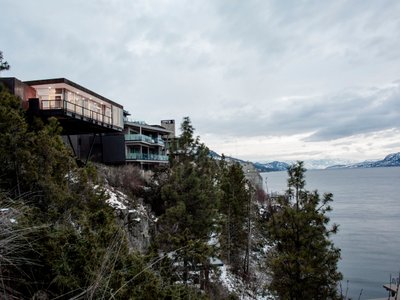
Alton Cliff House: A Harmonious Retreat by f2a Architecture in Lake Country, Canada
Alton Cliff House blends corten steel, prefabrication, and sustainable design, creating a luxurious, energy-efficient retreat perched on Canadian cliffs.


Similar Reads
You might also enjoy these articles


Bamboo Housing Challenge 2026: Design Affordable, Sustainable Homes Using Bamboo
An international design competition by Bamboo U and IBUKU inviting architects and designers to reimagine affordable housing using bamboo — with the winning design built full-scale in Bali.

Computational Design & Education: Beegraphy Design Awards Introduces 7th Category (Featuring Jiyun's Innovative Approach)
Dive into Beegraphy’s 7th Design Awards category, where computational design meets education to create immersive, interactive learning tools, inspired by Jiyun’s work.
From Parametric Lighting to Urban Furniture: Join the 2nd Workshop in Beegraphy’s Computational Design Series
Dive into Cutting-Edge Design Techniques and Practical Applications with Industry Experts

Explore Architecture Competitions
Discover active competitions in this discipline




The International Standard for Design Portfolios


The Global Benchmark for Architecture Dissertation Awards


The Global Benchmark for Graduation Excellence

Challenge to design mud housing for contemporary communities
Comments (0)
Please login or sign up to add comments
No comments yet. Be the first to comment!