
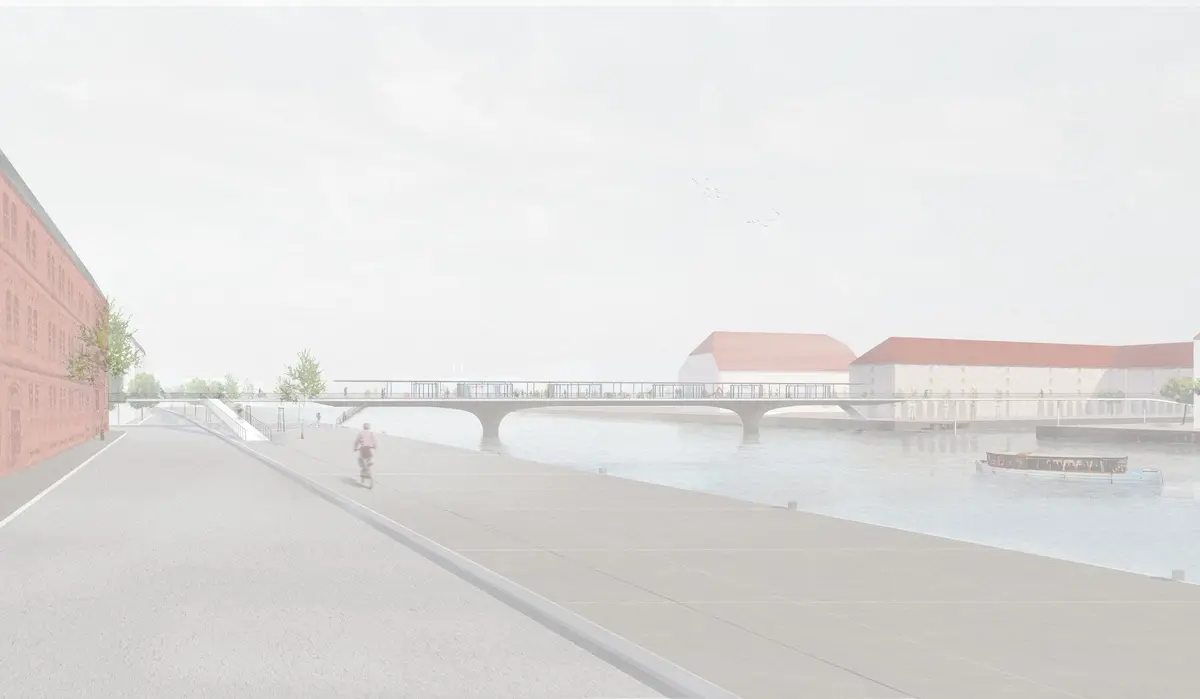
The City Link: A Landmark in Sustainable Urban Design
A cycling bridge transformed into vibrant public architecture, redefining sustainable urban design in the heart of Copenhagen.


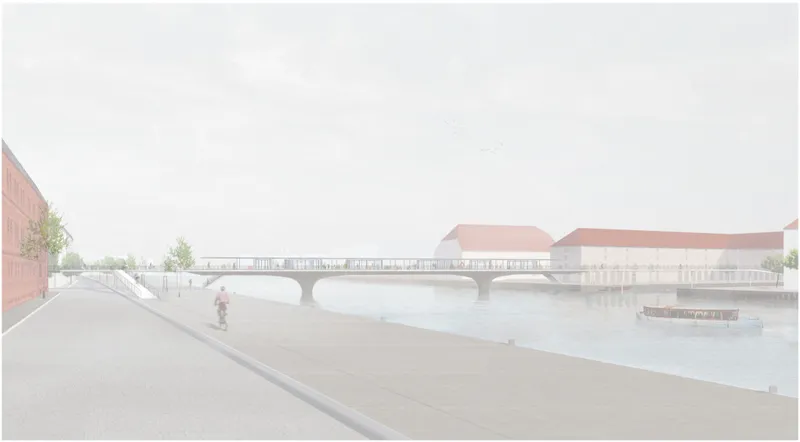
In the evolving discourse of sustainable urban design, infrastructure is no longer viewed as a purely functional necessity. Instead, it becomes an opportunity to create meaningful public space. The City Link, designed by Yannic Kohnen and Jonathan Burkard, challenges the conventional understanding of bridge architecture by transforming a cycling bridge in Copenhagen into a vibrant, multi-layered civic experience.
Rather than serving as a simple crossing over water, the proposal redefines the bridge as an elevated public realm: an urban platform that connects neighborhoods while fostering interaction, movement, and community life.
Sustainable Urban Design in Motion
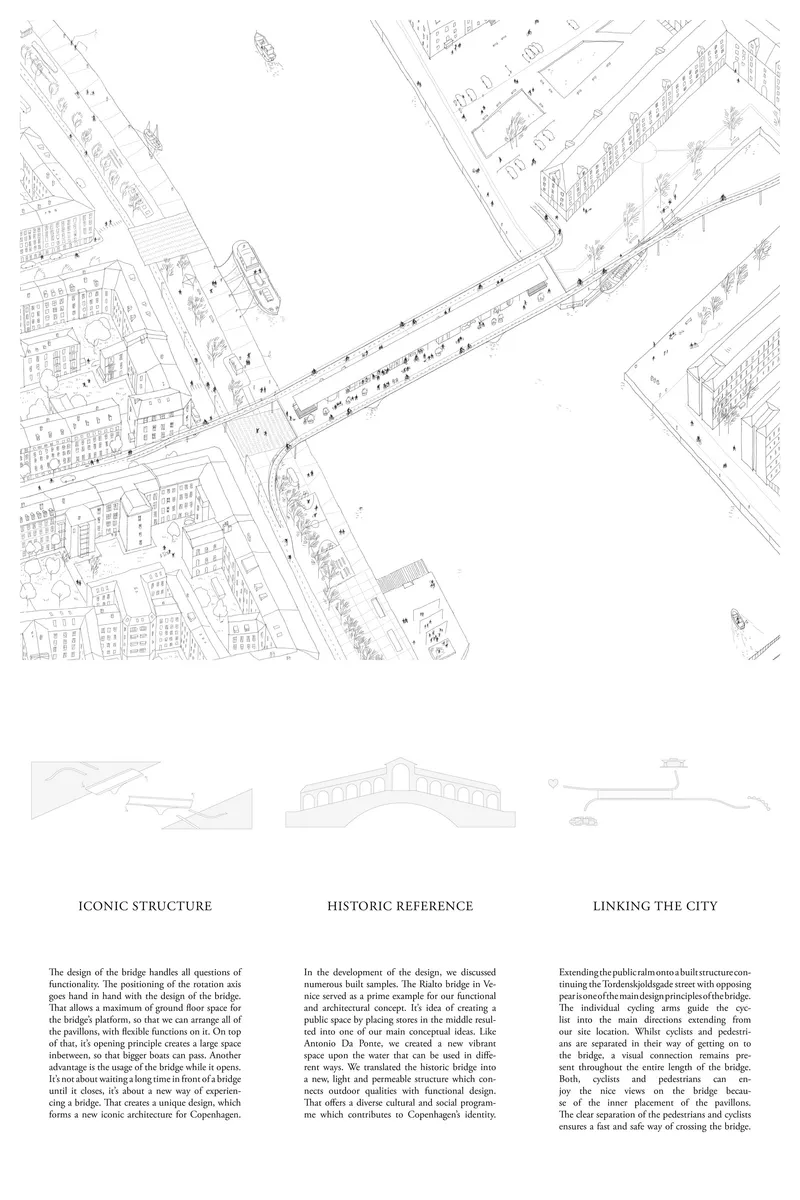
Copenhagen is globally recognized for its bicycle culture and progressive urban planning strategies. The City Link builds upon this legacy by integrating sustainable urban design principles directly into the architectural language of the bridge. The project prioritizes cyclists and pedestrians, structuring the spatial organization around fluid movement and safe circulation.
Bridge arms extend outward, guiding users naturally toward four primary directions within the city. This clarity of movement reduces congestion while enhancing the user experience. Cyclists and pedestrians are separated in circulation yet visually connected, ensuring both safety and shared spatial awareness.
The result is not just infrastructure, it is an experience of movement shaped by design intelligence.
A New Typology: The Bridge as Urban Plaza
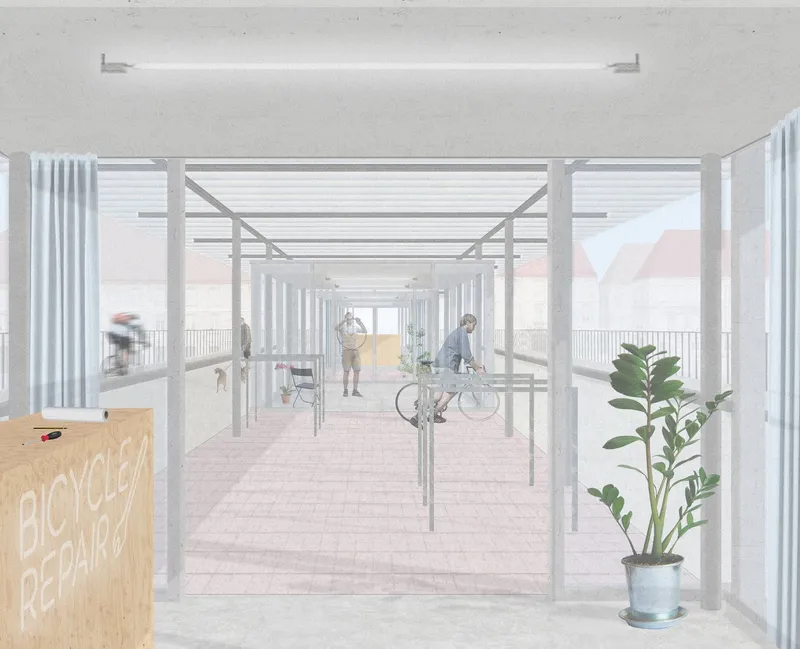
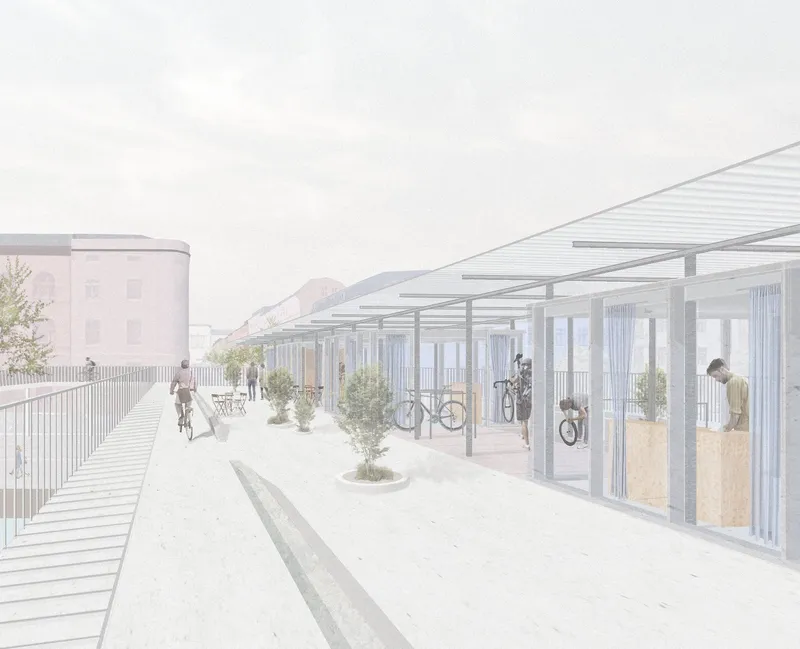
One of the most compelling aspects of The City Link is its reinterpretation of the bridge deck as a linear public square. Between integrated pavilion structures, generous open zones allow for flexible programming. Retail kiosks, cafés, bicycle repair stations, exhibition areas, and information centers activate the bridge throughout the day.
This approach reflects core values of sustainable urban design: adaptability, multifunctionality, and social inclusivity. The bridge does not simply connect Christianshavn to the heart of Copenhagen, it becomes a destination in itself.
Two organically formed pillars support the structure while creating a 25-meter opening for boats to pass. The rotation axis of the bridge introduces dynamic movement, ensuring navigational access while contributing to the sculptural identity of the project.
Historic Reference, Contemporary Expression
The project draws inspiration from historic European bridges, including Venice’s Rialto Bridge, where commerce and circulation coexist. Yet The City Link translates these references into a contemporary architectural vocabulary.
A light roof structure provides shade and rain protection, reinforcing usability throughout all seasons. The minimal material palette and restrained color scheme allow the bridge to blend respectfully into Copenhagen’s architectural context while establishing itself as a new icon of sustainable urban design.
Rather than dominating the skyline, the bridge integrates quietly: its strength lies in spatial clarity, human scale, and programmatic intelligence.
Cycling Infrastructure as Civic Identity
The primary focus of the design lies in the cyclist’s experience. As riders move across the bridge, they encounter programmed spaces, greenery, seating zones, and views over the water. This transforms commuting into a civic journey rather than a transitional necessity.
In sustainable urban design, infrastructure shapes identity. The City Link reinforces Copenhagen’s reputation as a forward-thinking city where architecture enhances lifestyle and environmental responsibility.
The separation of movement paths ensures fast and efficient crossings, while the continuity of the visual language along the bridge strengthens the feeling of cohesion.
Architecture Beyond Function
The City Link answers a fundamental question: can infrastructure become architecture in the fullest sense? The proposal suggests that it can.
It is not about waiting for the bridge to open or close. It is about creating a new way of experiencing urban space: where connection, culture, and circulation merge seamlessly.
By merging transportation, commerce, leisure, and public engagement into one coherent structure, The City Link establishes a new benchmark for sustainable urban design in bridge architecture.
It is an iconic structure, a historic reference, and a contemporary urban connector, linking not only two sides of a city but also redefining how infrastructure can serve as public architecture.


Popular Articles
Popular articles from the community


The Ocean Hive: Sustainable Architecture for a Self-Sufficient Civilization at Sea
The Ocean Hive imagines sustainable architecture at sea, where modular habitats, algae, wave power and ocean waste sustain a growing colony.

Play: Fragments of Their World
Familiar architecture becomes modular playground design, creating safe spaces where displaced children can learn, connect, imagine and play.

Hill & Cross Opera: Sculptural Opera House Architecture Shaped by Tallinn’s Landscape and Identity
Hill & Cross Opera reimagines opera house architecture in Tallinn through its sculptural hill, civic plaza, glass wave and a luminous cross.

The Musturak Paradise: Senior Living Architecture for a Connected Future in Temara, Morocco
The Musturak Paradise reimagines senior living architecture in Temara via private homes, social spaces, culture, community, and shared care.

Similar Reads
You might also enjoy these articles

Eco Chapel: A Green Architecture Pavilion Designed in Symbiosis with the Forest
Eco Chapel uses green architecture to weave prayer, learning and reuse into a forest pavilion shaped by modular hexagonal canopies for life.
Kaffeebühnen: Coffee Shop Architecture Designed as a Civic Stage Between Vienna’s City and Park
Kaffeebühnen turns coffee shop architecture into a civic stage, linking Vienna’s park edge, urban life, warm timber yards, and coffee craft.
Healing Façade: Sustainable Architecture for Reforestation, Community, and Sacred Ecology in Ethiopia
Healing Façade reimagines sustainable architecture as a living wall that restores soil, catches water and renews Ethiopia's forest churches.


Urban Forest: A Vertical Ecosystem for 5,000 Workers in Singapore's Changi Business Park
Radially stacked pods and layered green decks turn a 7-acre plot into 47 acres of ecological workspace projected for 2040.

Comments (0)
Please login or sign up to add comments
No comments yet. Be the first to comment!