
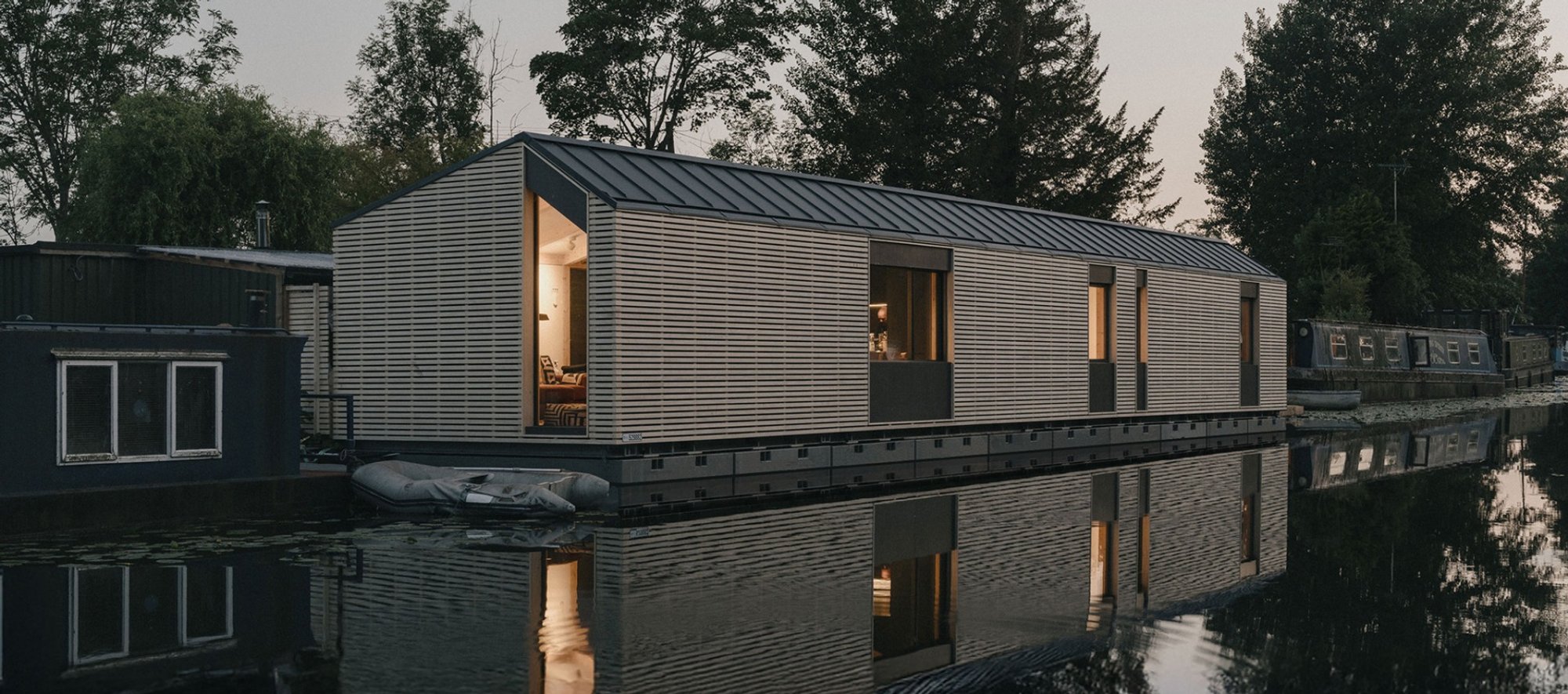
The Float House by Tigg + Coll Architects, United Kingdom
A modular floating home combining timber design and innovative engineering, creating a spacious, sustainable family residence seamlessly connected to water.

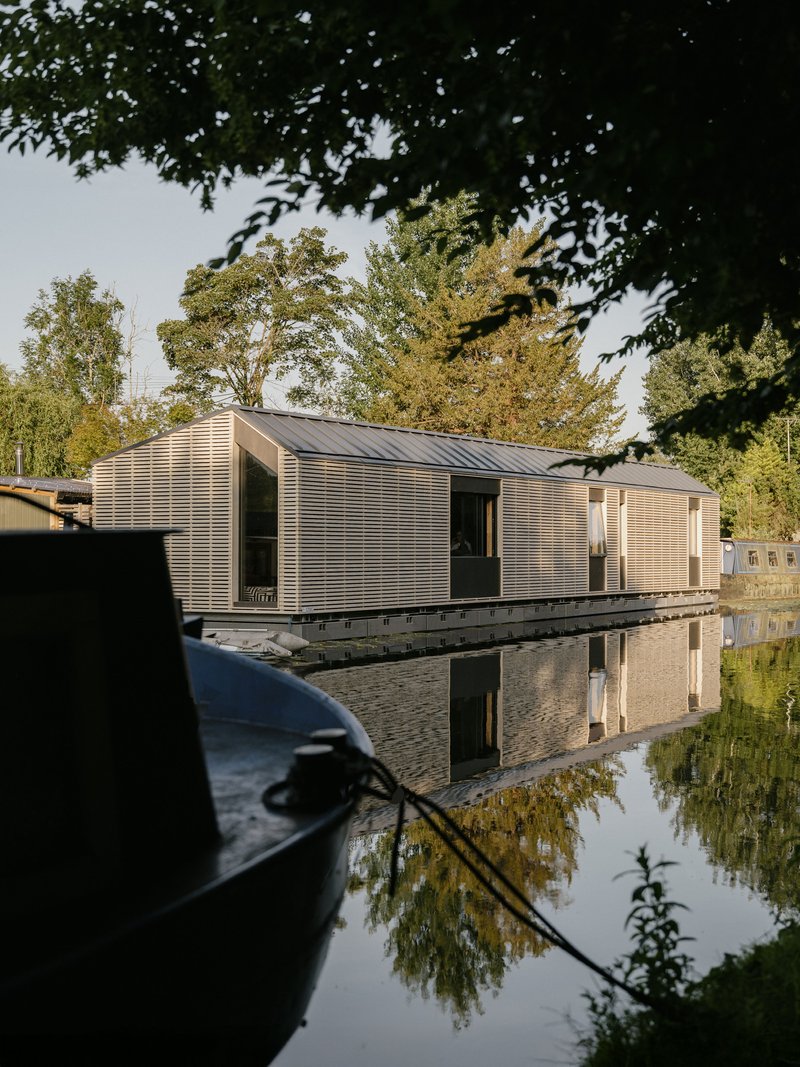
The Float House by Tigg + Coll Architects is an innovative reimagining of life on water, located along the Grand Union Canal in northwest London. Designed as a replacement for a traditional canal barge, the project responds to the evolving needs of a growing family by offering a spacious, accessible, and sustainable floating home.
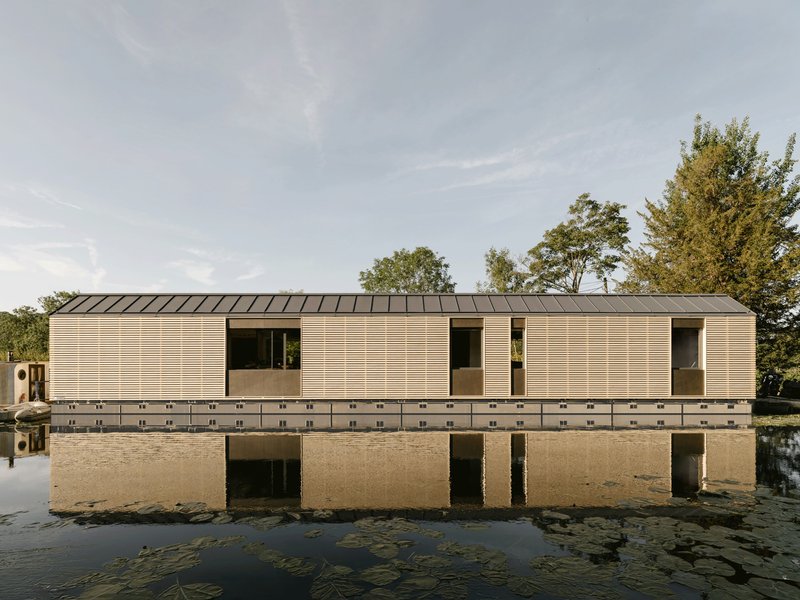
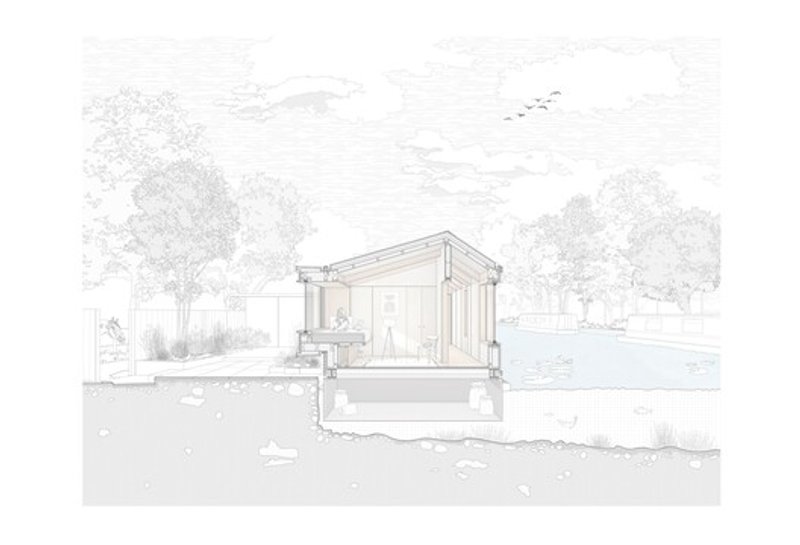
Unlike conventional houseboats, where living spaces are often positioned below water level, the Float House is elevated above the water, eliminating issues of dampness and cold while improving comfort and livability. This fundamental shift redefines the typology of canal living, transforming it into a contemporary residential experience that prioritizes health, accessibility, and connection to nature.
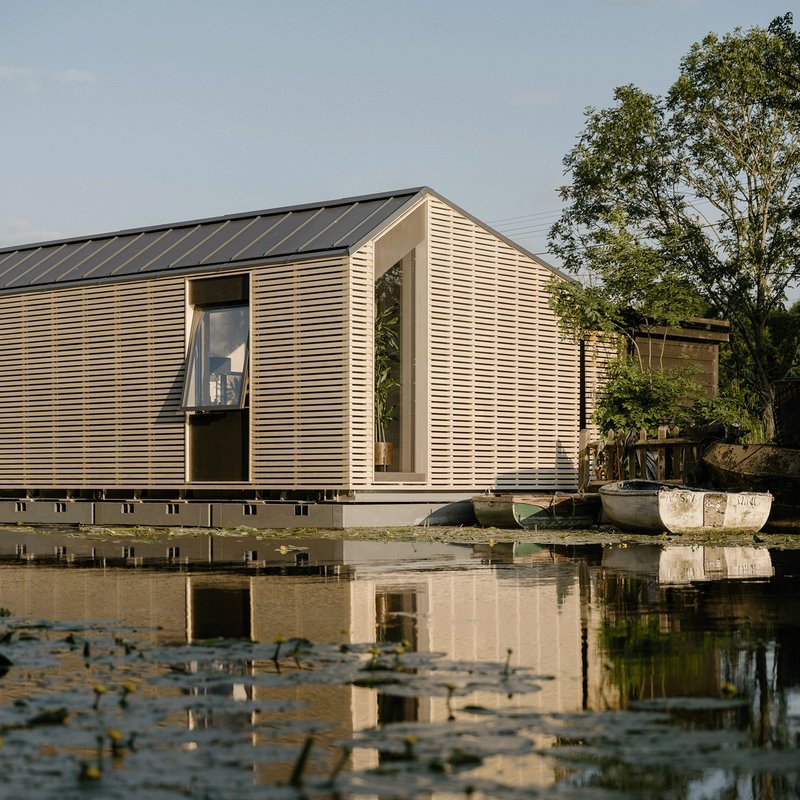
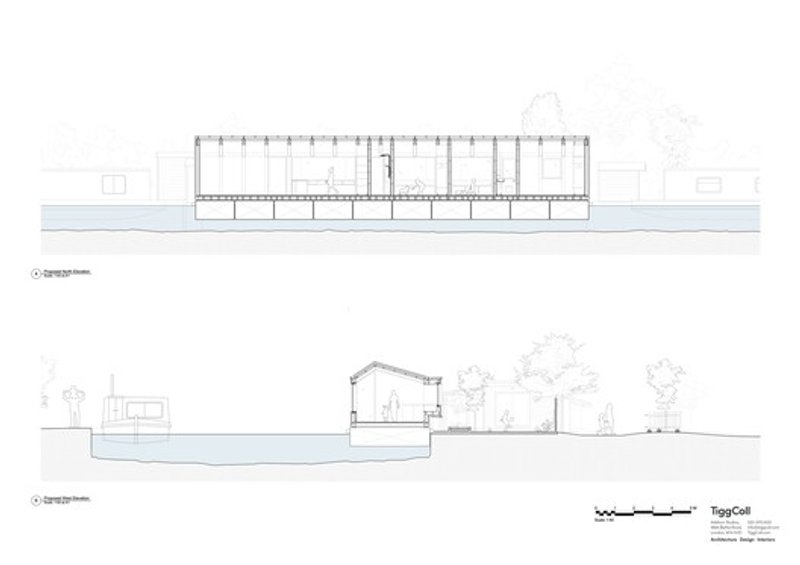
The house is conceived as a long, linear volume constrained by the dimensions of the canal and mooring conditions. Within a compact footprint of approximately 4 meters by 20 meters, the architects organize a fully functional family home, including an open-plan living area, a master suite, two children’s bedrooms, and a shared bathroom. Despite these limitations, the interior feels spacious and fluid, achieved through careful planning and the strategic use of natural light.
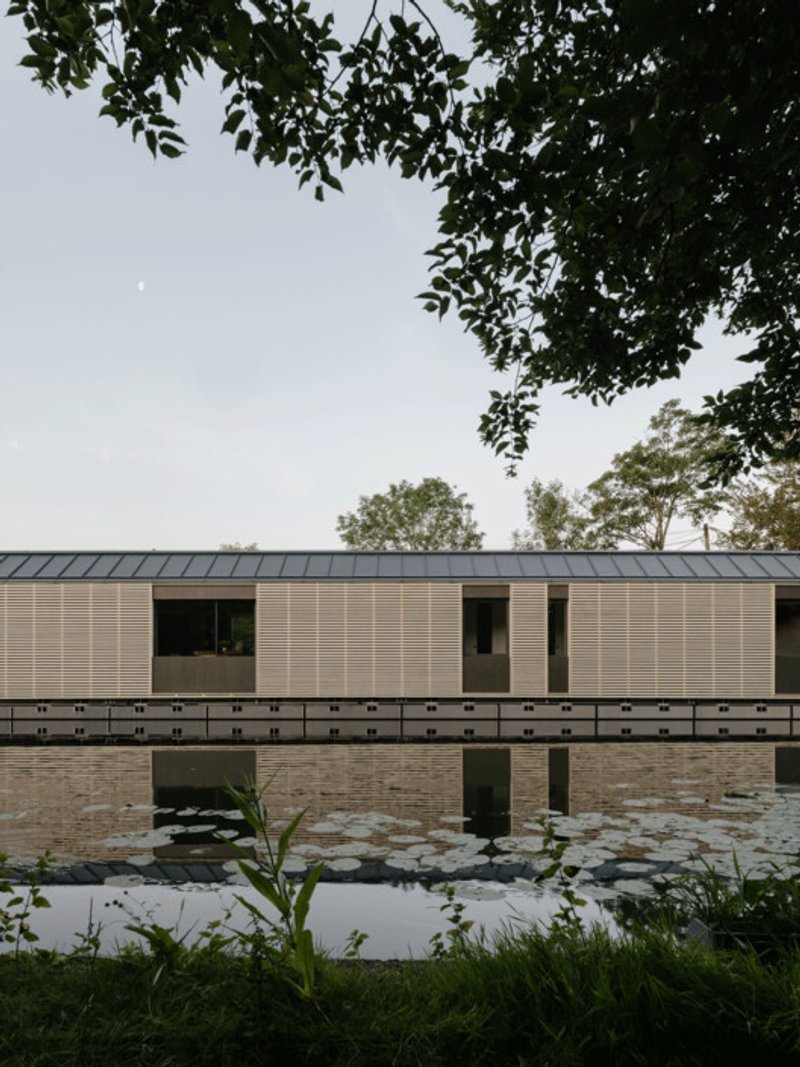
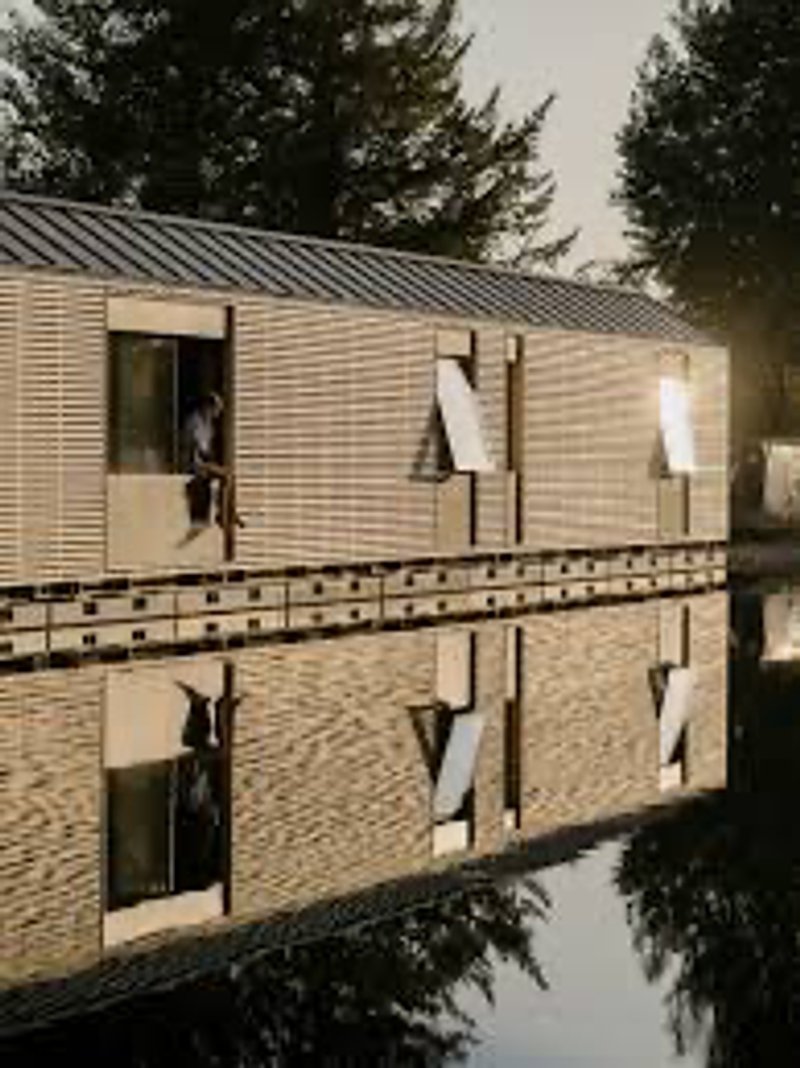
A key architectural feature is the use of cantilevered window bays, which extend outward from the façade to create additional interior space. These projections not only enhance functionality, providing extra work surfaces and seating areas, but also define the building’s external identity. Large windows frame views of the water and surrounding landscape, reinforcing a constant visual connection with nature.
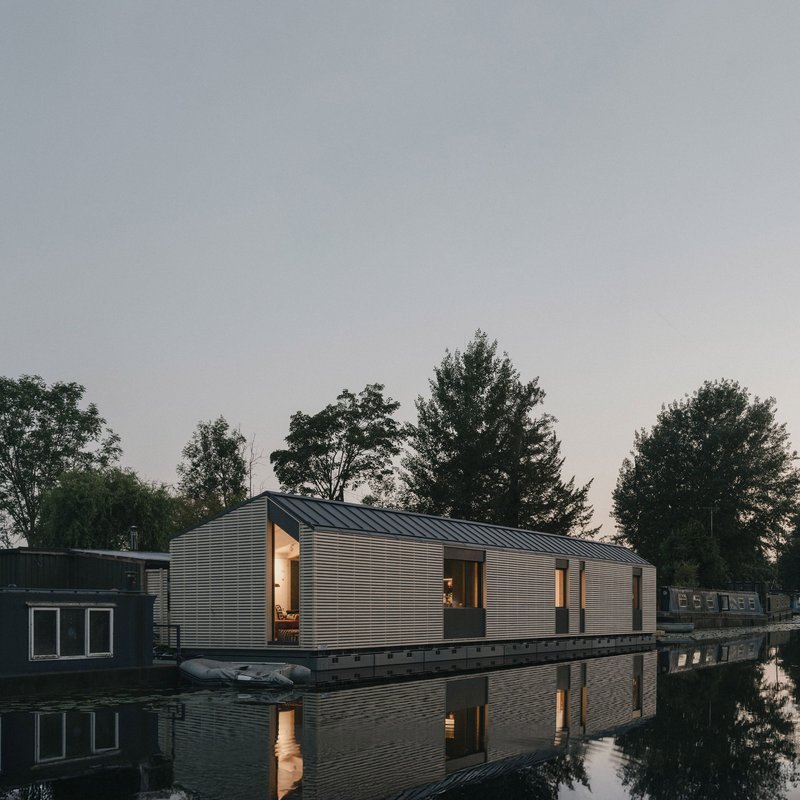
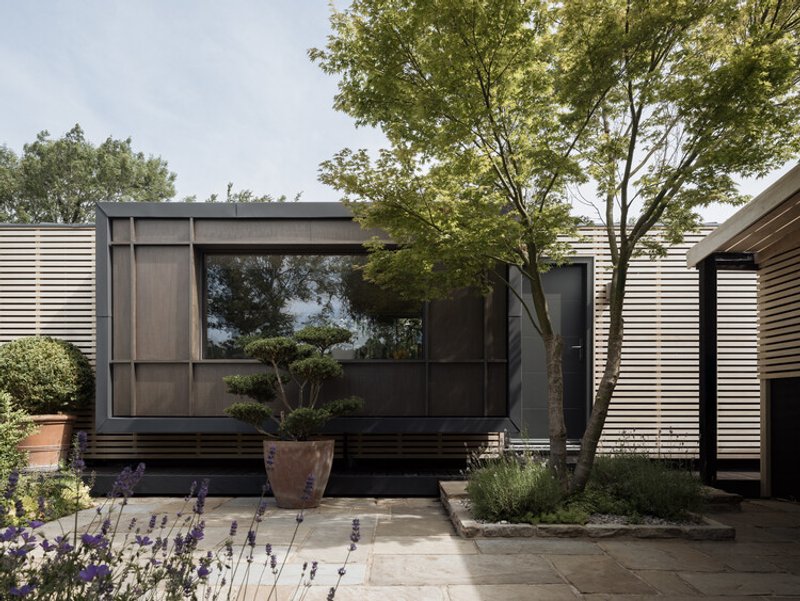
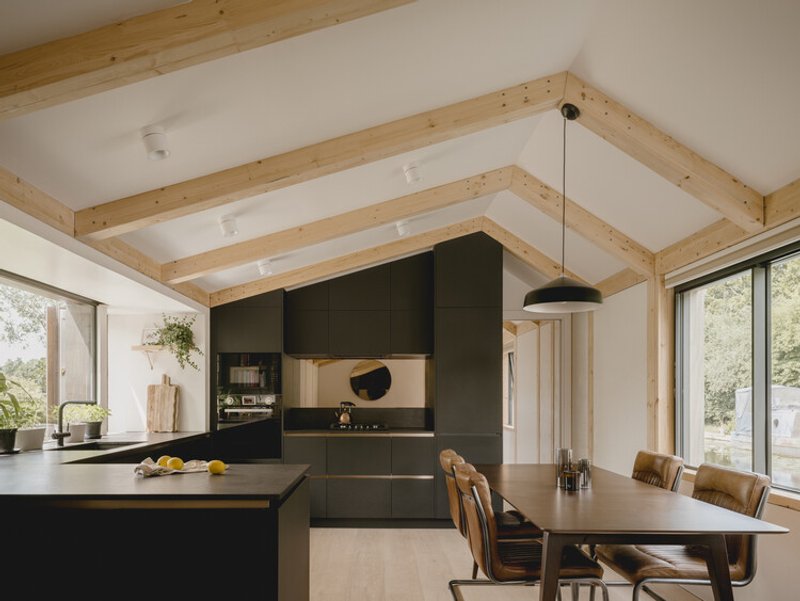
Materiality plays a central role in shaping the house’s character. The exterior is clad in horizontal Accoya timber slats, chosen for their durability, sustainability, and ability to weather gracefully over time. Internally, an exposed timber structure creates warmth and continuity, complemented by high-quality finishes such as engineered oak flooring and minimalist kitchen elements.
One of the most innovative aspects of the project lies in its modular floating system. Due to restricted access along the canal, where traditional maintenance methods such as craning are not feasible, the house is supported by ten interlocking steel hulls connected by a gantry. Each hull can be individually detached and floated away for maintenance, offering a practical and adaptable solution to long-term upkeep.
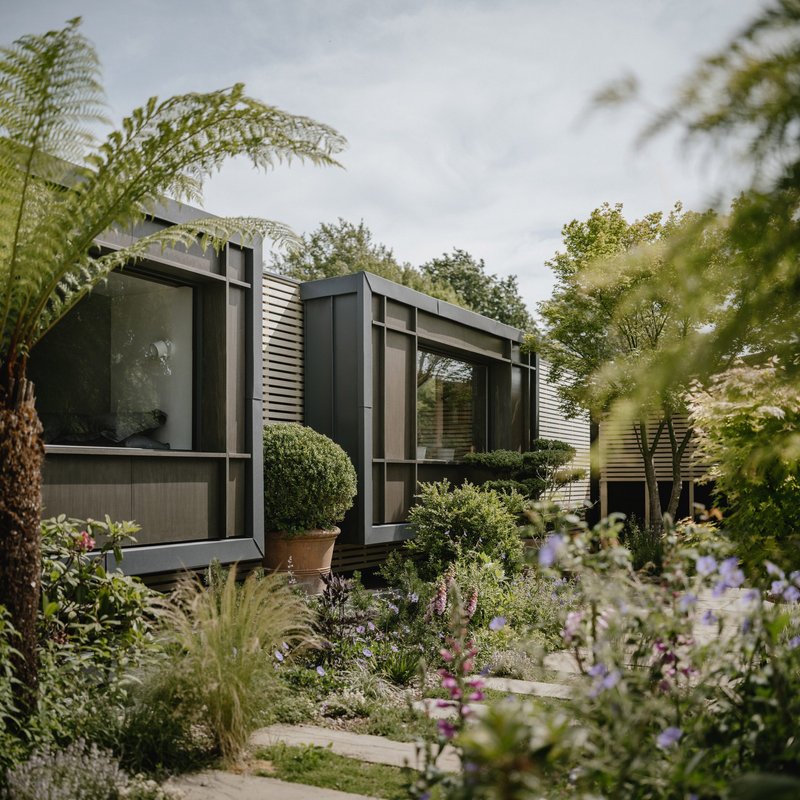
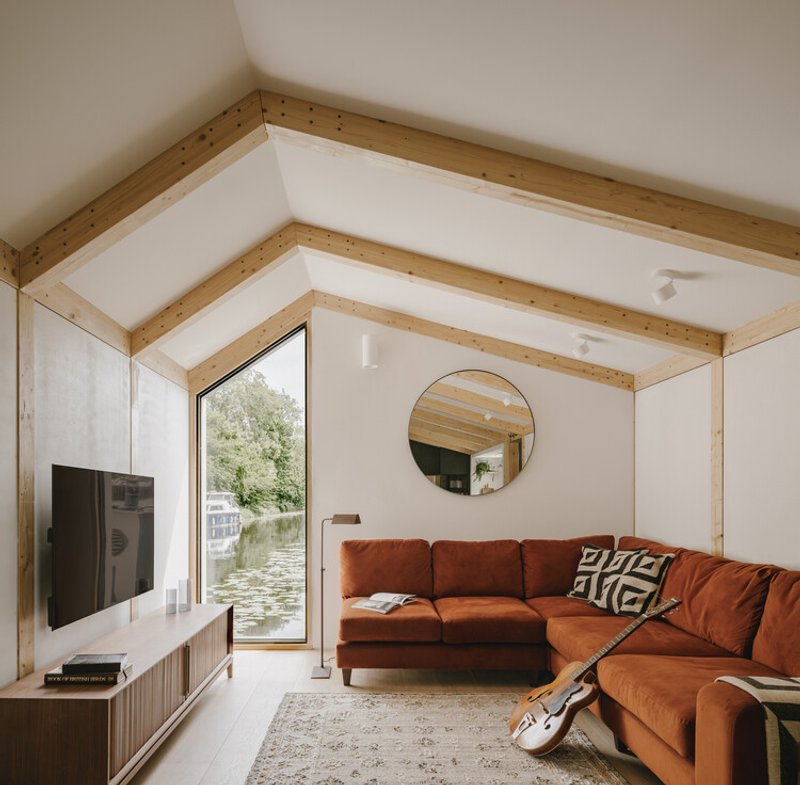
The construction process itself reflects a high level of precision and efficiency. Prefabricated components were assembled off-site and installed quickly once the floating base was in place, minimizing disruption to the surrounding community and environment. This approach demonstrates how modular design can address complex logistical challenges in constrained locations.
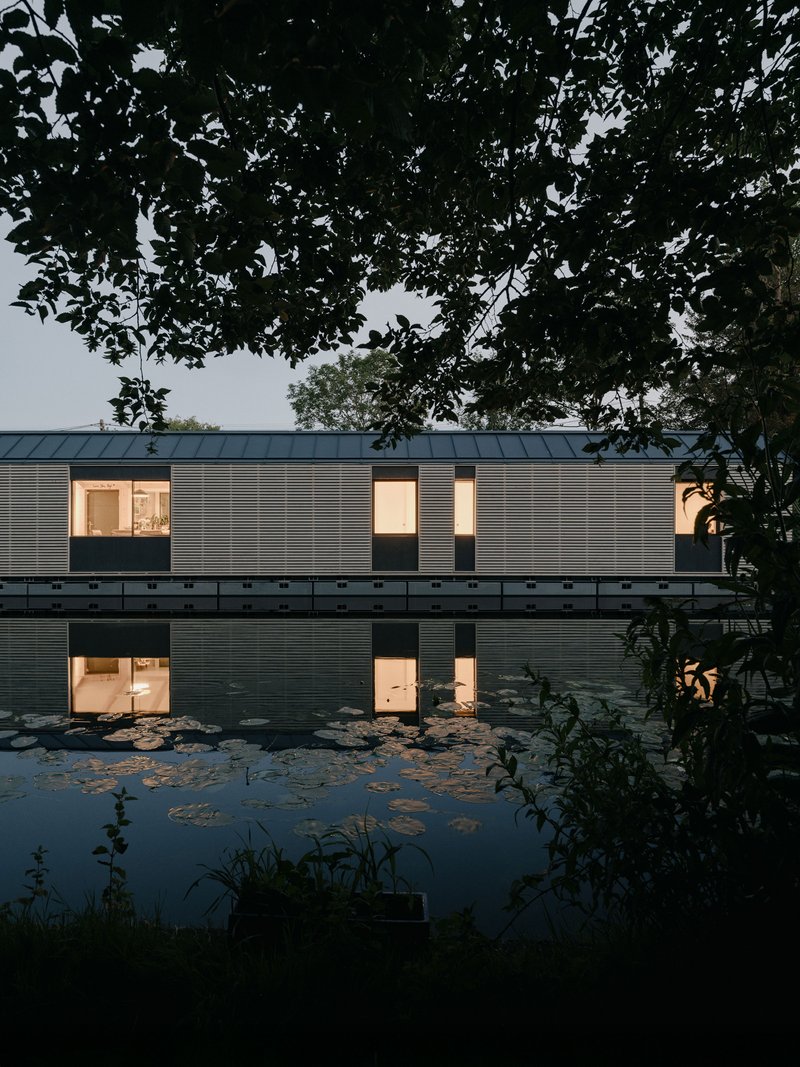
Beyond its technical innovation, the Float House is deeply connected to its natural context. Expansive glazing, integrated ventilation, and solar shading strategies enhance environmental performance while creating a comfortable and light-filled interior. The house engages with its surroundings through reflection, light, and movement, offering a tranquil living experience that contrasts with the density of urban life.
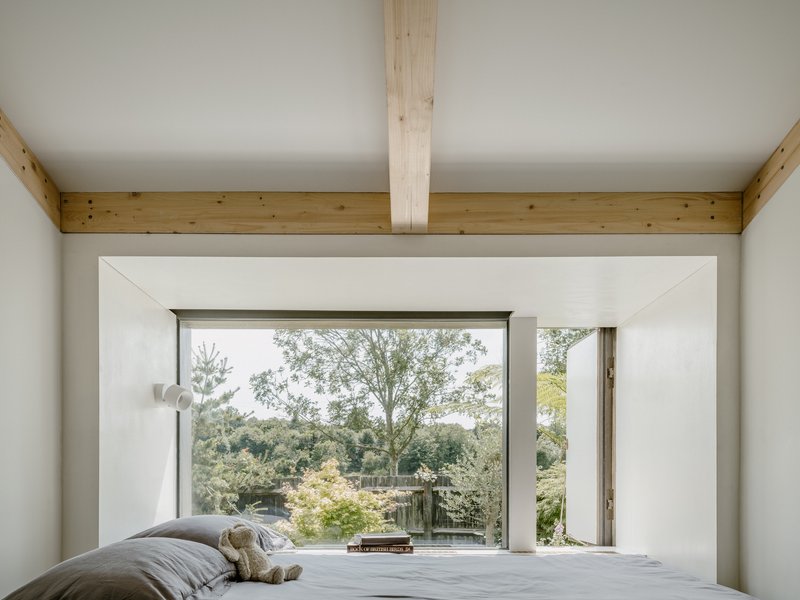
Ultimately, the Float House represents a forward-thinking model for water-based living. By combining architectural clarity, engineering ingenuity, and sensitivity to context, Tigg + Coll Architects have created a home that is both practical and poetic. It stands as a prototype for future floating dwellings, demonstrating how design can adapt to environmental constraints while enriching everyday life.
All the Photographs are works of James Retief




Popular Articles
Popular articles from the community

R/URBAN DESIGN OFFICE Carves a Communal Living Room from a Tokyo Corporate Dormitory
In Shinagawa's Oi district, a 35-year-old reinforced concrete tower becomes a 49-unit rental residence with shared spaces that redefine cohabitation.
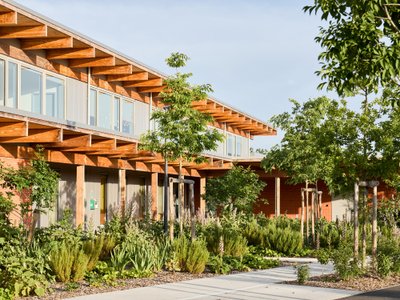
GGR Architectes Anchors a New Neighborhood in Frouzins with a Brick and Timber School Complex
A cruciform plan of terracotta brick and exposed wood frames four courtyards for 140 students outside Toulouse, France.

Cro&Co Architecture Builds a 150-Meter Tower on Top of a Seven-Lane Highway in La Défense
Trinity Tower reimagines the office high-rise as a bioclimatic organism threaded with terraces, trees, and public ground in Paris's business district.

Non Architecture's Horrible Houses Competition Asks AI to Design the Ugliest Home Possible
A free global competition invited participants to use AI image generators to produce the most hideous house they could imagine.

Similar Reads
You might also enjoy these articles
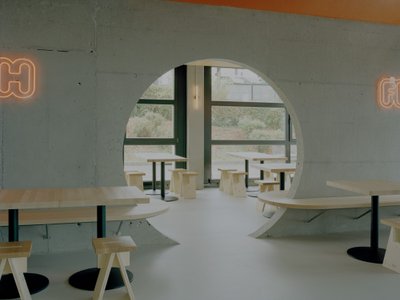
Noue Studio Organizes a Swiss Restaurant Around a Single Concrete Wall
In Granges-Paccot, Switzerland, a 216-square-meter renovation turns raw materials and a central spine into a legible dining experience.
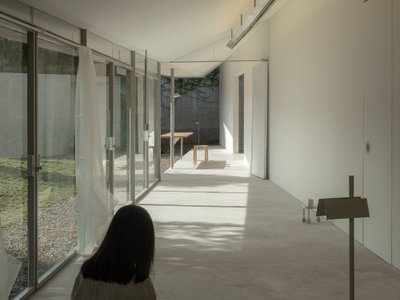
dua studio Stretches a 3.6-Meter-Wide House Across 24 Meters of Indonesian Garden
In Pesanggrahan, a single diagonal wall organizes an entire domestic program into two slender bands flanked by courtyards and trees.
No10-Architects Builds a Multi-Sensory Coffee Lab Around Preserved Trees in Yunnan
Voiceless Coffee in Baoshan wraps board-formed concrete, timber pavilions, and courtyards around a full-chain coffee experience in 260 square meters.
R/URBAN DESIGN OFFICE Carves a Communal Living Room from a Tokyo Corporate Dormitory
In Shinagawa's Oi district, a 35-year-old reinforced concrete tower becomes a 49-unit rental residence with shared spaces that redefine cohabitation.


Explore Architecture Competitions
Discover active competitions in this discipline




The International Standard for Design Portfolios


The Global Benchmark for Architecture Dissertation Awards


The Global Benchmark for Graduation Excellence


Challenge to reimagine the Iron Throne
Comments (0)
Please login or sign up to add comments
No comments yet. Be the first to comment!