

THE FUTURE OF ARCHITECTURE:
UTOPIAS, DYSTOPIAS, HETEROTOPIAS

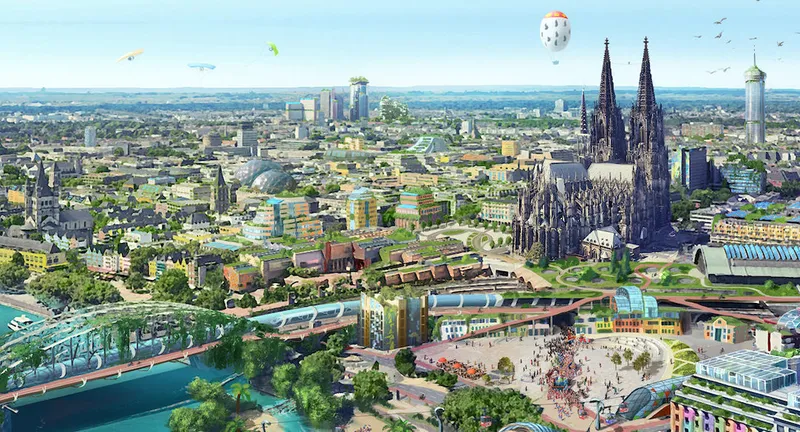
The problems that have arisen over the years in the cities have led to the emergence of the concept of utopia as a solution. Cities and the lives in them have been tried to be changed with utopian architectural projects.
Utopias
Utopia is an ideal and perfect place setting without mistakes. Since it consists of a non-existent world, it contains ideas that will oppose the conditions of the periods. It is not only concerned with society but also includes architecture. Ideal societies and ideal cities coexist. It is involved in architecture with future lives, cities, and design processes.
“The home of the Utopian impulse was architecture rather than painting or sculpture. Painting can make us happy, but building is the art we live in; it is the social art par excellence, the carapace of political fantasy, the exoskeleton of one’s economic dreams. It is also the one art nobody can escape.” (Hughes, 1980)
Architects’ Utopias
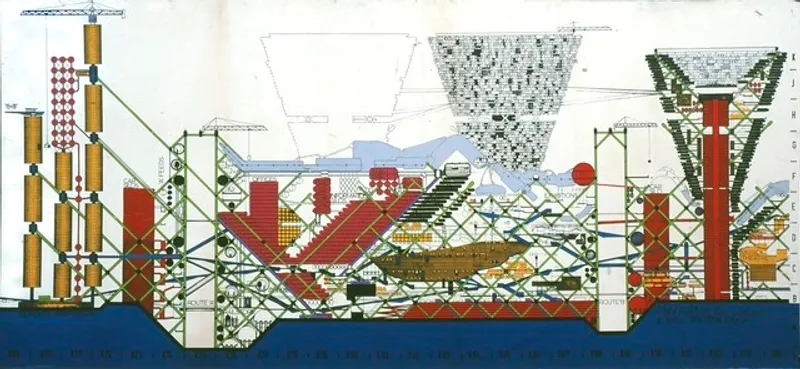
In the 15th century, urban design was developed in the search for the ideal during the Renaissance. Ideal cities are depicted in the form of stars. Visionary architects such as Étienne-Louis Boullée emerged in the 18th century. They designed symbolist, majestic buildings that were considered utopian to be built using large-scale geometric forms. At the beginning of the 20th century, the futuristic architecture movement emerged. They imagined modern worlds by using new materials and production techniques with technological developments. Antonio Sant'Elia, one of the idol architects, thought of Città Nuova as full of high skyscrapers and industrial elements. After the 1960s, pop culture studies emerged with neo-futurists' manifesto works. Archigram established. Within the framework of the possibilities that the developing technology can provide, a more intense and different lifestyle has been sought.
Anti-Utopias (Dystopias)
Dystopias have a more pessimistic outlook on the future. They believe that the future world will be a nightmarish place and that technology is dangerous. They criticize the great changes and chaos in the cities where anarchy prevails in human-urban relations. In dystopias, instead of personalization, uniformity, and placelessness, lack of identity can be emphasized. Science Fiction is a pioneer in producing dystopian products.

Science Fiction Cinema
The architectural structures and city images visualized in science fiction cinema, beyond being a superficial background, open the doors of a fictional world that provide the opportunity to criticize the present and reveal dreams and fears for the future. With this aspect, science fiction cinema offers people the most suitable ground for understanding the phenomenological history of the spatial and temporal transformation of the city. (Sobchack, 1997).
Besides architecture, Science fiction speculates about the future in cinema or literature. It shows us the effects of technology on space design with movies.
Creating space is a common issue in cinema and architecture so these 2 fields feed each other. Architects' drawings and paintings allow 3D animation thanks to cinema, that is, they can solve already thought-out science fiction ideas in a cinema or create new worlds and spaces that are thought to be realized in the future. But of course, producing space in the cinema is more flexible than architecture. There are references to future locations in some films, for example:
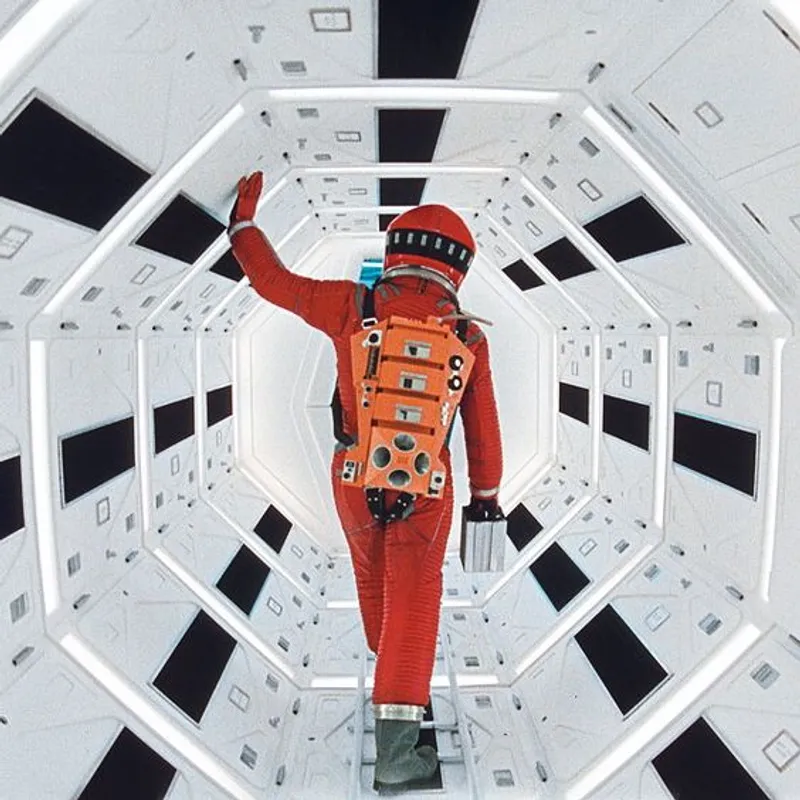
In the city depiction in the movie Metropolis directed by F. Lang, the bad effect of technology on human life is shown. It does not show that the past has been erased and replaced by new super technologies, but that the past and the future have collapsed on top of each other and the city has become ruined and devastated. The lack of identity of place is emphasized in the movie Playtime directed by J.Tati. Unrelatedness makes it difficult to understand where it is. The locations depicted in the movie Brazil, directed by T. Gilliam, take place in a nightmarish atmosphere. Reference is made to the excess of technology and gigantic structures stand out. Other movie examples: Alphaville- J.L. Godard, 2001 A Space Odyssey-Kubrick, Blade Runner- R. Scott, Delicatessen-M. Caro J. Jeunet, Inception-C. Nolan
Physical Representation of Utopias (Heterotopias)
Heterotopias, on the other hand, are the formation of original resistance efforts, different and opposing things in a space where social order is sought. They are places that exist in real space and that are also divided in time and space. Foucault distinguishes these two concepts through the metaphor of "mirror". The mirror is a utopia because it is a place without a place. A kind of shadow formed in a place where there is no mirror image, in an unreal space that opens virtually behind the surface; mirror utopia. But the mirror is also a heterotopia to the extent that it has the effect of a kind of return to the place. Neighborhoods that contain more than one time and place in a single real space such as museums, libraries, cemeteries, prisons, retirement homes, cinemas, theaters can be examples of heterotopia. ” (Foucault, 1997)
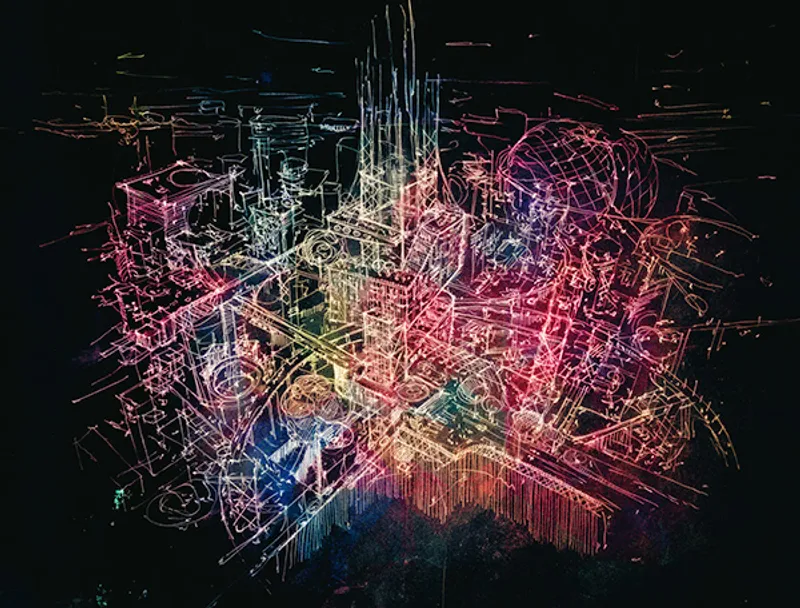
Three of these ways, utopias, cause collective spaces, dystopias cause collapse, and heterotopias cause physical spaces that act as other spaces alongside existing spaces, allowing for different expansions about the architecture of the future.



Popular Articles
Popular articles from the community


Hill & Cross Opera: Sculptural Opera House Architecture Shaped by Tallinn’s Landscape and Identity
Hill & Cross Opera reimagines opera house architecture in Tallinn through its sculptural hill, civic plaza, glass wave and a luminous cross.

The Musturak Paradise: Senior Living Architecture for a Connected Future in Temara, Morocco
The Musturak Paradise reimagines senior living architecture in Temara via private homes, social spaces, culture, community, and shared care.

Co-life: Sustainable Architecture for Age-Friendly Community Living
Co-life reimagines sustainable architecture for seniors through courtyards, rammed earth, shared gardens, and spaces designed for belonging.

Lunar Spiral: Space Architecture Shaped by the Mathematics of the Universe
Lunar Spiral reimagines space architecture through Fibonacci geometry, lunar regolith, levitating habitats, and self-sustaining Moon living.

Similar Reads
You might also enjoy these articles

Bao Huynh Watercolor Atelier: A Serene Art Retreat in Hội An
Bao Huynh Watercolor Atelier in Hội An blends multifunctional art spaces, sustainable design, local materials, and family-friendly living in a serene environment.

Atelier Macri Concept Store Interior Design by CASE-REAL
Atelier Macri store features a "ko" counter, walnut wood details, cork displays, blending retail, gallery, and seamless customer experiences.

Manuel Vargas Izquierdo Stadium and High-Performance Sports Center: Architectural Excellence in Jalpa de Méndez
The Manuel Vargas Izquierdo Stadium blends sustainable design, inclusive sports facilities, and cultural-inspired architecture, revitalizing Jalpa de Méndez’s public spaces.

KAKR Buluh Awar Hall: Revitalizing Community and Ecology Through Bamboo Architecture
Community built bamboo hall revitalizes Buluh Awar village, empowering youth, restoring ecology, celebrating vernacular craftsmanship through sustainable architecture and culture.



Comments (0)
Please login or sign up to add comments
No comments yet. Be the first to comment!