
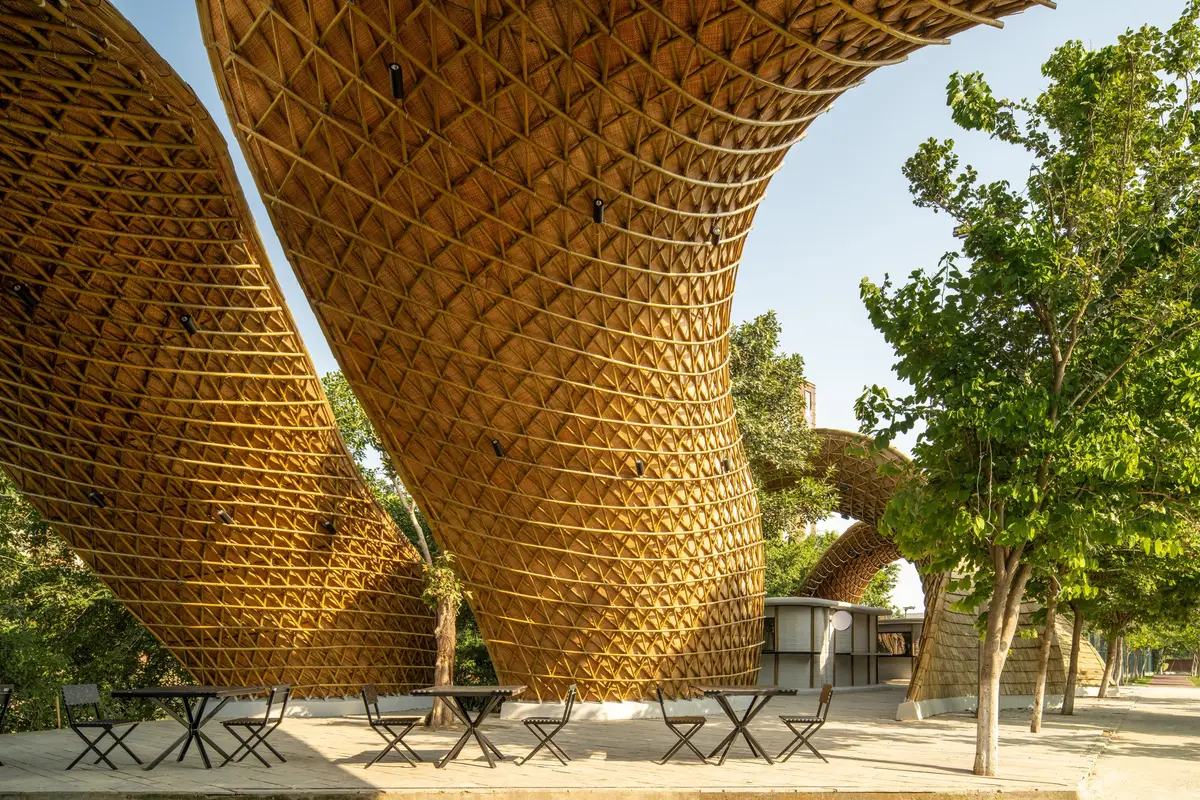
The Hungry Caterpillar By Lyth Design
A playful, caterpillar-inspired food street blending sustainable design, 3D-printed kitchens, bamboo structures, and recycled materials into an immersive public dining experience.


The Hungry Caterpillar, designed by Lyth Design, reimagines the idea of a food street as an immersive, sustainable public space, one that goes far beyond the act of eating. Located in Rai, India, this 650 m² project blends architecture, ecology, and storytelling to create a vibrant environment where children, families, and communities can gather, explore, and linger.
At its core, the project responds to an urgent contemporary need: sustainable living, not only as a design philosophy but as a way of life. By integrating eco-friendly materials, low-waste construction techniques, and nature-inspired structures, the project demonstrates how architecture can reduce environmental impact while enhancing human experience.

Concept: A Cocoon Within the Trees
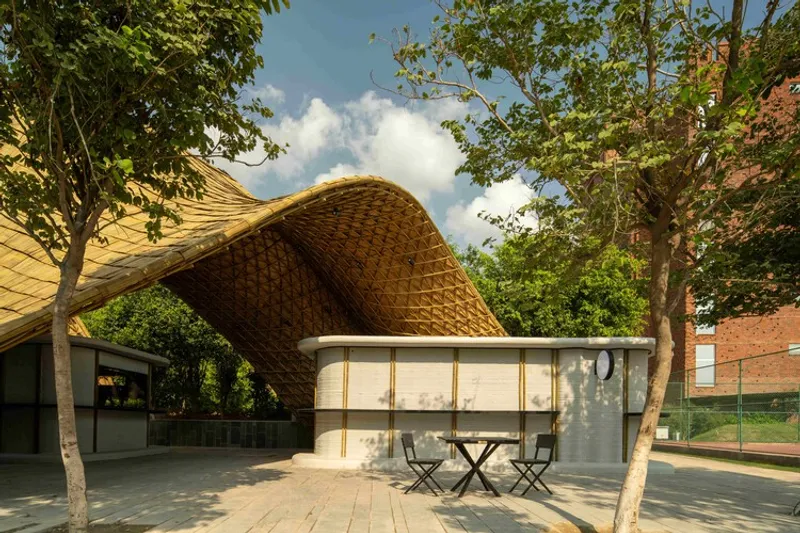
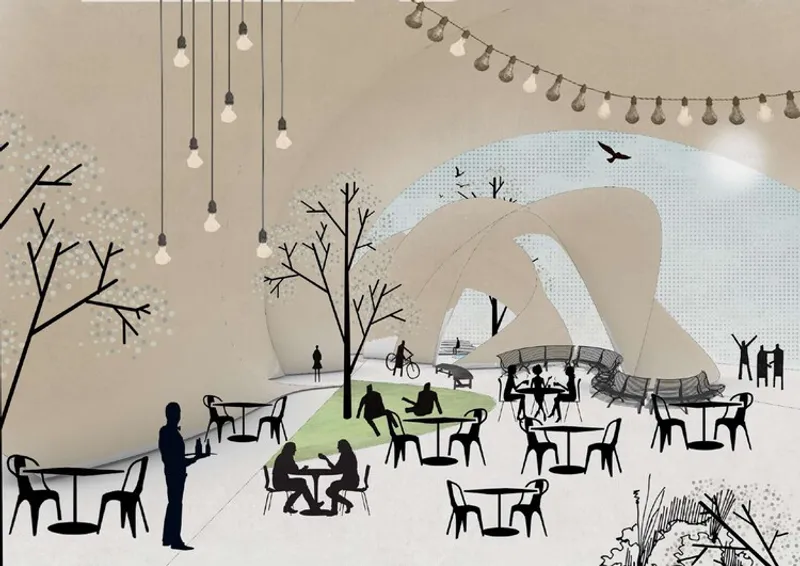
The initial brief was simple yet ambitious, to design a food street with character, one that children would enjoy as much as adults. A single visit to the site sparked the defining vision: a caterpillar nestled within lush tree canopies, feeding peacefully, protected, and at home. This metaphor of growth, nourishment, and transformation became the guiding narrative of the project.
Rather than relying solely on visual appeal, the design evolved into a responsible and conscious architectural response, shaped by collaboration, innovation, and belief in sustainable futures.

3D-Printed Kitchens: Technology Meets Sustainability
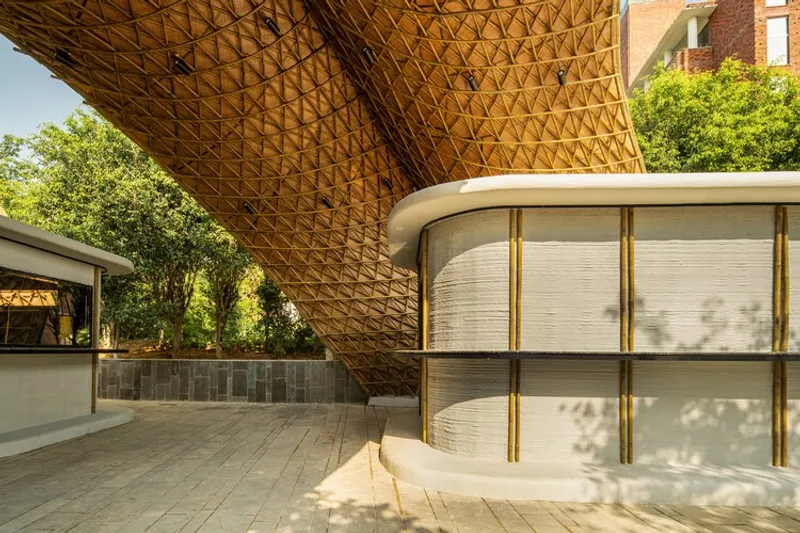
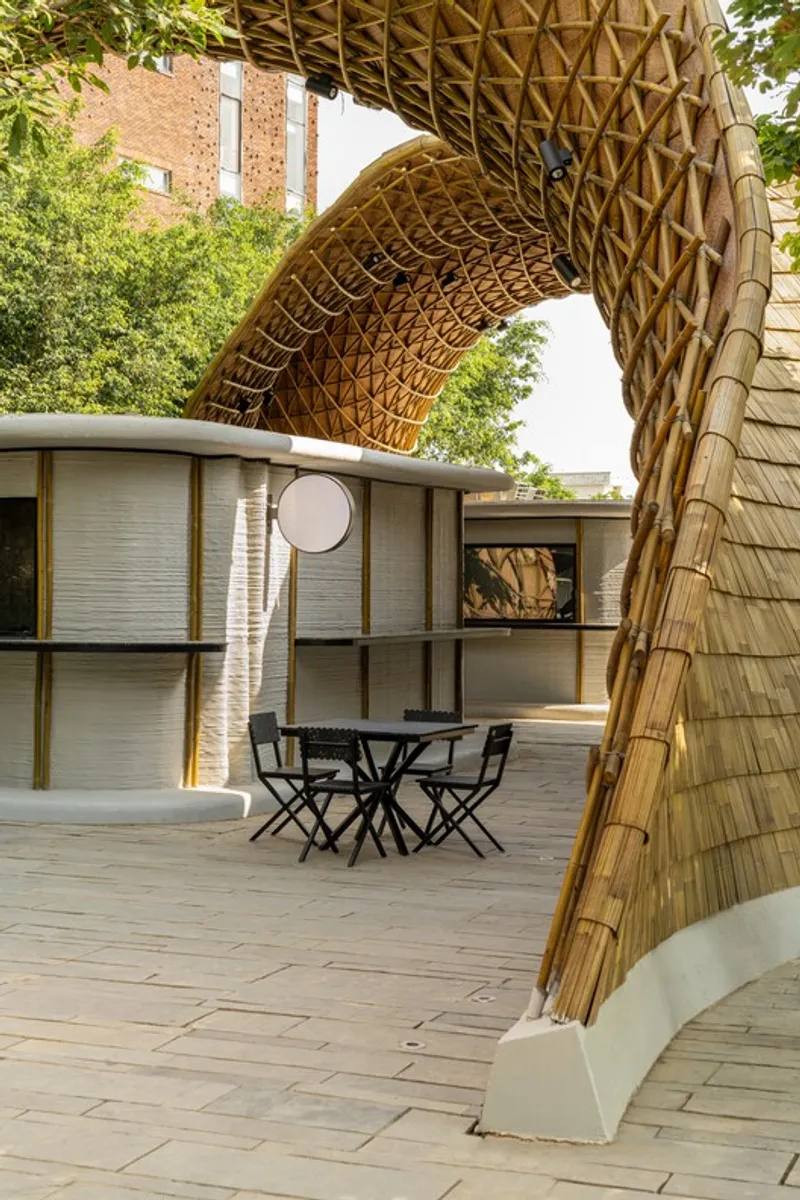
Inspired by the flexibility of food trucks, the kitchens are designed as modular 3D-printed concrete units, fabricated by Micob Pvt. Ltd., Ahmedabad, and assembled on site. The use of 3D printing technology ensures precision and efficiency through an additive process that uses only the required material, drastically reducing construction waste.
This automated method shortens construction timelines, lowers energy consumption, and minimizes the project’s overall carbon footprint. Additionally, the cavity between the printed concrete walls provides thermal insulation, reducing heat transfer and improving energy efficiency, an often overlooked but critical aspect of sustainable design.
Furniture from Recycled Plastic Waste
The furniture, designed and manufactured by Placyle, is crafted entirely from recycled plastic waste. Discarded plastics are transformed into durable, weather-resistant seating, embedding sustainability into everyday use. This conscious material choice helps reduce landfill accumulation and ocean pollution while proving that recycled materials can be both functional and aesthetically engaging.
Bamboo Cocoon: Nature-Inspired Structure
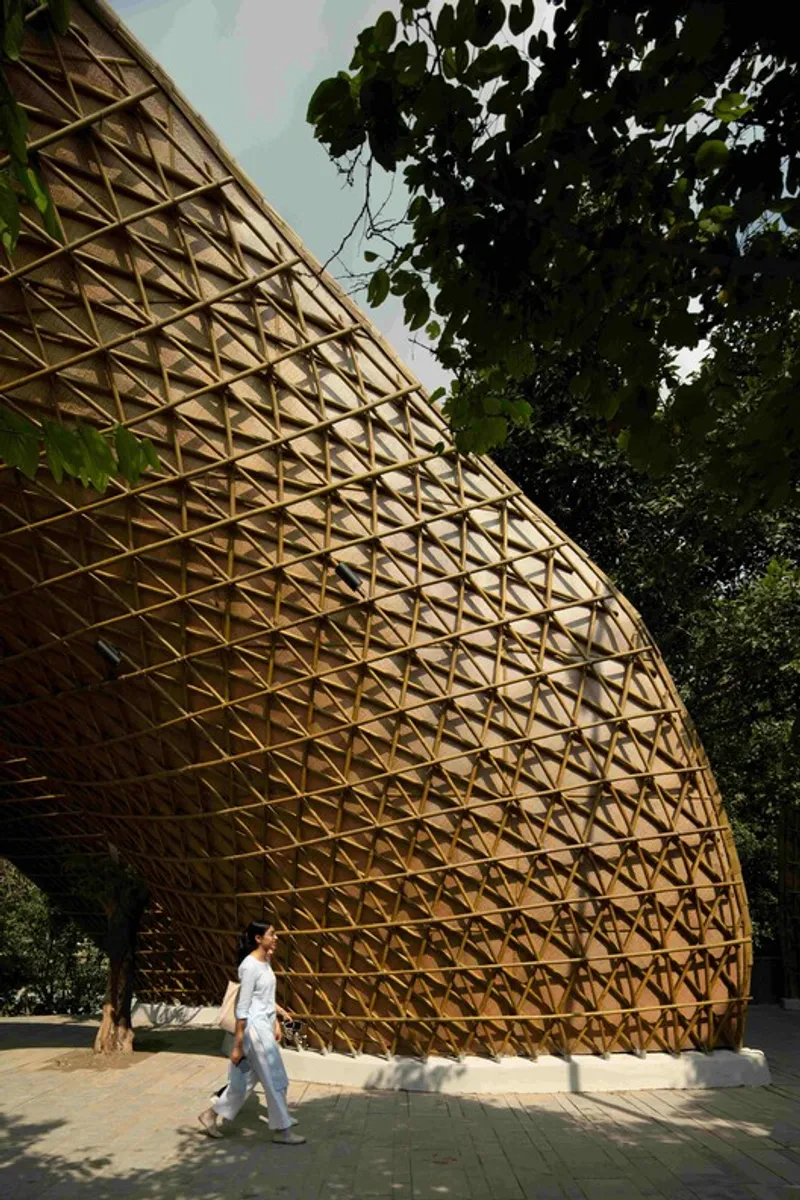
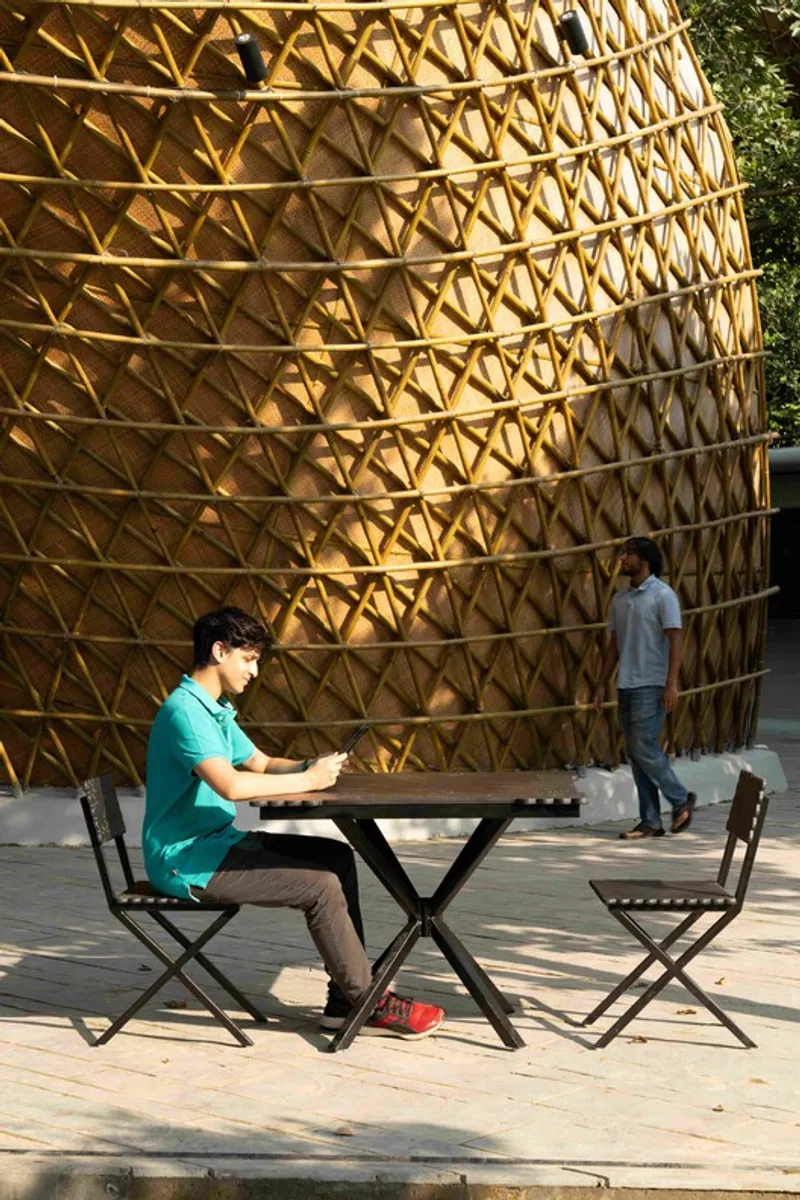
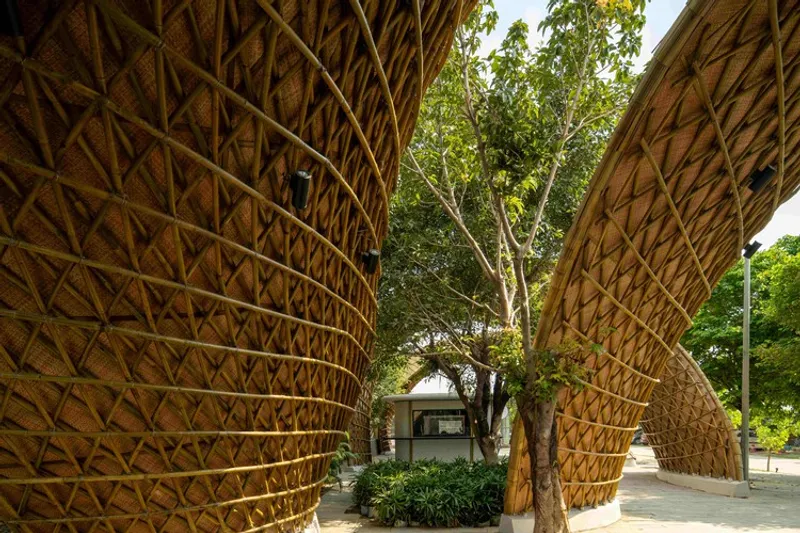
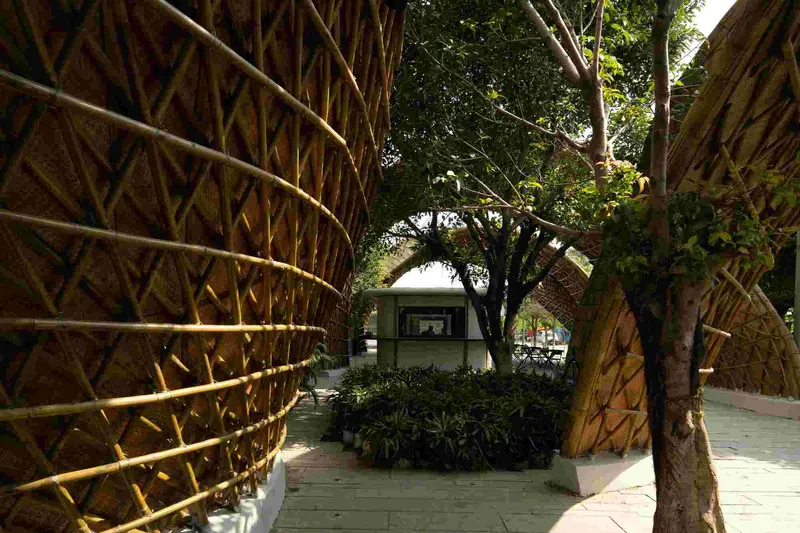
The most iconic feature of The Hungry Caterpillar is its bamboo gridshell shading structure, which wraps the food street like a cocoon. Drawing inspiration from the geometry of leaves: lightweight, efficient, and adaptive, the structure curves in two directions to achieve strength with minimal material.
The longest gridshell spans 19 metres, constructed from four layers of slender bamboo sections (30 to 50 mm diameter), each oriented at 45 degrees and topped with a crushed bamboo mat. This configuration allows complex double curvature while maintaining structural integrity and a low environmental impact.
The structural design was led by Atelier One, London, with architectural detailing by Jurian Sustainability, and fabrication by Jans Bamboo, showcasing a seamless collaboration between global expertise and natural materials.
A Living Example of Thoughtful Architecture
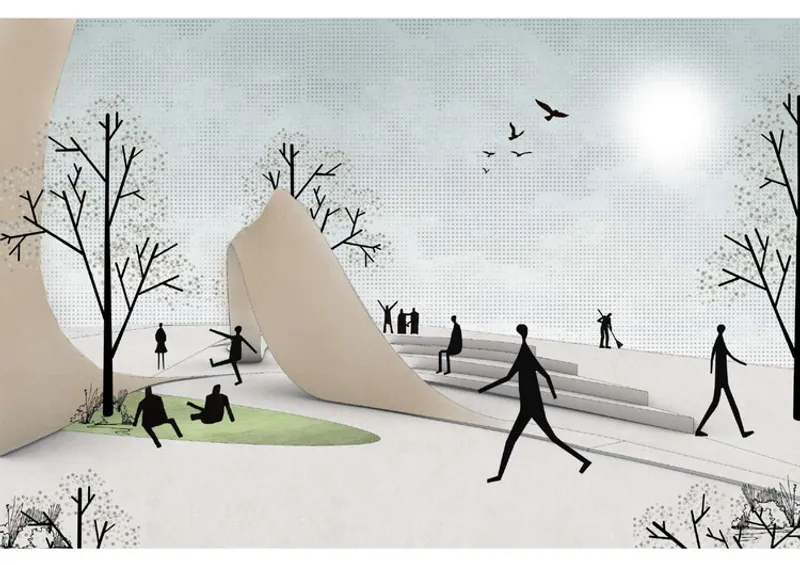
Designed by Architect Apoorva Shroff of Lyth Design, The Hungry Caterpillar is more than a restaurant or food street. It is a place of curiosity, conversation, and reflection, where technology and tradition coexist, and where architecture actively contributes to environmental stewardship.
The caterpillar is not just a metaphor here; it is a living demonstration of how thoughtful, sustainable design can nurture both people and the planet. By harmonizing structure, material, and narrative, the project stands as a compelling model for future public spaces in India and beyond.
All the photographs are works of Avesh Gaur Sohaib Ilyas


Popular Articles
Popular articles from the community


Temporary Home for Dogs: A Reversed Zoo Rethinks Animal Shelter Architecture
In Bucharest, a sinuous corridor and freed landscape flip the logic of containment, designing a shelter that works to make itself unnecessary.

Opera on the Sea: Driftwood Logic Shapes a Timber Opera House on Estonia's Coast
Trevor Orgill's opera house translates the entangled drift of floating timber into a civic building where wood, water, and music converge.

The Amber Palace Opera: A Geological Fiction Surfaces on Tallinn's Baltic Waterfront
Pierre Brillard reimagines a Baltic legend as a public landscape, opera house, and waterfront promenade rooted in Tallinn's coastal identity.

Extended Shell: Retrofitting Kolkata's Balconies as Living Urban Thresholds
A modular retrofit system recovers the social and environmental intelligence of Kolkata's historic verandas for contemporary Park Street residents.

Similar Reads
You might also enjoy these articles


Hodi-Mandai Geram
Project Function: Preservation and revitalization of the Intangible heritage and socio-spatial identity of the Hodi by Housing, Cultural Memory Center, Sacred Grove, landscape, local tourism economy


Olio Towers: A Mid-Rise for Performers That Fuses Housing, Rehearsal, and Stage
Located blocks from Houston's Theater District, this modular tower stacks living units around a central performance atrium.

Oasis: Modular Green Housing Carved into Dhaka's Urban Fabric
A shortlisted Plugin Housing entry reclaims unauthorized settlements in Dhaka with stepped concrete volumes, green roofs, and ventilation-driven design.

Black Hole: A Floating Megastructure for the Post-Physical Era
Emiliano Mazzarotto envisions a spherical, self-scaling arena where e-sports, digital hotels, and holographic stadiums replace traditional public space.

Explore Food Learning Hub Competitions
Discover active competitions in this discipline

Challenge to reimagine the Iron Throne

Photograph architecture without architects

Illustrate the lost glory of Angkor Wat - Render Challenge

Design challenge to reuse E-waste
Comments (0)
Please login or sign up to add comments
No comments yet. Be the first to comment!