
The Tale of Marine Life: A Sea Aquarium Complex – A Sustainable Future for Bangladesh's Sonadia Island
Where Marine Wonders Meet Sustainable Design: Preserving Ocean Life for Future Generations


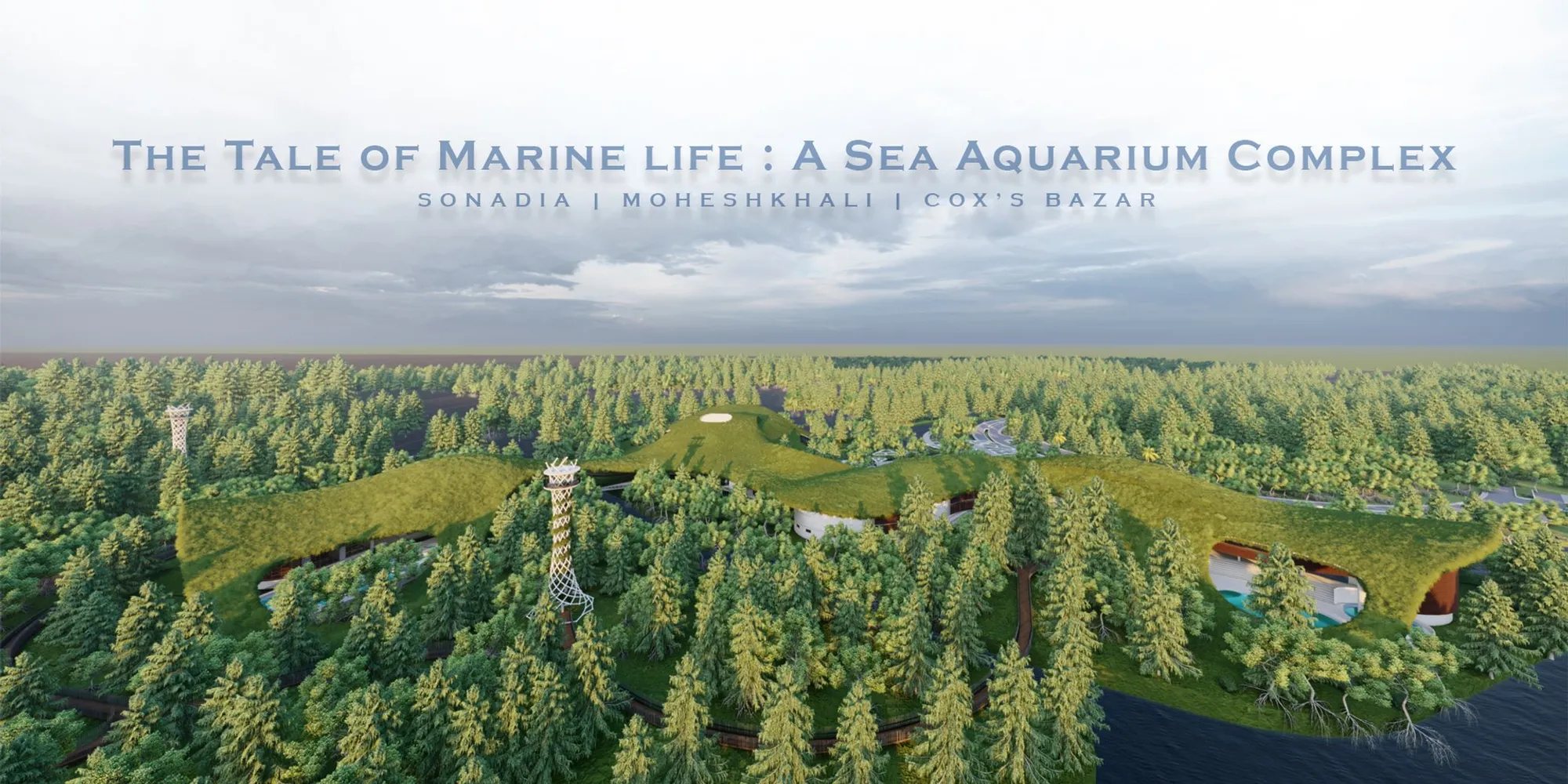
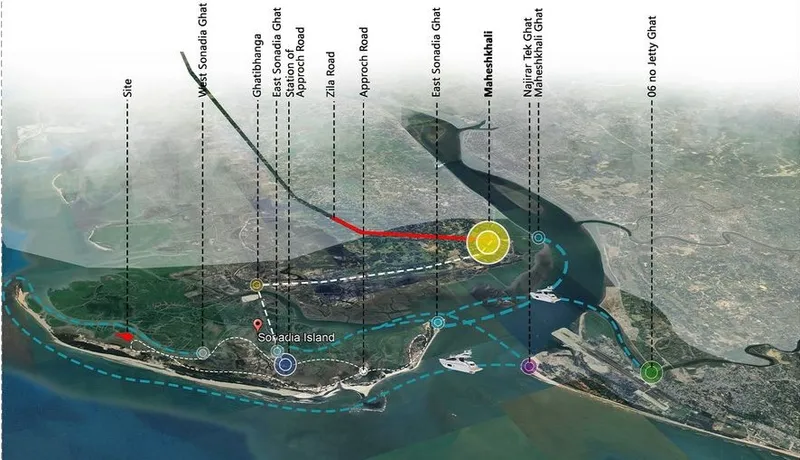
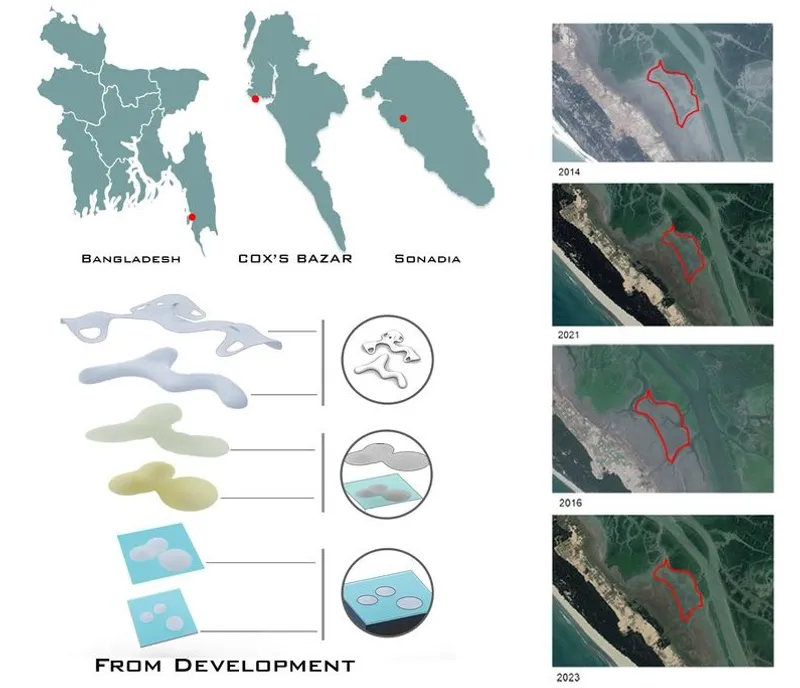
The project "The Tale of Marine Life: A Sea Aquarium Complex," conceptualized by Faisal Ahamed, is an architectural marvel designed to blend marine education with sustainability. Nestled in the ecologically sensitive Sonadia Island near Cox’s Bazar, Bangladesh, this sea aquarium complex aims to conserve marine biodiversity while promoting eco-tourism. The development of this project under the Bangladesh Economic Zones Authority (BEZA) is part of a broader initiative to transform Sonadia into an eco-tourism hub without compromising its rich biodiversity and fragile ecosystem. This project has garnered significant attention due to its eco-friendly approach, winning the People's Choice Award at the UnIATA 2024 design competition.
Spanning across 20.3 acres, this complex integrates a live marine aquarium, research facilities, public exhibitions, and conservation zones. The project is designed with a strong focus on environmental sustainability, highlighting marine conservation, research, and education. The sea aquarium complex will house saltwater organisms, from fish and invertebrates to larger marine mammals, within a thoughtfully designed architectural structure that replicates marine ecosystems found in the surrounding ocean.
Sonadia Island has long been a popular destination for tourists, offering pristine natural beauty and unique eco-tourism opportunities. However, the need for sustainable development in such a biodiverse environment is critical. The project’s core idea is to harmonize the architectural design with the existing marine and coastal environment, minimizing human impact while maximizing educational and recreational potential.
Design Philosophy: Harmonizing with Nature
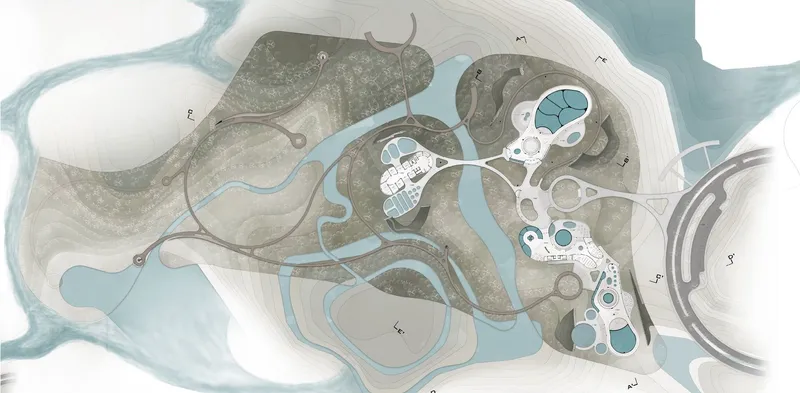
At the heart of the design is a philosophy of minimal disruption to the island's ecosystem. Unlike conventional tourism projects, which often flatten and artificially raise land, this sea aquarium complex preserves the natural geography of Sonadia Island. BEZA had initially proposed raising the site to 18 feet above sea level, a plan that would have destroyed the local ecosystem. Instead, Ahamed's design proposal focuses on enhancing sustainability, embracing the natural contours of the island, and promoting biodiversity.
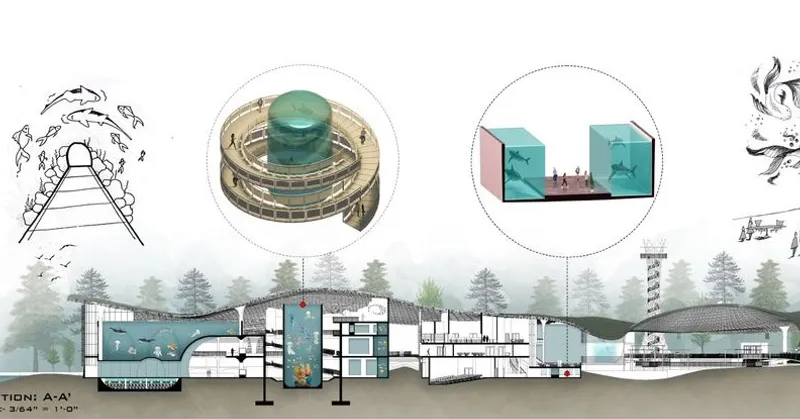
This approach is reflected in several sustainable design features, such as the green roof or "Super Roof," which incorporates a cocopeat soil layer to grow grass and regulate temperature naturally. The green roof not only merges the built environment with the surrounding landscape but also serves as a wildlife observation deck for tourists. From here, visitors can observe local birds and marine life from above, interacting with the environment in a minimally invasive way.
Additionally, aquaponic systems and rainwater harvesting techniques are integrated into the project’s water management system, reinforcing the project’s commitment to resource conservation. These systems not only support the landscape but also contribute to water conservation efforts, reducing reliance on external water sources.
The Sea Aquarium Experience: A Journey through Marine Life
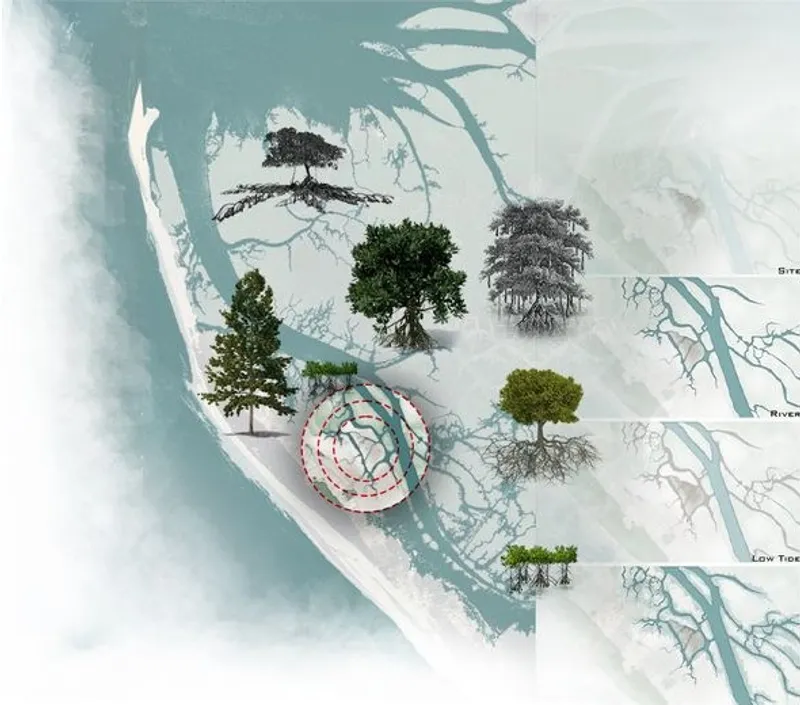
The sea aquarium complex is divided into three distinct areas: The Public Exhibition, The Semi-Public Exhibition, and The Research Institute, each designed to offer a unique and immersive experience.
Public Exhibition: The journey begins as visitors enter the public exhibition space, which showcases a wide array of marine life through diverse aquariums. The aquariums are carefully designed to display various species of coral, fish, sharks, and dolphins, highlighting their importance in marine ecosystems. Each exhibit is intended to tell a story, emphasizing the distinctiveness of these marine creatures while educating visitors about their roles in the ocean’s ecological balance.
A series of 3D displays, an auditorium, a library, and a 4D theater are also part of this immersive experience, providing both recreational and educational opportunities. Visitors can explore the intricate relationships between marine species and the environment, with the goal of promoting marine conservation and environmental awareness.
Beyond the educational aspect, visitors can enjoy leisure services such as a café and a souvenir shop, where they can purchase eco-friendly products that support the local community.
Semi-Public Exhibition: The semi-public area is a more specialized section, offering access to rare exhibits of preserved marine fossils and tanks dedicated to the conservation of endangered species. This section is primarily intended for researchers and eco-tourists interested in marine biology and environmental science. The semi-public exhibition underscores the project's commitment to marine research and preservation, providing resources for both tourists and scholars to deepen their understanding of marine ecosystems.
Research Institute: The research facility is a secluded space designed to support the work of marine biologists, ecologists, and conservationists. With room for around 20 researchers, the facility offers state-of-the-art resources for studying marine life and the island’s unique biodiversity. The aim is to foster ongoing research efforts that will not only contribute to global marine conservation but also enhance local strategies for preserving the island’s natural habitats.
Sustainability at the Forefront: Green Architecture and Eco-Friendly Materials
Ahamed’s project embraces the principles of green architecture, using locally sourced materials such as bamboo and recyclable wood to construct the trails that wind through the complex. These trails are designed to reduce the human footprint, allowing visitors to explore the site without causing significant disruption to the surrounding environment.
The use of environmentally safe materials extends to the prohibition of plastics, ensuring that the island remains free of hazardous waste that could harm local wildlife. Moreover, the project’s lighting system is designed with the island’s avian population in mind – all lights are turned off at dusk to allow the local birds to rest undisturbed.
The project also places emphasis on the integration of natural elements into the architectural design. For instance, the use of coco peat in the green roof allows for temperature control and the cultivation of local flora, while the spec truss superstructure ensures that the building remains resilient to the island’s coastal climate.
Tourism and Conservation: A Delicate Balance
The "Tale of Marine Life" complex is not just a tourist destination; it is a center for marine advocacy, striving to educate the public about the importance of conservation while offering recreational activities. The project supports eco-tourism by providing visitors with a unique opportunity to engage with nature without causing harm to the environment.
By maintaining a delicate balance between tourism and conservation, the project aims to preserve Sonadia Island’s rich biodiversity while supporting local economies through responsible tourism. The design also aligns with Bangladesh’s broader goals of promoting sustainable development and preserving its natural heritage.




Popular Articles
Popular articles from the community


The Ocean Hive: Sustainable Architecture for a Self-Sufficient Civilization at Sea
The Ocean Hive imagines sustainable architecture at sea, where modular habitats, algae, wave power and ocean waste sustain a growing colony.

Conexión: Biophilic Design Reimagines High-Rise Living in Hong Kong
Conexión reimagines high-rise living in Hong Kong through biophilic design, green facades, shared spaces, daylight, water and nature within.

Co-Life: Senior Housing Design That Reconnects Older Adults With the City
Co-Life reimagines senior housing design through healing gardens, shared streets, workshops, and a sustainable community across generations.

Riyadh For All: Intergenerational Urban Design for Active Aging in Rabat
Riyadh For All reimagines urban design in Rabat with intergenerational co-living, adaptive courtyards, and Moroccan cultural exchange today.


Similar Reads
You might also enjoy these articles

Day and Night Park: A Time-Based Urban Newsstand in Beijing
A temporary urban newsstand in Beijing blending travel, light, and reading through poetic colors, compact form, and community-focused design.

Modernist Patio Renovation in El Masnou, Barcelona by Oliver Segura Arquitectura + Cebrià Arquitectura
Modernist patio renovation blending tradition and innovation with a movable pool, leveled floors, and Catalan materials in El Masnou.

Alto Residencial Coop: Cooperative Housing Development in Santiago de Compostela by Carbajo Barrios Arquitectos
A linear cooperative housing complex blending white volumes and perforated metal façades, enhancing community living, natural light, privacy, and urban integration.

Vil Genis School by BPA ARCHITECTURE – Massy, France
Vil Genis School in Massy, France, features sustainable design, south-facing classrooms, community integration, accessible spaces, and modern educational architecture.

Explore Ocean Architecture Competitions
Discover active competitions in this discipline



Challenge to design public laboratory


Design challenge to reuse E-waste
Comments (0)
Please login or sign up to add comments
No comments yet. Be the first to comment!