
Tierra Tinta Pavilion by CoA Arquitectura: A Rustic Ode to Vineyards and Architecture
Tierra Tinta Pavilion blends steel, wood, and granite in a modular design that harmonizes with Mexico’s vineyard landscape and climate.


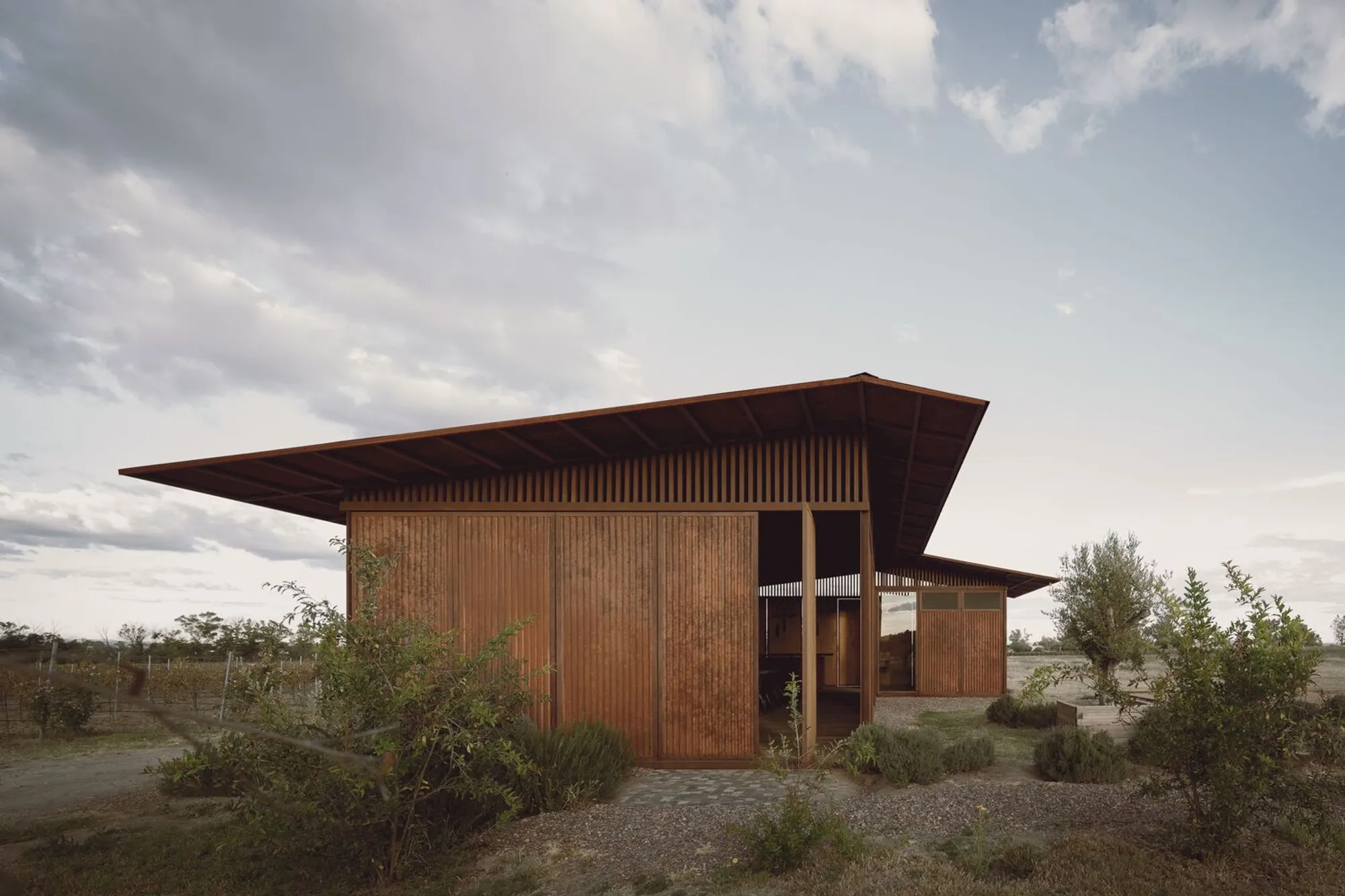
In the heart of Aguascalientes, Mexico, the Tierra Tinta Pavilion by CoA Arquitectura stands as a refined yet rustic architectural gesture—a space that harmoniously merges built form with the surrounding vineyards. Completed in 2021 and spanning 160 square meters, this architectural intervention is part of a larger residential development designed to immerse its users in the essence of the winemaking experience.
A Pavilion Within the Vineyards
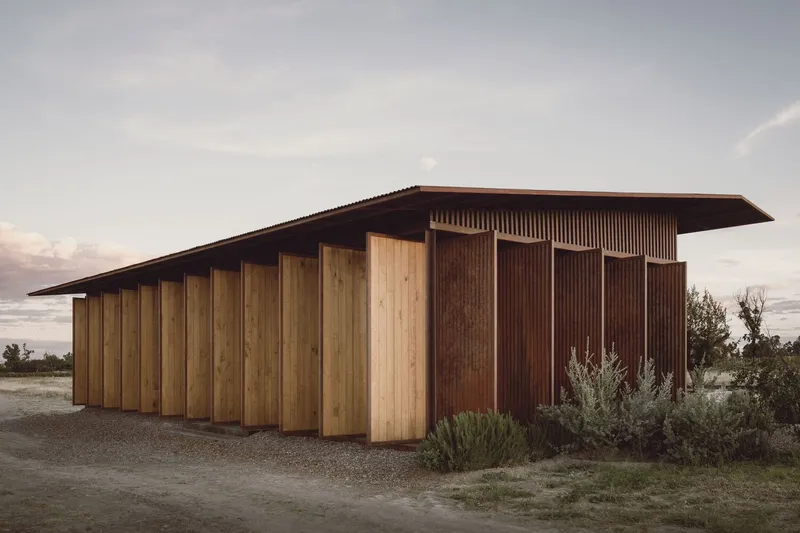
The Tierra Tinta residential development embraces a unique architectural vision that intertwines everyday life with the natural rhythms of viticulture. Positioned among the vines and beneath the gaze of Cerro del Muerto, the pavilion was conceived as a multifunctional promotional space for events such as pre-sales, wine tastings, and community gatherings. It also serves as a prototype for the material and structural language envisioned throughout the broader development.
Designing for Simplicity, Context, and Budget
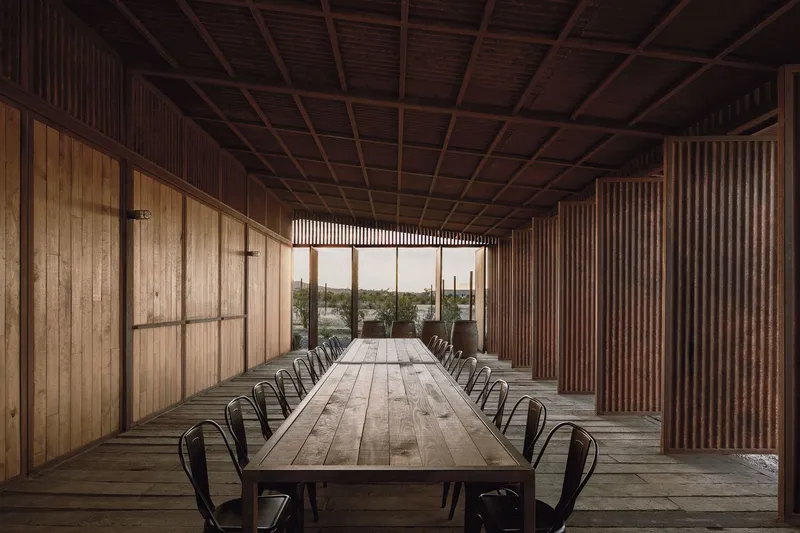
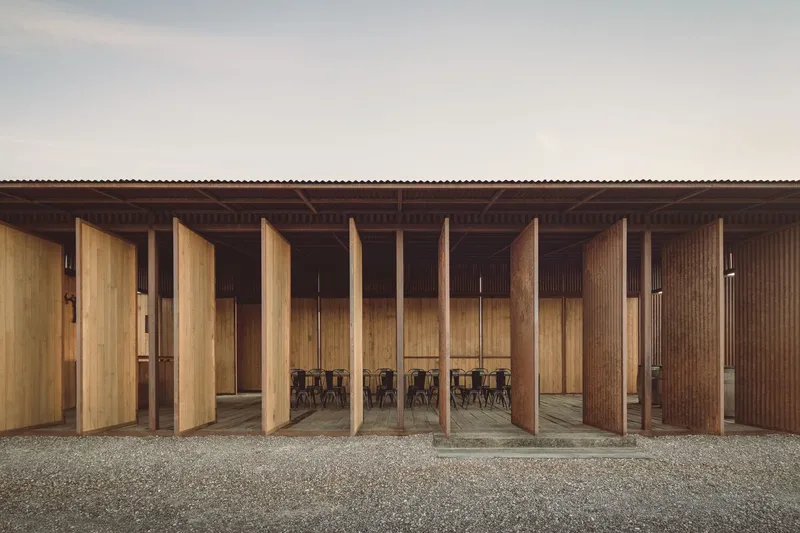
CoA Arquitectura was tasked with creating a pavilion that could be constructed rapidly and economically, without compromising on architectural expression or contextual sensitivity. The result is a thoughtfully designed open structure that frames panoramic views to the north and west, while offering protective enclosures to the south and east, shielding the interior from harsh sunlight and integrating essential functions like a service bar and restroom core.
Structural Grid and Modular Design
The pavilion's construction relies on a rational steel structural grid, with angled supports at the corners and squared steel tubing forming the base, vertical columns, and roof headers. This robust skeleton supports a lightweight corrugated steel roof, a material chosen for its affordability, ease of assembly, and rural-industrial aesthetic.
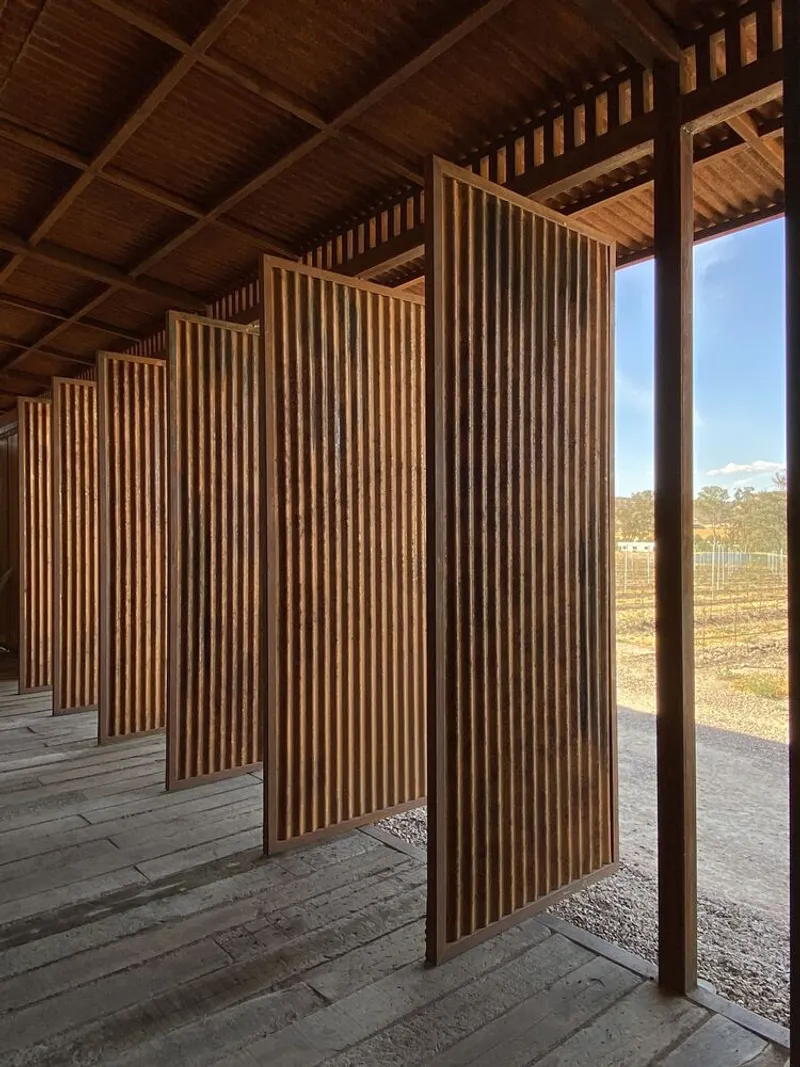
To close off parts of the structure without compromising natural ventilation or views, CoA Arquitectura developed a series of modular pivoting panels. Each module features a steel tube frame, clad on one side with corrugated steel and on the other with natural pine wood planks. Depending on their function, some panels are fixed while others rotate to allow sunlight modulation, cross-ventilation, and controlled privacy.
Honest Material Palette
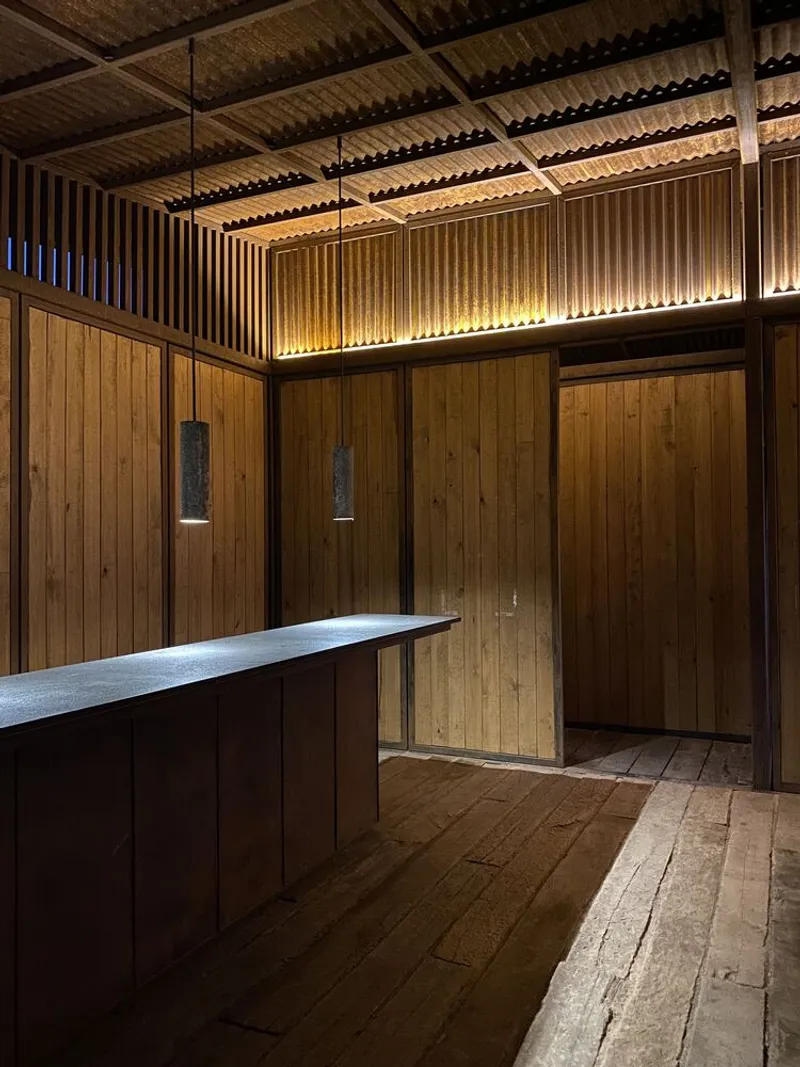
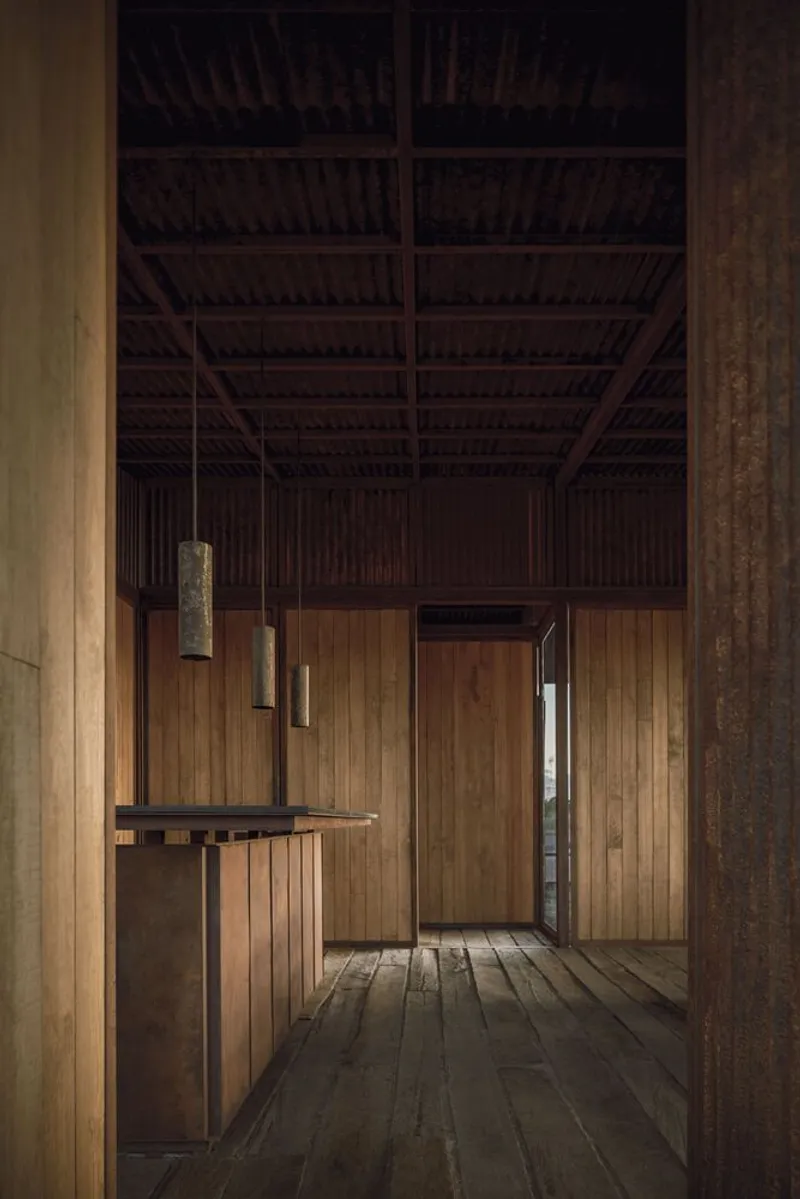
Material choices for the pavilion reflect a desire for durability, economy, and an earthy, grounded presence. The palette is reduced to just a few tactile and expressive materials:
- Rusty steel, which evokes a sense of age and organic patina.
- Inked pine wood, offering warmth and visual contrast against the metal.
- Dark gray granite, used for the service bar and sink, adding a touch of permanence and elegance.
Together, these materials echo the raw beauty of the Mexican landscape while providing comfort and functionality for users.

Integration with the Landscape
Perhaps the most striking quality of the Tierra Tinta Pavilion is its seamless integration with the vineyard landscape. By blurring the boundaries between inside and out, and offering expansive views of the grapevines and distant hills, the pavilion embodies the lifestyle and philosophy that the larger development seeks to promote: a deep connection to land, light, and time.
More than just a promotional space, the Tierra Tinta Pavilion exemplifies contextual architecture rooted in regional identity, material honesty, and environmental awareness. CoA Arquitectura has created a structure that feels both temporary and timeless—a quiet tribute to the culture of wine, local craftsmanship, and the enduring power of modest design.
Project Details Project Name: Tierra Tinta Pavilion Architects: CoA Arquitectura Location: Aguascalientes, Mexico Area: 160 m² Year Completed: 2021 Photography: César Béjar Studio




Popular Articles
Popular articles from the community


AL-JANNAH: Sustainable Architecture and Permaculture for Afghan Widows
AL-JANNAH uses sustainable architecture and permaculture to create resilient oasis of housing, learning, work and renewal for Afghan widows.

Co-life: Sustainable Architecture for Age-Friendly Community Living
Co-life reimagines sustainable architecture for seniors through courtyards, rammed earth, shared gardens, and spaces designed for belonging.
EW PARK: Sustainable Architecture Reimagines the Future of Urban Parking
EW PARK reimagines city parking as a modular wooden tower combining automation, solar energy, electric mobility, and adaptable urban design.

Conexión: Biophilic Design Reimagines High-Rise Living in Hong Kong
Conexión reimagines high-rise living in Hong Kong through biophilic design, green facades, shared spaces, daylight, water and nature within.


Similar Reads
You might also enjoy these articles


Hodi-Mandai Geram
Project Function: Preservation and revitalization of the Intangible heritage and socio-spatial identity of the Hodi by Housing, Cultural Memory Center, Sacred Grove, landscape, local tourism economy


Olio Towers: A Mid-Rise for Performers That Fuses Housing, Rehearsal, and Stage
Located blocks from Houston's Theater District, this modular tower stacks living units around a central performance atrium.

Oasis: Modular Green Housing Carved into Dhaka's Urban Fabric
A shortlisted Plugin Housing entry reclaims unauthorized settlements in Dhaka with stepped concrete volumes, green roofs, and ventilation-driven design.

Black Hole: A Floating Megastructure for the Post-Physical Era
Emiliano Mazzarotto envisions a spherical, self-scaling arena where e-sports, digital hotels, and holographic stadiums replace traditional public space.


Explore Wineyard Competitions
Discover active competitions in this discipline



Challenge to reimagine the Iron Throne


Photograph architecture without architects


Illustrate the lost glory of Angkor Wat - Render Challenge


Design challenge to reuse E-waste
Comments (0)
Please login or sign up to add comments
No comments yet. Be the first to comment!