

Traditional Chinese Architecture: Jiangnan House Changyuan in Suzhou by Atelier Deshaus
An exploration of Jiangnan House Changyuan by Atelier Deshaus, highlighting its preservation and adaptive reuse of traditional Chinese architecture.


Jiangnan House Changyuan in Suzhou, designed by Atelier Deshaus, is a remarkable example of traditional Chinese architecture that has been carefully preserved and adaptively reused. This 833 m² project, completed in 2023, represents an active endeavor by the Suzhou Famous City Protection Group and Jiangnan House to maintain and enhance the existing garden heritage, while providing a contemporary and functional space for visitors.
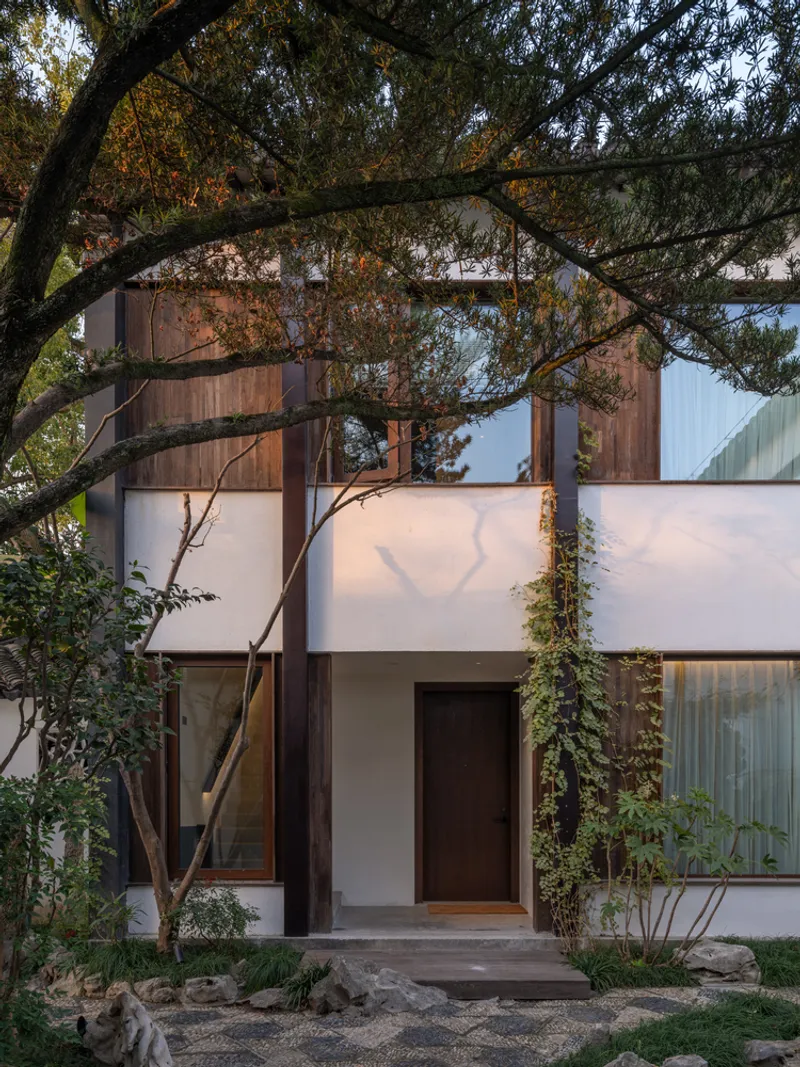
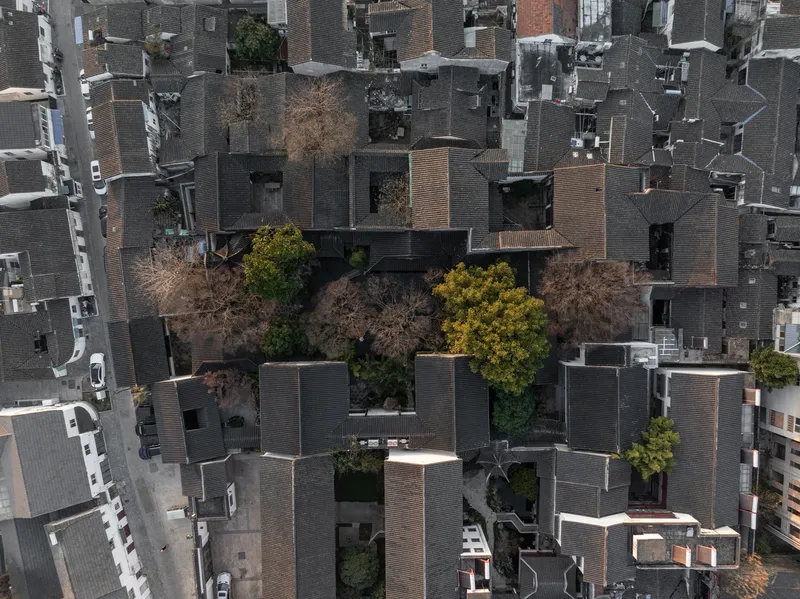

Project Overview
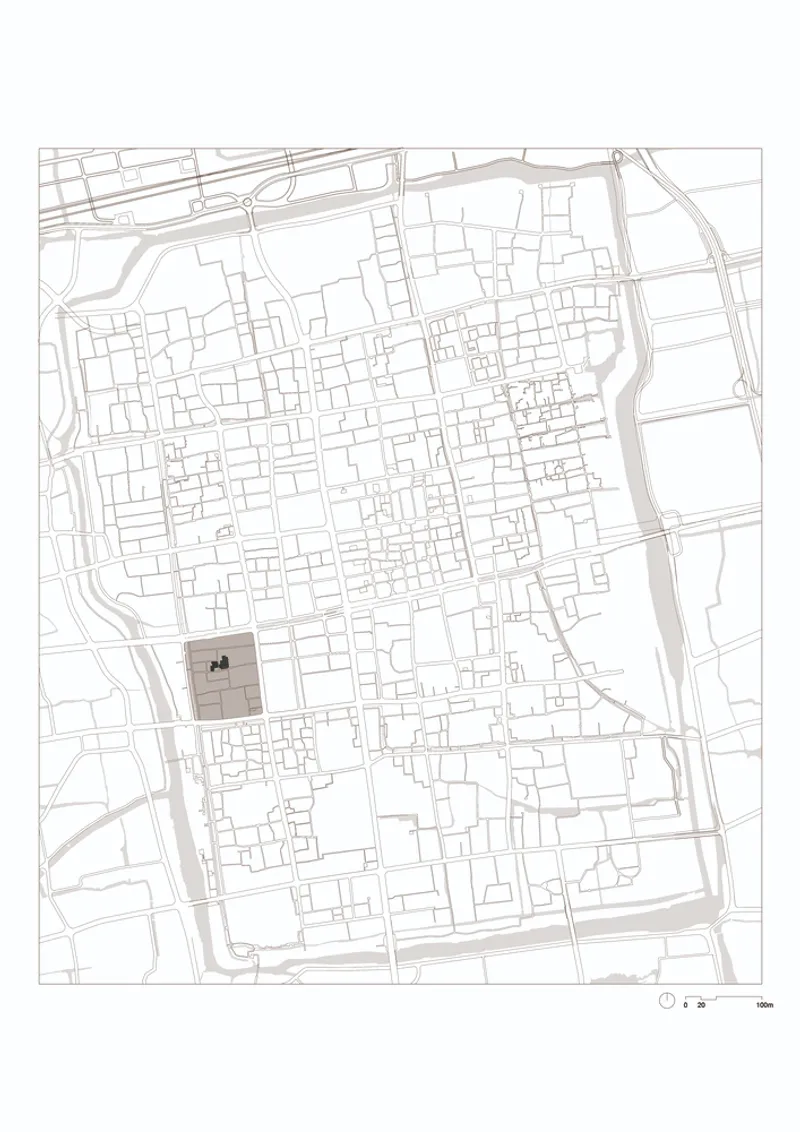
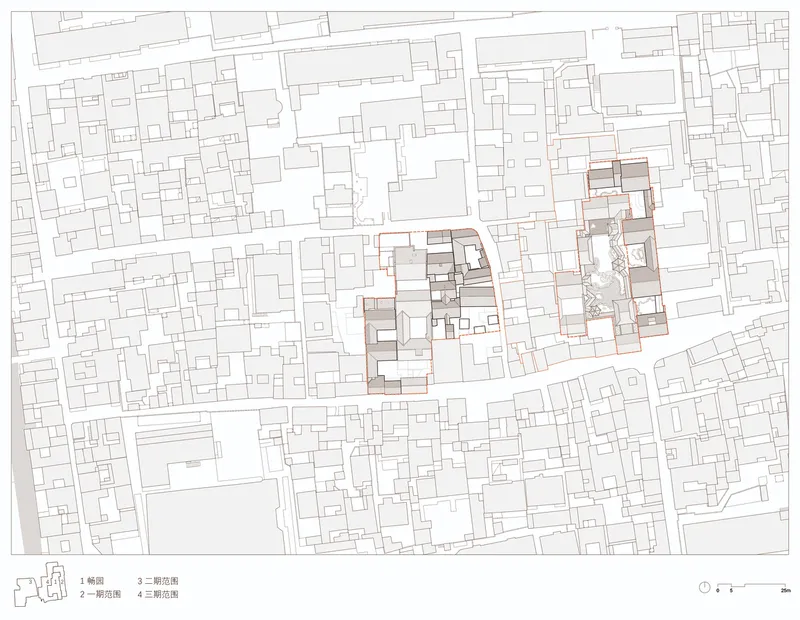
Jiangnan House Changyuan is a classical garden built during the late Qing Dynasty, located at 22 Miaotang Street, west of Suzhou City. The garden, spanning around one Chinese Mu (0.16 acres), features a delicate spatial layout and an exquisite landscape. Over time, the garden experienced destruction and restoration but remained closed to the public and showed signs of decay. The renovation by Atelier Deshaus aimed to preserve the historical integrity while adapting the space for modern use.


Architectural Concept
Preservation and Adaptive Reuse
The project emphasizes the importance of preserving traditional Chinese architecture and the historical context of Changyuan. The design had to adhere to strict protection restrictions, especially regarding the gables and courtyards of Changyuan. The existing buildings, which included both traditional wood structures and modern brick-concrete structures, were carefully renovated to maintain their historical essence while incorporating modern functionality.

Integration with Nature
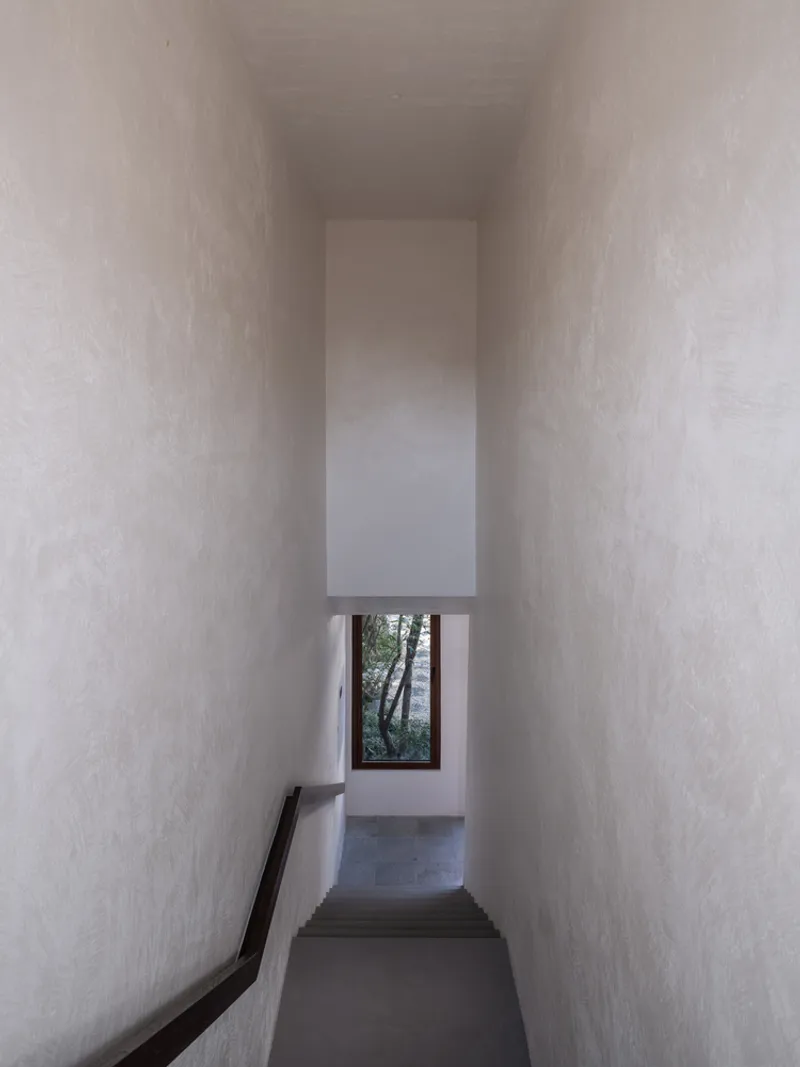
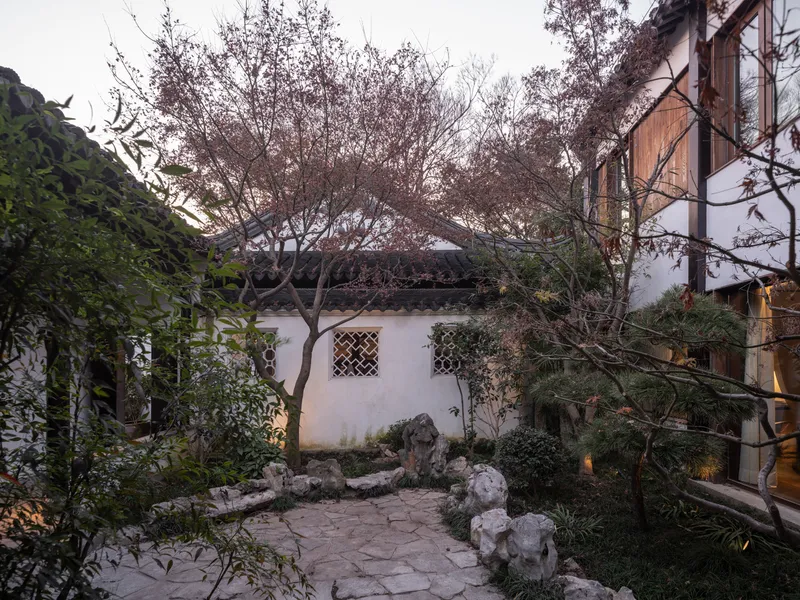
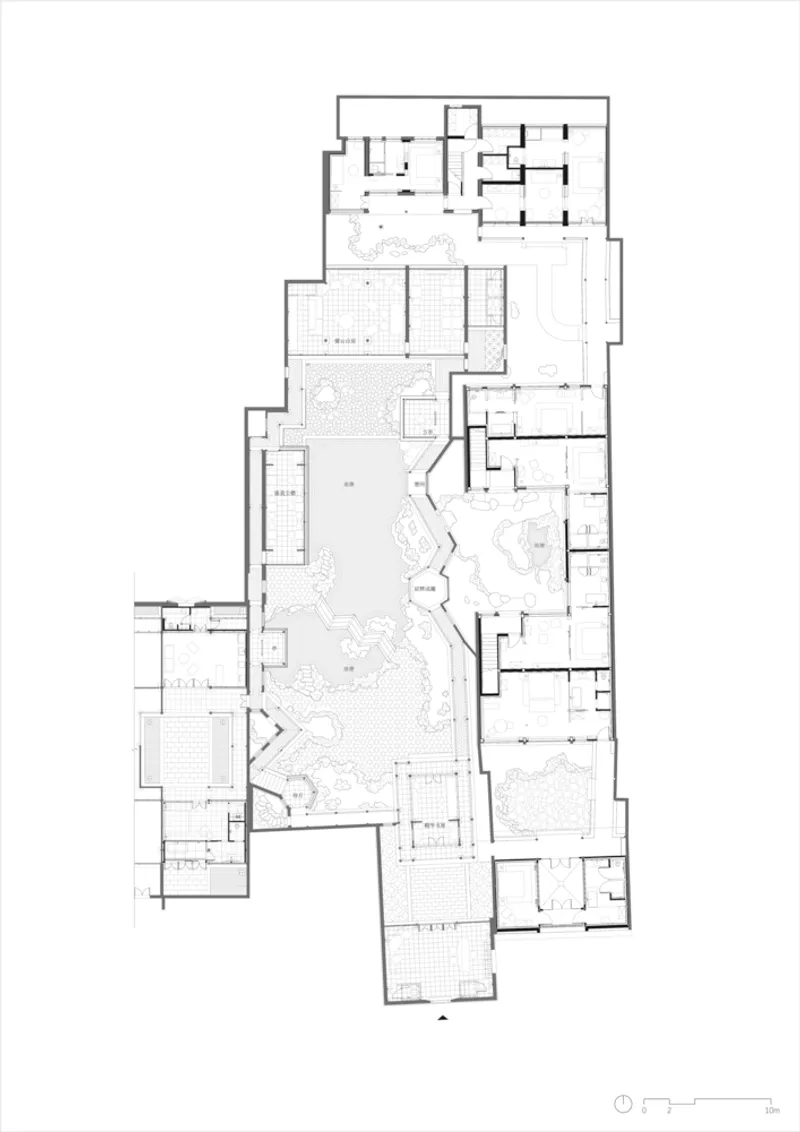
The design integrates the garden and courtyards with the guest experience, ensuring that these spaces are not just visual attractions but active parts of the experience. The original deep layout, consisting of four rows of houses and three small courtyards, was utilized to maximize guest room numbers while providing privacy and courtyard views. The use of skylights, plants, and rocks within the courtyards enhances the natural atmosphere and privacy of the guest rooms.

Design and Materials
Facade and Pixelation
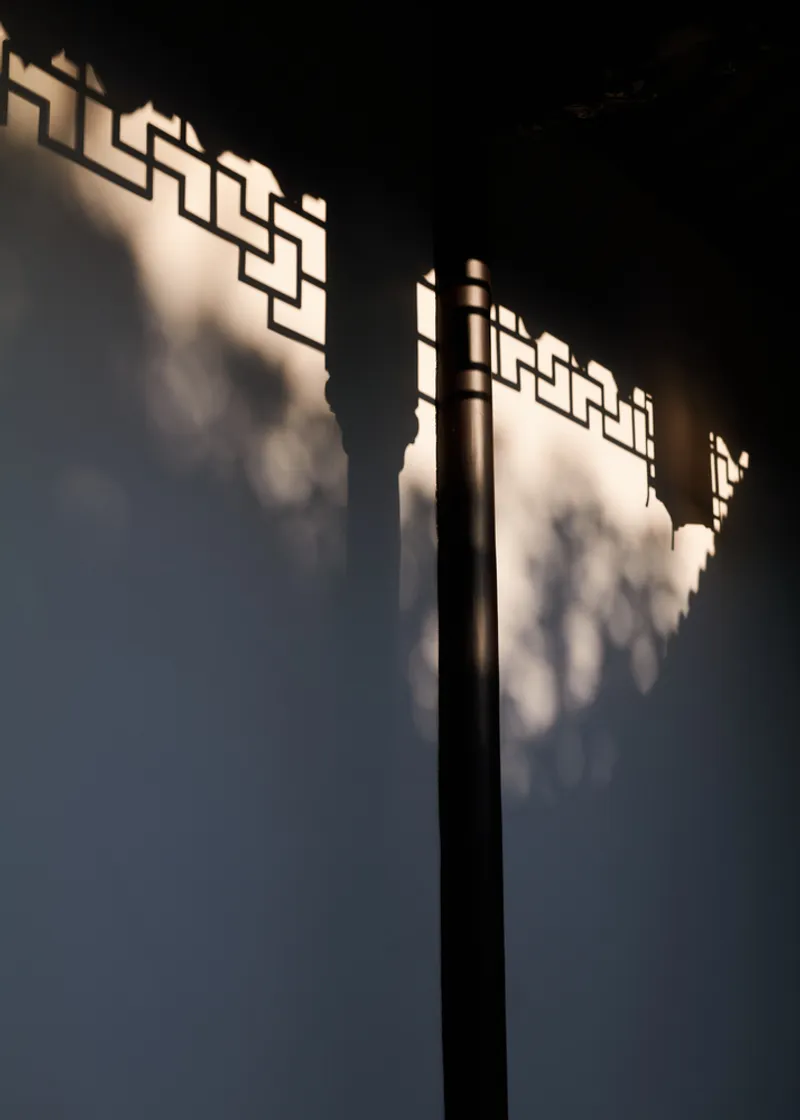
In response to the traditional terracotta roof tiles, the new facade incorporates a thoughtful mix of earth-tone cladding that mirrors the gradation of roof tiles. A custom-detailed stainless steel hanging mechanism allows for the free insertion of cladding modules, creating a pixelation effect. This design softens the visual impact of the new additions and transforms the facade into an architectural screen that complements the conserved bungalow.
Interior Design and Wooden Frame System
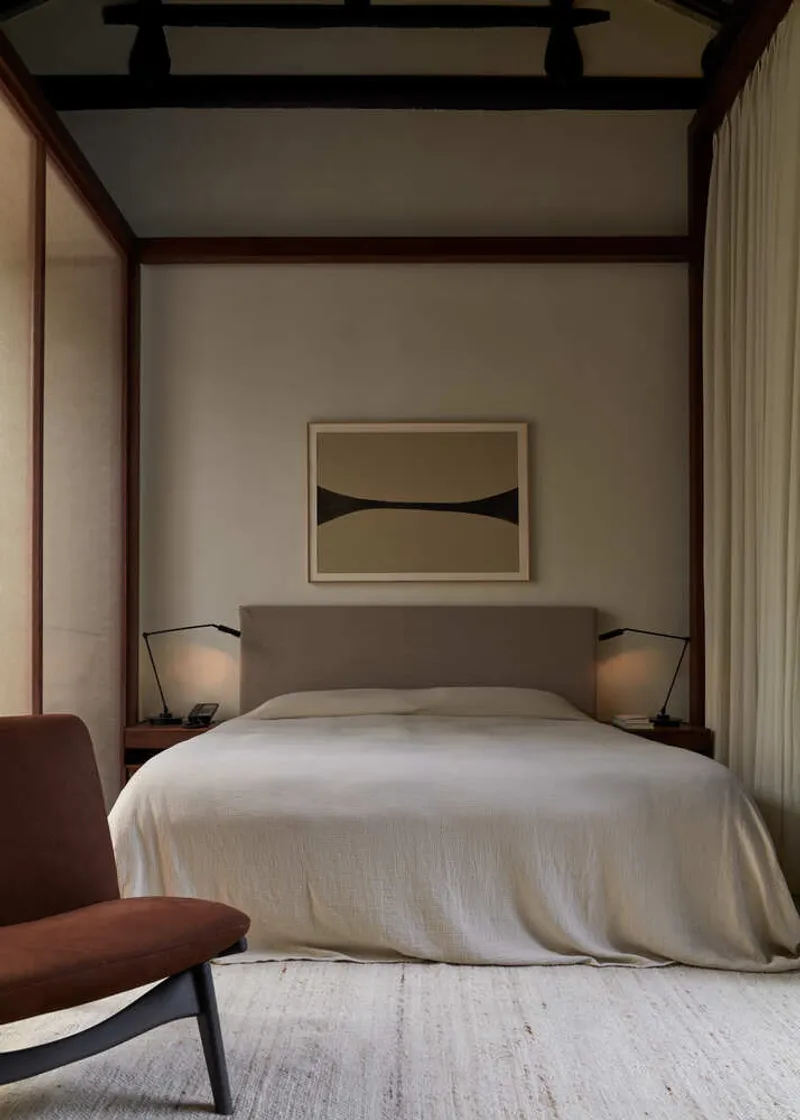
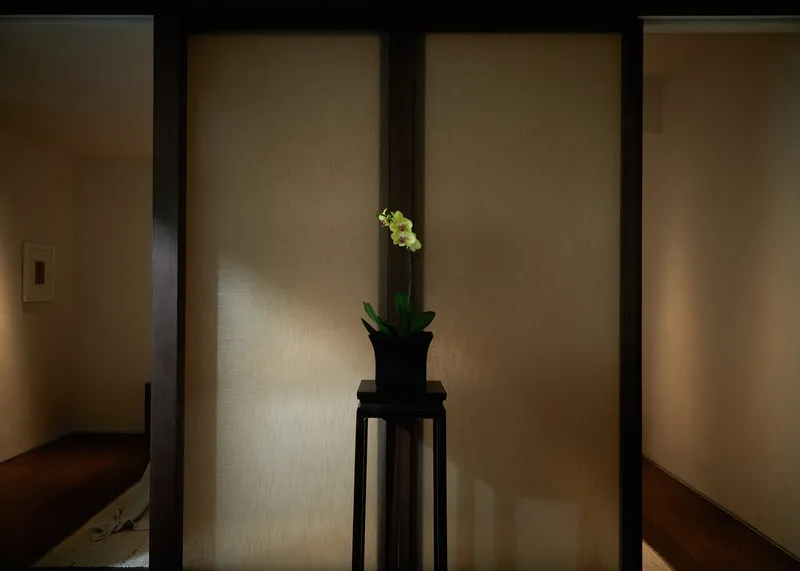
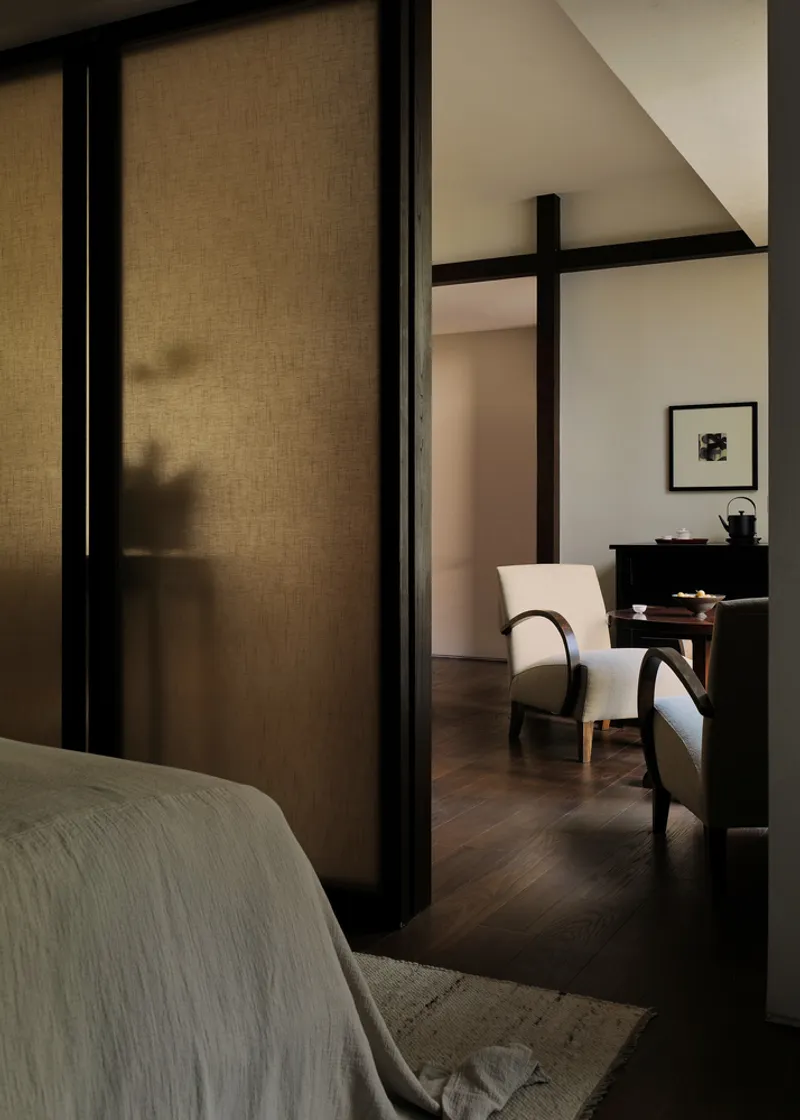
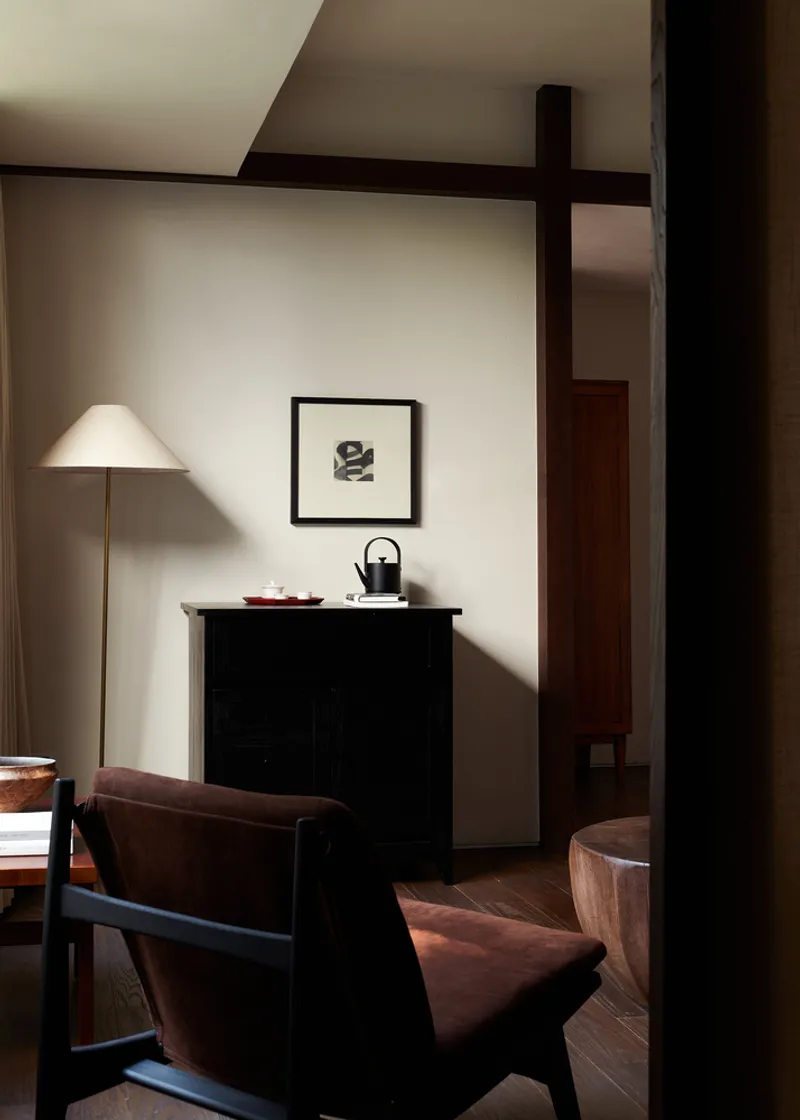
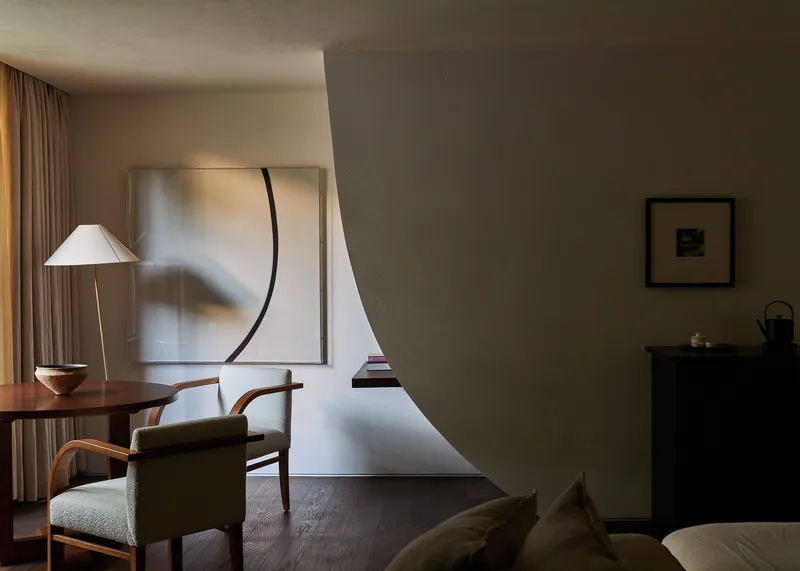
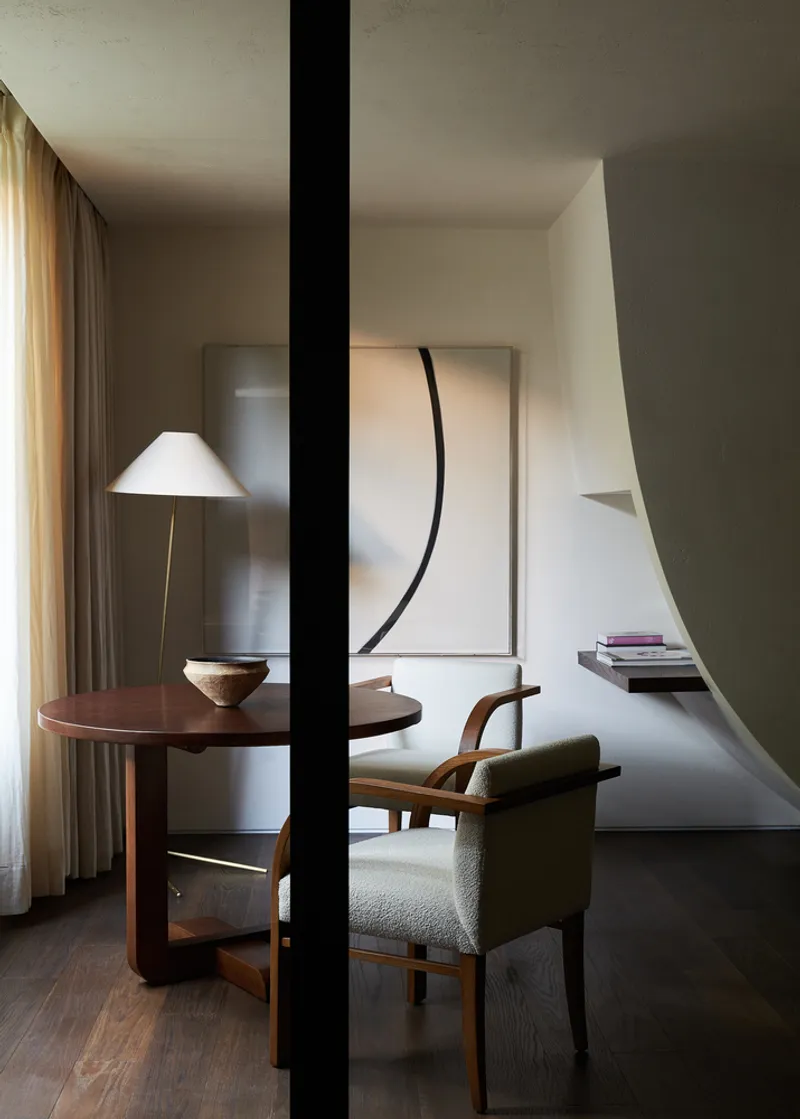
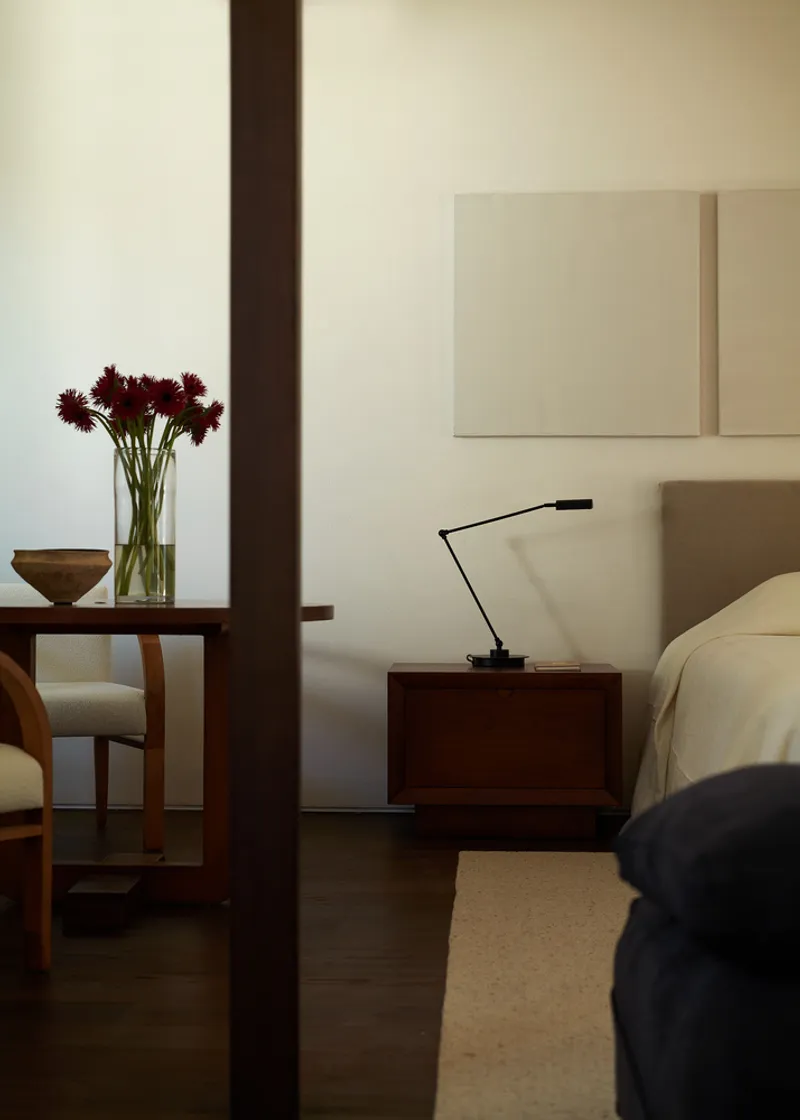
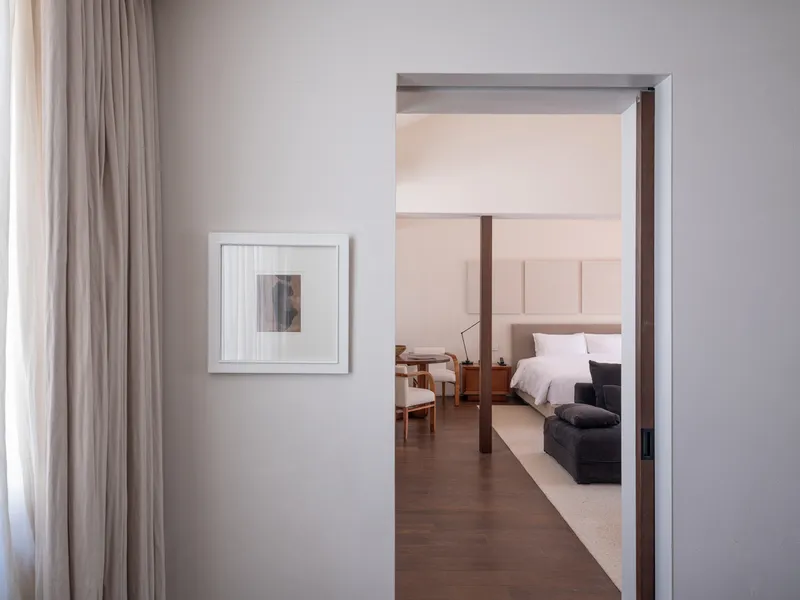
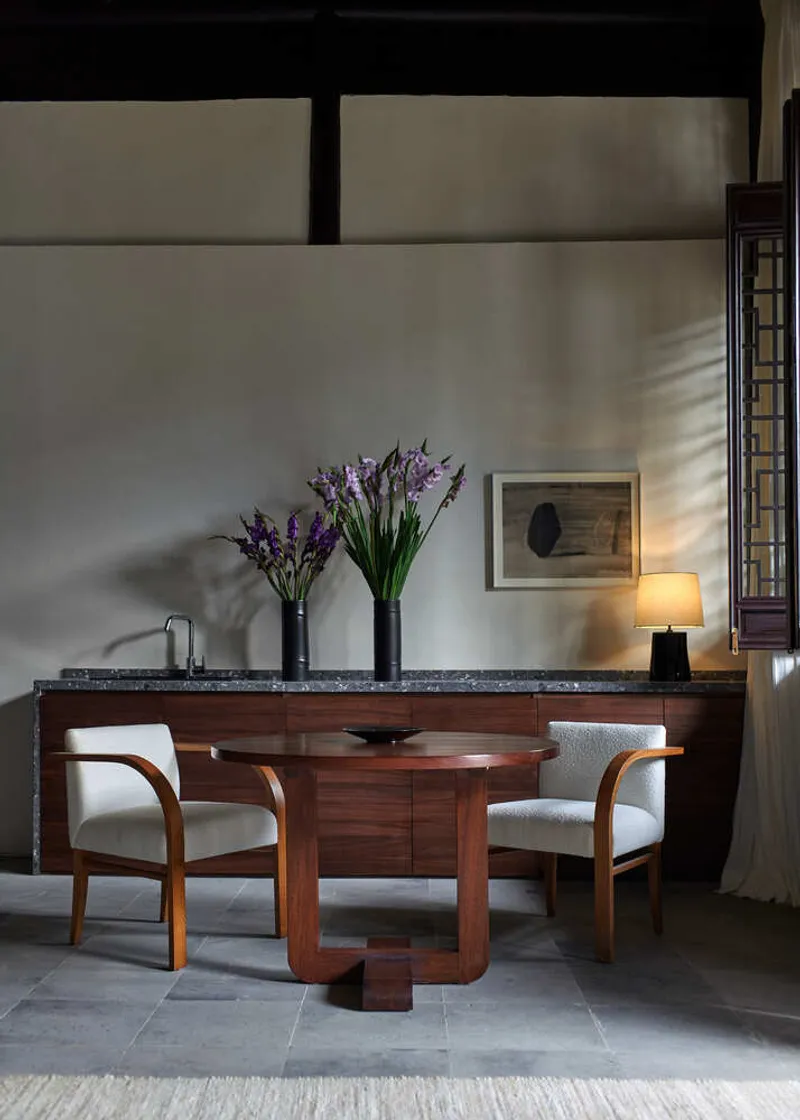
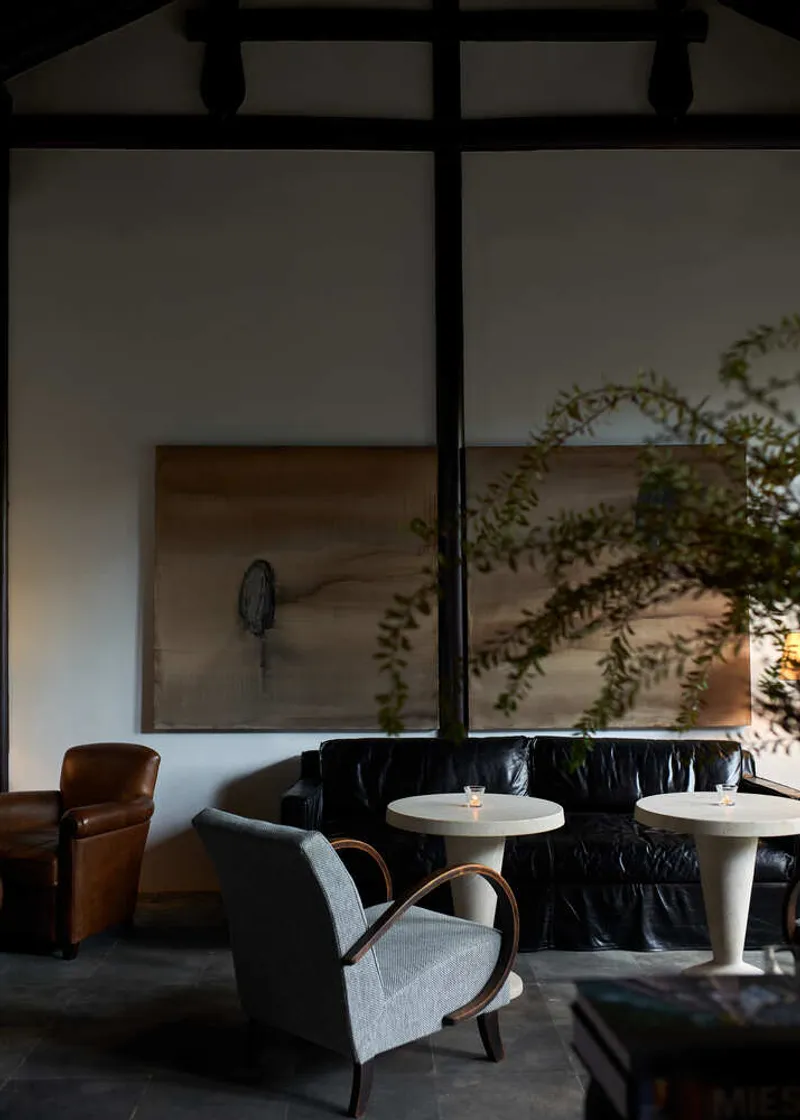
The interiors are designed to balance the historical and contemporary elements. A minor frame system of wooden beams adjusts the separation, scale, and atmosphere of the indoor space, creating an environment reminiscent of ancient buildings. This system allows for a simple design of other interfaces, using furniture that harmonizes with the existing space atmosphere. The coordination of furniture helps unify the diverse spaces, ensuring a seamless experience for the guests.

Functional and Aesthetic Elements
Courtyards and Glazed Bridges
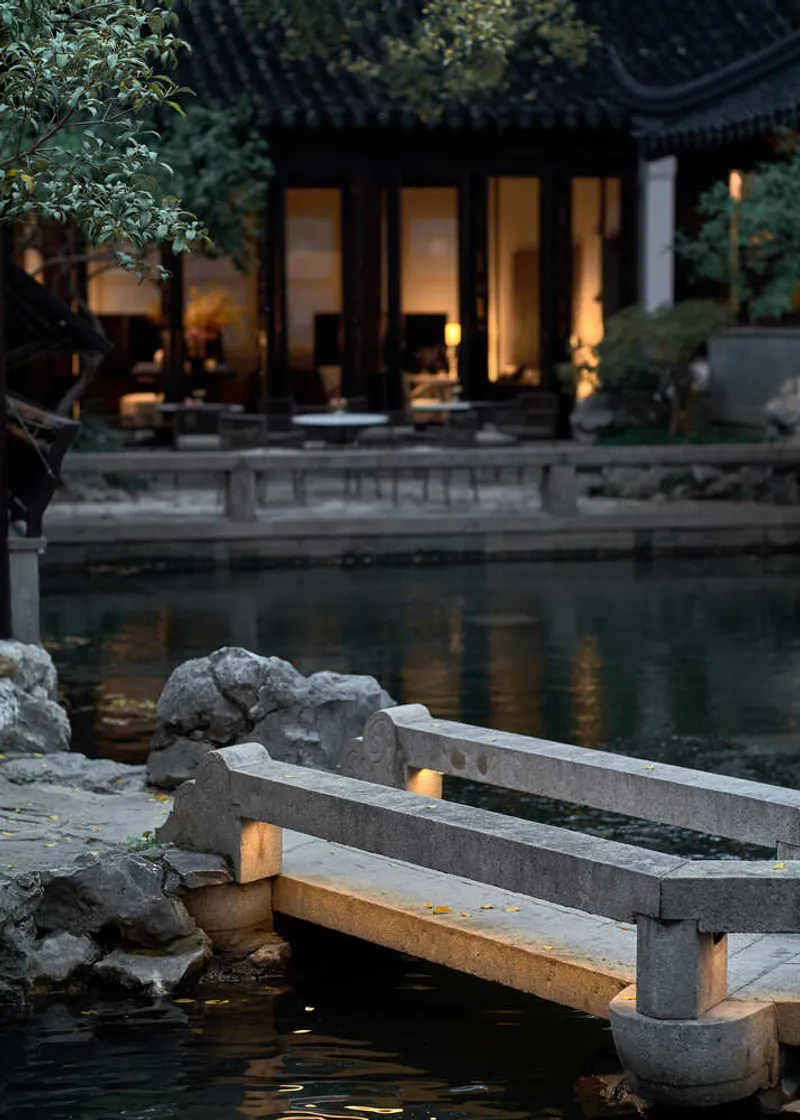
The project introduces courtyards at various levels to smooth the transition between the new additions and the old structures. Fully glazed bridges connect the new and old buildings, clearly delineating the transition and enhancing the flow between different parts of the house. These elements create a dynamic interaction and a sense of continuity within the space.

Enhancing Guest Experience
The design maximizes the use of existing interior space while providing privacy and a connection to the surrounding nature. The gate building on the south adopts a skylight for extra lighting in the bathroom and bedroom, while other rooms are kept private through strategic placement of plants and rocks. These design choices ensure that the guest rooms offer both the atmosphere of the landscape and the necessary privacy.
Jiangnan House Changyuan in Suzhou by Atelier Deshaus is a prime example of traditional Chinese architecture preserved through adaptive reuse. By maintaining the historical integrity of the classical garden and integrating modern design elements, the project successfully creates a functional and aesthetically pleasing space. This approach sets a benchmark for future heritage conservation projects, showcasing the potential to honor the past while accommodating contemporary needs.


All photographs are work of Hai Zhu, Fangfang Tian


Popular Articles
Popular articles from the community


longwave studio Reorganizes a 112 m² Tainan Apartment Around the Daily Routines of a Family and Two Cats
In Tainan, Taiwan, birch plywood, rust-red furniture and a freestanding plaster wall link arrival, storage, work and family life in one apartment.

Juan García Correa, John González and Claudia Rueda Sink a Circular Amphitheater into a Manizales Engineering Building
On the La Nubia campus in Manizales, Colombia, the S1 Building folds labs and offices into a hillside of ramped lawns that double as a campus route.

U.GA Architects Wraps an Oval Rooftop Pool in Curved Board-Formed Concrete on Busan's Jeollidan-gil
In Busan's Jeonpo-dong, a 454 m² mixed-use block stacks a neighborhood facility, guest rooms and an oval rooftop pool inside spiraling concrete walls.

Jaramillo Van Sluys Arquitectura and Urbanismo Turn a Demolished Registry Lot in Quito into an Orchard Plaza
In Quito's Centro Histórico, a 2,800 m² plaza exposes the San Agustín convent wall and redraws its lost Augustinian orchard in volcanic stone.

Similar Reads
You might also enjoy these articles


Hodi-Mandai Geram
Project Function: Preservation and revitalization of the Intangible heritage and socio-spatial identity of the Hodi by Housing, Cultural Memory Center, Sacred Grove, landscape, local tourism economy


Olio Towers: A Mid-Rise for Performers That Fuses Housing, Rehearsal, and Stage
Located blocks from Houston's Theater District, this modular tower stacks living units around a central performance atrium.

Oasis: Modular Green Housing Carved into Dhaka's Urban Fabric
A shortlisted Plugin Housing entry reclaims unauthorized settlements in Dhaka with stepped concrete volumes, green roofs, and ventilation-driven design.

Black Hole: A Floating Megastructure for the Post-Physical Era
Emiliano Mazzarotto envisions a spherical, self-scaling arena where e-sports, digital hotels, and holographic stadiums replace traditional public space.

Explore Chinese Small Scale Architecture Competitions
Discover active competitions in this discipline

Challenge to reimagine the Iron Throne

Photograph architecture without architects

Illustrate the lost glory of Angkor Wat - Render Challenge

Design challenge to reuse E-waste
Comments (0)
Please login or sign up to add comments
No comments yet. Be the first to comment!