
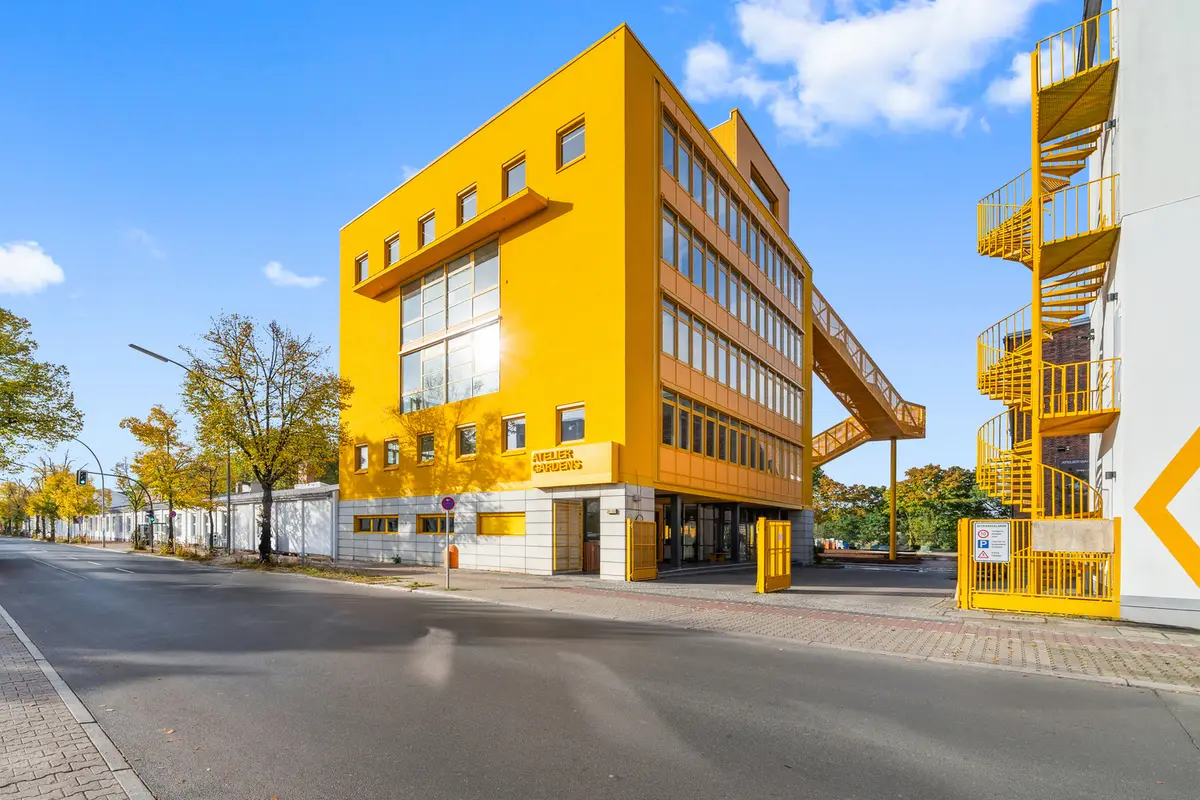
Transforming Berlin's Urban Landscape: The Sustainable Revitalization of Atelier Gardens HAUS 1
This article highlights the sustainable transformation of Atelier Gardens HAUS 1 in Berlin, showcasing innovative architecture and environmental design.


A New Era for Berlin's Architectural Landscape
Berlin, a city rich in history and innovation, is witnessing a groundbreaking transformation in architecture. Atelier Gardens HAUS 1, redesigned by MVRDV and Hirschmüller Schindele Architekten, exemplifies the future of sustainable architecture in Berlin. This project turns a dated 1990s office building into a vibrant, eco-friendly hub that prioritizes flexibility, community, and environmental responsibility.
Revitalizing HAUS 1: From Ordinary to Iconic
A Bold Visual Identity
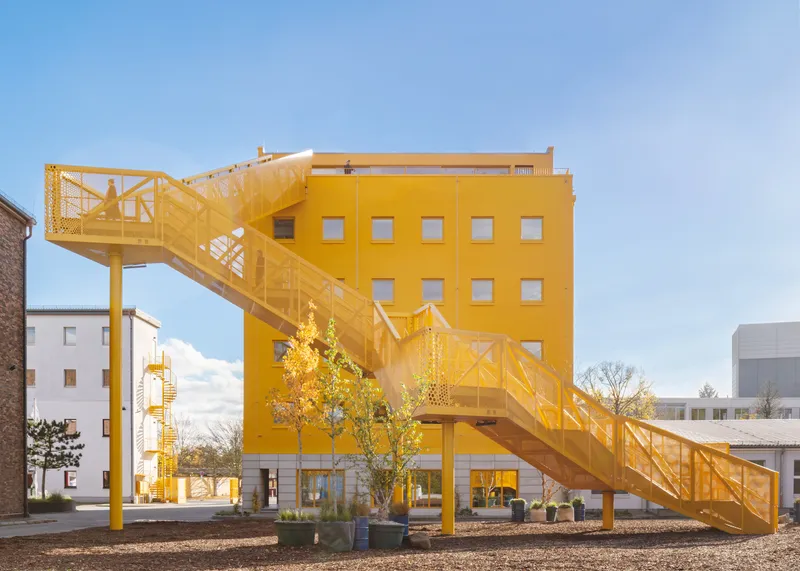
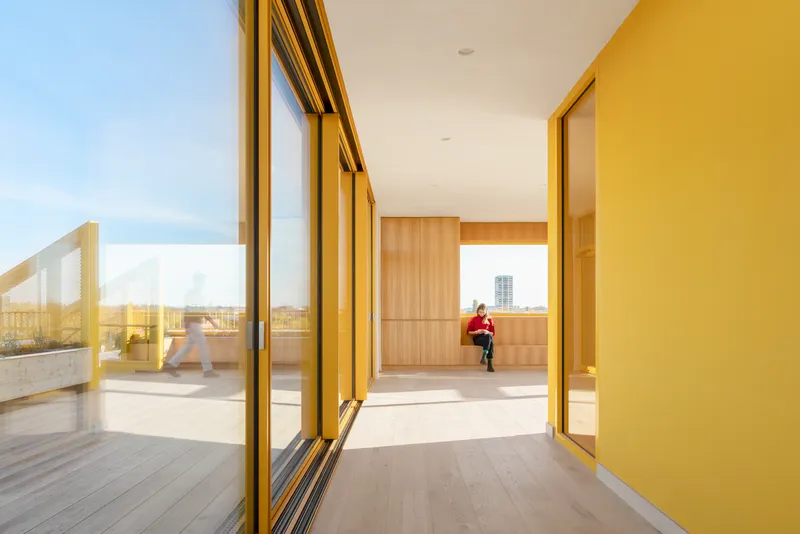
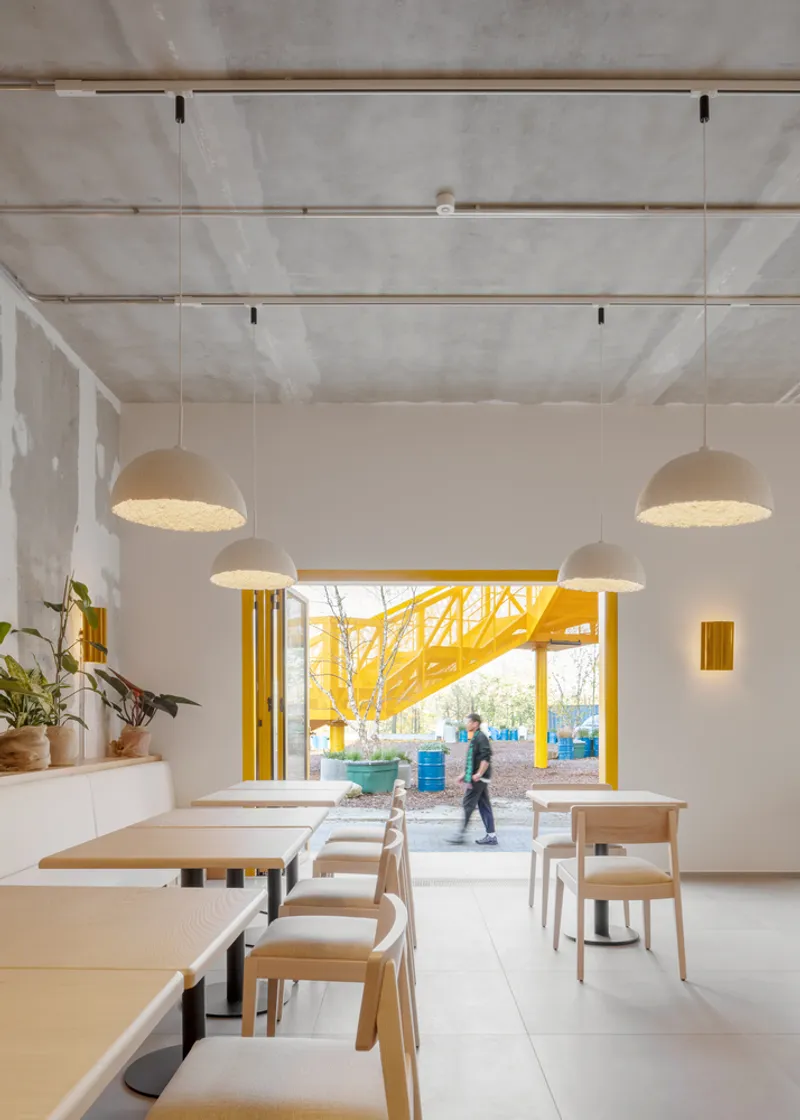
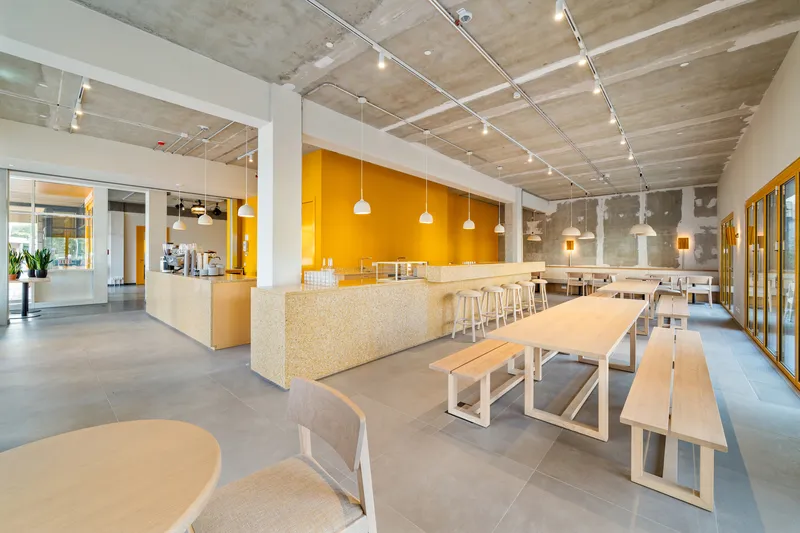
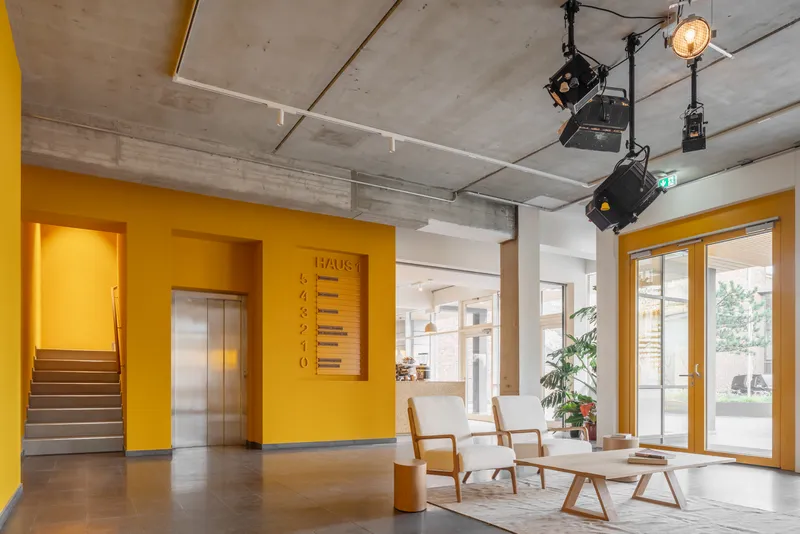
Previously an unremarkable white structure, HAUS 1 now stands out with its striking sunshine-yellow facade, marking it as a symbolic entry point to Atelier Gardens. This bold redesign enhances the site's visibility from Tempelhofer Feld and the surrounding urban landscape.
Sustainable Design Highlights
Key architectural changes emphasize sustainability and adaptability:
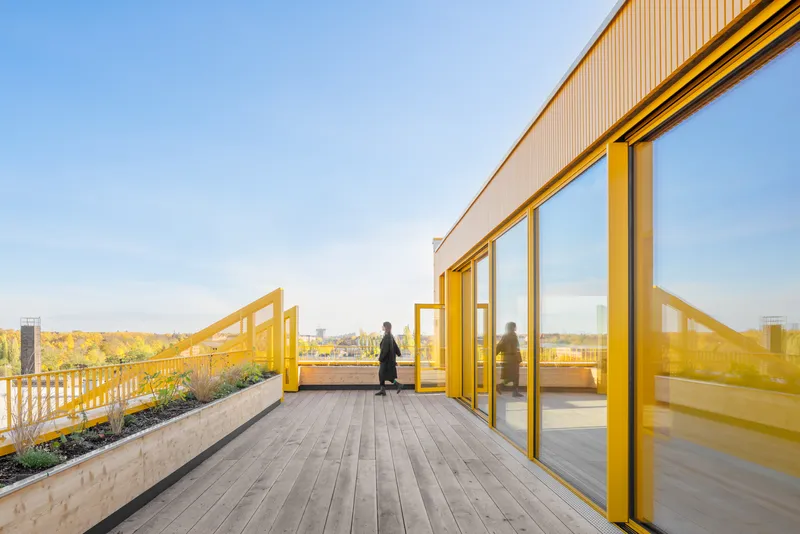
- Living Roof: Covered with native plants, the roof promotes biodiversity and serves as a rainwater collection system.
- Timber Pavilion: Constructed from cross-laminated timber modules, this pavilion uses bio-based materials, reducing its environmental impact.
- Energy Efficiency: Upgraded insulation, sunshades on glass facades, and LED lighting reduce energy consumption.
- Water Efficiency: Low-water-use toilets and rainwater recycling systems ensure resource conservation.
Sustainable Architecture Meets Community-Centric Design
Connecting People and Spaces
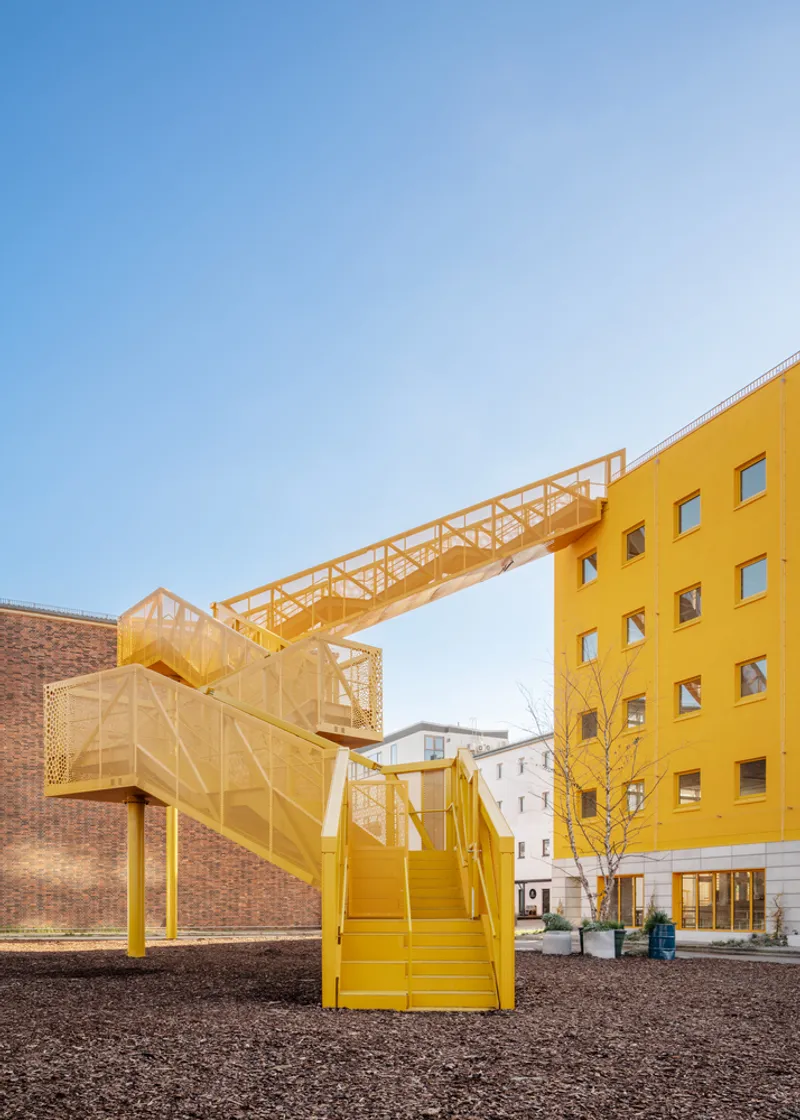
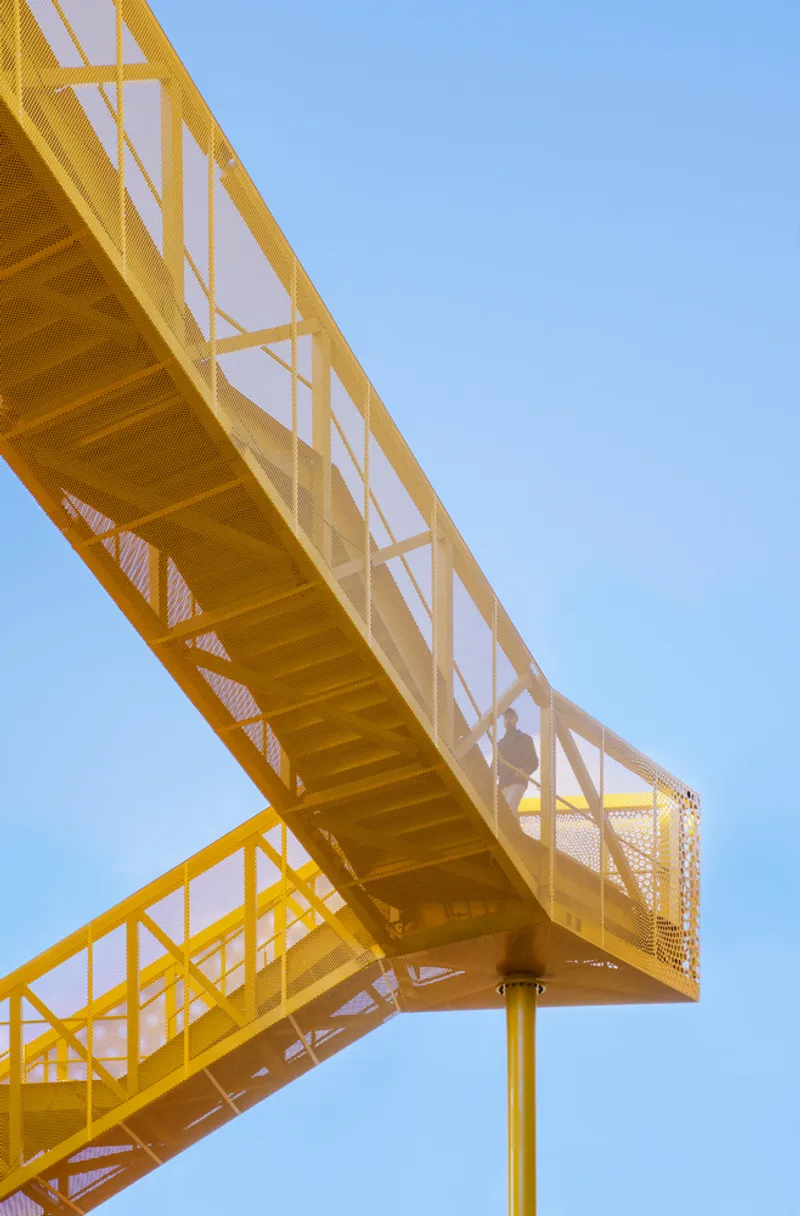
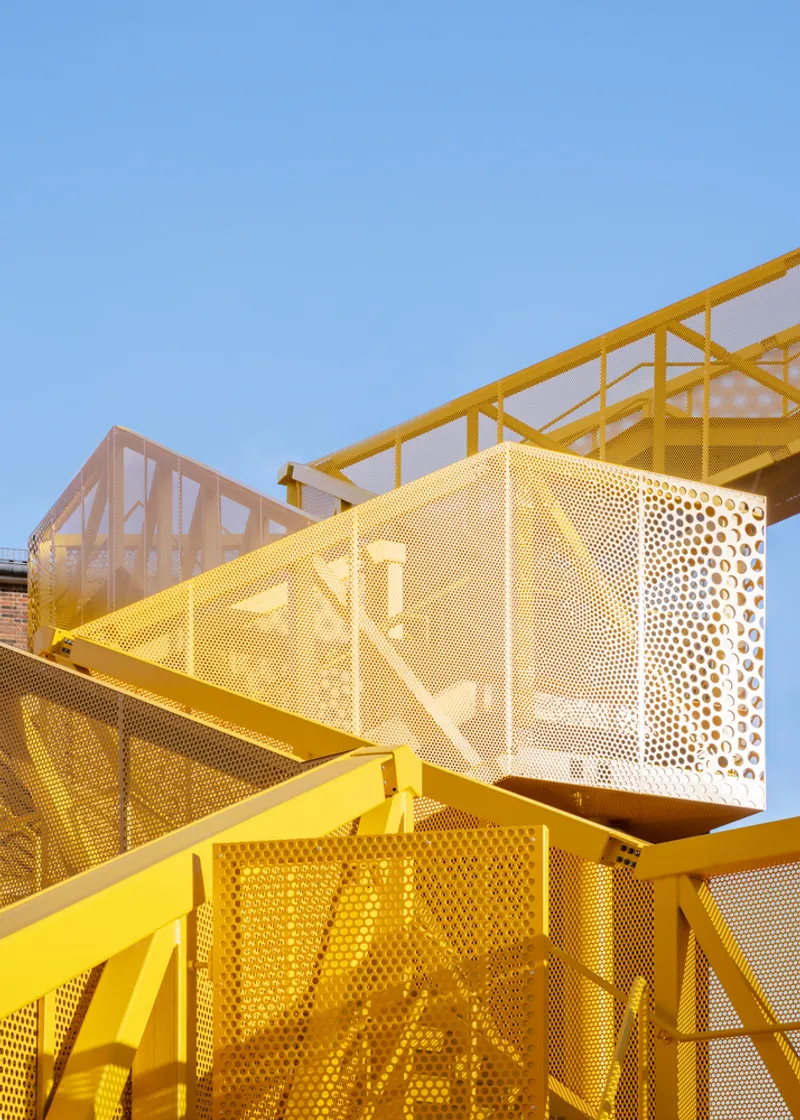
A standout feature is the zig-zagging external staircase, which invites visitors to ascend through vibrant social spaces with seating and viewing platforms. These additions foster interaction while offering panoramic views of the Berlin skyline.
Flexible and Adaptive Interiors
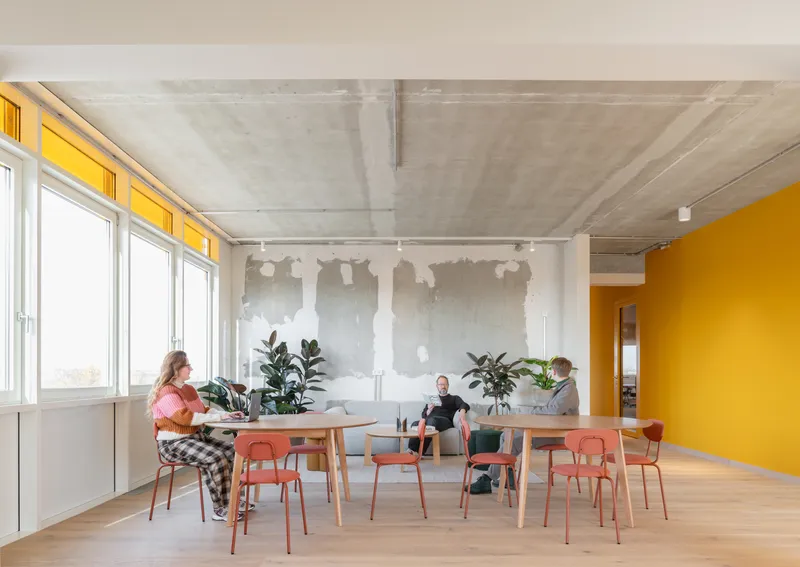
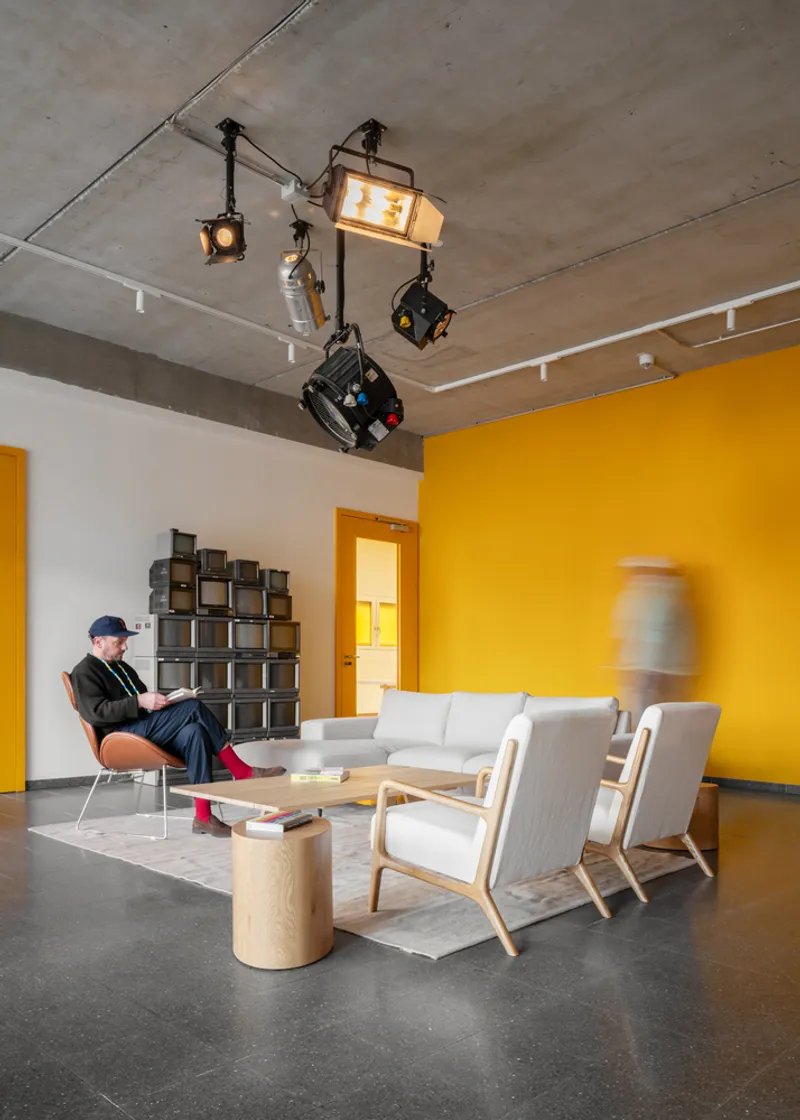
The redesigned interiors offer adaptable workspaces, meeting rooms, and a café. These spaces are designed to accommodate changing needs, ensuring longevity and versatility.
Integrating Climate Resilience in Urban Design
The project exemplifies how urban buildings can embrace climate resilience:
- Green Landscaping: Enhances urban ecology while managing stormwater.
- Energy-Efficient Heating and Cooling: Underfloor heating and sunshades ensure optimal indoor climate control.
- Eco-Friendly Materials: Bio-based, recyclable materials reflect a commitment to sustainable construction practices.
Impact on Berlin's Sustainable Architecture Movement
The transformation of HAUS 1 is part of a broader vision to position Atelier Gardens as a hub for "change makers" focused on climate action and social justice. By retaining much of the original structure and minimizing new material use, the project aligns with principles of circular economy and sustainability.
A Blueprint for Future Urban Design
HAUS 1 sets a new benchmark for sustainable architecture in Berlin, demonstrating how adaptive reuse and innovative design can breathe new life into existing structures. This project is more than a building; it’s a statement about Berlin’s commitment to a greener, more inclusive urban future.
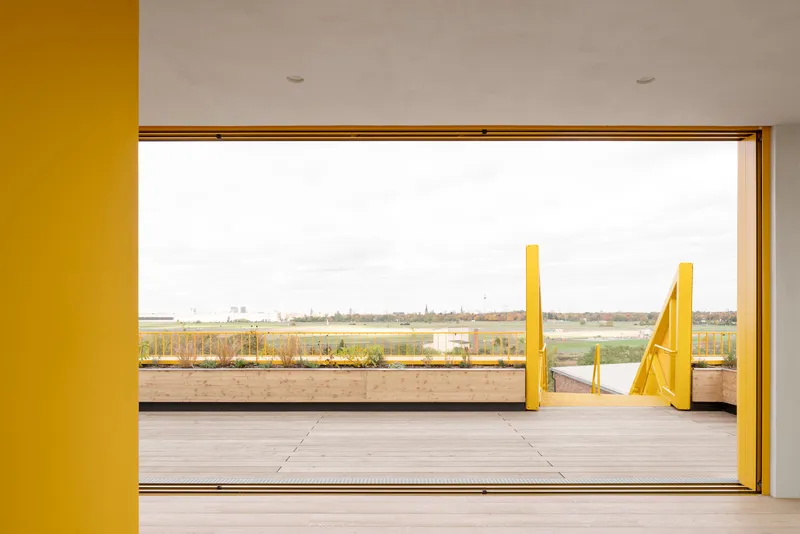
All Photohraphs are work of Schnepp Renou, Lukas Drobny


Popular Articles
Popular articles from the community

Faces of the Soviet Avant-Garde: Turning Moscow's Street Names into an Open-Air Museum
A network of sculptural installations across a Moscow residential district transforms forgotten architect names into spatial encounters with cultural memor
Opera by the Sea Estonia: Three Shells Dissolving Architecture into Tallinn's Coastline
A winning opera house proposal replaces monumental form with interconnected shells that blur the boundary between building, park and Baltic Sea.

Cloaked Colonization: A Mobile Underwater Habitat That Moves Like a Fish
Micah Abaya's shortlisted EHC Pacific entry reimagines ocean settlement as a dispersed network of self-sustaining architectural organisms.

The Amber Palace Opera: A Geological Fiction Surfaces on Tallinn's Baltic Waterfront
Pierre Brillard reimagines a Baltic legend as a public landscape, opera house, and waterfront promenade rooted in Tallinn's coastal identity.

Similar Reads
You might also enjoy these articles


Hodi-Mandai Geram
Project Function: Preservation and revitalization of the Intangible heritage and socio-spatial identity of the Hodi by Housing, Cultural Memory Center, Sacred Grove, landscape, local tourism economy


Olio Towers: A Mid-Rise for Performers That Fuses Housing, Rehearsal, and Stage
Located blocks from Houston's Theater District, this modular tower stacks living units around a central performance atrium.

Oasis: Modular Green Housing Carved into Dhaka's Urban Fabric
A shortlisted Plugin Housing entry reclaims unauthorized settlements in Dhaka with stepped concrete volumes, green roofs, and ventilation-driven design.

Black Hole: A Floating Megastructure for the Post-Physical Era
Emiliano Mazzarotto envisions a spherical, self-scaling arena where e-sports, digital hotels, and holographic stadiums replace traditional public space.

Explore Architecture Magazine Competitions
Discover active competitions in this discipline

Challenge to reimagine the Iron Throne

Photograph architecture without architects

Illustrate the lost glory of Angkor Wat - Render Challenge

Design challenge to reuse E-waste
Comments (0)
Please login or sign up to add comments
No comments yet. Be the first to comment!