
Transforming Rural Education: Talaricheruvu Rural School Design in Andhra Pradesh
Talaricheruvu Rural School in Andhra Pradesh enhances education with sustainable design, vocational programs, and an innovative bamboo canopy.

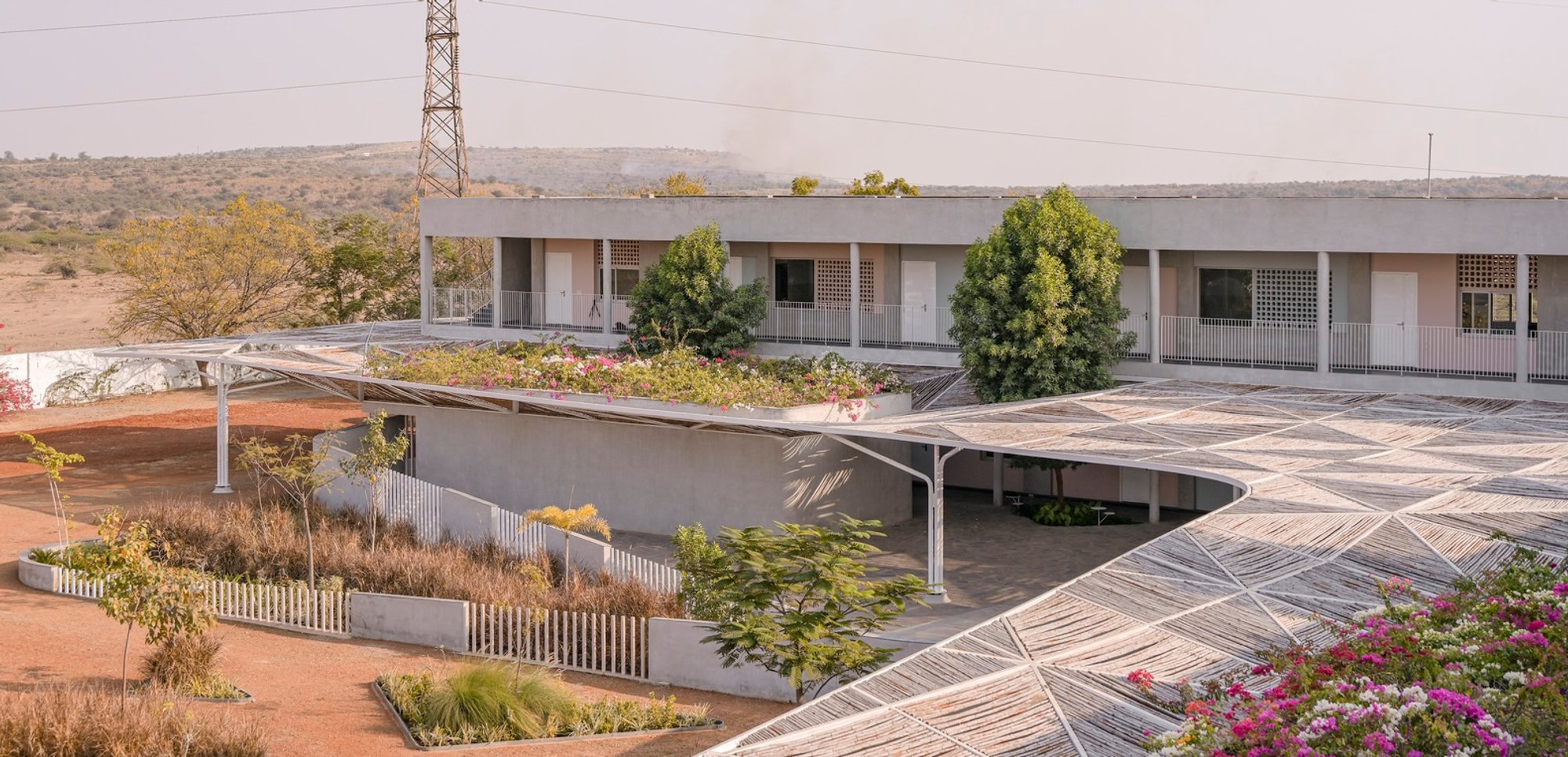
Talaricheruvu Rural School, located in the hot and dry region of Andhra Pradesh, India, presents a visionary approach to educational architecture. Designed by CollectiveProject, the renovation of this 40,000 ft² school building serves as a prototype to enhance the learning environment for children, particularly those of cement factory workers. The project aims to revitalize a 15-year-old "L" shaped structure and create a more vibrant, empowering, and functional space for both students and teachers. Completed in 2022, the school embraces innovation through design and sustainable materials while addressing the region’s unique climatic challenges.
The Challenge: An Outdated, Unwelcoming School Structure
The original school building was situated in the rear corner of a barren two-acre plot. Despite being structurally sound, the building had fallen into semi-disrepair, with inadequate shade and poor access to natural light and ventilation. The classroom design included oversized spaces that lacked adequate natural light and airflow, which made for uncomfortable and uninspiring learning conditions. The bathrooms were located far from the classrooms, requiring children to walk a circuitous route. In response to the client brief from the Penna Foundation, the goal was to create a prototype that could be implemented at other regional cement factories and attract teachers to this remote location.
Revitalizing the Design: A Playful and Functional Learning Environment
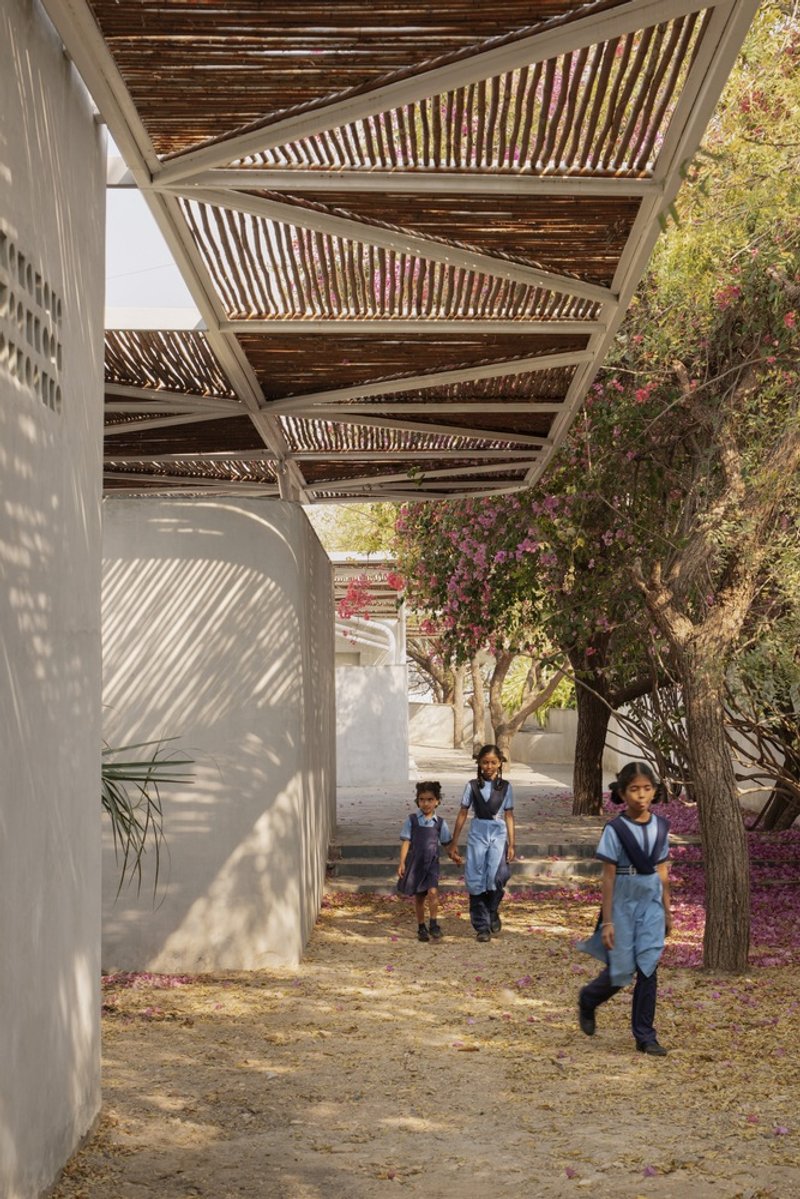
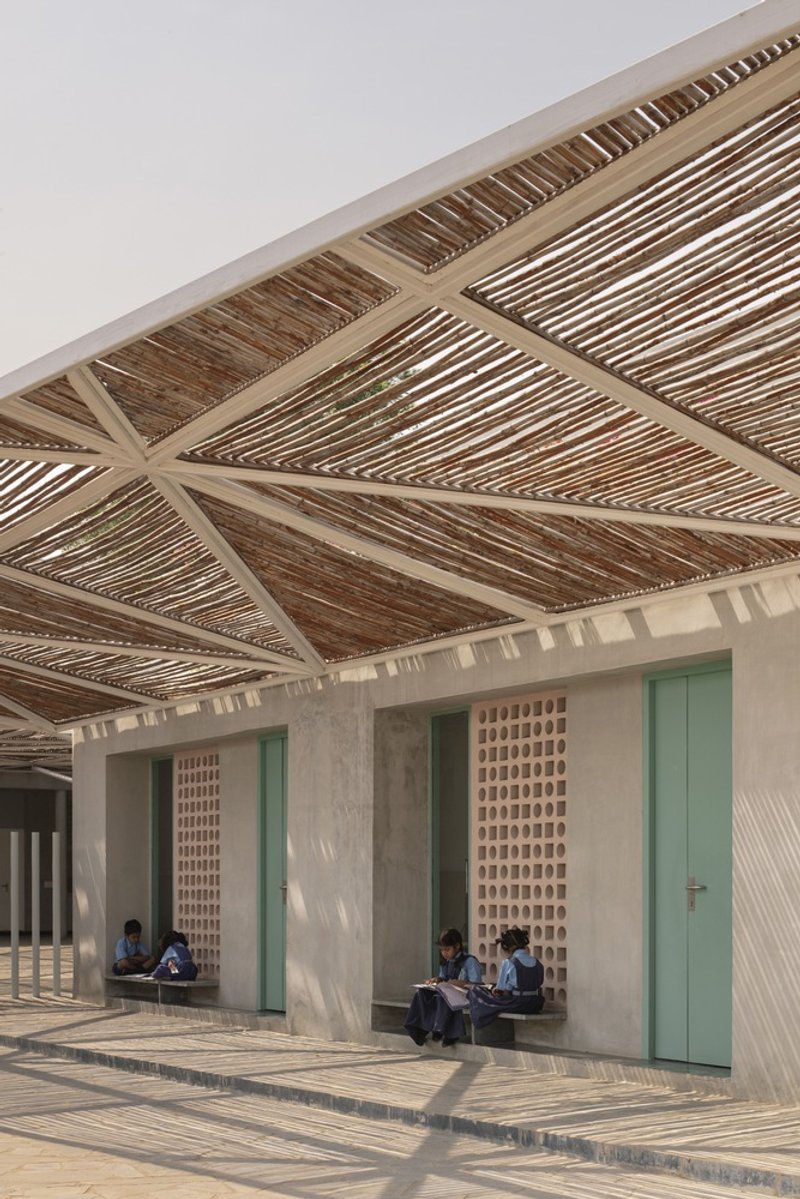
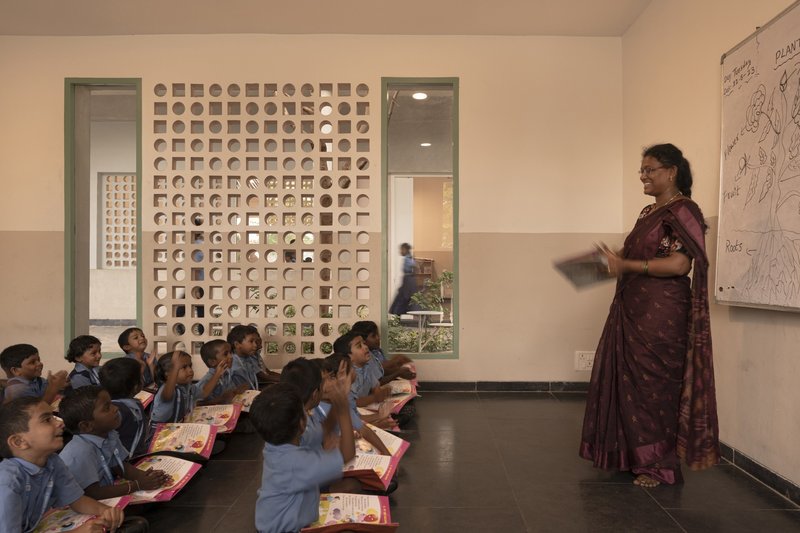
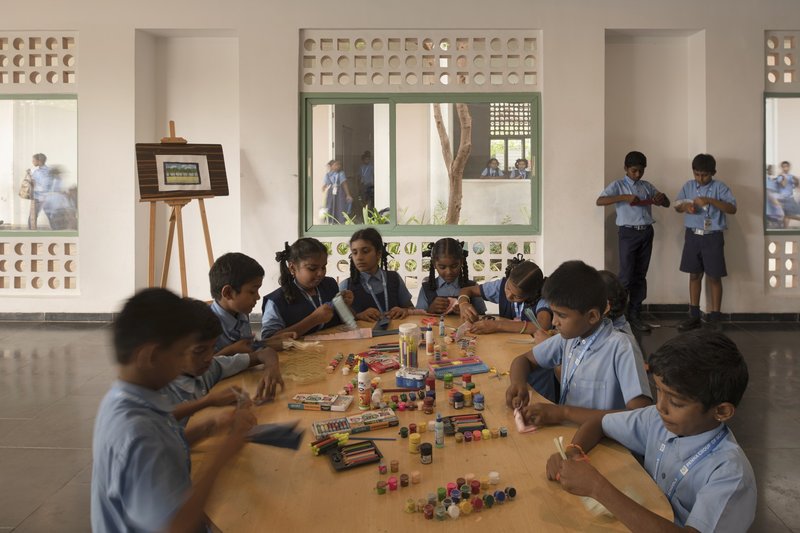
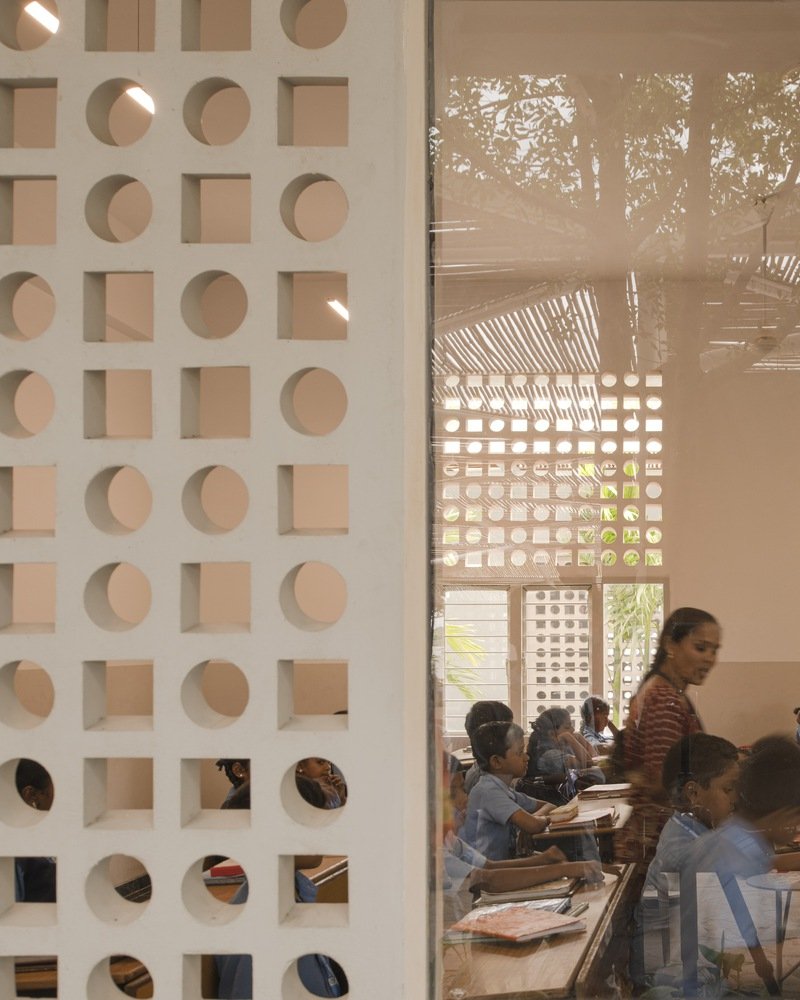
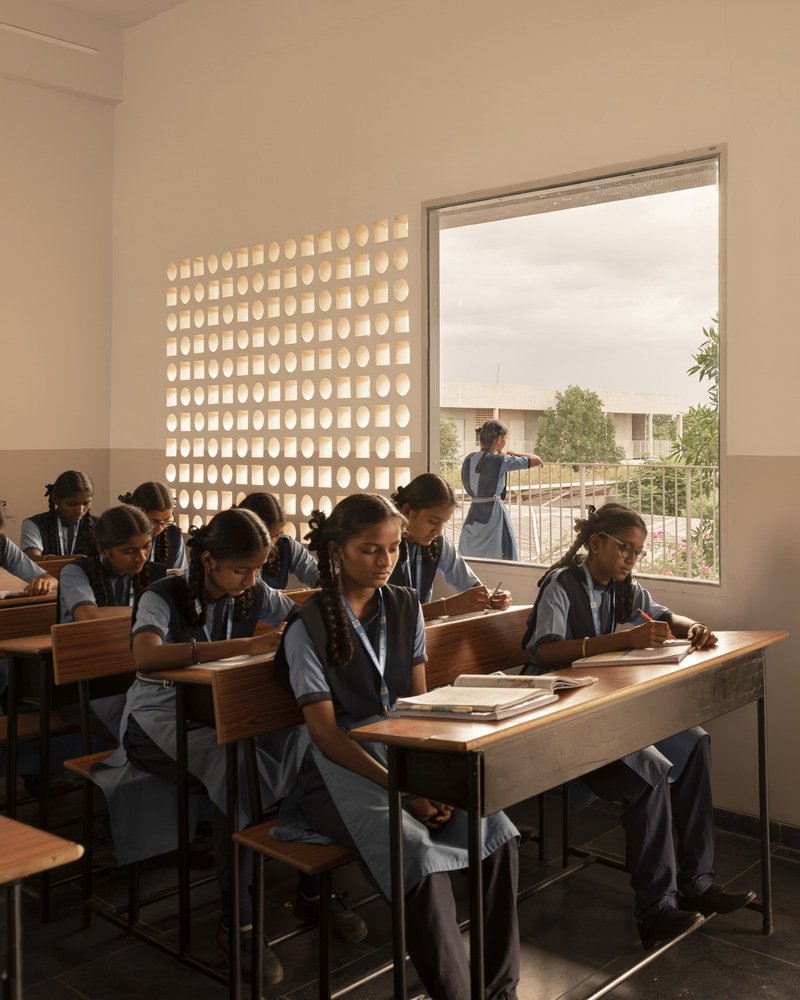
To meet these needs, CollectiveProject sought to create a responsive, playful design that would directly enhance the educational experience. The building’s renovation expanded beyond the required K-10 curriculum to include vocational training, sports facilities, and the arts. A major aspect of the redesign involved modifying the school’s façade with jali (porous masonry screens) and strategically placed windows, ensuring ample natural light and cross ventilation throughout the learning spaces.
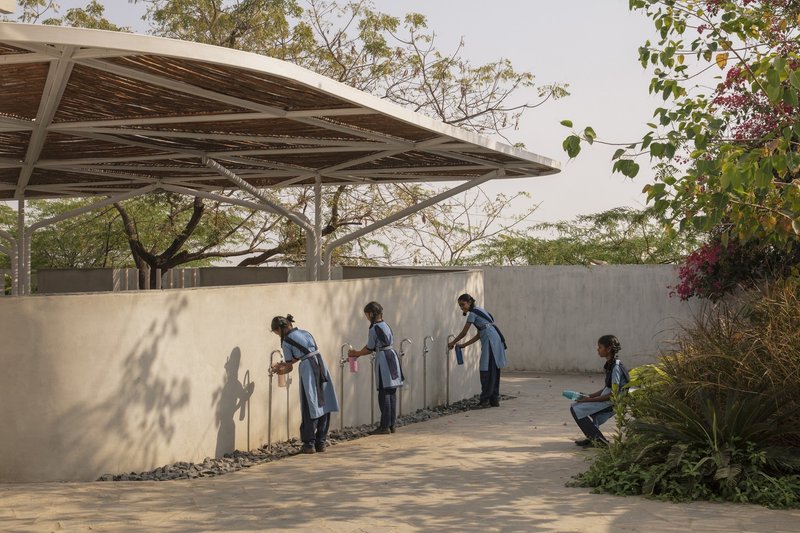
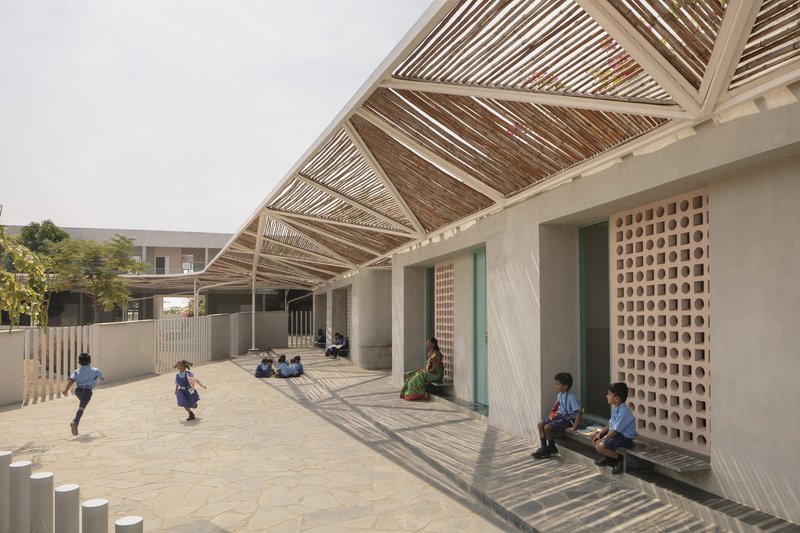
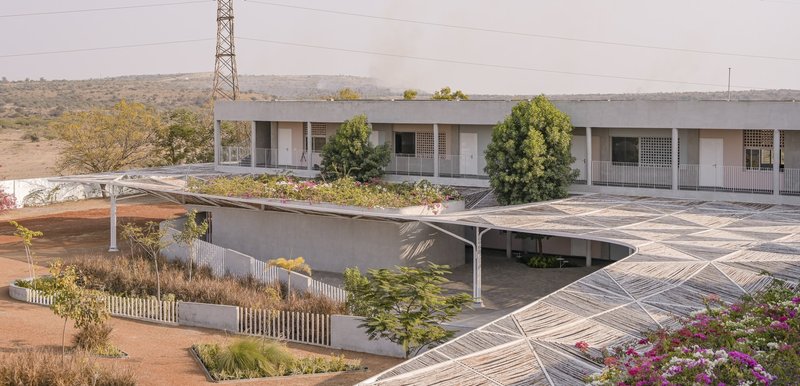
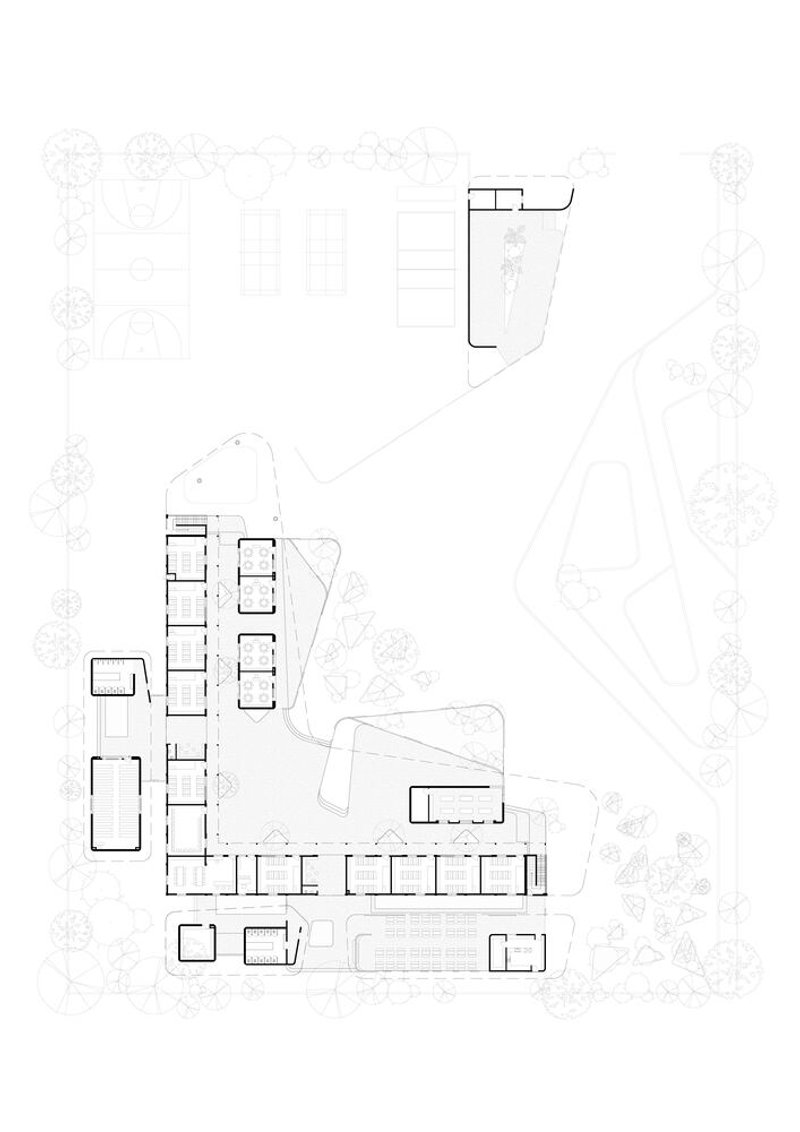
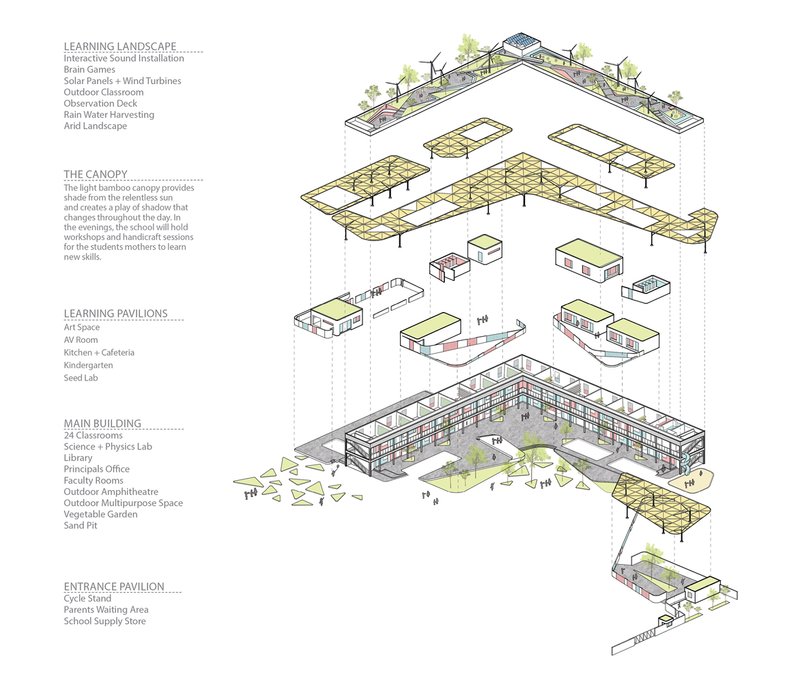
The internal layout was reworked to accommodate 24 classrooms, two faculty lounges, three laboratories, and two multi-purpose libraries. Rather than expanding with heavy infrastructure, the design introduced independent pavilions to house additional programs. These pavilions included a kitchen, cafeteria, art room, preschool, kindergarten, bathrooms, and bicycle parking. The incorporation of these spaces as separate structures minimized the need for expensive infrastructure and allowed the building to grow organically over time.
Creating an Outdoor Classroom: Bamboo Canopy for Shade and Multi-Purpose Use
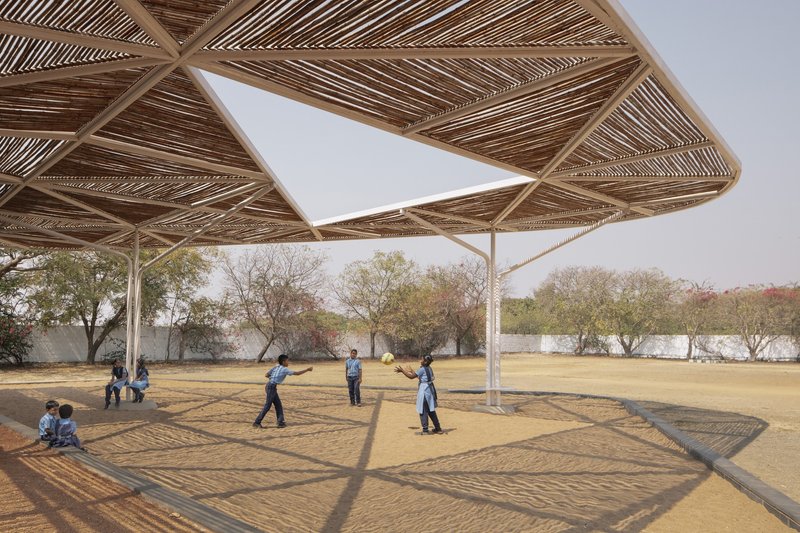
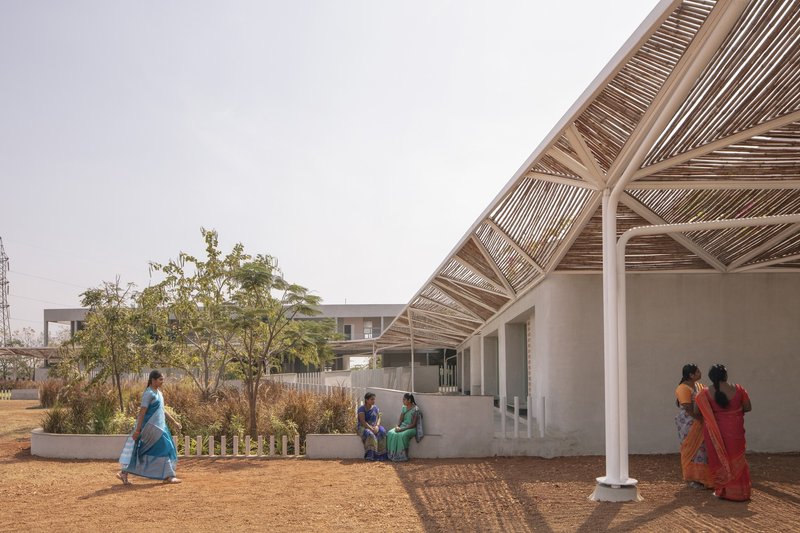
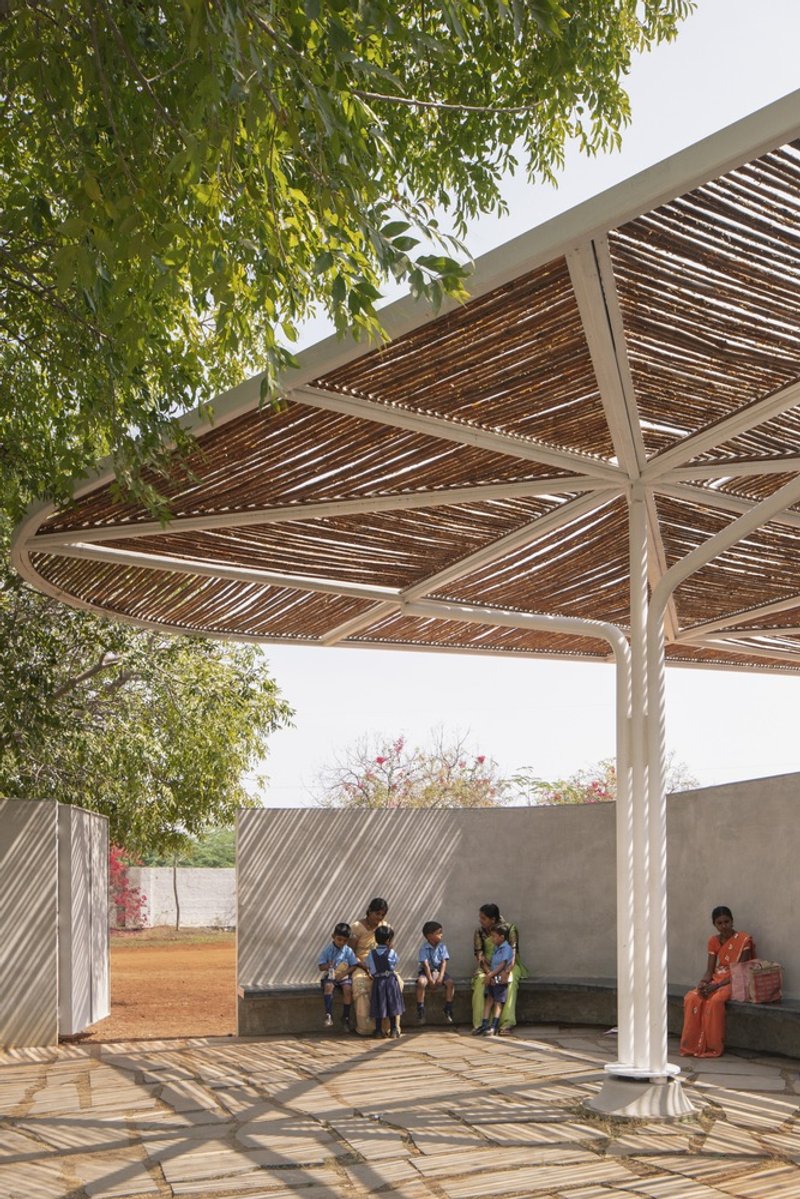
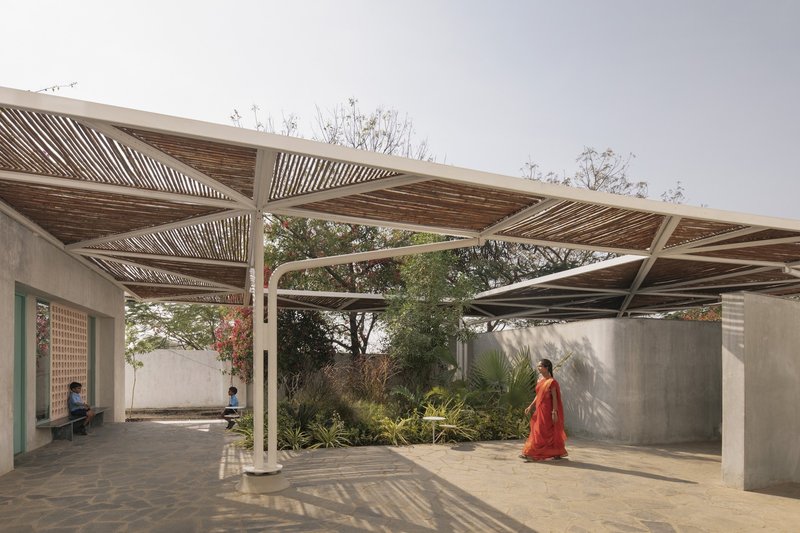
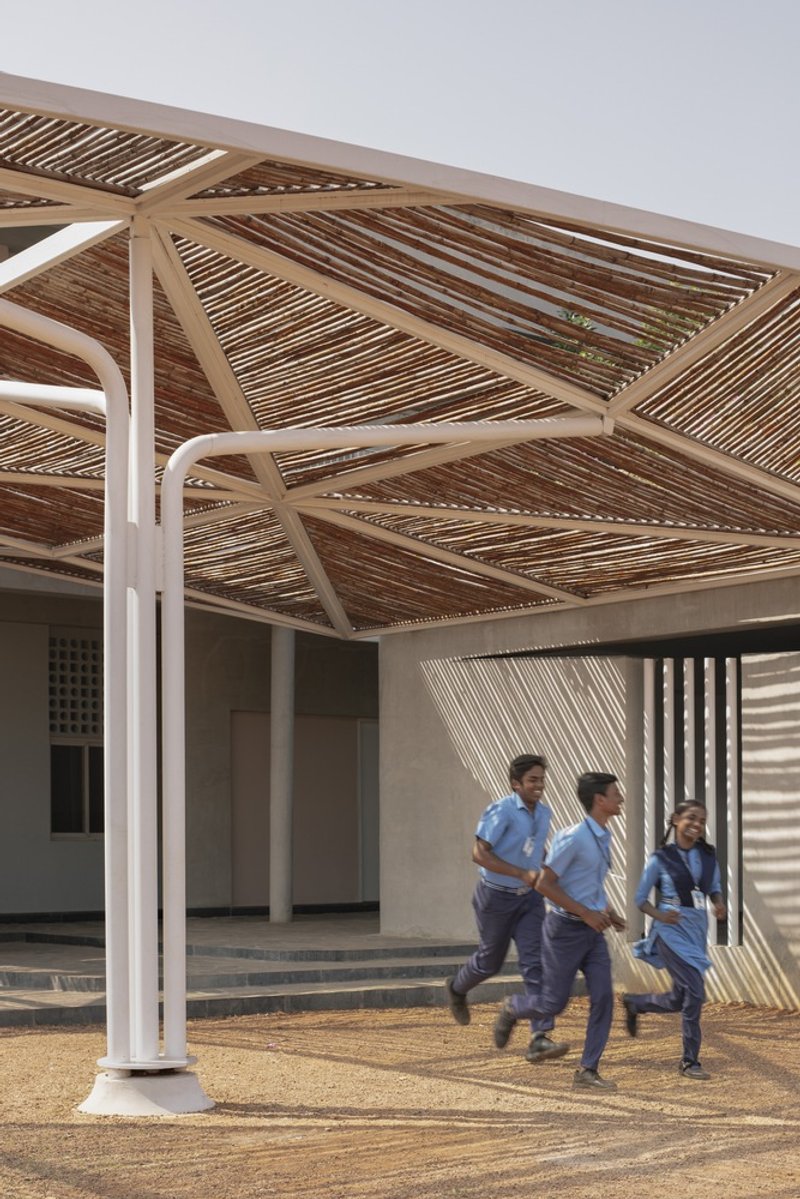
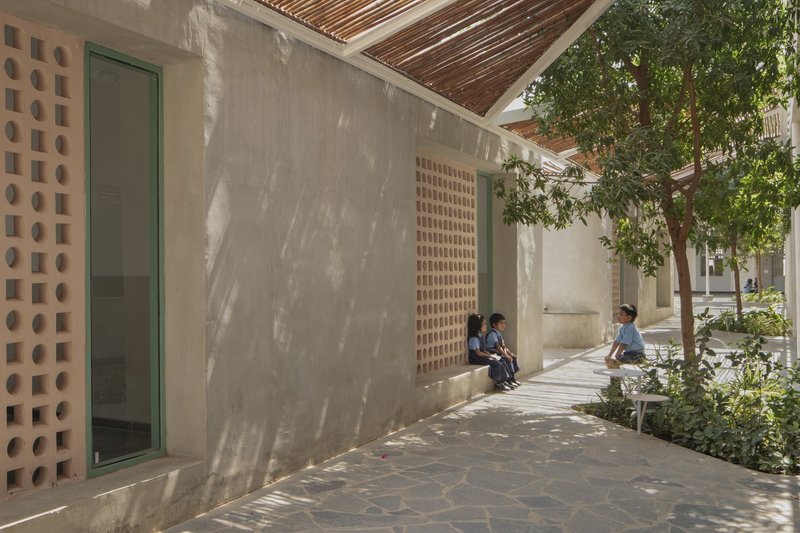
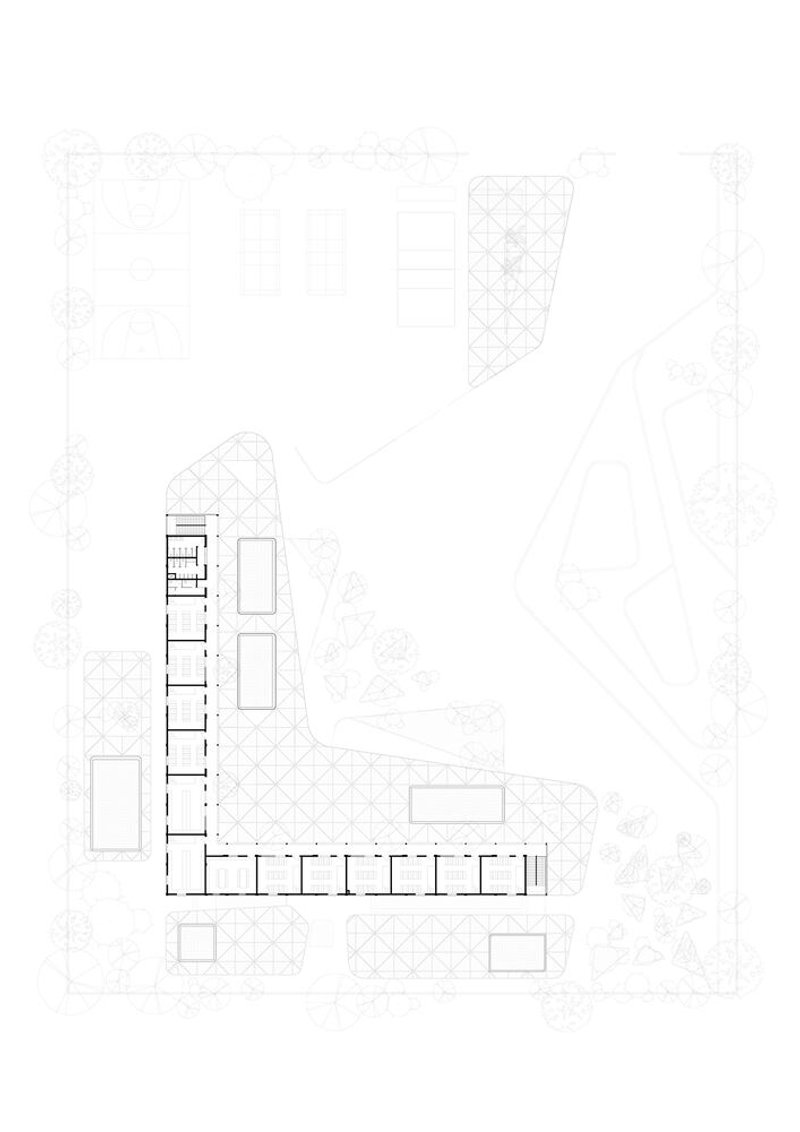
One of the most innovative features of the Talaricheruvu Rural School is its extensive use of bamboo. Given the extreme heat in the region, with temperatures regularly exceeding 43°C (109°F), the outdoor areas were previously unusable. CollectiveProject designed a large bamboo canopy to cover these outdoor spaces, transforming them into multi-purpose areas for school-wide gatherings and outdoor teaching. The canopy, which is supported by a lightweight metal framework, was crafted from 12,000 locally sourced bamboo poles. These poles were seasoned on-site to ensure durability in the harsh climate. As the sun moves throughout the day, the shadow patterns from the bamboo canopy change, creating dynamic spaces for learning and interaction.
Sustainable Design: Use of Local Materials and Community Involvement
The school’s design is not only practical but also environmentally conscious. The façade features a light cement wash sourced from the adjacent cement factory, blending seamlessly with the surrounding landscape. The flooring throughout the school is made from Kadappa black limestone, sourced from waste material produced in a nearby village. This sustainable approach minimizes waste and promotes local resources, reducing the environmental footprint of the project.
The construction process, which spanned six years, was carried out without disrupting the students' education. The school remained active during construction, with labor provided by nearby villagers. The local workers were guided by the head engineers from the cement factory, ensuring that the work was done with care and attention to detail. This community-driven effort further strengthens the connection between the school and its surrounding environment.
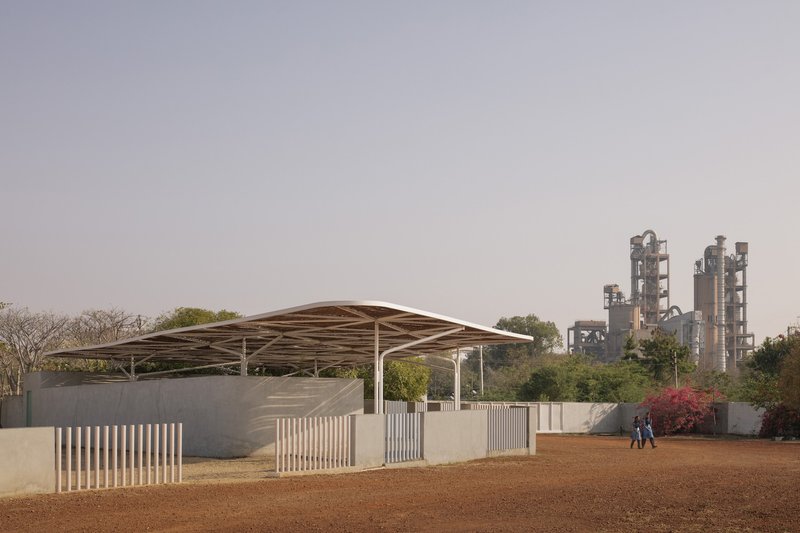
A Prototype for Future Rural Education
Talaricheruvu Rural School serves as an inspiring example of how thoughtful design can transform the learning experience in rural areas. Through the use of sustainable materials, strategic design, and a focus on community involvement, the project has created a school that is not only functional but also uplifting. By addressing the specific needs of its users—students, teachers, and the local community—the Talaricheruvu Rural School stands as a beacon for future educational architecture in rural India, proving that well-designed spaces can foster growth, creativity, and learning.
All Photographs are work of Benjamin Hosking, Vivek Eadara




Popular Articles
Popular articles from the community

On the Brooks House by Monsoon Collective – A Contemporary Kerala Home Rooted in Tradition
Kerala home blending tradition and modernity with water-inspired design, brick architecture, courtyard planning, and sustainable rainwater harvesting strategies.
A Contemporary Take on Iranian Residential Architecture
A modern interior design in Mashhad that reinterprets brick, light, and spatial flow to create a warm, contemporary residential architecture.


The Ken Roberts Memorial Delineation Competition (Krob)
As the most senior architectural drawing competition currently in operation anywhere in the world, it draws hundreds of entries each year, awarding the very best submissions in a series of medium-based categories.
Louis Malle Cinema: A Limestone Cultural Landmark Revitalizing Community Life in Prayssac
Limestone cinema extension with public forecourt, blending heritage and modern design to create flexible cultural spaces and strengthen community interaction.


Similar Reads
You might also enjoy these articles
The Ken Roberts Memorial Delineation Competition (Krob)
As the most senior architectural drawing competition currently in operation anywhere in the world, it draws hundreds of entries each year, awarding the very best submissions in a series of medium-based categories.

Waterfront Redevelopment and Urban Revitalization in Mumbai: Forging a New Dawn for Darukhana
A transformative waterfront redevelopment project reimagining Darukhana’s shipbreaking heritage into an inclusive urban future.

OUT-OF-MAP: A Call for Postcards on Feminist Narratives of Public Space
Rhizoma Design and Research Lab invites artists, designers, architects, researchers, and students to reflect on how feminist perspectives can reshape public space. Selected works will be exhibited in Barcelona, October 2026. Submissions open until 15 April 2026.

Documentation Work on Buddhist Wooden Temple
Architectural syncretism and cultural hybridity: A comparative study of the Buddhist temples in Chattogram Hill tracks


Explore Architecture Competitions
Discover active competitions in this discipline




The International Standard for Design Portfolios


The Global Benchmark for Architecture Dissertation Awards


The Global Benchmark for Graduation Excellence


Challenge to design public laboratory
Comments (0)
Please login or sign up to add comments
No comments yet. Be the first to comment!